Home Blog Page 252

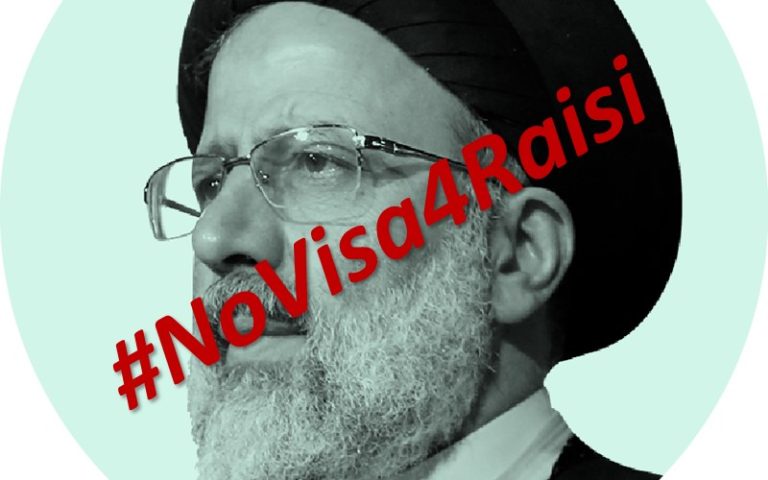
Iran: Raisi’s Six-Month Economic Record Contrasts Sharply With His 7,000-Page Program

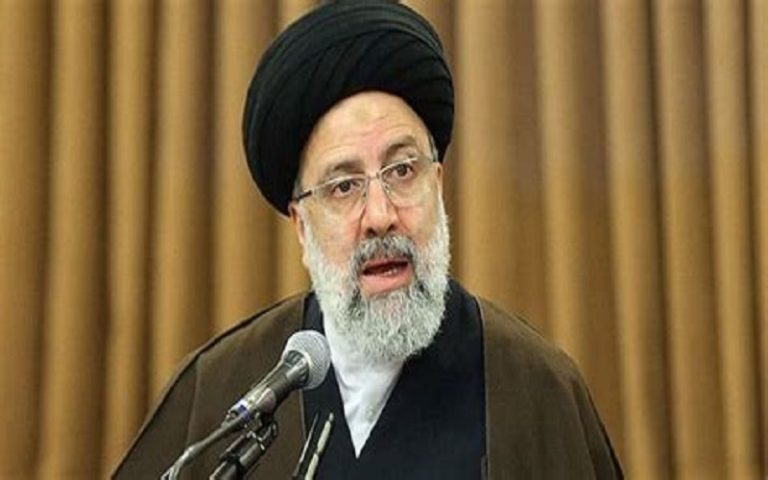
In the summer of 2021, the Iran regime’s supreme leader Ali Khamenei installed the infamous Judiciary Chief Ebrahim Raisi as the president. During his election campaign, Raisi claimed that he and his incoming economic team have prepared a 7,000-page economic program and that if carried out, the people and the country would witness a boom.

Now more than 180 days later, the question remains: What happened to the 7,000-page economic program, and, for that matter, the economic boom Raisi had boasted about?

Now that Raisi has been in office for six months, the economy is still plagued with many a plethora of economic problems and astronomical corruption.

Practically speaking, what has become obvious is that Khamenei and his handpicked president do not care about the country’s economy. Instead, they are only interested in filling the coffers of their cronies and agents by stealing from the country’s wealth.

After much wrangling over the 42,000 rials preferential currency used by the regime’s officials and brokers for the import of the country’s basic and important goods at a convenient price, the Parliament finally approved its elimination. This will only lead to a spike in the price of food stuff.

The import of basic goods so far was $11 billion with the 42,000 rial currency, but revenue of less than $1.8 billion has entered the country’s treasury.

If goods were to be imported at the open market rate, some $10 billion would go to the treasury, a significant difference in revenue that will end up in the pockets of the regime’s officials.

Is the government’s business performance clean and transparent? Is it governed by any regulations at all? Does the government have any control over all the entry and exit points of commodities? Or on the customs and the country’s ports which are under the control of the regime’s Revolutionary Guards (IRGC)?

In this regard, a report published by the regime’s Parliamentary Research Center said:

“Since 2013, statistics related to the reports of the Central Headquarters for Combating Smuggling show that in the lowest case, the total amount of incoming and outgoing smuggling (including reverse smuggling) was more than $12 billion, which is a significant figure compared to the country’s official trade figures. Goods include clothing, footwear, cigarettes, home appliances, cosmetics.” (State-run daily Arman, January 1, 2022)

News about the country’s economic crisis is leaking from all corners of the government’s institutions and their statistics. One of them is the so-called “lofty” index which is an indicator of the consumption power of the managers and owners of manufacturing enterprises.

The scale of this index is between 0 and 100. And any number above 50 shows the prosperity of the manufacturing enterprises and vice versa.

Now, this index has reached its lowest rate in the past four months.

“This lower ‘lofty’ index for the past four months reflects growing concerns of the private sector entrepreneurs and business owners.

“Surveys of economic actors show that the continued recession and volatility of foreign exchange market prices and declining purchasing power have negatively affected the positive expectations of economic actors and that companies have faced a lack of liquidity and reduced orders due to declining customer purchasing power.

“Also, the main reason for the decline in the overall index in December was due to the recession in the construction, services, and agriculture sectors,” the State-run daily Tejarat, wrote on January 5, 2022.

The report emphasizes that procurement managers are facing severe disruptions in currency price stability and other production costs and are unable to forecast and plan for the coming months and cannot make any planning to continue operations in the coming months.

State economists also warn that the economy has returned to a period of recession, seeing the “lofty” index and performance of foreign trade and the situation of smuggling and rent-seeking of billions of dollars.

Iran’s Export in the Casino of the State Mafia

0

The Chairman of the Tehran Chamber of Commerce, Mohammad Khansari, has stated that the total volume of exports of technical and engineering products has dropped from $6 billion to $200 million over the past few years alone.

In a healthy economy, such exports replenish the currency reserves and create a currency balance for the country. That is why states try hard to balance their foreign trade by strengthening exports over imports.

As an example, China in a very rare policy is trying to keep the value of its national currency low, to be able to increase its exports.

The Iranian economy, however, is mired in state corruption and rampant mismanagement. When the clerical regime obtained a windfall of cash because of the 2015 nuclear deal, it spent the bulk of it for its malign and destructive activities while a substantial portion was embezzled by corrupt officials.

In the end, none of the money was allocated to improve a lot of average citizens. Now, the treasury is empty, and the results of sanctions have been compounded by such abhorrent mismanagement and embezzlement, with the gap between rich and poor widening to unprecedented levels.

Even before the sanctions, the regime did not have much to offer to the people, and the main export of the country was oil, along with some other basic commodities primarily to neighboring countries.

Criticizing the foreign exchange rate policies of regime President Ebrahim Raisi’s administration, Khansari stated that the Turkish government had previously faced a 20 percent inflation but had managed to increase its exports to $220 billion, while on the other hand, the Iranian regime is restricting exports.

This is happening at a time where the regime is amid wrestling with crises like a rapidly growing budget deficit, rampant inflation, severe devaluation of the national currency, and extensive poverty.

Another significant problem in the country’s economy is the unfair distribution of wealth. This has effectively denied the chance for many people, and independent businesses, to contribute to the country’s exports.

What little export opportunities in Iran have remained are controlled by the Islamic Revolutionary Guard Corps (IRGC) and companies affiliated with the regime supreme leader’s office.

These are institutions that have caused significant capital exodus by investing their acquired capital in enterprises abroad. As a result, a ballooning budget deficit is seriously threatening the regime’s already depleted treasury.

Khansari added, “In the last 40 years, we have always had a budget deficit, which is one of the most important factors in the country’s economy, meaning that income has been less than expenses. If this happens to a company or a household, the company will go bankrupt and the household will become homeless, but governments are using the resources and people will become poorer day by day.”

He further stated, “The budget deficit means that we want to cover the deficit by printing money, which means raising the general level of prices and plundering people’s pockets. When the government has no currency, they print money, which increases inflation. When it has currency, it starts to ‘spread money’ (unlimited currency supply), which leads to hyperinflation.”

Will Iraq Get Ever Free of Iran’s Sway?

0

After many years and massive popular protests, there are indications that Iraq’s body politic has decided to separate its ways from the mullahs’ regime of Iran.

In the fifth election after the invasion of Iraq by the international coalition, the Iran regime’s proxy forces and its affiliated political groupings lost the power game. Cleric Muqtada al-Sadr’s faction secured the most seats in the parliament and is expected to form the next government in coalition with others, not under Tehran’s complete influence.

Pro-Iran political factions suffered a crushing defeat despite the full weight of the mullahs’ political and financial backing.

Furious over their rejection by the people of Iraq, the pro-Tehran factions resorted to terrorism and violence, even targeting the home of the country’s Prime Minister Mustafa Al-Kadhimi with suicide drones, but to no avail.

The Fatah Alliance and other Iran proxy factions managed to win only 17 seats in the parliament. The same group, part of the Popular Mobilization Forces (PMF), held 47 seats in the previous Iraqi parliament.

Al-Halbousi, a member of the Sunni coalition, was elected as the speaker of the Iraqi parliament, albeit with considerable delay, to prepare the groundwork for the appointment of a Kurdish president and a prime minister acceptable to the Sadr group.

The Sadr faction, which claims to oppose foreign intervention in Iraq, is reported to be considering reaching out to the United States and its NATO allies, de-escalating tensions with the Arab League, and the Gulf Cooperation Council, and perhaps preparing the ground for the signing of the Abraham Accords.

The fact is that after the fall of the former government in Iraq and for nearly two decades, Iraq became the roaming grounds for the clerical regime and its proxy forces and militias, which had disastrous consequences for the people of that country. The Iranian regime’s meddling reached its climax with the election of Nouri Al-Maliki as the Prime Minister, who, as a puppet of Tehran, carried out the mullahs’ policies in that country.

Fed up with continuing Iranian meddling in their country, the people of Iraq rejected the pro-Tehran factions to rid their country of the grip of the mullahs.

Iran: The Truth Behind Regime’s Call for a Return

While brain drain and migration from Iran under the mullahs’ rule has one of the highest rates in the world, Ebrahim Raisi’s government is insisting on the return of the expatriate Iranians, deceptively claiming that they should not have any concerns about being persecuted.

The regime is trying to lure the exiled Iranians back to Iran by asserting that they will have “fully ensured security”, “facilities needed to return”, and a “return without any problem.”

However, dissidents say the notorious Intelligence Ministry (MOIS) and the Revolutionary Guards (IRGC) are poised to snatch them at the airports when they approach the security checkpoints, according to dissidents.

The parliament’s official website ICANA, stated on March 20, 2020, that the latest report of the Parliamentary Research Center and another report by a former Deputy Minister of Education Baqer Larijani, say Iran ranked second in brain drain and some 150,000 to 180,000 educated specialists leave the country annually.

The regime’s Foreign Minister Hossein Amirabdollahian promised, “Their return will be no problem and has been coordinated with the security authorities.”

The state-run website Rouydad 24 admitted in a report on January 5, 2022, that the interrogation of passengers at airports is carried out in coordination with the MOIS and the Foreign Ministry.

“It has obtained information from some Iranian passengers that show that several passengers were taken to rooms by security officers with wireless (Walkie-Talkie) to fill out a form about their personal information,” Rouydad 24 wrote.

Recounting the plight of two Iranians in the Netherlands and Germany, Rouydad 24added that “since a few months ago” interrogations are carried out at Tehran Airport.

The report added: “According to an Iranian traveler living in the Netherlands, right after checking his passport and seal of arrival, a person with a wireless device led him and his wife to a room near the passport control office and asked them to fill out a form.

“This form asks for information such as name, address, place of residence, education, job, income, and date of arrival and departure.

This traveler added: “In addition to him, about 10 other passengers were in the room-filling out their declaration [interrogation] forms.”

Rouydad 24 reported that its investigation had concluded that “not only dual nationals or refugees were the target of these self-reported forms [interrogation], and but also foreign nationals are questioned.”

The Foreign Ministry’s consular section launched a ‘traffic inquiry system’ on the ‘Integrated Consular Services Management’ website on Wednesday, December 29, 2021, and according to Amirabdollahian, “Iranians abroad can find out whether or not they can leave the country after arrival by providing minimal information about themselves.”

The question is what objectives are the regime is pursuing by calling for the return of the Iranians?

Call to return in the service of looting

The budget deficit of more than $11 billion in 2022, according to Tasnim news agency, on January 10, 2020(higher according to some regime officials), lays bare the economic bankruptcy of the regime, forcing it to make up for part of its budget deficit with the capital of Iranians abroad.

Iran’s parliament speaker Mohammad Bahger Ghalibaf stated: “The inability to use the assets of Iranian diaspora would be a sign of our ineptitude.”

A spokesperson for the Judiciary added: “Iran is the best place for Iranians to invest.”

The state-run Mostaghel daily on December 28, 2021, confessed to the regime’s deception.  “Experience has shown that the main purpose of returning Iranians is essentially the return of their funds. In these years, due to sanctions, very low foreign investment and increased capital evasion, the capital of Iranians abroad has always been a seductive issue to provide a portion of the country’s economic costs,” it wrote, adding, “Of course, if their (government) intention to return Iranians is serious, the most obvious measure is to try to keep them in the country and motivate them not to migrate.”

Beware the “Mikhak System” an MOIS App

The Mikhak System like any other website or application created in Iran, first and foremost, serves MOIS. Therefore, using or subscribing to such Apps entails great risks.

In remarks to the State-run daily Iran Press, December 27, 2021, regime Foreign Minister Abollahian admitted as much: “Some Iranians who have not traveled to the country for many years are concerned. Since 8:00 a.m. (Wednesday) we have placed an environment in the State Department’s the ‘Mikhak System’ as a ‘traffic inquiry ‘ where Iranians abroad can ask us without divulging any information, whether or not they can leave the country easily after entering Iran.”

He added, “And we’ll respond to them within 10 days, and the foreign ministry ensures that Iranians can easily travel to their homeland.”

Adel Kianpour a latest bitter example  

Political prisoner Adel Kianpour, imprisoned since July 2020, died suspiciously on January 1, 2022, after being infected with the Coronavirus following a week of hunger strike in the Sheiban prison in Ahvaz.

Kianpour was sentenced to three years by a court in Ahvaz on charges of propaganda against the regime and benefitting opposition groups and disturbing public opinion.

In a voice message, addressing the regime’s Judiciary Chief Gholam-Hossein Mohseni-Ejei, he said, “Mr. Ejei, you said that everyone who has a security problem and is abroad can come back, and we help them get back to a normal life. By life, you mean life in prison?”

After returning to Iran, Kianpour was immediately arrested, tortured for two months forced, to make incriminating confessions, and was deprived of his right to an attorney and visitation for five months.

The last word

In a report on December 28, 2021, the state-run daily Mostaghel unmasked the regime’s latest ploy, “When nepotism is the main factor for promotion in the executive branch, is there any need for domestic elites and the return of the people aboard? Finally, Mr. Foreign Minister when you say that people can return and they will be harassed, this in and of itself is inaccurate. Are you and all your actions correct, and are all the other offenders? This sounds like you are being gracious by looking the other way as regards any mistakes they may have committed (while in exile).” now you decided to close your eyes on all their mistakes with generosity?”

Tehran Downplays Real Statistics of Car Accident Fatalities

The number of road accidents and fatalities in Iran has significantly increased during recent weeks. However, this is not the whole story, and observers believe that authorities are downplaying the actual aspect of this catastrophe by manipulating the statistics.

According to international observatory bodies, thousands of Iranians are losing their lives to car accidents every year. Domestic media describe dangerous roads in Iran as death halls due to dramatic growth in fatalities.

In its latest statistic, the country’s forensic reported the number of car accidents mortalities has increased by 9.6 percent and reached 17,000 in the past twelve months. the government had projected that this number would decrease to 15,000 in a year; however, like many other fields, the government has done nothing to save people’s souls.

Thirty-One Percent Increase in Car Accidents

According to the Young Journalists Club (YJC), affiliated with the Islamic Revolutionary Guard Corps (IRGC), on December 12, 2021, the number of car accidents had a 31-percent increase in the past 12 months.

The number of car accidents and fatalities soar in Iran, while the urban and intercity traffic has witnessed a considerable decrease due to the pandemic. Therefore, non-standard and unsafe roads and streets along with inappropriate indigenous vehicles are the most critical factors for increasing car accidents.

Instead, the government in Iran tries to convince citizens that the “human factor,” ie drivers, is the main reason for this massive amount of car accidents victims. In effect, officials seek to downplay their faults and lay the blame on victims.

Statistics of Car Accidents Fatalities Are Manipulated

However, former Traffic Chief Seyyed Hadi Hashemi has recently admitted that the statistics of car accidents fatalities are not accurate, and they are dwindled by the manipulation of the stats. “The death toll of car accidents is still high despite the manipulation of the stats,” he said in an interview with Jameh 24 website on December 28, 2021.

Hashemi revealed that the officials classify traffic stats to traffic incidents type 1 and 2. “New clauses have written to ignore many fatalities among car accidents casualties, seeking to decrease the statistics. However, they failed,” He explained.

“In several cases, we do not count the death after 30 days of incidents such as throwing the vehicle into the water or exiting from the road and its 2.5-meter sidelines among car accidents casualties,” Hashemi said. “In truth, we are deceiving and removing the issue utterly.”

State-Backed Mafia Is Behind Car Accidents Fatalities

In his interview, Hashemi pointed to the dire situation of roads and this social crisis. “Don’t be fooled by those who claim that ‘Our vehicles have necessary safety,’” he added. “These are deceptive tricks, and we have no safety in the vehicles’ field. The mafia of vehicles is so powerful that no one in the country can deal with it.”

Hashemi implicitly mentioned the most powerful official Supreme Leader Ali Khamenei, his mysterious office with billions of dollars in value, and the IRGC as those who pull the strings of Iran’s economy.

Furthermore, in its edition on December 20, 2021, Jahan-e San’at daily warned about the “seven-head dragon of corruption” in the automaking industry. Seyyed Abdoljavad Shamsuddin, Khamenei’s representative in Bandar Anzali in the northern province of Gilan, attacked the government. “Why automakers are unprofitable?” he said.

“Compare indigenous automaking companies with other companies across the globe! You have shut the country’s doors for importing cars; you do not let cars import to the country and prevent competition. You also ignore the increasing efficiency and quality of [indigenous] cars. Look at global automaking companies; how many employees do they have? How many products do they have? How much are their products?” he continued.

Nonetheless, one of the Parliament [Majlis] Presidium members, Mojtaba Youssefi, admitted to the importance of unsafe roads and low-quality cars in Iran’s massive number of car accident fatalities. “Iran is one of the most accident-prone countries in the world, which in addition to high mortality, we see disability caused by accidents,” the Majlis’s official website ICANA quoted him as saying on December 26, 2021.

“On average, 17,000 people are losing their lives to road accidents in the country every year. It means that 20 out of every 100,000 people are annually dying in car accidents,” he added. “Indigenous cars lack adequate quality, and we have time and again repeated this issue. However, the two automaking companies of the country have yet to act to improve their products.”

The JCPOA and the Capitulation of Iran

Iran’s government is trying to depict a strong position in its international relations and actions, especially during the nuclear talks.

On January 9, the regime retaliated against Qassem Soleimani’s elimination two years ago by engaging in a hollow gesture, sanctioning many US officials.

What’s past is prologue. Such theatrics by the regime pursue only one objective: Boosting the morale of its increasingly demoralized forces, who are witness to the regime’s growing isolation internationally.

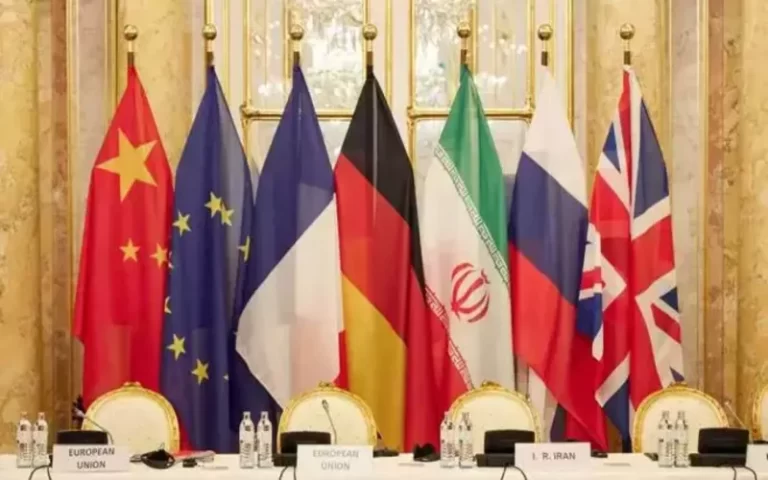
Recently an image published on social media, and in the Iranian regime’s media, showed Mikhail Ulyanov, the Russian representative in the Vienna nuclear talks, and U.S. Special Envoy for Iran Robert Malley sitting opposite each other alone without the Iranian regime’s presence as they discussed sketched the path forward.

This raised the frustration of many of the regime’s officials, not only because they are concerned about Iran’s independence, but because this image showed the regime’s weakness.

The sad truth is that the regime has auctioned off the country and the people’s wealth and their future for its useless nuclear program while shouting the slogan ‘Neither the West nor the East.’

Even in Syria, the regime has the same situation. Wasting the country’s resources for over the past 10 years, now it is losing everything. A recent article entitled ‘Ongoing Russian-Iranian conflict|Russian officers meet tribal dignitaries in Iran-controlled villages in Deir ez-Zor’ on January 9, showed the regime’s weakness which is extended to all areas of the regime’s policies. This is just one of many examples which highlight the same situation.

This is something that has even raised frustration among the regime’s media. In its recent editorial on January 10, 2022, after the recent speeches, meetings, and tweets of Russia’s representative Mr. Ulyanov, the state-run daily Jomhouri Eslami (jepress.ir), expressed concern. “After numerous protests in the printed and online media over the intervention of Mikhail Ulyanov, the Russian representative in the Vienna talks, on behalf of the Iranian regime, we waited for the Ministry of Foreign Affairs to react to the Russian representative or explain his speeches, meetings, and tweets. But so far there was no news,” the daily wrote.

“Ulyanov seems to find himself in a position where he can determine the fate of the Vienna talks and assign tasks to the Islamic Republic of Iran. The Iranian people do not accept such caretaker spirit from anyone, including the Russians, the Chinese, the Americans, and the Europeans, and if the foreign ministry officials refuse to comment on the issue because of possible considerations, it does not mean that the Russian representative is authorized to continue its interventions.”

It added, “All Iranians and all political activists from different factions and people with different tastes want the progress of the talks in Vienna, the revival of the JCPOA, and the lifting of sanctions, and no one wants these talks to end. Thus, the protest against Ulyanov’s behavior is a patriotic act aimed at preventing foreign interference.”

“Even now, the lifting of anti-Iranian sanctions is not in their interest, and it is we who must try to reach an agreement in the Vienna talks that guarantees the interests of the Iranian people. It is a great mistake to see the hope in foreigners,” Jomhouri Islami wrote.

This explains why the Iranian Resistance revealed the unpatriotic nuclear project 20 years ago. Notwithstanding squandering several trillion dollars on a completely unnecessary program, the mullahs’ quest for the bomb has had disastrous consequences for the Iranian people and the country’s future, much like the disgraceful ‘Treaty of Turkmenchay’ did.

Iran Government’s Serious and Incurable Crises

Over the past years Iran’s incurable crises have led to increased protests, and every new year the regime is facing new social crises.

Among these protests, we can point to the major social protests and movements like the one by residents of Sistan and Baluchestan Province or the water rights, protests of the people of the Khuzestan, or the protests of the people of Isfahan with the same goal demanding their water rights which have been usurped by the regime’s officials and industries working for the Revolutionary Guards (IRGC).

Each of them has been a huge shock to the regime because after the protests of November 2019 every small movement can change rapidly to a nationwide struggle against the regime.

While all the protests have roots in the dire social and economic situation, the regime tries hopelessly to connect them to the artificial enemies and ill-wishing hands from aboard.

This is so ridiculous that even state media is mocking such statements made mostly by the so-called Friday Prayers leaders and government experts in TV shows.

In an interview with the Hamdeli newspaper on January 8, 2022, a former Interior Ministry official said: “Protests are a natural matter, and because it comes from the real conditions that people live with. Social protests in the new generation quickly take on a political and security scent.”

Since the protests in 2009, the regime tries tries very hard to minimize the political orientation of these protests, but to no avail.

Therefore, government officials and state media are forced to confess about these mega-challenges that emanate from the regime’s corrupt political and economic structure.

In an interview with the state TV Channel 2, on January 7, regime expert Hossein Raghfar said: “We are in a crisis right now, and our concern should be to get out of this crisis.

“All the policies that this 13th government is presenting are based on the fact that we don’t have a crisis. We have to accept that we have this crisis. Unfortunately, these solutions are tailored to a normal situation, whereas our current situation is unusual.”

In such circumstances, all the regime’s economic solutions are stagnated, and poverty is crushing most of the people.

The expansion of poverty has reached a stage that according to another expert of the regime Mohammad Reza Mahboubfar, “The growth of poverty in Iran has entered a new phase.” He told the state-run website Eghtesad-e Pooya on January 8, “The current rate of poverty in the country has been unprecedented in the last 100 years, and over the past three years the population has doubled under the risk of poverty.”

A reality that, according to the state-run daily Mostaghel on January 8, “will create huge and fatal crises,” and “if it is not treated at the right time, the consequences will be difficult for any person in the society and the responsible institutions.”

In a TV show on January 6, 2022, Abdolreza Mesri, the regime’s former Minister of Labor, admitted that “there’s a serious crisis on the way, much more serious than some people think.”

The fact is that amid the crises facing the country and the people, the socio-economic crisis has a special place, which increases and expands protest movements throughout the country.

However, the mullahs’ regime and its repressive forces cannot end these protests, because when they suppress one protest, immediately and new group or sector starts its protest for various political, economic, and social reasons.

This situation is due to the explosive conditions of society and increasing crises, reflected in the media and statements made by officials.

Workers in Iran’s Mining Industry Suffer Greatly From the Iranian Regime’s Lack of Safety Laws

0

Mining has been one of the world’s most critical industries that have existed for thousands of years. Between 20,000 and 40,000 years ago is when the first people began mining the earth for precious minerals, and over time, and the discovery and advancement of technology to help assist the process, the industry has greatly benefitted from it.

These days, the safety of the miners is at the forefront, with many protocols and measures becoming laws to safeguard them in their place of work. As a result, mining incidents around the world are rare, but in Iran, the laws and safety protocols are non-existent under the rule of the Iranian regime.

Iran is one of the most important mineral producers in the world, ranked among 15 major mineral-rich countries, holding some 68 types of minerals, 37 billion tons of proven reserves, and over 57 billion tons of potential reserves worth $770 billion in 2014.

The environmental effects of mining, along with the metallurgical processing, regularly cause major occupational health and safety problems, but the Iranian government is blind to this fact. Assessments of the environmental impacts have never been fully manifested, so Iranian miners are risking their lives every day that they go out to work.

While Iranian workers do technically have the right to form labor unions, no union systems exist in Iran, and the right to strike is not respected by the regime. Since the mullahs came to power in 1979, protests and strikes have been consistently met with violent crackdowns and arbitrary arrests.

A lot of the industrial infrastructure in Iran is greatly outdated, and as many construction and mining sites regularly operate with inadequate materials, accidents are common. Managers at these sites refuse to invest in safety measures, and with international sanctions blocking the imports of new equipment, the workers are left to suffer the consequences.

About two million people work directly and indirectly in Iran’s mines. In Iran, there are about 5,400 active mines with over 91,000 workers, of which 90 are active coal mines with about 10,000 workers.

In recent years, a staggering number of mining-related disasters have occurred in Iran. In May 2017, around 23 miners were killed, and dozens of others were wounded and trapped when a coal mine in northern Iran collapsed following an explosion of methane gas.

Early 2020 saw several incidents. In Delijan on January 6, a mine worker was electrocuted when scaffolding collided with high-voltage cables. A few days later, Mojtaba Tagizadeh died, and four other miners were injured when tunnel number 20 of the Hamkar coal mine collapsed. A tunnel accident in the Asafij coal mine in Bahabad led to the death of a mine worker in late January, while a coal miner in Kerman was crushed to death by a concrete mixer. The following month, a stone worker in Khusuf was killed by a rockfall, and two workers at the Tashkouieh mine in Bafq were suffocated to death by a gas leak.

Aside from the severe lack of safety measures, workers in Iran, and particularly miners face severe salary delays. Sometimes their wages have not been paid for months.

These are just some of the things that Iranian workers must endure. Most employers are affiliated with the regime to one extent or another, so the lives of their employees and their living conditions are of little significance to them.

The regime routinely offers empty promises to those standing up for their rights, who gather in their hundreds and thousands to air their grievances or detain protesters instead of solving the problems within Iranian society.

Iranian workers have reached the undeniable conclusion that the solution to their misery and economic grievances can only be found with the removal of this regime.

By Shooting Down PS752 Iran’s Government Further Erodes Public ‘Trust’

Some events cause erosion of ‘trust,’ particularly when these events are carried out by a government or its officials.

One of the events that further diminished public ‘trust’ in the regime was the criminal downing of the Ukrainian passenger plane. flight PS752. This ‘operation’ was carried out by the regime’s Revolutionary Guards (IRGC) to provide cover for its missile attack on the US base Ain al-Assad in Iraq, on January 8, 2020.

The state TV’s coverage of the incident reflected the regime’s desperation and concern vis-s-vis the consequences of this crime.

Immediately after this crime and before the results of the investigation of the plane’s black box were announced, state TV blamed ‘technical problems as the main cause of the ‘plane crash,’ and blamed the ‘enemy’ for spreading ‘lies,’ ‘deceptions’ and ‘psychological warfare operations’ to damage the regime’s reputation.

With great fanfare, the state TV, went out of its way to “expose the commotion, espionage, and fabrications of the dissident media. The truth was something else, however. And when that truth came out, the regime further undercut public trust in an already loathed regime.

The reaction of social media speaks volumes about the extent to which the regime has been discredited in the eyes of Iranians.

A blogger asked:

“Why did you hit the passenger plane with a rocket?
Why did you hit it twice?
Why did you deny and lie for three days?
Why did you drive a bulldozer over the wreckage?
Why did you not allow an independent international investigation?
Why were the main perpetrators not tried and punished?

All these questions still remain unanswered.”

Another social media user said: “On the 2nd  anniversary of flight #PS752, we stand with the families of its 176 passengers, including 15 children who were brutally killed.”

Another social media user added: “Two years have passed, and justice hasn’t been served yet. The Iranian regime has refused to accept any accountability for the killing of 176 innocent people aboard Ukrainian Int’l Airlines Flight #PS752 with multiple surface-to-air missiles. We will never forget.”

Another social media user said: “Too painful to remember, too painful to forget.”

Another social media user said: “I will hurt you for this. I don’t know how yet but give me time. A day will come when you think you are safe and happy, and suddenly your joy will turn to ashes. With love and fond memories of victims of flight #PS752.”

Another social media user paid homage to her sister and wrote: “Two years ago #IRGC brutally killed my sister and niece by shooting down Flight #PS752 … for Parisa and Reera and all the other 174 passengers and crew #IWillLightACandleToo.”

Finally, the official Twitter account of the victims wrote:

“Families carry placards to send their messages. Loud and clear.

“The right to life is a human right. Killing a human being is destroying a generation. Justice is not negotiable. Truth should not be sacrificed for expediency. As the next of kin, we will not forgive. …”

Iran: IRGC Commander Admits That Protesters Were Targeted at Violent Crackdown of Isfahan Protests

Following the brutal crackdown of the demonstrations over the mismanagement of water resources in Isfahan in November 2021, the commander of the Iranian regime’s anti-riot police has admitted that his forces purposely targeted protesters. The unarmed protesters were shot by pellet guns at close range, leaving over three dozen people with severe eye injuries, with some losing their eyesight completely.

In an interview published on January 9, Brigadier-General Hassan Karami stated that his forces used ‘shotguns that discharged pellets’ to quell the unrest. Karami is already sanctioned by both the United States and the European Union due to his history of using repressive acts against ‘innocent civilians, political opponents, and peaceful protesters’, and other serious human rights abuses.

During the protests in Isfahan as special forces attacked the protesters, numerous images of many pellet bullets hitting the bodies, eyes, and faces of protesters were posted on social media.

Many state-run news outlets in Iran, including the Fars News Agency, which is closely affiliated with the Islamic Revolutionary Guard Corps (IRGC), published quotes from Nourrodin Soltanian, the spokesperson for the hospitals in Isfahan. Soltanian said, “40 people with eye injuries came to the hospitals. Twenty-one of those people were hospitalized, two in intensive care.”

However, the true number of people who sustained head injuries and lost their eyesight is likely to be much higher than the official figures. Many injured protesters avoided going to the hospital following the violent crackdown as they feared being arrested by security forces for taking part in the protests.

According to the People’s Mojahedin Organization of Iran (PMOI/MEK), at least 100 people were wounded some 300 detained when the suppressive forces attacked the protests on November 26.

Following a week of demonstrations at the dried-up riverbed of the Zayanderoud River in Isfahan by local farmers, the largest protest over the water shortage in the region began on November 19, with large groups of supporters, from all walks of life, joining the farmers in solidarity.

In a bid to prevent the protests from spreading to other cities across Iran, the regime enlisted their security forces and the anti-riot police to crack down on the unrest, which ended in violent clashes across the city of Isfahan.

Throughout 2021, daily protests were held across Iran by people from across all social sectors of society, with each pocket of unrest further highlighting the explosive state of Iranian society. Along with the major protest in Isfahan, two other major protests took place last year, with one in Khuzestan in the southwest of the country, and in Sistan and Baluchistan in the southeast.

To maintain control, the Iranian regime has resorted to more suppression and violent crackdowns of the protests in recent months and carried out more executions. If anything, the crackdowns reflect the desperation of the ruling mullahs in dealing with a nation on the verge of revolt.