Home Blog Page 258

Strange but Routine Actions by Iran’s Ruling Establishment

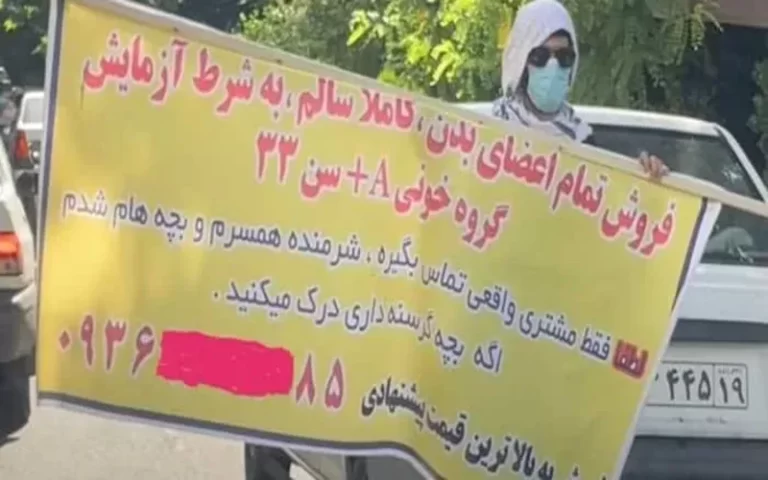
Hearing of strange and outlandish actions by the Iranian government has become ordinary. Like the news of officials filling the ballot boxes with votes using the ID cards of dead people. But that is not all. Even those who are not yet born have benefits for the regime.

The state-run daily Arman on September 28, 2021, in an article entitled, ‘Economic policies enrooted the production’ quoting an economic expert Bahman Arman, about one of the strange behaviors, wrote:

“According to figures provided by the International Monetary Fund, 500,000 people migrate from Iran each year. According to recent statistics from the Statistical Center of Iran, this number has increased to 700,000.

“While the rate of migration from Iran is high among the countries of the world. For this reason, Iran’s population should not exceed 70 million people. That’s why declaring that the country’s population about 84 million is a statistical mischievousness that is being exploited.”

In Iran, 74 million people receive subsidies, the newspaper added.

Before this article, Abbas Ali Kadkhodai, former Spokesman for the Guardian Council, said, “Iran’s population is now estimated to be 83 million.”

The increase in the number of migrants from Iran is an issue that many other regime officials have acknowledged in addition to the IMF.

“The population of Iranian immigrants has more than doubled in the past three years,” says Abbas Abdi. (State-run daily Etemad, 28 September 2021)

Now the question, why is the difference between 13 to 14 million official and informal statistics to be a ‘statistical mischievousness’?

Examining the subsidies given to these 14 million which for each person is 45,000 tomans, which is 630 billion tomans monthly. That is 7.5 trillion tomans each year. That’s the amount of subsidy that is paid to people who don’t exist.

In a regime which is led by mafia gangs, this is not a strange thing, all its institutions are involved in lootings like and Mostazafan Foundation or the Foundation of Martyrs and Veterans Affairs who are receiving huge amounts of money in the of the people but transfer all this wealth to the banks of other countries.

The IRIB news agency in an article titled ‘Business card in the name of one, but in the favor of another’ wrote:

“Some companies that are active in the field of corporate registration advertise that you can only own a business card by providing copies of identification documents (national id cards and birth certificates), current account numbers, certificates of non-background crimes, and copies of a degree. They even guarantee that you can get rich effortlessly after taking a training course and handing out cards to the people introduced by them.”

The outlet then deals with the people who were trapped, quoting a person called Hessam: “They told me we’d get you a job where you could have a salary of 3 million and insurance. What you do is export and exports are not taxed according to the law.

“They did not say that the foreign exchange obligation is heavier than taxes. A few months passed, but neither the work nor the big money was given. They gave me only 6 million in installments. They had taken my card with a power of attorney and called from time to time and said, ‘come sign this paper and go.’ That’s it”

The state-run outlet added that in his name, now a 32-million-euro foreign exchange has been registered, commitment from exports and his case is being pursued. Because those people haven’t imported a single currency, and now it’s unclear where they are.

However, it is clear where they are. They are in the government institutions and these media fear exposing these people. They have enough power; else they would be not able to commit such a huge crime. This is not just a hollow analysis but an explicit admission by government experts.

“The interests of power groups have always had an impact on difficult economic conditions. These groups benefit personally from this situation and, like a high wall, surround decision-makers and prevent other attitudes from passing through the wall. All these decision-makers are benefiting from one place.” (State-run daily Iran, October 6, 2021)

Iran’s Economy and the Government’s Unavoidable Wrong Decisions

Iran’s economy is currently facing various obstacles, all of which are of great importance and have challenged Iran’s economy. In this regard, high and chronic inflation, which itself is rooted in serious budgetary problems, government fiscal policies, and regime corruption, is one of these nodes.

In addition, the problems and shortcomings in the country’s banking and monetary system, the crisis in pension funds, the water and environment crisis, the organization of production, which instead of moving towards competitiveness, day-to-day is nearing a monopolized economy and property rights, which have shifted toward rent-seeking, are among the challenges and obstacles of the Iranian economy.

On the other hand, in the field of foreign relations and foreign trade, the country also faces many problems so that the balance of trade is not in the interest of exports. About the country’s capital, there is no transfer of capital into the country, and the country is witnessing an increase in capital outflows, which is executed mostly by the officials and the regime’s officials.

This is a long list of the economic problems which is mostly hurting the people and each of which is important, and if the regime will be not able to solve these problems, the situation will remain the same, and even becoming worse.

Although oil revenues have always been a solution to these problems in the short term, even if sanctions are lifted entirely, Iran’s position in the global energy market is not the same as before.

At the level of macro and strategic decisions, the regime is also showing many weaknesses which are worsening the situation and moving from one crisis to the next which are all made by its decisions to ensure its existence. They have not given the regime its desired result. On the contrary, the regime has become busy with this self-made mistake which is increasing its enmity with neighboring countries and increasing its economic siege.

Generally, the authorities’ view of the economy is not correct, and they think that the economy can be driven by planned government intervention. An example of this is the regime’s struggle over the past years to become a member of the Shanghai Cooperation Organization (SCO), thinking that playing in the field of an East and West bloc will solve their problems which is not consonant with the reality of the world economy in this century.

Meanwhile, the interests of powerful mafia groups controlled by the regime’s supreme leader and the Revolutionary Guards (IRGC) have always had an impact on the emergence of difficult economic conditions. These groups benefit from this situation and have become a tall barrier in front of the country’s economy, making all the economic decisions effectless. Therefore, all the decision-makers are going through the same meaningless path.

And the supreme leader’s office has blocked all economic discussions, and many important and influential decisions are person-centered, and when these decisions are made, the country’s managers are forced to implement them without any question, like the full price hike in 2019, or the regime’s 200-million-euro aid for the IRGC Qods Force, which was a blow to the country’s suffering economy, and ultimately, it will lead to an economic collapse.

A study of the regime’s economic attitude by different governments also shows that only faces change, but insights and attitudes to the economy have not changed.

Global Inaction Worsens Iran’s Human Rights Abuses

In a viral video seen on social media last week of the Iranian regime’s State Security Forces (SSF) and the morality police involved in an incident of ‘mal-veiling’, it is yet the latest example of human rights abuses faced by Iranians under the presidency of Ebrahim Raisi.

Since the beginning of 2021, figures have stated that there have been at least 263 executions in Iran, with 38 taking place within the last month alone. Many other deaths have been attributed to torture while imprisoned. Amir Hossein Hatami was tortured to death on September 23 in the Greater Tehran prison, as was Shain Naseri who was killed on September 21. Naseri’s family later revealed that his body showed visible evidence of the torture he endured.

The Iranian regime continues its human rights violations to intimidate the public and silence any voice of dissent. As the Iranian Resistance has repeatedly reiterated, this regime cannot stay in power.

Raisi is well known for his previous human rights violations, especially his involvement in the 1988 massacre. He was one of the main perpetrators involved in the executions of 30,000 political prisoners. Following the massacre, he continued to commit other human rights violations in his role as a top judiciary official. As he was appointed to head of the Judiciary by Khamenei in 2019, it coincided with the major uprising in November of that year, an event that saw 1,500 peaceful protesters gunned down by security forces. During the uprising, Raisi also oversaw the torture and detention of almost 12,000 protesters who had been arrested for taking part in the demonstrations.

Following the uprising, Amnesty International documented some of the cases of torture suffered by detainees and in a report issued in 2020, they stated that an inquiry led by the UN should be put forward to ensure that regime officials are held accountable.

Yet, the world community failed in doing so, allowing the regime to continue its crimes. The international community’s silence vis-à-vis the ongoing human rights violations in Iran fuelled the systematic impunity in Iran, allowing Khamenei to appoint a mass murderer like Raisi as president in June 2019.

Agnès Callamard, the Secretary-General of Amnesty International spoke out following Raisi’s appointment to the presidential role and said that the fact that he has reached such a position instead of being held accountable for his crimes against humanity is ‘a grim reminder that impunity reigns supreme in Iran’.

The impunity that surrounds the regime has continued and worsened since the 1988 massacre, and all because the international community failed to act accordingly and prosecute those who were involved.

The world community has a moral and legal duty to act and hold the Iranian regime accountable for its crimes.

The regime does not limit their crimes just to within their borders, as highlighted by the failed bomb plot of the Iranian Resistance conference in France in 2018. Unless an immediate halt is brought to their human rights violations, the West will remain at threat of future activities.

The international community should refer the dossier of the clerical regime’s crimes in Iran to the UN Security Council and prosecute its leaders for four decades of crimes against humanity and genocide.

Worrying Rise of Women Facing Social Harms in Iran

0

Social crises in Iran are increasing daily, and those who hurt most and without any support under the mullahs’ rule are Iran’s women.

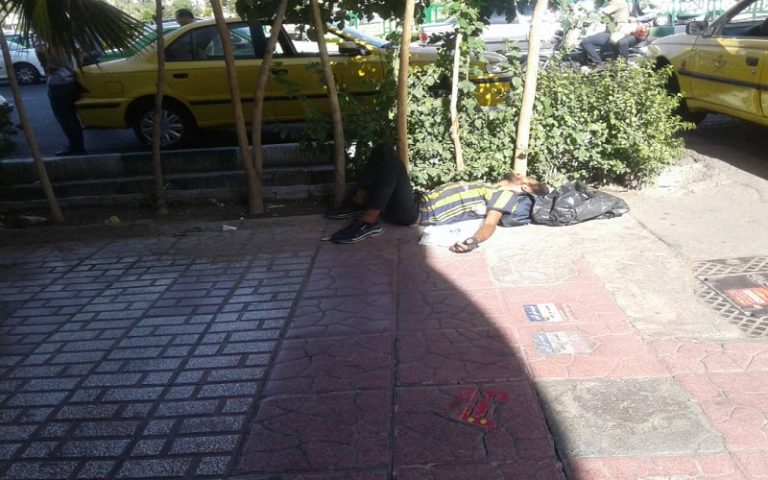
Recently it has been seen that some women in the country’s metropoles are searching for their daily income on the streets. These women are mostly resorting to scrounging garbage and are cardboard sleepers who are risking their health in such jobs to have the opportunity of one meal per day.

These women suffering from poverty believe that a job that is not prostitution is good because they are not dealing with their dignity and health, and unfortunately in a country like Iran where the last concern of the government is the people, this can be only by collecting garbage from the streets in runoffs and the city’s trash.

But the sad reality is these women when they are still young become victims of human traffickers and the prostitution mafia gangs controlled by the regime, and when they are in bad mental and physical situations, they turn to waste collecting.

There is no exact number of these people but, Sepideh Alizadeh, CEO of Noor Sepid Hedayat Harm Reduction Institute, said that “there is no specific number for the runoff waste collectors, but my field estimate shows that only in the Noor Sepid Hedayat Harm Reduction Institute, in the past year, 900 people have filed a case for the first time at our center. However, these individuals have also stepped into our center with their demands and have to get the necessary support.” (Rokna, October 6, 2021)

This revealed that the number of these women must be much higher, and no one, even the government, knows the real damage.

She about a collapsed society, adding: “We are so engaged that instead of professional and professional work, we are still stuck with the basic needs of the Maslow Pyramid. People may not know this, but many people do not become homeless because of addiction, but due to mental illness and lack of a good family. After 16 years of working in the field of addiction and social harm, it was amazing to me that today the dormitory is filled with other than addicted people.” (Rokna, October 6, 2021)

Finally, about the regime’s carelessness, which of course should not be interpreted as carelessness but as the regime’s intention to involve the people with poverty and social harms, about a solution, she added:

“We don’t have one answer and one specific way to answer this question, but we need to have solutions and options for the many different people affected to choose the right course of treatment. These people have not reached the end in one night to bring them back to normal life in one night. The harm reduction program has been dimmed in our country these days, and social harm activists are extremely afraid to continue their work.

“Activists in the field of social harm refuse to say that we need a consumption room so that drug users can use it, as the cultural and social context has not yet been updated and they are being attacked by the authorities and the public.” (Rokna, October 6, 2021)

Raisi’s Rise to Presidency Highlights Worsening Terror Threats

With Ebrahim Raisi’s appointment to the presidential role within the Iranian regime, it has only spelled negative consequences for the Iranian people who have suffered under the mullahs’ dictatorship for the past four decades. It has also threatened the international community with the spread of terrorism across the Middle East and Europe.

The National Council of Resistance of Iran (NCRI) said, “Raisi’s priority was to include in his government officials already involved in terrorist activities and repression against the people. This should be apparent from the examination of the backgrounds of just a few of his appointees.”

Mohammad Mokhber, Raisi’s first vice president, and the head of the Execution of Imam Khomeini’s Order (EIKO) institution was blacklisted by the United States in 2016 for financing projects to repress and seize the assets of regime dissidents.

The head of the regime’s nuclear program, Mohammad Eslami, was sanctioned by the United Nations for negotiating with Pakistani nuclear expert Abdul Qadir Khan, and for his support of the regime’s nuclear enrichment activities. He is currently in charge of the uranium enrichment program which is getting closer and closer to becoming weapons-grade purity.

Ahmad Vahidi, Raisi’s Minister of Interior, was responsible for the Quds Force, a branch of the Revolutionary Guards (IRGC), of which many members are affiliated with many international attacks over the years. Vahidi himself played a key role in the 1994 bombing of a Jewish center in Buenos Aires, Argentina, which killed 85 people.

The NCRI said, “The dangerous inadequacy of Western policies towards the Iranian regime is evident, with conciliatory interactions threatening to intensify nuclear activities falsely presented by Tehran as civilian necessities, while in reality they are suitable for the pursuit of nuclear weapons and spread of international terrorism.”

The level of the regime’s commitment to partaking in terrorist activities was apparent following the failed bomb plot in 2018, where there was an attempt to stage an attack at the Iranian Resistance conference in Villepinte, France. As many foreign political figures were present at the event, it highlighted how serious the potential threat was to Western countries.

The mastermind behind the bomb plot was Iranian diplomat, Assadollah Assadi, who along with three accomplices, tried to smuggle explosives out of Tehran and across Europe to France. The four men stood trial earlier this year and were collectively sentenced to over 70 years in prison.

Not only do the regime’s malign activities have consequences for the international community, but even more so, they spell great danger for the Iranian people domestically. This was demonstrated during the 1988 massacre where 30,000 political prisoners were executed for pledging allegiance with the Iranian Resistance movement. Raisi, at the time, was enlisted onto the ‘Death Commission’ in Tehran, a panel of judges who served the execution orders.

From the late 1980s, many dissidents living abroad have been murdered by the regime. According to reports from the Swiss Public Prosecutor’s Office of the Canton of Vaud, these murders took place across Europe between 1987 and 1993. One of the most notable was the assassination of Dr. Kazem Rajavi, a representative of the NCRI, in Geneva in 1990.

The NCRI said, “This escalation of internal and external violence in Iran, along with the acceleration of nuclear activities, should worry the international community and prompt it to action which challenges its current trend of conciliation towards the clerical regime that is today governed by a person responsible for the worst crimes from the foundation of the Khomeinist dictatorship.”

Iran: Prospects for ‘Difficult Economic Conditions’

In addition to the empty baskets of the Iranian people, now because of the destruction of the country’s production and economic infrastructure, the situation for business is not provided, they are not able to provide the minimum livelihood necessities.

What Iranian businesses are now facing is a lack of customers. The consumption of the Iranian people is decreasing rapidly, and the people are not able to provide even the minimum goods so that the consumption of important food items like meat, egg, dairy, and protein is witnessing a 50 percent decrease. This shows that the Iranian people becoming poorer in general, and their baskets have shrunk.

When an Iranian is forced to reduce half of his or her daily food because of poverty and the high prices, equally they will reduce the items from its purchasing list, and in practice, the production of the businesses and factories are witnessing a lack of customers.

While the people are forced to ignore the purchase of second-class goods because they are even not able to provide their important items, these items are accumulated by the producers, and they are dragged into recession.

The situation of the country and the people is now critical, so much so that one of the state dailies, the Arman newspaper, wrote that these circumstances “are becoming a social crisis.”

Looking helpless and being in despair, the state-run daily Farhikhtegan affiliated the supreme leader’s faction, about this situation wrote: “One by one, we examine different areas, that is, to go to the economy and write about the bad economic situation in the country, from a livelihood that is not good at all, from poverty and unemployment that is increasing, and the class gap that has become a deep valley.”

One of the main reasons for such a situation is the institutional corruption in the country. While the farmers are throwing away their products, the import mafia, is offering the same products on the market at high prices. According to the latest point inflation rate the situation is concerning about the foods.

The Statistics Center of Iran announced a 45.5 percent point inflation rate in September, in which food prices increased by 60 percent.

The state-run telegram channel Khabar Fori wrote: “Iran’s misery index of 20 provinces in the range of computational risk shows that 8 provinces of Iran are in the range of over 60 percent in terms of misery index. According to the latest estimate by the Statistical Center of Iran, the inflation rate reached 45.8 percent at the end of September and the unemployment rate has reached 9.6 percent, thus the country’s misery index reached 55.4 percent at the end of this summer. Only the misery index of Semnan and Qom provinces is lower than 50 percent, and Tehran, Mazandaran, Qazvin, Markazi, Hamedan, Alborz, Ardabil, Khorasan Razavi, and South provinces are at the bottom of the misery index table and around 50 percent figure, respectively.” (Khabar Fori, October 2, 2021)

Now, it is easy to imagine the situation of those who are the majority and who live under the poverty line.

Iranian Teachers Still in Crisis As the World Celebrates Teachers’ Day

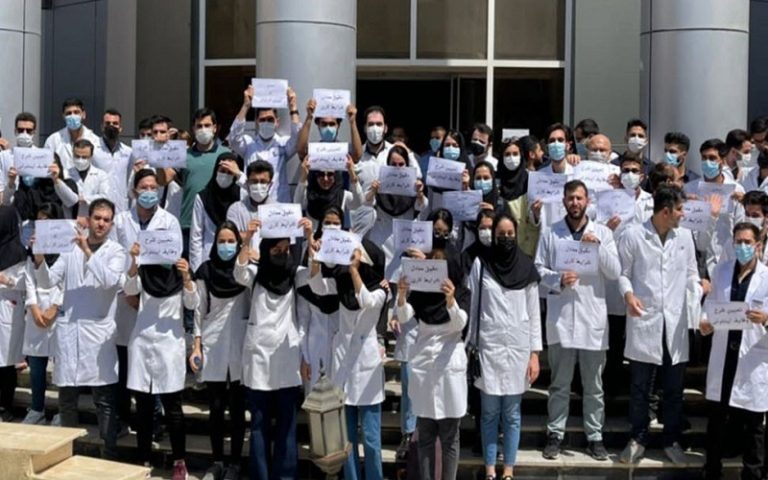
As the world celebrated Teachers’ Day on October 5, to honor teachers and their work in educating the young generations, Iranian teachers are still struggling with unemployment, lack of wages, and poor living conditions. At a time when the younger generation of Iranians need guidance and education, their teachers are left struggling to make ends meet due to the corrupt nature of the Iranian regime.

Protests have been ongoing for the past few years as the teachers fight against the regime for the support they need, including higher salaries and better living conditions, despite security and judicial crackdowns and severe repression of the demonstrations. Several prominent teachers’ rights activists have been given long prison sentences for taking part in peaceful protests to defend their colleagues’ rights.

Activists believe that, given the poverty line set by independent economists, Iran’s teachers are practically living below the poverty line. Public schools are run with people’s money, and the quality of education there is inadequate.

Due to the poverty faced by these teachers, three teachers, Hassan Chenarani, Gholamabbas Yahyapour, and Amin Kianpour have committed suicide in the past two months.

High School math teacher, Amin Kianpour, aged 43, set himself on fire on June 27 outside the Judiciary building in Isfahan as he protested a court ruling to evict him from his home. Due to the severity of the burns, he later lost his life.

Gholamabbas Yahyapour, also a math teacher, from Fars’s province, hanged himself on September 15 due to the poverty he was living under. He had requested a 50 million toman ($2,000) bank loan but could not afford to pay the deposit of 5 million tomans (less than $200) to receive it. Three days after Yahyapour’s death, the suicide of Hassan Chenarani, a teacher from Neishabour, was reported by the Iranian Teachers’ Trade Association.

As the start of the new school year neared, teachers in Iran resumed holding successive nationwide protests throughout September. The teachers’ protests have spread to 40 cities in 20 provinces across the country.

Despite the teachers in Iran protesting to fight for their legitimate rights and demands, the only response from the regime has been to give them false hope that the problems will be resolved, all the while repressing the peaceful demonstrations and arresting activists.

Numerous teacher trade unionists have been subjected to harassment, arbitrary arrests, and detentions, as well as unfair trials and lengthy prison sentences, all at the hands of Iranian authorities. Among the people currently imprisoned for exercising their rights to protest peacefully are Esmail Abdi, Mohammad Hossein Sepehri, Hashem Khastar, Nahid Fath’alian, Nosrat Beheshti, Yaghoub Yazdani, Mohammad Reza Ramezanzadeh, Hossein Hassankhani, Mehdi Fathi, Aziz Ghasemzadeh, and Zeinab Hamrang.

History teacher, Mehdi Fathi is a trade union activist from Fars’s province. Security forces violently arrested him on September 14 and detained him in prison, following years of harassment by the authorities for his involvement in union activities. Despite suffering from a heart condition, he has been denied access to medical treatment and has only been able to briefly contact his family once since his arrest.

In an article on International Teachers’ Day, The State-run daily Arman October 6, pointed to the deplorable conditions of Iran’s Teacher and wrote:

“Contrary to the support emphasized by the UNESCO, Iran’s teachers, this year and despite the coronavirus conditions, are still busy with the old pains of livelihood, dignity, lack of educational and professional justice, deprived of the impact of their professional views on policy-making, etc.

“In addition to the security perspective to their demands and protests of cultural scholars, these problems have increased the gap between a large segment of teachers and those involved.

“An example of this traumatic security view to the annoyance of the culturalists, is the detention of their activists in the past few weeks, including Aziz Qasemzadeh, Gholamreza Gholami in Shiraz, and Yaghoub Yazdani in North Khorasan. Arrests for completely guild protests against the failure to properly implement the ranking bill and their primitive demands.”

Iran’s Environment Cannot Bear Any More Mistakes

While Iran’s environment can no longer tolerate any mistake and mismanagement and is in an extremely critical situation and many experts say that if this trend continues many regions of the country will become uninhabitable, with a two-month delay the regime has appointed Ali Selajgeh, as the new head of the Environmental Protection Organization.

The question is, how much motivation, knowledge, and of course power does this organization have to protect the country’s environment under new management?

In recent years, Iran has been grappling with several environmental problems, from climate change and global warming to floods and fires in forests, like other places in the world.

But the difference is that contrary to other countries, the regime does not care about the situation in Iran, and in the four main components of the environment – water, ground, air, and biodiversity – the country is in a critical situation.

Iran has the highest soil erosion rate in the world, according to a 2018 UN report. One-twelfth of the total global soil erosion occurs in Iran.

However, not all of Iran’s environmental problems end with this case: drought, lack of water resources, land subsidence, air pollution, dust, habitat destruction, land-use change, forest, and grassland fires are just some of several environmental challenges that can change the fate of the inhabitants of Iran and lead to many political, social and economic tensions, something that we have witnessed in the past months and years many times, protests which occur mainly in high populated areas, from Isfahan to Ahvaz and elsewhere.

Ironically, the regime claims that the root of these problems and the following protests are the crises created by foreign enemies, while when the situation is becoming more critical many of the regime’s elements suggest the rule to put these senseless jokes away and find a solution for this danger.

Many state-run dailies know the reason for this delay because of the pressure from the regime’s different mafia factions from political to economic. Mafia factions and cartels were concerned that their benefits would be overshadowed by a new decision.

Currently, 304 cities of Iran are experiencing water stress, among them 101 are in a red situation and are struggling with their water supply.

More than 80% of the country’s wetlands lack water or are in severely critical condition, and wetlands in the south of the country, Bakhtegan Lake, Jazmurian, and Gavkhooni have been victims of indiscriminate dam construction and development.

But as mentioned above, the country’s environment doesn’t just suffer from water stress. Soil erosion and its consequences are also a major obstacle to the country’s development. Experts have also announced the country’s average rate of special erosion from 16 to 25 tons per hectare per year. However, the average global statistics are 6 tons, and it takes at least 700 years to form a centimeter of soil.

Land subsidence is another warning that experts have called a ‘quiet time bomb.’ According to the head of the National Surveying Organization, 29 of the country’s 31 provinces are at risk of land subsidence.

Forests and wetlands fires are also other important issues that we’ve seen more than ever in recent years, due to the regime’s carelessness.

According to the Parliamentary Research Center and according to the statistics of the last 20 years of the Forests Organization, 30,000 fires have occurred in the forests and rangelands of the country, destroying more than 280,000 hectares of forests and grasslands.

In other words, Iran has lost 14,000 hectares of forests and grasslands annually in wildfires alone. But in addition to water, soil, fire disasters, air pollution from particulate matter and ozone to sandstorms is also a serious and breathtaking crisis that directly affects people’s health.

Many experts believe that tackling air problems in Iran requires the environmental organization’s management ability to deal with the country’s non-standard and outdated factories, automakers, and petrochemical companies. This is something that has not happened in the last 42 years since the mullahs took power.

Khamenei and His Rule in Fear of Mounting Protests

The supreme leader of the Iranian regime, Ali Khamenei addressed security officials in a speech on Sunday, warning them about ‘the hard threat of the enemies’ and the ‘enemy within’, and stressed that all security forces, including the Revolutionary Guards (IRGC) and the State Security Forces (SSF), must be prepared to act as a shield against these threats.

The regime’s fear of enemies within is ever-growing, especially as widespread rallies continue to take place across Iran to protest the destructive policies of the regime. Recent protests have involved teachers, pensioners, and other workers, who have all raised their outrage at the recent social and economic crises.

In Tehran, teachers held a large rally in front of the Majlis (parliament). Similar protests were held in Isfahan, Shiraz, Ahvaz, Zanjan, Kerman, and other cities.

Iranian teachers began their protests as the new academic year began as many are struggling with unemployment and low wages, leaving much living below the poverty line. Despite the protests taking place for several months, government officials are still yet to satisfy the demands of protesters.

Other protests, featuring hordes of pensioners and retired government employees, took place in Tehran, Ahvaz, Isfahan, Rasht, Kermanshah, Khorram Abad, Mashhad, and Qazvin for the same reasons.

These kinds of protests movements are happening across Iran every day and involve all segments of society. And every day, the protests are growing and number, which is causing much concern for regime leaders and officials.

As previous protests, notably the 2019 uprising, have brought the regime to the brink of collapsing, it is no wonder that Khamenei is worried about the threat of future protests bringing down the regime entirely. Other regime officials also share his concerns, including a commander of the IRGC forces based in Qazvin. He said, “The conflict has been transferred from beyond our borders to within our home.”

This is fear is even expressed by the regime’s main official. Ahmad Khatami one of the regime’s clerics in his latest speech showed the regime’s frustration as he said: “The capital of this system and revolution is the people, the enemies are attacking this revolution. They try to show the country messy. They are showing Iran somehow in the foreign cyberspace, that who is listening to it thinks that tomorrow the system will collapse.”

Then about the people’s boycott of the recent presidential election which makes clear why the regime is forced to interfere in other countries, he said as an excuse for the regime’s failure: “That 48% of the people who came, I don’t compare it with 98%, but with those conditions, it was an epic. There was the coronavirus, and the people were right to fear the coronavirus.”

The regime is notorious for exporting terrorism across the Middle East as a way of maintaining order in Iran, but as the crises continue at home due to the regime’s corruption, the mullahs are slowly losing their grip on power. They are making it worse for themselves when the simple solution is to address the problems faced by the Iranian people, instead of trying to repress them.

But Khamenei, who has been the regime’s unchallenged and undisputed leader since 1989, knows full well that corruption and violence are the foundations on which his regime has been built.

Khamenei understands that if he diverts away from these foundations, that will spell the end of the regime, so his only solution has been to continue to suppress the citizens of Iran with force. The appointment of Ebrahim Raisi as the new regime president has only further established Khamenei’s plan to consolidate power to protect what is left of the fragile regime. Raisi is well known for his role in the 1988 massacre which saw the mass murders of 30,000 political prisoners.

Today, the people of Iran have nothing to lose and thus nothing to fear. They are returning to the streets every day despite the heavy presence of security forces, despite the regime’s constant threats to arrest and harass protesters, and despite the unbridled spread of the coronavirus, exacerbated by the regime’s criminal policies.

Iran, a Country Without Hope for the Future

0

In a new report, the Iranian Chamber of Commerce Research Center has examined the state of Iran’s economy over the past 10 years and answered the question of why, despite the government’s claims that all the measures have been taken, the Iranian economy has not recovered.

Mohamad Ghasemi, the head of this research center, answering this question said: (ISNA, September 9, 2021)

  1. “First, Iran’s domestic and foreign policy does not serve to solve economic issues. If we say that economics is a priority, all political power, both at home and internationally, should serve the economy, but it is not. So, unfortunately, we have to say in our speeches that the economy is only the first issue of the country.”

This is a clear admission about the regime’s other priorities which are its regional meddling and missile production and a nuclear project, each of which is devouring the country’s resources. Therefore, there will be nothing left for the people and the country’s economy.

  1. “Unfortunately, there is no scientific perspective for managing economic issues in the country. If you ask members of the Expediency Discernment Council, Parliament, or the government how economic problems will be solved, they have scattered and traditional views on these issues.

Unfortunately, the setup of an ostrich farm or home appliance manufacturing plant or at best a petrochemical company, etc., is the symbolism of the economy. This is while economics is a system that systematically encompasses the monetary, financial, and international trade sectors. If we accept that the goal in the economy is to grow productivity, then all of this should serve productivity and innovation.”

This is a clear admission about the unprofessional and inefficient officials who have no expertise in the field of the economy.

  1. About the third reason for the current situation, he counted the dispersion of economic policy-making power in the country and said: “In our country, it is unclear who is responsible for the fiscal, monetary or foreign exchange policymaking. All of this is scattered in a variety of high councils and institutions.”

This is a clear admission about the widespread corruption in the country. An economy led by a mafia system in which no one accepts responsibility for the different branches of the country and the capital circulates between them without any supervision and control.

  1. He considered the fourth reason with a look at oil revenues and added: “The answer to this question should be clear: what are we going to do with the oil revenues if the sanctions are lifted? Now, during the sanctions, what we do with oil revenues is to supply basic goods and, to some extent, supply raw materials for production.

“This threatens us. Because it’s unclear how long this is going on, and while the other world is moving towards alternative energy, we may find out at some point that some of our underground resources are no longer functioning economically.”

Finally, this is a clear admission about the country’s economic backwardness which is mostly dependent on its oil resources without a significant development in the fields of science and technology, leaving the country and the nation futureless and unable to compete with other nations, while in most other countries progress continues to be made. Instead, for more than 42 years, the regime has wasted all the resources and manpower for its useless existence.