Home Blog Page 264

Meaning of Iran’s Drone Sanctions in the Context of Its Nuclear Crisis

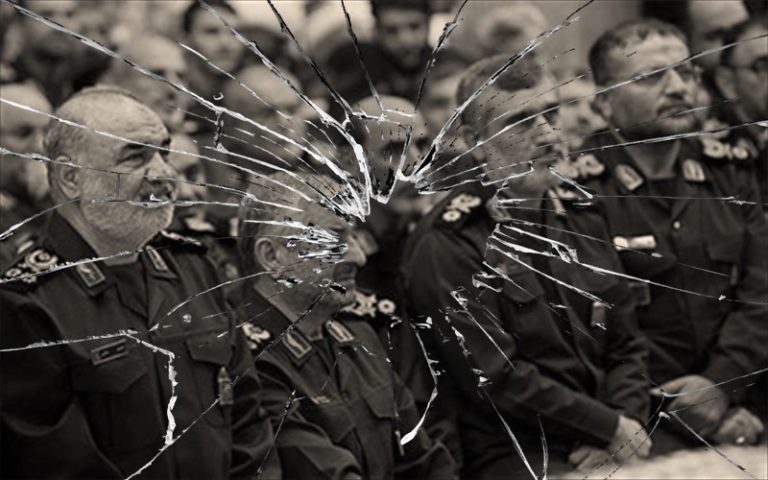
The U.S. Treasury slapped new sanctions on Iran’s Revolutionary’s (IRGC) as well as the IRGC Quds Force drone network and its responsible commanders. Four IRGC commanders including Yousef Aboutalebi, Saeed Aghajani, commander of the IRGC Aerospace Force UAV Command, Abdollah Mehrabi, and Mohammad Mohammad Ebrahim Zargar Tehrani were added to the sanctions list.

In addition to these individuals two companies relating to the regime’s destructive drone activities were also sanctioned:

KIMIA PART SIVAN COMPANY LLC is linked to the IRGC’s Quds Force and the OJE PARVAZ MADO NAFAR COMPANY is linked to the IRGC.

The US Treasury said in the sanctions statement:

“Today, the US Department of the Treasury’s Office of Foreign Assets Control (OFAC) designated members of a network of companies and individuals that have provided critical support to the Unmanned Aerial Vehicle (UAV) programs of Iran’s Islamic Revolutionary Guard Corps (IRGC) and its expeditionary unit, the IRGC Qods Force (IRGC-QF).

“The IRGC-QF has used and proliferated lethal UAVs for use by Iran-supported groups, including Hizballah, HAMAS, Kata’ib Hizballah, and the Houthis, and to Ethiopia, where the escalating crisis threatens to destabilize the broader region. Lethal UAVs have been used in attacks on international shipping and on U.S. forces.”

The US Treasury emphasized that “Treasury will continue to hold Iran accountable for its irresponsible and violent acts.”

The IRGC was placed on the sanctions list in part and in full in 2007 and 2017 according to several different executive orders, the last of which was on October 13, 2017, when the entirety of the IRGC was placed on the US sanctions list.

One of the regime’s central weapons for exporting terrorism and warmongering are drones, so over the past decade, the regime has invested heavily in drone production and has allocated a large budget despite a severe economic crisis.

Its foreign wing, the terrorist Quds Force group, is using the regime’s different drones to attack other countries in the region and destabilize them. The regime by this way is compensating its aerospace weakness with these drones, because since the start of its reign the regime was not able to create a war-effective air force, mostly because of its global sanctions.

The regime’s drone network consists of three parts:

  • The UAV production sector, which is run by the regime’s Ministry of Defense
  • The maintenance, use, and command of the UAV, which is carried out by the IRGC Air Force
  • The use of drones, which is transferred by the Quds terrorist force to the regime’s proxy groups throughout the region.

To produce drones, the regime smuggles part of its main components, such as engines and electronic components, from outside sources and produces other parts domestically.

According to the information obtained, a total of eight industries are involved in the construction of drones in Iran.

Some of these industries are subsidiaries of the regime’s Ministry of Defense’s Air Industries Organization. Another part of these factories relates to the IRGC Air Force and other armed forces of the regime which are apparently non-governmental.

Each of these is responsible for building different parts of the drones and eventually mounting them together. These sanctions are important while the United States and European countries seek a new nuclear deal with the regime, particularly the sanctions those affiliated with the IRGC, which are the regime’s main pillars of repression and warmongering. This indicates that these countries will not obey the regime’s blackmailing.

That is because the regime is trying to take more concessions from the international community and is seeking that the sanctions will be lifted.

As we witnessed that the regime’s foreign ministry spokesman, Saeed Khatibzadeh, angry about the new U.S. Treasury sanctions on its drone program said:

“The imposition of new sanctions reflects the White House’s completely contradictory behavior. The U.S. government says it intends to return to the JCPOA but continues the same approach as the previous administration in imposing sanctions. America is not really trustworthy by sending this message. The U.S. imposes new sanctions on Iran, including four individuals and entities.”

Iran: Khamenei Is Stuck in Solving the JCPOA Challenge

By wasting time, the Iranian government is trying to defy the conditions expected by the Western powers, especially the US government, in Tehran’s nuclear negotiations with world powers. Analysts believe this is in the hope of forcing them to give the regime more concessions and step back from their demands that the regime halts its missile and regional projects.

That’s unacceptable for Western powers. In an interview with Al-Arabiya TV on October 2, 2021, the French Foreign Minister emphasized that the path to negotiations will not remain permanently open and that regional and missile issues should be negotiated.

In return wasting time, western officials have repeatedly warned them. European Union foreign policy chief Josep Borrell said Iran should know that time is not in its best interests and that it is better to return to the negotiating table soon.

French President Emmanuel Macron, in a phone call with China’s president, also called for the regime’s adherence to the terms of the 2015 nuclear deal, known as the JCPOA, and warned the regime against violating the JCPOA.

The state-run news agency Student News Network (SNN) quoted French President Emmanuel Macron and wrote: “Iran must end activities that contradict JCPOA provisions.” (SNN, October 27, 2021)

According to the Evening Standard, Liz Truss, the British Foreign Minister, also warned: “Iran has no credible civilian justification for its nuclear escalation. As I made clear to my Iranian counterpart, Iran needs to urgently return to the negotiating table.

“If Iran does not engage meaningfully in negotiations, we will reconsider our approach. All options are on the table.” (Evening Standard, October 27, 2021)

The US Special Representative for Iran, Robert Malley, has shared America’s “growing concern” about Iran’s alleged nuclear advancement, as he declared that talks over reviving the 2015 Iran Nuclear Deal are in a critical phase.

He said that there is a “growing concern over the pace and direction of Iran’s nuclear progress.” (RT, 25 October 2021)

The Director-General of the International Atomic Agency (IAEA) recently warned the regime to abandon its disposal policy and not disrupt the agency’s oversight of inspections of nuclear facilities.

Although the regime apparently wants to pressure the negotiating countries to achieve its goal in possible future negotiations, the reality is that the regime’s supreme leaders Ali Khamenei can’t determine the JCPOA’s situation and is confused about it.

On the one hand, he is under pressure from Western countries and their constant threats, and on the other hand, even within his faction, there is no unified policy, and there are conflicting statements about the JCPOA and its discussions.

Elements within the principlist faction consider the JCPOA dead, as Khamenei’s mouthpiece in the Kayhan newspaper Shariatmadari called it a ‘deadly poison’ and a ‘stinking body.’

The regime’s president Ebrahim Raisi, however, speaks of negotiations, as he said in a recent interview with the state-TV Channel 1, “Iran has never left the negotiating table, and we are certainly serious about outcome-oriented negotiations.” (State-TV Channel 1, October 18, 2021)

Iranian officials, including Khamenei, know well that giving in to the ‘real negotiations’ desired by Western countries means that they must submit to their demands and negotiate regional and missile policy and surrender, and it is impossible to revive the 2015 JCPOA.

Iran’s state media and experts have acknowledged the fact that the regime’s so-called tactics of delay and not giving in to the ‘real negotiations’ desired by Western countries are shabby methods that cannot have any achievement for the regime.

The state-run daily Etemad wrote: “The lifting of all nuclear and non-nuclear sanctions was also discussed in the previous administration’s negotiations, and ultimately this demand did not work out. It should be noted that when the U.S. uses sanctions as a pressure tool, it is very unlikely that the U.S. will abandon it entirely. We can make this demand, but in practice, all predictions say this will not be fulfilled.” (State-run daily Etemad, October 28, 2021)

The state-run daily Arman took a step further and called the regime’s behavior dangerous and said:

“From the tone of all the permanent members of the Security Council, they are bored, and everyone is willing to see Iran enter these serious negotiations decisively, transparently, and accurately, and the outcome should that what the JCPOA members are waiting for. Because the impasse is a major threat that is turning over Iran’s head and can go as far as military intervention.” (State-run daily Arman, October 28, 2021)

This is something that is lurking behind the regime’s doors: “Mr. Sullivan explained that this administration believes diplomacy is the best path to achieve that goal, while also noting that the president has made clear that if diplomacy fails, the United States is prepared to turn to other options.”(Algemeiner, October 5, 2021)

Corrupt Family Appointments in Iran’s Government

0

The Iranian new government which is composed of Revolutionary Guards (IRGC) commanders, after the direct order of the regime’s supreme leader Ali Khamenei to build a young Hezbollahi government, like its predecessors is working in the direction of the regime’s plundering policies.

Ebrahim Raisi has selected many of the regime’s new officials from people who have no experience in political and executive administration. Therefore, there is no doubt left that these appointments are due to the regime’s critical situation and its fear of the people.

At least 13 governors have been selected from the IRGC. Also, many of the government’s officials are selected from the IRGC and other regime’s repressive organizations and are members of the regime’s principlist faction.

These authorities include:

  • Brigadier General Ahmad Vahidi (Interior Minister) former head of the Quds Force and former Minister of Defense.
  • Hossein Amir Abdollahian (Foreign Minister) Qasem Soleimani’s assistant in the IRGC-QF force.
  • Brigadier General Rostam Qasemi (Minister of Housing and Urban Development) former head of the Construction Headquarters known as Khatam al-Anbia of the Revolutionary Guards.
  • Cleric Ismail Khatib (Minister of Intelligence) is a key member of the infamous Ministry of Intelligence.
  • Brigadier General Mohammad Reza Gharai Ashtiani (Minister of Defense) was a commander of the regime’s army.
  • Brigadier General Saeed Mohammad (Raisi’s advisor on free trade, industrial and special economic zones’ former head of the IRGC’s Khatam al-Anbia headquarters.
  • Alireza Zakani (Mayor of Tehran) is a key member of the Ministry of Intelligence and Basij.

About the other appointments, the state-run daily Mardom Salari in an article entitled ‘the period of son-in-law appointments’, named the names of some of the regime officials son-in-law of the principlist faction who has gained a position in the government and wrote:

“Farshad Mehdipour is deputy press secretary for the Minister of Culture and Islamic Guidance, son-in-law of Hassan Khojasteh (Khamenei’s brother-in-law).

“Javad Mohammadi is the secretary of the Supreme Council for the Recruitment of The Supreme Council of the Cultural Revolution, son-in-law of Mohammadi Araghi a member of this council.

Mohammad Aghasi is the Secretary of the Culture Headquarters of the Supreme Council of the Cultural Revolution, son-in-law of Major General Rahim Safavi.

“Vahid Khavehi is the new CEO of the Alavi Foundation, the son-in-law of Ahmadi Moqaddam, former commander of the police force.

“Malik Rahmati is the deputy head of Astan Quds Foundation, Hashemi’s son-in-law, who is the economic deputy of the Executive Headquarters of Imam’s Order (EIKO).

“Ahmadi son-in-law Mohsen Rezaei was also supposed to be managing director of the Saderat Bank, who had a bad fortune.” (State-run daily Mardom Salari, October 27, 2021)

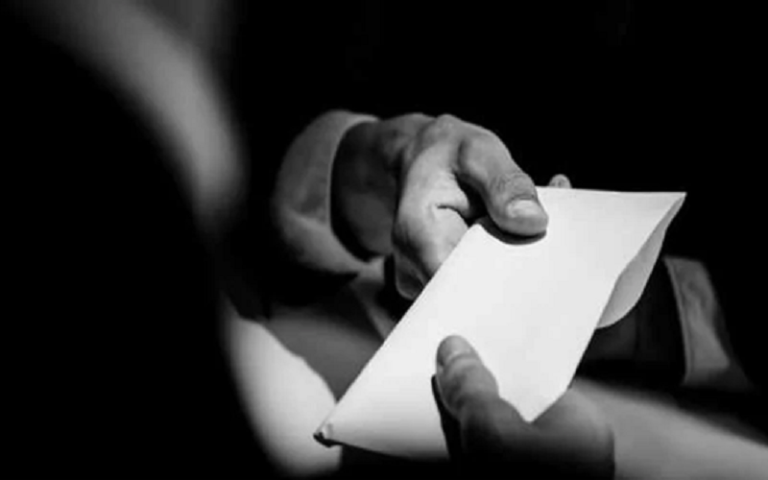
Alireza Zakani, who played in the past years the role of a clean politician and attacked many in the government for such appointments and corrupt clans, has appointed his son-in-law in a very beneficial position in Tehran’s Municipality.

“Before going to the municipality, Zakani had announced that the era of ‘Nepotism’ and ‘cronyism’ in Tehran municipality was over, but it was not long before his first ‘Nepotism ’ became the quotes of media circles.” (State-run daily Hamdeli, October 27, 2021)

The state-run media outlet Aftab named this corrupt clan a ‘huge problem’ and wrote:

“In addition to the criticisms and objections to the appointment of Zakani’s son-in-law in Tehran Municipality, in a beneficial post, please keep in mind that this issue is not limited to Tehran municipality firstly, the problem is deeply rooted and has nothing to do with this institution and that institution or this and that current.

“Wherever there is wealth and power accumulated, this special looting and rent-seeking exist, and every current that gains power is first thinking about appointing those close to him.” (State-run daily Aftab-e-Yazd, October 27, 2021)

Finally, the state-run website Asr-e-Iran wrote the issue about the regime’s corruption, that there is no difference between the two factions, and all of them are rent-seekers and corrupt people, and exposing each other is just to gain more power and wealth.

“Dear politicians from both currents know that we are accustomed to your family appointments and that whenever the election is raised, you are speaking about competently and say that when we come to work, we lock the family door so that it doesn’t come out of the house, let alone give them a post! But once you’ve crossed the bridge, you are doing your job and make family appointments thriving.” (State-run website Asr-e-Iran, October 26, 2021)

Iran’s Government Warned of Possible Uprisings Akin to Those in Recent Years

With the worsening crises in Iran, in recent days the state-run media have been discussing the regime’s fears of another uprising as society’s restiveness intensifies. Iranian people are suffering under dire conditions due to the Covid-19 pandemic as well as the country’s mounting social and economic crises and are making their frustrations known to the Iranian regime.

Even though the Covid-19 death toll in Iran is getting worse by the day, the regime has made the decision to push ahead and reopen schools, just as many health experts warn of a sixth wave of the virus on the horizon.

The head of the Virology Research Center at the Beheshti University spoke to the Mardom Salari Daily and warned that while many adults are being vaccinated, the reopening of schools and universities now could lead to a large spread of the virus to under 18s.

Over 464 700 people have lost their lives due to the Covid-19 pandemic in Iran, according to reports compiled by the People’s Mojahedin Organization of Iran (PMOI/MEK) as of Tuesday afternoon local time.

The Setare Sobh daily wrote in their October 25 publication that experts have suggested that it would have been more efficient if restrictions were lifted step by step. They also said that the rate of vaccinations in Iran falls far below the desired level of 80% of the population.

As for the dire state of Iran’s economy, many of the issues have stemmed from the regime’s institutionalized corruption. As the crisis worsens, instead of finding solutions to overcome the issues, the regime’s factions are just blaming each other.

Since assuming office in August 2021, the regime’s new president Ebrahim Raisi has continued the path of his predecessor Rouhani in giving hollow economic promises. His hollow promises and futile provincial visits. Raisi also tries to blame Rouhani for all problems.

The Arman daily wrote on October 23 that even after three months since the implementation of the new administration, there have yet to be any written or practical solutions from the government to fix the problems faced by the Iranian people.

The same day, Aftab-e Yazd stated that the inflation rate in Iran has recently reached its highest point. They wrote, “This is an important reason why economists have no hope for the future of the country’s economy, and with the current trend of policies concerning the economy and foreign policy, we will definitely face triple-digit inflation by next year.”

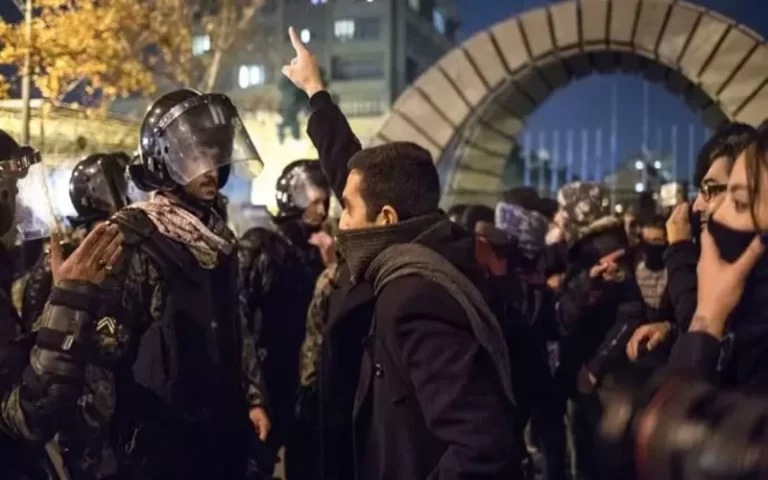
Sharq daily has warned regime officials that they should expect major protests on the level of the January 2018 and November 2019 uprisings as more and more Iranians are being pushed under the poverty line. The discrepancy between the levels of inflation and the low incomes, along with the chronic lack of job opportunities, means that many people are unable to provide adequate food and medical treatment for their families.

Discussing fuel prices, Arman daily acknowledged that all or a significant part of the price increase is due to mismanagement. Since people see that after three decades, they must pay the costs for the officials’ recklessness, they can no longer tolerate the situation.

The Arman daily warned on October 25 that in the current climate of the crises in Iran, “When the conditions are ripe for chaos, any minor incident could cause the greatest crises ever… every incident, however small, may ignite a fire that cannot be extinguished,”

Iran’s Government Fears Further Protests Following Gas Station Disruptions

Reports from state media indicated that on Tuesday, the sales of gasoline were disrupted at gas stations across Iran due to a massive cyberattack causing long queues and frustrated citizens. This incident comes just weeks before the anniversary of the major uprising that took place in November 2019.

In Isfahan, a digital traffic billboard read ‘Khamenei, where is our gasoline?’, displaying the increasing public dissatisfaction which has got the Iranian regime officials fearing another uprising is on the horizon.

While there have been many speculations recently that Tehran is going to increase the fuel price, the regime’s Interior Minister, Ahmad Vahidi, rushed to the scene and vehemently denied any attempt to raise the fuel price.

Energy experts in Iran have suggested that the increase of fuel prices was ‘inevitable’ to increase the production capacity of gasoline in the country. On the other hand, they have also previously warned the regime about the likely social consequences of the increased fuel prices.

Speaking to the IMNA news agency on October 26, Energy expert for the regime, Hassan Moradi said, “We have no choice but to relatively increase fuel price to increase the production capacity of gasoline. But to calculate the amount of this price increase, we must thoroughly examine the situation of the society.”

He explained that as the per capita consumption of gasoline in Iran is much higher than in other countries, there was no other choice than to increase the prices for the regime to ‘compensate part of the budget deficit’.

It is worth noting that in recent months, the Iranian regime has shipped tons of fuel to Lebanon to decrease pressure on its terrorist proxy group, Hezbollah, amid Lebanon’s financial and fuel crisis and people’s protests Hezbollah’s devastating role in their country.

The last time a sudden increase in fuel prices took place in November 2019, large protests erupted and spread across the country within hours, with protesters calling for regime change and attacking the regime’s acts of repression and corruption. The situation was eventually suppressed by the regime but at the cost of the lives of over 1,500 protesters, who were brutally shot down on the streets. Thousands more of the protesters were arrested or severely injured at the hands of the regime’s security forces.

The extent of the uprising shook the regime to its core and threatened to topple them. The threat of an event on this scale taking place again is what terrified regime officials during the recent disruptions at gas stations across the country and prompted them to react rapidly.

Farhikhtegan newspaper belonging to Velayati, Khamenei’s advisor, wrote: “On Tuesday, the multi-hour closure of the country’s gas stations was an accident that could cause public discontent and protests on the eve of the anniversary of November 2019.

“At the same time, some dissident media try to instill this line of thought to the people that the government is incapable of supplying fuel and intends to make energy carriers expensive in order to bring people to the streets by creating public discontent.” (Farhikhtegan Newspaper, October 27, 2021)

The Arman daily warned the regime that, “All or a significant part of the price increase is due to mismanagement. Since people can see that after three decades, they must pay the costs of the officials’ recklessness, and since inequalities have increased, they can no longer tolerate the situation. Thus, it is not a good time to increase the fuel price.”

Iran: Justice Under the Mullahs’ Rule

The Iranian judiciary in Qom has sentenced a poor father of three children to 10 months of prison and 40 lashes for stealing three packs of cashew nuts.

The state-run news agency Fars wrote: “Following the publication of a judge’s sentence for the burglar of three packs of cashew nuts – a heavy sentence of 10 months’ imprisonment and 40 lashes – Fars’ reporter followed up the story from the relevant authorities and determined that the news was true and was not fake news.” (Fars, October 25, 2021)

This cruel sentence faced public anger and was widely reflected in social media. Many people have compared the tragic story of this poor man to the story of the poor man in Victor Hugo’s famous novel ‘Les Misérables.’

In that story, the poor man, Jean Valjean, had broken the door of a bakery and picked up some bread to feed his sister and her children, and the government arrested him for robbery and sentenced him to s lengthy prison term.

Now, in a situation where the Iranian officials and their associates loot billions of dollars from the people and the country’s wealth, Iran’s judiciary is sentencing a poor father in such a way that even the state media were not able to defend such a decision.

This is just an example of much of the dark poverty that the regime has imposed on the people. Even according to the regime’s unreliable statistics, “40 million people need urgent support.” (State-run website Bahar News, October 25, 2021)

According to one of these statistics, about eight people in Iran fall below the absolute poverty line every minute, which is what the Asr-e-Iran state-run website quoted the Ministry of Welfare as saying, “If the name of this is not a ‘catastrophe‘ and the authorities’ silence on it is not a ‘shame’, then what is it?”

This outlet described people who have gone below the absolute poverty line as those whose “incomes only suffice for the extremely low minimum” and said that “more than a third of Iranians, (live) not in poverty, but in absolute poverty. According to the shocking report published recently, the number of people below the absolute poverty line up to a year ago was 26 million, and in the last year, another 4 million have fallen below the absolute poverty line so that the number has reached 30 million.” (State-run website Asr-e-Iran, October 24, 2021)

Regarding the catastrophic situation of people’s lives and the spread of poverty among them, Sharq newspaper, on October 25, 2021, wrote, “Whenever it is not possible to provide the facilities for an honorable and growing life, and employment becomes a commodity that is hard to achieve, the provision of proper food and treatment becomes vulnerable to the aspirations of vulnerable households.”

One of the main problems is that most of the country’s economy is in the hands of the government, the Revolutionary Guards (IRGC), and the supreme leader’s office, which has left nothing for the people.

The regime’s parliament speaker Mohammad Bagher Ghalibaf in this regard said: “With an 80% state-run economy and all these problems, we haven’t been able to perform well in explaining[these problems].” (State-run news agency Fars, October 25, 2021)

Earlier in 2014, Mohsen Safai Farahani, economy deputy minister in the government of Mohammad Khatami, said, “In the country today, about 120 institutions, various organizations, and foundations have a very broad economic activity while there is absolutely no proper control over their performance. Currently, nearly 50 percent of Iran’s GDP is at the disposal of these institutions.” (State-run Khabar Online, June 9, 2014)

The grip of these governmental institutions on the wealth of the poor and hungry people of Iran is while the smallest demands of the people are responded to with brutal repression by the regime.

Iranians Don’t Buy Officials’ Publicity Stunts

0

Studying Iran’s rising social situation since the 2009 uprising draws our attention to important achievements.

During this period, several nationwide uprisings have occurred: December 2009, December-January 2017-2018, November 2019, in addition to these important uprisings, other important protests have occurred whose importance is not less than these three nationwide uprisings, such as the Saravan uprising and the Khuzestan uprising.

In a general view of the curve of this series of uprisings, Iran watchers have come to a few conclusions:

In this series of nationwide uprisings and other small protests executed by different strata, the goals of these movements were livelihood issues or due to the outcome of the elections, but all of them changed their paths from such demands to calls for the mullahs’ overthrow and regime change.

Precisely said, the people have targeted the regime’s head, the supreme leader, and his repressive force, the Revolutionary Guards, and the regime’s infamous Ministry of Intelligence (MOIS).

The shared characteristic of all of them was their fast expansion from limited places and classes to the entire nation all over the country. Contrary to what the regime has tried to show these protests are ethnic. This shows that Iran’s people are deeply political, and their struggle is political and not just over economic and livelihood demands.

The government has answered all the protests with force, torture and executions, and the blockage of the Internet and other public information utilities.

The other thing that has changed over time is that the protests have become more organized and as we have witnessed in the November 2019 protests, despite its expansion none of the people’s private properties and other centers like supermarkets were attacked or destroyed and the only places which were attacked were the regime’s bases, stations, and organization buildings. This is something that the regime fears most because it is showing that the people are seeking the regime’s fall, despite being hungry and poor.

One of the achievements of these protests is the forcing of the regime to remove its deceptive mask of tolerating a reformist opposition in selecting one of the most notorious persons in Iran, Ebrahim Raisi, notorious as the ‘butcher of Tehran,’ as the regime’s president.

This is a crystal-clear sign that the regime is on the path of its fall, having no other choice than to prepare for the final confrontation with the people.

The state-run daily Shargh collected all the regime’s factions under the ‘believers of the Islamic Republic’ and confessed that none of them has the power to make any changes and wrote about them:

“The proximity of domestic criticizers to the country’s political and economic issues and awareness of people’s demands have given them the belief that by compensating their past mistakes, they can be again the voice of the people.”

This paper has an interesting opinion about the leading faction which are the principlists tied with the supreme leader:

“In the vacuum between these movements, the principlists, who, with their free wings and self-confidence derived from state and parliamentary power, think they can stabilize the situation and are consolidating their positions by eliminating rivals and opponents and by kicking them out, and with political and social restrictions and relying on the fact that in the absence of hegemony they can persuade the people with authority. More than wanting to be the voice of the people, they are trying to create ways to control the people.”

In the 2021 presidential elections, the people demonstrated to the regime that they had passed all the government’s struggles regarding the consolidation of the status quo and were in the spectrum of the supporters of the regime change. This path will become more evident over time.

Iranian Women Are the Most Affected by Extreme Poverty

Following a gathering of more than 100,000 in Paris on October 17, 1987, to remember the victims of violence, extreme poverty, and hunger, in 1992 the day was officially recognized as the ‘International Day for the Eradication of Poverty’ by the United Nations.

Around the world, this day is used to ensure that countries are doing all they can to help their citizens who are in need, all the while Iran continues to suffer greatly from rising inflation and extreme levels of poverty, with Iranian women facing the worst of the crises.

Even though the information and statistics that have been collected, do not tell the whole story, but since it is entirely extracted from the comments of government officials, experts, and the regime’s own media, it can show the immense human tragedy being unfolded in Iran.

Barely a few months after the formation of President Ebrahim Raisi’s administration, the levels of inflation in Iran have continued to skyrocket. The prices of items for people’s daily needs have seen a 10 to 50 percent increase while the general cost of living in Iran has gone up 32%.

Many Iranians are living in extreme poverty and are in dire need of necessities, such as food, shelter, clothing, and medical care. Along with the economic crisis, the Covid-19 pandemic and other social issues have severely diminished the quality of life for many people, and the situation is getting worse day by day.

The pandemic has led to many people losing their jobs and much-needed incomes. Businesses have been pushed to the brink of bankruptcy while trying to stay afloat. Added to the rising inflation and skyrocketing prices, many families are struggling to cope, and have resorted to extreme measures to bring in much-needed cash.

The rising poverty line and rampant inflation in Iran are among the main causes of the phenomenon known as child marriages.

Due to the levels of poverty faced by Iranian families, many parents have seen no other option to marry their daughters at young ages in order to earn what little money they can from the dowry.

Discussing the rise of the poverty line in Iran, Mohammad Reza Mahboubfar said, “If the poverty line of a family of four in the country at the beginning of this year was estimated to be 12 million Tomans per month, today this line has reached 14 million Tomans per month.”

According to a report from the Ministry of Labor and Social Welfare, the number of people who were living below the poverty line last year reached 36 million. This number has since doubled according to Roozbeh Kordoni, the head of the Higher Institute for Social Security Research.

The continuation of the mullahs’ rule will lead to a more bleak and dire situation for women in Iran. To survive, women will be compelled to gather the garbage, work as human mules, sell their organs, prostitute themselves and sell their infants amongst all kinds of other calamities.

One in Three Iranians Live Below the Poverty Line

How much did the minimum intake cover the poverty line in Iran in the 2000s? How much were the Iranian people to spend on a certain basket of goods and services in the last decade with their salaries?

These are questions that are raised especially in the wake of the worsening economic situation of the country and the people.

According to statistics of the 2000s with an average economic growth which was nearly close to zero, in which the rate of fixed capital formation also decreased by half, welfare declined significantly, and the Gini coefficient, which was supposed to reach 0.34 at the end of the sixth development plan of the Iranian government in this year, it remained above 0.4 and did not appear to be declining in the current circumstances.

Iranian government experts believe that what has happened to Iran’s economy in the past decade, even in its best years when there were no sanctions or the coronavirus, could not reduce the poverty and increase prosperity.

The situation is becoming more troubling when, according to the Ministry of Labor and Cooperatives’ Poverty Monitoring Report, 26.5 million of the country’s population live in absolute poverty, which is almost impossible to escape. Except with cash and non-cash donations and, of course, raising purchasing power for the minimum wage.

But to what extent does being employed and receiving wages by individuals can pull them out of the poor with low financial resources?

According to a Ministry of Labor report in which the poverty line per capita in 2020 was declared 1.254,000 Tomans, the poverty line for families of four was estimated at 3,385,000 Tomans last year.

However, at least one married person with two children with no work experience received about 3 million Tomans. Therefore, the gap between the poverty line and the minimum intake for a family of four was 385,000 Tomans.

These figures also seem a little strange when inflation was reported at 36.4 percent annually. According to the Ministry of Labor and Cooperatives, the country’s per capita poverty rate reached 1.245,000 Tomans in 2019 but living with this amount of money remains a joke in metropolises.

Some 1,254,000 Tomans is a figure announced as the poverty line of 2020 by the Ministry of Labor and Cooperatives, which is a little strange because buying a certain basket of edible goods for a month without paying for other goods such as clothing, transportation, healthcare, etc. costs more than 800,000 Tomans for families of four.

In another part of the report, the Ministry of Labor and Cooperatives also dealt with what poor people faced in 2020, according to which 100 percent of the jobs lost in 2020 (due to the coronavirus) were informal jobs in which people from low-income deciles were working, and since the share of wages and salaries was about 75 percent of the income sources basket of people in the lower deciles, it can be concluded that with the unemployment of people in 2019, practically 75 percent of the income source of the low-income deciles has been lost. In 2019, the poverty rate reached 32 percent, indicating that 26.5 million people were in absolute poverty.

Given that the poverty line in 2020 increased by 38 percent to 1,254,000 Tomans, it is expected that due to the widespread of the coronavirus in the country and the exit of about two million people from the labor market, the number of people living in absolute poverty will reach about 30 million.

If an average of 3.24 is considered for each household (the same figure stated in the Labor Ministry report), it is estimated that about 10 million households live below the poverty line.

It is customary to publish poverty line data from official centers in any country. Of course, sometimes like in 2011, the Iranian government did never publish accurate statistics about any subjects. But about the published statistics about poverty in Iran, it does not seem to be consistent with the realities of the market, because the cost of living in the country, especially in the metropoles, with a monthly salary of 1,245,000 tomans is almost a joke.

The poverty line rate in 2019 and 2020 was 4,600,000 Tomans and 9 million tomans, respectively, citing these numbers, the gap between the poverty line and the minimum wage in these years has been 2.5 million tomans and 7 million tomans.

Although the figure of recent years is somehow speculation about the cost of living in Iran, it seems closer to reality, since, with annual inflation of 36.4 percent in 2020, as well as 66.6 percent point inflation for edible goods in March 2021, it does not seem that 1,245,000 Tomans will cover the living expenses in the metropolises.

Future of Iran’s Government at Threat As Crises Worsen

For more than four decades, Iran has had inflation rates in double-digits which have left the country in a state of extreme poverty, leaving its citizens struggling to deal with the dire economic and social crises. While the Iranian regime has claimed that there is the hope of resolving the current issues, despite talks and meetings between officials, nothing has yet been done to help the Iranian people.

Government officials in various meetings, including the Economic Coordination Council and the private sector, claim they have found the key to resolving the crisis by cutting off the Preferential Exchange Rate for basic goods and paying them directly in the form of credit cards to disadvantaged people.

The regime’s Economy Minister, Ehsan Khandouzi stated during the meeting that the government agrees that the Preferential Exchange Rate procedures need to be reformed. On the other hand, economists have warned in the past that the elimination of the Preferential Exchange Rate would lead to further skyrocketing prices of food and other basic needs.

The dire state of the economic crisis in Iran means that increasing or decreasing the Exchange rate will not resolve the current issues. State-run media have been reporting concerns of regime overthrow that is on the horizon due to the restiveness in society. They have warned the regime that further inflation and any manipulation of the Exchange rate ‘will have to render severe security and social consequences in addition to widening the class gap’.

On October 19, the state-run Jahan-e-Sanat daily published an article titled “A Look at the Crisis-Creating Phenomenon and Its Effects on Iran’s Economy. While referring to the crises and challenges created between the regime and neighboring countries, the piece concludes that the mullahs’ regime is being swept away by regional countries and an ideological-economic siege has painted a darker outlook for the mullahs’ future.

Jahan-e-Sanat said that the gap that has formed between the government and the Iranian people has led society to band together to create a national movement. As the gap widens, the threat of national uprisings is inevitable, especially as the socio-economic crises in Iran worsen. The restiveness among Iranian citizens has been previously described as a powder keg, which will take just one spark to alight.

The state-run Hamdeli newspaper quoted the former secretary of the Government Economic Coordination Task Force, Masood Neeli in their October 19 publication. He said that during the second half of the Iranian calendar year [between September 23, 2021, and March 21, 2022], the ‘devasting flood of inflation’ will have consequences for the economy and described the situation as ‘very difficult and complicated’.

Neeli warned, “I have not seen any other period as dangerous as today in terms of inflation. These floods can destroy us all.”

The regime has milked the country and the people out of their last rials [Iran’s national currency], and today, the public has nothing to lose. This is the reason behind continued protests across the country despite the regime’s ongoing oppression.