Home Blog Page 268

Raisi’s Government Is a Defeated Government

On August 3, 2021, the new president of Iran Ebrahim Raisi was approved by the supreme leader Ali Khamenei. During the regime’s sham election in June, the supreme leader created a scene for Raisi to become the next president, to have someone who will only follow the orders of the supreme leader without questioning them.

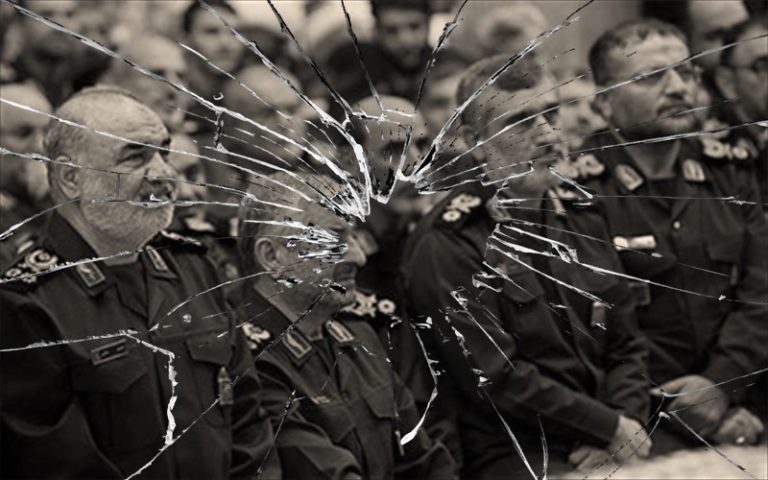
Years before Khamenei decided to create a young, efficient, and revolutionary government, following the example of someone like former Revolutionary Guards Quds Force commander Qassem Soleimani, who was fully obedient to the supreme leader.

But this is just a whole imagination that Raisi’s government could be effective and problem-solving. Because experienced showed that all the recent officials are corrupt people and just thinking about their benefits and the of their families.

Raisi will not appoint any person outside the current corrupt political body. But regardless of the greedy nature of the elements of this government, how is it possible that those who have caused all these crises and unimaginable problems can be the solution?

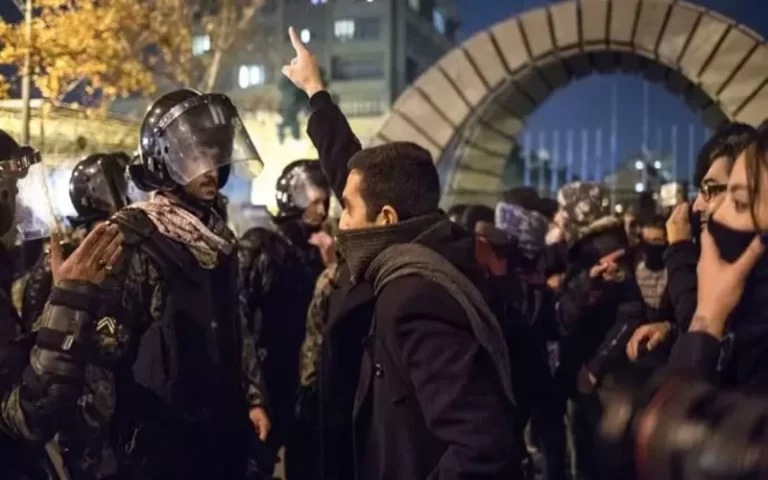
The first problem is the illegitimacy of this system, which these days we can see in the people’s slogans when they chant ‘death to Khamenei’ and ‘death to the principle of Velayat-e Faqih’ and of course ‘death to Raisi’ on the streets across Iran.

At the same time, the boycott by the election by the people indicates that the people are not compatible with this cruel and brutal regime and its government.

Regardless of this fact, the challenges facing the country and the people are far greater than the stature of this government, as the expertise of its head was and is the repression and the execution of the people over the past four decades.

In this regard, Abbas Abdi from the so-called reformist faction, while pointing out that the people have absolutely no hope that the situation will get better with the arrival of Raisi, but their opinion is that the situation will get worse, warns the president and the elements that are entering his government and said:

“The situation is not favorable at all to start work. Of course, your self have chosen this and you have made promises that cannot be fulfilled, and this society will understand, but the situation has worsened in several ways since June 18, when you have been elected.

“First, in terms of the suspension of the JCPOA negotiations and the closure of the short-term perspective in resolving the issue of sanctions.

“Second, increasing regional tensions that, even if they do not continue, have adverse daily effects on society and the economy.

“Third, the situation in the region and the arrival of the Taliban.

“Fourth, the situation of the coronavirus, which is in the worst condition of the last 18 months, especially since the issue of vaccination has become a complex and difficult issue.

“Fifth, the issue of despair and public protests, from Khuzestan to the issue of cyberspace and the promises that were made during the elections and must be fulfilled, all made the people more pessimistic, more confident and more protesting.” (State-run daily Etemad, August 3, 2021)

The fact is that these problems and crises did not arise overnight to be solved quickly and overnight, these problems are the result of 4 decades of the infamous rule of this regime. Crises that have deeply penetrated the body and soul of society.

It is not without reason that the Jahan-e-Sanat newspaper wrote, citing the statements and comments by Raisi’s relatives:

“The worrying news is that the relatives of Ibrahim Raisi emphasize the critical situation in the country and sometimes say that miracles should not be expected from Raisi and his future government. This position probably means retreating from the promises and visions that Ibrahim Raisi and his like-minded people have already presented to the people. Because the situation has not changed significantly since the last months when those visions and promises were expressed.

“If the members of the 13th government want to hide their inability and justify their inefficiency, then they must work to show the country more devastated.” (Jahan-e-Sanat, August 3, 2021)

The Mostaghel newspaper also predicts that the government of Raisi will be an inefficient and crippled government from now on. This newspaper listed crises, including “increasing sanctions, new coronavirus peaks, water and electricity crises, environmental disasters, and, most importantly, popular protests,” which “all can oust Raisi from the beginning. Especially the new strains of the coronavirus that researchers have predicted will kill one-third of patients.

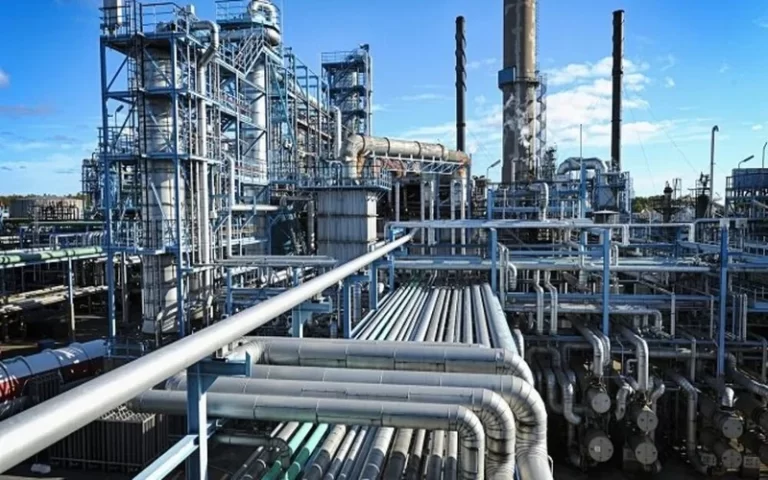
External problems which the new government will face such as, “severe economic sanctions” while “the way to sell oil and receive revenue is completely closed and the future government budget is in a state of ambiguity.”

It predicts that Raisi’s government has no mechanism and chance to solve all these problems, and “sooner or later we will see strong waves of protests by the people, especially the vulnerable sections of society, against the economic performance of the 13th government.” (Mostaghel, August 3, 2021)

The truth is that the patience and endurance of the people have a ceiling, and soon this regime must face the consequences of the people’s hatred.

Iran’s Society Will Not Tolerate New Crises

The accumulation of problems in Iran’s society has strengthened the protest spirit in the people. They are angry with the current situation and each time they want to return to a normal life, a new crisis created by their rulers is imposed on their lives.

Observe the sequence and form of crises in the last year and then see which nation in the world must withstand so many crises without any protest. The government’s officials instead to find out a solution for all these crises are increasing the protest spirit of the people because the problems are the solution for the government to control and people.

Making wrong decisions and vice versa the people priorities, for the regime’s official it is enough to just walk around the city for a day and talk to people in shopping malls, fruit and vegetable markets, subways, buses, vaccine queues, and deprived provinces, then they will realize the main priorities of Iranian society and instead of making decisions that conflict with people’s lives.

But their interests are groups like Hezbollah and other proxy groups and nuclear and regional terror activities. Therefore, for the regime’s officials, it is necessary to answer which crisis the people must cope with and join them in cooperation and empathy and not protest?

Inability to prevent the creation of new coronavirus waves. High costs and rampant inflation. Rising housing prices. Lack of medicine in the capital. Lack of hospital equipment in border cities. Dehydration in a province with several large rivers. Lack of electricity in the summer heat. Or this last decision to block the means of mass communication on the internet and restrict freedom of expression.

The latest plan has angered people the most, as from a 7-year-old child to a 90-year-old man, their lives and leisure time are tied to cyberspace. The question for all people is that if your plan is defensible and has no objections, why do you consider us unreliable and examine it in a closed session? But there is no wonder because all critical decisions which are tied with the continuation of this regime are handled behind closed doors.

Worse, are the people asking, why did they refer the bill to a special commission to oust most of them from any responsibility if there is nothing bad in this decision and will not destroy the people’s lives and restrict their freedom of speech? Why not explain to people that in these economic and social conditions, the plan to limit cyberspace has become their priority, if there is nothing to hide?

Isn’t it true that the lives of many Iranians today are tied to Internet businesses, and that they make a living in this way? Iran society has become an erupting society and any wrong speech or decision by the regime will raise the people’s protests which in this situation is a security issue for the regime, because Iran’s society has become a crisis-stricken society and cannot withstand a new crisis. Finally, the regime is forced to face the people soon, which will be a landmark of Iran and the people’s fate.

The Story of Iran Regime’s Attacks on Oil Tankers

A Liberian-flagged ship flying 280km from the port of Al-Daqam in the Oman Sea was targeted by a drone on Friday.

The oil tanker is called MV Mercer Street and is managed by the Zodiac Maritime company owned by Israeli billionaire Eyal Ofer. Two crew members, one British and one Romanian, were killed in the attack.

Following the incident, Israeli media and politicians pointed the finger at Iran. Britain and the United States later said that Iran’s regime was behind the attack.

The foreign ministers of Israel, Britain, and the United States held talks after the attack. At the same time, there were reports in the media about possible action against Iran.

U.S. Secretary of State Antony Blinken said: “We are in very close contact, in coordination with the United Kingdom, Israel, Romania, and other countries. And there will be a collective response,” he told reporters at the U.S. State Department on Monday.

Bogdan Aurescu, foreign minister of Romania, in a tweet on August 2, 2021, said: “Based on t/available info, Romania Flag of Romania strongly condemns t/Iranian drone attack against “Mercer Street”, during which a RO citizen was killed. There are no justification whatsoever 4 deliberately attacking civilians. We continue 2 coordinate w/our partners 4 an appropriate response.”

British Prime Minister Boris Johnson said on Monday that Iran must face up to the consequences of the attack on the oil tanker off the coast of Oman.

“Iran should face up to the consequences of what they’ve done. This was clearly an unacceptable and outrageous attack on commercial shipping,” the British Prime Minister told reporters, according to the Reuters news agency.

“A UK national died. It is vital that Iran and every other country, respects the freedoms of navigation around the world and the UK will continue to insist on that,” he added.

Such hostile activities are nothing new by Iran’s regime. Without thinking about the consequences of such actions, it takes such measures to show its forces that it is not in a weak stand, especially when it seems that the JCPOA nuclear talks are failing, and the regime must face the consequences of its nuclear adventures.

Escaping forward and warning other nations about the consequences of any ‘adventures’ against Iran is a clear sign of such half-baked decisions and weakness.

This weakness can be seen in the reactions of the state-run media. The state-run daily Tose-e-Irani on August 3, 2021, wrote:

“Now Iran is under pressure from these four countries and, of course, threats of retaliation. Iran’s reaction, however, has so far been a denial. Foreign Ministry spokesman Saeed Khatibzadeh said yesterday that the reaction of the four countries was unfortunate and said:

“These coordinated statements themselves contain contradictory phrases, such that they first accuse the Islamic Republic of Iran without providing any evidence and then speak of its “possibility.”

“It is unfortunate that while these countries have remained silent in support of terrorist attacks and sabotage of Iranian merchant ships in the Red Sea and international waters, in a blatant political bias they are making false accusations against the Islamic Republic of Iran, if these countries have a document to prove their false claims, they must provide it.”

Besides the regime’s fear about any reaction, it is clear that no one would reveal its resources to such a dictatorship, and one other than this regime is benefiting from the instability in the Middle East as we are witnessing its many countries and there is no need to count them all.

In an indirect confession about the regime’s action, the state-run daily Eghtesad News on August 3, 2021, wrote:

“With the denial of Iran, the Zionist regime and the United States are still trying to take full advantage of this incident. In a situation that less than a month has been passed after the sabotage in one of the buildings of the Atomic Energy Organization of Iran located around Karaj on June 23.

“The subversive act of which the Prime Minister of the Zionist regime Naftali Bennett implicitly referred to the role of this regime in this incident. The destructive and criminal role that was shown in the previous months by sabotaging the Natanz facility and assassinating our country’s nuclear scientist, Mohsen Fakhrizadeh.

“This is at a time when Western countries are not interested in condemning such actions against Iran and pass by it indifferently, preferring to remain silent in the face of crimes such as the child-killing of the Zionist regime in the 12-day war in Gaza.”

The decision of confronting the world and destabilizing more the situation in the Middle East has started at that time when the regime’s supreme leader Ali Khamenei was receiving the message of the former US President Donald Trump by Japan’s prime minister and ordered to attack an oil tanker of Japan, to show that the regime is not negotiable.

Taking such a decision a few days before the start of the regime’s new presidency of Ebrahim Raisi, delivered the message that the regime’s terror machine will not stop and will become even worse.

A Loan That Was Lost in the Sewage of the Iran Regime’s Corruption

The sad story of Iran’s Khuzestan province has not ended. Drinking water, electricity, and health care are becoming people’s dreams, so speaking about inflation, unemployment, poverty, and misery is nonsense. Ahvaz and other cities of this province in addition to these miseries are facing the disaster of the municipal sewage.

The sewage not only flows on the streets of these cities, but with the slightest rain, the sewage erupts and overfloods all streets, alleys, people’s houses, and even hospitals and health centers.

This situation was so dramatic that international agencies decided to give a large loan to Iran to overcome this situation. But as usual in this corrupt regime, this money and aid did not reach the people and this resource was looted.

Amazingly, now after the latest protests by Khuzestan’s residents, the regime’s officials remember this loan and are asking each other about the fate of that $149 million which was given to the regime in 2005 by the World Bank.

This loan should have put an end to this health disaster but now it has become one of the main subjects of the people in the social media and public’s opinion.

And again, as usual, the response of the officials is no one knows what happened to this loan. This event was so inexplicable that the then governor was forced to call it “Money poisoning.”

Then the official as a red herring used the alibi of a dispute between the Water and Sewerage Company and the municipality.

“Khuzestan Water and Sewerage Authorities, instead of questioning how the previous credits were allocated, have started a war between water, sewage and the municipality.” (State-run daily Etemad, December 26, 2019)

In a factional dispute, the then governor said: “In Khuzestan, we have suffered from a kind of money poisoning, which means that the projects are funded, but nothing is done. Shariati sharply criticizes the implementation process of the Ahwaz Wastewater Treatment Plant and specifically the Provincial Water and Sewerage Company and says: ‘In the province and Ahvaz, not all issues are related to the lack of money and credit, this can be seen in the non-implementation of the Ahwaz Wastewater Treatment Plant, which in the last 15 years has been allocated a lot of credit resources, including a World Bank loan, but has been not fulfilled.” (State-run daily Etemad, December 26, 2019)

At the same time, the head of water and sewage in the province had said that “A former high-ranking official of the province was involved in the seizure of this loan in 2005, but this revelation was not tracked.” (IRNA, December 20, 2019)

He mocked this official and said: “Instead of announcing what happened to the World Bank money, he appeared as a plaintiff and becomes a pretender for the current situation of water and sewage in Ahvaz.” (IRNA, December 20, 2019)

Finally, the Friday Prayers Leader of Ahvaz added his voice: “In the early 2000s, the World Bank allocated a large amount of credit to solve the problem of sewage in Ahvaz and some parts of the country, but unfortunately these credits were not spent in this city.” (IRNA, December 20, 2019)

Since then, constantly the regime’s media are speaking and writing about this corruption and the disaster raised by it. Here are just a few examples:

“For the umpteenth time, billions of dollars will be allocated to regulate the province’s sewage situation. Due to the ambiguity in the way of allocating billion (tomans) budgets, the sewage situation of Khuzestan province is stagnated for many years.” (Etemad, December 26, 2019)

“So far, large budgets have been allocated to solve Ahwaz’s sewage problems, but the streets of the metropolis are still flooded with every rain and as soon as the ground gets wetter.” (Javan News Agency, December 27, 2020)

In the 2000s, the World Bank predicted the current situation of Ahwaz’s sewage system and considered a loan to improve the sewerage network, but it remains to be seen where the money of this loan was spent. After about a decade and a half, the Ahwaz sewage problem has not been solved.” (Mardom Salari, July 24, 2021)

“The loan agreement was signed in March 2004 in the presence of the Deputy Minister of Economy, the Deputy Minister of Energy, the Successor Minister of Energy, as well as representatives of the World Bank. But after the essence of the signing of this contract dried up and the change of government in 2005, until the end of the ninth government, Khuzestan sewage and the World Bank loan were forgotten. This loan may have been lost somewhere in history.” (Iran Plus, July 29, 2021)

Iran’s Regime Has Nothing To Offer but Weakness

In recent years the weaknesses of Iran’s regime have become more transparent every day. From its weakness in the economy to lose its dominance in the country facing many huge protests which increased this weakness, to its international isolation, which is derived from its malign activities in the region, its support from the global terrorism and dictatorships sharing the same behavior with them.

The regime’s struggle to cover up this weakness with senseless activities like its missile and nuclear program not only does not help but increased the frustration of the people because of wasting their resources in such projects and increased the international will to counter the regime and preventing it from becoming a nuclear power.

Analyzing these weaknesses, it can be seen in the nuclear deal with world powers known as the Joint Comprehensive Plan of Action (JCPOA). The regime hopes that the new US government after the Trump administration would accept the regime’s requests and would return to the 2015 JCPOA without and precautions and new requests, but this did not happen.

As reported by many of the regime’s outlets and websites the state-run website Asr-e-Iran on July 29, 2021, wrote: “The United States has warned that nuclear talks with Iran to revive the JCPOA will not continue indefinitely. US Secretary of State Anthony Blinken said in a statement in Kuwait yesterday (Thursday) that talks with Iran could not and should not continue indefinitely.

“Pointing out that now is the time for Tehran to decide, the senior US diplomat added: ” We’re committed to diplomacy, the ball remains in Iran’s court.”

Then this media acknowledged that the US did not accept the regime’s avarice and added: “According to a recent statement by Iran’s representative to the International Atomic Energy Agency, US diplomats in the last six rounds of the Vienna talks have refused to lift more than 500 sanctions against various Iranian individuals and entities.”

Frustrated about a JCPOA+, it continued: “According to Kazem Gharib Abadi, Iran’s representative to the International Atomic Energy Agency, during the Vienna talks, the Americans insisted on including issues outside the scope of the Iranian nuclear issue and they have insisted on adding a clause on negotiations on regional issues to the agreement to revive the JCPOA.

“At the same time, Washington has stressed that the United States will wait for the establishment of the government of Iranian President-elect Ibrahim Raisi to continue the Vienna talks, but Washington limits the opportunity for Vienna talks to revive the JCPOA and there will be no further concessions from Washington.”

The AXIOS website interviewed a US official about Washington’s position, writing:

“The official stressed that the window for reaching a deal won’t be open for much longer, and the Iranians should return to the table quickly. “We also hope they don’t think they will get more than the previous government because they are tougher. It’s not about being tougher, it’s about fully implementing the terms of the 2015 nuclear deal. The U.S. position will not change, and the Iranians will not be able to reinvent the nuclear deal or be in a situation where they do less, and we do more.” (AXIOS, July 28, 2021)

Kazem Gharib Abadi in another interview about the defeat of the negotiations said: “The Americans tied the whole understanding to the acceptance of future talks on regional issues, which is completely irrelevant and harmful to the subject of negotiations. The lifting of some sanctions, as well as the removal of the name of the Islamic Revolutionary Guard Corps from the list of terrorist groups, was directly conditional on the acceptance of this clause.

“The Americans refused to guarantee in the negotiations that they would not repeat the same behavior of the previous administration in the face of the nuclear deal, and even refused to lift sanctions against more than 500 individuals and entities – who were sanctioned by the Trump administration on non-nuclear grounds. They also did not repeal the Countering America’s Adversaries Through Sanctions Act (CAATSA).”

But that’s not all. The situation for the regime is getting so bad that state TV was forced to admit that they no longer have the opportunity for lobbying the US government and are losing this aiding political ground.

The state TV Channel Two on July 28 reported: “Now you see a week among the US senators, some of them are writing letters. Many of them are writing letters to Mr. Biden that whatever agreement you make with Iran when we come to power, we will destroy all these agreements.

“You do not need to stand until 2024 for the next election in the United States. Next year you have the congressional election 2022 and the gap between Democrats and Republicans in the US Senate is one vote, one seat. And the US Senate looks set to fall to Republicans next year.

“Now that the US Senate is in the hands of the Democrats, the chairman of their foreign policy commission is Mr. Bob Menendez, who was a speaker at the hypocrites’ (MEK/PMOI) meeting last week.

“This means that this democrat, who is now influential in US policy towards Iran because of the role that the US Congress has in foreign policy, is the speaker of this group of hypocrites.”

Finally, a regime expert in international affairs Mohammad Jamshidi pointed to the main reason for the regime’s weakness and said:

“The 2009 sedition (2009 protests) that took place, after which we had the resolution of 1929 and the heavy unilateral sanctions of the United States. Haj Qasem Soleimani was martyred because of the riots of November 2019. When the other side sees that you are weak and confused, he moves towards hitting more.”

Iran Regime’s Bad Situation in Iraq

0

“One damn thing after another.” This is what the Iranian regime is facing at an increasing tendency. The miserable situation inside the country, successive crises, the uncertainty surrounding the regime’s nuclear talks with world powers (JCPOA), and the increasing global pressure. Now it is losing its regional sphere of influence and its markets.

Evidence of this is the recent strategic agreement between the United States and Iraq, which seems to have been reached as a result of last week’s talks between the two countries’ foreign ministers in Washington.

If we take a look at the visit of the Iraqi Prime Minister to the United States and the strategic talks for the withdrawal of the US troops from Iraq, which according to the state media analysis is a kind of redefining the American presence in Iraq, its result as the regime’s analysts say is not in favor of the regime and it has frightened the regime.

Iran’s regime has always had a special view of Iraq, relying on its religious and cultural commonalities, as well as Iraqis’ appreciation for Iran’s services, including helping to eliminate the threat of ISIS in many areas as the regime’s elements claimed, in the hope that it will become a friend and brother for this regime in difficult times. And the regime’s officials hoped that the Iraqi government which is under the pressure of its people because of the regime’s malign activities in this country, could easily forget and ignore all these malign behaviors and become an ally to this regime before the US.

A role that experts believe that Iraq will help the regime by delivering money to the regime and circumventing sanctions or open its large market to the regime which is the closest and most accessible.

Now if this regime is not able to give more aids to Iraq as its officials claim, it is natural that the Iraqi government will fill this gap with the US who are now promising many supports to the Iraqi government. And Iran is moving away from Iraq’s foreign policy priorities and is being marginalized. Which is a nightmare for the regime.

Seyed Jalal Sadatian, a so-called Middle East expert affiliated to the regime, about the regime’s loss of influence in Iraq confessed: “Undoubtedly, Iran and the United States are competing for side by side in Iraq. At one time, Saudi Arabia was doing this, and countries close to the United States were competing with Iran. Iran, however, has a stronger cultural base and a long history in Iraq. Of course, they also worked on those areas.

“For example, Iran had a relatively good base in Najaf, Karbala, and the Shiite areas of southern Iraq, but some currents in Iraq provoked so much that they also chanted slogans against Iran. Even in the matches that were held, in the same stadium that Iran had built, they chanted slogans against Iran.”

He added: “These events show that Iran’s rivals are not inactive and are working hard to eliminate the position that Iran had in Iraq and relied on it to save them in many areas from ISIS. For example, the formation of Hashad al-Shaabi is one of the things that Martyr Soleimani did and increased the Iraqi resistance base to maintain his position and his land.

“Then we see that these things are going in the direction of chanting slogans against Iran and making things difficult for Iran. Now, should we see that Iran’s situation with Iraq, that is, its demands, or that it is said, for example, that Iran should provide water and electricity to Iraq, can be continued according to Iran’s economic conditions?

“When it fails, and on the other hand, tempting offers are made to Iraq and they accept to help financially, build infrastructure, and while Iran is under pressure from sanctions and severe economic weakness, the current situation must have an impact on Iran-Iraq relations.

“But this does not mean that Iran should be expelled in the short term. However, conditions are not good for Iran.” (Nameh, July 26, 2021)

Hojjatollah Judaki, the regime’s expert on international issues, confirmed this situation and in an interview with the Jahan-e-Sanat said:

“The United States will certainly not do anything to its detriment, and this cooperation will certainly strengthen its position. Of course, it can also strengthen the position of the current rulers of Iraq. Since we have a conflict of interest with the United States, this will naturally be to our detriment.”

The conclusion is easy and clear, as the regime’s analysts said, the situation is not in Iran’s regime’s favor, and in the most optimistic case, they can only count on some past cultural backgrounds and collaborations which they are hoping that the Iraqis will not forget.

Iran Regime’s Biological Weapon: The Coronavirus

The coronavirus situation in Iran is a long time out of control and the regime not only does not care about the people’s health and life but is using the pandemic as a biological weapon against the people to prevent any gathering and protest as we have witnessed in the past days.

So that with the start of the protests the regime decided under the alibi of the spread of the coronavirus to close Tehran but as Mohsen Hashemi, Chairman of Tehran City Council, about the failure of this decision said: “Compliance with health protocols in Tehran has been severely curtailed and the number of deaths due to corona has exceeded six.

“It seems that the 4-day holiday has not been effective and has had an even worse effect, so Tehran should think about it and the Coronavirus headquarters should hold a special meeting in this regard.” (Sharefarda website, July 27, 2021)

Maryam Shahsamandi, a journalist and social researcher, in a short text published in the Taadol newspaper about the situation in Iran on July 27, 2021, wrote:

“Minister of Health! Do you know that the death toll has reached over 300 people a day? You know, this 300 is not just a number. Those are dear souls that perish in the shadow of carelessness.

“Do you know that Remdesivir is not available in pharmacies? You know, many coronavirus patients can’t even afford their treatment. I lost my mother because of the coronavirus. You know, we spent tens of millions to finally get her dead body.

“You have not lost someone so that you understand our pain who have lost someone. I lost my aunt because of the coronavirus too. She died in the ambulance because no hospital in Karaj had an empty bed to admit her. Minister of Health! Master of the coronavirus! What about the seven vaccines that were unveiled and robbed you of a good night’s sleep because of your happiness?

“How long are we going to be captivated by slogans and promises and reality hit like a slap our face? Do you know what it means to lose, someone? Do you even know that every number you announce in the form of coronavirus death statistics means how many families are mourning?

“Master of the coronavirus! When will your promises be fulfilled? How long do people have to watch their loved ones die before they decide to start a nationwide vaccination?

“Now the coronavirus does not only take the lives of adults. Now it has found new prey, now the sweet souls of children are in danger, and you are still lecturing, with what remarkable literature.

“Minister of Health! No one is well these days, not the people, not the medical staff, not those who have been witnessing unplanned and carelessness all this time. Do you know how many nurses in which hospitals have not received their salaries and arrears for months?

“Do you know that, unlike you, they are risking their lives and are taking care of the sick people of their land? Which hospitals do you have visited intrusive?

“Master of coronavirus! What made you disband the National Coronavirus Headquarters? Why did you shy away from even a simple apology to the people for the rude behavior and speeches of your colleagues, and in Sistan and Baluchestan you adopted the same literature?

“These days are passing. You know very well that we are more resilient than you can imagine. You know very well that these people are nobler than they want to make you accountable.

“You know very well how the coronavirus and this crisis-ridden economy have plagued the people. But what have you done instead of all this decency and resilience? Every day a new promise, every day a new order that of course has no executive guarantee.

“We are lost among all this sorrow and loss. It is hard for us to even laugh anymore. Do something before it is too late, Mr. Master of Coronavirus!”

Iran Regime’s Solution To Prevent the Expansion of Protests: National Internet

Statements by Ahmad Khatami, a member of the Iranian regime’s Assembly of Experts on cyberspace and the new government’s call for more restrictions on the free internet, have once again brought the issue of filtering and blocking internet space to the forefront of the news.

Ahmad Khatami had said in his speech that “all countries that have Internet technology have restricted the use of the Internet for their target community” and therefore called on the new president, Ibrahim Raisi, to address the issue of “national Internet” as soon as possible in Iran.

The remarks come ahead of a controversial “protection of cyberspace users” bill in parliament. The majority of parliamentary seats are held by principlist MPs, and as a result, concerns about the re-closure of cyberspace have spread on the Internet by the Iranian people.

Previously, the regime’s Minister of Communications and Information Technology, in April and June of this year, called the word “national Internet” “fake” and stated that what is referred to as the national Internet is the national information network and “we in the national information network are not looking to cut ties with the world. We are looking for a regional market. If the idea of ​​anyone in the country is to build something called the national Internet, it is not technically possible at all.”

“Go and read the National Information Network document,” Azari Jahromi told the Etemad daily, rejecting the issue of the national Internet.

The document explaining the requirements of the National Information Network has been prepared by the “National Cyberspace Center” and has been posted on related websites.

So here we are dealing with a “public” document, but surprisingly, parts of this document have been censored and kept out of the reach of experts and audiences as “unpublishable.”

The document presents the definition of a national information network as follows:

“According to the first resolution of the 15th session of the Supreme Council of Cyberspace, the National Information Network, as the country’s cyberspace communication infrastructure, is a network-based on Internet contracts along with switches, routers, and data centers.

“In such a way that internal access requests for obtaining information stored in internal data centers are not routed through foreign countries in any way and it makes possible to create a private and secure internal internet networks in it.”

Not including the “unpublishable” part, with the definition of the national information network, makes the function and goals of this network ambiguous.

For example, Article 3-4 of this document entitled “National Information Network Management” in the third paragraph is announced as “unpublishable”.

But the fourth paragraph of this article states:

“Integrated management in the allocation and optimal use of national resources (such as name and address) and monitoring should be done in such a way as to minimize the impact of the use of international resources and policies and principles governing global networks and the possibility of independent management, especially in the case of network separation from the global Internet.”

Putting these two clauses together, one unpublishable and the other emphasizing the work that is done when the global internet is down raises doubts about ensuring that the Internet is not cut off.

In the third paragraph of the first article of paragraph 1-4-5 of this document, the issue goes even further, and the authors have stated that it should be possible to, provide intelligence and monitoring supervision, the possibility of legal eavesdropping and comprehensive supervision, protection against supervision and foreign influence, and comprehensive refinement and sanitation should be done in cyberspace.”

Article 4 of this clause is completely censored and has become “unpublishable”. This is repeated in Articles 9 and 10.

The first paragraph of Article 4-2 of this document states (National Information Network): “It is possible to monitor, supervise and apply various governance policies in all dimensions and layers of the network.”

Much of the Internet traffic is distributed internationally. Therefore, it raises the question that if such a law is implemented, Internet providers will cooperate with “Iranian government policies” in the field of cyberspace. If not, what happens then? Filtering or blocking access? This is also one of the ambiguities. But it seems that the regime has no other solution to “disrupted or interrupted the internet”, in cases of protests and uprisings which is the main concern of the rule.

In an interview with Etemad, the regime’s Minister of Communications and Information Technology in response to why the Internet was completely cut off during the November 2019 protests and who was responsible for its possible losses said: “All over the world, when a country’s national security is endangered, its officials limit all possibilities, which leads to chaos and disorder, and this is why it happened.”

Jahromi confirmed in the same conversation that, “the severe internet disruption in November 2019 was ordered by the National Security Council.”

In another resolution, the regime’s Supreme Council of Cyberspace approved a plan entitled “The Grand Plan and Architecture of the National Information Network” in October last year, which also includes an “unpublishable” item. The resolution outlines some of the practical goals of the National Information Network, which explicitly addresses restrictions on the global Internet, such as “elimination of dependence on GPS “or” determining the share of 70 to 30 traffic for internal and external services “or” tariffing 2 to 3 times access to external content in front of the national information network.”

So, it becomes clear that signs of restrictions on the Internet and cyberspace are more visible than ever in the national document of the National Information Network.

Why the Iranian Economy Is in Tatters

Iranian Foreign Affairs Commentator and research analyst Cyrus Yaqubi have written an op-ed about the Iranian economy, where he spoke about how the crisis has been made worse under each subsequent president and advised that the problems have not been caused by sanctions but rather by the mullahs’ actions.

Yaqubi advises that during the 40 years of the regime, the country has earned some $ 1,377 billion from selling oil – $700 billion during the eight-year presidency of Ahmadinejad alone – but yet the economy is still ruined and the country is nearly bankrupt.

How? Well, Ahmadinejad spent much of the country’s income on the Revolutionary Guards, terrorism, domestic repression, and missile programs, which meant that the people never saw that money.

This only got worse during Rouhani’s subsequent eight-year presidency, with Iranians only getting more money stolen from them, as proven by the revelations that have come out over the last few years. One of these involved Sepah Bank CEO Ali Rastegar Sorkheh and Rouhani’s brother Hossein Fereydoun embezzling 3,700 billion tomans, but because of Rouhani’s involvement, he has tried to ignore or justify the corruption cases, even blaming the issues of sanctions.

Yaqubi wrote: “According to a regime official, at least 80% of the country’s problems are due to mismanagement and corruption, which have nothing to do with the sanctions.  Experts say Iran’s devastating economy has never been worse in the past 42 years. Not even during the eight-year Iran-Iraq war has the situation in Iran been so critical.”

He then said that new Iranian president Ebrahim Raisi doesn’t know “anything about management or the economy”, so the problems will only get worse because of this year’s budget deficit, which will lead to banknote printing, liquidity growth, and inflation. With inflation now at 80% for some essential items and 60% of the country in poverty, this seems to be a dangerous situation indeed.

Yaqubi wrote: “This situation cannot last long, and the impoverished Iranians are facing poverty, unemployment, the COVID-19 virus, droughts, unannounced and extended blackouts, and many other economic problems. The Iranians are suppressed through the regime’s violent crackdowns. However, the Iranian people cannot be suppressed forever, and the collapse of the corrupt regime is close. Many analysts, even regime insiders, describe the current social environment as a powder keg waiting to explode.”

Thus, he advised, that many experts are already predicting that Raisi will not be in power for the entire four-year first term.

Raisi’s Execution Tactics Exposed

Ebrahim Raisi will become president of Iran in just over a week, even though (or perhaps, because) his resume is filled with crimes against the Iranian people and humanity. Shortly after his ascension was announced, Amnesty International Secretary-General Agnès Callamard criticized Raisi’s rise to the second-most powerful position in the country.

Callamard wrote: “That Ebrahim Raisi has risen to the presidency instead of being investigated for the crimes against humanity of murder, enforced disappearance, and torture is a grim reminder that impunity reigns supreme in Iran…”

Let’s look into that a little more.

Executions

The Iranian regime is the world leader in executions per capita because the mullahs use the death penalty as a tool for repression, murdering political activists to intimidate the wider public into submission, although it should be noted that this doesn’t just apply to the regime’s enemies.

This has increased markedly during Raisi’s stint as Judiciary Chief from 2019 until 2021, not least because of the crackdown on the 2019 uprising, which led to 1,500 protesters being slaughtered in just a few days, while 12,000 more were arrested; many of whom are still in prison.

This does include many women, including mothers of young children, as the execution of them has also increased under Raisi.

In July 2019, political prisoner Golrokh Ebrahimi Iraee wrote an open letter, in which she discussed women on death row, noting that many of them were victims of domestic abuse who had snapped and killed their husband, father, or brother after years of violence because the regime offers no legal way for women to escape.

One of these women is Mohabbat Mahmoudi, 64, who has been on death row for 20 years after she killed a man – Hatam Mahmoudi Gonbadi – who broke into her home, armed with a knife and intending to rape her and her daughter. He stabbed Mahmoudi three times before she accidentally fired a gun at him and he was still holding the knife when the police arrived.

In February, Zahra Esma’ili was executed just minutes after suffering a heart attack because she saw others being executed in front of her, even though she was innocent and had only taken responsibility for the murder of her husband – Alireza Zamani – to protect her teenage daughter, who snapped after years of abuse by the Intelligence agent.

Another woman, 24-year-old Zeinab Sekaanvand was hanged in 2018, despite international calls for a pardon, after seven years on death row for killing her abusive husband who she was forced to marry at 15. She was given the death penalty even though international law bars the execution of people who are under 18 at the time of their crime.

The Iranian Resistance wrote: “In Iran, executions and killing continue unabated, tarnishing the nation’s history. Grief continues as well, and the calls seeking justice will never be forgotten. Families’ pain and suffering will never be forgotten, either, including for orphans whose parents were tortured and executed. Thus, the calls for justice by the mothers and other loved ones of the executed will not be forgotten. Surely, one day, Ebrahim Raisi will be brought to justice.”