Home Blog Page 275

Iran’s Presidential Candidates Deliberately Ignore Crises Caused by the Neglect of the Social Sphere

One of the main crises in Iran, caused by the mullahs’ underdeveloped culture, is the social crisis. On the evening of Tuesday, June 8, the second debate of the 2021 presidential election was held on cultural, social, and political issues. But what was marginalized in this debate, and the candidates were content with a few general statements about it, was the social sphere.

In the second debate, the 2021 presidential candidates referred to the problems of people with disabilities, women head of households, and addicts, and the need to maintain social capital, but did not explain to the audience what their plans were to solve these problems.

Although Iran’s social experts warned continuously that one of the most important areas is the country’s suffering society, hurt with poverty, social harms and the lack of social justice, security and at least life expectancy, but it has always been neglected purposely and only during an election is used by the candidates as a slogan spices to heat up the election oven.

The candidates’ speeches showed that this time it seems that the social sphere is not considered in the election process too.

Hassan Mousavi Chalac, the President of the Iranian Association of Social Workers, about Iran’s social sphere in an interview with IRNA said:

“Our society has acute and minor social issues, and in a situation where everyone says that the social sphere is not good, unfortunately, the social debate of the presidential candidates was not good either. In the second debate, some social issues such as the problems of the disabled, addicts, marriage of young people, women and the poor were discussed in general without being in the form of a plan and the candidates to say how they want to solve the problems in this area.

“We did not see any plans and the talks were just a few recommendations. This is at a time when candidates must have a plan for the future of the country. It is not enough to talk about what has happened so far and whether it has been done well or not. It is expected that the presidential candidate will have a plan knowing the current situation.”

Then he warned the government about a social collapse and said: “In this area, the judiciary, the parliament and the whole government are involved. The whole government must make a serious decision for the social sphere, otherwise the social sphere of the country will face a serious crisis.”

Then pointing to the government’s loss of social capital, he added: “In the last few years, many incidents, even the occurrence of tragic events due to the increase in gasoline prices, are due to the decrease in social capital. It is true that everyone considers livelihood and economic problems as the first problem of the country, but if the social capital in the country is not high, you cannot manage crises or run a resistance economy.”

“If there is no social capital, we cannot make a decision today that will have the desired result for all people in the next 10 years. Trust is important because it provides a platform for participation. Two capitals are the factor of development of any country: One is human capital, and the other is social capital. The current situation also creates social harms and provides the ground for the spread of social harms.”

About the government’s defeat in the social sphere over the last 40 years, he added: “The next government must put a few measures on its agenda. The first is the implementation of a multi-layered social system to identify people in need and provide social assistance, social support and their connection to social insurance. This may take two decades to implement. We have not been able to implement this system for 40 years, but the only solution is to follow this path.

“The command of the social sphere has not been in the hands of social managers for 42 years, and part of the current problems is the result of this issue. People are not at their proper positions in the social sphere, and unfortunately this has continued for the last 40 years.”

Then about the reason of this situation, he said: “The government should believe in social affairs as an important area and consider it without a political-security approach. The political-security approach in the social sphere deepens the problems.”

Satellite Footage Shows Tehran Never Stopped Nuclear Bomb-Making Projects

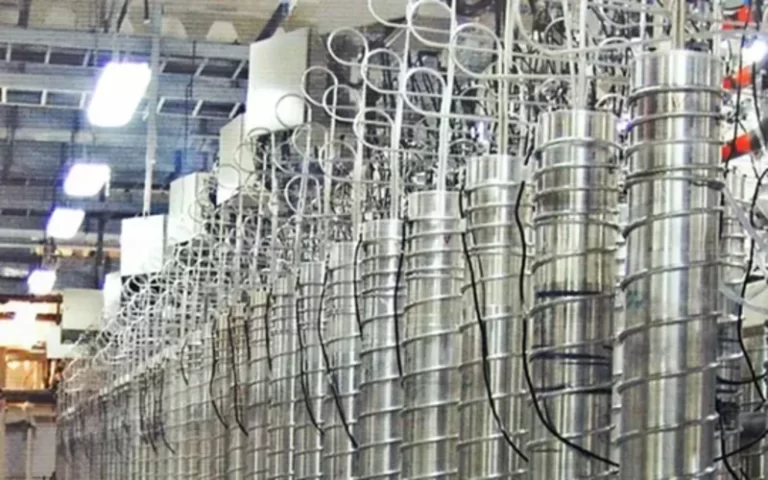
On June 9, Fox News revealed unusual activity at the Sanjarian nuclear site in 25 miles outside the capital Tehran, Iran. According to new satellite images obtained from Maxar, there were 18 vehicles at the site on October 15, 2020. The Iranian government has used more vehicles and excavation in January along with a new access road that was later covered up in March.

Fox News mentioned that Iranian authorities had already practiced “shock wave generators,” which allow the government to miniaturize a nuclear weapon. The International Atomic Energy Agency (IAEA) had declared that Tehran halted the scientific program to build nuclear weapons in 2003.

Iranian Opposition Exposed the Sanjarian Nuclear Site in 2009

In a press conference in Paris, the Iranian opposition National Council of Resistance of Iran (NCRI) had exposed the site on September 24, 2009. At the time, the NCRI revealed that operated site is located in the Sanjarian village.

“The regime conducts scientific research at a site located in Tehran Pars district, called Metfaz. And this site produces the results of research. Residents of the Sanjarian village have special ID cards for communicating,” said Mehdi Abrishamchi, the NCRI Peace Commission chair, at the conference regarding the Iranian government’s attempts for producing nuclear weapons.

The NCRI’s September 24, 2009 revelation is one of a string of revelations by the Iranian Resistance since 2003, when the international community was taken aback by Tehran’s secret nuclear-bomb-making projects for the first time.

On May 7, 2019, David Albright, the IAEA’s Action Team associate (1992-1997) and the first non-governmental inspector of Iraq’s nuclear program, and Olli Heinonen, the IAEA’s operations director (1995-2005), published their joint research about Tehran’s nuclear activities.

“This site was first publicly identified in 2009 by the National Council of Resistance of Iran (NCRI), which called it the ‘Research Center for Explosion and Impact’ near Sanjarian, known under its Farsi language abbreviation METFAZ. The NCRI stated that this site was developing high-explosive detonators for use in atomic bombs and manufacturing components for these detonation systems,” they wrote.

The IAEA’ Questions About the Sanjarian Site Remain Unanswered

In the past two decades, the world powers tried time and again to contain Iran’s provocative nuclear projects. Instead, Tehran only responded with cheating and more concealing. For instance, Iranian authorities never declared their sites’ location or the quality of their activities before being revealed by the opposition or other counterparties.

For years, the ayatollahs had been refusing the UN nuclear watchdog access to their sensitive site. “Regarding Iran’s nuclear program, I provided a clear assessment since 2003 to 2009. In 2011, I raised 12 fields and said, ‘Iran should respond these questions,” said the late Yukio Amano, the former IAEA director-general in May 2019.

The first question was about producing detonation for the nuclear explosion, which was applied at the Sanjarian site, with alias Nourabad. The IAEA asked Tehran about developing detonations, in clause C-5, and beginning tests of severe explosions and relevant experiments, in clause C-6.

At the June 7 convention of the IAEA Board of Governors, the IAEA director-general Rafael Grossi once again declared his frustration towards Iran’s secrecy. “The lack of progress in clarifying the agency’s questions concerning the correctness and completeness of Iran’s safeguards declarations seriously affects the ability of the IAEA to provide assurance of the peaceful nature of Iran’s nuclear program,” said Grossi at the meeting.

Just like his predecessor, Grossi expressed alarm that after many months, the Iranian regime has not provided the necessary explanation for the presence of the nuclear material particles at any of the three locations where the agency has conducted complementary accesses.

“In the absence of such an explanation from Iran, I am deeply concerned that nuclear material has been present at the three undeclared locations in Iran and that the current locations of this nuclear material are not known by the agency. Nor has Iran answered the questions with regard to the other undeclared location or clarified the current location of natural uranium in the form of a metal disc,” he said.

U.S. and Eu Negotiators’ Frustration Over the JCPOA

Tehran’s contradictory behavior has also disappointed U.S. and EU negotiators. In his Presidential campaign, U.S. President Joe Biden had vowed that he would rejoin the 2015 Iran nuclear deal, formally known as the Joint Comprehensive Plan of Action (JCPOA).

However, Tehran still renounces direct talks with the U.S. and avoids full compliances with the JCPOA. Aside from uranium traces in some sites, Tehran recently acknowledged the enrichment of uranium up to 60-percent fissile purity.

“We have a country that has a very developed and ambitious nuclear program, which is enriching at very high levels, enriching uranium at very high levels, very close to weapons-grade,” Grossi said.

Ayatollahs Understand the Language of Firmness

“It remains unclear whether Iran is willing and prepared to do what it needs to do come back into compliance,” Reuters quoted U.S. Secretary of State Antony Blinken as saying on June 7. “Meanwhile, its program is galloping forward…. The longer this goes on, the more the breakout time gets down.”

In such circumstances, the international community faces a complicated situation regarding Tehran’s nuclear ambitions. On the one hand, Tehran seemingly intends to keep negotiations in a limbo, and it still continues provoking attempts for achieving nuclear weapons on the other hand.

“To guarantee its survival, the clerical regime has not abandoned its atomic bomb project,” said NCRI President-elect Maryam Rajavi on June 7. The recent IAEA report “also shows that to buy time, the regime has continued its policy of secrecy to mislead the international community. At the same time, the regime is blackmailing its foreign interlocutors into lifting sanctions and ignoring its missile programs, export of terrorism, and criminal meddling in the region.”

Presidential Candidates Did Not Mention Iran’s Dying Economy

Not mentioning the economic situation and plans by Iran’s presidential candidates has a long history in Iran’s elections. The main reason for it is that speaking about the critical situation and its reasons would expose the many corruptions of the officials and the supreme leader Ali Khamenei and his economic empire. Therefore, the candidates are prevented from speaking about specified subjects.

On Saturday June 5, the people of Iran have witnessed the first presidential debate with repeated useless slogans and generalization about the country’s economic problems, which followed most time with disputes between the rivals and attacking each other over their past cases and behaviors.

Interesting is that these candidates accused their own government of disrupting and weakening the country’s economic system but did not offer a solution to the current economic problems.

Some important economic issues for the people were not discussed at all in the debate. One of the most important was an issue mentioned by one of the candidates after the debate, the coronavirus.

The coronavirus and its effects on the economy

Damage to many businesses, the increase of unemployment apart from the social problems caused by the coronavirus, is at the moment on of the main problems and most considered by the people. A problem which is caused by the government of Iran deliberately to prevent any gatherings of protests, therefore, is subject was out of interest in this debate.

The result of the coronavirus’s spread is the unemployment of 2 million people. Unemployment is only part of the coronavirus impact on the Iranian economy that people are tangible with. So far, many reports of coronavirus damage have been published by various sectors of the Iranian economy.

Expensiveness and its reasons

The next subject are the high prices which is related directly with the people’s pockets. Which is now the most important concern of the people. A problem which is increasing poverty and is eliminating the middle class of the society, while many of the officials have previously admitted that the middle class in Iran does not exists anymore.

And this subject was not mentioned by the candidates too. None of the candidates said what action plan they have to solve this problem given the current economic situation in the country.

The annual inflation rate for the country’s households in May 2021 reached 41%, which shows an increase of 2.1% compared to the same information in the previous month. Also, the point inflation rate in May 2021 reached 46.8%.

In other words, the country’s households have spent an average of 46.2% more than in May 2020 to buy a ‘set of identical goods and services.’ In only one of the 53 food items surveyed by the Statistics Center in May this year, 51 items increased by 173.7% to 3.2% compared to the same month last year, although single-digit inflation in these 53 cases only belongs to two items of these food items.

Housing

Housing is another issue that many Iranian families are struggling with. While some candidates have chanted slogans about solving the housing problem and increasing its construction. This issue was not analyzed realistically in the debate.

According to the Statistics Center under the title of Social Justice Indicators, 67% of the country’s urban population live in units owned by them. This index also reaches 86% for rural areas. The trend of this index during the 2000s shows that in 2019, 98% of the rental population in urban areas has increased compared to the beginning of the 2000s. Also in 2019, in rural areas, only 4.5% were tenants.

Unemployment and lack of a strategy by the candidates

Job creation is another rightful expectation of the people. These days, having several unemployed people in a family has put a heavy burden on the head of the household, and many families are struggling with this problem.

The unemployment rate for the population aged 15 and over, reached 9.6 percent in 2020, down from 1.1 percent a year earlier, but the decline came as the economic participation rate, according to the Statistics Center of Iran, compared to the previous year (2019), has decreased by 3.8 percent.

In 2020, 41.3% of the population aged 15 and over were economically active, i.e., in the employed or unemployed group. An examination of changes in the rate of economic participation shows that this rate has decreased by about 2.8 percent compared to 2019. Economic participation rate is the ratio of active population (employed and unemployed) to working age population.

But the other point is that the income of many people who have a job does not cover the cost of living. The country’s misery index, which shows the sum of inflation and unemployment, was estimated at 46.1% at the end of last year. And despite all these none of the candidates pointed to this issue.

Stock market

The stock market is another issue that has affected many Iranian households in recent years, with its turbulences and declines and failures.

The non-reform of the market has led to the loss of many people who had invested their small capital in the stock market with the promises of the officials, and even lost their entire capital. It is said that the number of stock exchange codes has reached more than 50 million, which indicates that 60% of them enter the capital market, considering the population of 84 million people in Iran.

And how to solve this problem and restore people’s trust in the market also had no place in this debate.

Cash and subsistence subsidies

While some presidential candidates are specifically talking about increasing subsidies, none of them are properly explaining how they are going to pay for it. According to the head of the Higher Institute for Social Security Research, a report on the state of poverty and inequality in the country in the last two decades will be published soon, but preliminary statistics released from this report show that the population below the absolute poverty line has reached 15% from 2013 to 2017. But from 2017 to 2019 increased to 30%.

According to Iran’s government, the government is paying 1.4 trillion tomans of hidden subsidies and is paying more than 300 trillion tomans ($12.5 billion). Now the question how the candidates are claiming to increase the subsidies while the country’s treasury is empty because of the government’s wasting in sub-subjects.

These are just some of the current problems of the country’s economy that people directly face but solving them will definitely require deep changes in the country’s economic and political structure. And another point is that Iran’s government never published the rights numbers and statistics, and the situation in Iran is much worse.

Sanctions

The last and one of the most complicated subjects in Iran’s economic crisis is the global sanctions. Complicated because it is not a problem caused by natural economic challenges and phenomenon, but because of the rule’s self-constituted problems because of its nuclear and missile program and support of terrorism.

It is obvious that the people are suffering from it. But the regime has not left other solution for the international community to prevent the regime from such activities threatening the entire world. And as the entire 40 years showed, none of the mullahs’ governments is capable to solve the country’s economic problems.

A Sad Example of Iran Officials’ Pointless Economic Plans

There is no doubt that Iran’s economic system is a disordered and turbulent market without any control or proper supervision. It is controlled mostly by the government’s officials and IRGC commanders and the economic mafia under the control of the regime’s supreme leader Ali Khamenei.

The people do not benefit from the country’s economy at all, mostly they are the main losers and are being looted by the officials.

Now a new scheme by the government in the country’s economy is hurting the lower classes more than ever.

According to its designers in the government, the capital gains tax is a kind of regulatory tax that does not aim to generate revenue for the government but wants to prevent the tendency of people’s capital towards speculative investments.

Government capital income tax planners assume that most people have no incentive to invest in production, so agiotage must be stopped so that people can invest in production.

But the officials’ designers of such a strange plan must answer the question of whether the few who were motivated for production have succeeded in investing or have faced obstacles?

The designers of the Capital Income Tax are all regime officials. They do not have freelance jobs, and this makes them decide not based on knowledge of investing in Iran but based on common misconceptions in public opinion.

For about 15 years, the government has been obliged to write the conditions of the necessary documents for business licenses in a book or a website only. How then can it still be incomplete?

In a country where studying medicine, pharmacy, and nursing is a dream, and a pharmacy license and a power of attorney license take 20 years, and its banks do not give loans or interest above inflation, and turning the desert into factories, warehouses, and houses is prohibited, it is now forbidden to buy houses, property, and buildings to escape the devaluation of assets in the invasive inflation. Unaware that they cannot block the way to gold, currency and cryptocurrencies treasuring, and God’s land has suddenly become smaller than the corruption of Iran’s government’s officials and their lootings.

The regime’s officials’ behaviors with investors have so far drained hundreds of billions of dollars of the country’s capital and handed over to the United States, Europe, the UAE, and Turkey, and continues to do so. Capital gains tax will intensify this trend.

Analysts say those responsible in the government for such plans did not think about the real situation of the people’s economy. People who are even not able to provide their daily food with the “Mongol invasion of inflation.”

According to statistics published by the Statistics Center of Iran in 2020, the purchasing power of employees has decreased by 28 percent. By the end of the year, that figure had risen to about 40 percent. Food prices have also quadrupled, which means rising poverty rates. Add to this the fact that more than one million people have lost their jobs. The point is the truth is more than what the statistics say.

A country that is suffering from huge inflation taxes. The difference between ordinary taxes and inflation taxes is that ordinary taxes are levied on the wealthy and upper income classes, but inflation taxes are levied on the middle and lower classes. The function of this type of tax is elimination of the middle class and the increase of the poor.

All-Important Wetlands in Iran Dried Up

Iran is geographically located in an arid and semi-arid region, and in recent years the issue of wetlands, lakes and the resulting dust has been considered by environmental scientists. The country’s environmental problems are numerous. Iran is most at risk from this dust. Almost all of Iran’s major wetlands have either dried up or are drying up.

Productivity and use of basic resources are low in Iran. Water, soil, and energy resources are not used properly, and this leads to environmental pollution in the field of air, water, and soil.

The country faces serious challenges in the field of water quantity. This year, Iran is facing the phenomenon of dust. Many of the country’s rivers and wetlands have dried up due to misuse and overuse.

In addition, Iran’s biodiversity and ecology face many problems and cause the origin of dust in the country. In addition to environmental damage, this phenomenon has many consequences in the field of health, economy, etc.

The area of ​​very critical dust centers in Iran is about 2 million hectares. In addition, the total area of ​​dust centers in the country has reached 35 million hectares. Over the past three years, the government has allocated a total of €450 million to the National Dust Management Headquarters to address the dust problem, without any appropriate result.

On the other hand, the area of ​​external dust hotspots is 350 million hectares, which is adding to the dust crisis of Iran. Notable that a country which has no good political relation with its neighbor countries is not capable to lead an effective plan to eradicate this external crisis.

The Iranian Space Agency has estimated the change in water level of 10 wetlands and lakes in the country using satellite data, during which, except for the complete dryness of the three wetlands of Hamoon, Arjan and Bakhtegan, it is known that the surface of all wetlands and lakes except wetlands Gavkhoni and Choghakhor are decreasing compared to the same month in 2020.

Salehieh wetland in Alborz province, Miankaleh wetland in Mazandaran, Parishan, Arjan, Maharloo, Tasht and Bakhtegan wetlands in Fars province and Hamoon wetland in Sistan and Baluchistan province are among them.

One of the most risked places in Iran is the capital Tehran. Some 90% of Salehieh and Allahabad wetlands in the south of Tehran have dried up. The drying up of these wetlands has become a source of dust for the city of Tehran and can be a great threat to the city and aggravate the problem of weather in Tehran.

Gavkhoni International Wetland is located 167 km southeast of Isfahan province and in the lowest part of Zayandehrood river and it feeds from this river. But it has been struggling with water and drought problems for some time, which according to environmental activists, this wetland is closer to premature death. This wetland is one of the most beautiful wetlands in the country in terms of valuation, and it has been registered in the Ramsar Convention in the past. Today it is one of the 22 international wetlands in the world.

Gavkhoni, as one of the most important wetlands in the country, has been suffering from drought for some time, and such a problem can certainly affect the central cities and even Tehran with its dust. Unfortunately, the last water that entered the lagoon was in 2006.

To date, the environmental water rights of Gavkhoni have not been fully granted. The estimated water fee is 176 million cubic meters per year, of which up to 20% of this fee has been delivered so far, and it was a flood and was not needed for agriculture. For this reason, water supply to the upper sections of the lagoon is very difficult.

Iran’s Livelihood Crisis

What is the situation of livelihood in Iran?

Why are the migrant caravans from Iran’s center cities and margins to Tehran and other metropolises not ending?

Is the livelihood crisis in Iran, which is accelerating on a weekly basis, really an economic issue that can be solved by providing expert and investment solutions, or are there threads that are tied to the political crisis?

The center of all the above questions is directed to the government, which is caught up in interests that it sees as more necessary and urgent than hearing the voices of the people and answering these questions. In more detail, this means that in the Islamic Republic, the definition and function of the state has departed from its legal, civil, and political status.

Therefore, it is very clear that the solution to the domination of poverty and livelihood crisis in an Iran occupied by the mullahs is not large investments from abroad, not providing expert opinions, not signing open letters, not voting and elections, not lifting sanctions, not the Iran nuclear deal (JCPOA), and not having expectations from Supreme Leader Ali Khamenei and President Hassan Rouhani and the other regime’s rulers.

Therefore, the acute political crisis between the Iranian people and the supreme religious rule (Velayat-e-Faqih) must be the final task. With each passing year of this regime, the poverty crisis becomes fatter, more swollen, more tense, and more damaging to Iranian families’ living basket and the families’ economy.

The state-run website Tejarat News on May 29, 2021, depicted this situation by this title: “Are Iranians getting poorer than this? It seems that our tomorrow will be sadder than our today.”

Comparing the situation of citizens of different countries from an economic point of view is one of the easiest ways to compare the way of governing in these countries. This is the last situation of Iranian citizens in June 2021:

“After red meat, dairy products, fruits, oils, sugar, and rice, which were considered as the only alternative to expensive meat products for a large part of the population, chicken also disappears from the table. The price of chicken has reached an amazing 50,000 to 60,000 tomans.” (Iran Press website, May 29, 2021)

People’s poverty and starvation is ensuring the regime’s lifespan and is tight with regime’s interference in the Middle East and its support of terrorism and proxy groups.

“All basic necessities are collected from the place of production and sent for export to Iraq, Syria, Lebanon and Venezuela. They steal people’s basic goods and sell them to other countries for dollars.” (State-run website, Iran Press, May 29, 2021)

And let us read the bitter conclusion of the regime’s policy from its own outlet.

“According to the World Bank and the International Monetary Fund, we should see the citizens of poorer countries overtake in the next five years in terms of wealth. In other words, we [Iran] will become poorer than them. According to the World Bank, in 2026, the citizens of Georgia, the Republic of Azerbaijan, Vietnam and Egypt will be richer than the citizens of Iran. It seems that our tomorrow will be sadder than our today.” (State-run website Tejarat News, May 29, 2021)

Iran Daily Produces, Buries 58,000 Tons of Waste

“Japan buries three percent of its waste and recycles and composts the remaining part. We produce and non-standardly bury 58,000 tons of waste,” said the President of Studies and Development of Environment, Water, and Agriculture think tank Saber Baghkhanipour in an interview with the semiofficial ISNA news agency on May 27.

“Only ten percent of this volume of waste is recycled. In the case of water, out of 5 billion cubic meters that is circulated industrial and potable cycles, 1.2 billion cubic meters of water are recycled,” he added.

A stable progress in any field needs wholesome infrastructure. However, officials in Iran look at the environment as a fantasy and money-winning issue. Such insight has destoryed any initiative to promote natural resources in Iran.

“In the environment field, we have two hyper challenges in territory and land-use planning. Territory of environment and water is intertwined but there is a problem with this issue regarding the current structure and officials’ opinion,” Baghkhanipour said.

Regarding the environmental catastrophes and mismanagement, the expert also points to another flaw in Iran. There is no integrated organization, which covers all parts of this critical object. Scattered offices and institutes, in reality, pursue to ensure their territories in the best condition. In other words, they prioritize their own organization’s interests in comparison to the entire natural resources.

“Current management is sprinkled. One organization is responsible for the air, one for land-use planning, one for agricultural lands, etc. This issue needs to be reviewed because we need an integrated organization to resolve dilemmas,” Baghkhanipour added.

Unequal Distribution of Population Density in Iran

Furthermore, the population density has not been distributed equally. For instance, the population density in Tehran experiences a growing rate, which is considered a failure due to keeping unresolved environmental problems like sewage, residue, harms to the environment, and slum areas to the table.

The environmental expert also blamed officials for failing to manage the population. “Out of 15 populous cities around the world, 11 cities are in coastal areas. However, the most underprivileged cities are coastal cities in Iran, and the relevant official has ignored this potential,” Baghkhanipour explained.

Meanwhile, he counted the country’s capabilities including strategic position, energy resources, human resources, and mineral reserves, highlighting officials’ mismanagement to exploit natural resources in favor of citizens. “There are energy resources in western parts of the country, and we have mines in eastern parts. However, these mines have been abandoned. If the maps of reserved mines were specified, they would provide massive assets for managing society,” the expert added.

Various Administrations Toying with Environment Organization

Baghkhanipour recounted the horrible effects of a state-run environment organization, believing “the environment management should be separated from the administration’s structure.”

“It needs comprehensive discussions over this organizations’ structure. There should be an organization beyond the ministries. The decision-making structure is one of our main challenges with the Islamic Republic,” he added.

Indeed, like many complicated dilemmas in Iran, the environmental problems go to the monopolized and isolated system ruling the country. In other words, the leaders only care about their own advantages and pursue lining their pockets with national assets.

In such circumstances, underprivileged citizens, who are struggling with enormous difficulties in almost all aspects, see no path to achieve their inherent rights and benefit from fundamental services through ongoing protests and anti-establishment activities. Theis harmful experience has proven that both reformists or principalists have failed to do anything in their favor other than rubbing salt on their wounds.

Iran’s Science Is Collapsing

Now for over 40 years, Iran’s rule controlled by the mullahs is destroying and toying with all of the country’s assets and values of the people, from the culture to the science and economy and most important human dignity and freedom.

In this article what we will point to is a recent report of the famous science journal, ‘Nature’, about the fake-paper factories of science articles which are in some countries ‘industrialized’.

It is notable that a credible journal like the ‘Nature’ would never jeopardizes its credibility to publish a biased report. Nature Magazine is credited with its history, and it is a great danger for Nature to publish a biased report. So, the expression ‘Industrialized cheating’ is not only indulgence about Iran government’s behavior but is less than the reality talked about the destruction of this rule.

Naturally one of the main subjects that is showing the dynamism and vitality of any university and science institutions is the writing of scientific essays. With the goal of being published internationally by credible science organizations and outlets to increase the university’s trustworthy.

But because of the fundamental thought of Iran’s officials who sees everything as an tool to gain more profit and wealth for themselves, they are engineering the countries universities’ structures to achieve profitable functions such as ‘essay production’, without thinking about its long lasting destruction of the country’s universities.

It is as if the identity of a university is nothing but an institutional structure whose components can be transformed with the intention of achieving new functions such as further article production, entrepreneurship, and solving social problems (easily and reverse engineered).

“Industrialized cheating

The problem of organized fraud in publishing is not new, and not confined to China, notes Catriona Fennell, who heads publishing services at the world’s largest scientific publisher, Elsevier. “We’ve seen evidence of industrialized cheating from several other countries, including Iran and Russia,” she told Nature last year. Others have also reported on Iranian and Russian paper-mill activities.” (Nature, March 23, 2021)

The problem with the mullahs’ rule is that they predict the universities independence of the country’s history, so it is very easy for them to play with such an important institution which is the main source for the construction of the country’s future.

The truth is that no country can only rely on natural resources as an eternal source for the wealth of a country and to establish a strong nation having a bright and long-lasting future. And what here comes into question are the country’s universities and its brains.

So, because of the view of the regime’s officials, without thinking about the norms and internal mechanisms and the worth of the universities, they pressurize the universities to change their structure in a way that results to a worthless ‘harvest’ for the officials. And the rise of academic fraud in universities stems from this.

Widespread scientific violations, officials abusing their position, abusing students, the prevalence of ghostwriters and the existence of essay and dissertation production centers on Enghelab Street, are all obvious facts of the scientific destruction in Iran.

And the truth is that Iran is being pushed out of real competition in scientific productions. So, just to create something artificial that perform better than its natural example is implausible. A humanoid robot that lacks a human-like nervous system which overtake the best runners in athletics, a chess computer that can beat the best human chess players are these days without any scientific value and no one allows robots to compete in athletics. No computer chess players take part in human chess competitions.

So, the truth is that Iran in the 21 century is out of the ‘real scientific competitions’, losing its future.

Iran Loses Voting Right at UN

On Wednesday, July 2, the United Nations Secretary-General Antonio Guterres criticized the Iranian government for refusing to pay its arrears. In this context, the Islamic Republic joined Venezuela, Yemen, and Lebanon who had lost voting rights in 2020.

“Iran and the Central African Republic are in arrears on paying their dues to the United Nations’ operating budget and will lose their voting rights in the 193-member General Assembly,” Guterres said. “The minimum payments needed to restore voting rights are $16,251,298 for Iran.”

In response to Guterres’s letter, Iran’s Foreign Minister Mohammad Javad Zarif claimed, “UN deprived Iran of its voting rights,” shedding crocodile tears for his government, “U.S. economic terrorism prevents Iran paying for FOOD, let alone UN dues.”

However, he intentionally neglected how much Iran spends on irresponsible policies and aggressive projects like equipping and supplying extremist proxies, supporting the Syrian regime, making nuclear weapons, and advancing ballistic missiles’ range.

“When I went to Syria, some complained that I had caused expenses. But I will say this again, “We may have given $20-30 billion to Syria,” said former chair of the Parliament (Majlis) National Security and Foreign Affairs Committee Heshmatollah Falahatpisheh in early May 2020.

Furthermore, in December 2020, Hamas co-founder Mahmoud al-Zahar praised Qassem Soleimani, the former chief of the Islamic Revolutionary Guard Corps’ Quds Force (IRGC) killed in a U.S. drone attack in January 2020, for supporting Hamas.

“During my meeting with Iranian officials in 2006, I raised some requests as the Palestinian Foreign Minister. [Then-President Mahmoud] Ahmadinejad referred me to Soleimani. I told Soleimani that we have a problem with paying our employees’ paychecks,” he said.

“A decision was quickly made because I had to leave the next day. I saw $22 million in cash in several suitcases. We had agreed on more but since we were a nine-men delegation, we could not carry more,” al-Zahar explained.

In a speech broadcasted in January 2016, Lebanese Hezbollah Secretary-General Hassan Nasrallah, confirmed all Hezbollah’s financial and weaponry supports come from Iran. “All of Hezbollah’s budget, wages, food, drinks, weapons, and rockets are supplied by the Islamic Republic of Iran,” he said according to al-Arabiya.

Meanwhile, in October 2020, Iran Focus revealed that state-owned companies have devoured 70 percent of Iran’s total budget, and while they can compensate for the country’s entire budget deficits, the fate of their profits are bleak. The website mentioned this amount of money are absorbed by corrupt government institutes and officials.

In reality, the government’s primary problem is not with a lack of money, but the country suffers from a corrupt system. “The corruption looks like a seven-headed dragon,” the Supreme Leader Ali Khamenei described the corruption in February 2018. “Every time you cut one head off, you’re still left with another six.”

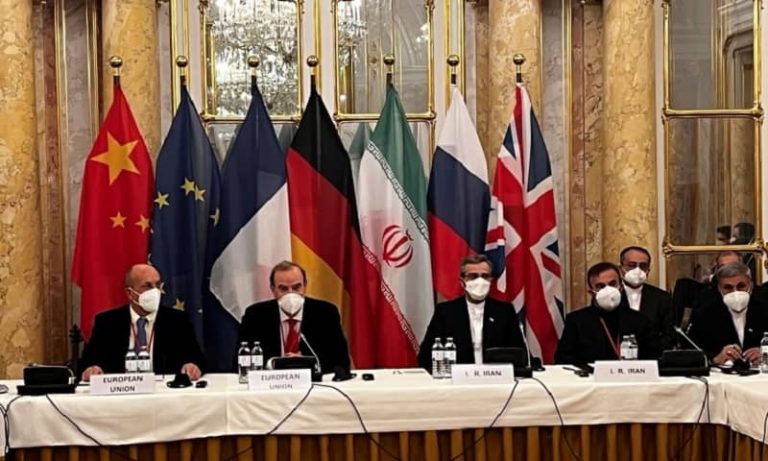
In October 2013, Regarding Iran’s systematic corruption and flawed financial system, first IRGC commander-in-chief Javad Mansouri said, “Even if it rains gold, … nothing will be solved.” Therefore, Iran’s complicated economic dilemmas will be resolved neither in Vienna nor in Washington DC.

As long as the ayatollahs continue their untransparent rule, they squander national assets on oppressive and aggressive policies. The Islamic Republic’s 42-year history has proven this truth, and the current system would resolve the country’s dilemmas once a leopard changed its spots.

Iran: Diplomats or IRGC Quds Force Officers

Following the leak of Iranian Foreign Minister Mohammad Javad Zarif’s audiotape in April, no one doubts about the role of the Islamic Revolutionary Guard Corps (IRGC) in Tehran’s foreign policy. “In the Islamic Republic, the military field rules,” Zarif said. “The [military] field’s success was more important than diplomacy’s success… I have sacrificed diplomacy for the field rather than the field serving diplomacy.”

In this respect, Zarif particularly pointed to the role of former IRGC Quds Force commander Qassem Soleimani. He also grumbled over Soleimani sabotaging the nuclear negotiations with the West. “Soleimani had worked to subvert the nuclear deal, by colluding with Russia and by ramping up Iran’s intervention in Syria’s civil war,” Zarif added.

Already in late March 2008, Soleimani had sent a message to then-commander of U.S. forces in Iraq General David Petraeus through then-Iraqi President Jalal Talabani emphasizing the IRGC-QF’s role in the Middle East. “General Petraeus, you should know that I, Qasem Soleimani, control the policy of Iran for Iraq, and also for Syria, Lebanon, Gaza and Afghanistan,” Soleimani’s message read.

Why Iran Has a Greedy Eye on Iraq?

Since the beginning of the Islamic Republic in 1979, regime founder and first Supreme Leader Ruhollah Khomeini had a greedy eye on the western neighboring country Iraq. Given the geopolitical position of this country, particularly a 69-percent Shiite population, Khomeini chose Iraq as a launchpad for his regional ambitions.

However, he was pursuing a scheduled plan aimed at conquering Mideast countries with a Shiite-population density like Iraq, Syria, and Lebanon. Khomeini actually dreamed to form an Islamic State—more than three decades before Abu-Bakr al-Baghdadi and his comrades had thought about such a state—in the countries that form a crescent.

In this respect, he and his top officials mentioned this regional “Shiite Crescent” in their remarks. Later, they called it as the state’s “Strategic Depth.”

At the time, the Islamic Republic founder started his meddling in the then-Iraqi government’s affairs. He frankly called on the people of Iraq to revolt against their rulers, and he secretly ordered the IRGC to begin border conflicts.

Indeed, Khomeini had taken power in Iran as a spiritual leader. He had no political or social method to resolve society’s complicated dilemmas. He tried to monopolize the power and remove all domestic dissidents. However, he could not practice his idea completely due to society’s volatile condition.

Therefore, he resorted to a longstanding trick that has been applied by dictators throughout history. “Victory will be achieved through terrifying the masses” was Khomeini’s rationale to strengthen his sovereignty.

Thus, he ignited a full-scale war with Iraq to attribute all the country’s unresolved difficulties to the war. On the one hand, Khomeini sent hundreds of thousands of youths to the battlefields and left millions of grieving parents, sisters, brothers, widows, and orphans. And he quelled any domestic objection and complaints under the excuse of the war.

“War is a divine blessing,” Khomeini said several times, insisting, “We will continue the war even if it takes 20 years and until the last brick in Tehran.” He practically spread an atmosphere of fear in Iran’s society to achieve “victory.” He also equipped the IRGC with advanced weaponry systems under the banner of “Holy Defense.” He also prolonged the war to eight years keeping the people under the sense of fear and terror.

Iranian Diplomats in Iraq

Following the occupation of Iraq and the establishment of ‘Coalition Provisional Authority,’ Tehran appointed IRGC-QF brigadier generals, including Hassan Kazemi-Qomi, Hassan Danaeifar, and Iraj Masjedi as its ambassadors to this country.

The first ‘ambassador’ Kazemi-Qomi had served as Iran’s counselor in Harat, Afghanistan, before the Iraqi government fell in 2003. At the time, he was organizing terror squads under the banner of a diplomat. He had a firsthand experience of work with the U.S. forces in Afghanistan.

The Iranian government replaced Kazemi-Qomi with Danaeifar in 2010. Danaeifar especially focused on orchestrating terror attacks on the Iranian dissidents Mojahedin-e Khalq (MEK/PMOI). Around 140 dissidents were killed during his tenure, and eventually, when the MEK departed Iraq in September 2016, he was replaced with Masjedi, then-IRGC-QF deputy commander. Masjedi is still Tehran’s ‘ambassador’ in Iraq.

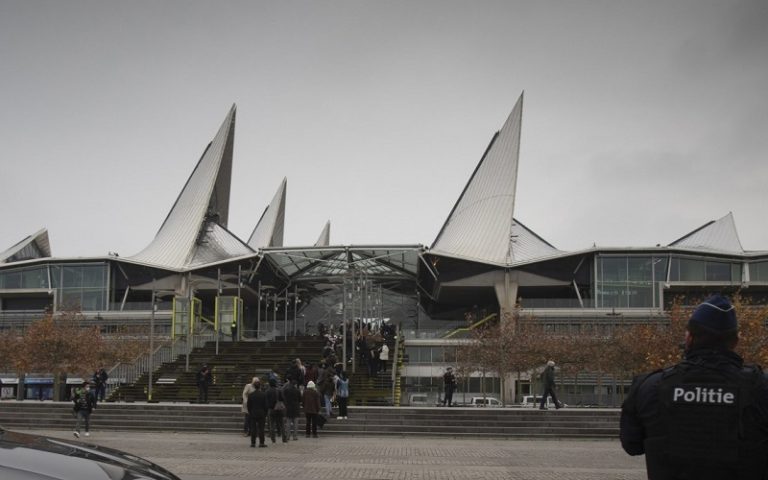
Furthermore, Assadollah Assadi, who was recently convicted to 20 years in prison by a Belgian court for a foiled bomb plot against the Iranian opposition rally in Paris, is another IRGC-QF high-ranking agent.

“The 49-year-old [Assadi] was a diplomat in Iraq from 2003 to 2008, before being appointed third secretary at the Iranian embassy in Vienna in 2014,” wrote Le Monde on October 10, 2020.

In his minutes, taken by the Belgian police, Assadi had plainly threatened Belgian authorities with terror attacks by IRGC-QF-controlled proxies in the Middle East. “Armed groups in Iraq, Lebanon, Yemen and Syria, as well as in Iran, were interested in the outcome of his case and would be ‘watching from the sidelines to see if Belgium would support them or not,’” reported Reuters on October 9, 2020.

Iranian Diplomats in Lebanon, Syria, Yemen

Just like Iraq, Iranian authorities deployed IRGC commanders and IRGC-QF officers to Lebanon as ambassadors and diplomats since the 1980s. Qazanfar Roknabadi was one these ‘diplomats.’

To sabotage the Hajj ceremony and ignite ethnic conflicts in Saudi Arabia, he entered the country with a forged identity and passport. However, he died during the 2015 Mina stampede, and Tehran’s plot was exposed and foiled.

Seyyed Ahmad Mousavi and Mohammad Reza Raouf Sheibani were Iran’s ambassadors in Lebanon who were coincidently Tehran’s ambassadors in Syria. However, this was not the whole story.

Following the 1979 revolution, Khomeini then Khamenei initially dispatched Ali Akbar Mohtashamipur then Mohammad-Ali Taskhiri as the Supreme Leader’s representative in Tehran’s embassy in Damascus. Aside from their representatives, other ambassadors and diplomats were IRGC-QF officers.

Likewise, Iran’s diplomats and ambassadors in Yemen were all IRGC-QF offices since the 2000s. The latest ambassador is IRGC-QF Brigadier General Hassan Irlu.

Furthermore, since November 2007, the name of the first IRGC-QF commander-in-chief Ahmad Vahidi was added to the Interpol red notice list due to his role in the 1994 AMIA bombing in Buenos Aires, Argentina. According to Argentinian authorities, Vahidi had orchestrated the bomb plot through an IRGC-QF team.