Home Blog Page 285

Natanz Site a Cemetery for Khamenei’s Aspirations

Iran’s Supreme Leader Ali Khamenei is fast pursuing a goal of announcing himself as a nuclear power by surprising the world, analysts argue. In that case, the nuclear bomb would be in the hands of a government that is known as the main sponsor of international terrorism and fundamentalism and this would be a disaster for the world.

And this is an unavoidable path for Khamenei. He knows that this is the only way to secure his regime. Khamenei’s main nuclear project is at the Natanz site. But since this site is the main focus of Khamenei, it is also raising the attention of other parties in the world, especially intelligence services.

Some reports say this site was attacked for a second time on Sunday, April 11, 2021. The regime’s officials first claimed that the event on Sunday was just an accident, while the power of the site was cut off. But later the head of the Atomic Energy Organization of Iran Ali Akbar Salehi, presented this ‘accident’ as ‘nuclear terrorism’ and said that “we consider our right to take action against agents and advocates.”

He added: “The action today against the Natanz Enrichment Center represents the failure of the opposition of nuclear progresses and negotiations.”

He demanded the international community confront this “nuclear terrorism.” He said that the goal of the perpetrators of this action was to “avoid impressive development of the nuclear industry on the one hand and successful negotiations to eliminate the cruel sanctions.”

Although Israeli sources confirmed the involvement of this country in the Natanz explosion and Salehi had confirmed foreign agents’ involvement, the head of the technical group of the examination of the incident in a conversation with the site “Noor News,” which is close to the Supreme National Security Council, called this ‘media propaganda.’ According to this official, whose name was not disclosed, “The technical group is investigating the occurrence of today.”

The incident on Sunday, April 11, led to the cutoff of electricity at the uranium enrichment facilities in Natanz. Due to this incident, Iran’s ability to enrich uranium suffered a severe blow. Specialists said that the Iranian government needs at least nine months to return to the situation before the blast.

It should be noted that in July 2020 the Centrifuge Assembly Center at Natanz facility was attacked for the first time. But government officials never published a final report on the nature of the attack and damages. Although most of the Natanz nuclear facilities are built underground, it is the second time that due to mysterious attacks, severe damage has hit this site.

The amazing point was that the night before this incident, Salehi in an interview on state TV on April 11 said: “The centrifuge assembly hall was demolished by our enemy a few months ago. But we did not step back, and we constructed a temporarily salon, which was the compensator of the lost salon.”

Israel’s Kan public radio cited intelligence sources, whose nationality it did not disclose, as saying that the Mossad spy agency had carried out a cyber-attack at the site.

Iran’s Misogynous Birth Rate Bill

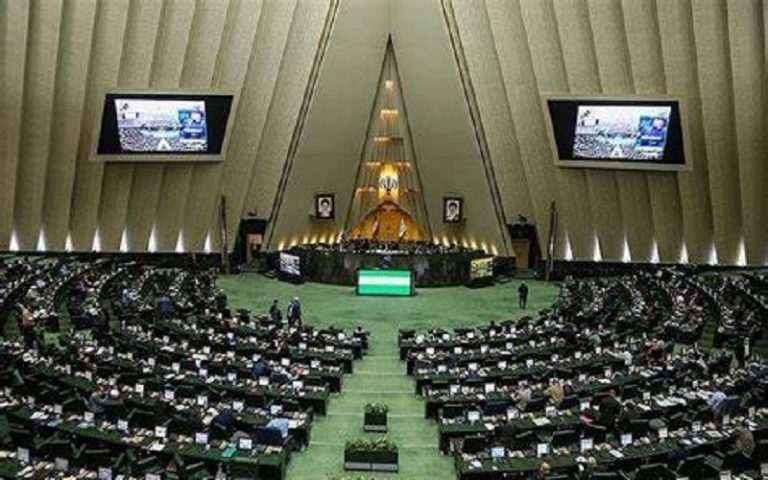
The current Iranian parliament is only 5.7% female. Even those women who are MPs are from the fundamentalist faction, which is controlled by Supreme Leader Ali Khamenei, and therefore represent misogynous attitudes and cruel policies.

It’s therefore no surprise that they supported the Population Growth and Family Support Plan, which effectively marginalises women by making them stay home to have and raise children in order to raise the birth rate to at least 2.5 children per woman.

Fatemeh Mohammad Beigi, a member of the Presidium of the Parliamentary Health Commission, called it “among the best laws in the Islamic Republic of Iran in history”, but its really just a way for authorities to keep young women at home and away from protests that could spell the overthrow of the dictatorship. (The government has systematically failed to help women over the past four decades, which is why so many of them are rebelling against the mullahs.)

Worse still, 80% of Iranians live in poverty. How can they keep their heads above water with more mouths to feed?

After all, even if the plan requires the government to use its own facilities to provide housing or land to families with three or more children, there’s still a shortage of five million housing units

Mohammad Eslami, Minister of Roads and Urban Development, said: “Statistics show that the number of houses is greater than the number of households. However, housing distribution has major drawbacks. In the meantime, poverty is gradually rising in a society in which people cannot afford to buy or rent a house.”

Low-income families with one or two children will also be worse off in terms of energy costs, taxes, subsidies, tariffs, stimulus payments, wages, and insurance premiums, to name just a few. The promises on maternity leave, job security, and support packages sound great but they don’t gel with the history.

Additionally, article 28 of the bill warns against the promotion of any program that conflicts with population increase and advises that these be changed to help support an increased birth rate. Although, as an important reminder, without programs to improve healthcare, education, and lift people out of poverty, this scheme is flawed from the start.

The Iranian Resistance wrote: “It seems that Parliament’s real role is to maintain Khamenei’s full sovereignty and hegemony. In this regard, women, who are the first victims of this misogynistic regime and suffer the most repression, should stay at home and lose their influence in the protests. This will never happen.”

Iran’s Coronavirus Crisis

Over a year since the coronavirus first found its way to Iran, President Hassan Rouhani is acknowledging the seriousness of the problem as a fourth wave ravages the country due to the failure of the officials’ policy.

He said on Saturday: “We have a hard period ahead of us.”

The biggest issue is that mullahs’ used the pandemic to stop their overthrow, hoping that people would be too terrified of catching a deadly disease that had run rampant because the mullahs enforced no safety precautions to gather in large crowds and overthrow the government.

At first, shortly after the November 2019 and January 2020 major protests, the authorities denied that the virus was in the country at all, allowing it to spread silently. Supreme leader Ali Khamenei even called this virus a “test” and “blessing”, proving that he should not be trusted with the country.

Now, even officials and media outlets are terrified because it is backfiring on them. Predictably, the general public doesn’t like it when their rulers allow them to die en-masse when many deaths were preventable.

The state-run Jahan-e Sanat wrote last month: “Although the coronavirus crisis delays the conflict, delaying it at the cost of overwhelming issues is a challenge in society. In other words, when society is freed from the clutches of this disease, political, social, and economic faults will begin to move with greater destructive power.”

Another reason that anger is burning white-hot in the hearts of Iranians is that the Iranian Resistance has been exposing the government’s cover-up, which includes shifting blame to the people. All of this has increased infighting amongst the mullahs.

Mashhad’s Friday prayer leader Ahmad Alam-ol Hoda said: “Whatever they [Rouhani’s government officials] said was the opposite. They said the coronavirus is over. Then from where this fourth wave come from?”

While Deputy Health Minister Iraj Harirchi said: “The National Covid-19 Combat Task Force refused to use [Persian New Year] holidays to control Covid-19 crisis.”

To sum up, Iranian officials are worried that this crisis will be the last straw and that the people will soon overthrow the government because they are terrified that the situation will only get worse with the mullahs in charge.

The Jahan-e Sanat paper wrote: “If crises pile up and the rulers do not listen to the voices of the protesters, the continuation of such a phenomenon can end the patience of the people. If there is no change in Iran soon, the mental state of the society will soon become more dangerous.”

One Hundred Nurses Emigrate From Iran Each Month

“The rate of nurses’ emigration has become increased in comparison to the past years, and 100 nurses monthly emigrate from Iran on average. Other countries strongly welcome Iranian nurses,” said Mohammad Mirza-Beigi, the director-general of Iran’s Nursing Organization, on Thursday, April 8.

Nurses’ emigration has dramatically grown while the country extremely needs the human resources in health and medical sectors due to the coronavirus outbreak. Iran is the worst-hit country in the Middle East regarding the illness. According to the Health Ministry, 63,884 people have lost their lives to the pandemic as of April 8.

Health professionals, and even members of the country’s Covid-19 combating headquarters, challenge official statistics, reckoning this number is not the whole story. According to Iranian dissidents’ reports, the actual number of fatalities is four times the Health Ministry’s figure.

“Over 246,400 people have died of the novel coronavirus in 535 cities checkered across all of Iran’s 31 provinces,” stated the opposition Mojahedin-e Khalq (MEK).

Why Nurses Emigrate from Iran?

Contrary to other countries, Iranian nurses face enormous dilemmas in various aspects. Despite their sincere work amidst the Covid-19 crisis, thousands of these selfless people have yet to receive their monthly salaries for months. This is while Iranian nurses endure additional hardship due to the country’s lack of adequate health and medical staff, which has made the dilemma more complicated in the past 14 months.

“It seems that [the government] is wasting time. Such behaviors towards nurses are not an inspiration in this status quo,” said Mirza-Beigi. “In addition to 140,000 nurses who care for hospitalized patients, we have 60,000 nursing students in the grade of expert to PhD in the medical sciences universities. Also, we have 30,000 nurses who provide services for home care units in a community-oriented manner.”

The number provided by the head of Nursing Organization is far lower than the global average. It means there are three nurses for each 1,000 citizens while the global average is at least four to eight nurses for every 1,000 people. “In comparison to other countries that have at least between four to eight nurses per each 1,000 people, we have only 0.9 nurses, meaning that we have less than one nurse per every 1,000 people,” Mirza-Beigi added.

The catastrophe, however, is not limited to nurses alone. Their family members also tolerate backbreaking dilemmas in financial and even psychological fields. Iran News Update reported last year that 111 medical staff have died of Covid-19 in Iran as of April 17, 2020. Officials’ refusal to provide necessary equipment is the main reason for the high death rate among Iranian nurses.

In a September 3, 2020 report, Amnesty International announced that over 7,000 health workers had lost their lives globally to the coronavirus. The organization ranked Iran with 164—official figure—as the 11th country in term of fatalities among medical staff.

Also, former Science Minister Mostafa Moeen had already spoken about the high mortality cases among Iranian health workers. “Why should the casualties among our dear medical staff, whether doctors, nurses, or pharmacists, be higher than the international average? Regrettably, over 180 physicians, nurses, and other irreplaceable forces of health and medicine have been martyred, and over 6,000 have contracted the disease,” Moeen said in an interview with Sharq daily on August 2, 2020.

Zarif’s ‘Final Game Plan’

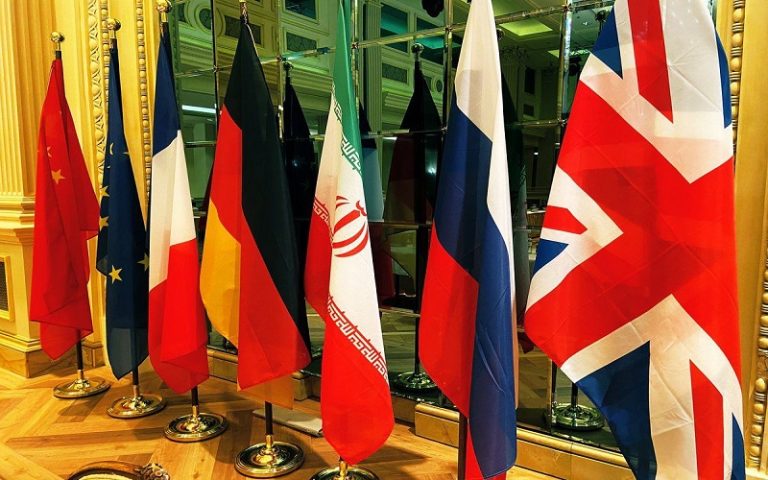
Talks held over the 2015 Iran nuclear deal, known formally as the Joint Comprehensive Plan of Action (JCPOA), ended on Friday in Vienna without direct diplomacy between the United States and Iran. Three days before this meeting, in a virtual meeting on Tuesday, April 6, the Iranian government presented a plan, which it called the “Final Game Plan,” to the international parties.

What is the “final game plan” and what is Iran’s government searching for?

On March 5, 2021 Mohsen Rezaei, secretary of the Expediency Discernment Council, announced in an interview with the Financial Times that if the West sends a clear signal that it would remove sanctions on Iran, then Iran would be ready to return to the talks.

This speech was against the instructions and the red line drawn by the regime’s supreme leader Ali Khamenei and moving back to the negotiations step-by-step. This was faced with the hasty reaction of the regime’s foreign ministry.

Mohamad Javad Zarif as the foreign minister immediately in a tweet announced: “Iranian polity is vibrant & officials express diverse opinions But those opinions should NOT be confused with state policy As Iran’s FM & chief nuclear negotiator, I will shortly present our constructive concrete plan of action—through proper diplomatic channels.”

So, the question here is, what is the ‘constructive concrete plan of action’ that Zarif is speaking about, that he refused to announce in public and said would do so ‘through proper diplomatic channels?’

The propositions provided in the negotiations last Friday, which was presented by Deputy Foreign Minister Abbas Araghchi, showed that what they are calling the “Final Game Plan” is the cancellation of sanctions at once.

Japan’s Kyodo News Agency quoted a senior Iranian government official as saying that Iran had presented the ‘Final Game Plan’ before Vienna talks at the Imperial Frankfurt Hotel in Germany.

The basis of the plan was that the Americans would remove all sanctions, and thereafter Iran would return to the JCPOA. While in the virtual meeting on Tuesday, April 6, this plan was accepted by the participating countries, and the news said that the US government is rejecting it and desires the Step-by-Step policy.

Adding to this, the U.S. side did not accept the removal of sanctions that are based on the regime’s human rights violations and terrorism.

As the US State Department spokesperson Ned Price said: “These talks have been described as constructive, as businesslike, as accomplishing what they set out to do. And that is true. We would characterize it that way as well. We would also, however, hasten to not allow expectations to outpace where we are. After all, we have said this will be hard.”

With this announcement of the United States, it would seem that the US government knows very well the trickery ways of this regime which wants to have all sanctions removed at once without paying any price, even the sanctions that are not related to the regime’s nuclear case.

While the entire regime expect all sanctions to be lifted as part of the “Final Game Plan,” the U.S. seeks to make Tehran understand that they should not expect the removal of nonnuclear sanctions.

This plan shows us something more, which is despite the regime’s claims and propaganda and its attempts to appease its supporters that the sanctions have no effect on the regime, this regime is taking its ‘last breath of life’, so that finally all its plans would lead to the removal of the sanctions at once.

And many in U.S. President Joe Biden’s administration want the continuation of the sanctions, even when they are rejecting in public Donald Trump’s ‘maximum pressure’ campaign so that they said:

“We need not have broad strategic talks at this stage. We are engaged in technical talks about how we might get to that endpoint. And it will be hard of course because there is no insignificant degree of distrust between the United States and Iran, between the United States and the broader international community. Now, we’re not going to let any of that be insurmountable and potentially stand in the way. Maximalist demands are probably not going to get us very far.” (Ned Price, US State Department spokesperson, April 8)

“We Have Reached the End of the Line,” Iranian People

In recent months, the Iranian people have dramatically increased their protests against their theocratic rulers across the country. They flagrantly announce their disappointment over officials’ mismanagement, corruption, and hazardous decisions. “We have reached the end of the line” citizens from different classes commonly say in various cities and towns.

For many years, officials in Iran attribute all dilemmas and difficulties to foreigners. They brag about their scientific progress on the one hand and justify their inabilities by blaming other countries. However, the experience of the 2015 Iran nuclear deal, formally known as the Joint Comprehensive Plan of Action (JCPOA), and billions of dollars afforded to the ayatollahs proved that there is a domestic barrier in front of the nation before anything else.

“The situation in our country will not improve, and our (economic) problems will not be solved because the main reason for our problems is internal. Even if it rains gold, but we do not enjoy meritocracy and the rule of law, nothing will be solved,” said Javad Mansouri, the first commander of the Islamic Revolutionary Guard Corps (IRGC), in an interview with the IRGC-controlled Fars news agency on December 9, 2013.

Furthermore, on August 13, 2018, Daily News quoted the Supreme Leader Ali Khamenei as saying, “The country’s economic problems were the result of internal mismanagement by the government and not just because of the U.S. pressure.”

In other words, systematic corruption is the main obstacle that has barred the people of Iran from prosperity and progression. This phenomenon has hijacked the country’s fate and left a weak and brittle economy based on money laundering, embezzlement, and nepotism.

“You have created a field… Iran’s economy runs on a corrupt field… It is full of non-transparency and corruption,” said Abbas Akhoundi, the former Minister of Roads and Urban Development, in a TV program.

Meanwhile, state-run media highlight the international isolation and domestic social hatred as the aftermath of corruption and money laundering. “Recent high prices have made the society nervous, putting it on the verge of a social explosion. This incident would happen soon if it does not happen today,” wrote Arman daily in its April 3 edition.

On the other hand, Iranian citizens openly declare their hatred of the rulers and their tricks. From April 4 to 7, the people staged at least 56 protests, including rallies, strikes, and marches, despite a new surge of the coronavirus disease. Protesters frequently chanted, “We have not seen justice,” “We no longer vote,” and “Death to the deceitful government,” referring to the upcoming presidential election scheduled for June.

“You can no longer deceive us with lovely words. We will return tomorrow. This time, we would stand until the end and obtain our rights even if you gun me down here,” said a protester during a retirees’ rally in Isfahan on April 4.

“Unfortunately, as we have lied, the people no longer trust our words as officials,” said Mehrdad Veis-Karami, the member of the Parliament (Majlis) from Lorestan province, in a public session on April 6.

In the leadup to the Presidential election, the Islamic Republic has severely been challenged by ongoing protests and public distrust. Potential candidates portray themselves as progressive and opposition figures to earn people’s acceptance, which is an inverse confession of the government’s horrific failures in the past 41 years.

“We do not vote for theft, plunder, suppression, poverty, high prices, and executions, as well as those who killed the passengers of the Ukrainian airliner and issued the ruling for the execution of Navid and others,” said a citizen from Mashhad, the capital of the northeastern Iranian province of Razavi Khorasan, on April 2.

Iran’s Crippled Economy

Iran’s economic experts and analysts who have access to state-run media are speaking about the failures, bitterness, and inaccuracies that plague a nation in its economy, and looking for the ‘one’ major problem, each with its own perspective and expertise.

Some of them say the high costs are the main problem and others see the culprit for all the problems to be the government’s deception, but they are of course forced to confess about the corruption in Iran’s economic system and warn about the social consequences of this situation.

The head of the state-affiliated Iranian Social Welfare Association believes: “The more we promise people and delay the solution of fundamental problems, the higher the intensity of the social explosion.” (State-run daily Arman, April 3, 2021)

He adds: “As a result, the recent rise in prices has made the society nervous and the society is on the verge of a population explosion. If this does not happen today, it will undoubtedly happen in the near future. People hate a government that cannot manage their affairs.” (State-run daily Arman, April 3, 2021)

The government economist says that the weakness and sickness of the soul of the economy is an undoubtable reality. Iran’s economy has reached dangerous borders, and its sickness is reaching an incurable situation. He warns:

“Iran’s economy, for whatever reason it has become weakened and for whatever reason it is entangled in its work, its consequences have become more destructive every day, and especially put the times of the citizens in the worst conditions. Iran’s economy needs to be relieved, and this patient must be treated as soon as possible so that citizens do not die.” (Jahan-e-Sanat, April 3, 2021)

On the other hand, there are many experts who see that ‘one’ main problem in the ‘swamp of recession’ and especially show it in the capital market and describe the situation of the capital market these days as ‘absolute recession’.

“An examination of the capital market transactions in the new year shows that during the last four working days of last week, more than 800 billion tomans of real money has left the market. Thus, the process of withdrawing money from the market, which began last year, continues.” (Jahan-e-Sanat, April 3, 2021)

Another government economist has a different view, linking that ‘problem’ to the fate of the ‘JCPOA’ (2015 Iran nuclear deal) and believes that “as long as the fate of the JCPOA is not determined, the market is in uncertainty and ambiguity.”

Another government expert examining the causes of the failure of the government says that it is not only mismanagement that can last for years, but also the ‘main problem’ is the mislead of the production support.

“It has been almost half a century that the country’s economic policy-making, despite the change in political structure and change of governments, has been done on the wrong path, and as a result, the efforts of the relevant authorities have failed, and de-production has replaced productivism.” (Jahan-e-Sanat, April 3, 2021)

Another analyst says that under the influence of US President Joe Biden and more oil sales in the fall, we had economic growth of 0.8 percent (!) While economic growth in the first nine months of 2020 was negative 1.2 percent, then he speaks about the dependence of Iran’s government to the oil, that the slightest change in the international situation could change its price and cause problems for the Iranian economy.

Then he added to it that, “Economic growth has been negative in recent years. In other words, since 2017, the size of Iran’s economy has been steadily shrinking.” (Eghtesad News, April 2, 2021)

Finally, these government experts suggest to the government sarcastically: “In such circumstances, no complex policy advice is needed for 2021. Just do not do anything! Let the economy overcome fluctuations on a smaller scale on its own. Let there be no policy in 2021! It certainly costs less for the economy, the people and, of course, the policymakers themselves.” (Donya-e-Eghtesad, April 3, 2021)

Amnesty – Annual Report of Human Rights Abuses in Iran

Amnesty International released its annual report on Wednesday, April 7, with a section on human rights abuses in Iran. In this report, with a sharp criticism of the human rights situation in Iran, it announced that the Iranian government in 2020 was increasingly using executions as a tool for political suppression of protesters and opponents and members of the minorities.

Execution, tool of suppression

Amnesty International said executions in Iran were being ordered in extremely unfair courts and a large number of the executed are from the Kurdish minority of Iran.

Amnesty International referred to the execution of the Ruholllah Zam, director of the Amad News telegram channel, and emphasized that the Iranian government uses executions as “weapon of political repression.” Amnesty International pointed to secret executions and executions of people who were under the age of 18.

According to the report: “The authorities continued to commit crimes against humanity by systematically concealing the fate and whereabouts of several thousand political dissidents forcibly disappeared and extrajudicially executed in secret in 1988. Mass graves believed to contain their remains were subject to ongoing destruction.”

Breach of freedom of expression, association and assembly

In another part of the report, it pointed to the suppression of freedom of expression, illegal use of forces to suppress protesters and the arrest of hundreds of protesters, dissidents, and human rights defenders. Another part of this report pointed to institutional violence against women, ethnic and religious minorities, as well as forced disappearance, torture and other brutal and inhuman behaviors which are widespread and organized, and of course the impunity that exists for the preparators of such crimes.

“The Ministry of Interior as well as security and intelligence bodies continued to ban independent political parties, and human rights and civil society groups. Censorship of media and jamming of foreign satellite television channels continued. Facebook, Telegram, Twitter and YouTube remained blocked.

Hundreds of people remained arbitrarily detained for peacefully exercising their human rights. Among them were protesters, journalists, media workers, political dissidents, artists, writers and human rights defenders, including lawyers, women’s rights defenders, labour rights activists, minority rights activists, conservationists, anti-death penalty campaigners and those demanding truth, justice and reparation for the mass extrajudicial executions in the 1980s. Hundreds of prisoners of conscience were excluded from pardons and temporary releases.”

Downed Ukrainian airplane by the IRGC

Amnesty International referred in another part of its report to the Ukrainian aircraft which was shot downed by the Revolutionary Guards and the secrecy of the Iranian authorities from the beginning. In the following, it referred to the suppression of protesters who referred to this crime and wrote:

“In January, security forces used unlawful force, including firing pointed pellets from airguns, rubber bullets and tear gas, and using pepper spray, to disperse peaceful protesters demanding justice for the Ukrainian plane crash victims. They also kicked, punched and beat protesters and carried out scores of arbitrary arrests.”

Inability in dealing with COVID-19

Amnesty International assigned part of its report to the coronavirus and government officials’ behavior dealing with this epidemic. Amnesty International emphasized that the Iranian medical system was heavily stressed, and more than 300 medical employees has lost their lives. At the same time, government officials conducted measures to prevent the publication of independent reports and in order to silence criticism on its dealing with this epidemic.

Amnesty International referred to the fact that the Iranian Health Ministry provide the media a daily report about the victims and deaths by this disease, but there are serious doubts about the correctness of these statistics. Particularly, the Iranian Medical Education organization consider victims of three to four times official statistics.

The situation of prisons

Amnesty International assigned part of his report to prisons. Prison authorities and prosecutors deliberately deprive political and prisoners of conscience from medical care. The health status of prisoners remained brutal and inhuman in many prisons and detention centers. These conditions have placed more prisoners at risk of coronavirus disease.

The organization noted that at least 160 people were sentenced to flogging last year, several male prisoners lost their lives in suspicious conditions. Video evidence suggests that at least two of them were tortured before death.

The Iranian government has refused to accept the United Nations Special Reporter and other UN experts or independent human rights observers, and generally rejected their cooperation requests.

Forced Confessions

Unpredictable trials, broadcasting “torture-tainted confessions” from television, immunity of human rights violators from punishment. Disappearance and torture because of protests, are also other human rights violations, which has been addressed by Amnesty International. The organization emphasized that many detainees, including prisoners of consciousness, have been disappeared by keeping them in uncertain places and hiding them from their families.

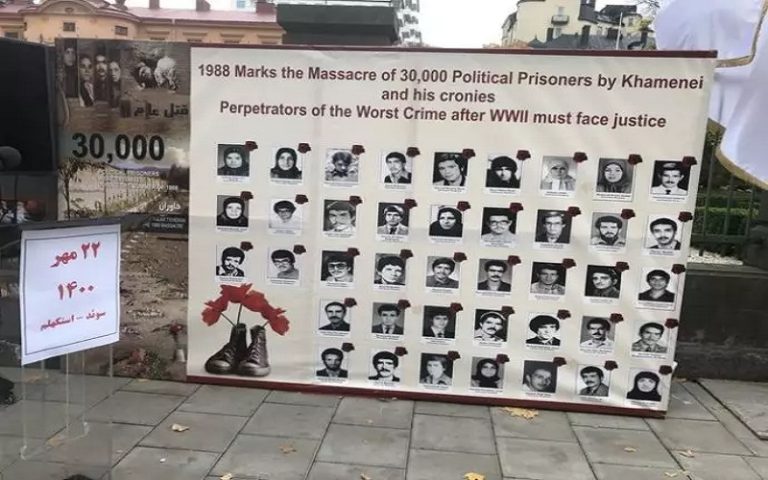
Fate of the 1988 political prisoners’ massacre

Part of the annual report of Amnesty was dedicated to the continuation of the Iranian government’s secrecy about the fate and place of the 1988 massacre victims, and it described it as a crime against humanity.

“The authorities continued to commit the crime against humanity of enforced disappearance by systematically concealing the fate and whereabouts of several thousand political dissidents who were forcibly disappeared and extrajudicially executed in secret in 1988 and destroying unmarked mass gravesites believed to contain their remains.

Security and intelligence forces threatened victims’ families with arrest if they sought information about their loved ones, conducted commemorations or spoke out.

“Impunity prevailed for past and ongoing crimes against humanity related to the 1988 prison massacres, with many of those involved continuing to hold top judicial and government positions, including the current Head of the Judiciary and the Minister of Justice.”

Iran’s Government Sells Away the Country’s Gold Mines

Many parts of the recent Iran-China 25-year contract remain unrevealed for the people and even some of the regime’s officials. China forced the regime to obey its orders and not to speak about parts of this ‘country-selling’ contract. This indicates that china stands to benefit hugely from this contract, and the Iranian regime, or better said, the people and the country, are the main losers in this contract.

One part of this contract that has been revealed by the state-run media is China’s investment and exploitation of Iran’s gold mines.

It is highly unlikely that the Chinese are doing this in the favor of the Iranian regime or Iran and its people.

China previously entered the fishing industry of Iran in the Persian Gulf and has actually destroyed the life and work of the Iranian fishermen market and put a severe damage to the aquatic life cycle in this water. This action has been protested by the people of the region and the people of Iran.

Now the next country selling fact, which the regime is trying to contradict from the base, is reflected by its own media. Below are excerpts of an article in the state-run website Tejarat News, April 5, 2021:

“The Chinese have been working in Iran’s gold mines for a long time, but since the gold mines are in the hands of the public sector with more reserves, private sector activists still do not know what decision was made for the gold mines in the 25-year Iran-China cooperation document.

“Shahram Shariati, secretary general of Iran’s Youth Chamber of Industry, Mines and Commerce, says the Chinese have been working in the country’s mines for a long time, and the more attractive the working conditions, the more welcome they are.

“Regarding the 25-year cooperation document between Iran and China, we have not been informed about the details of the investment or exploitation of the mines, but what is clear is that the mines, including gold mines, are part of the investment agreements between Iran and China.

“Shariati, while emphasizing that from the past until today China’s contracts with the Iranian government have been non-transparent for the private sector, said: ‘Iran’s gold mines with high reserves are mostly state-owned, and if a contract is concluded in the technology, sales and investment sector is state-owned, and the private sector is not informed about the content of the contract and its news’.

“Bahram Shakoori, head of the Iranian Chamber of Commerce’s Mines Commission, said that they did not provide details to the private sector about the details of the 25-year Iran-China agreement and added: ‘If the Chinese are going to exploit gold mines as before, only the public sector knows the details.’”

Then while being aware about the consequences about this situation, Shakoori, who is a government official, added: ‘We should not devote our interests to countries like China and Russia, and we should increase our interaction with the world, especially European countries, so that we can have the upper hand in economic contracts.’

“Earlier, Massoud Khansari, head of the Tehran Chamber of Commerce, in approving the Iran-China cooperation document, considered the country’s mines to be innumerable and in need of foreign investment.

“Currently, the definitive gold reserves in Iran’s mines are 250 tons, which are extracted by the public, private sectors and foreign investors.

“Now we have to see with the document of 25 years of cooperation between Iran and China, will the Chinese be more open to enter Iran’s mines than before?”

While this state-run news outlet is trying to play teeter-totter between the investment in Iran’s mines by the country’s so-called private sector which is in the hands of the regime’s Revolutionary Guard (IRGC) and the public sector, but it reveals that the regime fearing anti-government protests is using any way to hide the country-selling clauses from the people to have the opportunity to revive its money resources lost because of the sanctions. That of course is not in favor of the people but in favor of its malign activities.

Thieves in Iran’s Car Industry

Assuming that a list of the names of Iran’s looted people can be prepared, the names of more than 95 percent of the Iranian population should be put on this list.

The reason is clear: it is because natural resources, soil, mountains, forests, rivers, wetlands, and everything in the treasury of Iran’s national capital are the target of plundering by the government.

One of the most obvious cases of theft by the government is implemented by the state-affiliated AZVICO company which stole the people’s money with the contract for the pre-purchase of the MG 360 car.

AZVICO Company was registered in 2013, but the contract for MG 360 cars started in the winter of 2018. On December 17, 2018, a currency allocation license was issued for it, and the order registration license was approved.

But the issue was not the delivery of the car to the buyers at all, but the looting of people’s property by taking 4200 Tomans currency from the government and stealing the money of the people who registered to buy a car from this company and paid 40 million Tomans of the car price.

ISNA news agency wrote in confession to this theft: “According to the official statistics of the Central Bank, the Azerbaijan Automotive Industry Company, i.e., AZVICO, by the end of March 2019, it has received the 4,200 Tomans official currency in the amount of $ 20 million in government currency and according to the official statistics of the monthly car production published by the Ministry of Industry, Mine and Trade, has produced 3570 cars by the end of 2018. Evidence shows that the company did not have any license from the Ministry of Industry, Mine and Trade for the pre-sale of 5400 vehicles in May, June, and July 2018, and received the pre-sale license of about 5400 vehicles on 4 July 2018. While after three months, the car salesman received money from the remittance owners.” (ISNA, February 19, 2020)

It is noteworthy that in the absence of sanctions, the company’s car production capacity was 3,570 units per year, which begs the question, why before getting the license did it pre-sell 6,400 cars and take half the price from customers with a three-month time limit?

A document published in the newspaper of the Ministry of Industry, Mine and Trade states: “The company produced and delivered 2,300 vehicles in 2018, that is, sold 2,200 vehicles on the black market later at a higher price instead of selling them to the people who pre-ordered it them.”

They took from each customer 40 million Tomans in advance money, which is how they took between 250 to 300 billion Tomans from people in 2018 to deliver them a car.

Then this company did something very strange and perfected its theft, as ISNA wrote: “There are 746 non-finished vehicles, so it is planned to complete the vehicles according to the penalties and hand over the remittance owners due to the registration priority. After that, the company called 746 customers and announced that they should deposit the excess amount of 40 million Tomans in the form of a check to the company’s account and then wait for the cars to be delivered within the next one or two months.” (ISNA, February 19, 2020)

But not in 2019 nor in 2020 and of course nor today have any cars been delivered to the people. The question is who are behind this story?

Taghi Kabiri, a member of the 10th parliament, Naqdi, former Minister of Industry, Mine and Trade, Abbas Tabesh, head of the so-called Consumer Protection Organization, are individuals who were in the hands of the AZVICO board of directors.

One of the plundered people said: “Now they tell me come and we will return 12 percent of your money, and many referred and this 12 percent which took several months to get their money back and many did not take it back.”

And another one who tried to take his money back said: “I went to the factory, they said we cannot give a car, I said give our money back, we do not want a car at all. They say we do not give money or any car.”