Home Blog Page 296

Missed Future for Iran’s Children

Since the beginning of their rule in Iran, the ayatollahs are responsible for millions of deaths inside and abroad. The high intensity of words and phrases like execution, suicide, immolation, organ selling, and sleeping in cars, roofs, graves, and appliances’ cardboard, as well as ongoing news about the death of children, display how the rulers see the people.

In other words, these realities reveal that not only does the Iranian government violate the opponent’s fundamental human rights, but it does not care about people’s livelihood and welfare. Rampant poverty, high prices, inflation, expanded gap between society and state show the government drives the country to misery and backward.

The Islamic Republic founder Ruhollah Khomeini led millions of people, including teenagers and minors, to an eight-year war of erosion with Iran’s western neighbor Iraq. Khomeini and his eulogists, like current Supreme Leader Ali Khamenei and former President and Propaganda Minister Mohammad Khatami, incited children to sacrifice their lives for opening minefields.

They exploited teenagers’ religious beliefs in order to continue the war. Then-commander of the Islamic Revolutionary Guard Corps (IRGC) Mohsen Rezaei called innocent children “one-time use soldiers.” Once, he spoke about between 360,000 to 400,000 school and college students who the attended war fronts. Since the end of the war in 1988, the Islamic Republic occasionally parades those children’s remaining bones to deceive others and gain a social base.

Read More:

Iran’s Deprived Students: Where Is Their Money Spent?

However, the real number of children who fell victim to the government’s goals is far higher. In addition to the war’s victims, Iranian officials have destroyed the lives of millions of children by spreading poverty and misery among citizens. Dropouts of school and child laborers, vendors, and garbage-collectors are seen in almost all of Iran’s provinces. Furthermore, suicide among minors is the flipside of these social phenomena.

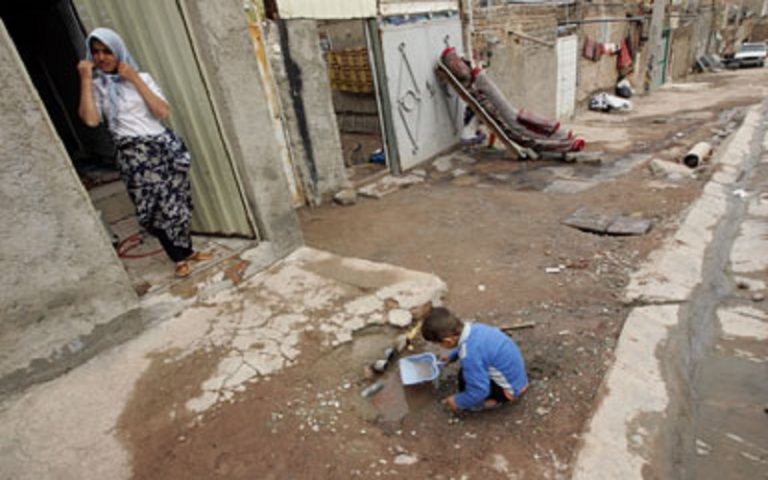
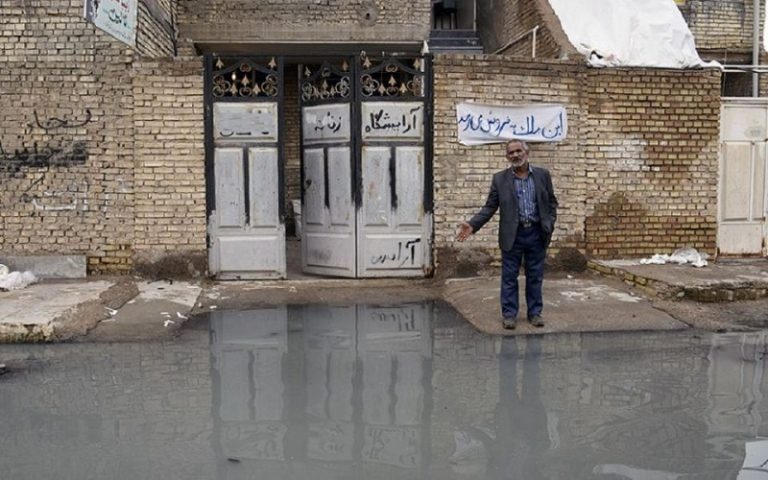
In its February 17 edition, Aftab-e Yazd daily pointed out an ongoing catastrophe in Ahvaz city, Khuzestan province’s capital. “Danial’s death for which sin?” the daily titled, attracting attention to the dire condition of Ahvaz’s infrastructure.

“There is no end for the tragic death of Ahvaz’s children. Children soon bid farewell to their world due to the officials’ indifference about the sewage problem. Two-year-old Danial Navaseri from Darvishieh area in Kut-Abdollah district has just lost his life to fall in open sewage runnel,” wrote the daily.

“There is an open sewage system in this area, and it had not built a standard system for sewage. In August 2020, one-year-old girl Sedigheh Heydari fell into the open sewage system and lost her life. Before her, children like Mohammad Sadegh Zargani, in March 2016, one and half-year-old Mohammad Erfan Abidavi, in May 2018, and three-year-old Ali Baravieh, in August 2018, had died of the same way,” said Gholamreza Safarnejad, chief of Ahvaz’s Water and Sewage Organization.

Social media activists reflected on this ongoing drama. “This boy would be with his family if we had a sewage system,” posted an activist.

“I remember my little brother when his head was tainted with blood and sewage. The pain is that these sewage wells are getting victims after 20 years,” wrote another activist. “Is there anyone to provide four lids for these wells?” posted an activist. “This is the official’s imprudence that kills innocent children,” another activist added. “No one would realize what is going on in Ahvaz and how ridiculously this city is being governed!” wrote an activist.

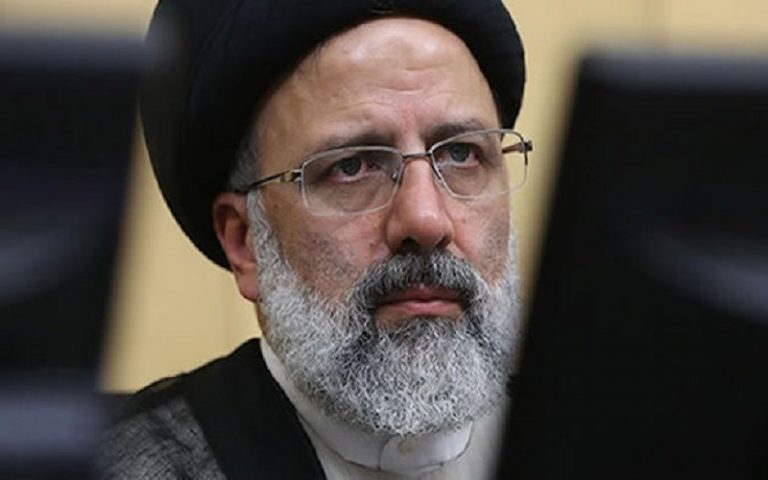
Notably, President Hassan Rouhani promoted former Khuzestan Governor Gholamreza Shariati as the head of Standard Organization on February 14. This promotion shows a perfect view of the Islamic Republic’s system and how imprudent officials gain significant positions.

Now, Shariati’s standard seems to engulf the country, and Iran would face many more dilemmas under the shadow of Rouhani’s new appointee. Surprisingly, the new Standard Organization’s head was involved in the mass killing of dozens of protesters in Khuzestan province during the gas protests in November 2019, which sounded alarms about more deaths and misery in various cities.

Iran To Further Breach Nuclear Deal

0

Iran has announced plans on Monday to further violate its commitments under the 2015 nuclear deal with world powers or Joint Comprehensive Plan of Action (JCPOA), which the Iranian Resistance says is perfectly in step with the mullahs’ nuclear extortion campaign.

The regime said, according to Reuters, that “it will block snap inspections by the [United Nations] nuclear watchdog from next week if other parties to the 2015 nuclear deal do not uphold their obligations”.

It should be said that the five remaining signatories to the deal have bent over backwards to meet obligations given the international sanctions on Iran, but Iran have been openly violating the deal for over a year and the US pulled out in 2018 citing Iranian non-compliance and the deal’s failure to cover other malign actions by Iran.

The signatories thought that the deal would end Iran’s nuclear ambitions but, in reality, they left some glaring loopholes that the regime could exploit. This led National Council of Resistance of Iran (NCRI) President-elect Maryam Rajavi to say in 2015 that if the world powers had been more forceful that Iran would have no choice but to end its nuclear weapons programmes.

The NCRI actually revealed Iran’s nuclear weapons programme in 2002, prompting international sanctions and leading to the 2015 deal.

In 2017, the US Representative Office of the NCRI revealed that the nuclear programme was continuing at the Research Academy in the Parchin complex, something that Iran’s nuclear chief Ali Akbar Salehi confirmed in an interview with the state-run Fars News Agency.

He said: “Nuclear activities, as well as research and development on the nuclear fuel cycle, uranium conversion, and enrichment are being carried out without any restrictions.  Enriched uranium production and stockpile are now as high as pre -JCPOA period, heavy water storage is being carried out without any restrictions the process of building the Arak heavy water research reactor is advancing in cooperation with foreign parties and the use of related equipment.”

In response to this, Rajavi noted that the regime never gave up on trying to build a nuclear bomb and still “continues the deception and concealment. The regime uses all the facilities and concessions that the nuclear deal has given to pursue terrorism, foreign warfare, and domestic repression”.

The NCRI advised that Europe ends its appeasement policy, which is only encouraging the mullahs, and instead take a firm stance against Iran’s terrorism and nuclear extortion.

New Revelations Expose Iranian Propaganda After Terrorist-Diplomat’s Conviction

0

Early this month, a Belgian court convicted the Iranian diplomat Assadollah Assadi of planning a deadly terrorist attack on European soil. The plot in question was thwarted in the summer of 2018, but the ensuing investigation and trial helped to expose a much larger underlying threat. When Assadi was arrested by German authorities, documents were recovered from his car which showed that he had been in contact with a network of operatives spanning at least 11 European countries. Many of those operatives received cash payments from Assadi while he was serving third counsellor at the Iranian embassy in Vienna.

The nature of those cash payments remains to be determined, and critics of the Iranian regime have urged Western governments and multinational bodies to undertake more serious investigations of the full range of activities that figures like Assadi had been pursuing around the world.

There’s little question that the network associated with Assadollah Assadi has a role to play in both these aspects of Iran’s foreign strategy: direct attacks on its adversaries and disinformation campaigns aimed at smearing it as either ineffectual or dangerous to Western interests. Fortunately, that narrative has been widely rejected within American and European policy circles, as evidenced by the presence of political dignitaries from all major political parties at the event that Assadi attempted to bomb in 2018. Unfortunately, though, it has not been rejected entirely by the governments in which those parties are represented.

We should hope that this situation will not last much longer, now that Assadi and his three co-conspirators have been convicted, and their network exposed. Paying attention to Iran’s propaganda at this point would needlessly downplay the effects of far-reaching infiltration by institutions like the Iranian Ministry of Intelligence and Security (MOIS). It would also lend false credibility to the very claims that motivated the 2018 plot in the first place.

Read More:

State-Run Media Highlights Iran Terrorism

According to the Belgian National Security Service, that plot had not been undertaken on Assadi’s own initiative but had been ordered from high up in the Iranian regime. And according to the NCRI, the decision stemmed from discussions involving both the regime’s Supreme Leader Ali Khamenei and President Hassan Rouhani. It marked a notable departure from the regime’s usual modus operandi, in that the activity was not channeled through proxy groups but was placed directly in the hands of a high-ranking diplomat. This hands-on approach reflected the perceived importance of the operation, which was reportedly intended to kill NCRI President-elect Maryam Rajavi, in particular.

About three months prior to the Free Iran rally at which she delivered the keynote address, Mrs. Rajavi urged activists in Iran to make the just-begun Iranian calendar year a “year full of uprisings.” That in turn was motivated by a protest movement that had broken out in more than 100 Iranian cities and towns at the end of 2017, then continued through much of January 2018. The movement exposed previously hidden vulnerabilities in the clerical regime and, more to the point, revealed the domestic popularity and organizational strength of the MEK, which even regime officials credited with leading the protests.

By the summer of that year, the regime was desperate to counter direct challenges to its rule and also to reassert the propaganda that portrayed the MEK as an ineffectual cult and helped to prevent Western governments and international bodies from supporting those challenges. A devastating attack on the powerfully symbolic Resistance gathering might have accomplished both of these aims, but unfortunately the failure of that attack only thwarts one of them. The regime’s propaganda has not been amplified in its wake, but it has not been uprooted, either.

This is because talking points that target the Resistance have been spreading through international media for many years, as the result of an increasingly sophistication system of international warfare carried out by networks like the one associated with Assadollah Assadi. On one hand, Assadi’s conviction helped to alert Western governments to the existence of these networks, potentially putting them on a path toward confronting them. But on the other hand, the networks’ mere existence is not enough to convince American or European policymakers that they or their colleagues have been deliberately misled about the situation in Iran.

Just this week, the NCRI announced the release of a letter than had been sent to United Nations Secretary-General Antonio Guterres from a former collaborator with the Iranian Ministry of Intelligence and Security, expressing regret over his dissemination of false claims points about the Resistance movement. “For four years I fell into a trap set by the Iranian regime’s Ministry… and its Iranian embassy in Albania,” said the author, Hadi Sani-Khani, before going naming specific agents, tactics, and operations the regime used in an effort to poison the international press against the MEK and forestall any Western support for its democratic aims.

Among other things, the letter explained the genesis of a 2019 article in Der Spiegel that parroted false claims about the MEK’s community in Albania – an article that later became the subject of a lawsuit that resulted in a court order for the retraction of those claims. That article was not the only one of its kind to face a successful legal challenge, and this phenomenon should go a long way toward demonstrating the legitimacy of the Sani-Khani letter and the underlying claims regarding an Iranian influence network dedicated to disinformation and character assassination in Western media.

As the international community sets out to further investigate the contents of the letter, policymakers should also be making plans for how to address the relevant phenomena when they prove to as real and as dangerous as the NCRI claims. No doubt most serious critics of the Iranian regime will offer the same advice they have already offered in response to Assadi’s conviction, namely that European nations should consider closing Iranian embassies, downgrading diplomatic and trade ties, launching investigations into Iranian institutions that currently operate in their territory, and pursuing indictment or other consequences for all those who have contributed to the spread of terrorism or information warfare in the name of the Iranian regime.

Iran Executes Seven on Wednesday

The Iranian regime executed seven prisoners at dawn on Wednesday in Rajai Shahr Prison, a.k.a. Gohardasht Prison, bringing the total number of executions in February to 13. 

This included six men and one woman, all convicted of murder. However, it should be understood that Iran does not separate murder by degrees, so many people convicted of murder may have killed by accident (i.e., manslaughter) or in self-defence. Many women who are victims of abuse may be executed for killing their abuser. 

In fact, the woman executed, Zahra Esmaili, was a domestic violence victim who killed her husband in self-defence. The 42-year-old, who is the 114th woman executed during the presidency of Hassan Rouhani, was regularly beaten by her detective husband. 

On Monday, the mother of two was moved to solitary confinement in Qarchak prison in Varamin, where she’d been serving her sentence, before being moved to Rajai Shahr prison in Karaj on Tuesday.

Read More:

Fundamental Violations of Human Rights in Iran

In recent weeks, the Iranian regime has executed three other women in prisons in Ardabil, Sanandaj, and Karaj. The regime, which is the world leader in executions per capita, is also number one in executions of women. Most of these executions are handed out for offences where international law prohibits the death penalty, including in the many murder cases that should be tried by lesser degrees. 

In the seven-and-a-half-year rule of Rouhani, a supposed moderate, over 4,300 people have been killed. Although, as always, it’s important to note that the regime carries out many executions in secret, so the number many be much higher. 

The Women’s Committee of the National Council of Resistance of Iran (NCRI) has published a list of all the women executed under Rouhani, which is based on reports from the state-run media and the Resistance’s network of supporters inside Iran.  

In a post on Wednesday, they reiterated their call to ban the death penalty in Iran, something that is covered in their 10-point plan for a Free Iran. 

The Iranian regime uses executions and other repressive measures to intimidate the public against taking part in popular protests. 

Th UN High Commissioner for Human Rights, UN Human Rights Council, and other human rights groups should take immediate action to save Iranian prisoners on death row. Human rights organizations such as Iran HRM have also called for the regime’s human rights violations dossier to be referred to the UN Security Council and for regime officials to face justice for crimes against humanity. 

Iran-EU Trade Summit Should Be Cancelled

On March 1, the Iran-Europe prospects for economic relations summit, hosted by the International Trade Centre, will begin, following the postponement from December. 

Why was the event postponed? Unlike most things postponed in 2020, the answer is surprisingly not the pandemic. 

The reason is that Iran executed French resident and journalist Ruhollah Zam after luring him to Iraq under the false pretence of a story and kidnapping him. At that point, just days before the event was due to start, European participants began withdrawing and the event was postponed officially. 

Read More:

Iran’s Economic Crisis – What Is the Cause?

Now, if you’re wondering why they would still hold the event two-and-a-half months later and questioning how serious the EU’s condemnation of this politically-motivated execution  was, hold on tight, because that is only the start. 

Iranian diplomat Assadollah Assadi was found guilty of terrorism in a Belgian court this month and sentenced to 20 years in prison for attempting to blow up a Free Iran rally in France in 2018, with the intention of killing opposition leader Maryam Rajavi and as many more people as was possible. At the rally, Rajavi was surrounded by hundreds of dignitaries from across the world and tens of thousands of Iranian Resistance supporters. 

Assadi commanded three operatives in this attack, which Belgian prosecutors said was directed by the ruling mullahs, including Foreign Minister Javad Zarif, but stands accused of running a terror network across Europe based on evidence found in his car by German police upon his arrest. 

Given this, why would Europe hold any summit with Iran, let alone one where Zarif is a keynote speaker alongside EU foreign policy head Josep Borrell 

The Resistance wrote: “It could hardly be clearer that for many leading policymakers, the issue with the originally scheduled event was not its invitation to open dialogue with a world-leading human rights abuser but rather its proximity to the most recent and most internationally recognized such abuse. The new date for the summit simply reflects an assumption that the dust has settled enough for the EU to carry on with business as usual in hopes of retaining access to Iranian markets and avoiding the political challenge of confronting Iran’s theocratic regime. 

Many lawmakers across Europe have urged the EU to abandon the summit and make all relations with Iran contingent on the ending of Iranian terrorism in Europe and the improvement of the human rights situation. They’ve also argued for scrutiny of Iran’s embassies and cultural institutions. 

The Resistance wrote: “If the Business Forum goes forward under current circumstances, it will only inspire a stronger sense of impunity among Iranian authorities by giving them the impression that the EU intends to pursue Iranian trade relations without prior conditions. 

Fundamental Violations of Human Rights in Iran

0

The arrest of Ahmad Saedi and breaking his grandmother’s hand by the IRGC:

Intelligence agents of Iran’s Revolutionary Guards (IRGC) broke the hand of his grandmother when they arrested a young man in Hamidiyeh, Ahvaz. Revolutionary Guards intelligence arrested the second member of Saedi’s family in Ahvaz. On Monday, February 8, IRGC agents raided Ahmad Saedi’s house and took him to an unknown location.

Ahmad Saedi
Ahmad Saedi, arrested by Iran’s IRGC intelligence

Violence by IRGC intelligence

Ahmad Saedi is an Iranian Arab civil activist and poet of the time. He is 26 years old and married. The reason for his arrest has not yet been announced.

Ahmad Saedi had previously been arrested in 2018 for collecting public donations for flood victims in Dasht-e Azadegan, along with a number of other popular committees.

Three months ago, his brother, Abbas Saedi, was also arrested for unknown reasons and transferred to Sheiban Prison. Abbas Saedi is currently being held incommunicado in Sheiban Prison.

According to reports, when Ahmad Saedi was arrested, his grandmother was injured in the shoulder by the IRGC and is currently in hospital.

Ahmad Saedi's grandmother in the hospital
Ahmad Saedi’s grandmother in the hospital

IRGC hostage-taking

Another report states that before Ahmed was arrested, the father of the family was taken hostage. He was held in prison until Ahmed was arrested.

The wave of arrests of Ahvazi activists continues. On February 10, three people were arrested by intelligence in Susangard. The detainees are Ayub Sharifi, 29, married, Hassan Halafi Sharifi, 23, married, and Yousef Sharifi, 26, married. All of them were detained by intelligence agents and transferred to Tehran, and their status is unknown.

Marjan Eshaghi, a political science student, has been sentenced to five years in prison

Marjan Eshaghi, a student at the University of Tehran, was reportedly sentenced to five years in prison on appeal. Ms. Eshaqi, a political science student at the University of Tehran, was arrested on charges of participating in the November 2019 uprising. Earlier, she was sentenced to one year imprisonment and four years suspended imprisonment in Branch 15 by the Revolutionary Court of Tehran.

Marjan Eshaghi
Marjan Eshaghi

This sentence was issued by the Tehran Court of Appeals and was recently notified to her. Ms. Eshaghi was sentenced to four years suspended imprisonment and one year imprisonment on charges of conspiracy against national security. The court declared her participation in the student protests of November 2019 as an example of these crimes.

Execution of a Baluch prisoner without a death sentence in Birjand

Reports from Birjand prison in Iran indicate that a Baluch prisoner has been executed and five more are likely to be executed. On February 13, an Iranian Baluch citizen named Jamal al-Din Barahui was suddenly executed in Birjand prison. Additional information indicates that 40-year-old Jamal al-Din Barahui, son of Khodadad from Sefidabeh village of Nasrabad district of Zabol, was executed in Birjand prison. He was executed on drug charges.

Jamal al-Din Barahui

Jamal al-Din was sentenced to 27 years in prison

Jamal al-Din was arrested about two years ago at the Salabad checkpoint in Birjand, according to an informed source. He was sentenced to 27 years in prison. But suddenly this prisoner was transferred to the prison quarantine ward on Thursday for execution, and he was executed on Saturday, February 13.

The news says that the family of this Baluch citizen went to visit their loved one for the last time on Friday. They were able to meet him.

State-Run Media Highlights Iran Terrorism

0

The reaction from Iranian state-run media over the recent conviction and imprisonment of their diplomat Assadollah Assadi on terrorism charges in Belgium highlights how the regime is actually responsible for state-sponsored terrorism.

The state-run Mizan news agency accused Europe of “politicizing” the case and called for the regime to retaliate. The outlet, associated with the Judiciary, then admitted that retaliation was in fact the reason that they stopped the South Korean ship last month, even though they promised at the time that this was not true.

The outlet wrote: “After [South Korea] refused our demand to pay its debt, we stopped the Korean ship under the pretext of polluting the Persian Gulf and the environment.”

This debt is actually being held because of international sanctions on Iran that bar other countries from providing it with assets held in other countries.

The terror plot

In June 2018, Assadi smuggled 500 grams of explosives into Europe in his diplomatic luggage. He drove to Luxembourg where he handed the bomb and detailed instructions to a Belgian-Iranian couple, telling them to bomb the Resistance’s “Free Iran” rally in Paris on June 30.

Read More:

Western Policymakers Ignore Iran-Al Qaeda Relationship at Their Peril

The plot was foiled by European police and countless lives were saved. Assadi’s three accomplices – another was waiting at the rally to report on the explosion – were arrested hours before the bomb was due to go off and he was arrested the next day.

The regime has always claimed that Assadi had diplomatic immunity and that he was being framed, which are contradictory statements, but they never disavowed him. Belgian prosecutors have consistently said that Assadi was working at the behest of the regime, including Foreign Minister Mohammad Javad Zarif.

(Also, he didn’t have diplomatic immunity because he was arrested in Germany and not Austria, where he was stationed, and Austria could have rescinded the immunity based on the crime he was accused of.)

The Resistance wrote: “Due to the Iranian regime’s 40 years of state-sponsored terrorism, Assadi’s conviction and his case, although very important, is not shocking. The surprising and rather appalling fact is that European leaders continue having a dialogue with the regime.”

For example, EU Foreign Policy Chief Josep Borrell intends to continue the “maximum diplomacy” strategy and take part in the “Europe-Iran Business Forum” with Zarif next month. (The event was postponed in December after Iran executed a French resident.)

How can this be right following Assadi’s conviction and given that European prosecutors hold the regime responsible? Given that the UN recently condemned the Iranian regime for human rights violations for the 67th time?

The Resistance wrote: “They should hold the regime accountable for its terrorism and human rights violations, not providing it with more incentive packages. Any financial help to the regime will result in more terrorism and human rights violations. The European Union should make all relations with the regime contingent on its absolute halt of terrorism and human rights violations.”

West Should Side With the People, Not Iran’s Government

Iranian agents attempted to bomb an opposition rally in France in 2018, with the goal of assassinating Resistance leader Maryam Rajavi. All four agents were arrested over the course of two days and the attack was foiled.

Following a two-and-a-half-year investigation, Iranian diplomat Assadollah Assadi and his three co-conspirators were found guilty at a court in Belgium earlier this month and given long prison sentences.

But the Belgian court and other European authorities said repeatedly that Assadi was working on behalf of the regime, so the Iranian Resistance warned Western lawmakers from regarding the matter as settled and insisted that the West was still very much in danger from Iranian terrorism, so long as they appease the mullahs. After all, German police found evidence that appears to place Assadi at the head of a terrorist network across Europe.

The Resistance wrote: “In the wake of Assadi’s conviction, it is essential that the European Union and the entire international community revaluates their approach to dealing with the Iranian regime and considers new measures that could be employed to mitigate the terrorist threat in the short term and uproot it over the long term.”

Sadly, Josep Borell, the EU foreign policy chief seems set on pursuing a “maximum diplomacy” strategy and even participating in the “Europe-Iran Business Forum” next month with Iranian Foreign Minister Javad Zarif, who is Assadi’s boss. (This event was postponed in December after Iran executed a French resident.)

Read More:

Turkey Arrests Iranian Diplomat for Murder

Luckily, there are hundreds of lawmakers from all across the political spectrum who believe that the right thing to do is actually support the democratic Resistance, which advocates for individual freedoms and the institution of democracy.

Apart from this, other policies necessary for ending the regime’s terrorism include:

  • making relations contingent on the dismantling of Iran’s terrorist network and assurances that it will end its support for terrorism
  • investigations of Iranian embassies and cultural groups
  • holding regime leaders, including Zarif, accountable for the terrorist acts they ordered

After all, this brazen attack just shows how the regime was threatened by the Resistance in Iran following the nationwide uprising that took place in December 2017, just six months earlier. The regime hoped that by destroying Rajavi, they would regain control, but nothing could be further from the truth.

The Resistance wrote: “It is incumbent upon Western governments to take the threat of Iranian violence seriously both for the sake of their own security and for the sake of the Iranian people. These two objectives go hand-in-hand because inevitably if the Iranian regime fails to crackdown on dissent in one venue it will turn its attention to the other. Furthermore, it is only by protecting the Iranian people in their fight for a democratic future that the EU and the US can hope to permanently remove the Iranian terror threat from the world.”

Why Is Khamenei Scared of Satellite Internet?

0

There is many news these days about the finalization of satellite internet. Elon Musk, CEO of SpaceX, which is launching the Starlink satellite Internet project, has announced that the space Internet is ready for people to access and use. He said that, after the launch of the latest satellites (October 2020), when these satellites reach their destination, we will be able to launch a relatively large-scale pilot project to access the Internet in the northern United States and possibly southern Canada. Then he added that other countries will be on the list soon. Once we can get the necessary permits.

The uselessness of Khamenei’s national internet

It is estimated that 3 billion people, or about 40% of the world’s population, are denied access to the Internet. Of the current 4.5 billion subscribers, many do not have access to high-speed, cheap, high-quality Internet. That is why the news of the arrival of Starlink satellite internet has given many users hope. However, Iran’s supreme leader Ali Khamenei and his officials are terrified of the outcome of this advanced humanitarian project.

Read More:

Iran Internet Censorship – Update

Continuing to express this fear, Abolhassan Firoozabadi, the secretary of the Virtual Supreme Council, whose job is to censor and deprive Iranian people of global communication systems, announced the uselessness of parallel government systems. He announced the formation of a working group to deal with satellite Internet.

Firoozabadi said on Sunday, February 14, that with the advent of satellite internet, “the entire national information network may be endangered.”

Government’s cyberspace domination will end

Unable to allay his fears that the Internet would break free of Khamenei’s monopoly, he said that measures should be taken to ensure that “cyberspace governance” is not compromised by the introduction of this technology. Firoozabadi, who is aware of the government’s multi-year investment in launching a national information network to deprive the Iranian people of the World Wide Web, said: One way to face the satellite Internet network is to develop the country’s fixed network. He warned that with this lack of development, “we see the security of the country’s cyberspace in danger.”

Some experts believe that if satellite Internet projects such as SpaceX, are completed, the world of communications will change. People around the world will be able to access the Internet without filtering.

Iran is the worst country in internet freedom

Khamenei’s officials are trying to crack down on satellite internet, while Freedom House stressed in its latest annual report on October 14: “Iran is one of the worst countries with the least internet freedom.”

Firoozabadi continued: “The Islamic Republic is facing the issue that satellite systems are coming and with its arrival, it is possible that the entire national information network will be questioned at once.”

The Iranian theocracy in the shadow of Internet censorship has deprived the Iranian people of many Internet facilities. Many social networks and media such as Twitter, Telegram and Facebook are filtered in Iran. The authorities have adjusted the bandwidth so that people could not easily access the information. The main fear of government officials is that the voice of the opposition will easily reach the people.

In November 2019, during the suppression of the popular uprising, Khamenei and Hassan Rouhani’s government launched a bloodbath in Iran with the complete cessation of the Internet. More than 1,500 people were shot in the street, and more than 12,000 were arrested.

If the satellite Internet disrupts this process of ideological and political repression of the government, there is no doubt that Khamenei should be even more terrified, Iran observers say. In any case, the dark era of this tyranny is over. From now on it is the age of light and brightness.

Iranian Farmers’ Right to Water Has Been Plundered

Over the past month, farmers in Isfahan, central Iran, have staged several large rallies to protest the denial of their water rights from the Zayandehrood River.

One of the reasons for this deplorable situation is the profiteering of companies and organizations affiliated with the government. Such organizations have built the water supply industry without accurate calculation and cut the water of Zayandehrood River by creating many dams.

Clergyman Naqdali, a member of parliament, said in fear of the anger of the deprived farmers: “Today, every day, farmers in large gatherings ask the officials to pay attention to the awkward situation of the Zayandehrood River. Relevant Institutions, Security Institutions, there is not a good situation in Isfahan in terms of livelihood for farmers.” (ICANA, January 19, 2021)

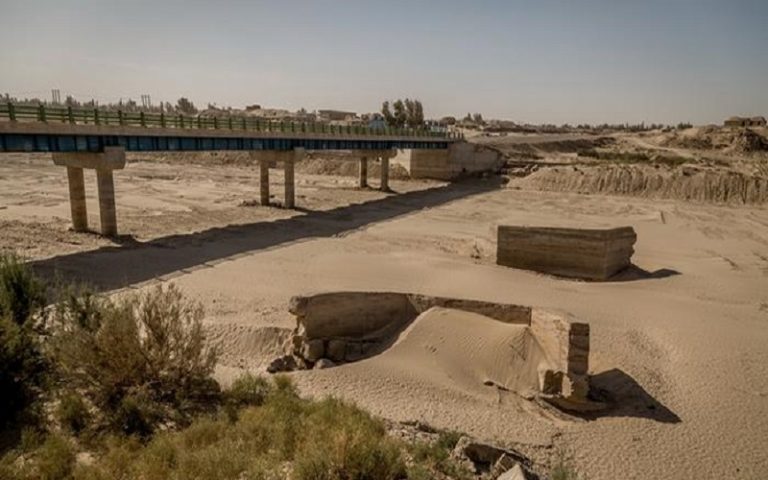
The river that used to be the bustling ornament of Isfahan province for centuries and once a part of the life of the villagers and farmers is now out of water and has become a dry area, and the people and farmers around it are waiting for the water to pass, so that they can irrigate their lands. But this is just a hopeless wish.

Read More:

Iran Media Warns of Protests Over Crises

The pressure of the government and its institutions on this river is so obvious that for years the state media have been forced to admit it.

State-run news agency Tasnim wrote: “Some 86 percent of Zayandehrood dam is empty and only 14 percent of this vital water source remains in the central plateau of Isfahan. The promises have not been fulfilled and the reopening of the river has been conditioned by rains that do not show a godd face to Isfahan these days.

“Managers, in a behavioral and managerial contradiction, each speak in their own way, and the promise of a constant flow of the Zayandehrood River in Isfahan, as promised by the President in the Eleventh Government, never materialized.” (Tasnim, January 15, 2021)

Establishment of water supply industries and digging of deep wells for many years is the main reason for the drying up of the Zayandehrood River. These industries and wells are often under the control of companies affiliated with the Revolutionary Guards or the government.

Institutions affiliated with the IRGC and the government plunder water, but the people of the region, especially the hardworking farmers of the Central Plateau of Iran, pay the price for water looting.

In one of the farmers’ protests, which was reflected in the state media, the difficulties and complaints of several protesting farmers were as follows:

“All the people here that you see are farmers, their bread comes from agriculture, all their eyes are on their agriculture.

We came many times and protested, no one listens to us, we have a document and are farmers, we have a document that is several hundred years old. Now that we have planted our crops, there is no water.

The governor said ‘plant’, the administrator said ‘plant’, the head of the water organization came and said ‘plant.’ Now we have no water.”

In the last protest of Isfahan farmers, one of them said: “We have the right to water, and we do not want to give up our water. Why did you trample on the right of the Zayandehrood?”

Every day, the government implements a new plan for plundering more and more the water of Zayandehrood. Its latest plan is to target gardeners by destroying water pipes leading to their gardens.

On Saturday, February 6, the government agents in the water department, accompanied by the police force, attacked the village of Morche Khort with heavy machinery and brutally destroyed the wells and pipes up to thousands of trees.

The words of the gardeners are as follows: “Who should pay for the damage to this pipe? The trees in the 121 gardens. Each garden has 120 trees. There are about 30,000 to 40,000 trees, and their pipes have been cut and broken. Let us die, let us become relax, let us get rid of these dishonorable people.”

Apart from the drying up of farmers’ lands due to the abduction of the Zayandehrood River, the lack of water in this river has also had devastating environmental effects on the region.

ISNA on November 28, 2021 in an article entitled, “15 cm, the average annual subsidence rate in the Isfahan-Borkhar plain,” wrote: “Groundwater studies expert of the Office of Basic Studies of Water Resources of Isfahan Regional Water Company, emphasizing that the Zayandehrood River drought, as a source of aquifer nutrition, contributes to the phenomenon of subsidence, said: The average annual subsidence rate in the Isfahan-Borkhar plain is about 7 up to 15 cm estimated per year.”

ISNA continued its report by quoting this government expert, referring to the continuous decline of groundwater in 35 plains in the east of Isfahan and Bakhtiari in the mountainous areas of west of Isfahan, the lack of water and dryness of the Zayandehrood River as the main factors of this situation and wrote:

“On the one hand, with the dryness of the Zayandehrood River, we put pressure on the aquifer that is fed by the river. It causes the phenomenon to subside and continue. On the other hand, due to the fact that the supply of drinking water to the people is a priority, by digging wells and extracting it, we put double pressure on the aquifers, which causes the subsidence and the continuation of this process. Zayandehrood’s drought, as a source of aquifer nutrition, contributes to subsidence.”