Home Blog Page 3

Iranian Regime Judiciary Announces ‘Harshest Punishment’ for Defendants in Ekbatan Case

The Mizan News Agency, affiliated with the judiciary of Iran’s regime, reported that Tehran’s Revolutionary Court sentenced a number of defendants in the Ekbatan case to the harshest punishments on charges including “corruption on earth,” collusion and assembly to commit crimes against the national security, and propaganda activities against the regime.

Mizan News Agency, affiliated with the judiciary of the Iranian regime, wrote that Tehran’s Revolutionary Court sentenced several defendants in the Ekbatan case to the harshest punishments on charges of “corruption on earth,” assembly and collusion to commit crimes against the country’s internal security, and propaganda activity against the regime.

Iran: The “No to Executions Tuesdays” Campaign Warns of Possible Death Sentences for “Ekbatan” Case Defendants

In a brief report published on the evening of Sunday, May 24, Mizan wrote: “According to the issued verdict, a number of the defendants in the case were sentenced to the harshest punishment on charges of corruption on earth, and the other defendants, based on the nature of their actions and the extent of their involvement, were sentenced to prison terms and supplementary punishments.”

The report did not mention the names of the defendants or the type of punishments and emphasized that since the verdict is not final, it is not possible to provide details about the case.

At the same time, HRANA, the news outlet of the Human Rights Activists in Iran organization, quoted a source familiar with the case as saying that Milad Armon, Navid Najaran, Mehdi Imani, and Seyed Mohammad Mehdi Hosseini — defendants in the case known as the Ekbatan Township case who were arrested during the nationwide 2022 protests — were sentenced to death by Branch 15 of Tehran’s Revolutionary Court on charges of moharebeh (“waging war against God”). The court was presided over by Judge Abolqasem Salavati.

According to the report, Amir Mohammad Khosh-Eghbal, Alireza Barmerz Pournak, Alireza Kafaei, and Hossein Nemati, other defendants in the case, were each sentenced to seven years in prison along with supplementary punishments.

According to the informed source, the ruling was verbally communicated to the defendants on Sunday without the presence or knowledge of their lawyers, and by the time the report was published, the attorneys had still not been informed. As a result, the lawyers were unable to file appeals.

Previously, all six defendants in the case had been sentenced to death, but the ruling was overturned by the Supreme Court, and the case was referred to Branch 13 of Tehran Criminal Court for retrial.

In this part of the case, Branch 13 of Tehran Province Criminal Court No. 1 convicted Milad Armon, Alireza Kafaei, and Amir Mohammad Khosh-Eghbal on charges of participating in the intentional killing of Arman Aliverdi, a member of the Basij paramilitary force. Each of them was sentenced to pay an equal share of the full blood money compensation for one person and to five years in prison.

The Ekbatan Township case dates back to the nationwide protests of 2022. On October 26, 2022, Arman Aliverdi, a member of the Basij paramilitary force, was injured in Ekbatan Township while sent to suppress anti-regime protest rallies. He died two days later of his injuries.

Following his death, security agencies arrested more than 50 young residents of Ekbatan Township, and indictments were issued against a number of them.

Currently, hundreds of political prisoners and citizens detained during the protests are facing political and security-related charges in Iran’s prisons.

Human rights activists have warned that some of these prisoners are at risk of receiving, having confirmed, or facing the implementation of death sentences.

In one of the latest developments, Manouchehr Fallah, a political prisoner held in Lakan Prison in Rasht, was sentenced to death for a second time by Branch 1 of the Revolutionary Court of the city. He had previously been sentenced to death in January 2025 on charges of moharebeh and supporting the People’s Mojahedin Organization of Iran (PMOI/MEK).

Power Struggle, An Endless Crisis at the Top of Iran’s Regime

As Iran’s economic crisis deepens and social discontent increases, new signs have emerged of an intensifying power struggle within the ruling establishment. While regime officials in recent months repeatedly invoked slogans such as preserving unity and wartime conditions in an attempt to suppress any social protests, they are now themselves entangled in internal rivalries and political score-settling. The latest example of this power struggle has surfaced in the election of the presidium of the 12th Majlis (parliament).

The state-run Jahan-e Sanat newspaper reported: “On Monday, May 25, the election for the presidium of the third session of the 12th Majlis will be held; an election in which the country’s special circumstances have not prevented the usual factional maneuvering seen in such political events. However, the manner of holding the presidium election remained shrouded in ambiguity due to the parliament’s closure.”

Exposing the Paydari Front’s Operation to Bring Down Ghalibaf

In its report, the state-run Jahan-e Sanat newspaper exposed what it described as an operation by the hardline Paydari Front faction to weaken Mohammad Bagher Ghalibaf, the current speaker of parliament. The report shows that despite the regime’s official propaganda about the necessity of internal unity; different regime factions remain occupied with rivalry and struggles for a greater share of power.

The state-run Jahan-e Sanat newspaper explicitly stated in its report that hardliners are fully aware that their political weight is not comparable to that of Ghalibaf, but they are trying to prevent him from gaining full control of parliament through a strong vote. Although Ghalibaf’s faction succeeded in securing him the position of speaker of the Majlis of the anti-human regime for the seventh time, factional infighting and disputes continue.

This power struggle has not been limited to the position of parliament speaker. The report by the state-run Jahan-e Sanat newspaper also points to extensive efforts to remove Ghalibaf’s allies from deputy speaker and secretary positions within the presidium.

Power Struggle and Fear of the Future

Recent developments in parliament are being viewed as a reflection of a deeper crisis within the power structure of Iran’s regime. At the same time as, economic pressures increase and social protests reemerge; regime factions are feeling greater insecurity about their political future. Each faction is trying to consolidate its position and weaken internal rivals before any possible future developments.

In recent months, alongside intensifying inflation, the collapse of the national currency’s value, and the spread of labor and livelihood protests, regime leaders repeatedly emphasized the need for internal unity. Nevertheless, revelations about heavy lobbying and behind-the-scenes competition in the parliament’s presidium election have further exposed the deep divisions within the regime’s power structure.

Regime analysts have also reported growing tensions among various factions. Some media outlets close to the regime have warned that the continuation of this power struggle could deepen internal divisions. However, signs indicate that competition for a larger share of power has overridden any form of political cohesion.

A notable point is that even domestic media outlets are no longer able to conceal the dimensions of this crisis.

Social Protests and the Intensification of Divisions and Factional Infighting

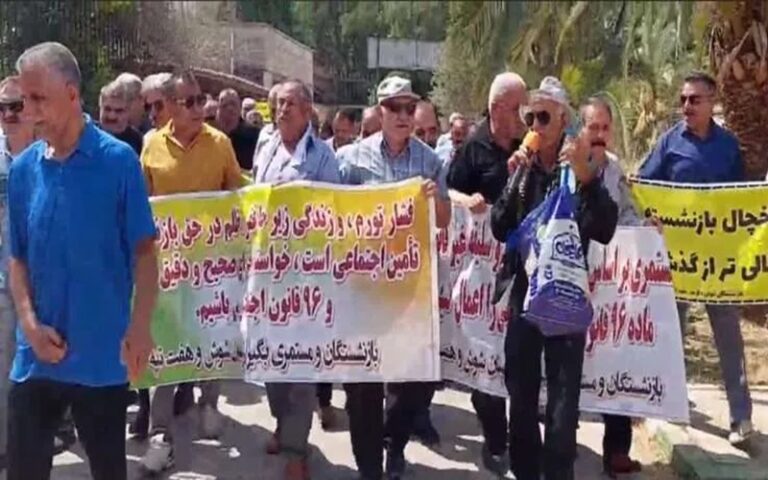
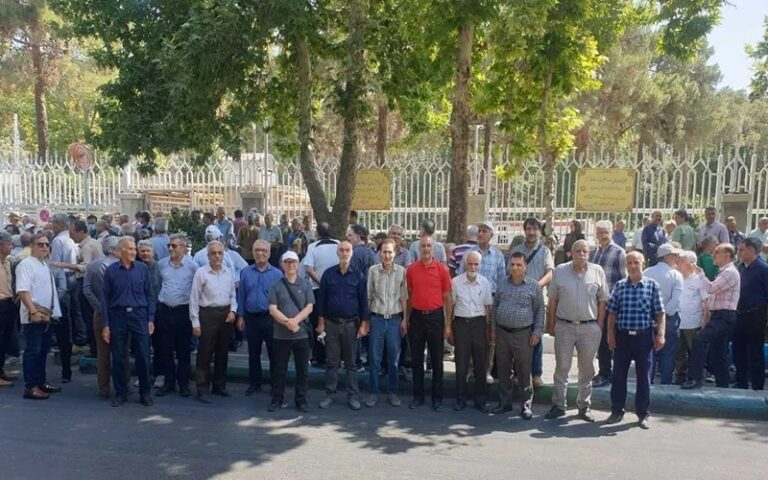
At the same time as this power struggle, a new wave of social protests is unfolding in various Iranian cities. Retirees, workers, teachers, and other protesting groups have repeatedly demonstrated in recent weeks against the economic situation, rising prices, and the severe decline in purchasing power. Many observers believe that the increase in these protests has intensified regime factions’ fears about the future.

Under such circumstances, the regime’s internal conflicts have become more visible than ever. Each regime faction is trying to preserve its position and prevent being pushed out of the power structure. This power struggle has now become one of the most significant signs of the regime’s internal crisis.

Iranian Media Report Approval of Resolution to Restore International Internet Access

0

Iranian media reported that a resolution to restore international internet access has been officially communicated for implementation.

Iranian domestic media reported that a resolution by the Steering and Organization Headquarters for Cyberspace to restore internet access to its pre-January status was communicated by Iranian regime president Masoud Pezeshkian to the Ministry of Communications for implementation.

Iran’s Regime Forms New Headquarters for Repression and Control of Cyberspace Amidst Internet Blackouts

CITNA, a news website focused on information technology, wrote on the evening of Monday, May 25: “The resolution of the Steering and Organization Headquarters for Cyberspace to restore the internet to its pre-January status was communicated minutes ago by the president to the Ministry of Communications for implementation.”

Hours before publishing this report, the outlet quoted an informed source as saying that the Steering and Organization Headquarters for Cyberspace, chaired by Mohammad Reza Aref, the first vice president of the regime, held a meeting and approved restoring internet access to its status before January 2026.

Details of the decision, the timing of its implementation, and whether it will include the full restoration of international internet access or merely reduce some restrictions have not yet been announced.

Fars News Agency, affiliated with the Iranian regime, also quoted an informed source as saying that restoring international internet connectivity was approved with nine votes in favor and three against and is now awaiting final approval by the head of the government.

IRGC-affiliated media oppose the return of profiteers behind “Internet Pro”

Mohammad Sarafraz, a member of the Supreme Council of Cyberspace, said on Saturday, May 23, that equipment related to the permanent shutdown of the internet had been purchased from China and imported into Iran.

He added that operators affiliated with the Supreme Council of Cyberspace are involved behind the scenes in approving the “Internet Pro” plan and that beneficiaries of internet shutdowns are active in the market for VPN sales and special internet services.

Ali Yazdikhah, deputy chairman of the Majlis Cultural Commission, had said on May 21 that higher authorities had concluded that reopening the internet is not in everyone’s interest.

He added that people do not have major problems with internet shutdowns and that access had been granted to groups deemed to need international internet access.

The approval of this resolution comes as people in Iran have faced at least 109 days of internet outages or severe restrictions since the beginning of 2026.

Restrictions on international internet access in recent months have become one of the most significant pressures on citizens and digital businesses, and reports have emerged regarding discussions of scenarios for the gradual restoration of internet access.

These developments have coincided with reports about the inactivity of the Supreme Council of Cyberspace.

Ezzatollah Zarghami, a member of the Iranian regime’s Supreme Council of Cyberspace, said in an interview with the Shargh newspaper on May 19 that decisions related to internet shutdowns had not been made by the council and that the body had not held a meeting for nearly one year.

This coincidence has intensified speculation that decision-making authority over internet and cyberspace issues has been transferred to newly established institutions — an area that in recent months has become one of Iran’s most sensitive security, economic, and social issues.

Punitive Restrictions Imposed on Female Prisoners in Iran’s Evin Prison

Golrokh Iraee, Zahra Safaei, Marzieh Farsi, Shiva Esmaili, and Sakineh Parvaneh, five female political prisoners in Tehran’s Evin Prison, have been subjected to punitive deprivation of phone calls after participating in the “No to Executions Tuesdays” campaign and chanting slogans against death sentences. The restriction is part of ongoing pressure against female political prisoners.

Reports from Evin Prison indicate that since Sunday, May 24, these five female political prisoners have been punitively deprived of the right to use prison telephones. According to received information, prison authorities canceled the prisoners’ phone cards because of their participation in the “No to Executions Tuesdays” campaign and chanting slogans against the implementation of death sentences. Human rights activists say depriving prisoners of contact with family members and lawyers has become a tool for suppressing the civil protests of political prisoners.

Repression and Human Rights Violations in Iran – April 2026

Continued Deprivation of Visits with Family and Lawyers

These five political prisoners had previously also been deprived of the right to in-person visits with their families and lawyers. According to reports, the restriction remains in place, and no clear explanation has been provided regarding its continuation.

Simultaneous deprivation of visits and phone calls places severe psychological pressure on prisoners and their families. According to these activists, preventing prisoners from communicating with family members and lawyers not only has psychological effects but also limits the right to an effective defense and access to legal support.

Pressure on Female Political Prisoners in Evin

Recent reports show that pressure on female political prisoners in Evin Prison has increased over recent months. Earlier, during the second week of May, reports had also emerged regarding intensified pressure on female political prisoners.

According to these reports, Zahra Safaei, Forough Taghipour, Marzieh Farsi, Elaheh Fouladi, Arghavan Fallahi, Shiva Esmaili, and Golrokh Iraee were subjected to three weeks of visitation deprivation because of their participation in the “No to Executions Tuesdays” campaign.

Afterward, because they again participated in the protest ceremony, another three-week deprivation was imposed on them. Human rights activists say even dozens of other prisoners who were merely present in the prison yard or witnessed the ceremony have faced disciplinary punishments.

The “No to Executions Tuesdays” campaign has in recent months become one of the symbols of political prisoners’ protests against the increasing implementation of death sentences in Iran. Prisoners participating in the campaign usually express their opposition to the death penalty through chanting slogans, gathering in prison yards, or holding sit-ins.

Prison authorities’ response to these protests has often included increased pressure, deprivation of communication, exile, transfer to solitary confinement, or deprivation of visits. Punitive treatment of prisoners protesting executions demonstrates the efforts of security and judicial institutions to silence any voice of dissent, even inside prisons.

Similar Restrictions Repeated in Qarchak Prison

In recent months, similar reports have also emerged from Qarchak Prison in Varamin. According to these reports, a group of female political prisoners in Qarchak also faced communication restrictions and punitive measures after protesting prison conditions or participating in protest gatherings.

The collective deprivation of prisoners’ basic rights and facilities without transparent explanation amounts to a form of collective punishment. According to activists, this process has increased mistrust, psychological insecurity, and tension inside prisons.

Increasing Pressure Amid a Wave of Executions

The protests by female political prisoners in Evin come as the number of executions in Iran has increased in recent months. Human rights organizations have repeatedly warned that the widespread use of the death penalty, especially in political and security-related cases, has become a tool for creating an atmosphere of fear and social control.

Iran’s ‘No to Execution Tuesdays’ campaign marks 122nd week

On Tuesday, May 26, 2026, the prisoners’ hunger strike in protest against unjust executions across Iran entered its 122nd week. On this occasion, the “No to Execution Tuesdays” campaign issued a statement calling on international human rights organizations to respond to the continued executions in Iran.

Full text of the statement by the “No to Execution Tuesdays” campaign

International human rights bodies must stand with the people of Iran in confronting the tragedy of executions

Iran’s Regime Executes Abbas Akbari Feyzabadi, One of the Protesters of the January Uprising

Continuation of the “No to Execution Tuesdays” campaign in its 122nd week across 56 different prisons

The wave of political executions continues. Since last week, two political prisoners and Kurdish compatriots, “Ramin Zeleh” and “Karim Yaghoubpour,” as well as another young man named “Abbas Akbari Fayzabadi,” who was among the January 2026 protesters, have been brutally hanged. Another prisoner, “Mojtaba Kian,” was executed on charges of espionage—charges that, as usual, led to these executions without fair trial rights.

According to received information, at least 72 people have been executed since March 21, more than 25 of whom were political-security prisoners. In addition to those mentioned, dozens and hundreds of unnamed prisoners in various prisons are also under death sentences.

In the past week, the death sentence of political prisoner Manouchehr Fallah in Lakan Prison in Rasht was reinstated after being overturned and then re-confirmed. In addition, the sentence of Rouhollah Karki in Sheiban Prison in Ahvaz, as well as the death sentences of political prisoners Milad Armon, Navid Najaran, Mehdi Imani, and Seyed Mohammad Mehdi Hosseini—defendants in the “Ekbatan Town” case—have been confirmed, and their lives are in grave danger.

In response to these executions, the “No to Execution Tuesdays” campaign has continued its resistance for 122 weeks inside prisons. This includes the women’s ward of Evin Prison, where inmates chant slogans every Tuesday in protest against executions and have consequently been banned from visits and deprived of phone contact with their families.

Modern Iranian history is full of resilient and revolutionary women who have sacrificed even their lives for change and have become immortal in the struggle for freedom and equality. In particular, over the past decade, during the December 2017 and January 2018 protests, November 2019 uprising, the 2022 “Jina uprising” (Mahsa Amini protests), and the January 2026 protests, women have been one of the main social forces in the frontline of struggle. The justice-seeking movement is filled with the names of women who have risen against executions and played a significant role in advancing the “No to Execution” movement.

In the “No to Execution Tuesdays” campaign as well, resilient women in various prisons have consistently raised the voice of freedom and the right to life. For this reason, the authorities cannot tolerate women’s voices, as misogyny has been one of the regime’s foundational pillars since its inception.

In the past week, UN High Commissioner for Human Rights Volker Türk, Amnesty International, and numerous human rights organizations have condemned the wave of executions in Iran and called for their immediate halt. In the same context, the European Parliament has also passed a resolution condemning the executions and the Iranian authorities’ targeted repression, calling for strong pressure on the authorities and urging governments to make any political engagement with Iran conditional on stopping death sentences.

We, the members of the “No to Execution Tuesdays” campaign, once again call on international human rights organizations and all awakened consciences to use effective measures to prevent the continuation of inhumane executions, and to stand with the people of Iran in their demand for freedom, justice, and the abolition of the death penalty.

Members of the “No to Execution Tuesdays” campaign were on hunger strike on Tuesday, May 26, in its 122nd week, across 56 prisons in the country.

Iran’s Regime Executes Abbas Akbari Feyzabadi, One of the Protesters of the January Uprising

Mizan News Agency, affiliated with the judiciary of the Iranian regime, reported early Monday, May 25, on the execution of Abbas Akbari Feyzabadi. The state-run media outlet described him as one of the leaders of the nationwide protests in Naein County, located in Isfahan Province, and claimed that he had been convicted on charges including “enmity against God” (moharebeh), deliberate destruction of public property, disruption of public order and security, and collusion against internal security.

The judiciary also wrote regarding the courageous rebel Abbas Akbari: “He appeared in the streets armed with a military handgun and opened fire at security forces.”

This comes despite the fact that no prior reports had been published regarding the arrest or death sentence issued against this political prisoner.

Details of the Execution of six PMOI Members

At the same time, human rights activists have expressed concern about the handling of Abbas Akbari’s case, saying it was examined in a completely security-driven atmosphere and without transparency. So far, no independent information has been released regarding the details of his arrest, interrogation process, court proceedings, or whether he had access to an effective legal defense.

State-run media outlets have claimed that Abbas Akbari played a central role during the nationwide protests in Naein County in Isfahan Province. According to Mizan News Agency, he was accused of deliberately destroying public property with the intention of confronting the regime, disrupting public security, and colluding against internal security.

In contrast, human rights sources emphasize that the lack of transparency in the judicial process has heightened concerns regarding compliance with legal and judicial standards. These sources say that in many political and security-related cases, Iran’s Revolutionary Courts issue heavy sentences, including executions, without publishing details or evidence.

Human rights activists have also stated that Abbas Akbari’s family was under pressure from security agencies throughout his detention and judicial proceedings, which prevented them from publicly speaking about his situation. According to these activists, pressuring the families of political prisoners to stop cases from becoming public is one of the common methods used in sensitive security-related cases.

Rising Dairy Prices Send New Shock to Lives of People in Iran

The state-run Hamshahri newspaper published a report on May 23 regarding a new wave of price increases in dairy products. The report shows that rising dairy prices have once again entered an upward trend. According to the Dairy Products Association, increased production costs have reached a critical stage. This situation has made rising dairy prices an unavoidable outcome. At the same time, discussions over currency liberalization and supplying livestock feed with free-market currency have created additional pressure. This trend has turned rising dairy prices into one of the main issues in the food market.

The Collapse of Investment in Iran, the Shutdown of Production, the Downward Spiral of Life

Rising Dairy Prices Are the Result of Pressure on the Production and Consumption Chain

The increase in exchange rates and changes in the method of supplying livestock feed have raised production costs. Under such conditions, according to industry activists, rising dairy prices are the direct result of pressure on the production chain. Factory owners also speak of shrinking profit margins and pressure from the consumer market. They believe that continuation of this trend could reduce production capacity in some facilities. Amid this trend of rising dairy prices, exports have been raised as a compensatory option. Increased transportation costs have also contributed to higher final prices.

According to the state-run Hamshahri newspaper, dairy industry experts warn that the pricing structure has become unstable. This instability has placed additional pressure on both producers and consumers. The dairy market has experienced repeated fluctuations in recent weeks. These fluctuations have increased concerns about price stability. Some production units have also reported declining demand in the domestic market. Changes in currency policies have played a key role in these economic developments. Some economic analysts consider this trend the result of a flawed distribution structure. Ultimately, both the production and consumption chains have come under pressure.

Rising Dairy Prices and Reduced Consumption Among Low-Income Families

Rising dairy prices have reduced consumption among many low-income families. This decline in consumption carries significant nutritional and health consequences. Reports indicate that rising dairy prices could affect public health. Reduced access to dairy products has increased concerns about diseases related to calcium deficiency. Health experts emphasize the importance of dairy consumption in the diet. However, rising prices have limited the purchasing power of many households.

This situation has made the economic divide in the consumption of essential goods more visible. Citizens in urban markets are expressing concern about rapid price changes. These concerns have also led to declining confidence in economic stability. Some reports indicate reduced demand in local stores. Changes in household consumption patterns in the food sector are becoming increasingly noticeable.

The report by the state-run Hamshahri newspaper presents a picture of increasing pressure on the dairy market. The report shows that the pricing structure is facing serious challenges. Rising production costs and currency fluctuations play the main role in this situation. The consumer market has also experienced declining demand in response to these changes. This cycle of pressure has affected both producers and consumers. Overall, this trend is a sign of instability in the market for essential goods. Reports indicate that this situation is likely to continue in the coming months.

Italian Parliament Conference Condemns Executions in Iran, Voices Support for NCRI

0

Italian lawmakers and human rights advocates gathered at the Italian Parliament on May 21 for a conference with Maryam Rajavi, the president-elect of the National Council of Resistance of Iran (NCRI), where speakers condemned the Iranian regime’s use of executions and called for stronger international support for democratic change in Iran.

The event in Rome brought together members of parliament, former officials, and rights activists who framed the situation in Iran as both a domestic political crisis and an international security concern. Throughout the conference, participants repeatedly criticized what they described as years of Western appeasement toward Tehran while voicing support for the NCRI and Rajavi’s Ten-Point Plan for a future democratic republic.

Opening the session, moderators pointed to the scale of executions carried out in Iran, describing the issue as one that receives only intermittent international attention despite its persistence. Speakers argued that executions, torture, and repression remain central tools used by the Iranian regime to maintain control.

Maryam Rajavi used her keynote address to emphasize what she called the “fundamental conflict” between the Iranian regime and the Iranian people. Referring to ongoing protests and underground opposition activity inside Iran, she said the struggle had continued for more than four decades and was now being carried forward through “popular uprisings and the activities of the Resistance Units,” a reference to networks affiliated with the People’s Mojahedin Organization of Iran (PMOI/MEK).

Rajavi argued that the increase in executions reflected fear within the ruling establishment. “These daily executions are driven by the regime’s sheer fear of the Iranian people and their uprisings,” she said.

She also sought to position the NCRI as an organized political alternative capable of replacing the current system. In doing so, she rejected both the ruling clerical establishment and attempts to revive the former monarchy. Rajavi criticized what she described as efforts to construct “a pseudo-alternative out of the remnants of the monarchical dictatorship,” referencing demonstrations by monarchist supporters in Europe carrying symbols associated with SAVAK, the Shah’s former secret police.

Addressing European governments directly, Rajavi called on the European Union to formally recognize “the right of the Iranian people and their resistance to overthrow this regime.”

Naike Gruppioni, a member of the Italian Chamber of Deputies and organizer of the event, focused her remarks on the importance of defending political freedoms and human rights. She argued that democratic societies often take liberty for granted until it is threatened or removed.

Gruppioni highlighted the case of Vahid Bani-Amerian, described during the conference as a Resistance Units commander who was executed following what speakers characterized as a sham trial. She quoted his final reported words: “Even if you kill us, we multiply.”

She described Rajavi’s Ten-Point Plan as “a concrete political project for a future of a free Iran, a democratic, non-nuclear Republic,” and said the Iranian people had already rejected both religious authoritarianism and a return to monarchy.

“The Iranian people have already rejected every form of authoritarianism,” Gruppioni said, adding that opposition to the current system did not translate into support for restoring the monarchy.

Former Italian Foreign Minister Giulio Terzi di Sant’Agata, who currently chairs the Senate’s European Affairs Committee, delivered one of the conference’s sharpest criticisms of Western policy toward Tehran. Drawing on his diplomatic background, Terzi argued that international engagement with the Iranian regime had enabled repression and regional destabilization.

He credited the PMOI with exposing Iran’s nuclear activities years earlier and contrasted the sacrifices of activists operating inside Iran with opposition figures living abroad whom he described as disconnected from events inside the country.

Terzi specifically criticized Reza Pahlavi, the son of Iran’s last Shah, accusing him of promoting a political transition that would preserve parts of the current security apparatus, including the Islamic Revolutionary Guard Corps (IRGC), the Ministry of Intelligence, and the Basij paramilitary force.

According to Terzi, the NCRI represented the only organized alternative with a defined political framework for democratic transition.

Calls to blacklist the IRGC were repeated throughout the event. Several speakers urged the European Union to formally designate the IRGC as a terrorist organization and to adopt a firmer stance toward Tehran.

Antonio Stango, president of the Italian Federation for Human Rights, argued that the policy commonly described as “appeasement” amounted to political “condescension” toward a government responsible for systematic abuses.

Stango also linked Iran’s domestic repression to regional conflicts, describing the Iranian regime as an “aggressor regime.” He accused Tehran of directing or supporting militant groups across the Middle East, including Hamas, Hezbollah, and the Houthis.

Referring to the October 7, 2023 Hamas attack on Israel, Stango claimed the operation had been directed by Tehran, while attacks carried out by Hezbollah and Houthi forces were “coordinated, armed, financed” by the Iranian regime.

He argued that regional stability required a policy of “ayatollah regime zero,” rejecting the possibility of long-term compromise with Tehran.

Another contribution came from Senator Marco Scurria, who was unable to attend in person due to official commitments in Belgrade but submitted a written statement that was read during the conference.

Scurria described the repression in Iran as a moral challenge for the international community and argued that economic or geopolitical considerations should not outweigh human rights concerns.

“One cannot witness in silence the repressions and killings that strike men and women, and even children,” he wrote.

The conference concluded with repeated calls for greater international recognition of Iranian opposition movements and stronger action against Tehran’s security institutions. Speakers presented the debate not simply as a foreign policy issue, but as part of a broader discussion over democratic accountability, political repression, and the direction of international engagement with Iran.

The Collapse of Investment in Iran, the Shutdown of Production, the Downward Spiral of Life

The collapse of investment in Iran means the halt of production, widespread unemployment, capital flight, the destruction of job security, and the decline in the quality of life for millions of citizens. Official statistics and statements by economic activists show that the Iranian regime is not only incapable of rebuilding the engine of production but has also pushed the economic environment into a stage of chronic instability through ineffective policies.

Lack of investment causes businesses to first reduce production capacity, then lay off workers, and ultimately shut down. Reports published in recent months provide a clear picture of this downward spiral.

Iran’s Economy Beneath the Rubble of War and Structural Collapse

Investment Stopped, Unemployment Began

According to published data, gross fixed capital formation fell to negative 4.3% from March to September 2025. This means the halt of new projects, deterioration of machinery, a decline in construction, and the destruction of employment capacity. Investment in machinery has also dropped from positive growth to negative 2.5%, while construction investment has entered negative territory as well.

This trend has directly targeted the labor market. In the summer of 2025, the number of employed people in the country declined by about 171,000, while at the same time the inactive population increased by more than one million. This means a large portion of society no longer has hope of finding work and has withdrawn from the economic cycle.

The collapse of investment in Iran’s economy is not merely the result of sanctions or war. The crisis is deeper than these simple explanations. Over the years, the economic structure under the control of the Iranian regime, through systematic corruption, a rent-seeking economy, suppression of the genuine private sector, and political uncertainty, has destroyed the motivation for investment. Capital grows in an environment where legal security, economic stability, and predictability exist — elements that have long disappeared from Iran’s economy.

Reports concerning the country’s industries show that around 80% of production units have faced declining activity. Many factories have laid off part of their workforce due to shortages of raw materials, export disruptions, energy outages, and liquidity crises. This situation is not limited to industry; agriculture has been equally affected by collapse.

In agriculture, producers who for years cultivated export products are now facing collapsing prices and the closure of foreign markets. Farmers who once considered production profitable now prefer to lease out their land. When income from renting land exceeds income from production, it means the productive economy no longer has the ability to survive.

A Worn-Out Economy Surrounded by Inflation and Uncertainty

The collapse of investment is impossible without chronic inflation. Inflation exceeding 60% in Iran’s economy has not only destroyed people’s purchasing power but has also eliminated any possibility of economic planning. An investor enters production only when they can predict future costs, exchange rates, and sales markets.

The result of this situation is the growth of speculation and the weakening of production. Instead of entering factories and industry, capital flows into currency markets, gold, housing, and brokerage activities. In such a structure, genuine producers effectively become victims of the Iranian regime’s rent-seeking and inflationary policies.

The energy crisis has also become one of the major factors behind the destruction of investment. Severe electricity and gas imbalances have caused many factories to operate at half capacity or temporarily shut down. How can a producer who faces daily power outages and gas restrictions plan to expand operations?

At the same time, the banking network has effectively ceased playing its developmental role. Although the volume of bank loans has increased, most of these resources are being used to repay previous debts or cover current expenses. Banks are no longer engines of investment; they have merely become mechanisms to prevent the complete collapse of indebted businesses.

On the other hand, the sharp reduction in development spending shows that the Iranian regime has even lost the ability to make public investments. The share of the development budget has fallen to around 4.6%, a figure that reflects the paralysis of infrastructure and development projects. Without investment in infrastructure, the private sector also has no possibility for growth.

The Collapse of Livelihoods Under a Rent-Seeking Economy

The ultimate consequence of the collapse of investment is the destruction of household livelihoods. Widespread unemployment, declining real incomes, and severe inflation have rapidly shrunk the middle class and turned poverty into a widespread phenomenon.

This is the same cycle that economists describe as a widespread recession — a situation in which crisis spreads from one sector to the entire society.

The Research Center of the regime’s Majlis (parliament) has also acknowledged that economic growth had sharply declined even before the recent war. Internet shutdowns, the energy crisis, political uncertainty, and financing problems have caused growth in the services and agricultural sectors to turn negative. This issue shows that the roots of Iran’s economic crisis are not merely in external tensions, but in a worn-out political and economic structure that has lost the ability to generate stability and development.

Over the years, the Iranian regime has destroyed the foundations of economic development by suppressing independent institutions, expanding the rent-seeking economy, and prioritizing political and security objectives.

Inflation, Economic Crisis, and the Silent Collapse of Iran’s Middle Class

The state-run Khabar Fori website wrote on May 22 that the phenomenon of “poor billionaires” has become one of the latest signs of the economic crisis in Iran. Economists say the uncontrolled rise in asset prices, alongside the collapse of people’s purchasing power, has created a society in which many citizens appear wealthy on paper but in practice are unable to manage their daily lives.

In recent years, chronic inflation and the collapse of the national currency’s value have caused housing, automobiles, and durable goods prices to increase severalfold. These price increases have turned millions of people into owners of billion-rial assets. Nevertheless, a large portion of these same individuals face financial crises when trying to pay for basic living expenses, car repairs, home maintenance, or even essential goods.

40 million Iranians Below Poverty Line

Economists describe this situation as the rise of “poor billionaires,” a term that reflects the obvious contradiction in today’s Iranian economy — a society in which the apparent value of assets has expanded while the real ability to live has collapsed. Amir Hossein Khaleghi, an economist, told the state-run Fararu media outlet on May 14: “We are now facing a type of poverty that cannot be measured solely by income or wealth indicators. A phenomenon gradually revealing itself is the emergence of poor billionaires — people who may appear to own cars or homes, but cannot afford their maintenance, repairs, and ongoing expenses.”

The sharp rise in housing prices is one of the most important factors behind the emergence of the poor billionaire class. Today, even a small apartment in Tehran is worth tens of billions of rials. However, many owners of these homes have incomes that do not even cover ordinary living expenses.

The same situation can be seen in the automobile market. Cars that until a few years ago were among the cheapest products on the market now carry billion-rial price tags. Yet the owners of these vehicles struggle to pay for insurance, repairs, or even replacement of consumable parts.

The economic crisis has also spread to household appliances and consumer goods. Many families can no longer afford to replace worn-out appliances. Repairing a refrigerator, washing machine, or air conditioner has become a heavy expense for part of society.

Experts say the phenomenon of poor billionaires is the direct result of structural inflation and failed economic policies. Under such conditions, the increase in the nominal value of assets not only fails to create prosperity but also imposes greater psychological and economic pressure on people.

The Erosion of the Middle Class Under the Pressure of Crisis

At the same time as poverty expands, Iran’s middle class is rapidly eroding. A social group that once played an important role in cultural, social, and economic activities now spends a large portion of its income merely on survival.

Many teachers, engineers, office employees, doctors, and professionals who until a few years ago were considered part of the middle class are now crushed under the costs of housing, food, healthcare, and transportation. Living expenses have risen so sharply that a large segment of society no longer has the ability to participate in cultural and social activities.

Economists warn that the destruction of the middle class confronts any society with deep political and social crises. This class usually plays a balancing and reformist role. However, economic pressure has pushed it closer to the lower classes.

Meanwhile, many analysts speak of the emergence of a state of social suspension in Iran — a situation created by the regime in which people neither have hope for the future nor see any clear prospect for change.

The Regime’s Economic Deadlock

Experts trace the roots of the current crisis to decades of structural corruption, mismanagement, ineffective policies, and heavy government spending. Chronic inflation, the collapse of the national currency’s value, sanctions, and political crises have pushed Iran’s economy to a point where even asset owners feel poor.

Alongside these problems, uncertainty and regional crises have also pushed the economy into a deep recession. Many businesses remain in a state of limbo, and people have stopped making non-essential purchases.

It must be emphasized that a structure which for decades has spent the country’s resources on corruption, repression, and political projects has now brought society to a stage where even owning assets is no guarantee of a quality life. Under such conditions, millions of citizens are struggling merely to preserve the minimum necessities of life.