Home Blog Page 308

Why Is Khamenei Scared of Satellite Internet?

0

There is many news these days about the finalization of satellite internet. Elon Musk, CEO of SpaceX, which is launching the Starlink satellite Internet project, has announced that the space Internet is ready for people to access and use. He said that, after the launch of the latest satellites (October 2020), when these satellites reach their destination, we will be able to launch a relatively large-scale pilot project to access the Internet in the northern United States and possibly southern Canada. Then he added that other countries will be on the list soon. Once we can get the necessary permits.

The uselessness of Khamenei’s national internet

It is estimated that 3 billion people, or about 40% of the world’s population, are denied access to the Internet. Of the current 4.5 billion subscribers, many do not have access to high-speed, cheap, high-quality Internet. That is why the news of the arrival of Starlink satellite internet has given many users hope. However, Iran’s supreme leader Ali Khamenei and his officials are terrified of the outcome of this advanced humanitarian project.

Read More:

Iran Internet Censorship – Update

Continuing to express this fear, Abolhassan Firoozabadi, the secretary of the Virtual Supreme Council, whose job is to censor and deprive Iranian people of global communication systems, announced the uselessness of parallel government systems. He announced the formation of a working group to deal with satellite Internet.

Firoozabadi said on Sunday, February 14, that with the advent of satellite internet, “the entire national information network may be endangered.”

Government’s cyberspace domination will end

Unable to allay his fears that the Internet would break free of Khamenei’s monopoly, he said that measures should be taken to ensure that “cyberspace governance” is not compromised by the introduction of this technology. Firoozabadi, who is aware of the government’s multi-year investment in launching a national information network to deprive the Iranian people of the World Wide Web, said: One way to face the satellite Internet network is to develop the country’s fixed network. He warned that with this lack of development, “we see the security of the country’s cyberspace in danger.”

Some experts believe that if satellite Internet projects such as SpaceX, are completed, the world of communications will change. People around the world will be able to access the Internet without filtering.

Iran is the worst country in internet freedom

Khamenei’s officials are trying to crack down on satellite internet, while Freedom House stressed in its latest annual report on October 14: “Iran is one of the worst countries with the least internet freedom.”

Firoozabadi continued: “The Islamic Republic is facing the issue that satellite systems are coming and with its arrival, it is possible that the entire national information network will be questioned at once.”

The Iranian theocracy in the shadow of Internet censorship has deprived the Iranian people of many Internet facilities. Many social networks and media such as Twitter, Telegram and Facebook are filtered in Iran. The authorities have adjusted the bandwidth so that people could not easily access the information. The main fear of government officials is that the voice of the opposition will easily reach the people.

In November 2019, during the suppression of the popular uprising, Khamenei and Hassan Rouhani’s government launched a bloodbath in Iran with the complete cessation of the Internet. More than 1,500 people were shot in the street, and more than 12,000 were arrested.

If the satellite Internet disrupts this process of ideological and political repression of the government, there is no doubt that Khamenei should be even more terrified, Iran observers say. In any case, the dark era of this tyranny is over. From now on it is the age of light and brightness.
Iranian Farmers’ Right to Water Has Been Plundered

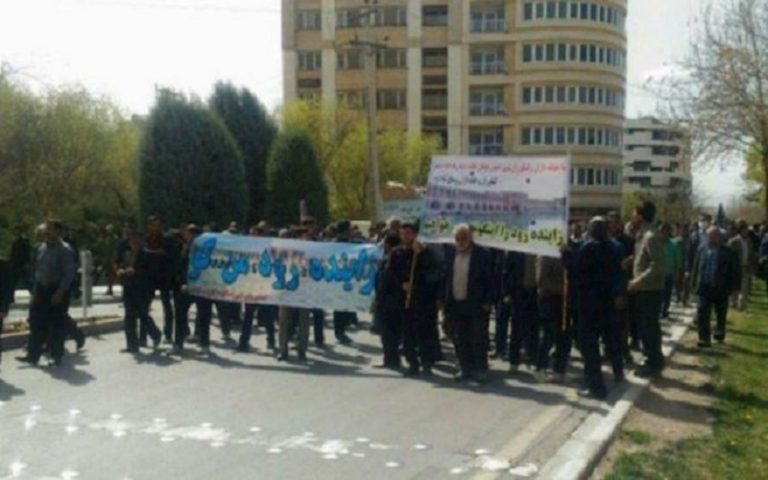
Over the past month, farmers in Isfahan, central Iran, have staged several large rallies to protest the denial of their water rights from the Zayandehrood River.

One of the reasons for this deplorable situation is the profiteering of companies and organizations affiliated with the government. Such organizations have built the water supply industry without accurate calculation and cut the water of Zayandehrood River by creating many dams.

Clergyman Naqdali, a member of parliament, said in fear of the anger of the deprived farmers: “Today, every day, farmers in large gatherings ask the officials to pay attention to the awkward situation of the Zayandehrood River. Relevant Institutions, Security Institutions, there is not a good situation in Isfahan in terms of livelihood for farmers.” (ICANA, January 19, 2021)

The river that used to be the bustling ornament of Isfahan province for centuries and once a part of the life of the villagers and farmers is now out of water and has become a dry area, and the people and farmers around it are waiting for the water to pass, so that they can irrigate their lands. But this is just a hopeless wish.

Read More:

Iran Media Warns of Protests Over Crises

The pressure of the government and its institutions on this river is so obvious that for years the state media have been forced to admit it.

State-run news agency Tasnim wrote: “Some 86 percent of Zayandehrood dam is empty and only 14 percent of this vital water source remains in the central plateau of Isfahan. The promises have not been fulfilled and the reopening of the river has been conditioned by rains that do not show a godd face to Isfahan these days.

“Managers, in a behavioral and managerial contradiction, each speak in their own way, and the promise of a constant flow of the Zayandehrood River in Isfahan, as promised by the President in the Eleventh Government, never materialized.” (Tasnim, January 15, 2021)

Establishment of water supply industries and digging of deep wells for many years is the main reason for the drying up of the Zayandehrood River. These industries and wells are often under the control of companies affiliated with the Revolutionary Guards or the government.

Institutions affiliated with the IRGC and the government plunder water, but the people of the region, especially the hardworking farmers of the Central Plateau of Iran, pay the price for water looting.

In one of the farmers’ protests, which was reflected in the state media, the difficulties and complaints of several protesting farmers were as follows:

“All the people here that you see are farmers, their bread comes from agriculture, all their eyes are on their agriculture.

We came many times and protested, no one listens to us, we have a document and are farmers, we have a document that is several hundred years old. Now that we have planted our crops, there is no water.

The governor said ‘plant’, the administrator said ‘plant’, the head of the water organization came and said ‘plant.’ Now we have no water.”

In the last protest of Isfahan farmers, one of them said: “We have the right to water, and we do not want to give up our water. Why did you trample on the right of the Zayandehrood?”

Every day, the government implements a new plan for plundering more and more the water of Zayandehrood. Its latest plan is to target gardeners by destroying water pipes leading to their gardens.

On Saturday, February 6, the government agents in the water department, accompanied by the police force, attacked the village of Morche Khort with heavy machinery and brutally destroyed the wells and pipes up to thousands of trees.

The words of the gardeners are as follows: “Who should pay for the damage to this pipe? The trees in the 121 gardens. Each garden has 120 trees. There are about 30,000 to 40,000 trees, and their pipes have been cut and broken. Let us die, let us become relax, let us get rid of these dishonorable people.”

Apart from the drying up of farmers’ lands due to the abduction of the Zayandehrood River, the lack of water in this river has also had devastating environmental effects on the region.

ISNA on November 28, 2021 in an article entitled, “15 cm, the average annual subsidence rate in the Isfahan-Borkhar plain,” wrote: “Groundwater studies expert of the Office of Basic Studies of Water Resources of Isfahan Regional Water Company, emphasizing that the Zayandehrood River drought, as a source of aquifer nutrition, contributes to the phenomenon of subsidence, said: The average annual subsidence rate in the Isfahan-Borkhar plain is about 7 up to 15 cm estimated per year.”

ISNA continued its report by quoting this government expert, referring to the continuous decline of groundwater in 35 plains in the east of Isfahan and Bakhtiari in the mountainous areas of west of Isfahan, the lack of water and dryness of the Zayandehrood River as the main factors of this situation and wrote:

“On the one hand, with the dryness of the Zayandehrood River, we put pressure on the aquifer that is fed by the river. It causes the phenomenon to subside and continue. On the other hand, due to the fact that the supply of drinking water to the people is a priority, by digging wells and extracting it, we put double pressure on the aquifers, which causes the subsidence and the continuation of this process. Zayandehrood’s drought, as a source of aquifer nutrition, contributes to subsidence.”

U.S. Congress Stands With Iranians’ Desire for Free Iran

0

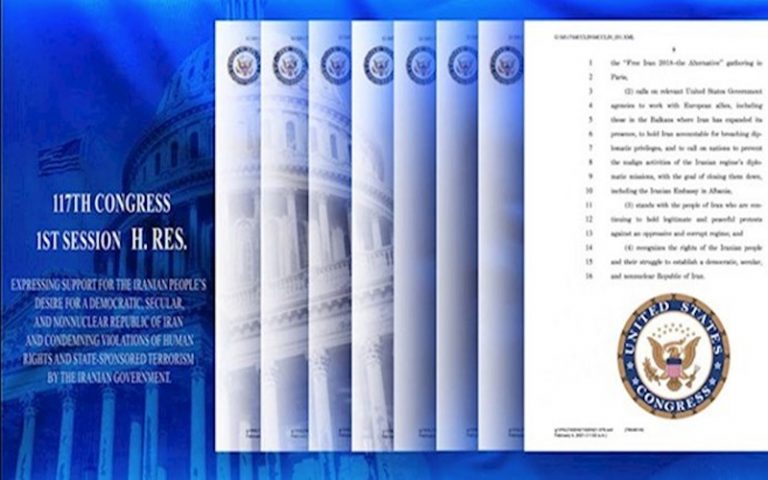
In a bipartisan initiative, 113 members of the U.S. House of Representatives this week declared their solidarity with the people of Iran in their struggle for freedom, justice, and basic human rights. 

Expressing support for the Iranian people’s desire for a democratic, secular, and nonnuclear Republic of Iran and condemning violations of human rights and state-sponsored terrorism by the Iranian Government,” read House Resolution 118. 

U.S. lawmakers who co-sponsored the resolution pointed out the volatile condition of Iran’s society and ongoing struggle by different classes for their inherent rights. In H.Res.118, some 113 Members of Congress mentioned the Iranian government’s use of lethal force to silence protests. 

In 2017, the Iranian regime suppressed protests with repressive force than resulted in at least 25 deaths and 4,000 arrests, including decorated wrestling champion Navid Afkari, who was later executed in September 2020 amidst international outrage,” the lawmakers wrote. 

Furthermore, they highlighted the November 2019 protests in Iran, which was ignited by gas price hikes in mid-November. “On November 15, 2019, popular protests against the Iranian regime began and rapidly spread to at least 100 cities throughout the country, and reports indicate that Iranian security forces used lethal force and about 1,500 people were killed during less than two weeks of unrest, and thousands more were detained during these protests,” the draft resolution read.

Read More:

Albanian President Meets With Iranian Opposition Leader Maryam Rajavi

The text reiterated its support for H.Res.752 passed by the 116th House of Representatives, titled, “Supporting the rights of the people of Iran to free expression, condemning the Iranian regime for its crackdown on legitimate protests, and for other purposes.” They emphasized the imperative of holding the Iranian government accountable for human rights abuses and called on the U.S. government to work with its partners to prevent Tehran from more violations. 

Whereas House Resolution 752 urges the Administration to work to convene emergency sessions of the United Nations Security Council and to work with United States partners and allies to condemn the ongoing human rights violations perpetrated by the Iranian regime and establish a mechanism by which the United Nations Security Council can monitor such violations,” H.Res.118 read. 

The U.S. Congressmen also declared their support for letter by seven United Nations experts on September 3, 2020, calling on the international community to take action to investigate the case of mass killing of thousands of political prisoners between July and September 1988, which has come to be known as the 1988 massacre, through the establishment of an international investigations. 

Notably, mostly executed prisoners were members and supporters of the Iranian opposition Mojahedin-e Khalq (MEK/PMOI). “The killings were carried out on the orders of a judge, an official from the Ministry of Intelligence, and a state prosecutor, known to the prisoners as Death Commissions, which were formed on July 19, 1988, and undertook proceedings in a manner designed to eliminate the regime’s opponents,” the resolution read. 

The lawmakers also mentioned the Iranian government’s terror attempts in 2018 against the National Council of Resistance of Iran (NCRI). They referred to the Iranian opposition’s grand gathering in June 2018, where “tens of thousands of people gathered in Paris at the Free Iran gathering where they supported advocates for a democratic, secular, and non-nuclear Republic of Iran, and showed support for the opposition leader Mrs. Maryam Rajavi’s 10-point plan for the future of Iran.” 

They supported the European agencies efforts to foil terror attempt orchestrated by Iran’s Ministry of Intelligence and Security (MOIS) and Ministry of Foreign Affairs. “On February 4, 2021, a court in Belgium sentenced Iran’s diplomat Assadollah Assadi to the maximum sentence of 20 years imprisonment for his role in planning to plant a bomb at the Free Iran gathering in 2018, and his 3 accomplices were given jail terms of 15 to 18 years and stripped of their Belgian citizenship,” H.Res.118 read. 

Remarkably, on July 10, 2018, a senior Department of State official said, “Iran uses embassies as cover to plot terrorist attacks,” and that “The most recent example is the plot that the Belgians foiled, and we had an Iranian diplomat out of the Austrian Embassy as part of the plot to bomb a meeting of Iranian opposition leaders in Paris.” 

“In December 2018, the Government of Albania expelled Iran’s Ambassador, Gholamhossein Mohammadnia, and MOIS station chief in Albania, Mostafa Roudaki, for planning terrorist activities against Iranian dissidents and members of the People’s Mojahedin Organization of Iran (PMOI/MEK),” the U.S. lawmakers wrote. 

In a nutshell, in their resolution, 113 lawmakers reiterated that the U.S. House of Representatives 

(1) condemns past and present Iranian state-sponsored terrorist attacks against United States citizens and officials, as well as Iranian dissidents, including the Iranian regime’s terror plot against the “Free Iran 2018–the Alternative” gathering in Paris; 

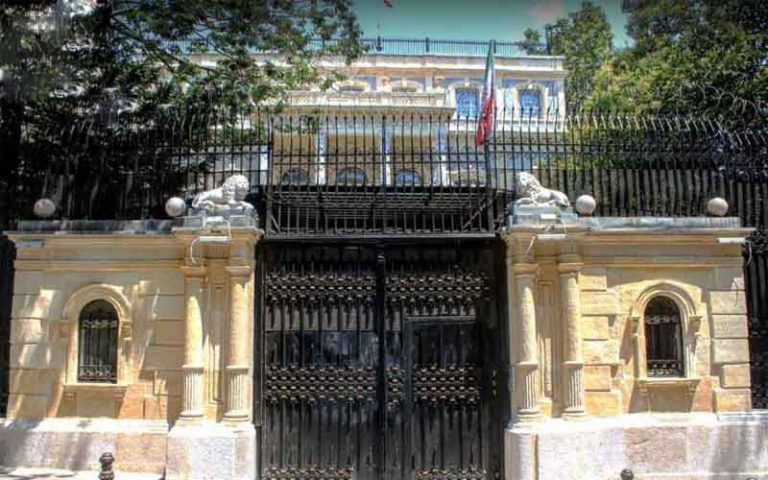
(2) calls on relevant United States Government agencies to work with European allies, including those in the Balkans where Iran has expanded its presence, to hold Iran accountable for breaching diplomatic privileges, and to call on nations to prevent the malign activities of the Iranian regime’s diplomatic missions, with the goal of closing them down, including the Iranian Embassy in Albania; 

(3) stands with the people of Iran who are continuing to hold legitimate and peaceful protests against an oppressive and corrupt regime; and 

(4) recognizes the rights of the Iranian people and their struggle to establish a democratic, secular, and nonnuclear Republic of Iran. 

Iran’s Deprived Students: Where Is Their Money Spent?

Education means human development. It is the foundation of the macro development of any country. What perspective does Iran’s press reflect on the educational situation?

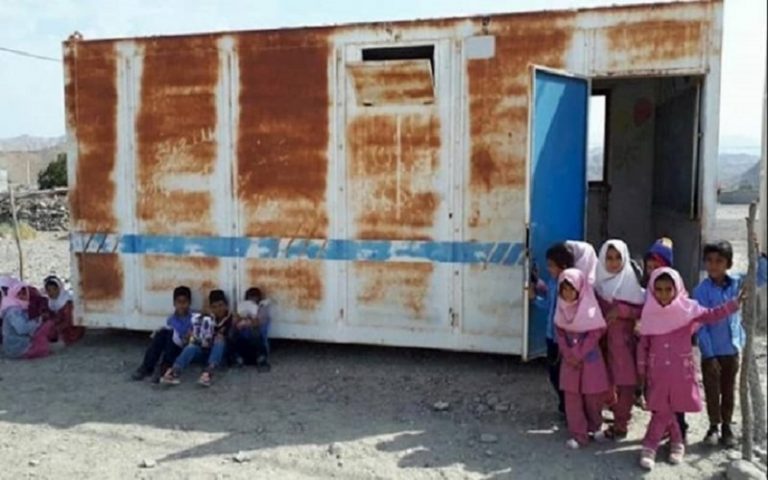
State-run website Rouydad-e-24 on January 20, 2021 carried a report from Sardasht Dezful trailer School in which three students and two teachers were burned, while looking at the statistics of schools which exist in trailers:

“Khuzestan province has 1300 trailers schools and Sardasht region of Dezful has 13 trailer schools and two stone made schools.”

Earlier the state-run daily Arman on September 23, 2018 wrote: “There are no monetary schools in any of the developed countries. They have made education free because they are aware of the shortcomings and calamities of the monetized education system.”

Read More:

“Food Poverty Line” a Warning Sign of Iran’s Silent Massacre

According to the statistics provided by Iran’s Statistics Center, in 2010, some 9,483,028 people were considered illiterate in Iran, of which 6,025,965 million were women.

At the beginning of the 2020 academic year, Hamid Reza Rakhshani, Director General of Education of Sistan and Baluchestan Province, said: “Some 400,000 students in Sistan and Baluchestan do not have access to virtual education.” (Mehr news agency, October 14, 2020)

Also, a member of the Education Commission of Iran’s parliament announced: “Some 5 million students in the country do not have a smartphone and Internet access. It is estimated that 3 million students in the country will not have access to a smartphone and 2 million students will not be able to access the Internet.” (Tasnim, August 31, 2020)

Corruption mafia in education

On December 18, 2018, a fire at the ‘Aswa Hasna’ Preschool Center in Zahedan seriously injured four female students. All four later died of their burns in hospital. After this incident, Iran’s Minister of Education said: “With the current budget of the Ministry of Education, it will take eight years to remove (oil) heaters from schools.”

Recently, Mohammad Batahi, the former Minister of Education of Iran, in response to the removal of school oil heaters, acknowledged the root of inefficiencies in the education ministry and said:

“Nowhere in the world is education like here where children are tortured with such hardships, taking all their might and possessions so that they bring good grades in the entrance exams. Especially when I was in the ministry and had access to some information, in 2017 we had a turnover of up to 15 trillion tomans from those who depended on the schools and colleges for entrance exams, tests, and textbooks. (State TV Channel 5, January 22, 2021)

The then spokesman of the judiciary, Gholam Hossein Ejei, said in a press conference on November 11, 2018: “Two former CEOs of Sarmayeh Bank have recently been arrested, who have a heavy charge in the field of cultural reserve fund.”

“The Cultural Reserve Fund has more than 800,000 members affiliated with the Ministry of Education and pays them annual interest on cultural depositors’ monthly deposits. The ‘Capital’ Bank is also a subsidiary of this fund.” (State-run news agency IRANA, November 11, 2018)

50 luxury schools next to the luxury tombs

Alongside the luxury seminaries of the mullahs, built at the price of the poverty of Iran’s people; Qudratullah Alizadeh, a member of the council for overseeing Iran’s non-governmental schools, admitted: “Of the 17,000 non-governmental schools, perhaps under 50 are luxury and special schools. Most of these schools, i.e., more than 30, are in the north of Tehran, and unfortunately most of our officials, who may also have schools, live there. These schools make good money.” (State-run Khabar Fouri website, January 27, 2020)

Drop Out of Education, the Product of the Rule of Extreme Poverty

Although conflicting statistics are available on the number of children dropping out of school, the trend towards monetization and commodity education is the most important issue that has excluded children from the education cycle. The state-run daily Hamdeli on September 22, 2019 wrote in a report on the statistics of dropout children studying in 2019-2020: “The number of children who dropped out of school is estimated at between 100,000 and over 3 million.”

According to Iran’s statistics center, Sistan and Baluchestan Province ranks first in Iran for school dropouts. Children in this province are forced to drop out of school due to poverty, lack of schools in the villages, lack of teachers and lack of proper roads.

“According to official statistics, 127,000 children have dropped out of school in Sistan and Baluchestan province in the 2019-2020 academic year.” (IRNA – February 1, 2020)

Dilapidated sheds and trailer schools are a disgrace to a rich country

Trailer schools, along with other misfortunes of the country’s schools, such as old and worn-out schools, classrooms with dilapidated roofs, old oil heaters, etc., show the bitter reality of this rule. After announcing the death of the second student in Dezful’s trailer School, a social media user named Rahgozar wrote: “In the 21st century, in a country that is considered one of the richest countries in the world in terms of oil and gas resources, there are still shed and trailer schools. Isn’t that a shame?” (State-run daily Hamdeli, January 23, 2021)

On August 31, 2019, the director general of Hormozgan school renovation, development and equipment said: “There are currently 670 non-standard schools in the province, of which 220 must be completely destroyed.”

On July 7, 2019, the director general of school renovation in Alborz province said of the critical situation of school shortage: “About 40 percent of Alborz’s schools need to be repaired, demolished and rebuilt because in case of an earthquake in Alborz province, the old schools will be vulnerable and will be destroyed.”

The director general of Iran’s education in South Khorasan said: “Currently, 420 classrooms are needed in South Khorasan province, of which 238 classrooms are needed in Mehr Birjand housing site, 119 classrooms in Mehr housing sites in other cities, and 63 classes in Birjand satellite towns.” (Provincial TV, September 6, 2019)

Director General of School Renovation of Kermanshah Province: “Out of 3,900 educational spaces, 1,200 schools, i.e., one third of the educational space of the province, need to be demolished, rebuilt and rehabilitated.” (Provincial TV, August 30, 2019)

Where is the money for Iran’s children spent?

Iran’s Minister of Education had previously claimed that it would take eight years to remove all shed schools in Iran if the budget were provided.

In estimating the budget for the year 2020, the per capita budget of each theological student in the ministries is equal to the per capita of roughly 198 students.

During the seven-year war in Syria, in addition to military intervention, Tehran provided billions of dollars in economic aid to Bashar al-Assad’s government. On August 31, 2018, referring to the economic agreement between Iran and Syria, the Mehr news agency reported that ‘30,000 housing units have been built in Syria.’

An Iranian said in response to the fire at Dezful’s shed school: “The condition of schools in affluent cities is not comparable to that of remote villages and areas. Is forty years a little time to reorganize the country’s schools?”

Iran’s Production of Uranium Metal Puts US Policy Under the Microscope

0

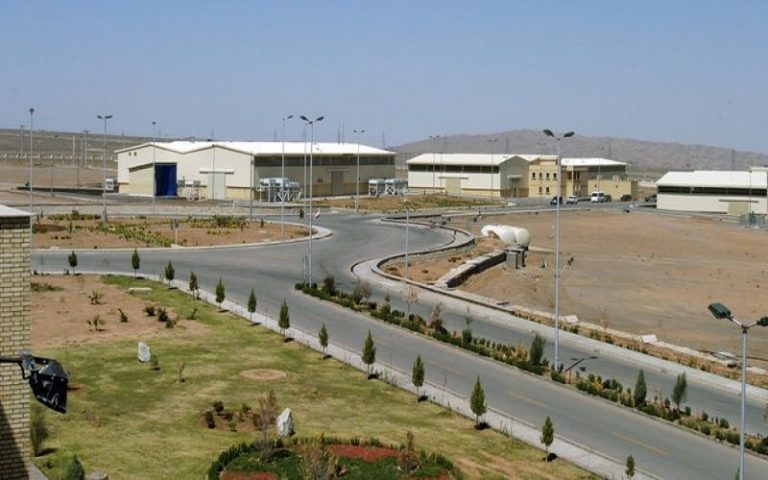
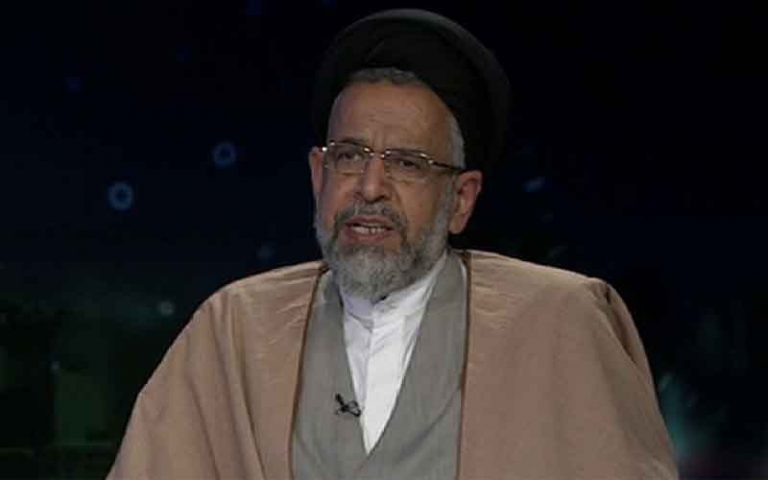
The International Atomic Energy Agency confirmed on Wednesday that Iran had followed through on recent threats to produce uranium metal, a key component of nuclear warheads. The report comes just days after Iranian Intelligence Minister Mahmoud Alavi delivered remarks via state media which indicated that the Islamic Republic might actively pursue nuclear weapons capability if “pushed” by pressure from the US and its allies. 

Alavi’s statement flew in the face of the regime’s longstanding official position that the Iranian nuclear program is intended only for the “peaceful” purposes of power generation and scientific research. In fact, the Intelligence Minister directly cited one of the main sources of support for that argument, a fatwa issued by Supreme Leader Ali Khamenei on December 12, 2010, which suggested that nuclear weapons were contrary to Islam. But in downplaying the fatwa’s potential impact on future Iranian decision-making, Alavi seemed to corroborate prior rebuttals by the likes of the National Council of Resistance of Iran, which argued that the fatwa was neither binding nor permanent, and was most likely intended only to mitigate Western opposition while the regime inched closer to a short “breakout time” for a nuclear weapon. 

Western attitudes toward the notion of a peaceful Iranian nuclear program have been varied, as evidenced by the 2015 Iran nuclear deal and the backlash against it. While the Obama White House and fellow negotiating powers permitted Iran to retain scaled-back nuclear enrichment operations, those who were most skeptical of Iran’s intentions were also keen to protest that these activities should have been ended altogether. That sentiment was a driving force behind the Trump administration’s decision, in 2018, to pull out of the deal that its predecessor had spearheaded. 

When President Trump was seeking reelection last year, he argued that the Iranian regime was looking to his opponent, who had been Obama’s vice president, as a possible lifeline in the wake of the economic hardship inflicted by the Trump administration’s re-imposition and expansion of US sanctions. Indeed, Joe Biden hard signaled during the presidential campaign that he would be willing to return the US to the agreement, even as Trump insisted that Iran was on the verge of economic collapse and would swiftly concede to more comprehensive demands if maximum pressure persisted into 2021. 

Read More:

We May Produce Nuclear Weapons if We Are Forced To

Whether or not Trump was correct about this, Tehran was evidently frustrated by Biden’s refusal to immediately reverse his predecessor’s policies after taking office. While the new administration is still leaving the door open for a return to the nuclear deal, it has also insisted that Iran has to act first by reversing the various steps that it has taken in violation of the agreement, formally known as the Joint Comprehensive Plan of Action. 

The US withdrawal from that agreement was followed by a grace period after which sanctions began to be phased back in starting November 2018. Shortly thereafter, Iran acquired stockpiles of nuclear material in excess of what is allowed under the JCPOA. Further violations proceeded in a series of strategic steps until early 2020 when the regime announced that it no longer intended to comply with any of the imposed restrictions. 

This prompted the deal’s European signatories – Britain, France, and Germany – to trigger a dispute resolution mechanism. But the leadership of the European Union expressed willingness to draw that process out indefinitely, thus leaving the US as the only party exerting serious pressure on the Islamic Republic while the deal remained on life support. However, this still did not stop Iranian officials from complaining about Europe’s role in the dispute or insisting that the EU take measures to explicitly undermine US sanctions. This desire to divide Europe against America was reiterated by Hossein Deghan, currently the only candidate for Iran’s forthcoming presidential election, in a recent interview with The Guardian. 

To be crystal clear, the Europeans have absolutely no independent stance from America any longer,” Deghan declared in the context of rejecting the notion the EU or its member states might act as mediators in discussions aimed at resolving the dispute between Iran and the US. He also gave voice to Tehran’s early frustration with the Biden administration by suggesting that its foreign policy showed no sign of substantive differences from that which was put in place by President Trump. 

Deghan, a military adviser to Supreme Leader Ali Khamenei and former officers in the Islamic Revolutionary Guard Corps, seemed to make it clear that if he were to assume the Iranian presidency the regime would continue to insist upon the immediate removal of all US sanctions, as a prerequisite for any steps toward renewed Iranian compliance with the nuclear deal. However, representatives of the current administration, that of Hassan Rouhani, have attempted to portray the prospective election of a “hardliner” like Deghan as the closure of existing opportunities for peaceful reconciliation. 

Iranian Foreign Minister Mohammad Javad Zarif said on Wednesday that the Biden administration should be wary of missing a “fleeting” window for mutual restoration of the JCPOA. But his comments came in the context of a video that celebrated the Islamic Republic’s 41st anniversary by disparaging its so-called “enemies” and mocking the supposed failure of US-led pressure tactics. 

Soon, my government will be compelled to take further remedial action in response to the American and European dismal failure to live up to their commitments under the nuclear deal,” Zarif said, referring to previously announced plans to restrict access for inspectors from the IAEA on February 21, unless US sanctions have been removed by that time. In the event that Tehran moves forward with that plan, the regime’s uranium metal production may be the last major development to be reported by the UN nuclear agency. 

That production, along with Mahmoud Alavi’s threat regarding future nuclear weapons capability, raises questions about how Deghan or any other hardline leader might alter Iran’s strategy to be more threatening in this regard. While the current president has been variously embraced as a “moderate” or “reformist” by certain Western authorities, he has actively participated in communicating the ultimatums associated with the prospective return to JCPOA compliance. And this is only of many public behaviors that have allowed the regime’s critics to all his moderate credentials into question. 

 “We have still not seen any goodwill from the new government,” Rouhani told Iranian state television on Thursday, apparently ignoring reports from days earlier which indicated that the Biden administration was weighing various options for Iran and the US to trade intermediary steps leading to restoration of the status quo as it existed before maximum pressure went into effect. Rouhani made no apparent effort to demonstrate goodwill on the Iranian side, but merely reiterated the regime’s demand that Biden reverse his predecessor’s policies without regard for the explicit progress that Tehran has made toward nuclear weapons capability. 

For many critics of the Iranian regime, that progress is only further confirmation that the Trump administration’s strategy was more or less correct, and that the JCPOA’s restraints on the Iranian nuclear program were too loose to prevent Iran from sprinting toward acquisition of a nuclear bomb at some point in the future. In fact, even though Biden’s diplomatic overtures to the Islamic Republic have been tentative and conditional, they have still been enough to raise alarms among those who believe that Tehran is more likely to respond to coordinated pressure tactics. 

On Wednesday, an editorial in Newsweek accused Biden of pretending to “play hardball” with Iran but actually moving in the direction of policies that let the regime off the hook for malign activities, potentially empowering not only Iran but also Russia and China. The piece argued that the administration wants “to help Iran economically despite the fact that its intensive uranium enrichment and other nuclear activities make clear that Iran’s nuclear efforts are entirely military-related.” 

It remains to be seen how Biden will react to the increased transparency of those military intentions following Alavi’s comments and the start of uranium metal production in Iranian facilities. On one hand, the White House is sure to face pressure from allies that believe the best course of action is to return to the nuclear deal and dis-incentivize Iran’s continued pursuit of nuclear provocations. But on the other hand, prominent figures within US intelligence and policy circles can be expected to advise the administration that such concessions would only embolden more of the same action. 

Along these lines, former Director of National Intelligence John Ratcliffe recently stated that there is “no intelligence to support” the lifting of sanctions on Iran. In fact, Ratcliffe argues that the Iranian regime’s latest efforts to pressure Biden toward more conciliatory policies are a sign of desperation in the face of a situation that has made Iran “weaker, poorer, and less influential in the Middle East than they’ve been in decades.” 

Iran: Rouhani, COVID Vaccine Will Take Until 2022 To Distribute

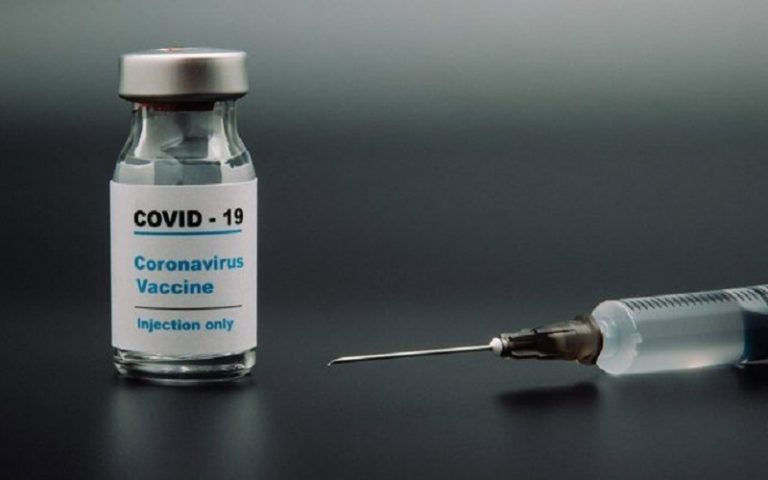
Iran’s president Hassan Rouhani says even if Covid vaccine is read by summer, it will take until 2022 to distribute.

Iranian president Hassan Rouhani told a Covid-19 Task Force meeting on Saturday that even if domestic vaccines are ready by the summer, it would take “five to six months” to distribute them. 

With over 212,000 Covid-19 deaths in Iran so far, the people cannot wait that long and the Iranian Resistance said that this was “just another excuse to dither on vaccinating the Iranian population”. 

Read More:

Why Iran Does Not Purchase Covid-19 Vaccines

In December, Rouhani said that the Iranian regime was ready to buy the vaccines approved by the World Health Organization but that this was being blocked by the US, something the US and the WHO debunked. 

Then, it was the Iran didn’t have the equipment to transport the Pfizer vaccine at minus 70 degrees Celsius, something other Iranian officials denied. Then, it was that foreign banks wouldn’t give Iran credit because it wasn’t part of the Financial Action Task Force, but after FAFT denied this, Central Bank president Abdolnasser Hemati and health minister Saeed Namaki admitted that this was also incorrect. 

Finally, it was that the vaccine was not safe and that Iran didn’t want its people to be guinea pigs, even though by this point, the UK was about ready to start administering it en-masse to its citizens following clinical trials of thousands of people. The import of the US and UK-made vaccines were also banned. At this point, Rouhani promised a domestic vaccine by the summer. 

The People’s Mojahedin Organization of Iran (PMOI/MEK) wrote: “Now, he says that even if the vaccine is prepared by summer, it will need another seven, eight, or ten months to have the people vaccinated. And given Rouhani’s history of pathological lying, one can only wonder at how reliable his latest promise is. 

Other regime officials, like Mohammad Reza Shanesaz, the president of the Food and Drug Organizationare admitting that they are delaying vaccine purchases to get a better price, as if this is a gaming system and not lifesaving medicine. It’s also a bizarre take considering that the economy will rebound quicker if the population is vaccinated and herd immunity is achieved. 

In this regard, the MEK wrote:  “The deeper reality, however, is that the regime simply doesn’t care how many people die of coronavirus in Iran. Contrary to other countries, where governments are united with their people to fight the pandemic, in Iran, the regime is aligned with the virus to kill the people. Regime supreme leader Ali Khamenei downplayed the pandemic and even called it a blessing on separate occasions. He has refrained from allocating his huge financial and logistic resources to help the coronavirus response. 

But why? Probably because in November 2019, just before the pandemic, Iran saw the biggest nationwide anti-regime protests ever and the mullahs are scared that without the threat of the coronavirus, the people will rise up again.

Turkey Arrests Iranian Diplomat for Murder

0

Turkish Daily Sabah website on Thursday, February 11, reported that authorities have detained an Iranian diplomat Mohammad Reza Naderzadeh, 43, for involvement in the murder of Iranian dissident Massoud Molavi Vardanjani in November 2019.

Naderzadeh as a staff member of the Iranian Consulate in Istanbul had forged travel documents for Ali Esfandiari, who had masterminded the assassination of Massoud Molavi and then fled to Iran.

Molavi was a “former intelligence operative for Iran before he moved to Turkey and launched a social media crusade to expose corruption involving the Iranian administration and the Quds Force, a subsidiary of Iran’s Islamic Revolutionary Guard Corps (IRGC),” the Turkish website wrote.

Iranian Officials Use Stock Market to Plunder People’s Money

Investigating the murder, Turkish security forces revealed that Esfanjani met Molavi’s killer Abdulvahhab Koçak on the murder day. Koçak is also lieutenant of fugitive Iranian drug lord Naji Sharifi Zindashti.

Esfanjani and Koçak met in a shopping mall and talked for about half an hour. Then, Esfanjani met Molavi and the two started walking on the street when Koçak approached from behind and fired 11 shots at Vardanjani.

“The investigation also shows Abdulvahhab Koçak – who was later captured by police – hid out in a residence owned by Naji Sharifi Zindashti after killing Vardanjani. Koçak’s brother Ali was also a suspect in the Istanbul murder of Saeed Karimian, owner of a Persian-language TV station,” Daily Sabah added.

Zindashti was also implicated in the disappearance of Habib Chaab, another Iranian dissident who disappeared in October 2020. Chaab, who had been living in exile in Sweden, was allegedly lured to Istanbul by Iranian intelligence and was smuggled into Iran.

“Files show how Iranian dissident Habib Chaab was kidnapped in Turkey after ‘honeytrap by Iran,’” reported Sky News on December 17, 2020. “Sky News has been given exclusive access to Turkish counter-terrorism files which show how Iranian opposition activist Habib Chaab was lured into the trap and smuggled back into Iran.”

The above-mentioned instances are the tip of the iceberg, showing the Iranian government’s exploitation of diplomatic coverage to implement terror attacks in other countries.

Last week, a court in Antwerp, Belgium, sentenced a senior Iranian diplomat Assadollah Assadi to 20 years in prison for bombing against the Free Iran 2018 gathering hosted by the Iranian opposition coalition National Council of Resistance of Iran (NCRI). Investigations carried out by the European prosecutors revealed that Assadi had transferred 1lb of TATP explosive material and detonate device on a civil airport under diplomatic status.

Don’t Ignore Iran Terror Plot

He later traveled to Luxembourg and delivered the bomb and instructions to operatives. They had planned to target the NCRI President-elect Maryam Rajavi. However, the operation was foiled at the last moment.

During their investigation, European law enforcement discovered an expanded network of the Iranian Ministry of Intelligence and Security (MOIS) on European soil. In his green booklet, Assadi had written around 300 notes, including receipts and appointment places. The NCRI had already disclosed that Assadi was the head of Iran’s intelligence station in Europe.

Back in March 2018, Albanian authorities foiled another plot orchestrated by the Iranian embassy in Tirana. Terrorists wanted to blow up the opposition Mojahedin-e Khalq (MEK) gathering marking Nowruz, the new Persian year. Following the intelligence services’ investigation, the government expelled Iranian ambassador Gholamhossein Mohammad-Nia and his first deputy Mostafa Roudaki for involving the plot.

Mohammad-Nia, who was expelled, is a close figure to Iranian Foreign Minister Mohammad Javad Zarif. The ‘ambassador’ was also a member of Iran’s negotiating team during talks that led to the Iran 2015 nuclear deal, formally known as the Joint Comprehensive Plan of Action (JCPOA).

In the past 42 years, Iran’s Foreign Ministry was directly involved in terrorism. Tehran’s embassies in Baghdad and Kabul purged nationalists those who were opposing the ayatollahs’ meddling in their countries’ affairs. Tehran’s new ambassador to Houthis-controlled Sana Hassan Irlu was one of former IRGC Quds Force Qassem Soleimani’s closest associates. Moreover, Iraj Masjedi, Iran’s ambassador to Iraq, and his predecessors, all were high-ranking commanders in the Quds Force.

This is time to end Iranian officials’ exploitation of diplomatic coverages for terrorism, dissidents say. Iran’s Foreign Ministry, in fact, plays the role of a broker to make advantages for the government’s hostage-taking operations. However, giving concessions to the Iranian government only emboldens it to take more hostages and jeopardize global peace and security by terrorism and nuclear extortions.

Iranian Ministry of Foreign Affairs, a Cover for State Terrorism

We May Produce Nuclear Weapons if We Are Forced To

0

“In his Fatwa, the Supreme Leader [Ali Khamenei] announced that the production of nuclear weapons is Haram [forbidden] and contrary to Sharia, and the Islamic Republic would not pursue them. However, if [foreigners] caught a cat in an awkward corner, it may behave unlikely to a free cat. If they pushed Iran to that path, then [the production of nuclear weapons] is not Iran’s fault,” said Iran’s Minister of Intelligence and Security (MOIS) Mahmoud Alavi in an interview with the state-run TV Channel Two on February 8. 

Cornered Cat 

In his unprecedented remarks, the Intelligence Minister described the establishment as a cat to show the country’s dire conditions. Given recent developments and the Iranian government’s concerns about the next events, Iranian authorities are seemingly right. 

Alavi raised these remarks while Tehran suffers from economic pressure and isolation as a result of the ayatollahs’ aggressive and outlaw behavior. Only four days earlier, MOIS agent Assadollah Assadi, who had disguised himself as a senior diplomat in Vienna, was sentenced to 20 years in prison in Belgium for masterminding a bomb plot against the opposition gathering in June 2018.

Window of JCPOA Closing, But in Which Direction?

On the other hand, “the threshold of society’s tolerance is going to end,” according to state-run media, which poses serious risk at the Islamic Republic’s survival. In December 2017 – January 2018 and November 2019, economic grievances sparked nationwide protests. Currently, citizens face far worse financial conditions in comparison to the past years and government-linked sociologists warn about the “erosion of the state’s social acceptance.” 

Furthermore, members and supporters of the Iranian opposition Mojahedin-e Khalq (MEK/PMOI) have recently intensified their anti-establishment activities, inciting the people to voice their protests against the government. Following the MEK domestic network’s activities, there has been no day without protests, rallies, and strikes on behalf of impoverished citizens. 

In such circumstances, Tehran is deeply concerned about international developments. Before January 20, when Joe Biden took office as the 46th U.S. President, Iranian officials were hopeful that they could immediately receive financial reliefs and resume their bankrupt economy. However, Biden and his nominees declared that they would not grant privileges to the Iranian government for free, particularly while Tehran has breached many restrictions and limitations under the 2015 nuclear deal, formally known as the Joint Comprehensive Plan of Action (JCPOA). 

Tehran’s Propaganda for Coercing the U.S. to Rejoin the JCPOA 

Notably, following the revelations by the Iranian opposition coalition National Council of Resistance of Iran (NCRI) about Tehran’s attempts for achieving nuclear weapons, Khamenei claimed, “We believe that the production of nuclear is Haram.” 

“We do not believe in Atomic bombs and nuclear weapons, and we would not pursue them. According to our ideological beliefs, our religious basics, using these mass destructive devices are forbidden and Haram. They would lead to destroying earth and human generations,” Khamenei said in February 2009. 

However, the Supreme Leader currently tries to terrify the international community to make his government’s advantages. This is another flipside of the Iranian government’s hostage-taking method to gain its required privileges. In other words, Tehran follows its renowned blackmailing policy by jeopardizing global peace and security. 

On the other hand, Iranian Foreign Minister Mohammad Javad Zarif warned his counterparts about the Islamic Republic’s decisions. “Time is running out for the Americans, both because of the parliament bill and the election atmosphere that will follow the Iranian New Year,” Zarif said on February 6, pointing to the Parliament (Majlis) recently passed legislation that ordered the government to leave the Nuclear Nonproliferation Treaty (NPT) on February 21. 

In response, the U.S. State Department Spokesperson Ned Price described Alavi’s remarks as very concerning. I would say that we, of course, took note of those remarks. They are very concerning. Would also note – and I referenced this yesterday as well – that Iran has an obligation under the Nuclear Nonproliferation Treaty – the NPT – never – never, never, never – permanent prohibition to acquire nuclear weapons, and it reaffirmed that commitment under the JCPOA. I think that’s where we’d leave our reaction,” Price said during the February 9 press conference. 

Also, in his first visit to the Department of Defense on February 10, Biden announced, “I would never hesitate to use force to defend the vital interests of the American people and our allies around the world when necessary. 

In this respect, Iranian state-run media slammed Alavi for his recent remarks, displaying the government’s fragile conditions and baseless claims. It should be asked of the Intelligence Minister were [his remarks] a personal opinion or a part of the state’s strategy to confront the democrats?” wrote Mashreq daily, affiliated with the Khamenei’s faction. 

“The Intelligence Minister’s remarks prepared the atmosphere for a massive wave of propaganda against Iran’s nuclear program. The Islamic Republic’s foes immediately exploited Mahmoud Alavi’s unconsidered comments—which were contrary to the Supreme Leader’s orders— and claimed that [Khamenei’s] fatwa is flexible, and Iran will strive to produce nuclear weapons under special circumstances,” Jahan News daily wrote. 

Iran watchers believe that the Intelligence Minister’s recent comments and Zarif’s concerns reveal the Iranian government’s need for negotiations. Furthermore, they indicate that both the Iranian government and the international community are in a new balance of power. It seems that the world has realized that Tehran’s blackmailing and hostage-taking techniques are a sign of its weakness, which should be confronted by firmness and power. 

Iran Executes 113th Woman Under Rouhani

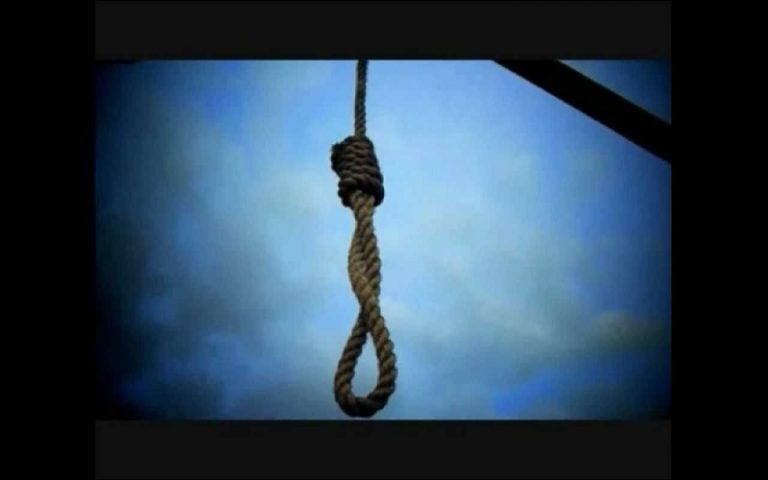
With the execution of an unidentified 23-year-old woman in Ardabil Prison on Monday, the Iranian regime has executed at least 113 women during the presidency of Hassan Rouhani, a supposed moderate. 

This comes just over a month after the execution of Zeinab Khodamoradi in Sanandaj Central Prison on December 27 and follows on from at least 27 executions in January. 

The Women’s Committee of the National Council of Resistance of Iran (NCRI) has noted that most women in Iran are executed for murder, but this is actually another example of how the regime fails women because they are mostly victims of domestic abuse who kill in defence of themselves or their children because they have no legal recourse to end an abusive marriage. 

This is backed up by political prisoner Golrokh Ebrahimi Iraee  who wrote in 2019 that these women, “had murdered their husbands —instantly or based on a pre-meditated plan—after years of being humiliated, insulted, battered and even tortured by them and because of being deprived of their right to divorce” and that if they were allowed to divorce, they may never have committed murder. 

In other countries, they would be granted leniency based on their circumstances, but not in Iran where murder is not separated by degrees. This, of course, does not even touch upon those executed for crimes that are not capital offences under international law, like drug offences, or for non-crimes, like political activism.

Iranians Furious Over Ignored Domestic Abuse

The Committee wrote: “The Iranian regime open-handedly uses the death penalty as a form of punishment. In many cases, the religious and ethnic minorities, political dissidents, and women are targets of the death penalty in a discriminatory manner.” 

Number one in executions 

Iran is the world leader in executions per capita, as well as executions of women and juvenile offenders. Over 4,300 people have been executed since Rouhani took power in 2013, with the number of overall executions and those of women actually believed much higher because of the fact that most executions take place in secret without witnesses. 

The NCRI Women’s Committee has produced a list of the 113 executed women, using information from Iran’s state-run media, human rights activists, and reliable sources inside the country to fill in as much information as possible about those women. 

The Iranian Resistance has called in their 10-point plan for a Free Iran for the death penalty to be abolished and for women to have equal rights in many areas, including divorce. 

Iran’s Economic Crisis – What Is the Cause?

The economic crisis in Iran has been the focus of media attention around the world, with the regime and its apologists blaming foreign sanctions, but the Iranian Resistance states that the problem lies with the regime itself and even some regime officials have backed up the stories of economic mismanagement and institutionalized corruption. 

Indeed, Parliament Speaker Mohammad Bagher Ghalibaf said last month that the budget infrastructure was “damaged” because it indicates a “36% difference between salaries and expenses”. But the Resistance highlighted that Isa Sharifi, a former deputy of Ghalibaf when he was the mayor of Tehran, was actually sentenced to 20 years in prison for stealing almost five trillion tomans. 

Iranian Workers’ Salaries Don’t Reach the Poverty Line

Even the state-run is reporting on the economic struggles of Iranians and how their situation is only getting worse, with the Hamdeli daily reporting that the poorest in society are only earning a quarter of what would put them just above the poverty line. 

Other news agencies wrote about how, while Iranians live in poverty, the regime is embezzling billions to enrich themselves, something that former Minister of Roads and Urban Development Abbas Akhundi, spoke about. 

The ILNA news agency wrote on February 3 that even doubling the pay of workers would not lift them out of poverty, which has left many living in tents and unable to afford food. 

All of this just ridicules the idea that the economic problems are linked to sanctions, with even the state-run Arman daily admitting that it is “far too optimistic” to assume that a lifting of US sanctions would bring about a change in the Iranian people’s economic outlook. 

After all, there was no let-up in poverty during the period 2016-2018, when sanctions were lifted. And despite widespread poverty, Iran still found  “$600 million” for the “expansion at the Imam Hussein shrine” in Iraq in December.    

Sanctions relief only benefits the regime by providing money for their malign actions, like for instance the type of international terrorism that Iranian diplomat Assadollah Assadi has just been found guilty of in Belgium. Evidence produced in the trial found that he had spent plenty of money to finance a spying and terror network across Europe. 

The Iranian Resistance wrote: “World leaders should provide incentive packages to the regime. They should maintain and increase sanctions on the regime for its support of terrorism and human rights violations. Iranian people underlined their desire for regime change and pointed to the regime as Iran’s only problem during the major protests in 2018 and 2019. The time has come for the international community to support the Iranian people’s desire for regime change, democracy, and equality.