Home Blog Page 35

Iranian Political Prisoner Ehsan Rostami Faces Risk of Execution

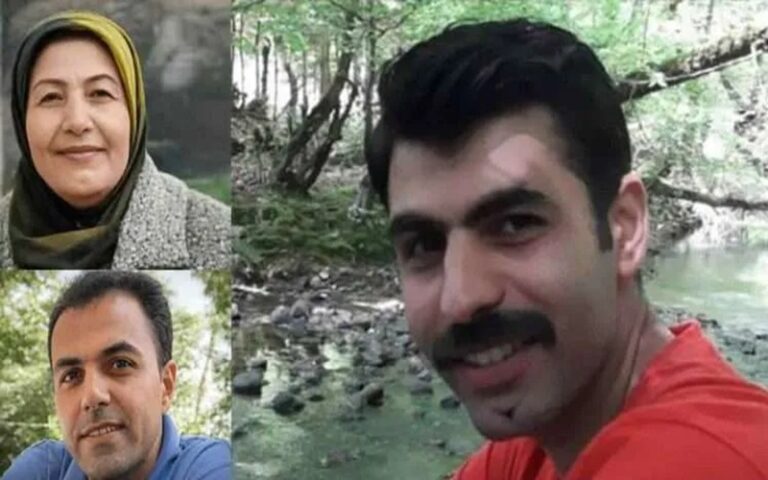
The National Council of Resistance of Iran (NCRI), the main opposition coalition to Iran’s regime, announced that political prisoner Ehsan Rostami is facing the risk of a death sentence or heavy punishments due to the fabricated charge of “baghi” and under the pretext of cooperation with the People’s Mojahedin Organization of Iran (PMOI/MEK).

On Wednesday, December 10, Branch Five of the Evin Prosecutor’s Office formally presented this charge to Ehsan Rostami. After the interrogation session ended, he was immediately transferred to solitary confinement.

Over 400 Global Figures Urge Halt to Execution of Iranian Political Prisoner

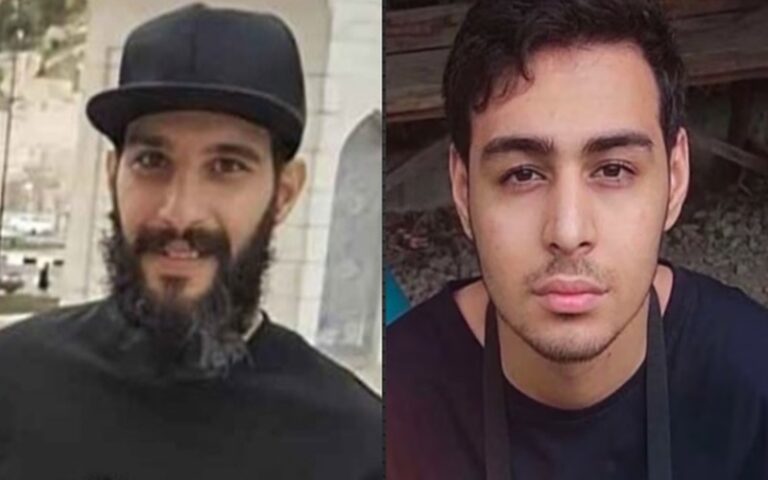
Ehsan Rostami was arrested on August 20 along with several relatives and friends, including his cousin Ramin Rostami, during simultaneous raids on their homes in Tehran. They were subjected to torture-inflicting interrogations and severe pressure for four months.

Ehsan and Ramin Rostami began a hunger strike on Thursday, October 2, in protest against the torture and pressure imposed by interrogators, continuing for 23 days.

Ehsan Rostami faces the risk of a death sentence.

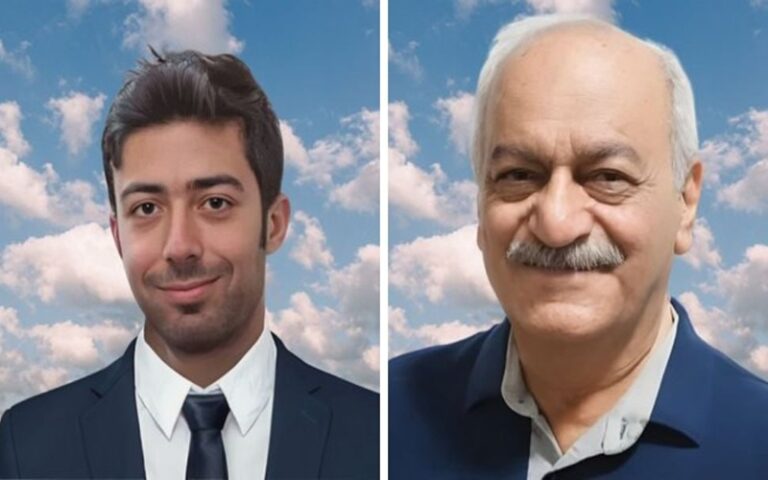
Ehsan Rostami, 36 years old, is a sociologist and a graduate of Allameh Tabataba’i University. He is the manager of a publishing house and bookstore and is known as a cultural figure. Ramin Rostami, 29 years old, is an electrical engineer and an independent cultural publisher.

Additionally, Jahangir Rostami, Ehsan’s 63-year-old father and a retired educator, was arrested at his home in Harsin on Friday, October 17, and was severely beaten, suffering injuries to his head and face. Two days later, he was brought before his son Ehsan with a bloodied face to extract a forced confession.

Retirees’ labor associations in Kermanshah and Harsin issued statements condemning the arrest and beating of Jahangir Rostami. They also demanded his release during a retirees’ gathering in Kermanshah. He was eventually temporarily released from prison on December 16 on bail of 15 billion rials (approximately 11,200 dollars).

It should be recalled that the Iranian regime’s security agencies, in order to intimidate the public and young people, are carrying out widespread arrests of activists and regime opponents and bringing the charge of baghi, which carries the death penalty, in an effort to frighten people and prevent them from joining Iran’s Resistance and engaging in active political struggle.

 Worldwide Women’s Coalition Demands Halt to Execution of Iranian Political Prisoner Zahra Tabari

Global figures have called for the revocation of Zahra Tabari’s death sentence. The issuance and confirmation of the death sentence for Zahra Tabari, an Iranian engineer and women’s rights activist, has triggered a wide wave of media and human rights reactions worldwide. At the same time, with the release of a statement signed by more than 400 prominent women from around the world, international media outlets have extensively covered the case. This report focuses on the global reflection of the demand to overturn Zahra Tabari’s death sentence in major international media and institutions.

Calls to overturn Zahra Tabari’s death sentence in Arab media

The newspaper Asharq Al-Awsat wrote in a detailed report that Zahra Tabari, a sixty-seven-year-old mother, was sentenced to death after a ten-minute trial held without the presence of a lawyer. The outlet stressed that the court session was conducted via video conference and that fair trial standards were not observed. The report stated that the main reason for issuing the sentence was her holding a placard. Asharq Al-Awsat described the case as a clear example of a security-driven response to civic activism and pointed to the global demand for overturning Zahra Tabari’s death sentence.

Over 400 Global Figures Urge Halt to Execution of Iranian Political Prisoner

Coverage of the call to overturn Zahra Tabari’s death sentence by Agence France-Presse

Agence France-Presse reported on December 23 that more than four hundred prominent women, including four Nobel Prize laureates and several former presidents and prime ministers, have called for Tabari’s immediate release. The outlet stated that the main concern of the signatories is the risk of the sentence being carried out imminently. AFP also noted that Iran’s state-run media have made no mention of the case. This silence, combined with mounting global pressure, has turned the demand to overturn Zahra Tabari’s death sentence into one of the day’s major news stories.

The role of United Nations experts in demanding the revocation of Zahra Tabari’s death sentence

Alongside the media coverage, a group of eight independent United Nations human rights experts issued a statement calling on Iranian authorities to immediately halt the execution of the sentence. They stated that the charge of “baghi” was based solely on a placard and an unverified audio file. Their statement said that the case represents a serious violation of Iran’s international obligations. This stance elevated the demand to overturn Zahra Tabari’s death sentence to the formal level of international institutions.

Scoop website and details of judicial violations

The Scoop website, citing United Nations experts, reported that Zahra Shahbaz Tabari, a sixty-seven-year-old electrical engineer, is being held in Lakan Prison in the city of Rasht. The report pointed to issues such as unlawful deprivation of liberty, denial of effective legal counsel, insufficient time for defense, and reliance on inadequate evidence. Scoop emphasized that such a process renders any conviction invalid. The report described the systematic use of the death penalty for vague security-related charges as a serious obstacle to justice and stressed the necessity of overturning Zahra Tabari’s death sentence.

Independent Online and global women’s solidarity

Independent Online reported that the signatories of the statement have called on governments around the world to stand with the women of Iran. The outlet wrote that in addition to politicians, judges, diplomats, and intellectual figures such as Elisabeth Badinter have also signed the appeal. Independent Online added that United Nations experts have confirmed that the sentence was issued solely on the basis of symbolic activity. Referring to the execution of more than forty women in the current year, the report underscored the urgency of overturning Zahra Tabari’s death sentence.

Office of the United Nations High Commissioner for Human Rights

The Office of the United Nations High Commissioner for Human Rights in Geneva warned that Tabari’s case involves no charge of intentional killing and that her execution would constitute an arbitrary execution. The body described the criminalization of women’s activism as a clear form of gender discrimination. France 24 television network also wrote that the case reveals the fear Iranian women have faced for decades. The network described Iran as the world’s leading executioner of women relative to population size and called for the revocation of Zahra Tabari’s death sentence.

The extensive media coverage and positions taken by international institutions show that Zahra Tabari’s case has become a global symbol of the repression of women in Iran. The demand to overturn Zahra Tabari’s death sentence is not an individual appeal, but a global condemnation of a system that has turned justice into a tool of intimidation.

Head Of Atomic Energy Organization of Iranian Regime: Grossi Is ‘Part of the Enemy’

Mohammad Eslami, head of the Atomic Energy Organization of the Iranian regime, criticized the positions of the Director General of the International Atomic Energy Agency (IAEA) regarding the need to inspect nuclear sites bombed in Iran and described Rafael Grossi as “part of the enemy.”

On Wednesday, December 24, Eslami reacted to Grossi’s recent remarks about the IAEA’s lack of access to the Natanz, Fordow, and Isfahan sites and said: “If there is a protocol for [inspecting] attacked facilities, he should announce it. Such a thing is not provisioned in the safeguards.”

Iran’s Regime Is Clearing One of Its Nuclear Facilities, Study Shows

He added that the method of the Agency’s inspections of sites that were targeted during the twelve-day war “must be defined.”

In recent days, speculation has intensified about the fate of the Iranian regime’s nuclear program and the possible reactions of the United States, Israel, and the European troika (France, Germany, and the United Kingdom).

On December 23, a meeting of the United Nations Security Council to review the Iranian regime’s nuclear file ended with another confrontation between the representative of the U.S. government and the ambassador of Iran’s regime. In response to remarks by Amir Saeid Iravani, Iran’s regime ambassador to the UN, Morgan Ortagus stressed that uranium enrichment is not acceptable inside Iran under any circumstances.

On December 22, Grossi said in an interview with Russia’s RIA Novosti news agency that the International Atomic Energy Agency believes most of the Iranian regime’s stockpile of highly enriched uranium remains inside Iran.

He had also said on December 15 that the Agency’s activities in Iran are very limited and that its inspectors must have access to the key nuclear facilities at Natanz, Fordow, and Isfahan.

In recent months, and especially after the twelve-day war, a number of officials of the Iranian regime have sharply criticized Grossi; some have called him a “Mossad agent,” and the state-run Kayhan newspaper, which operates under the supervision of a representative of regime supreme leader Ali Khamenei, even called for his execution on charges of “espionage” for Israel.

On December 13, Grossi described threats by Iranian regime officials against him as “very damaging” and said that unfortunately he remains under security protection, because experts in this field consider these threats to be real and credible.

Eslami: If the facilities have been destroyed, what is the inspection for?

The head of the Atomic Energy Organization of the Iranian regime, continuing to repeat the regime’s previous positions, emphasized blocking the Agency’s inspections at the current stage.

Eslami said: “What kind of visit do they want to make to facilities that, by their own claim, have been destroyed?”

Grossi: Bulk of Iran’s Highly Enriched Uranium Stockpiles Remain Inside Country

Donald Trump, the president of the United States, has repeatedly stated that following U.S. attacks on the Natanz, Fordow, and Isfahan sites during the twelve-day war, the Iranian regime’s nuclear program has been destroyed.

However, some observers believe that although these attacks caused serious damage, they did not eliminate Tehran’s nuclear program.

On December 18, the Institute for Science and International Security reported, based on satellite imagery, that the Iranian regime is attempting to conceal the remnants of the Natanz site from observers.

In recent days, some reports have indicated the possibility of another Israeli attack on Iran.

NBC News reported on December 20 that Israeli officials believe the Iranian regime is expanding its ballistic missile program and that, as a result, Israeli Prime Minister Benjamin Netanyahu will present options to the U.S. president in his upcoming meeting for Washington to join Israel in a potential attack on Iran.

On December 21, during a visit to Israel, Lindsey Graham, a prominent Republican senator, said that if it becomes clear that the Iranian regime is resuming nuclear enrichment and increasing the production of ballistic missiles to threaten Israel and even Europe, Iran must be attacked before these actions materialize.

Earthquake In Tehran Would Be Deadlier Than War

0

Ali Nassiri, head of Tehran’s Disaster Prevention and Management Organization, warned about the consequences of a major earthquake in the capital, saying that an earthquake with a magnitude above six could cause human losses far heavier than war.

Nassiri, head of Tehran’s Disaster Prevention and Management Organization, said in an interview on Wednesday, December 24, with ISNA, a state-run news agency, that earthquakes are “the most important and most destructive threat facing Tehran.” He added that an earthquake would be even more devastating for the capital than war, because if a severe earthquake occurs, the scale of human casualties could exceed the total victims of past wars and major disasters.

Rejecting rumors about the “man-made creation of earthquakes,” Nassiri stressed that major earthquakes have no human origin whatsoever and that claims about triggering earthquakes through military or nuclear tests lack any scientific basis.

Four Dead Due to “Multiple Ground Subsidence” in Tehran

He added that such narratives only divert public attention from the main necessity, which is prevention and preparedness.

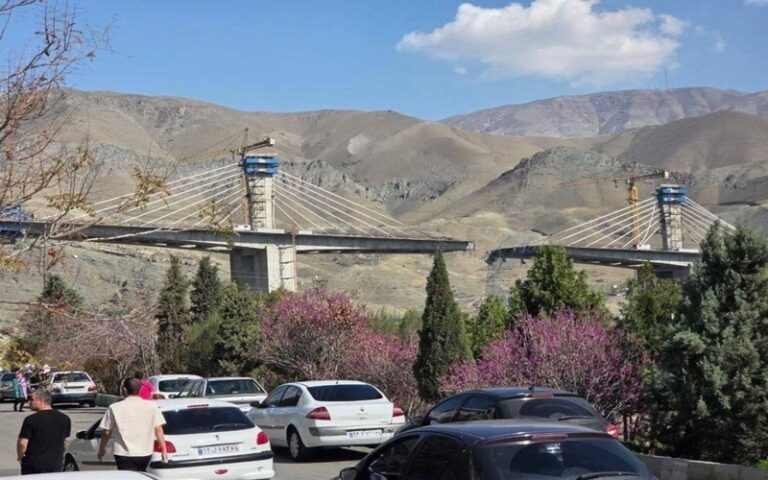
Media in Iran reported on December 13, citing Tehran emergency officials, that land subsidence had occurred in the Valiasr Township in the south of the capital, attributing it to “sand and gravel extraction and dried-up qanats.”

Jalal Maleki, spokesperson for the Tehran Fire Department, said the subsidence covered an area of about 10 meters and had a depth of about one and a half meters, trapping three vehicles that were unable to get out.

Ali Beitollahi, head of the earthquake and hazards department at the Road, Housing, and Urban Development Research Center, also told the agency that the subsidence occurred early Friday morning on December 12, coinciding with the start of rainfall in Tehran, and was a type of “sudden subsidence” (ground collapse).

The destruction of a hospital, the collapse of hope

The head of Tehran’s Disaster Prevention and Management Organization, referring to the condition of hospitals, said that the collapse of a hospital is not merely the destruction of a building, but rather “the collapse of people’s hope.”

According to him, hospitals are symbols of citizens’ psychological security, and damage to them during a crisis, beyond structural destruction, leads to the loss of human capital, including medical staff and patients.

Mehdi Zare, a professor at the International Institute of Earthquake Engineering and Seismology, told Khabar Online on December 5: “Excessive pumping of groundwater in the plains of Tehran, Rey, and surrounding areas, and the resulting land subsidence, affects the activation of active faults in the region.”

Zare emphasized: “Over-extraction of groundwater, especially in alluvial plains, leads to the compaction of soil and sediment layers and ultimately to land subsidence.”

Prevention is more cost-effective

Emphasizing that prevention should take precedence over post-disaster response, Nassiri said that in many cases the cost of retrofitting or even fully renovating buildings is lower than the chain of costs imposed after a crisis, from debris removal and emergency sheltering to temporary housing and years-long reconstruction.

Iran Ranks Third Globally in Extent of Land Subsidence

Pointing out that human lives cannot be priced, he said: “Experience has shown that prevention is more cost-effective, both in human and economic terms.”

Nassiri stressed that public budgets and oil revenues no longer have the capacity to bear the heavy burden of widespread safety measures, and that urban management is forced to move toward modern, sustainable, and revenue-generating methods.

Kamran Abdoli, deputy for prevention and fire safety at the Fire Department, said on November 1 that 80,000 unsafe buildings have been identified in Tehran.

He emphasized that inspection system assessments by the Fire Department show that of these, three thousand are low-risk, 50,000 are medium-risk, and about 27,000 are high-risk buildings.

Earlier, in late September, the deputy head of Tehran’s Urban Renewal Organization said that loans for renovating deteriorated urban fabric in Tehran have not been paid for about three years.

Tehran is located among several active faults, including the North Tehran Fault with the potential for a magnitude 7.2 earthquake and the southern Rey and Kahrizak faults with a magnitude capacity of 6.7, a situation that has multiplied concerns over the potential for widespread earthquake damage in the capital.

Hezbollah Turns to Drug Trafficking in Venezuela as Support from Tehran Dries Up

The Washington Free Beacon, reported citing informed sources that Hezbollah, following a reduction in support from the Iranian regime, has turned to drug trafficking in Venezuela to finance itself and has expanded its presence in the country.

The outlet wrote, citing informed sources, that following the failures of the Iranian regime and its proxy groups, Hezbollah forces have increasingly traveled to Venezuela and are relying on drug trafficking for revenue more than ever before.

Marshall Billingslea, the former U.S. Treasury Department assistant secretary for terrorist financing, said in October during a hearing of the “International Narcotics Control Committee” in the U.S. Senate that more than 400 Hezbollah field commanders had been ordered to relocate to Latin America, specifically Venezuela. These commanders have joined approximately 11,000 Hezbollah-affiliated operatives who entered Venezuela between 2010 and 2019.

Lebanese FM Says Disarming Hezbollah Depends on Tehran’s Approval

According to the Washington Free Beacon, although this Iranian regime–backed group has benefited from the Venezuelan government’s hospitality for years, the growing focus on drug trafficking shows that Hezbollah is seeking to secure its financial resources outside the Iranian regime.

According to sources familiar with Hezbollah’s presence in Latin America, Iran used to provide more than 700 million dollars annually to Hezbollah, an amount that made up about 70% of the group’s annual budget, but it is now no longer able to adequately finance this proxy force.

Kan, Israel’s public broadcaster, reported on Monday, December 21, that Lebanese Hezbollah officials in recent talks with commanders of the IRGC Quds Force demanded an increase in financial assistance from the Iranian regime to about two billion dollars per year. However, Tehran agreed only to pay close to one billion dollars to its main proxy group.

Matthew Leavitt, a former U.S. Treasury Department analyst on terrorist financing and a current senior fellow at the Washington Institute for Near East Policy, told the Washington Free Beacon that because of the 12-day war, the Trump administration’s sanctions snapback, and energy and water crises that have persisted in Iran for months, the Iranian regime “is reportedly unable to foot the bill for Hezbollah’s reconstruction efforts as it did after Hezbollah’s 2006 war with Israel.”

According to him, Hezbollah has responded to this situation by increasingly relying on the drug trade.

The main focus of Hezbollah’s activity in this field is “black cocaine,” a substance molded into coal-like bricks to prevent detection by security forces.

According to the Washington Free Beacon, revenue from the sale of these drugs finances Hezbollah’s global terrorist operations, while the Venezuelan government also receives a share of the proceeds, helping sustain its own survival.

An estimate by the U.S. Drug Enforcement Administration (DEA) in 2016 shows that Hezbollah moves up to 400 million dollars’ worth of cocaine annually through criminal networks in Latin America. According to a report by the Foundation for Defense of Democracies, this figure has likely increased since the war with Israel.

William Barr, the former attorney general of the United States, also referred to Hezbollah’s role in drug trafficking during a podcast interview on Friday.

Barr added that Venezuela is a strategic enemy and a threat to the United States. He said the country serves as a base for Hezbollah, supports the group, and plays a role in various dealings, from money laundering to other arrangements, to facilitate Hezbollah’s drug trafficking into the United States.

While U.S. officials are speaking about Hezbollah’s role in drug trafficking in Venezuela, Ali Khamenei, the supreme leader of the Iranian regime, has also reacted to the recent pressure campaign by the Trump administration against Nicolas Maduro, the president of Venezuela. In a public speech last week, Khamenei condemned the Trump administration’s seizure of an oil tanker in the Caribbean Sea.

Over 400 Global Figures Urge Halt to Execution of Iranian Political Prisoner

More than 400 prominent women from across the world and a group of United Nations experts, in separate statements, have called for stopping the execution of Zahra Shahbaz Tabari, a 67-year-old political prisoner held in Lakan Prison in the northern city of Rasht. According to reports, she faces execution for holding a banner bearing the slogan “Woman, Resistance, Freedom.”

The statement by more than 400 prominent women worldwide—including Nobel Prize laureates, former heads of government, members of parliaments, UN special rapporteurs, media figures, leading human rights activists, and sports personalities—was published on Tuesday, December 22.

The signatories condemned the death sentence issued against Tabari and stated that it was handed down after a roughly 10-minute-long “show trial”; a trial that, according to them, was conducted remotely via video conference, during which the political prisoner was denied access to her lawyer of choice.

Iranian Political Prisoner Sentenced to Death

They emphasized that the charge attributed to Tabari was announced as “cooperation with the People’s Mojahedin Organization of Iran,” while the only evidence cited in her case was her holding a banner with the slogan “Woman, Resistance, Freedom”; a slogan that, according to the statement, has become particularly common among female political prisoners.

In conclusion, the signatories called for Tabari’s immediate release and urged governments around the world to stand alongside the women of Iran in the pursuit of democracy, equality, and freedom.

On November 4, Tabari detailed the death sentence issued against her in a letter and, citing legal provisions, described it as “lacking legal basis and indicative of the absence of a fair trial.”

In part of her letter, she wrote that her sentence was issued on the charge of “baghi” through alleged membership in the People’s Mojahedin Organization of Iran, and that in addition, she was sentenced to one year in prison on the charge of “propaganda against the regime.”

The political prisoner cited the installation of a banner with the slogan “Woman, Resistance, Freedom” and the presence of an audio file on her mobile phone, which she had not sent anywhere, as the evidence in her case.

Warning by United Nations experts

A group of independent United Nations experts also issued a separate statement on Tuesday, December 23, calling for the immediate halt of Tabari’s execution.

The experts stated that Tabari’s case demonstrates “serious and systematic violations” of fair trial guarantees and the unjustified use of the death penalty for vague and ill-defined security charges.

According to the experts, Tabari was arrested during a raid on her home without a judicial warrant, subjected to interrogation in solitary confinement for one month, and pressured to confess.

They emphasized that she did not have access to her chosen lawyer and appeared in court with a court-appointed lawyer.

Among the signatories of the statement are Mai Sato, the UN Special Rapporteur on the situation of human rights in the Iranian regime; Claudia Flores (Chair), Ivana Krstić (Vice-Chair), Dorothy Estrada-Tanck, Hina Jilani, and Laura Nyirinkindi, members of the Working Group on discrimination against women and girls; Reem Alsalem, the Special Rapporteur on violence against women and girls; and Morris Tidball-Binz, the Special Rapporteur on extrajudicial, summary or arbitrary executions.

The statement noted that there is no “intentional murder” in this case and that due process has been widely violated, warning that carrying out Tabari’s execution would constitute an “arbitrary execution.”

The experts also emphasized that criminalizing women’s activism for gender equality and framing it as “armed rebellion” constitutes a severe form of gender discrimination.

On October 31, Amnesty International also issued a statement calling for the immediate annulment of Tabari’s death sentence and stressed that she was sentenced to death after an “extremely unfair” trial at the Rasht Revolutionary Court.

On October 25, the human rights website HRANA reported that Ahmad Darvish-Goftar, head of Branch One of the Rasht Revolutionary Court, sentenced Tabari to death on the charge of “baghi” through alleged cooperation with the People’s Mojahedin Organization of Iran.

According to human rights sources, currently about 70 prisoners across the country are facing confirmation or implementation of death sentences on political charges, and more than 100 others with similar accusations are at risk of receiving death sentences.

203 Cases of Femicide Recorded in Iran in Current Year

The human rights organization Hengaw, in a report warning about the rise in femicide in Iran, wrote that during the current year (starting from March 21, 2025), 203 cases of femicide were recorded in the country.

The report states: “Due to the anti-women laws of the Iranian regime, as well as patriarchal and so-called honor-based social relations in Iranian society, a significant portion of femicide cases fall into the category of hidden statistics.”

In another report published on November 25, Hengaw wrote that from the beginning of the current Gregorian year until November 25, 2025, at least 176 cases of femicide were recorded in various cities across Iran, with at least 25 cases motivated by so-called honor.

State Cleric Blames ‘Women Not Wearing Hijab’ For Drought in Iran

According to these statistics, Tehran recorded the highest number of femicides with 27 cases, followed by Mazandaran and Kermanshah with 14 cases each, and Razavi Khorasan and West Azerbaijan with 13 cases each.

Additionally, East Azerbaijan recorded 10 cases, Sistan and Baluchestan recorded nine cases, the provinces of Lorestan and Fars each recorded eight cases, and Gilan recorded seven cases, ranking next.

Based on these statistics, at least 11 women were killed for rejecting marriage proposals, nine women for requesting divorce, 10 women were victims of child marriage, and six women were victims of forced marriage, all killed by their husbands.

On November 24, the HRANA news website, affiliated with a human rights news agency focused on Iran, reported on the occasion of the International Day for the Elimination of Violence against Women that during the one-year period from November 23, 2024, to November 20, 2025, at least 110 women were killed in Iran, and the organization recorded 181 reports comprising 320 documented cases of violations of women’s rights in Iran.

In recent years, cases of femicide in Iran have increased, with a significant portion occurring under the label of “honor killings.”

Execution of 1,050 People and Crackdown on 30,000 Women for Not Wearing the Hijab

Mai Sato, the United Nations Special Rapporteur on the situation of human rights in Iran, said in a report on September 26 regarding the human rights situation in Iran that the absence of a comprehensive law against domestic violence has paved the way for increased violence against women.

100th Week Of ‘No To Executions Tuesdays’ Campaign In 55 Prisons Across Iran

0

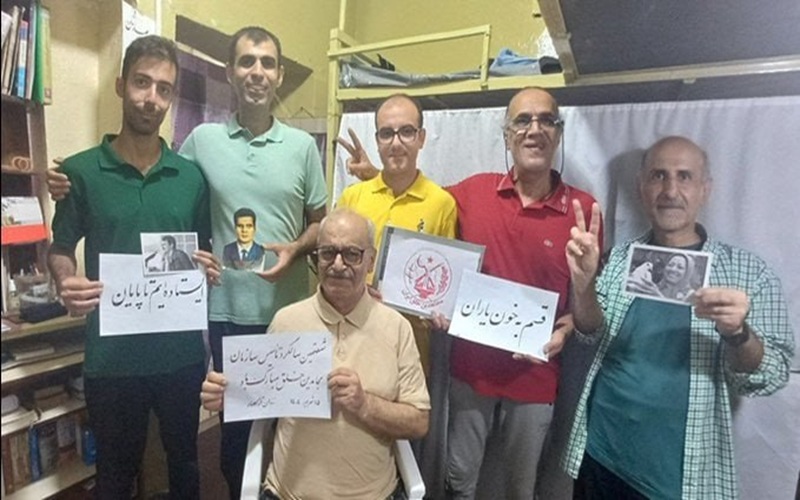
The hundredth week of the “No To Executions Tuesdays” campaign continues in 55 different prisons across the country with hunger strikes by prisoners. One hundred weeks of hunger strikes in 55 prisons have shown that even in the most confined wards, it is possible to keep hope alive and raise the voice of justice.

Political prisoners participating in this campaign, after nearly two years, continue the campaign steadfastly and with faith in human values.

The full text of the statement for the hundredth week of the “No To Executions Tuesdays” campaign is as follows:

Iran’s Regime Carries Out 335 Executions in November, Highest Toll in 37 Years

The expansion of the “No To Executions Tuesdays” campaign in its hundredth week with the joining of the women’s ward of Yazd Prison

One hundred weeks of relentless struggle against the killing machine and the gallows

With congratulations on Yalda Night to all compatriots, to imprisoned members of the “No To Executions Tuesdays” campaign, and to each and every prisoner sentenced to death, and with the hope for the abolition of the death penalty in a free and prosperous Iran.

The “No To Executions Tuesdays” campaign, in its hundredth week, despite many ups and downs, acts of courage, and the most painful nights marked by the execution of its comrades and fellow prisoners, continues its path with momentum.

One hundred weeks of no to execution,

One hundred weeks of relentless struggle against the killing machine and the gallows,

One hundred weeks of standing against cruelty and brutality,

One hundred weeks of breaking the aura of the gallows and prison,

One hundred weeks of calls for resistance by prisoners’ families.

One hundred weeks of resistance against a dictatorship that seeks to silence every voice of protest through executions and death squads and to impose itself on society. An illegitimate government that, according to the seventy-second United Nations resolution adopted in the past week, has executed more than 2,000 people in the year 2025 alone so far (meaning more than twice the number in 2024) with the aim of intimidation and repression; this campaign will continue without توقف and will persist until the abolition of the inhuman death penalty.

We learned that simultaneously with the hundredth week of the “No To Executions Tuesdays” campaign, the women’s ward of Yazd Prison also announced its participation. With greetings and gratitude to these individuals, we hope that other prisons across the country will also join this campaign in the future, and that along this path we will reach a day when the “No to Execution” campaign spreads throughout the country and the groundwork for abolishing the inhuman death penalty is established.

The number of executions between November 22 and December 21 has reached 357 people.

This wave of killing and execution of prisoners reflects the extremely critical condition of a government that, caught in a vortex of incurable political, social, and economic crises that have made even ordinary daily life impossible for the people, has turned to executing prisoners. In a wholly misguided assessment of Iranian society, it seeks to prevent anticipated protests by displaying such savagery and brutality in executing the youth of this land; however, this unbridled brutality has not and will not cure any of the ills of despotism.

Political prisoners participating in the “No To Executions Tuesdays” campaign are on hunger strike in 55 prisons across the country during the hundredth week, on Tuesday, December 23.

Iran’s Regime Conducts Missile Tests at Several Locations

The state-run Fars News Agency reported that missile tests were conducted on Monday, December 22, at several locations across Iran. This comes as the state-run IRIB (Islamic Republic of Iran Broadcasting) news agency said the published images are not related to an IRGC missile test.

According to Fars News Agency, citing “field observations and public reports,” reports of missile tests were received from Khorramabad, Mahabad, Isfahan, Tehran, and Mashhad.

Some images published on social media show a white missile trail in the sky over several areas inside Iran.

Iranian Regime FM Spokesperson Calls Missile Program ‘Non-Negotiable’

However, the Iranian regime’s state-run IRIB news agency said the published images are not related to an IRGC missile test and are not accurate.

Quoting “some informed sources,” the outlet stated: “No missile test took place today, and the white trail in the sky is the flight path of an aircraft at high altitude.”

Earlier, Axios reported that Israeli officials had warned the Trump administration over the weekend that recent IRGC missile drills could in fact be “Iran’s preparations for a surprise attack on Israel.”

An Israeli source told the outlet: “The likelihood of an Iranian attack is less than 50%, but no one is willing to take the risk and say this is merely a test.”

At the same time, NBC News reported that Israeli officials believe Iran is developing its ballistic missile program.

Ahmad Vahidi, deputy chief of Iran’s Armed Forces General Staff, rejected claims of damage to Iran’s missile industry, saying: “Our weapons production has never stopped, not even for a single moment.”

Abolfazl Shekarchi, senior spokesperson for Iran’s Armed Forces General Staff, also stated that after the 12-day war, “our powerful missile production lines were not shut down for even a moment.”

Economic Crisis Intensifies Academic Decline in Iran

Iran, the state-run newspaper of the Iranian regime, reported that due to cuts in the Ministry of Education’s budget and the decline in people’s incomes, the government and families no longer have the same capacity as before to spend on students’ education.

The newspaper Iran wrote on Monday, December 22, quoting Hadi Mousavi-Nik, head of the Social Protection and Poverty Alleviation Policy Group at the Majlis Research Center of the Iranian regime: “Over the past 15 years, government spending on the country’s education system has decreased by 12%, and on the other hand, households no longer have the same ability as before to pay for education.”

Educational Disaster in Iran: 70% of Students Suffering from Learning Poverty

According to Mousavi-Nik’s statistics, during the 2010s the share of children’s education expenses from total household expenditures was about 4%, but this figure has declined to 2% in recent years.

This official from the Majlis Research Center attributed this issue to declining household incomes and added that with the decrease in per capita income, families’ financial ability to pay for educational expenses has weakened.

As a result of the Iranian regime’s ineffective policies in the economic, domestic, and foreign policy spheres over recent decades, runaway inflation has severely affected citizens’ lives, especially low-income groups, and the prices of basic goods have seen an unprecedented surge.

Numerous reports have also highlighted the impact of the economic crisis on citizens’ mental and physical health and its consequences across various sectors, including the education system.

Deterrent factors in Iran’s education system

Continuing his remarks, Mousavi-Nik identified the reduction in household spending on children’s education as one of the reasons for the decline in students’ average grades.

He emphasized: “We have repeatedly observed in society that when economic conditions worsen, deterrent phenomena in students’ education also increase, one of the consequences of which is dropping out of school.”

In September, amid continued warnings about a wave of children dropping out of school in Iran, Alireza Kazemi, the Iranian regime’s minister of education, announced that the number of students who have dropped out nationwide has reached 950,000.

Farshad Ebrahim-Pour, a member of the Majlis Education Committee, also said in October 2024, referring to hidden statistics on children who have dropped out of school, that in the 2024–2025 academic year about two million students were not enrolled, with economic problems being the main reason.

Poverty hinders the progress of future generations

According to reports, Iran’s education crisis is not limited to school dropouts; academic decline has also become a widespread phenomenon, affecting even students who remain within the education system.

In its report, the newspaper Iran wrote that statistics show students’ average grades last year fluctuated between eight and 10, heightening concerns about the decline in education quality and the performance of the country’s education system.

Mousavi-Nik further stressed that household poverty is a major obstacle to the growth and advancement of future generations.

Citing available statistics, he said: “Intergenerational mobility among members of our society has become very weak.”

According to this official from the Majlis Research Center, if a person in Iran is in the first income decile, meaning the weakest economic level, there is a 40% probability that the next generation will also remain in the same decile.

He added that in contrast, in Canada the probability of individuals not improving their social status compared to their family background is only 20%.