Home Blog Page 95

Three Iranians Accused of Spying for Tehran to Be Tried in the UK in Fall 2026

During a preliminary hearing at the Old Bailey court in London, it was announced that the trial of three Iranian men accused of collaborating with the Iranian regime’s intelligence service will begin in October 2026 in the United Kingdom.

Defense attorneys for the defendants — Mostafa Sepahvand, 39; Farhad Javadi Manesh, 44; and Shapur Ghaleh Alikhani Noori, 55 — announced on Friday that their clients are likely to plead “not guilty” to all charges.

The formal plea hearing for the three men will be held on September 26, while their trial is set to begin on October 5, 2026, at Woolwich Crown Court in London.

Paraguay designates IRGC as a terrorist organization

The three are accused of “gathering information and planning acts of violence” on British soil.

The men, who were arrested on May 4 and remain in custody, are the first Iranians to be prosecuted under the UK’s National Security Act of 2023, which addresses threats posed by hostile foreign states.

All three are accused of actions that allegedly support the intelligence service of a foreign government. The UK police and Home Office have identified that foreign state as “Iran.”

The charges relate to alleged activities carried out between August 2024 and February 2025.

Prosecutors say the three men are also accused of surveillance and conducting reconnaissance operations targeting specific individuals in the UK.

Iranian Opposition Condemns Release of Tehran’s Convicted Diplomat-Terrorist Assadollah Assadi

UK Government Reaction

Following the announcement of the charges in May, Yvette Cooper, the UK Home Secretary, issued an official statement in response to the allegations against the three Iranian nationals.

The Home Secretary said that the Iranian regime must be held accountable for its actions and the UK will not tolerate the increasing threats posed by foreign governments on its soil.

She added that the UK government would consider taking further measures to counter state threats to national security.


Warning Resolution by IAEA Board of Governors: Tehran Has Violated Its Safeguards Commitments

In a new and escalating development in the Iranian regime’s nuclear case, four Western countries — the United States, the United Kingdom, France, and Germany — have submitted a draft resolution to the International Atomic Energy Agency (IAEA) Board of Governors, accusing Tehran of “violating its safeguards commitments.”

According to the Associated Press, this draft resolution, which was shared with the Board members on Thursday, June 5, stresses that since 2019, the Iranian regime has repeatedly refused to fully and promptly cooperate with IAEA inspectors regarding undeclared nuclear material and suspicious activities at hidden sites.

Iranian Regime Atomic Energy Organization Protests IAEA Reports

The Western resolution states that Iran’s lack of transparency in its nuclear program has raised serious questions about its peaceful nature, which could eventually lead to referral to the United Nations Security Council — the body tasked with maintaining global peace and security.

IAEA on the Scene; Iran Facing Unprecedented Charges

Rafael Grossi, the Director General of the IAEA, has been tasked with continuing efforts to implement the provisions of this and previous resolutions. The IAEA’s latest quarterly report confirms existing concerns and reveals undeclared Iranian nuclear activities at sites such as Lavizan, Varamin, Marivan, and Turquzabad.

A Western diplomat told the Associated Press that if this resolution is adopted, it would mark the first time in two decades that Iran is formally accused of violating its safeguards obligations.

Iranian Regime’s Warning: Europe on the Brink of a Strategic Mistake

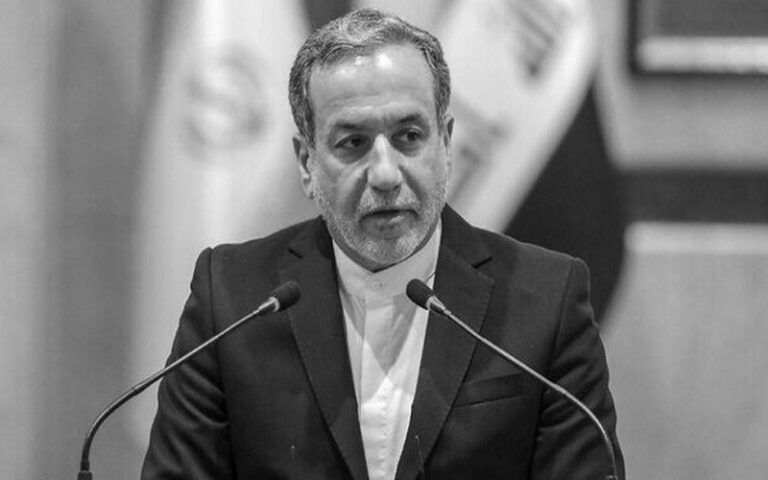
In response to the move, Abbas Araghchi, former deputy foreign minister of the Iranian regime, described it as a “biased action” and said, “Baseless and politicized accusations against Iran will only escalate the crisis.”

He warned that Europe is on the verge of “a major strategic mistake,” and that the Iranian regime “will respond decisively to any violation of its rights.”

Efforts to Preserve Diplomacy; But Warning About Snapback Sanctions

While this resolution is considered a major step toward increasing international pressure on Tehran, Western sources say the aim is not to end diplomacy, but to pressure Iran into providing transparency. Based on this approach, for now, the case will not be referred to the UN Security Council.

However, the three European countries have warned that if Iran continues its lack of cooperation, they are prepared to activate the “snapback mechanism” and formally refer the case to the Security Council.


Trump: Iran Will Not Enrich Uranium; Otherwise I Will Do Something I Don’t Like

U.S. President Donald Trump told reporters about the Iranian regime’s nuclear issue saying: “They won’t be enriching. If they enrich then we’re gonna have to do it other way and I don’t really want to do it the other way but we’re gonna have to. There is not going to be enrichment.”

He added that after the end of his first presidential term, there were no problems. There were no wars, ISIS was 100% defeated, Iran was bankrupt, there was no issue with Hamas and Hezbollah, Israel had not been attacked, the Russia-Ukraine war had not happened, and there was no inflation in the U.S.

Alongside continued U.S. military threats, speculation about a potential Israeli military action against the Iranian regime has also intensified in recent weeks. Israeli officials have recently reinforced this speculation through both public and covert signals.

However, Axios quoted senior Israeli officials reporting that while Israel is conducting training and drills for potential strikes on Iran’s nuclear facilities, it has told the United States it will not take action unless negotiations fail.

Meanwhile, the Iranian regime, in a note addressing the Director General’s report to the Board of Governors of the International Atomic Energy Agency (IAEA) under the title “NPT Safeguards Agreement,” stated that 60% uranium enrichment is not prohibited under the NPT and that Iran’s 60% enrichment activities and stockpiles are under the Agency’s supervision and verification.

Iran’s Regime Dismisses IAEA Report About its Nuclear Program as “Biased and Baseless.”

The note, referring to the IAEA’s report on undeclared nuclear material or highly contaminated equipment, states security officials have recently discovered further leads indicating that sabotage or hostile actions were involved in contaminating those sites.

The Iranian regime claimed that all its nuclear materials and activities have been fully declared to the IAEA and verified by the Agency, and that it is making every effort to identify the origin of such particles at those locations.


Wall Street Journal: Iran’s regime buys raw materials for its missiles from China

The Wall Street Journal reported on Thursday, June 5, citing unnamed informed sources, that Tehran, amid tense nuclear negotiations with the United States, is seeking to rebuild its military capabilities and has ordered thousands of tons of materials needed to produce ballistic missiles from China.

According to the Wall Street Journal, the shipments include “ammonium perchlorate,” which, according to the sources, is expected to arrive in Iran in the coming months. Ammonium perchlorate is the main component used in producing solid fuel for Iran’s ballistic missiles.

The report adds that part of these materials will likely be sent to Iran’s regime-backed militias in the region, including the Houthis in Yemen.

Iran’s Regime Sends Long-Range Missiles to Its Proxy Forces in Iraq

According to the report, while advancing tense nuclear negotiations with the U.S. government, Iran’s regime is also working to strengthen its regional allies and rebuild its missile arsenal. At the same time, Tehran continues enriching uranium to weapons-grade levels and has explicitly stated it is not willing to negotiate over its missile program.

U.S. President Donald Trump stated on Wednesday, June 4, that he had a phone call with Russian President Vladimir Putin in which they discussed negotiations with Iran’s regime.

The Wall Street Journal wrote that an Iranian company called Pishgaman Tejarat Rafi Novin Co placed an order in recent months with a Hong Kong-based company named Lion Commodities Holdings Ltd.

The director of the Hong Kong company, representatives of the Iranian firm, and the Iranian regime’s mission to the United Nations did not respond to the newspaper’s request for comment.

A spokesperson for China’s Ministry of Foreign Affairs also told the Wall Street Journal that they had no knowledge of the deal.

Iran’s regime is trying to rebuild its “Axis of Resistance” following the collapse of Bashar al-Assad’s government in Syria and the serious damage inflicted on groups like Hezbollah in Lebanon and Hamas in Gaza. U.S. and Israeli attacks on Houthi positions in Yemen have also weakened this group, although their threats against Israel continue.

Sources informed the Wall Street Journal that Iran’s regime has recently transferred ballistic missiles to Shia militias in Iraq—groups that have previously attacked U.S. and Israeli forces. These transfers were also previously reported by the Times of London.

After the U.S. killed Qassem Soleimani in 2020, Shia militias in Iraq launched at least 12 ballistic missiles at the American airbase Ain al-Asad.

U.S. officials state that Iran’s regime possesses one of the largest missile programs in the region. Ammonium perchlorate, as an oxidizer, is the key component in the solid fuel of Iran’s effective ballistic missiles.

Earlier this year, two Iranian ships docked in China loaded more than 1,000 tons of sodium perchlorate, a substance used to produce ammonium perchlorate. According to reports, these materials, which arrived at Iranian ports in mid-February and late March, were sufficient to fuel approximately 260 short-range missiles.

A new contract for the import of ammonium perchlorate in larger volumes, according to an official, will provide the capacity to produce fuel for approximately 800 missiles. This agreement was signed months ago, likely before Donald Trump extended a nuclear negotiation proposal to the regime’s leader in early March.

On April 29, the U.S. Treasury Department sanctioned six individuals and six entities in Iran and China for their involvement in procuring raw materials for ballistic missiles, including sodium perchlorate. Two weeks later, additional sanctions were imposed on entities and individuals in China and Hong Kong.

In November 2022, the U.S. Navy announced that it had seized a ship in the Gulf of Oman carrying over 70 tons of ammonium perchlorate—a route Iran’s regime commonly uses to smuggle weapons to the Houthis.

Last October, Israel severely damaged the Iranian regime’s capability to produce solid-fuel missiles by targeting approximately 12 planetary mixers used in the production of missile fuel.

The Wall Street Journal further reported, citing a knowledgeable official, that Iran’s regime has begun repairing these mixers. As a result, part of the imported materials will likely be used domestically, while another portion will be transferred to groups such as the Houthis.

Bandar Abbas Explosion Exposes Regime’s Deadly Cover-Up

Storing these flammable materials carries high risks. In April, an explosion at Rajaee Port—which handles a major share of Iran’s container trade—left dozens dead. State-run media reported that the explosion was caused by improper storage of explosive materials by a unit of the IRGC Quds Force. According to an official, some of the sodium perchlorate imported from China was also destroyed in that explosion.


Escalating Human Rights Violations in Iran: Focus on Women’s Rights and Arbitrary Executions

In a June 2025 article published on Opinio Juris, Melanie O’Brien, Associate Professor of International Law at the University of Western Australia, and Javaid Rehman, former UN Special Rapporteur on the situation of human rights in Iran, examine two deeply concerning issues in the country: systemic discrimination against women and girls, and the state’s escalating use of arbitrary executions.

The authors note that these violations are not new. “The Iranian regime is and has been brutal and violent since its inception through the Iranian revolution of 1979.” Persistent patterns of abuse include “violation of the right to freedom of assembly through violence against and arrests of protestors; arbitrary detentions; torture and cruel treatment; discrimination against minorities; enforced disappearances; cruel and inhuman punishments; the use of the death penalty as a tool of political repression; and systematic discrimination against women and girls.”

Following the death of Jina Mahsa Amini in custody of security forces in 2022 and the emergence of nationwide protests, the UN Human Rights Council established the Independent International Fact-Finding Mission on the Islamic Republic of Iran (FFMI). Originally focused on abuses related to the protests, the FFMI’s mandate was expanded in March 2025 to investigate broader, ongoing violations.

Gender Apartheid and Legalized Violence

Rehman observes that Iranian authorities “have maintained a system of gender apartheid,” marked by “draconian laws, policies and practices” that violate the rights of girls and women. Criminal liability for girls begins at nine lunar years for qisas (retribution) and hudud (fixed penalties), and the legal age for marriage remains 13, with even younger marriages permitted with judicial approval. “Child marriages are forced marriages and inherently destructive to the life of the girl child.”

14 Men and Women Hanged in a Single Day in Iran

Women face systemic barriers in public life. They cannot head the judiciary, and though they may sit on judicial panels, “Iranian law prohibits them from rendering a final judgment.” Moreover, the Iranian regime’s Penal Code “expressly permits a man who witnesses his wife committing adultery to kill or assault either or both parties.”

A 2024 law titled Protection of the Family through Promoting the Culture of Hijab and Chastity aimed to enforce strict hijab requirements through 71 articles. It imposed steep fines and potential imprisonment for women failing to comply, extended penalties to civil servants and business owners, and empowered intelligence agencies to enforce the rules. UN experts condemned the law, stating on 13 December 2024: “[t]he new hijab law marks an intensification of state control over women’s bodies in Iran and is a further assault on women’s rights and freedoms.” Following this criticism, Iran’s National Security Council paused the law, allegedly due to “ambiguity in the legislation,” though the authors argue international pressure played a key role.

Arbitrary Executions as State Repression

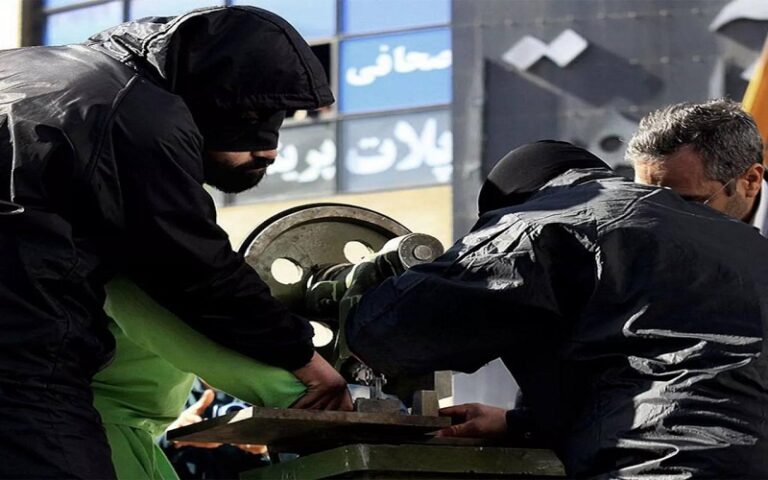
Iran remains “the highest known executioner per capita amongst all countries.” In 2024, “at least 901 people were reportedly executed,” a 6% increase from the previous year. The regime applies the death penalty for over 80 offenses, including moharebeh (taking up arms), efsad-e fel-arz (spreading corruption), and baghy (armed rebellion), along with drug offenses, apostasy, and repeated alcohol consumption.

Iranian Prisoners Sound Alarm as Regime Escalates Executions

Executions disproportionately target ethnic and religious minorities, juveniles, and women—many based on coerced confessions. “At least 31 women were executed in 2024, the highest number of executions of women in any country in the world.” The authors describe this as “the worst form of state-sanctioned violence against women and girls.”

Rehman also recalls past atrocities. In a 2024 UN report, he documented “summary, arbitrary and extra-judicial executions of thousands of arbitrarily imprisoned political opponents,” including the 1988 massacre. These acts, he argues, amount to “crimes against humanity of murder and extermination, as well as genocide.” Victims included many women and children; some women were reportedly raped before execution.

The Demand for Accountability

The authors call on Iran to “respect the fundamental human rights and dignity of all girls and women; end gender apartheid in Iranian society; eliminate in law and in practice all forms of persecution of and discrimination and violence against women and girls.” They further urge Iran’s regime to “immediately end the barbaric arbitrary practice of the death penalty.”

However, they emphasize that the absence of accountability remains a major obstacle: “If accountability is denied for abuses committed over 30 years ago, there is little to no chance of justice within the regime for recent and current abuses.” Their 2024 report drew sharp backlash from Iranian authorities, underscoring the regime’s resistance to scrutiny.

Still, international pressure has shown impact, as seen with the hijab law’s suspension. The authors urge continued support for Iran-focused UN mechanisms and direct diplomatic pressure: “There must be an end to the continuing impunity of this regime; all victims and their families deserve justice and accountability.”


Khamenei: U.S. Interference In Uranium Enrichment Issue Is Nonsense

On Wednesday, June 4, Iranian regime supreme leader Ali Khamenei rejected the U.S. demand in nuclear negotiations that “Iran will not be allowed to enrich uranium,” during a speech at the 36th anniversary of the death of Ruhollah Khomeini, the founder of the regime.

Khamenei stated that “uranium enrichment is the key to the nuclear issue,” adding, “The enemies have also focused on enrichment.”

He continued with harsh language, saying: “Why are you interfering in whether Iran should have enrichment or not? What’s it to you! Who do you think you are?”

Khamenei was referring to the U.S. proposal for reaching a nuclear agreement, which had been delivered to Iran on May 31 by the foreign minister of Oman.

U.S. President Donald Trump stated on Truth Social on Monday, June 2, that as part of a potential nuclear agreement, Washington would not accept any uranium enrichment by Iran.

Khamenei further claimed that the Iranian regime had “experienced America’s unreliability in the 2000s when it came to 20% fuel,” and said: “America’s main point is that Iran should not have a nuclear industry, so you will depend on America. Our response to America’s nonsense is clear: they can’t do a damn thing about it.”

In his speech, Khamenei described the nuclear industry as a “mother industry” and claimed that “multiple scientific fields are influenced by the nuclear industry.”

The Iranian regime’s leader further added: “The nuclear industry is not just for energy. That’s only one of its benefits—this is a mother industry. If we have one hundred nuclear power plants but no enrichment, it’s useless.”

Uranium enrichment: Industrial use or a cover for building nuclear bombs

Khamenei’s claims about the scientific application of the nuclear industry come at a time when the United States and its Western allies fear that the Iranian regime, under the guise of ordinary nuclear activities, is enriching uranium to high levels in pursuit of building nuclear weapons.

These concerns have intensified because, according to the latest report by the International Atomic Energy Agency (IAEA), the Iranian regime has increased its stockpile of 60%-enriched uranium to over 400 kilograms.

In this context, Rafael Grossi, Director General of the IAEA, had previously stated that if Iran enriches uranium to a higher purity level, its stockpile would be sufficient to build at least six nuclear bombs.

According to experts, 60% enrichment is only one technical step away from 90% enrichment, which is the level needed to produce a nuclear weapon. The IAEA report also emphasized that Iran is the only non-nuclear-armed country that has enriched uranium to this level.

Khamenei’s remarks also come after the Iranian regime has spent billions of dollars in national resources over the past two decades on nuclear programs, expanding uranium enrichment in a manner that, according to experts, lacks any economic or technical justification.

These statements are also made while Iran’s only nuclear power plant, located in Bushehr, currently imports its fuel from Russia. The nuclear program has produced no tangible results in meeting Iran’s energy needs, and in recent months, power outages due to energy imbalances have caused serious harm to both the industrial sector and the daily lives of citizens.

Medicine Shortages In Iranian Pharmacies And Online Sales

The power struggle between online sales platforms and pharmacies over the distribution of medicine online continues, as the “Deregulation and Business Environment Improvement Board” has declared the Food and Drug Administration’s directive banning pharmacies from cooperating with online platforms to be illegal and has demanded its cancellation.

On May 21, the Food and Drug Administration banned pharmacies from collaborating with online sales platforms. This reaction came after the Iranian Pharmacists Association accused online platforms of undermining drug distribution security by creating a virtual black market.

The association referred specifically to the sale of narcotic medications and rare or scarce drugs through black market channels.

Pharmacy owners and pharmaceutical companies, due to the Iranian regime’s policies, are entangled in complex financial difficulties, including 40 trillion rials (approximately $48.192 million) in bounced checks, and 290 trillion rials (approximately $349.397 million) in outstanding receivables from insurance companies and the Targeted Subsidy Organization.

Online drug sales, at a time when insurance companies and the Targeted Subsidy Organization delay for months in compensating the difference between the real and official prices of medicine, are seen as a temporary remedy for the deeply troubled finances of pharmacies.

Although the head of the Food and Drug Administration had promised in March 2025 that online drug sales would be implemented under full supervision and within new regulatory frameworks starting spring 2025, a new wave of opposition led the Pharmacists Association to submit a protest letter to the president regarding the activities of online sales platforms.

Ramin Moghadam, a digital health expert, told the state-run Mehr news agency that the Deregulation Board has no authority to intervene in health matters regarding online pharmaceutical delivery, stating: “A purely economic perspective from the Deregulation Board on online drug delivery is harmful.”

On the other hand, Marzieh Bazrafshan, legal deputy of the Iranian Pharmacists Association, has described the excessive insistence of platforms on selling medicine online as suspicious.

Many pharmacists and pharmacy owners believe that platforms like Snapp and Digikala, under the protection of the government—especially the Ministry of Information and Communications Technology—are bypassing the Ministry of Health and Medical Education’s oversight over healthcare standards and services.

Snapp and Digikala treat medicine like mobile phones and consumer goods

Many pharmacists and pharmacy owners support making medicine more accessible to patients, but emphasize that it must be done through a healthy and regulated process.

What has caused pharmacists to take a stance against pressure from platforms like Snapp and Digikala is that these companies are treating medicine the same way they handle mobile phones, refrigerators, electronic goods, and other consumer products.

These platforms want to create their own stockpile of medicine and fulfill requests for medication without considering whether a prescription is required.

Lack of pharmaceutical delivery standards; easy access to drugs like Tramadol

One of the points emphasized in the Pharmacists Association’s letter was the emergence of a black market for medicine through these platforms, which it referred to as a “virtual Naser Khosrow”—a reference to the infamous black market street in Tehran.

One outcome of the involvement of unrelated ministries in pharmaceutical delivery and the pressure from platforms is that drugs like Tramadol—a narcotic painkiller that must only be dispensed with a prescription—have been listed as available medications in online systems. Previously, a person without a prescription might have had to search multiple pharmacies to possibly obtain it, but now, they can simply place an order through the platform and easily purchase it.

Another critical issue—especially with specialized medicines—is how they are transported. Some medications must be handled with extreme care during transit to avoid any movement. Currently, there is no oversight on how these drugs are transported in online sales, which is a responsibility that the Food and Drug Administration must enforce, just as it does for physical pharmacies.

Maintaining the cold chain, where certain medicines must be stored at temperatures between 2 to 8 degrees Celsius, is another critical factor. Currently, there is no oversight on this aspect in online distribution, and due to frequent power outages, this issue can lead to spoilage of medications.

Are Negotiations Between Iran’s Regime and US Heading Toward a Deadlock?

It appears that nuclear negotiations between the Iranian regime and the United States are moving toward a deadlock, with Tehran in a position of weakness and desperation. Recent remarks by U.S. President Donald Trump, stating that the Iranian regime would not be allowed any uranium enrichment, along with Tehran’s rejection of Washington’s offer, indicate a strategic failure for the regime in advancing its nuclear and diplomatic objectives.

On Monday, June 2, Donald Trump stated on Truth Social that under a potential agreement, “we will not allow any uranium enrichment!” This firm stance came after the Axios website reported that the U.S. had offered the Iranian regime a written proposal permitting limited low-purity enrichment (around 3%) for a defined period.

Iran’s Regime Dismisses IAEA Report About its Nuclear Program as “Biased and Baseless.”

Trump’s remarks signal a return to the “zero enrichment” policy, which had previously been emphasized by U.S. Secretary of State Marco Rubio and Special Envoy Steve Witkoff.

In response, Abbas Araghchi, the Iranian regime’s foreign minister, called the U.S. proposal “unacceptable” and stated that Tehran is preparing a response. A senior diplomat close to the Iranian regime’s negotiating team told Reuters that the Washington proposal is “one-sided” and lacks clear details about sanction relief. The diplomat added that the Iranian regime’s nuclear negotiations committee, operating under the supervision of the regime’s supreme leader, found the U.S. offer inadequate and not aligned with Tehran’s interests.

IAEA Reports and Pressure on the Iranian Regime

Two new reports by the International Atomic Energy Agency (IAEA), published on June 2, have further weakened the Iranian regime’s position. According to The Wall Street Journal, these reports show that since February 2025, the regime has increased its stockpile of 60%-enriched uranium by about 50%, an amount sufficient for building 10 nuclear weapons. This level of enrichment, which is close to weapons-grade purity, makes the Iranian regime the only non-nuclear country with such capabilities.

The second IAEA report also emphasizes the Iranian regime’s failure to meet its obligations regarding undeclared nuclear material research, indicating that Tehran continues to deceive in its nuclear program.

These reports have set the stage for the June 9 meeting of the IAEA Board of Governors, where the United States and European countries may propose a resolution against the Iranian regime for violating the Nuclear Non-Proliferation Treaty (NPT). The Wall Street Journal stressed that these reports provide sufficient evidence to justify the swift reimposition of international sanctions on the regime—an action that could intensify both economic and political pressure on Tehran.

Uncertainty Over the Continuation of Negotiations

CNN reported on June 3 that the holding of a sixth round of nuclear talks between the Iranian regime and the United States is shrouded in uncertainty and may not take place at all. Sources familiar with the matter told the network that the Iranian regime views the new U.S. proposal as irrelevant, unrealistic, and overly demanding.

A senior official of the Iranian regime stated that the repeated shifts in the U.S. position—including retreating from a limited enrichment offer to insisting on zero enrichment—have made the negotiations more difficult. The official added that the U.S. proposal contradicts the understandings reached during the fifth round of talks in Rome on May 23, 2025, which reflects a lack of coherent strategy from Washington.

The Iranian regime is in a position of weakness in the nuclear negotiations. On one hand, the IAEA reports and international pressure have placed Tehran at risk of broad sanctions being reinstated. On the other hand, the regime’s economy is on the brink of collapse under the weight of inflation, unemployment, and the continued devaluation of its national currency.

Pharmaceutical Corruption in Iran

The profiteering of pharmaceutical distribution companies and the resulting humanitarian disaster from the shortage of vital medicines in Iran

One of the most serious crises in Iran’s healthcare system is the hostage-taking of medicine distribution by companies affiliated with regime institutions—an issue that threatens not only pharmacies but directly endangers people’s lives.

One of the most common pressure tactics is “basket selling” of medicine and rationing of widely-used, life-saving drugs. This begins under the pretext of “supporting domestic production.” For example, a medicine like warfarin is first completely removed from the import list. Then, due to insufficient domestic production, it is distributed in a trickle to certain individuals close to the regime and ultimately sold on the black market at several times its original price. Pharmacies can only obtain this medication if they also purchase other low-demand but high-profit drugs.

This method, which resembles pharmaceutical extortion, often results in medications expiring or becoming unusable while still in customs or the warehouses of distribution companies. Given the critical nature of some of these drugs, pharmacies and patients are forced to obtain them at any cost.

Another pressure tactic used by distribution companies is lowering the profit margin on essential medicines and shortening the repayment window for pharmacies. For instance, brand-name medications in fields such as chemotherapy, MS, and diabetes are offered with a minimal profit (around 6%) and short settlement periods (15 days to one month), while insurance organizations delay pharmacy payments for 6 to 8 months. This forces pharmacies to purchase Iranian or Chinese biosimilar products that offer higher margins and more lenient payment terms, a condition imposed by the distributors.

In the past two years of acute crisis and increased working capital requirements for pharmacies due to drug shortages, the legal departments of distribution companies have become more aggressive than ever. Exploiting the centralized banking system and market liquidity shortages, they seize bank accounts, confiscate the assets of pharmacy founders, and collect massive legal fees for even the slightest payment delays—without providing any formal notice or grace period for settlement.

Iranian Regime MP Warns About Intensified Medicine Shortages

What is noteworthy is that nearly all pharmaceutical distribution companies are directly or indirectly controlled by regime institutions. As a result, no independent body has the power to confront or oversee their actions. Consequently, the only victims of this corrupt and chaotic system are the people and patients.

As long as this regime-controlled structure persists, there is no hope for improvements in public health or equitable access to medicine. The only ultimate solution lies in moving beyond Iran’s regime, which is the root cause of this structural crisis.


Iranian Prisoners Sound Alarm as Regime Escalates Executions

Tehran, Iran – June 3, 2025 – In a stark warning issued on their 71st week of protest, participants in the “No to Executions Tuesdays” campaign have urgently called on families of death-row prisoners and the international community to break the silence surrounding the Iranian regime’s escalating use of capital punishment, a tactic increasingly seen as a desperate measure to quell dissent. The campaign, now active in 46 prisons across Iran, highlighted a horrifying surge in state-sanctioned killings.

The prisoners’ statement reveals that since May 21, 2025, (the beginning of the Persian month of Khordad), at least 67 prisoners, including three women, have been executed. This averages out to approximately seven executions per day. In a particularly brutal display, 20 prisoners were reportedly hanged on a single day, May 28, 2025.

The “No to Executions Tuesdays” campaign: Ongoing hunger strike in 41 prisons across Iran

These figures align with reports from outside opposition groups. The National Council of Resistance of Iran (NCRI) stated on May 30, 2025, that 41 individuals were executed over just three days, from May 26 to May 28, 2025. This equates to nearly 14 executions daily, or one person killed less than every two hours. The NCRI also noted that since July 2024, during Masoud Pezeshkian’s presidential tenure, the number of executions has reached a staggering 1,275.

The “No to Executions Tuesdays” campaign statement asserts that this wave of executions is a deliberate strategy by the regime. “The regime of slaughter and execution, in its dungeons, executes prisoners en masse in complete secrecy,” the statement reads, adding that these actions, coupled with the “mockery of international laws and leveraging religion,” are aimed at “suppressing justice-seeking and popular uprisings.”

Saeed Masouri: 170 Executions In The Past Month In Iranian Prisons, Minute-Long Trials, And Death Sentences

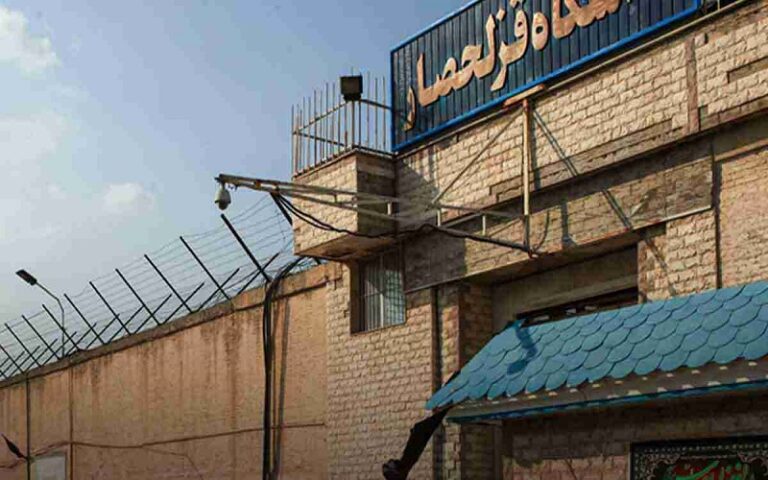
The prisoners emphasize that this high level of capital punishment is accompanied by widespread violations of the right to a fair trial. They highlight specific cases to underscore the grave injustices. On Wednesday, May 28, 2025, Pedram Madani was reportedly hanged in Ghezel Hesar prison on charges of “espionage,” his execution carried out in “media silence.”

Furthermore, the statement raises alarm over the case of Mohammad Amin Mahdavi Shayesteh, previously sentenced to death for “espionage” by Judge Abolghassem Salavati, notoriously dubbed the “death judge.” Mahdavi Shayesteh’s appeal for a retrial has been rejected by the Supreme Court, placing him at “serious risk of execution.”

In light of these grim developments, the “No to Executions Tuesdays” campaign directly implores families of those condemned to death to act. “The campaign…advises the families of death-row prisoners to quickly publicize the case files of their loved ones and inform the people of Iran and human rights institutions,” the statement urges. The stated aim of this public disclosure is crucial: “so that with this enlightenment, we can stop and disable the machinery of slaughter and execution.”

The prisoners also issue a stark warning to these families: “and they should not be deceived by the tricks or threats of intelligence agents and interrogators, lest the government execute prisoners in media silence and, in a sense, trample their right to life through state-sanctioned murder.”

The “No to Executions Tuesdays” campaign itself demonstrates growing internal resistance. Having commenced in January 2024, it marked its 71st consecutive week on June 3, 2025. The recent inclusion of prisoners from Firuzabad prison in Fars province has expanded the campaign’s reach to 46 prisons across Iran, where participating inmates engage in weekly hunger strikes. The campaign also expressed solidarity with other protest movements, such as the ongoing strike by truck drivers, now in its twelfth day.

The prisoners’ message is one of both dire warning and resilient determination. They call upon the broader public, particularly families of those on death row, to support their campaign and ensure that “the voice of ‘No to Execution’ must resonate in every city and street.” They conclude with a powerful assertion: “Power lies in our unity and solidarity,” signaling that despite the regime’s brutal crackdown, the spirit of resistance remains unbroken.