


By Jubin Katiraie
The expression ‘on the tarmac’ has in recent years been added to Iran’s political culture. The term is used as a replacement for ‘protests and uprisings’ by government officials.
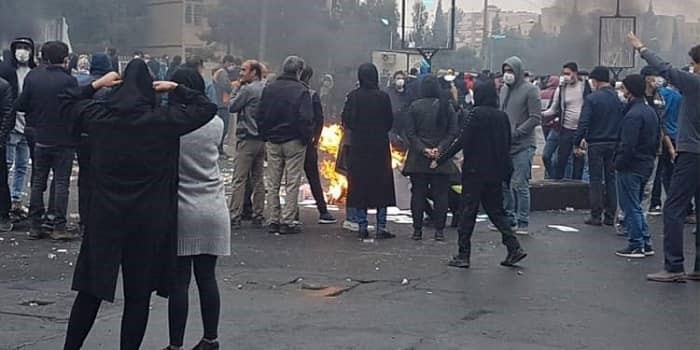
In recent years, and especially in the last four years, the Iranian political scene has witnessed protests and uprisings against the entire government in Tehran.
At first glance, these protests may seem to have an economic basis, but looking more closely at the protests of recent years, it becomes clear that the main nature of these protests is political.
The December 2017-January 2018 uprising ostensibly began in protest to the high prices in Mashhad, but a few days later, the slogan “Reformist, Hardliners, the game is over” in the University of Tehran showed that the entire clerical system had been targeted by the people and students.
Relatively sporadic protests continued in 2018. But the November 2019 protests clearly confirmed the political direction of the protests.
The story began with a threefold increase in the price of gasoline. But within a day, the slogans “Death to Khamenei”, “Death to the principle of Velayat-e-Faqih” and other radical slogans against the integrity of clerical rule showed that the Iranian people had moved beyond their protest over the bad economic situation; their main target was the government.
By focusing on this formula, any statement of this kind can be analyzed. Whenever there is talk of the ‘on the tarmac’, one should expect to see mass uprisings and popular protests in the country’s social arena in the near future, even if an underlying economic issue also exists.
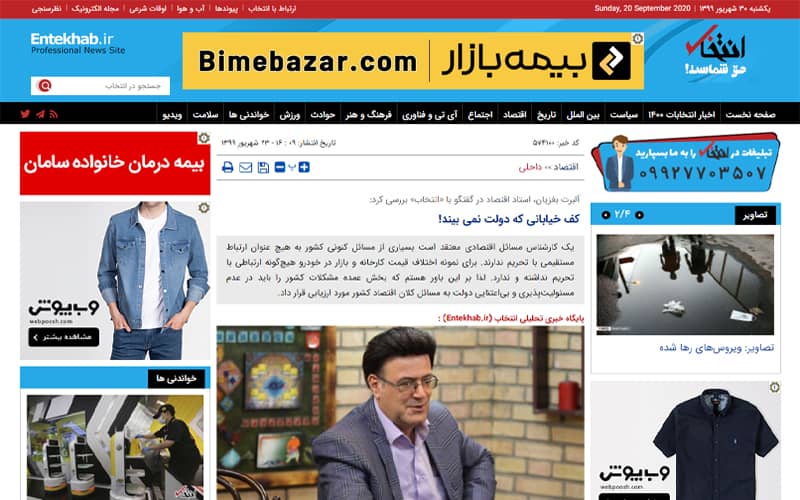
The latest example of the use of this keyword is by an economic expert and professor at the University of Tehran.
Albert Baghzian, who spoke in an interview with Entekhab daily on September 13, emphasized the prospect of an uprising in Iranian cities.
Describing the country’s economic situation, he told Entekhab daily: “Inflation and rising prices have become a great pain and suffering for the Iranian people. For example, the rising of butter prices in the market has caused great controversy at the macro-level of society. In general, from the stock market as the largest capital market to a minor commodity such as butter, the situation is unfortunately not favorable. This issue has now led to widespread mistrust in society, which of course will not be easily reversed.”
The Present Situation in the Country Has Nothing to Do with the Sanctions
Pointing to the country’s sanctions, he added: “Many of the current issues in the country have nothing to do with sanctions. For example, the difference between the factory price and the market price of a car has nothing to do with sanctions. Most of the country’s problems should be assessed in the government’s irresponsibility and disregard for the country’s macroeconomic issues.”
Attacking the government’s wrong economic policies, he added: “The wrong policies of the economy, which led to an abnormal decline in the Iranian stock market, have had a profound effect on reducing citizens’ trust.”
Baghzian also pointed to another contradiction within the government. “Reducing of the unemployment rate” and the government’s claims about it: “Is it possible to talk about reducing the unemployment rate without any documents? Such positions will definitely lower people’s trust more than ever.”
In the end, part of the reality of the whole clerical system is heard from Baghzian as he said: “The other government is completely disappointed with the reform of things.”
Finally, all these parameters force Baghzian to express the discussed expression as he said: “‘On the tarmac’ means not seeing any government.”
This shows that the people who were ‘on the tarmac’ do not recognize any government and do not differentiate between the reformists and the conservatives. The situation is clear enough. Not the government, but the entire system is responsible for the current miserable situation, after more than four decades of rule in Iran. And finally, everything will be dictated to the clerical system ‘on the tarmac’.


