Home Blog Page 117

Drought Has Put Iran’s Environment at Risk

While officials of the Iranian regime have warned about the possibility of water rationing in Tehran next summer, Issa Bozorgzadeh, the spokesperson for the regime’s water industry, stated in an interview with the state-run Mehr news agency that next year will also be a year of drought. According to this official, even if the conditions in the coming months are normal, the water year will still be classified as a drought year.

Bozorgzadeh explained that even if rainfall increases, the water year—especially in Tehran Province—will still face severe water stress.

On Tuesday, March 11, Ahad Vazifeh, the head of the National Center for Climate and Drought Crisis Management at the regime’s Meteorological Organization, stated that water shortages in the summer are a serious threat and that there is a possibility of water rationing in Tehran next summer.

Serious Water Pressure Drops and Outages in Tehran

Now, Bozorgzadeh says that the situation of Tehran’s dams is dire: “In Tehran, we have a 25% decrease compared to last year and about a 46% decrease in the long term. Among Tehran’s dams, Amir Kabir and Latian dams are in worse condition. Overall, the four dams in Tehran—Lar, Latian, Mamloo, and Amir Kabir in Karaj—have less than 60 million cubic meters of inflow; meaning their reservoir volume is less than 60 million cubic meters, and part of that consists of dead storage and sediment, which cannot be used.”

According to him, although the condition of the Taleqan Dam is better, there are structural limitations in water transfer, and it is not possible to transfer its water to Tehran: “Surface water resources are in trouble, and if we do not manage consumption and the rainfall does not recover, in the coming months, we may lose some of Tehran’s dams as water sources.”

In recent months, many citizens have reported experiencing water cuts in addition to power outages.


UN Security Council to Hold a Closed-Door Meeting on Iran’s Nuclear Program

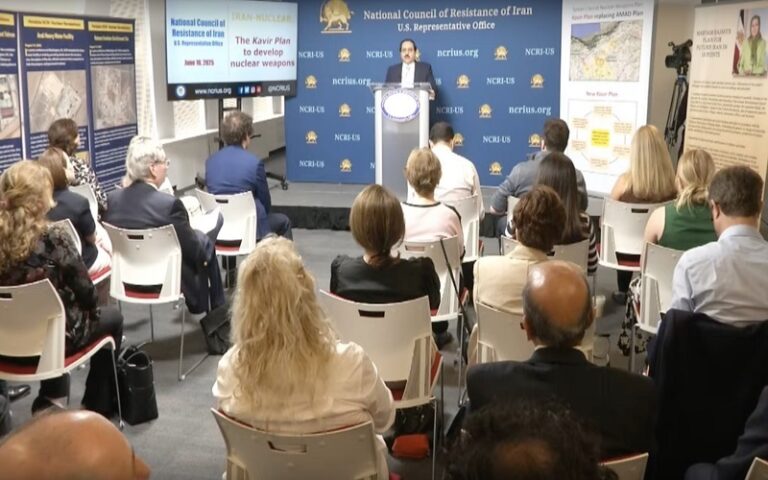
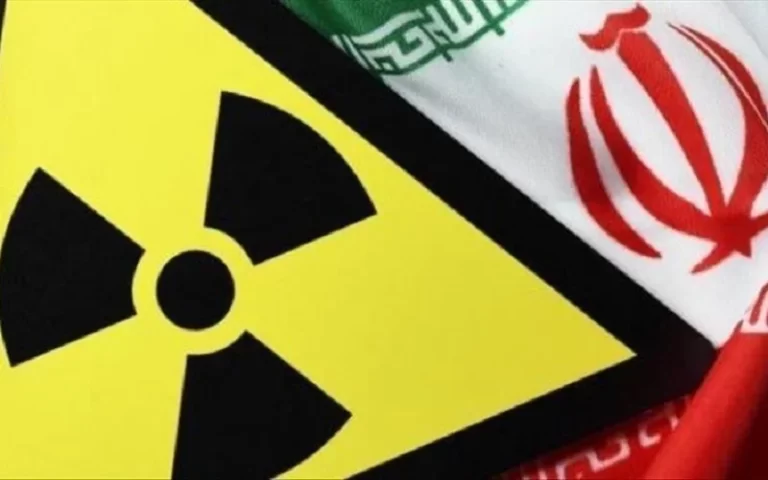
The United Nations Security Council is set to hold a closed-door meeting on the Iranian regime’s uranium stockpile, which has reached levels close to what is needed for nuclear weapons production.

According to Reuters, the meeting, scheduled for Wednesday, March 12, has been requested by six of the fifteen Security Council members: the United States, France, the United Kingdom, South Korea, Greece, and Panama.

Diplomats say these countries also want the meeting to address questions raised by the International Atomic Energy Agency (IAEA) regarding the discovery of uranium particles at undeclared sites in Iran.

European Union: The Iranian Regime Must Not Attain Nuclear Weapons

The Iranian regime has consistently denied allegations of seeking nuclear weapons. However, according to IAEA reports, Iran has enriched uranium up to 60%, which is technically close to the 90% enrichment level required for nuclear weapons production.

The United States and the three European signatories of the 2015 nuclear deal (the JCPOA) have warned that such a high level of uranium enrichment is unprecedented for a non-nuclear-armed state and lacks any credible justification.

In July 2015, Tehran and six world powers signed a nuclear agreement known as the Joint Comprehensive Plan of Action (JCPOA), under which Tehran agreed to limit its nuclear program in exchange for the lifting of international sanctions.

However, during his first term as U.S. president, Donald Trump accused the Iranian regime of violating the spirit of the JCPOA and announced in May 2018 that the United States was withdrawing from the agreement. In response, Iran gradually rolled back some of its commitments under the deal.

The United Kingdom, France, and Germany—the three European signatories of the JCPOA—have cited Iran’s non-compliance and its expanding nuclear program as grounds for triggering the so-called “snapback mechanism,” which would reinstate all UN sanctions against Iran.

The United States and these three European countries have reaffirmed their determination to prevent Iran from obtaining nuclear weapons.

UN Security Council Resolution 2231, which endorsed the JCPOA, has a ten-year duration. After its expiration on October 18, 2025, the snapback mechanism will no longer be available.

Mr. Trump has instructed the U.S. ambassador to the United Nations to work with Washington’s Western allies to activate the snapback mechanism and restore all sanctions against Iran.

In recent days, the U.S. president has once again emphasized his commitment to preventing Iran from acquiring nuclear weapons, warning that Tehran faces two options: reaching an agreement or facing military action.

However, Iranian regime’s Supreme Leader, Ali Khamenei has rejected the idea of negotiations with the U.S., and the regime’s Foreign Minister Abbas Araghchi has also stated that Tehran will not negotiate “under pressure.”

At the same time, on Sunday, Araghchi said that Tehran is engaged in discussions with China and Russia, as well as separately with the three European countries, to explore ways to build “trust and transparency” regarding its nuclear program.

Additionally, the Russian Foreign Ministry spokesperson has stated that Tehran may be willing to accept certain limitations on its nuclear program in exchange for sanctions relief.


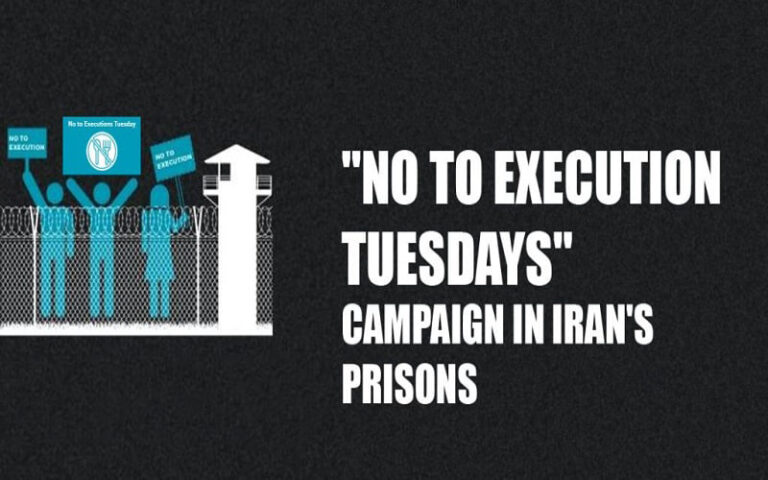
Iran: The 59th Week of “No to Executions Tuesdays” with the Participation of Women’s Ward in Sepidar Prison

On Tuesday, March 11, members of the “No to Executions Tuesdays” campaign went on a hunger strike for the 59th consecutive week.

The imprisoned members of this campaign, while congratulating International Women’s Day on March 8 to “all women of the world, especially the courageous women of Iran,” announced that the women’s ward of Sepidar Prison in Ahvaz has joined the campaign.

With this development, the number of prisons where inmates go on hunger strike every Tuesday in protest against the issuance and execution of death sentences in Iran has reached 38.

In this week’s statement, the campaign members referred to “46 years of blatant discrimination against Iranian women by the religious fascist and misogynistic regime” and emphasized that Iranian women have been fighting for “their most basic human rights” throughout these years.

The start of the second year of the “No to Execution Tuesdays” campaign: The gallows must be dismantled

Full Statement:

The “No to Executions Tuesdays” campaign congratulates all the women of the world, especially the resilient and fighting women of this land, who have endured centuries of severe discrimination and, for the past 46 years, have risen up for their most basic human rights despite the rule of a religious fascist and misogynistic regime. The campaign honors the memory of thousands of women who lost their lives in the struggle for freedom.

The authoritarian regime in Iran continues its killing machine without pause. Since the beginning of February, nearly 100 people have been executed, including 28 people in a single day on March 1.

This week, coinciding with International Women’s Day, a group of female prisoners from the women’s ward of Sepidar Prison in Ahvaz issued a statement announcing their participation in the “No to Executions Tuesdays” campaign, calling for the abolition of the death penalty.

The campaign expresses its gratitude to all prisoners who have so far joined this movement against executions and continues to call on all inmates, as well as all conscientious individuals, political activists, human rights defenders, civil society activists, and trade unionists, to stand against the death penalty in Iran and be the voice of every person sentenced to execution.

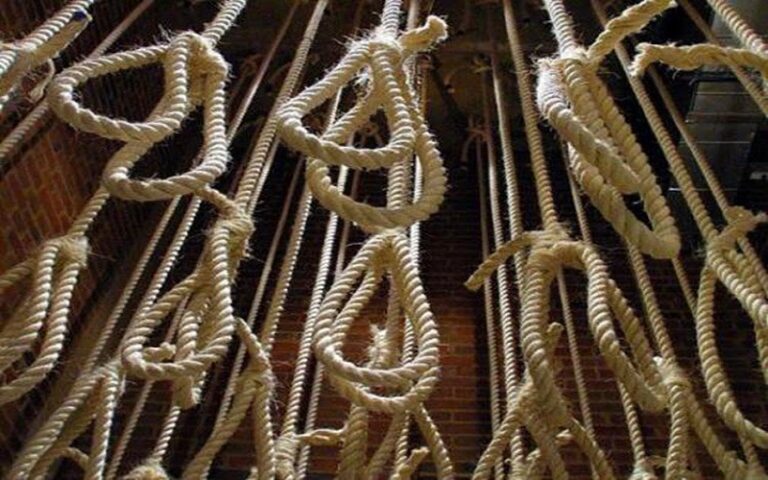
We must all remember that thousands of prisoners convicted of general crimes, as well as dozens of political and ideological prisoners, are on death row. For these prisoners and their fellow inmates, every moment in prison is spent with the looming thought of the noose and the gallows. At any moment, their right to life may be taken away by the repressive machinery of the religious dictatorship. Therefore, it is crucial that in the midst of various news distractions, we continually remind the world of the issue of executions and take a firm stand against it.


Economic Protests and Recession on the Eve of Nowruz; Reports Indicate The Market is a “Powder Keg”

As the value of the Iranian rial continues to plummet, economic protests in Iran persist with demonstrations by retired telecommunications employees, protests by nurses, strikes by oil industry workers, gatherings of merchants opposing the recession, and protests by job applicants for the Agricultural Jihad Ministry.

The rise in economic protests across the country comes as the Iranian rial has further depreciated following the belligerent remarks of Supreme Leader Ali Khamenei regarding negotiations with the United States. Meanwhile, on Monday, March 10, the market price of one US dollar reached 953,000 rials, and the price of a single gold coin was approximately 790 million rials (approximately $831).

Sharp Price Increases Ahead of Nowruz; Iran’s Economic Crisis Worsens

According to reports circulating on social media on Monday, March 10, protests by retirees took place in at least the cities of Tabriz, Sanandaj, Hormozgan, Marivan, and Bijar.

Retired telecommunications workers in Sanandaj chanted in their protest: “A nation has never seen such injustice.”

The executive bylaw of Article 24 of the National Service Law, passed in 2010, concerns the tasks that can be delegated and the procedures for purchasing services from the private sector. According to this regulation, “until the obstacles to delegation are removed,” the responsibility for providing services to the workforce remains with the executive body, i.e., the government. However, 14 years after the approval of this bylaw and despite the retirees’ continuous and repeated protests, it appears that neither have the “obstacles to delegation” been resolved nor has the executive body fulfilled its obligations toward the protesters.

The weekly protests by retired telecommunications employees have been ongoing for months, consistently taking place on Mondays. The reasons for their protests include the lack of updates to welfare benefits in 2022 and 2023, management’s disregard for the 2010 bylaw, issues with supplementary insurance, and the failure to pay past dues at current rates.

Additionally, a group of contract workers at the Fourth Refinery of South Pars protested against what they described as “wage suppression.”

Gonabad Market: A Powder Keg Awaiting a Spark

Some merchants in Gonabad staged a protest in front of the Ghasabeh police station against what they described as “harassment by the regulatory authorities.”

The situation in Gonabad’s market is like a powder keg waiting for a spark.

A number of shopkeepers in the Chaharbagh shoe market have protested against the economic stagnation.

A citizen report from Abhar, a city in Qazvin province, also highlights the sluggish market conditions. In a video report, a person points to the economic downturn and the empty shops, stating, “This is the state of Abhar’s market ten days before Nowruz—this is how our business is this year.”

Nurses’ Protest in Tabriz

According to another citizen report on Monday, a group of nurses and staff at Mardani Azar Hospital in Tabriz gathered to protest “economic and wage-related hardships.”

The protesters chanted: “The silence of any nurse is a betrayal to colleagues.”

Agricultural Jihad Ministry Job Applicants Protest

Additionally, a group of job applicants for the Agricultural Jihad Ministry gathered in front of the Administrative and Employment Organization to protest the recruitment of fewer employees than initially promised.

The protesters stated that, according to the recruitment booklet, 19,000 people were supposed to be hired, but “in the end, only 10,000 were recruited.”

Tehran University Staff Protest

Furthermore, a group of Tehran University employees gathered on Sunday on 16 Azar Street to protest against “low wages and inadequate welfare benefits.”

The protest was specifically against the “unfair and unequal wage increases” among employees in different university departments.

Expansion of Labor and Professional Protests in Iran

The growing labor and professional protests by various groups—including retirees, workers in different industries, teachers, defrauded investors, nurses, and healthcare staff—highlight the increasing economic hardships in Iran and the negligence of the Iranian authorities.

The continuous depreciation of the national currency against foreign currencies, worsening economic crises, and the declining purchasing power of the people have pushed markets into a severe recession—right before Nowruz and during Ramadan, two periods that traditionally boost business activity in Iran.


Escalating Crises in the Iranian Regime: Is an Explosion Imminent?

In recent months, crises within the Iranian regime have reached unprecedented levels, transforming into formidable threats that surround the regime both internally and externally. In addition to these domestic and foreign crises, the escalating international tensions have further complicated the situation.

The issue of women remains one of the most serious challenges facing the regime. The steadfastness of Iranian women has echoed resistance within the corridors of power, exacerbating internal divisions within the regime. In this context, 209 members of the regime’s parliament sent a letter to the government demanding the enforcement of the “Chastity and Hijab” law, a controversial bill that created a severe crisis three months ago, forcing the regime to suspend it.

Iran’s Regime Preparing “Chastity and Hijab” Law and Financial Penalties for Girls Aged 9 to 15 

Now, with the impending decision on the fate of Pezeshkian’s government by the parliament—naturally under the supervision of the Supreme Leader—this law is being revived to inflame political tensions. However, some state-affiliated media outlets have warned that the timing is unsuitable for reintroducing this law, arguing that it could pose greater risks to the regime. Meanwhile, Pezeshkian has announced that he will not enforce it.

But will this public confrontation between parliament and the government remain limited to the enforcement of compulsory hijab and parliamentary interrogations? Or are there simultaneous developments accelerating the crisis?

It is noteworthy that the fastest ministerial interrogation in the history of the Iranian regime took place last week with Khamenei’s approval. Additionally, vice president for strategic affairs Mohammad Javad Zarif was forced to resign through the mediation of Judiciary Chief Gholam-Hossein Mohseni-Ejei, with regime supreme leader Ali Khamenei playing a decisive role. Meanwhile, the parliament is preparing to continue questioning several ministers, as some MPs are calling for an acceleration of dismissals. The state-run Iran newspaper stated explicitly in its March 6 edition: “There is no government!”

The Iranian regime has historically relied on brutal repression to maintain its grip on power, continuing to use daily executions as a primary tool to terrorize society and maintain control. These executions are seen as a means of taking hostages among the population to instill fear and suppress any attempt at a new uprising.

Nurse Shortage Leads to Closure of Hospital Departments in Iran

On the public front, retirees’ protests are growing in various cities, with demonstrators chanting radical slogans against the regime’s structural corruption. With the Persian New Year (Nowruz) approaching, soaring prices have intensified social discontent, placing the regime in a critical test regarding its ability to contain the mounting public anger.

Meanwhile, waves of migration are increasing across various social groups, particularly among academics, nurses, and doctors, who see no hope for the country’s future under the regime’s rule. Intellectual and technical expertise, along with financial capital, is leaving Iran at an accelerating pace, reflecting the deepening collapse of the nation’s human and economic resources.

Adding to these crises, daily power outages have exacerbated public suffering. While officials claim that nuclear program development aims to generate energy, the country is facing severe electricity shortages—exposing the falsehood of these claims and fueling suspicions about the regime’s true nuclear ambitions.

The Social Explosion is Approaching

Warnings from within the regime about an imminent social explosion due to escalating class disparities are becoming more frequent. Government-affiliated media continuously issue cautionary messages to the Supreme Leader’s office, the parliament, and the government, warning of an impending catastrophe if a spark ignites public outrage.

Amid this turbulent scene, the key question remains: How long can the regime withstand these accumulating crises before the situation spirals out of control?


The Dollar and Gold Become More Expensive in Iran Following Ali Khamenei’s Belligerent Remarks

One day after Ali Khamenei’s belligerent remarks regarding negotiations with the United States, the price of one US dollar in the Iranian market exceeded 950,000 rials on Sunday, March 9, and the price of one gold coin approached 790 million rials (approximately $831).

On Saturday, March 8, in a meeting with several officials,Khamenei, the leader of the Iranian regime, referred to the possible negotiations with the United States, saying that their goal is to “raise new demands,” and these expectations “will definitely not be met by Iran.”

According to the Nosan website, which tracks the fluctuations of foreign currency and gold coin rates in the Iranian market, the price of one US dollar remittance reached 952,400 rials on Sunday.

The continuous fall in the national currency’s value against foreign currencies, along with the intensification of economic crises and the further emptiness of people’s pockets, has caused alarming stagnation in markets on the eve of Nowruz (the Iranian New Year, starting on March 21) and during Ramadan, two occasions typically considered to boost markets in Iran.

The turmoil in Iran’s financial markets comes as Brian Hughes, spokesperson for the US National Security Council, expressed hope that the Iranian regime would prioritize its people and national interests over terrorism.

However, alongside reports of market stagnation and the spread of poverty in Iran, senior officials of the Iranian regime have described poverty as a “divine test” and have considered “paving the way for the departure of the weak.”

The economic stagnation has led to the closure of markets, with most shops widely shut down, but the Iranian regime continues its confrontation with the international community, support for terrorist groups, and pursuit of nuclear bomb development.


The Prevalence of Smuggled Goods in Iran’s Market

Mostafa Pourdehghan , a member of the Iranian regime’s Majlis (parliament) Industry and Mining Commission, stated on Sunday, March 9, that the unrestricted availability of smuggled goods in the market proves this policy to be unsuccessful and in need of revision.

According to the state-run ILNA news agency, Pourdehghan  criticized the current market situation, stating: “Smuggled household appliances are freely sold while official imports are banned. This situation has led to capital outflow and has made monitoring the quality and pricing of goods more difficult.”

Pourdehghan warned that support for domestic production should not be permanent, and if this trend is not corrected, the Majlis will reconsider the import ban policy.

He also mentioned the possibility of revising the import ban on household appliances, saying: “The Majlis’s Industry Commission has emphasized in its meetings with domestic manufacturers that this support cannot last indefinitely. If this policy (the import ban policy) is not adjusted, changes will definitely be made.”

12 million Liters of Fuel Smuggled Out of Iran Every Day

Referring to closed-door parliamentary sessions with regime president Masoud Pezeshkian, he stated: “Majlis members have explicitly declared that the smuggling issue must be resolved once and for all, as its consequences on the country’s economy, as well as public health and security, are extensive and damaging.”

Pourdehghan criticized the household appliance import ban, emphasizing that such prohibitions are uncommon worldwide and should, at most, be temporary.

Restrictions and bans on the import and sale of foreign brands in the Iranian market, imposed under the pretext of “supporting domestic production,” have not strengthened local manufacturing due to the impact of other policies, including monetary and financial regulations. Instead, they have led to a decline in the quality of domestic products while increasing the smuggling of foreign goods into the country.

In September 2021, Ali Khamenei, the Iranian regime’s supreme leader, ordered a ban on household appliance imports, further enforcing individual decisions that have collectively burdened the economy and pushed the people into financial distress.

This directive, which was issued at Khamenei’s request, was enforced after foreign currency restrictions led the Supreme Economic Coordination Council to ban household appliance imports from 2018 until early 2022. When the possibility of unfreezing Iran’s blocked funds in South Korea arose, “a group of home appliance manufacturers” urged the supreme leader of the Iranian regime to support them against the potential “resumption of imports” of certain South Korean appliance brands.


U.S. Doesn’t Renew Iraq’s Waiver for Purchasing Electricity from Iran

On Saturday, March 8, the Trump administration did not renew a waiver that allowed Iraq to pay Iran for electricity. According to a U.S. State Department spokesperson, this move is part of President Donald Trump’s “maximum pressure” campaign against Tehran.

According to Reuters, the State Department spokesperson added that the decision not to renew the waiver after its expiration ensures that “we do not provide any economic or financial relief to [the Iranian regime].”

He emphasized that Trump’s campaign against the Iranian regime aims to end its nuclear threat, limit its ballistic missile program, and stop its support for terrorist groups.

One of Trump’s first actions upon returning to the presidency in January was reinstating the maximum pressure policy against the Iranian regime.

Aging and Low-EfficiencyPower Plants Worsen Iran’s Electricity Shortage

The U.S. government has stated that its goal is to isolate the Iranian regime from the global economy and eliminate its oil export revenues to slow Tehran’s progress in developing nuclear weapons.

Washington has imposed numerous sanctions on Tehran due to its nuclear program and support for militant organizations, effectively preventing countries that trade with the Iranian regime from conducting business with the United States.

Increased Pressure on Baghdad

After reimposing energy sanctions on the Iranian regime in 2018, Trump granted waivers to several countries, including Iraq, to ensure energy supply for consumers. However, both his administration and Joe Biden’s administration repeatedly extended these waivers while urging Baghdad to reduce its dependence on electricity from the Iranian regime.

Sources familiar with the matter told Reuters that the U.S. has used the waiver review process as a tool to increase pressure on Baghdad to facilitate crude oil exports from Iraq’s Kurdistan region via Turkey.

Washington’s objective in this move is to boost global supply and control prices, allowing the U.S. to continue its efforts to curb Iran’s oil exports.

Meanwhile, the U.S. State Department spokesperson emphasized that Iraq’s dependence on Iranian electricity is not significant, stating that in 2023, electricity imports from Iran accounted for only four percent of Iraq’s total consumption.


Iranian Regime Officials Purchase Commercial and Residential Properties in Dubai and Spain with Stolen Money

While the Iranian people are grappling with severe economic hardships, soaring inflation, and livelihood challenges, cases such as the “Debsh Tea” scandal once again expose the widespread and systemic corruption within the Iranian regime.

Between 2019 and 2022, Debsh Agro-Industrial Group received a total of $3.37 billion in foreign currency for the import of tea and machinery, of which $1.472 billion was allocated as government-subsidized foreign exchange.

Iran: $3.37 Billion Stolen in Latest Government-Linked Embezzlement Case

On Sunday, March 9, the Iranian regime’s judiciary news agency reviewed the details of this case, whose final verdict was issued on March 3. According to this report, the court ruling on the Debsh Tea case reveals that the foreign currency obtained in this case was used to purchase commercial and residential properties in Dubai and Spain.

One of the main charges against the primary defendant in this case is widespread disruption of the national economy due to failure to fulfill foreign exchange commitments and illegal currency sales without adhering to the prescribed regulations.

In recent years, the Debsh company used its extensive connections within Iran’s banking system to receive rial-denominated loans. The company placed multiple import orders for tea, declaring exorbitant prices for low-quality goods, and after receiving these loans, it acquired foreign currency through international exchange offices.

According to the report, a significant portion of the obtained foreign currency was invested in the UAE, including the purchase of a commercial tower and the establishment of a currency exchange. Additionally, the company purchased properties in Spain and, through these transactions, secured a visa for that country.

According to the investigative authority’s report, one of the defendant’s methods for delaying payment obligations was altering and manipulating the registration dates of import orders and customs declarations.

According to Mizan news agency, from the outset of the investigation into this case, affiliated companies linked to the Debsh Group also came under scrutiny. Some reports indicate that this group had over 47 domestic subsidiaries and more than 10 foreign companies.

Iran: Former Minister of Agriculture Involved in $18.7 Million Fraud

A noteworthy point is that despite being aware of the company’s violations and the existence of a judicial case against it for failing to pay the foreign exchange differential, the Ministry of Agriculture again allocated foreign currency to this company.

On Monday, March 3, the Iranian regime’s judiciary announced the issuance of sentences in the case known as the Debsh Tea scandal. It stated that Reza Fatemi Amin, the former Minister of Industry and Mining, and Javad Sadati Nejad, the Minister of Agriculture in Ebrahim Raisi’s cabinet, had been sentenced to one and two years in prison, respectively, for “complicity in disrupting the national economy.” However, in images released yesterday of Ali Khamenei’s meeting with Iranian regime officials, Sadati Nejad was seen among the attendees.

Many examples of such “staged anti-corruption efforts” have been observed in recent years, where most key defendants have either fled the country or been released after a short period, while the economic situation of the people continues to deteriorate day by day.


Khamenei Rejects Negotiation with U.S.; Maximum Pressure Will Continue

Ali Khamenei, the leader of the Iranian regime, addressed the possibility of negotiations with the United States during a meeting with regime officials on Saturday, March 8. He stated that the goal of such talks would be to “raise new demands” and asserted that these expectations “will certainly not be met by Iran.”

Khamenei stated that negotiations are not intended to “resolve issues” but rather to “impose dominance.” He claimed that the scope of discussions would not be limited to the “nuclear issue” but would also extend to matters such as “defense capabilities,” the country’s “international influence,” and restrictions on “missile range.”

Since his return to the White House, Donald Trump has reinstated the “maximum pressure” policy and has called for a comprehensive agreement with the Iranian regime. However, Khamenei has strictly prohibited any negotiations with the U.S. Meanwhile, Iran’s economic situation continues to deteriorate due to the regime’s ongoing tensions with the world and the West.

U.S.: Under ‘Maximum Pressure,’ Iran’s Oil Exports Will Again Be Reduced to 100,000 Barrels Per Day

With nuclear deal revival talks at a standstill, reports from the International Atomic Energy Agency (IAEA) indicate growing concerns over the future of Iran’s nuclear program.

A few days ago, Trump stated that he had sent a letter to Iranian regime leaders, expressing hope for negotiations. His remarks quickly became headline news.

The U.S. president also warned that the only options for dealing with the Iranian regime are “reaching an agreement” or “military action.”

On Friday, March 7, Trump stated at the White House that a significant event regarding Iran would happen soon. He described the moment as a turning point in U.S.-Iran relations and predicted “interesting days ahead.” He emphasized that he hopes for a peaceful outcome but added that “the other way” would also resolve the issue.

In his meeting with Iranian officials today, Ali Khamenei also addressed the European parties, responding to their claims that Iran has not fulfilled its commitments under the Joint Comprehensive Plan of Action (JCPOA). He stated, “They did not fulfill their commitments from day one. After the U.S. withdrawal, they promised to compensate for it, but they broke their promise twice.”

Khamenei’s claims come as Rafael Grossi, Director-General of the International Atomic Energy Agency (IAEA), reported to the IAEA Board of Governors on March 3 that the Iranian regime has increased its stockpile of 60% enriched uranium to 275 kilograms.

European Union: The Iranian Regime Must Not Attain Nuclear Weapons

The IAEA chief described Iran’s regime as the only non-nuclear-armed country to have enriched uranium to such a high level and called it a matter of “serious concern.”

The European Union’s representative at the IAEA also stated that the Iranian government has halted the implementation of its nuclear commitments under the JCPOA. It further noted that for the past four years, the IAEA has been unable to carry out verification and monitoring activities related to the nuclear agreement.

During his meeting with officials, Khamenei also expressed hope that regime president Masoud Pezeshkian would soon be able to announce the implementation of “major aspirations” to the people.

Previously, Pezeshkian had stated during the impeachment session of the Minister of Economy and Finance that he supported negotiations with the U.S., but the Supreme Leader of the regime opposed them.