Home Blog Page 285

In Iran, ‘the Rich Enjoy High Inflation’

Under the current rule in Iran, the rich enjoy inflation, a phrase used by government outlets about inflation in Iranian society.

On April 6, these media outlets admitted that all over the world, when inflation occurs, inflation first and foremost targets the rich with high incomes. But in Iran, this law is the opposite.

The Etemad daily wrote: “A person who has several companies and cars in Iran becomes richer every day with the increase of inflation, and the burden of inflation will again fall on the low-income deciles of the society.”

In Iran such rich people are none other than the elements of government factions and their affiliates.

Etemad added: “The average economic growth during these years was zero and our seven deciles of income suffered the most in terms of economic challenges, and it can be said that in these difficult conditions, only the upper deciles of the society became rich.”

The Khabar Online outlet in an article entitled, ‘Our rich enjoy high inflation’, quoting a government economist wrote: “Who in Iran, except the rich who have connections, rents and large collateral, can access large loans? Considering 40 percent inflation and 18 percent interest rate on loans, if a person receives a billion tomans loan, receiving the same loan will include 22 percent interest for this person.” (Khabar Online daily, April 6)

Explaining the cause of the situation, this expert added: “There is no wealth tax or income tax in Iran, and this also causes the growth of inflation to end in favor of the rich. A person who has several companies, houses and inflation in Iran becomes richer every day with the increase of inflation and the burden of inflation will again fall on the shoulders of the low-income deciles of the society.”

He then made a simple comparison and said: “In countries where the tax system works properly, the pressure is on the rich and they have to pay high tax rates, but in Iran there is no income and wealth tax and our rich enjoy high inflation, while the banking system and subsidies are available to the rich. Because they use cheap energy carriers for their homes and cars.” (Khabar Online daily, April 6)

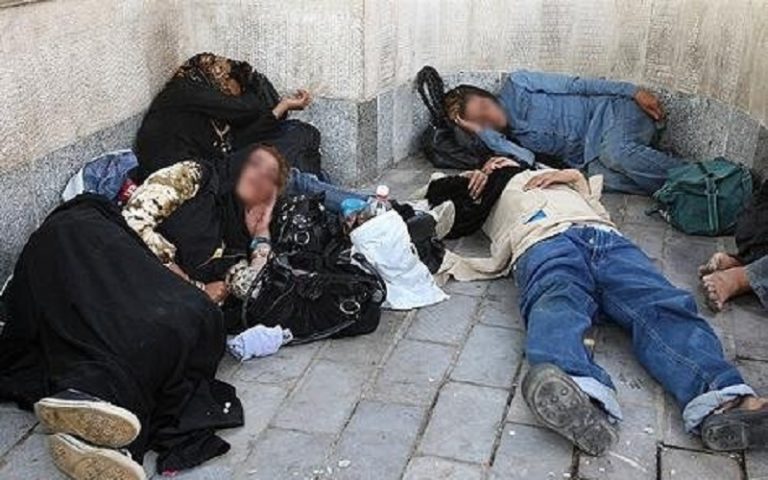
Poor people are suffering under the heavy burden of inflation while state media report a staggering increase in inflation in recent days.

The Donya-e-Eghtesad daily on April 22, 2021 wrote: “With the publication of this statistic, the first picture of the increase in the consumer price index was recorded this year. In April 2021 monthly inflation, point-to-point inflation, and average inflation, have recorded three points.

“According to these statistics, the first month of spring has been associated with relatively high inflation and has experienced a significant increase in the consumer price index. The announced statistics also show an average inflation of 38.9 percent.”

And the State TV News Channel reported: “In all three inflation indices, the monthly, the point-to-point, and yearly rates increased in April 2021. This means that the beginning of 2021 was accompanied by a 50 percent increase in the cost of Iranian households compared to the previous year.”

If the ’50 percent increase in household spending over the previous year’ is taken into account, it means that more people are below the poverty line because incomes are not enough to cover the exorbitant costs of living.

According to the state media, this unbridled inflation has caused 9 deciles of the society to live a hard life under the burden of poverty and high prices, and specifically, while the poverty line is 10 million Tomans, according to the regime‘s own experts, a family of three or four has a maximum wage of 3 million. This is at a time when many people are unemployed and have no income at all.

In return, the rich take the looted money out of the country and deposit it in their accounts in foreign banks, and some of them invest in buying and selling houses and villas abroad.

Iran Joins UN Commission on the Status of Women

These days beside the news about the coronavirus, wars, and poverty another news surprised the entire civilized world.

‘The Islamic republic of Iran is becoming a member of the UN’s Commission on Women.’ This unbelievable act which has its roots in pollical issues has shocked many people around the world.

And this is while the United Nations in its report of March 19, 2021 on the ‘Situation of human rights in the Islamic Republic of Iran’ about the situation of the women in Iran wrote:

“Notwithstanding these improvements, the Special Rapporteur remains deeply concerned at the persistent discrimination against women and girls in public and private life, enshrined in the Constitution of the Islamic Republic of Iran and within law and practice. Articles 20 and 21 of the Constitution guarantee equal protection of men and women before the law and the State’s undertaking to secure women’s rights. However, the provision of these rights is subject to “the Islamic criteria”, which have been implemented by the authorities in a manner that violates and undermines women’s dignity and fundamental human rights, including the right to equality and non-discrimination, as established in the State’s international human rights obligations. The Government stated that the Islamic criteria were defined and could be updated according to societal needs.

“Concern is expressed that the legal age for a girl to marry in the Islamic Republic of Iran is 13 years, with even younger girls allowed to marry paternal and judicial consent… Failure to increase the marriage age undermines measures aimed at protecting women and girls from domestic violence and negatively affects education and employment prospects.

“The criminal justice system discriminates between men and women regarding payment of diya (blood money).  The Penal Code states that the amount of diya paid as compensation for a female victim is half that of a male (art. 550).

“…The State effectively devalues the worth of a woman’s life to half that of a man, and consequently makes women more vulnerable to crime.”

Nonetheless, there is much more, which is beyond the scope of this short text, but these excerpts are enough to imagine what is going on Iran and among the women living in that country.

Dissidents and Iran watchers are asking why is the United Nations discrediting itself and its commissions? Why are they ignoring their own report?

Hillel Neuer, Executive Director of United Nations Watch, in this tweet on 21 April 2021 wrote: “No joke: UN elects Iranian regime to top women’s rights body. Electing Ayatollah Khamenei’s Islamic Republic of Iran to protect women’s rights is like making an arsonist into the town fire chief.”

This is an accurate description of this event. Because the basis of the growing fundamentalism today, at least in the Middle East, whose main feature is its anti-woman nature, is derived from the ideology of the founder of the Islamic Republic.

The amazing thing is that the main duty of this is commission is Improving gender equality and women’s empowerment.

“Imagine the model of ‘gender equality’ which is implemented in Iran becomes worldwide through the United Nations and this specialized commission. What a paradise the world would become”, an Iranian opposition website stated sarcastically. Here is what it would entail:

  • In line with gender equality, all schools in the world must segregate gender.
  • All prestigious universities in the world should work in two separate shifts for men and women.
  • All buses in Washington, Paris and London should have a gender separation wall and women should sit in the back.
  • All metros in the world must allocate most of its wagons to the men and only the last wagon should belong to the women.
  • In the direction of gender equality, the chador should be obligatory as a superior hijab for all women in the world. The police of all countries are obliged to set up ‘Enjoining good and forbidding wrong’ inspections, and, of course, arrest unveiled women while preserving their human dignity.
  • For the sake of gender equality, all fathers in the world should give their daughters half of their sons’ inheritance.
  • Let all the female politicians of the world respectfully step aside and give their place to the young male forces.
  • To preserve the dignity of women, all women’s commissions in the countries’ parliaments should be renamed to the Family Commission (Iran has no women commission, instead the regime is calling it the family commission), and men should be elected spokespersons for these commissions.
  • Allow girls to enter only in certain female university disciplines. Do not allow women to suffer ‘oppression’ by enrolling in men’s and unnecessary fields. All these universities can follow the example of Al-Zahra University of Tehran. Male professors should not be allowed in female student classes and vice versa.

Iran Disappointed With Nuclear Negotiations, Concerned About an Uprising by the Starving People

Iran’s supreme leader Ali Khamenei who was for a time silent about the negotiations over the Joint Comprehensive Plan of Action (JCPOA), or the 2015 nuclear deal, broke his silence and said points about the negotiations that experts see as a sign of his despair and frustration with the negotiations.

But why, while he said that the suggestions in the negotiations of the world powers are humiliating and he cannot tolerate any erosive negotiations, is begging for this too?

The answer should be searched in the stagnation of his regime and his fear of an uprising by the starving population. It is worth to mention the speeches of the officials about this deadlock to see its real dimension.

As Khamenei said with frustration and despair: “It is not that the United States wants to negotiate until it accepts a right word. No, it wants to negotiate in order to impose a false word. The offers they make are often arrogant and humiliating offers that cannot even be looked at.” (State TV Channel One, April 14, 2021)

Then this frustration effected the other officials too. Mohamad Vaezi, Chief of Staff to the regime’s president Hassan Rouhani, about these humiliating negotiations said: “The new US administration had announced that the maximum pressure of the Trump administration had failed, and it did not accept that policy. In practice, maintaining the sanctions means that it is following the same path.” (State-run website Iran Press, April 14, 2021)

One of the elements of Khamenei factions explained the US’s goals as pulling the regime step by step to the “successive agreements to contain and limit Iran’s power altogether.”

This government affiliate added: “They want stronger agreement. That means that they want these stronger agreements, to take more concessions in non-nuclear areas.” (State TV Channel Two, April 14, 2021)

Abbas Araghchi, Spokesperson for the Ministry of Foreign Affairs of the regime, depressed and angry about the Europeans positions said: “The Natanz incident is not something that can be easily overlooked. We expect the opposing countries in the JCPOA to condemn this incident, not only did they not do it right, but they also even added items to their list around ​​sanctions.” (State TV News Channel, April 15, 2021)

Rouhani completed this current of frustration hold his begging bowl toward the US government and said: “The Americans should live up to their commitments and lift the embargo.” (State TV News Channel, April 15, 2021)

Meanwhile, state media fear the hungry and furious population.

The Jahan-e-Sanat daily fearing a social explosion wrote: “In these deplorable economic conditions, and in order to be safe from the consequences of the periodic and, of course, fungal protests, as well as from the consequences of the country’s starving uprising, a heroic softness is desperately needed.” (State-run daily Jahan-e-Sanat, April 15, 2021)

In the lexicon of the Iranian leadership this ‘heroic softness’ means taking another poison chalice and accepting the demands of the world powers.

Because the United States intends, to impose “the same previous maximalist demands with new deception”, and “how does a Europe that itself has imposed sanctions on eight individuals and institutions at the same time as the negotiations, want and can mediate the lifting of US sanctions.” (Kayhan, April 18, 2021)

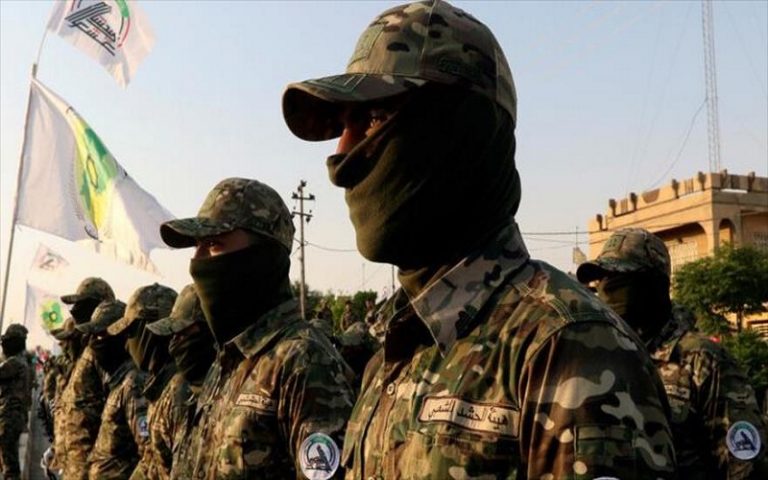
Another concern of Khamenei’s faction is that even if the regime accepts those demands, it is still subject to sanctions, because the US government cannot lift all sanctions, especially those imposed by Congress. While the US the other parties of the JCPOA negotiations are not accepting the same conditions of the 2015 JCPOA. And are searching for a new one to put the regime’s missile arsenal and middle east activities in that agreement.

The state-run website Siasat Rooz on April 18 wrote: “The Biden administration says it is seeking a ‘longer and stronger’ deal than the 2015 nuclear deal, which would include fundamental changes in Iran’s support for militants in Iraq, Syria, Lebanon and Yemen and a limit on the number and range of Iranian missiles.

“Iran and the United States are in dispute over which sanctions should be lifted. Iran wants to return to the time before [Donald] Trump entered the White House. The United States is reluctant to lift all the Trump-era sanctions, in part because the Trump administration has deliberately linked many of the sanctions to the fight against terrorism, which are difficult to lift.”

Kayhan on April 19 wrote: “The goal of the United States and Europe is to turn the negotiations over the JCPOA into an erosive one. And in the first stage, ‘without lifting sanctions’, to return to the JCPOA, and in the next stage, it will impose its maximalist demands to make Iran’s nuclear restrictions permanent and to attach our missile capability and regional power to the JCPOA text.”

And Siasat-e-Rooz on April 19 wrote: “The Vienna talks are a waste of time, given that they are irrelevant because of the existence of the JCPOA, and given that the Supreme Leader of the Revolution has also warned the Vienna talks becomes erosional, now the Vienna meetings are now on that path.

“Accepting the continuation of negotiations by Iran, while knowing that the United States and Europe have no incentive to lift sanctions, is not the right strategy to revive the JCPOA. The lifting of economic sanctions on Iran has now become a dream that some still dream of.”

Critical Situation in Iran’s Province of Khuzestan

First of all, Iran’s impoverished province of Khuzestan needs to have a development program in accordance with its geographical, cultural and social potentials. In Khuzestan, the government should think about the education and the development of its people which it has forgoten after the end of the Iran-Iraq war.

The pains and disadvantages of Khuzestan are many and innumerable. Crying and showing only ‘sympathy’ with this injured province body is useless. If the problem of Khuzestan was to be solved with the government’s fake budget, industries, agriculture, industry, etc., promises, it would have become heaven by now, but this did not happen.

Khuzestan has been one of the firsts in many industries and resources in the country, but these firsts did not cause all-round growth and excellence in the province. Because along with material development, the human, social and cultural dimensions have always been ignored. And the people of this province are one of the most isolated and deprived in the country, just because of being an Arab Sunni minority.

And now, if the intention to carry out reforms and real growth and development is considered, it is very difficult to do so because many resources such as water, environment, soil, etc. have been destroyed and in many cases have reached a critical and irreversible level.

Today, the situation of education, even at its basic levels, is not in a good condition in many parts of the province. Over the years, some of the misconceptions of the people of this land have not been corrected and the positive cases have not been strengthened by the government. The spirit of development of its people is not supported and instead it has been weakened by the government, and an industry such as oil has only led to their deprivation because all its benefits are stolen by the government.

In the years after the war, because of the regime’s wrong policies, the favorable social aspect of Khuzestan, which indicated brotherhood, friendliness, kindness, and self-sacrifice, has changed and moved towards divergence. Many investors outside the province are reluctant to invest in the province’s economy. Many natives of the province have either migrated or are migrating, and in this migration, not only the issue of dust and water are the reasons, but it should be said that cultural repression and poverty in many areas of the social life in this province are the cause and motivation of these migrations.

Comparing the indicators of development in the province with other provinces of the country, it becomes clear that the province is lagging in many ways, and compensating for this backwardness requires planning, effort, and leaving matters in the hands of skilled people, which the government is not interested.

With political games and phony support, the government is trying to cure the pains of this province, without any success. Only attracting budget and credit will not work for the government, because at the same time, many of its officials and brokers are looting this province and thinking of gaining more benefits and enhancing their power from these credits.

And, as in previous years, they will hurt the province with their various lootings and benefiting, taking the money and capital of this province with themselves to the capital, and just paying attention to their own welfare and livelihood, and deriding the people of this province and taking only political and social gestures that they are caring about the interests of these poor and weak people.

If the government of Iran would just care about the development of Khuzestan’s people, this province would see progress, otherwise, as in previous years, the people are forced to leave this province. And now this is not happening and most of its people are vagrant, around the metropoles of the country.

Khuzestan today has problems even in small and primitive matters such as waste collection even in its good neighborhoods of the city. It has problems in matters such as maintaining public transportation such as buses and its stations, and you rarely see well working stations in the provincial capital which is Ahvaz. And the final comment is that this province is still at the start of its development after 40 years of clerical rule.

Why Are Iran’s Looted Creditors Protesting Again?

Protests and gatherings of looted creditors have become a common occurrence in the Iranian economy. From time to time, a group of creditors that have lost their money, or better said have been looted by government officials and Iran’s Revolutionary Guards officers which have captured many parts of the country’s economy in various economic spheres, gather to protest, and this time it is the turn of the stock market.

Iran’s stock market is extremely dependent on the global economy.  According to government officials, it has faced a sudden downward trend due to international sanctions. In reality, the government itself has manipulated the statistics and numbers to pull the people to the stock market for investments and finally looting them.

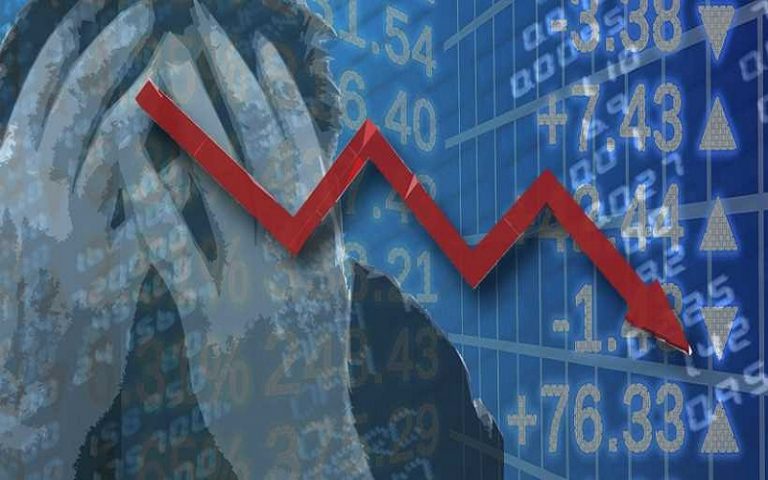
On Wednesday April 21, the Tehran Stock Exchange fell 4,000 units in the first minutes of the week, and this decline continued to 12,527 units, and the total stock index reached 1,207,062, which is not far away from the 1.2 million units from the critical channel limit.

State media reported, “the Tehran Stock Exchange is not happy these days, and its officials are refusing to comment on the market. (State-run website Ghatreh-e-Aval, April 21)

And nothing can control the downward trend of capital market indicators anymore. Following the continuation of this negative trend, a group of small shareholders gathered in front of the Stock Exchange and Securities Organization. These demonstrators have been looted. Because by applying wrong policies such as the distribution of Edalat shares and the government’s ETF, has been unknowingly invited to the stock exchange, and by this way the government brokers have empty their pockets.

Protest rallies have become the mainstay of Iran’s ailing economy. One day, the creditor losers of Samen Al-Hojjaj gather in front of the Central Bank; the next day, the investment losers of the car importing companies gather in front of the Ministry of Industry, Mine and Trade. One day, angry poultry farmers block the Taleghani Street, because of the wrong policies of regulating the agricultural jihad market; the next day, people take to the streets worried about rising gasoline prices.

After the government asked people to invest their capital in the stock market instead of just spending it on the coin and gold market, many came to this market and thereby lost their capital.

Some shareholders gathered in front of the Stock Exchange and Securities Organization. As reported by ILNA, this group of protesters were real and small shareholders who protested the government’s policies during the index decline and the non-fulfillment of promises of support.

In an interview with the state-run daily Shargh, Mehdi Souri, a stock market expert, said: “People were invited from the highest government officials to the stock exchange. It is not customary to invite someone and empty their pockets instead of entertaining them.”

Then, to the question of who invited people to the stock exchange, he answered: “The government and parliament invited them. Everyone who has been a decision-maker in our officials has asked these people to put all their capital in the stock market. Some people were invited, and some people were pushed into the market with non-standard tools such as government ETFs or the Edalat stocks, without knowing where they are stepping into. Even the banking network has directed them to this direction.”

About the situation of Iran’s stock market, he added: “The stock market we are witnessing now in Iran is not a standard financial market, because the first condition of a standard financial market is market liquidity. This means that you can take your money out of that market whenever you want.

“This is the biggest advantage of a standard stock market, but when in our capital market people’s money stays in line for a month and people cannot withdraw their capital, so, it is not a standard market that we can talk about it on an analytical basis.”

About misuse and corruption by officials, he added: “The unprofessional intervention of the officials and the use of incorrect tools have made this market non-standard. From the very beginning, when the Edalat stocks were created and there was talk of government ETFs, we strongly warned that these tools were substandard and could mislead the stock market.”

Then he asked these officials which of course is a hopeless thing in Iran: “We expect the authorities to allow the stock market to follow its standard path. Do not push anyone, do not build a barrier, and do not turn the main road, for which all its tools have been worked in practice in the world for years, into a side detour.”

About the Edalat shares, he said: “The person who distributed the Edalat shares among the people did not estimate how these people would sell this volume of shares. In the world, stocks belong to someone who has extra money. While the Edalat share was given to the weak who have no extra money and need money liquidity.

“I am against social subsidies and charity. If such a thing is to be given, it is possible only through cash. Because with these administrative and economic conditions in the country, any action is prone to corruption and creates problems. The crises that have arisen in the country are due to the fact that we have not made the things right from its roots.”

How Can Workers in Iran Live With a Monthly Salary of $160?

On Friday, April 16, and while less than a month has passed since Nowruz, the new year in the Persian calendar on March 20, the semi-official website Bartarinha pointed to workers’ dire conditions in Iran. “Can someone live with a salary of $160 per month?” the website titled.

According to the semi-official ILNA news agency, until March 2021, the inflation chart had been ascending. The economy’s shock-therapy, which began from March 2018 and continued until March 2021 with a high acceleration, has severely increased basic expenditures.

In such circumstances, the Central Bank of Iran (CBI) has announced that it proposes to achieve a 22-percent inflation rate from March 2021 to March 2022. Back in June 2020, the CBI had set a 22-percent inflation rate with positive and negative amplitude of percentage points for the next Persian year.

“However, the question is, can the CBI obtain an inflation rate of 20 or 24 percent in the current year?” ILNA asked, replying, “Data shows, ‘no, it cannot.’ In response to such question, we should easily say, ‘The coming events have cast their shadows in advance.’”

Official figures provided by the Statistics Center show a growing rate in prices from February 20 to March 20. Also, unofficial and field data obtained by media and local reports show that the inflation rate was continued since March 20 until now.

Inflation Statistics in Iran (February 21 – March 21)

“In March 2021, the point-to-point inflation rate has reached 1.8 percent; In other words, the country’s families have spent on average 48.7 percent more than in March 2020 to buy a ‘set of identical goods and services,’” the Statistic Center reported on March 21.

The report also says, “The monthly inflation rate for urban families is 1.8 percent… and it is 1.6 percent for rural families.” This means that the prices have grown this amount in comparison to the last month. On the other hand, the Statistics Center announces that in the major section of “Foods, Drinks, and Tobacco,” people have experienced the most increase in prices of red meat, chicken, sugarcane, sugar, sweets, edible oils, and vegetables like tomatoes, onions, and cucumbers, in comparison to the previous month.

“The amplitude of changes in the annual inflation rate in March 2021 for different deciles was 34.6 percent for the first decile—the richest class of society—and 43.5 percent for the tenth decile—the poorest people,” the report added.

Inflation Statistics in Iran from March 21

Since March 21, unofficial indicators show a growing rate in prices. For instance, on April 10, the CEO of Tehran Urban and Suburban Railway Operation Company Farnoush Nobakht acknowledged a 25-percent increase in Metro ticket prices in Tehran. “These prices would take effect from April 21,” he said.

This is while taxi fares had already increased by 25 to 35 percent in different cities according to relevant city councils’ approvals. For example, taxi fares were increased by more than 35 percent in Mashhad, Iran’s second major city and the capital of the northeastern province of Razavi Khorasan.

“Since Nowruz, an average of a 35.2-percent increase in taxi fares has been applied. Of course, these amount will depend on the type of cars,” Mehr News Agency quoted the chief of Mashhad Municipality Taxi Organization Ahmad Mohebbi as saying on April 13.

Therefore, the expenditures in transferring sector have on average increased by 30 percent. In the foodstuff sector, citizens witnessed a minimum increase of 25 percent in the price of essential goods. For instance, on April 1, the official IRNA news agency reported, “The Base for Organizing the Chicken Price raised the official price of chicken from 204,000 rials [$0.81] per kilo to 249,000 rials [$1.00], meaning a 25-percent increase for the first month in the Persian calendar.”

In such circumstances, the government has increased workers’ minimum salaries by 39 percent, which reaches 40 million rials [$160] per month, and 42 million rials [$168] when calculating the child cost allowance. However, regarding the 100- to 130-million-rial [$400-520] poverty line for a family of four, workers can only cover a quarter of their monthly expenditure in the best-case scenario. Furthermore, they are not optimistic to save this status quo given the accelerating rate of inflation, let alone improving their living conditions.

Workers in Iran Forecast a Tougher Year

To have a better view about working families’ livelihood in Iran, it is useful to take a look at what has been reflected in the state media. However, this is not the whole story, and Iranian media try to portray an acceptable image of the present conditions, deterring the spark of public disappointment.

“in the best-case scenario, it is supposed that 10 million rials [$40] be added to workers’ salaries. We cannot be satisfied with this $40. In the past two weeks after Nowruz holidays, the price of all items of the product basket has been raised. Every time officials add for instance 20 percent to salaries, inflation turns out at 40 percent, which means workers are still losing out by 20 percent. Still, workers could never be satisfied with their salaries after any increase,” said labor activist Abdollah Vatankhah to ILNA.

Meanwhile, given the massive population of unemployed people in Iran, the increase in salaries would not remove any problem. Because there are always a massive number of unemployed people who are ready to gain a job even with a low salary. In such circumstance, workers have to acquiesce to employers’ exploiting rulings or lose their careers.

On the other hand, government officials can never feel workers’ hardships and difficulties, because they receive stellar salaries which increase several times the inflation rate. Therefore, all economic components have been adjusted to frustrate workers from a better future.

In reality, a manager with an official monthly salary of $1,000 to $1,400 does not care about a 25-percent increase in taxi fares or chicken prices. Instead, workers must constantly calculate how they can overcome inflation rate with meager salaries. Of course, if they won to receive their salaries.

“Even managers of the Social Security Organization, which belongs to workers and its managers should receive salaries like workers’ salaries, receive multi-million and stellar salaries. They benefit from our work, but their salaries are multiple times larger than ours,” said Vatankhah.

Meanwhile, in an interview with ILNA, Khosro Zargarian, a social activist from Markazi province, underscored workers’ main dilemma. “In fact, inflation is the most important issue for workers. Workers are struggling with inflation every day and night. They are always concerned about the increase in prices. In the past three years, everything was against workers,” he said.

“If we reviewed prices from March 2018, the price of all goods has increased by at least five to ten times. I feel high prices very strongly because my product basket is dwindling every day. With such salaries, a worker with a family of three or four needs a miracle to live,” Zargarian added.

Furthermore, the increase in official prices would severely impact other prices. “When officials themselves permit a 25- to 30-percent increase in prices, what can we expect from grocers or hairstylists?” he explained.

In such circumstance and while the government issues permissions for increasing essential goods’ prices, raising workers’ salaries would not ease any dilemma. In practice, a giant monster named inflation has ambushed millions of workers, and they would lose in a repeated game with such figures.

Therefore, workers are the losers, and employers, who benefit from their strong ties with high-ranking officials, win again. Speaking in a debate, Mirhossein Mousavi’s economic advisor during the 2009 Presidential election Hossein Raghfar recently pointed to the high rate of emigration and suicide in society, describing it as a kind of protest.

“It is impossible that such society would survive in the long run, and it would definitely collapse whether we admit it or not. Such an emigration wave is unprecedented. The youths prefer to emigrate anywhere, refusing to stay in their homeland. So why? Why do youths believe that they can obtain a good future anywhere except their own homeland? Because these policies have destroyed the entire society,” he said on February 20, 2019.

“I think sooner or later, people will voice their protests in different manners. Today, we witness various kinds of insurgents. Suicide is a kind of insurgent. Addiction is a kind of insurgent, which has unfortunately expanded in our country. And emigration is a kind of insurgent. However, these are not sole kinds of insurgent, and an insurgent may appear by taking the people to the tarmac,” Raghfar said.

“High-ranking officials should decide whether they prefer this state to remain or not. It seems that many of officials, who use bulletproof cars and bodyguards, do not feel people’s difficulties,” he added.

The Unknown Fate of Iran’s Retirees

For weeks, the social security retirees of Iran have been protesting their bad living condition and lack of money and insurance. Social security retirees complain about the government’s delay in raising their pensions, but the question that many of them ask is, in principle, why should the increase in the pension of social security retirees depend on the government?

A retiree under the sponsorships of the Social Security Organization has generally paid 30 years of insurance premiums to this organization, and in principle, these premiums should be stored in the pension fund of this organization, and the pensions and pension increases of retirees that must be paid are also from the funds and investments accumulated in this fund.

A report prepared by the state-run daily Eghtesad Online on the status of the Social Security Organization’s pension fund shows that 70 percent of the resources of the Social Security Pension Fund are through premiums that it receives from individuals, and only 12 percent of its resources are provided from the income of investments. In other words, the fund is heavily dependent on the premiums it currently receives from insured workers, and the previous capitals and investments have not yielded much for the fund.

The finger of blame is pointing at the government
There are various analyses on the cause of this situation, but they all have one thing in common: By withdrawing the resources of the Social Security Fund, the government had the largest share in weakening the fund and did not pay its debts to the fund. On the other hand, part of the government’s debts to the Social Security Fund have been paid with the liquidation of loss-making state-owned companies, which has practically not benefited the fund.

Interestingly, the Social Security Fund, despite its unfavorable situation, still receives the least assistance from government sources, and according to the Eghtesad Online’s report, the State Pension Fund and the Steel Fund are in a much worse situation than Social Security Fund and provide most of their resources from the government’s assistance.

One of the government’s officials Mohammad Assadi from the General Department of Public Relations of the Social Security Organization said about the government’s delay and inaction providing the funds for the retirees:

“Last year’s resolution of the Islamic Parliament to transfer 32 trillion tomans of shares of state-owned companies to social security should be implemented so that this organization can provide desirable and needed services to the covered society with the support of reliable financial resources in addition to implementation.” (Jahani press, April 19, 2021)

He added: “This organization spends more than 15 trillion tomans a month this year, and in order to fulfill its obligations, in addition to receiving insurance premiums on time, which is the most important source of social security funding, it must also receive claims from the government through a precise and effective mechanism.” (Jahani press, April 19, 2021)

From these sentences it can be understood that the government is not just supporting the retirees but is stealing their money. And according to the cognition that we have from this regime, this capital is used for the regime’s malign activities like its nuclear and missile program and its meddling in the Middle East.

Although nationwide rallies have been held regularly and weekly for months by the retirees, the demands of retirees have not yet been met. The protesting retirees, in addition to increasing the level of pension to the level of the poverty line, which is now 10 million tomans, demand the repeal of Article 69 of Social Security, ‌ increase in their annual pensions and free medical treatment.

At their protests, they also chanted: “Officials, Give us back our rights”, “Expensiveness, inflation, the scourge of people’s lives.”

There are also slogans that the government fears the most like, “We will not vote anymore, because we heard so many lies.”

In recent months, social security retirees have been among those who have held regular weekly rallies to protest the lack of adequate pay. With the poverty line reaching nearly 10 million tomans, officials, including members of parliament, acknowledge the huge gap between workers and retirees’ incomes with the living expenses.

Trafficking In Iran; A Major Concern

The trafficking of women in Iran is a real problem, with most of the victims smuggled out of the country from the provinces of Hormozgan, Sistan and Baluchestan, and Khuzestan.

Lawyer Hossein Komeili said: “In Sistan and Baluchestan, where forced marriages are common, women are given to men in Afghanistan and Pakistan. [It’s a form of] organized trafficking [where] corruption in the bureaucracy [and cooperation between] “smugglers and the police” [make the issue worse].”

Of course, the government hides the relevant statistics, so it’s impossible to know for sure how many victims there are, but the state-run ROKNA News Agency says that the women are moved under the pretext of finding employment, smuggled into countries, and forced to become sex workers because their identification documents are stolen before they even leave Iran.

Despite its opacity, the government is still considered tier 3 by the US State Department for failing to make the minimum effort to combat human trafficking and the US said that the domestic Iran trafficking networks appear to enjoy anonymity.

One Iranian strategist, Hassan Abbasi, publically exposed the trafficking of women to other Middle Eastern countries as far back as 2008, condemning the President, the Information Minister, the Expediency Discernment Council, the Revolutionary Guards, the Bassij, the Judiciary Chief, the commander of the State Security Force, and Tehran’s mayor for failing to address the issue.

But, of course, one of the main reasons for the increased rate of trafficking is poverty because people are desperate to escape the hardships in Iran, tricked with thoughts of a better life. This is worse in more deprived areas.

Komeili said: “The University of Tehran has a law clinic in the Oudlajan area of Tehran. A woman came to the clinic and said, ‘My daughter has been missing for 2 weeks! Her friends said she went abroad.’ We asked, ‘What did you do in these 2 weeks?’ I did nothing. I thought she was going abroad to earn money and send it to us,” the mother replied. Therefore, the principal reason for human trafficking is poverty, and victims fall into traffickers’ traps thinking they are finding jobs. Laws must be changed, and the victim must not be seen as a criminal.”

While sex trafficking is a major part of this criminal industry, we shouldn’t forget about the nasty blood and organ trafficking business, whereby victims (including children) are held for some time abroad before they are killed for their blood and organs.

Iranians Want the COVID Vaccine, so Why Can’t They Get It?

The Iranian people desperately want the government to purchase the safe coronavirus vaccines, approved by the World Health Organisation, and begin to roll out the vaccination program in order to save hundreds of thousands of lives.

But, of course, that’s not going to happen. Back in January, after months of lies about sanctions preventing them from buying the vaccines, supreme leader Ali Khamenei actually banned the import of vaccines made in the US or UK, which most approved ones were at the time. Then, they promised that Iranians would get an as-yet-untested Cuba vaccine over the next two years.

Now, it’s the survival of the richest as Coronavirus Task Force Committee spokesperson Alireza Raisi announced that imported vaccines would not be covered by the government, which means that anyone who cannot afford to be vaccinated will have to wait months for their shot. This was confirmed by the Red Crescent, which said that the vaccines would not be free.

This is the culmination of the authorities’ policy to use the pandemic as a means of control, hoping to stop protests that could overthrow them just weeks after the November 2019 protests rocked the system to its core. The mullahs relied on a high death toll to cull potential protesters and terrify the rest. Now, they want to reduce the people’s anger through the import of a fraction of vaccines.

Not to mention that the vaccine money will end up in the hands of the Revolutionary Guards (IRGC) and Khamenei, extorting from the people, who are in such dire financial straits that they cannot afford poultry, bread, and eggs and live below the poverty line.

Even the state-run media is questioning this decision, with the daily Javan saying on April 19 it would create “corruption, distrust, discrimination, and… black markets”, while the Mardom Salari said that high costs were putting many poorer people off, especially when they were first told it would be free.

The Iranian opposition wrote: “The regime’s criminal measures will have social consequences. Many factions warn of the “ticking social bomb” of the Iranian society and the public outrage that has already manifested itself in five major uprisings in the past two-and-half years. But at this point, it seems that the regime is in a deadlock, and no matter what path it chooses, waiting at the end will be the wrath of the Iranian people and their demands of regime change.”

Treating Stagflation, Only by Restructuring Iran’s Economy

For the past century, revenue from the sale of Iran’s oil has filled the pockets of the dictatorships in this country, especially that of the theocratical rule. What has been ignored and neglected is the scientific, economic, technical, and educational development of the country and its people.

Every time the rulers faced a problem or challenge, they have chosen the simplest way which is further opening the oil valves.

Knots that could be untied with the main source of the country which are the people and helping the development, welfare and prosperity of the country have become more blind, and the benefits of the oil money flowed in the pockets of the rulers, and its consequences becoming the chains of poverty and misery of the people.

Now after one hundred years of corrupted rulers, the country’s economic and social damages are unsolvable.

One of the biggest challenges and gaps in Iran’s economy which are now becoming visible, because the government has lost its main source of income which is oil, are inflation and the stagnation of the economy.

The government and the mullahs’ rule are no longer capable to solve both the social and economic crisis at the same time and are forced to choose between them.

But whichever has priority, the other will act like an unstoppable wildfire which will hurt the country and people. Even the government’s specialists are confessing that the rule has lost the time in these 40 years to solve the country’s economic problems. And they are not able to reverse that time anymore unless heavy changes are made in the future.

Controlling inflation and creating a recession or economic boom with money printing has reached a dangerous stage. Iran’s economy is at a difficult juncture this year, with rising inflation, especially in the last three years, while many officials fear Iran’s fate will that of Venezuela. On the other hand, any boom requires a lot of money to be injected into the market, which in turn will further increase inflation.

“Iran’s economy is in a difficult situation. Recession and inflation are the most important economic problems that Iran is facing in 2021, and if it (Government) does not have a plan for it, this situation will be transferred to the following years, in which economic development plans will no longer make sense.” (State-run daily Arman, April 17, 2021)

Mehdi Karbasian, a government economist, said: “Iran’s economy has been suffering from stagflation for years and this procedure is one of the rare economic diseases in the world. That is, countries are either in recession or inflation and stagflation are very rare. But unfortunately, over the past decades, we have also had serious stagflation at times.” (Mashregh, April 17, 2021)

He points to inflation above 40 percent, which is felt in the items and food of the weak strata of society, i.e., the fourth and fifth deciles, close to 70 percent of the society, and on the other hand, the recession has reached a point where GDP has been negative for several years and we see that the economy has shrunk over the past year or two, and in one year in 2019 the country’s economy shrank by 12 percent.

The inevitable result of this situation is dissatisfaction.

“There has been a fundamental change in the context of Iranian society that can no longer be denied. This event is the turning point of society in the satisfaction curve and the flow of satisfaction.

“The twelfth government no longer has the money to give to the higher institutions and the regulatory bodies, and they fall from the satisfied rank to the line of the dissatisfied. It no longer has the money to give to the workers, so the workers are also dissatisfied.

“Iran’s education and health personnel are dissatisfied because of the government’s inability to increase wages and salaries due to a lack of welfare funding.

“There is no money left to pay farmers to buy wheat. Journalists, footballers, writers, intellectuals, as well as government employees, and more importantly, actors and key players in politics and economics, are also dissatisfied.” (Jahan-e-Sanat, April 17, 2021)

And now the sweet dreams of all officials and experts of this regime in returning the situation to a previous state are fade away and “now, at the beginning of 2021, we are facing a society full of all kinds of problems, and it seems that Iran’s economy is falling apart, and the consequences of this event will sooner or later affect other sectors such as politics, culture and social affairs.” (Jahan-e-Sanat, April 17, 2021)

And these phrases are evidence enough: “As in 2020, there is no empty capacity of stock exchanges and debt securities to compensate for this deficit and prevent the monetization of this deficit.

“How is the stock market and the debt market (capital market) supposed to finance a total of about 300 trillion Tomans of the government’s budget of 840 trillion Tomans in 2021, which is equivalent to 35 percent?” (Kayhan, January 26, 2021)