Home Blog Page 80

“A Crime is in Progress”: A Letter from Political Prisoner Saeed Masouri Exposing the Iranian Regime’s Plans

One day after the heroic resistance of political prisoners in Qezelhesar Prison successfully thwarted an attempt by Iran’s Ministry of Intelligence agents to abduct the nation’s longest-serving political prisoner, Saeed Masouri, and forcibly transfer him to an unknown location, Masouri managed to smuggle out a powerful letter. July 17, 2025, the letter not only details the pressure exerted on him but also places it in a grave historical context, warning that the regime may be repeating the atrocities of the past. He affirms his and his fellow inmates’ resolve to resist, even at the cost of their lives, to prevent another “massacre in silence.”

The Letter of Political Prisoner Saeed Masouri:

A Crime is in Progress

Since this morning, they have tried to transfer me with a thousand and one tricks, using threats, enticements, and solemn oaths. What is certain is that this method—kidnapping in prison under the guise of a “transfer”—was not and is not aimed at me alone. It is fundamentally a method for controlling, isolating, and silencing prisoners.

PMOI Supporters Given Double Death Sentences by Iran’s Regime

The issue of the transfer itself is absolutely not the subject of this conflict. Rather, the goal is suppression, suppression, and yet more suppression, and an insistence on more killing and executions! It is exactly as it was during the 1988 massacre, and today there is a fear that the same path will be repeated, albeit with a different language and method. At that time, its name was the “Death Committee”; today, it is “Fire at will”. But this widespread suppression and intensification of executions is not a sign of authority, but an admission of the regime’s helplessness in the face of truth and the will of the people. In the same vein, the “Fire at will” order is nothing but a desperate attempt to cover up the depth of its infiltration, decay, and structural collapse! They want to compensate for it by taking revenge on the people of Iran and their prisoners.

My refusal to accept a “transfer” from Ghezel Hesar exile to another is not out of fear of being moved, nor is it from the illusion that a few of us prisoners can stop these illegal acts. It is solely and only so that a massacre does not take place in silence and obscurity, as it did in 1988, and so that it all happens before the eyes of history and awakened consciences! Yes, let the world hear this time that “a crime is in progress” and that there is, of course, a resistance against it! Even if this only results in a warning and an alarm for the people of Iran and the world that “a crime is in progress!” Patience, O noble people!

Iranian Political Prisoner Saeed Massouri Suddenly Transferred to Unknown Location

As for me personally, as a political prisoner and a supporter of the People’s Mojahedin Organization of Iran (PMOI/MEK), especially during the month of Muharram and in the presence of the immortal message of Imam Hussein, I want to affirm that the blood of his child, which was thrown to the sky, continues to drip down upon us Iranians, Shiites, and his followers. And far be it from us to take a single step back on the path of freedom and liberation because of this prison, this exile, and these executions.

Even if the slaughter of us all is merely news that reports on the day of the event and does not allow a crime to be carried out in silence!

What honor and fortune it would be if we have only given a state of readiness to our homeland and our people, a mere warning, even at the cost of our lives! For Iran and Iranians have learned nothing from their legends like Siavash and Ariobarzanes, and from the epics of Ferdowsi, but perseverance and steadfastness. And what an unparalleled honor it is that we have been inspired and have learned from them, and also from liberating Islam, the Prophet of Mercy, and his legendary companions, of whom it is said: “Mountains may move, but you shall not.”

“Praise be to Allah, who has guided us to this; and we would never have been guided if Allah had not guided us.” (Quran 7:43)

Saeed Masouri

July 2025

Prisoners’ Resistance Foils Forcible Transfer of Iran’s Longest-Serving Political Prisoner, Saeed Masouri

In a dangerous escalation seen as the Iranian regime’s attempt to exact revenge on its domestic opponents following its war with Israel, political prisoners at Qezelhesar Prison in Karaj have thwarted a violent effort by Ministry of Intelligence agents to transfer Iran’s longest-serving political prisoner, Saeed Masouri, to an unknown location. The event has led to a tense standoff and a severe lockdown within the prison.

The Failed Transfer Attempt

On the morning of Wednesday, July 16, 2025, forces from the Ministry of Intelligence and prison guards raided the ward for political prisoners with the intent of abducting Saeed Masouri. According to reports, the agents used a deceptive tactic, summoning him out of the ward under the pretext that the “Protection and Intelligence Office” needed to see him. Once he stepped through the barred gate, it was locked behind him to prevent his return.

Iranian Political Prisoner Saeed Massouri Suddenly Transferred to Unknown Location

Realizing from past experience that the goal was a forcible transfer, Masouri refused to cooperate. Meanwhile, another political prisoner who had been with him quickly alerted their fellow inmates. The prisoners immediately gathered at the barred gate, managed to pull Masouri back inside through force of will and numbers amidst chanting and slogans, and then barricaded the ward door from the inside.

In retaliation, the director of Qezelhesar Prison, Allah-karam Azizi, ordered the ward’s telephone lines to be cut for several hours. After protests, communications were restored, but the prisoners were given an ultimatum: the transfer has been postponed until Saturday, July 19, but it “will be carried out by any means necessary.”

Reactions in Prison & The Prisoners’ Statement

The political prisoners of Qezelhesar issued an urgent statement detailing the incident, declaring that a security atmosphere now pervades the ward, with the constant threat of a raid by prison guards. Their statement read:

“Today, our morning began with more news of the government’s maximum pressure… This time, it was the turn of Saeed Masouri, Iran’s longest-serving political prisoner, to taste the revenge of the oppressive Islamic Republic’s system for the thousandth time.”

The prisoners stressed that “the abduction and exile of political prisoners to unknown locations is one of the most flagrant violations of human rights that the regime uses as a tool of suppression.” They also warned that this pressure may be a prelude to carrying out the illegal death sentences against their cellmates, specifically Behrouz Ehsani and Mehdi Hasani, whose requests for a retrial were recently rejected for the fourth time.

Who is Saeed Masouri?

Saeed Masouri, 60, is a symbol of resilience in Iran’s prisons and is the country’s longest-serving political prisoner.

* Arrest Date: He has been imprisoned since January 2001.

* Sentence Duration: He has spent nearly 25 years in prison without a single day of furlough.

* Charge: “Cooperation with the Mojahedin-e Khalq (MEK) of Iran.”

* Background: He was a medical student in Germany and Norway before his arrest upon returning to Iran in the city of Dezful.

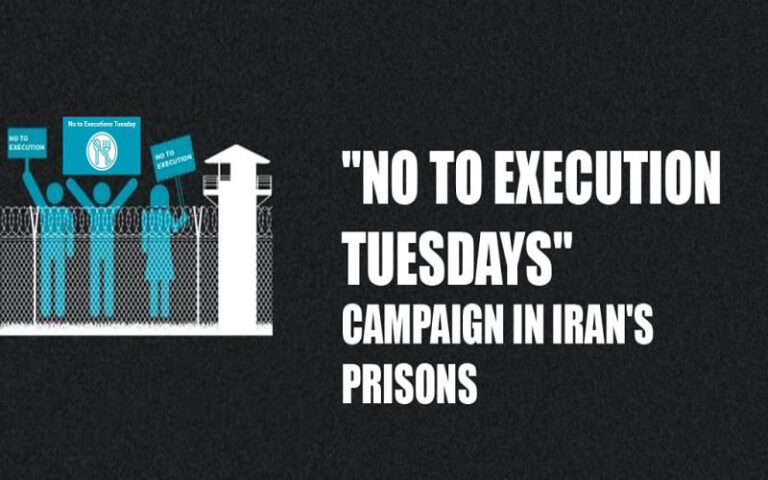
* Activism in Prison: Masouri is known for his prominent role in the “Tuesdays Against Executions” campaign, organized by prisoners to protest death sentences. In the last month, he has been explicitly threatened by intelligence agents over his letters exposing the rise in executions.

The Regime’s Post-War Revenge as a Pretext for Repression

Political prisoners and human rights activists are linking this incident to the atmosphere following the recent war with Israel. As stated in the prisoners’ declaration: “In these circumstances, the war has provided another pretext for the government to tighten the noose on the people, especially political prisoners.”

The statement adds that the regime considers its “real war to be with the people, not with foreign governments,” and that pressure on the populace has increased under various pretexts since the conflict. They view the targeting of Saeed Masouri today as an act of “blind revenge against the unarmed people.”

This move is widely seen as a message of intimidation to all dissidents, signaling that the regime will use an iron fist internally to compensate for any blow it receives externally, with political prisoners being the easiest target for this retribution.

Iranian Regime Figure Tied to 1988 Crimes Against Humanity Reemerges in Academic Circles

Mohammad Jafar Mahallati, former Iranian regime ambassador to the United Nations, who became embroiled in scandal over serious accusations of helping justify the 1988 massacre of political prisoners in Iran and charges of sexual abuse and assault during his teaching career in the United States, is now engaging with students in Iran.

His biography on the website of the Majd Research Center describes him as a “full professor of religious and peace studies at Oberlin College, USA.”

He also co-organized a conference from May 26 to 28 at the University of Tehran titled “The Sixth Annual Conference on Peace and Conflict Resolution.”

Following Mahallati’s dismissal from Oberlin College in November 2023, the university administration removed all traces of his presence from its website.

Oberlin College in Ohio removed him from his position as professor of religious studies after revelations of his potential role in covering up crimes against humanity during the 1988 mass executions ordered by Ruhollah Khomeini, in which 30,000 political prisoners—mostly members and supporters of the People’s Mojahedin Organization of Iran (PMOI/MEK)—were executed. His past also includes allegations of sexual exploitation and abuse of a Columbia University student in the 1990s.

In September 2023, the U.S. Department of Education launched an investigation into Oberlin College and Mahallati to determine whether they had allowed antisemitism to spread on campus and whether Mahallati had promoted Hamas in his classes.

During his teaching years, the Oberlin academic community referred to him as the “professor of peace” until Amnesty International exposed his role in covering up the 1988 political prisoner massacre. Mahallati went from being called “professor of peace” to the “Butcher of Oberlin.”

According to the University of Tehran conference program, he chaired one session and delivered a speech titled “The Complex Nature of Human Conflicts and the Necessity of Multifaceted Discourses for Their Management and Prevention from the Perspective of the Quran.”

Other speakers at the conference included Ali Akbar Mousavi, previously introduced as a senior advisor and postdoctoral fellow at the Center for World Religions, Diplomacy, and Conflict Resolution at George Mason University in Virginia.

Mahallati appears to be attempting to restore his lost credibility. A website for his works was launched in 2024, though it contains no contact information.

The site still claims he is a “full professor of Islamic studies at Oberlin College.”

Oberlin refused to meet with Iranian-American members of the coalition investigating Mahallati.

Although the Tehran University conference was ostensibly about peace, Hossein Simaii-Sarraf, the Iranian regime’s Minister of Science, used the platform to call for the destruction of Israel. He stated: “It is hoped that to eradicate injustice, human catastrophes, and the savagery of the Zionist regime, all Muslim nations and free people of the world will unite more than ever.”

For years, Iran’s regime has attempted to infiltrate Western countries by sending intelligence agents under the guise of journalists, human rights activists, or academics.

Iranian Political Prisoner Saeed Massouri Suddenly Transferred to Unknown Location

According to received reports, political prisoner Saeed Massouri was removed from Ghezel Hesar Prison in Karaj by agents of Iran’s terrorist intelligence apparatus on Wednesday, July 16, and transferred to an unknown location.

This abduction was carried out without informing his family or lawyers, causing serious concern.

In response, a number of political prisoners held in various wards of Ghezel Hesar have staged a sit-in protest. Reports indicate that these prisoners, by chanting slogans against repression and increased security pressure, are demanding Massouri’s immediate return and an end to the regime’s unlawful treatment of political prisoners.

Political Prisoner and PMOI Supporter Maryam Akbari Monfared Transferred to New Prison

Saeed Massouri has spent over 24 years in Iranian regime prisons and is regarded as one of the symbolic figures of resistance behind bars.

Human rights activists have warned that such actions constitute a flagrant violation of basic prisoner rights and amount to “enforced disappearance”—a tactic the Iranian regime has a long history of carrying out.

FBI Releases Images of Iranian Officials Connected To Abduction of US Citizen

On Tuesday, the United States Federal Bureau of Investigation (FBI) released images of three senior Iranian regime intelligence officers who, according to U.S. officials, were involved in the abduction of retired FBI agent Robert Levinson.

The images were published as “Seeking Information” posters and pertain to Reza Amiri Moghaddam, Taghi Daneshvar, and Gholamhossein Mohammadnia.

According to the FBI, Reza Amiri Moghaddam, who currently serves as the Iranian regime’s ambassador to Pakistan, previously led the operations unit of Iran’s Ministry of Intelligence in Tehran—a unit whose several members have been accused of orchestrating Levinson’s 2007 abduction from Kish Island.

The FBI has emphasized that a reward of up to $5 million remains available for information leading to the discovery, return, and location of Levinson. Additionally, the U.S. State Department’s Rewards for Justice program has offered a separate reward of up to $20 million for information related to this case.

Previously, the U.S. Department of the Treasury sanctioned these three Iranian regime intelligence officials for their roles in the abduction, detention, and possible death of former FBI agent Robert Levinson.

On Tuesday, March 25, 2025, the U.S. Treasury Department issued an official statement announcing that Reza Amiri Moghaddam, Gholamhossein Mohammadnia, and Taghi Daneshvar have been added to the sanctions list in coordination with the Federal Bureau of Investigation (FBI).

Robert Levinson, a former agent with the FBI’s Drug Enforcement Division, disappeared on March 9, 2007, after flying from Dubai to Kish Island in southern Iran. His family announced in 2020 that he had died.

According to the U.S. Treasury Department, the three sanctioned individuals played a role in Levinson’s abduction and possible death, as well as in efforts by Iran’s regime to conceal or distort its responsibility in the case.

In early March, the U.S. State Department’s Rewards for Justice program announced it was offering up to $20 million for information regarding two Iranian regime agents involved in the abduction of Robert Levinson.

On Wednesday, March 5, the Rewards for Justice program published photos of Ahmad Khazai and Mohammad Baseri—agents of Iran’s Ministry of Intelligence—on X, stating that they are suspected of involvement in the abduction, detention, and possible death of Mr. Levinson.

The FBI had also announced in a February 4 statement that it was offering a $25 million reward for information regarding Khazai and Baseri.

On March 26, 2020, Levinson’s family announced his death on their Facebook page.

In their March 2020 statement, the Levinson family said that the cause of his death remains unknown, but that it occurred before the COVID-19 outbreak. They stated that if not for the Iranian regime’s cruel actions, Robert would be with his family today.

In the same statement, the Levinson family said the Iranian regime had abducted a foreign citizen and deprived him of his most basic human rights. “His blood is on their hands.”

Senator Ted Cruz Calls for Expulsion of Iranian Regime Agent from the U.S.

They emphasized in their March statement that they would dedicate the rest of their lives to seeking justice for Robert Levinson’s death and would do everything possible to bring Iranian regime officials to justice.

Iran’s Regime Negotiates with Four Countries to Import Water as Crisis Deepens

Amid growing warnings about water shortages and the Iranian regime’s failure to manage the drought crisis, Abbas Aliabadi, Iran’s Minister of Energy, stated that importing water from neighboring countries is on the agenda and that negotiations have already taken place with Turkmenistan, Afghanistan, Tajikistan, and Uzbekistan.

On Tuesday, July 15, Aliabadi noted that Iran has been suffering from drought for more than five years and said, “Our rainfall is down 31% compared to last year and 44% below the long-term average.”

In response to a question about the water crisis, the Minister of Energy said, “There is no water now. We have to consume slowly to make it last longer.”

Warning About the Possibility of Water Rationing in Iran

He urged people to manage their water use and make the best of limited resources during these difficult conditions.

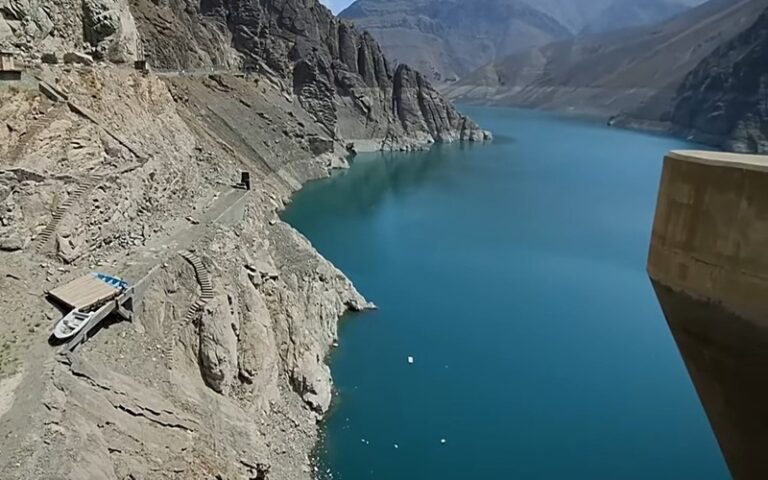
Aliabadi further emphasized that the drought has left the country’s dams in poor condition, noting that the problem is not limited to Tehran, and provinces such as Khorasan, Tehran, Markazi, Hormozgan, and Sistan and Baluchestan are also facing dire situations.

The Energy Minister warned, “We may lose Mamloo Dam within the next month; the condition of the Latyan and Karaj dams is also far from ideal. Currently, we are facing a 30% to 40% reduction in rainfall and dam reserves.”

He added, “We need different methods to control consumption. Efficient users should be rewarded, and wasteful users should be severely punished because they are creating hardship for the public.”

As Iran’s water crisis intensifies, reports indicate that citizens are receiving exorbitant water bills.

Meanwhile, Mohsen Ardakani, CEO of Tehran’s Water and Wastewater Company, pointed to the critical state of the country’s water resources and called on residents to install water pumps and storage tanks.

According to him, there is a risk of water supply problems in the coming days.

Regarding reduced water pressure, Ardakani said, “Due to limited resources, we are forced to manage consumption, and we will reduce water pressure as much as possible, so that water will only be available on the first and second floors.”

Behzad Parsa, CEO of Tehran Regional Water Company, also said on July 15, “This is the fifth consecutive year of low rainfall in Tehran province. This year’s rainfall is unprecedented over the past 60 years.”

Parsa continued, “Since the beginning of the water year, we have recorded 153 mm of rainfall, which shows a 44% decrease compared to the long-term average and a 33% decrease compared to last year.”

He stated that only 14% of Tehran’s dam reservoirs are currently filled and added, “Our major dams contain 170 million cubic meters less water than last year, and there is a 400 million cubic meter shortfall compared to the long-term average.”

In recent months, warnings have intensified regarding water shortages, depleted dam capacities, and the worsening drought crisis.

In one such case, in March, regime MP Abolfazl Aboutorabi warned of the potential for a “water war” between provinces and stated, “Tehran is facing an extremely acute and dangerous situation, and provinces like Fars, Sistan and Baluchestan, and other semi-eastern regions of the country are also facing similar problems.”

Official statistics show that around 80% of Iran’s groundwater resources have been consumed and dam reserves are in a critical state.

Experts have previously warned that Iran’s millennia-old groundwater reserves have been depleted over the past three decades.

PMOI Supporters Given Double Death Sentences by Iran’s Regime

As part of the ongoing wave of repression and political executions, the judiciary of Iran’s regime issued harsh sentences against five political prisoners on Saturday, July 12. Three of them—Farshad Etemadifar, Masoud Jamei, and Alireza Mardasi (Hamidavi)—were each sentenced to two executions and one year in prison. The other two, Saman and Davood Hormatnejad, were sentenced to 12 and 15 years of discretionary imprisonment, respectively.

These sentences were issued by Branch One of the Revolutionary Court in Ahvaz, presided over by Judge Adibi-Mehr. The official charges include “waging war against God (moharebeh),” “assembly and collusion against national security,” “membership in the People’s Mojahedin Organization of Iran (PMOI/MEK),” and “propaganda against the regime”—charges frequently used against political prisoners to justify harsh sentences.

Saeed Masouri: 170 Executions In The Past Month In Iranian Prisons, Minute-Long Trials, And Death Sentences

Issuance of Execution Sentences for Three Political Prisoners

Farshad Etemadifar, 30, a resident of Basht in Kohgiluyeh and Boyer-Ahmad province, was arrested in June 2023 in the village of Pichab, Basht, along with Saman and Davood Hormatnejad. He had previously been arrested in 2018 for political activities and spent 20 months in prison. Masoud Jamai, a 47-year-old teacher, and Alireza Mardasi, a 52-year-old Arab teacher, were arrested in Ahvaz in August 2023. It is reported that Jamai suffers from serious health issues, including stomach cancer, liver problems, and internal infections, and is in urgent need of medical care.

Earlier, Mehdi Hassani and Behrouz Ehsani, two prisoners who support the People’s Mojahedin Organization of Iran (PMOI/MEK), had been sentenced to death.

These sentences come amid a rise in executions, threats of execution, and pressure on political prisoners in recent months. Many international observers have interpreted this as a sign of the deepening political and social deadlock within the regime.

Ali Khamenei, the supreme leader of Iran’s regime, in an effort to prevent a repeat of popular uprisings and explosions of social anger, has once again resorted to the familiar tools of repression, execution, and instilling public fear. However, experience has shown that such actions not only fail to prevent uprisings but, on the contrary, strengthen the motivation and determination of the younger generation to bring about regime change.

In this context, the National Council of Resistance of Iran (NCRI) has called for immediate action by the international community. The NCRI has urged the United Nations Security Council, the UN High Commissioner and Human Rights Council, the UN Special Rapporteur on Iran, the European Union, and all democratic governments to use all available legal and diplomatic means to prevent the implementation of these sentences and the gradual massacre of political prisoners.

Nine Iranian individuals and entities added to the European Union’s new sanctions list

Jean-Noël Barrot, France’s foreign minister, announced that the EU Foreign Affairs Council has approved sanctions against individuals and entities that threaten Europe’s interests. Among those sanctioned are nine Iranian individuals and entities.

These individuals and entities are accused of spreading terrorism on European soil.

Barrot said on Tuesday that Europeans have frozen the assets of nine Iranian individuals and entities responsible for terrorism in Europe and have banned them from entering EU territory.

He added that this was the result of efforts he personally led and that he welcomes the outcome.

U.S. Sanctions 22 Entities Tied to Iranian Regime’s Shadow Banking Network

The French foreign minister also called for the “immediate and unconditional release” of French citizens detained in Iran and emphasized the need for International Atomic Energy Agency (IAEA) inspectors to return and for the launch of a new diplomatic process to curb Tehran’s destabilizing behavior.

Barrot also expressed hope that sanctions against Russia would be approved in the near future.

Who are the sanctioned individuals?

The sanctioned individuals are accused of directly designing and executing assassinations and security operations against opponents of Iran’s regime in European countries.

According to the published statement, the list includes Mohammadreza Ansari, commander of Unit 840 of the Quds Force of the Islamic Revolutionary Guard Corps (IRGC).

Also named are Naji Ibrahim Zindashti; Abdolwahab Kochak, Zindashti’s operative and the assassin of Masoud Molavi; Ali Esfanjani, an Intelligence Ministry agent and accomplice in Molavi’s killing; Ali Kocak, Zindashti’s associate and a suspect in the murder of Saeed Karimian; Ekrem Abdulkarim Oztunc, Zindashti’s niece and member of his network; Nihat Abdolghadir Asan, another member of the Zein-Dashti network; and Reza Hamidi Ravari, a Ministry of Intelligence official who oversaw Zindashti’s operations, including the assassination of Iranian regime opponents.

The network affiliated with Naji Zindashtihas also been designated as a sanctioned entity.

This move by the European Union comes after repeated warnings from European officials in recent months about increased intelligence and terrorist activities by Iran’s regime on European soil.

The sanctions were announced shortly after the French foreign minister warned that if nuclear talks with Iran’s regime do not result in a “verifiable agreement,” the snapback mechanism against Iran will be activated on August 31.

A Decade After the Signing of the JCPOA, Will the Snapback Mechanism Be Triggered?

Ten years after the signing of the Joint Comprehensive Plan of Action (JCPOA) between Iran’s regime and the P5+1 countries—which had initially raised hopes for resolving Tehran’s nuclear dispute—those hopes for economic recovery and renewed political relations with the West have been replaced by growing concern over the potential activation of the snapback mechanism.

Esmail Baqaei, spokesperson for Iran’s regime Foreign Ministry, said on Monday, July 14, during a weekly press conference, referring to European countries’ threat to activate the snapback mechanism: “The use of the snapback mechanism is a political move and aimed at confronting Iran.”

He added: “Iran still considers itself a member of the JCPOA and has scaled back its commitments in response to the gross violations of the agreement by the United States and other parties.”

Tightening Global Pressure On Iran’s Regime Nuclear Program

Baqaei warned: “The threat of a snapback will be met with an appropriate response from Iran.”

Abbas Araghchi, Iran’s regime foreign minister, also said on July 10 in a meeting with heads of foreign missions in Tehran that in recent months—and especially lately—European countries have hinted at the possibility of using the snapback mechanism to automatically reinstate sanctions on Iran, but this would be “the biggest mistake they could make.”

What is the JCPOA nuclear deal?

Ever since the National Council of Resistance of Iran (NCRI) revealed Iran’s covert nuclear program in August 2003, many countries have been suspicious of the regime’s ambitions to acquire nuclear weapons and viewed its secrecy as part of that objective.

NCRI-US Reveals Iran’s Secret Nuclear Weapon Program – The Kavir Plan

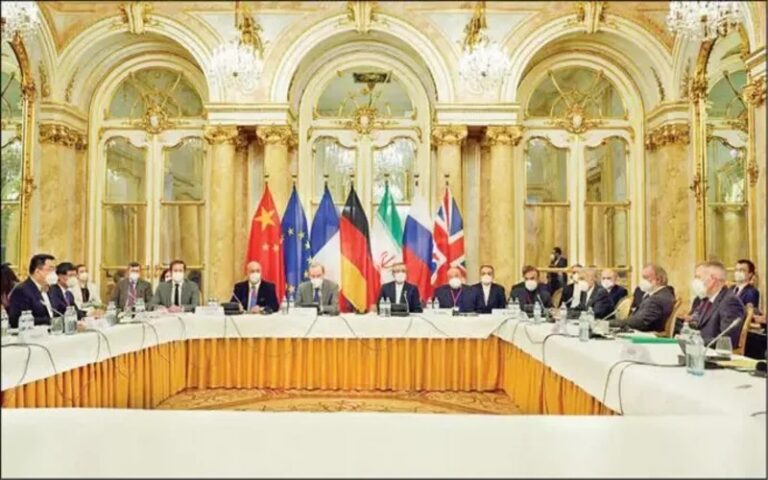
On July 14, 2015, Iran’s regime signed an agreement in Vienna with the United Kingdom, Germany, France, the United States, Russia, and China—known as the JCPOA. The deal lifted United Nations, U.S., and European Union sanctions on Iran in exchange for limitations on its nuclear program.

The United Nations Security Council adopted the agreement in a resolution in July 2015.

What is the snapback mechanism or “automatic reimposition of sanctions”?

The JCPOA includes a provision known as the snapback mechanism, under which UN sanctions on Iran can be reimposed without requiring a new vote in the Security Council.

Under the terms of this mechanism, if during the ten-year implementation period of the JCPOA the five member countries cannot reach consensus on Iran’s “serious non-compliance,” any one of them can activate the mechanism within the 15-member UN Security Council.

Once triggered and the review process begins, the Security Council must vote within 30 days on whether to continue lifting sanctions on Iran.

To adopt a resolution to maintain sanctions relief, nine affirmative votes are required, and none of the five permanent members—United States, Russia, China, the United Kingdom, and France—can exercise a veto.

If the resolution is not adopted, all previous UN sanctions on Iran automatically return, unless the Security Council takes another course of action.

What is the likelihood of the snapback mechanism being triggered?

Despite the U.S. withdrawal from the JCPOA, arguing that the United States was still listed as a party to the agreement in the 2015 UN resolution.

However, all the remaining parties to the agreement—Iran, Germany, France, the United Kingdom, Russia, and China—told the Security Council that they did not recognize the U.S. move.

Almost all of the then-non-permanent members of the Security Council also opposed it, and the snapback mechanism was not officially triggered at that time.

Currently, the United Kingdom, France, and Germany are seriously considering triggering the snapback mechanism.

What is happening now?

With the expiration of the UN Security Council resolution on October 18, 2025, the window of opportunity to activate the snapback mechanism will close.

Donald Trump has instructed the U.S. ambassador to the United Nations to work with allied countries to reimpose sanctions on Iran.

The United Kingdom, France, and Germany have informed the Security Council that they are prepared to pursue the activation of the snapback mechanism.

These three countries had previously warned Iran’s regime that if no new agreement was reached by June 30, they would trigger the snapback mechanism.

London’s warning to Tehran regarding the snapback mechanism

On July 7, British Foreign Secretary David Lammy warned that if Iran’s regime does not back down from its nuclear ambitions, the UK, along with France and Germany, may initiate the return of United Nations sanctions against Tehran by activating the snapback mechanism.

The reinstatement of UN sanctions would not only target Iran’s oil exports again but also subject trade and financial interactions with any country doing business with Iran to potential penalties.

What UN sanctions would be reinstated?

If the snapback mechanism is triggered, the sanctions previously imposed by six UN Security Council resolutions between 2006 and 2010 would be reinstated. These sanctions include:

• Arms embargo

  •  Ban on uranium enrichment and reprocessing
  •  Ban on launching and engaging in activities related to ballistic missiles capable of carrying nuclear warheads, along with bans on transferring technology and providing technical assistance in this field
  •  Asset freezes and travel bans for a number of Iranian individuals and entities•
  • Authorization for UN member states to inspect cargo shipments by Iran Air and the Iranian shipping lines to prevent the transfer of prohibited goods.

Seventy-Seventh Week of the “No to Executions Tuesdays” Campaign In 48 Prisons Across Iran

Today, Tuesday, July 15, in the seventy-seventh week of the “No to Executions Tuesdays” campaign, Yazd Prison also joined the ranks of protesting prisons.

This campaign, which has become a symbol of resistance against the increasing and systematic executions carried out by Iran’s regime, continues through hunger strikes and protests by political and ideological prisoners.

In its weekly statement, the campaign announced that Branch 1 of the “Ahvaz Revolutionary Court” — referred to here as a “sham court” — has issued two death sentences each for three political prisoners: Farshad Etemadifar, Masoud Jamei, and Alireza Mardasi. In addition, three Arab prisoners from Ahvaz — Ali Mojadam, Moein Khenafri, and Mohammadreza Moghaddam — have been transferred to solitary confinement, raising the possibility that their executions may be imminent. The complete lack of information about their status has heightened concerns and increased the likelihood of their “enforced disappearance.”

Meanwhile, Mai Sato, the UN Special Rapporteur on human rights in Iran, has issued a warning about the condition of these prisoners and called for an end to the current wave of repression.

At the same time, the retrial requests of Mehdi Hasani and Behrouz Ehsani, two political prisoners sentenced to death, have been rejected for the fourth time. This comes despite the fact that their cases involve serious legal ambiguities, and authorities had previously denied their lawyer access to case details under the pretext that the files were “classified” — a practice that is illegal.

Iranian Prisoners Sound Alarm as Regime Escalates Executions

In recent weeks, Iran’s regime has once again accelerated its execution machinery. Between June 22 and July 15 alone, at least 44 people were executed, including two who were publicly hanged in the cities of Miandoab and Bukan. These executions are not only clear violations of human rights, but also part of the regime’s broader policy of intimidation and social control amid internal crises.

Members and families involved in the “No to Executions Tuesdays” campaign have stood firm against security pressures and are demanding the immediate halt of executions, fair judicial proceedings, and widespread public solidarity to break the regime’s cycle of death.

The “No to Executions Tuesdays” campaign has become a symbol of resistance from within Iran’s prisons and the outcry of survivors against a slow death. Public support for this campaign can amplify the voices of prisoners and justice-seekers and expose the true face of repression in Iran to the world.