

At Least 40 Killed in Explosion of Extremely Dangerous Cargo at Rajaei Port in Southern IranThis port, one of Iran’s most important economic terminals, has been burning since noon on Saturday, and the extent of the damage caused by three explosions and more than 36 hours of burning cannot be fully assessed until the fire is completely extinguished. It is estimated that each day of the port’s closure inflicts approximately 25 million dollars in losses on Iran’s economy. Data from the Ports and Maritime Organization of the Iranian regime shows that 57 percent of the country’s nominal commercial port capacity is concentrated at Rajaei Port. This port has a capacity of 160 million tons. The second largest, Khomeini Port, has a nominal capacity of only 60 million tons. The next one, Anzali Port, with a capacity of 13.6 million tons, is located in the north of the country and, due to its geographic position, plays a limited role in international trade. Bushehr Port also has only a nominal capacity of 13.4 million tons. In the container sector, out of the 11 active ports in Iran, 77 percent of the country’s nominal container handling capacity—equivalent to 6,650,000 TEU (Twenty-foot Equivalent Unit, a standard measure where one 20-foot container equals one TEU)—is concentrated at Rajaei Port. The next port in this sector is Bushehr, with a registered capacity of only 550,000 TEU. From March 21, 2024, to March 21, 2025, out of a total of 158,455,624 tons of goods transported through 21 ports across Iran, about 51 percent—equal to 81,020,482 tons—were either loaded or unloaded through Rajaei Port. Approximately 52 percent of all oil products imported or exported through Iran’s 21 ports passed through Rajaei Port. From March 21, 2024, to March 21, 2025, out of a total of 52,542,000 tons of oil products, 27,149,000 tons were either loaded or unloaded at this port.
Explosion at Iran’s Largest Commercial Port and Its Impact on the Economy
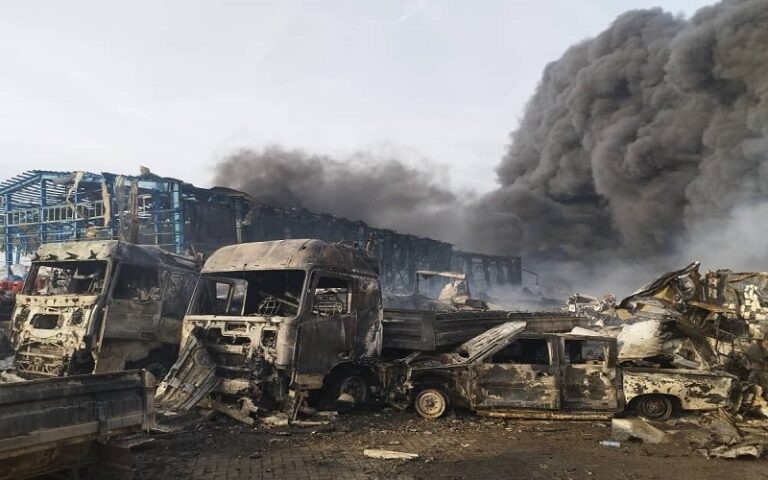
With the explosion on April 26, 2025, at Rajaei Port and the subsequent halt of operations there, approximately 57 percent of Iran’s nominal cargo handling capacity has been taken out of service. This port does not play a major role in the trade of essential goods but holds a special position in the oil products sector.
The Marine Affairs Department of the Ports and Maritime Organization of Hormozgan Province, located in southern Iran, announced after the explosion that maritime and port operations at Rajaei Wharf in Bandar Abbas have been temporarily suspended.
Despite claims by the Iranian regime’s Minister of Roads and Urban Development and some regime-aligned media outlets about the resumption of operations at Rajaei Port, the port is still burning.
Continued Protests of Iranian Retirees and Workers on the Eve of International Workers’ Day
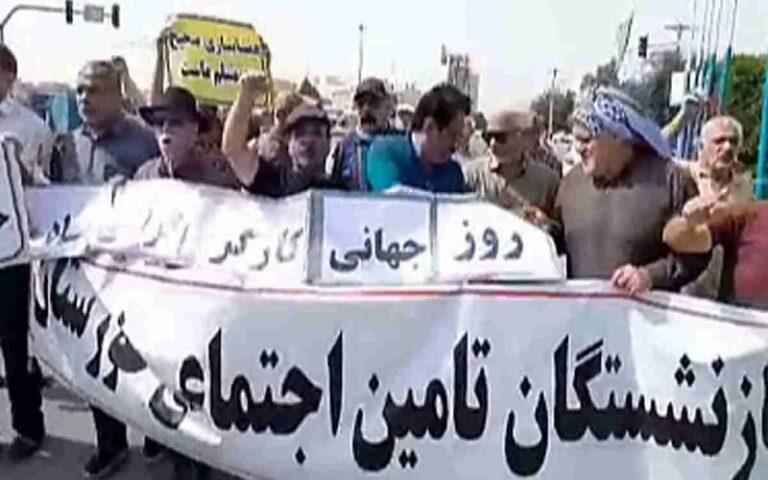
On Sunday, April 27, 2025, various cities across Iran witnessed protests, gatherings, and protest marches by different segments of society, from retirees to workers and truck drivers.
Protest Gathering of Steel and Mining Retirees in Isfahan, Kerman, and Tehran
Retirees from the steel and mining industries in the cities of Isfahan, Kerman, and Tehran held protest gatherings to object to poor living conditions, delayed paychecks, and the unfulfilled promises of officials. Protesters chanted slogans such as “Astronomical thefts, public misery” and “Only in the streets will we win our rights,” demanding an end to discrimination and the securing of their basic rights.March of Social Security Retirees in Kermanshah and Khuzestan
In Kermanshah, retirees covered by the Social Security Organization gathered in front of relevant offices to protest the policies of the Supreme Labor Council and the worsening economic situation. Slogans such as “Supreme Labor Council, supporter of capitalists” and “Imprisoned teachers must be freed” were among their demands. In Khuzestan province, retirees in the cities of Ahvaz, Shush, and Haft-Tappeh held major gatherings in front of the governorates. They protested against poverty, corruption, and repression with slogans like “From Khuzestan to Sistan, shame on these managers” and “Under the burden of inflation, the people’s backs are broken.” They also criticized the lack of adequate healthcare, medical services, and educational facilities.Truck Drivers and People of Behabad in Yazd Protest Against Transfer of Chah-Gaz Mine
In Behabad County in Yazd province, central Iran, local people and truck drivers protested against the twenty-year transfer of the Chah-Gaz mine to the Choghart company in Bafq and Chadormalu company. Protesters viewed this move as a threat to local livelihoods and employment and demanded the cancellation of the auction and attention to regional interests. They emphasized that mineral resources must serve local development and employment for native residents.Strike of Titanium Mine Workers in Kahnuj
Local workers at the Kahnuj Titanium Mine in Kerman province also staged a protest in front of the company against the dismissal of more than 70 local employees without clear reasons. This crisis began in mid-March with the dismissal of ten workers and intensified in recent days with another 60 workers losing their jobs under the pretext of contract expiration. The workers are demanding reinstatement, an end to anti-worker policies, and local residents’ access to the wealth of the region’s mineral resources. These protests reflect the depth of public dissatisfaction with the economic, social, and political conditions. Protesters demanded justice, welfare, and an end to discrimination and corruption with slogans such as “We won’t live under oppression” and “Shame on these managers.”At Least 40 Killed in Explosion of Extremely Dangerous Cargo at Rajaei Port in Southern Iran
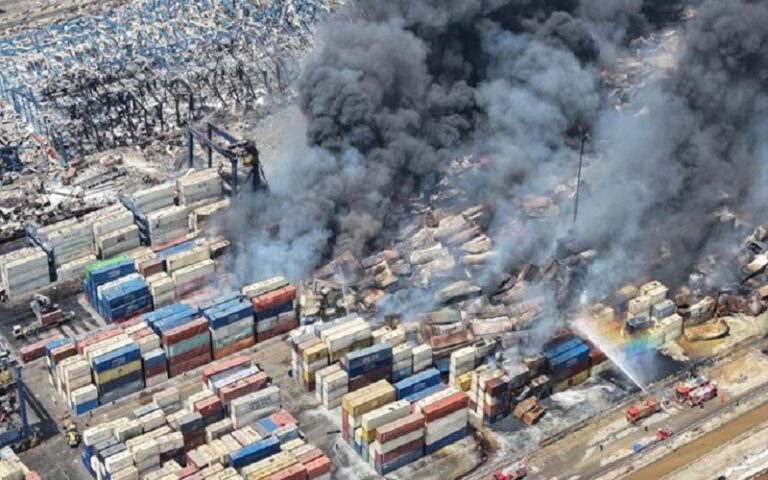
On the evening of Saturday, April 26, 2025, a massive explosion occurred at Rajaei Wharf, one of the strategic docks of Bandar Abbas, causing extensive damage. Numerous videos circulated showing the state of the dock after the explosion, including damage to vehicles, infrastructure, and the spread of fire. However, according to provincial and security officials, the cause of the explosion has not yet been identified.
The Director General of Crisis Management for Hormozgan Province announced a few hours after the explosion, as smoke covered the skies of Bandar Abbas, that all schools, universities, and government offices in Bandar Abbas County would be closed on Sunday, April 27.
Mohammad Ashouri, the governor of Hormozgan Province, stated on Sunday evening that the death toll from the incident at Shahid Rajaei Port had reached forty people, with nine hundred others injured or wounded.
The full shutdown in Bandar Abbas was announced following a warning from the Iranian regime’s Ministry of Health, stating that the potential release of pollutants “such as ammonia, sulfur dioxide, and nitrogen dioxide into the city’s atmosphere” had placed air quality in an emergency pollution condition.
Saeed Jafari, CEO of Sina Marine and Port Services Development Company, told the regime-affiliated ILNA news agency: “The strength and blast wave, the destruction radius, and other characteristics of yesterday’s explosion indicate that the cargo involved was extremely dangerous and, according to the FAL Convention and port regulations, should have been officially and in writing declared as dangerous goods by the shipping company to the port authorities. However, this cargo was declared, packaged, and delivered as ordinary and non-hazardous cargo.”
Earlier, The New York Times reported, citing an individual connected to the Iranian regime’s Islamic Revolutionary Guard Corps (IRGC) who wished to remain anonymous due to the sensitivity of the security matter, that the explosive material at Rajaei Shahr Port was “sodium perchlorate, one of the main components of solid rocket fuel.”
Rajaei Wharf is one of the busiest docks at the port. The fire has spread extensively and has yet to be brought under control.
Mohsen Heydarian, commander of Abdolkarimi Air Base in Bandar Abbas, announced the dispatch of a fire station, equipment, and medical staff from the Ninth Tactical Fighter Base to assist victims of the Rajaei Port incident. Some media outlets reported around 1:00 AM on April 27 that the fire had been partially brought under control.
The firefighting facilities in Bandar Abbas are reportedly inadequate. There was not even a bulldozer available to build embankments around the fire site.
According to the state-run Mehr News Agency, Mojtaba Khaledi, spokesperson for the Iranian regime’s Red Crescent Society, announced that the number of those injured in the explosion at Rajaei Port has reached 1,242 people.
Eyewitness reports indicate that the condition of the wounded is tragic. Although details are scarce, many of the injured are reportedly in critical condition, with several cases of amputations. Many people have sustained eye injuries due to metal debris striking them like shrapnel. Car windows shattered over people’s faces and bodies, and windows of homes and buildings both near and far from the dock were blown out. Victims were not limited to those present at the wharf; people farther away from the site were also injured by the blast.
Several noble doctors and nurses in the city are posting the names of the injured and wounded admitted to their hospitals on Instagram and their personal accounts; meaning even this simple task of providing information cannot be handled by the regime, and the burden has fallen on the people.
The regime’s Tasnim news agency, quoting an employee from one of the offices at Rajaei Port, reported: “Some employees are still trapped under the collapsed roofs, and we are trying to rescue them.”
Internet speed in Bandar Abbas has dropped drastically, and within one or two hours after the explosion, the Intelligence Organization of the IRGC took full control of the Rajaei Port area, port facilities, and adjacent customs buildings.
After being deployed, the security forces expelled the port and customs protection guards from the area and are not allowing anyone to enter. Some people had parked their cars in the parking lots of Rajaei Port and the customs area, but the security forces are not allowing them to retrieve their vehicles.
Rajaei Wharf is located in Hormozgan Province, near the city of Bandar Abbas. Since the 1980s, it has been Iran’s main container and commercial port, bearing a significant share of the country’s foreign trade.
At least 4,000 people have been directly employed in an area covering 2,400 square kilometers.
Rajaei Port alone handles 58 percent of non-oil operations, 43 percent of oil operations, and 85 percent of container operations of Iran’s ports. It has access to international open waters and is connected to the country’s road and rail transportation networks.
More than 40 berths for docking ocean-going vessels have been operational at Rajaei Port, and despite the severe U.S. sanctions on Iran’s maritime trade following the withdrawal from the JCPOA, Rajaei Port has continued to play a vital role in Iran’s economy.
Iranian Political Prisoner Jafar Kashani Tortured for Chanting Against Khamenei

Political prisoner Hamid Haj Jafar Kashani was tortured for chanting against Khamenei. This former political prisoner was arrested for the third time on Sunday, April 27, 2025, on North Kargar Street in Tehran and is currently under beating and torture.
According to a video that circulated widely on social media on Sunday, Hamid Kashani, a former political prisoner, was arrested on North Kargar Street in Tehran while holding a placard reading “Death to the principle of the Supreme Leader” and chanting “Death to Khamenei.” He had also written on his placard: “This homeland will not become a true homeland until the mullahs are buried.”
Hamid Kashani, born in 1982 in Tehran, was arrested in February 2020 on charges of “propaganda against the regime” and “membership in the People’s Mojahedin Organization of Iran (PMOI/MEK)” and sentenced to three years and six months in prison. He served his sentence in Rasht Prison, Evin Prison, and the Greater Tehran Penitentiary.
After his release, Kashani migrated to Turkey, but he was deported and once again imprisoned in Evin Prison for one year, where he was subjected to torture and pressure. During his previous imprisonments, he was repeatedly pressured to make forced confessions and express remorse on the Iranian regime’s television.
Amnesty International Warns of Imminent Executions of Behrouz Ehsani and Mehdi Hassani After Unfair Trials in IranIn January 2021, Hamid Haj Jafar Kashani was sentenced by Branch 26 of the Tehran Revolutionary Court, presided over by Judge Iman Afshari, to three years and six months of prison for “assembly and collusion” and eight months of prison for “propaganda against the regime.” As supplementary punishment, he was also sentenced to two years of deprivation from membership in political parties, groups, and factions, and two months of compulsory daily work, four hours per day, at the Cultural and Educational Deputy of the Martyrs and Veterans Affairs Foundation, under the supervision of the foundation’s security department. Kashani had previously been arrested and convicted for his political activities. In his most recent case before this, he was arrested by security forces in Qaemshahr in 2018 and was sentenced by Branch 2 of the Sari Revolutionary Court to three years of prison on charges of “insulting the leadership” and “propaganda against the regime.” Hamid Kashani is a futsal referee. After his release from prison in 2017, based on a decision by the security department of Iran’s Football Federation, he was banned from continuing his refereeing career in the premier league futsal competitions. On July 20, 2022, Kashani was transferred from Evin Prison to Gohardasht Prison in Karaj. He suffers from kidney problems and was denied proper medical care and medical furlough throughout his imprisonment.
28 killed and more than 750 injured in Rajaei Port explosion in Iran
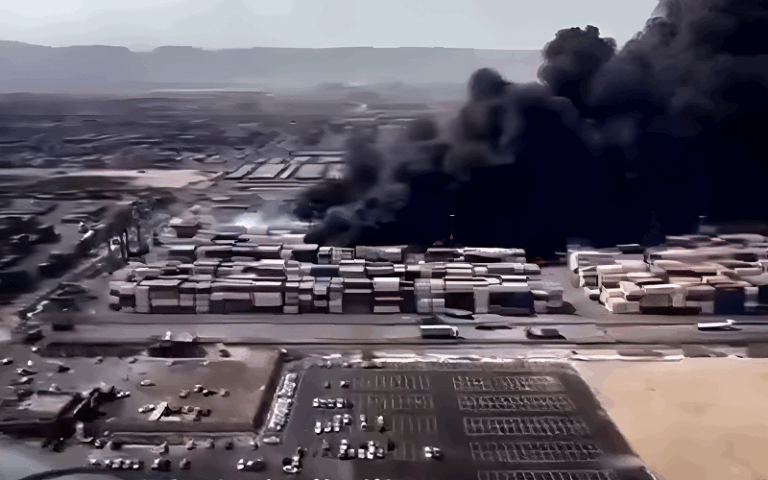
On Saturday, April 26, around 12:30 PM local time, a massive explosion rocked Rajaei Port, southern Iran.
Pirhossein Kolivand, head of the Iranian regime’s Red Crescent Society, announced that the death toll from the Rajaei Port explosion had risen to twenty-eight.
He said that twenty people are currently hospitalized in intensive care units. Kolivand estimated the number of injured to be one thousand.
Explosion at Rajaee Port in Bandar Abbas Leaves Over 700 Injured and 5 DeathMohammadreza Rezaei Kochi, head of the Civil Commission of Iranian regime’s Majlis (parliament), told state-run ILNA news agency: “Accurate investigations have not been completed yet, but it is estimated that more than ten thousand containers have been destroyed.” He pointed out the lack of warehouse standards at Rajaei Port, stating that regulations regarding the placement of containers had not been observed, the spacing between them did not meet standards, and proper separation based on cargo type had not been implemented. Rezaei Kochi added: “We had anticipated that firefighting operations would conclude in about two more hours (around 3 PM) on Sunday, but several containers caught fire due to high heat, which spread the blaze to other containers.” According to him, a new part of the port is now engulfed in flames. Meanwhile, Mrs. Maryam Rajavi, the President-elect of the National Council of Resistance of Iran (NCRI), expressed her condolences to the families of the victims of this incident and held the Iranian regime fully responsible for this human tragedy.
With this explosion and the subsequent halt of port operations, fifty-seven percent of the country’s nominal unloading and loading capacity has effectively become unavailable. This port does not play a significant role in the trade of essential goods, but it holds a special position in the handling of petroleum products. The Associated Press, quoting the maritime security company Ambrey, reported that the explosions at Rajaei Port in Bandar Abbas were caused by the mishandling of a shipment of solid fuel used in ballistic missiles. According to Ambrey, the port had received a shipment of missile fuel, specifically sodium perchlorate, in March. This fuel was part of a cargo that, according to a Financial Times report in January, had been sent from China to Iran by two ships. According to the report, the mentioned fuel was intended for the replenishment of the Iranian regime’s missile stockpiles. Ambrey, citing its sources, stated that the fire broke out following the improper handling of this solid fuel shipment. Ship tracking data analyzed by the Associated Press indicated that one of the vessels suspected of carrying these chemicals was present near the mentioned port in March.My heartfelt condolences and sympathy go out to the grieving people of Bandar Abbas following today’s devastating explosion.
— Maryam Rajavi (@Maryam_Rajavi) April 26, 2025
There is no doubt that the clerical regime bears full responsibility for this tragedy. Their reckless stockpiling of chemical materials, weapons, and…
The life of political prisoner Kamran Rezaeifar is in danger.
The National Council of Resistance of Iran (NCRI) issued a statement on April 25, 2025, regarding political prisoner Kamran Rezaeifar. The statement reads:
“The henchmen of Khamenei are preventing the transfer of political prisoner Kamran Rezaei-Far, who is suffering from malignant stomach cancer to a hospital and blocking his hospitalization. Hedayat Farzadi, the criminal head of Evin Prison, is obstructing Kamran’s access to urgent and necessary medical care. He has been grappling with death for months and is enduring debilitating pain.”
Kamran Rezaeifar had been diagnosed with a stomach illness since November 2024. However, due to the authorities’ refusal to transfer him to a hospital, his condition worsened into malignant cancer. In a delayed surgery, part of his stomach and pancreas were removed. Without undergoing proper recovery and necessary post-operative medical care, he was returned to prison immediately after the operation. Subsequently, he developed a pulmonary embolism while in prison, and now he has blood clots in his lungs.
According to specialists, Kamran must undergo chemotherapy, but Iran’s Ministry of Intelligence, the prosecutor’s office, and the head of Evin Prison are preventing his release or transfer to a hospital.
Kamran Rezaeifar, sixty years old, was arrested in September 2023 and sentenced to five years in prison on charges of connection with the People’s Mojahedin Organization of Iran (PMOI/MEK).
The NCRI called upon the United Nations High Commissioner for Human Rights, the UN Special Rapporteur, and all international human rights organizations “to take immediate action for the release of political prisoners, especially sick prisoners. Torturing prisoners to death by depriving them of medical care—a well-documented practice of the clerical regime—is a clear example of a crime against humanity.”
The pressure against political prisoners comes at a time when Iran’s regime has executed twenty-two people between April 21 and April 23. Out of fear of an explosion of public anger, the regime has unprecedentedly accelerated the pace of executions.
These executions are taking place while Western governments are engaged in negotiations with Iran’s regime. The ruling mullahs are attempting to suppress potential uprisings and protests by resorting to executions and acts of brutality.
The dire economic conditions, along with the repression, torture, and execution of dissidents by the regime, have pushed Iran to the brink of a nationwide uprising, and Iran’s regime is desperately trying to contain the situation.
Explosion at Rajaee Port in Bandar Abbas Leaves Over 700 Injured and 5 Death
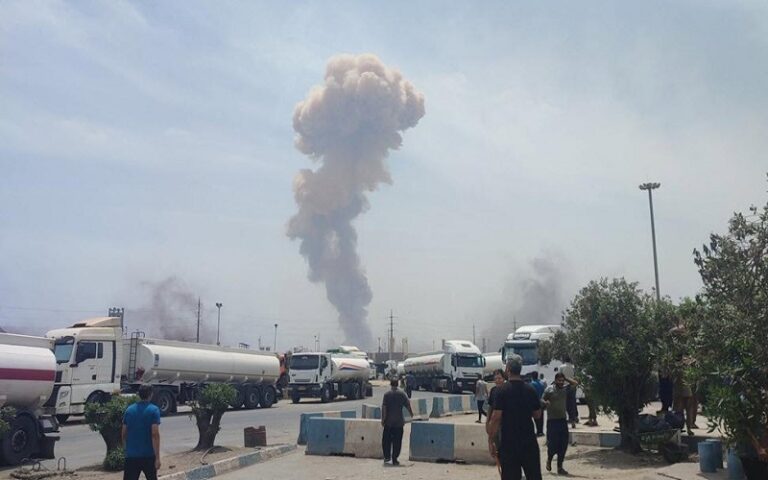
On Saturday, April 25, a powerful explosion at the facilities of Rajaee Port in Bandar Abbas caused heavy tremors across the city and surrounding areas. According to state-controlled media, the intensity of the explosion was such that the sound was heard for several kilometers and the ground shook.
According to the regime’s Director General of Crisis Management for Hormozgan Province, the number of those injured in the explosion at Rajaee Port in Bandar Abbas has surpassed seven hundred, with the possibility of the casualty count increasing.
It is reported that so far, five people have been killed in this incident.
Tasnim News Agency, affiliated with the Islamic Revolutionary Guard Corps (IRGC), reported quoting Mehrdad Hassanzadeh, the Director General of Crisis Management of Hormozgan Province, that all the injured have been transferred to hospitals across Bandar Abbas.
State television reported that multiple other explosions were also heard from the port, and thick smoke has engulfed the area’s sky. Local witnesses reported shattered windows in buildings within several kilometers and feeling the ground shaking.
Hossein Zafari, spokesperson for the regime’s crisis management organization, confirmed that the explosion was powerful enough for the ground tremors to be felt within a fifty-kilometer radius.
According to government reports, the site of the incident was part of the Sina container yard, affiliated with Iran’s Ports and Maritime Organization. Reports suggest that the explosion was caused by the storage of hazardous goods and chemicals, though the exact cause is still under investigation. Tasnim News Agency also raised the possibility that the explosion may have involved a fuel tank or sensitive petroleum products.
Less than a month prior to the explosion at Rajaee Port, reports had surfaced about the arrival of a vessel named “Jeyran” at the port; this ship was accused of transporting components related to the Iranian regime’s missile program from China to Iran.
On March 31, Newsweek, quoting the Maritime Executive website, reported that the cargo ship JAIRAN, which has been sanctioned by the United States, docked at Bandar Abbas after departing from China and was suspected of carrying chemical materials used in the production of solid-fuel missiles.
Paraguay designates IRGC as a terrorist organization
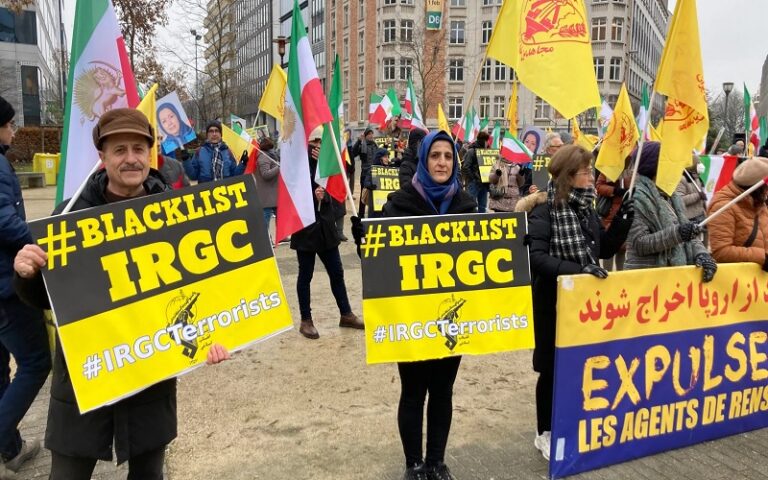
On April 25, 2025, Santiago Peña, the President of Paraguay, announced in a post on X (formerly Twitter) that his country has designated Iran’s Islamic Revolutionary Guard Corps (IRGC) as a terrorist organization. He emphasized that Paraguay has expanded the scope of its terrorist list to include all branches and sectors of Hezbollah and Hamas. In addition, the IRGC was added due to its systematic violations of peace, human rights, and international security.
This decision by Paraguay was welcomed by the U.S. Department of State. In a statement issued on this occasion, it was declared that Iran’s regime is the world’s largest state sponsor of terrorism, and through the IRGC Quds Force and its proxy groups like Hezbollah and Hamas, it has financed and directed numerous terrorist attacks and activities globally.
Declaración de la Vocera del @StateDept Tammy Bruce (@statedeptspox) congratulando a Paraguay por Restringir a Irán y a sus Intermediarios https://t.co/Y6WRgYiLWO
— Embajada de EE.UU. (@laembajada) April 24, 2025
The IRGC and Hezbollah’s presence in Latin America
The IRGC and Hezbollah have had a long-standing presence in Latin America, especially in the Tri-Border Area between Paraguay, Argentina, and Brazil. This region, due to weak legal oversight and the presence of Arab diaspora communities, has become a favorable ground for illicit activities. Hezbollah has been present in this region since the 1980s and has been involved in drug trafficking, money laundering, and financing terrorist operations. For example, in 2002, reports emerged about open Hezbollah activities in Ciudad del Este, Paraguay. In recent years, U.S. and Paraguayan authorities have succeeded in identifying and dismantling cocaine trafficking networks linked to Hezbollah in this region.Disarming Hezbollah: A Crippling Blow to Iranian RegimeIn addition, the IRGC has been active in Latin America through its Quds Force. For instance, in 2022, a Boeing 747 cargo plane crewed by Iranians and Venezuelans landed in Ciudad del Este, Paraguay. This flight was seen as part of an air bridge between Iran and Venezuela, used to transport senior regime officials, intelligence agents, and weapons under the cover of passenger or cargo flights.
Consequences of Paraguay’s decision
Paraguay’s designation of the IRGC as a terrorist organization reflects growing international concerns over Iran’s activities and its proxy groups in Latin America. This move could strengthen regional cooperation in countering terrorism and organized crime and exert further pressure on Iran’s regime to stop supporting terrorist groups.Disarming Hezbollah: A Crippling Blow to Iranian Regime
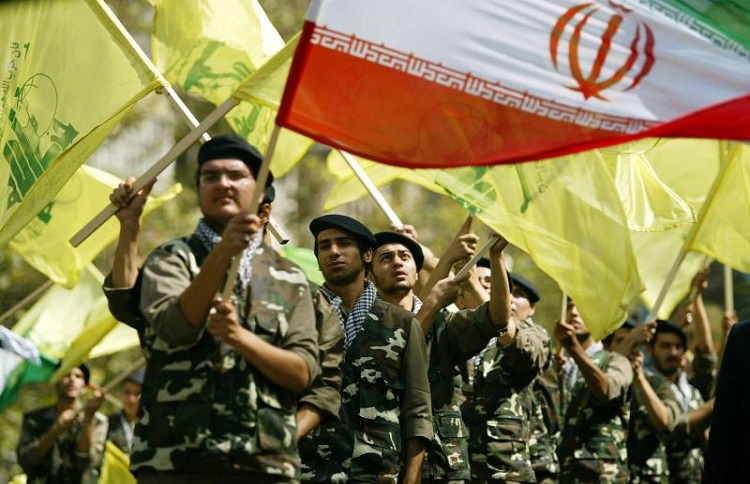
The official summoning and reprimand of Iran’s regime ambassador in Lebanon by the Lebanese Ministry of Foreign Affairs—over his comments on Hezbollah’s disarmament—marks a major shift in Lebanon’s political landscape and a potentially decisive transformation in the regional balance of power. Hezbollah has long served as one of the most important proxy arms of the regime, and implementing a plan to disarm it would be a strategic blow to Tehran.
In recent weeks, multiple reports have surfaced about mounting internal and external pressures to disarm Hezbollah. From the explicit stance of Joseph Aoun, the President of Lebanon, to the repeated insistence of the United States on the necessity of arms being exclusively in the hands of the official Lebanese government, all signs indicate the beginning of a seemingly irreversible process.
Syria, Hezbollah, and Iran’s Regime Obstructed Lebanese Reconciliation for YearsHezbollah is not merely a paramilitary group but a central pillar of Iran’s regime’s regional policy. From Syria to Iraq and Yemen, Tehran’s regional influence has largely relied on proxies like Hezbollah. Within this framework, Lebanon has consistently served as a key strategic outpost for the regime—both in confronting Israel and in exerting control over Lebanon’s internal political affairs. At a time when Tehran is entangled in deep internal crises, international sanctions, and drawn-out negotiations with the U.S. over its nuclear program, the elimination of one of its most crucial foreign levers would amount to structural damage to the regime. The recent remarks by the regime’s ambassador in Beirut—who initially called Hezbollah’s disarmament a “conspiracy” in a tweet, only to later walk it back by labeling it a “domestic Lebanese matter”—are themselves evidence of growing pressure on the regime to retreat from its interventionist stance in Lebanon. The repeated summons of the regime’s ambassador by Lebanon’s foreign ministry is a clear sign of the country’s political space opening up to challenge Hezbollah’s role and influence, and by extension, that of the Iranian regime. These developments come as Hezbollah has lost a significant portion of its legitimacy in Lebanon in recent years—particularly following the Beirut port explosion, the deepening economic crisis, and its failure to provide solutions for the public’s hardship. A large segment of Lebanese society has now concluded that disarming Hezbollah and restoring military authority to the state are prerequisites for any form of national stability and progress. In the current balance of power, disarming Hezbollah appears to be an inevitable and logical outcome. This shift is not happening through war, but rather through Hezbollah’s own political and social erosion, and the transformation of Lebanon’s internal dynamics. Just as Syria is no longer the regime’s former maneuvering ground, Lebanon too is gradually breaking free from Tehran’s proxy control. For a regime that sits at the negotiation table while carrying out mass executions in the streets of Tehran out of fear of popular uprising, Hezbollah’s disarmament is just one more sign of its decline—not only across the region but within its own power structure.
Amnesty International Warns of Imminent Executions of Behrouz Ehsani and Mehdi Hassani After Unfair Trials in Iran
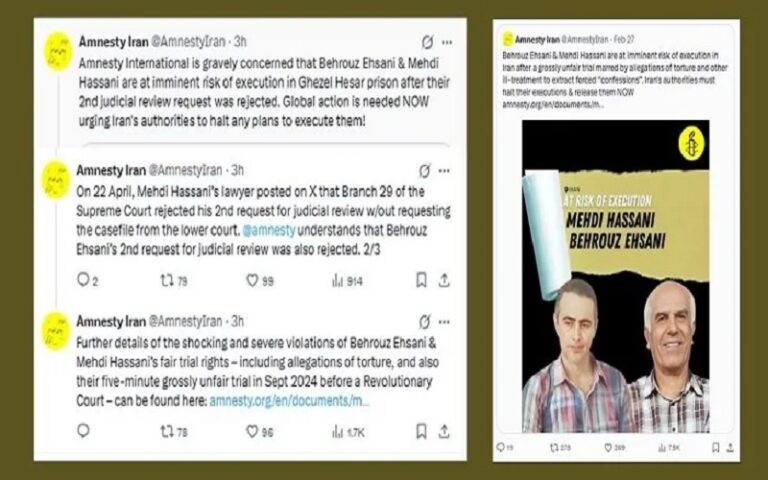
Amnesty International is deeply concerned that Behrouz Ehsani and Mehdi Hassani are at risk of execution in Ghezel Hesar Prison following the rejection of their second appeal.
Amnesty International stated that it is deeply concerned that Behrouz Ehsani and Mehdi Hassani face execution in Ghezel Hesar Prison following the rejection of their second appeal.
Amnesty International emphasized that global action is now needed and called on Iran’s regime to halt any plans to carry out the executions. Behrouz Ehsani and Mehdi Hassani are at imminent risk of execution after an extremely unfair trial tainted by torture and other ill-treatment used to extract “forced confessions.” Iranian authorities must stop their execution and release them immediately.Amnesty International is gravely concerned that Behrouz Ehsani & Mehdi Hassani are at imminent risk of execution in Ghezel Hesar prison after their 2nd judicial review request was rejected. Global action is needed NOW urging Iran's authorities to halt any plans to execute them! https://t.co/pdssTZpeJT
— Amnesty Iran (@AmnestyIran) April 24, 2025
Iranian Regime’s Contradictory Justifications for Executing Political OpponentsAccording to Amnesty International, Mehdi Hassani said that the Supreme Court of Iran’s regime rejected his lawyer’s request to appeal the death sentence issued by the lower court. Amnesty International also reported that the second judicial appeal filed by Behrouz Ehsani’s lawyer has likewise been rejected. Amnesty International released further details of the shocking and severe violations of fair trial rights in the cases of Behrouz Ehsani and Mehdi Hassani, including allegations of torture and their extremely unfair five-minute trial held in September 2024 in the regime’s Revolutionary Court.
