

Amnesty International documented cases of arbitrary arrests, torture, amputations, flogging, unfair trials, and widespread use of the death penalty, even against juvenile offenders. Additionally, regime officials have refused to pursue legal accountability for crimes such as the 1988 massacre of political prisoners, and the perpetrators have enjoyed impunity. According to the report: “Systemic impunity prevailed for past and ongoing crimes against humanity relating to prison massacres in 1988 and other crimes under international law.” The report criticizes the systemic impunity enjoyed by Iranian regime officials regarding past and ongoing crimes and notes that efforts to uncover the truth about cases such as the downing of the Ukrainian plane or the 1988 massacre have yet to yield results. In the area of civil liberties, Iran’s regime has severely restricted public space through heavy media censorship, blocking of social platforms, and bans on political and union activities. Labor activists, teachers, and workers faced harassment for peaceful protests. The so-called “Protection of Cyberspace” plan and increased security measures following the death of former regime president Ebrahim Raisi were also cited as signs of intensified repression. Amnesty International added: “Authorities censored media, jammed satellite television channels, and continued to block or filter mobile apps and social media platforms.” In detention facilities, reports show individuals had forcibly disappeared in secret detention centers and tortured to extract confessions. These confessions continued to be broadcast on state media, and political detainees were denied medical care. Psychiatric facilities were also used to suppress dissent. The report states: “Several individuals arbitrarily detained for political reasons in psychiatric facilities were subjected to torture and other ill-treatment, including through enforced administration of pharmaceuticals.” In the area of women’s and girls’ rights, structural discrimination continued in areas such as marriage, inheritance, and employment. Women who defied compulsory hijab laws faced punishments including imprisonment and flogging. Enforcement of hijab was intensified through facial recognition technology and digital surveillance, and women faced violence in public spaces. Ethnic and religious minorities continued to face structural discrimination, arbitrary arrests, and violence. Groups such as Kurds, Baluch, and Arabs were denied access to education, employment, and public services. Security forces opened fire on cross-border porters and fuel carriers. Bahá’ís, Christians, and other religious minorities faced property confiscation, arrests, and the destruction of religious sites. In the area of executions and impunity, hundreds of executions were carried out for offenses unrelated to the “most serious crimes,” including drug-related charges and political dissent. Minorities, especially Baluch and Afghan individuals, faced the highest risk of execution. Even juveniles were executed for crimes committed while underage, in violation of international law. Finally, Amnesty International’s report highlights the Iranian regime’s failure and negligence in managing the environmental crisis. The drying of water resources, air and soil pollution, and disregard for marginalized communities such as those in Khuzestan and Sistan and Baluchestan provinces have contributed to the deaths of thousands and a widespread humanitarian crisis.Read more in our State of the World’s Human Rights report: https://t.co/5yFgUQu4jf
— Amnesty International (@amnesty) April 29, 2025
Amnesty International Annual Report Warns About Systematic Human Rights Violations in Iran
Amnesty International released its 2024 annual report on April 29, detailing human rights violations in Iran.
In Amnesty International’s 2024 annual report on the human rights situation in Iran, widespread and systematic violations of fundamental rights in the country are addressed. The report emphasizes that Iran’s regime continued suppressing freedom of expression, association, and peaceful assembly over the past year and carried out hundreds of arbitrary executions. Victims of this repression included women, children, religious and ethnic minorities, migrants, and asylum seekers.
Over 2,000 Workers Killed in Iran in the Past Year
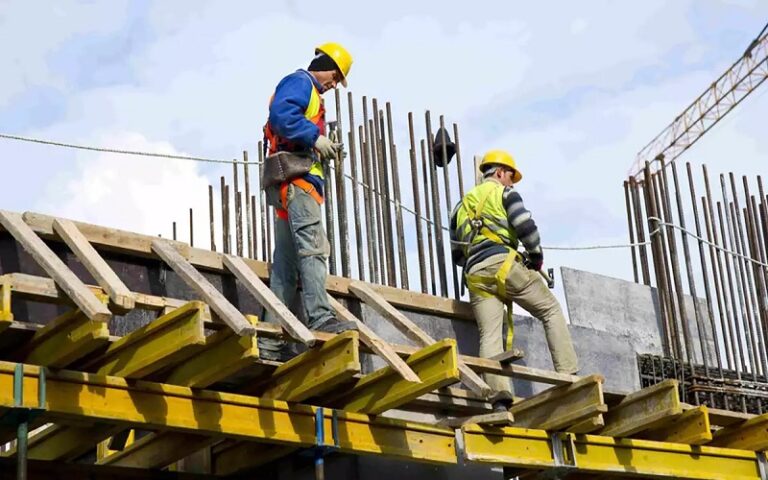
The human rights website HRANA reported on the occasion of “World Day for Safety and Health at Work,” that between May 2, 2024, and April 27, 2025, at least 2,079 workers in Iran lost their lives due to unsafe work environments or hazardous working conditions, and at least 16,273 others were injured.
Additionally, a total of 16,273 workplace injuries were reported by the media and compiled by the organization’s statistics department.
According to the report, 22.63% of the incidents were caused by falls from height, 14.23% by traffic accidents, 10.57% by fires, 10.37% by impacts from hard objects, 8.85% by poisoning, 7.62% by mining accidents, 6.42% by gas inhalation, 6.39% by factory-related accidents, and 6.19% by electrocution.
Further causes included construction accidents (2.46%), well-related incidents (2.30%), explosions (0.81%), petrochemical and refinery accidents (0.49%), unknown causes (0.23%), smoke inhalation (0.19%), agricultural accidents (0.13%), and drowning (0.13%).
70 Killed and Over 1,200 Injured in Rajaei Port Explosion
Around noon on Saturday, April 26, during the third round of talks between Tehran and Washington in Muscat, a massive explosion occurred at Rajaei Port in Bandar Abbas, shaking the ground within at least a 50-kilometer radius and shattering windows in nearby buildings.Massive Explosion at IRGC-Controlled Port in Bandar Abbas Raises Questions and CasualtiesFor nearly four hours following the explosion and the extensive fire that ensued, despite significant destruction, no reports of casualties were released; however, official figures later indicated hundreds of injuries. According to official statistics, at least 70 people were killed and more than 1,250 were injured in the explosion. The state-run ILNA news agency reported on April 28 that the primary victims of the explosion at Rajaei Port in Bandar Abbas were workers. Meanwhile, a source informed the state-run Etemad newspaper that as of Sunday noon, the Ministry of Health and all its affiliated organizations had been prohibited from releasing any statistics regarding the number of injuries, fatalities, or other casualties caused by the explosion of containers at the Bandar Abbas dock. According to assessments, Iran ranks 102nd globally in terms of workplace safety, and its worker death rate is higher than global averages.
U.S. Slaps New Sanctions on Tehran’s Missile Fuel Supply Network
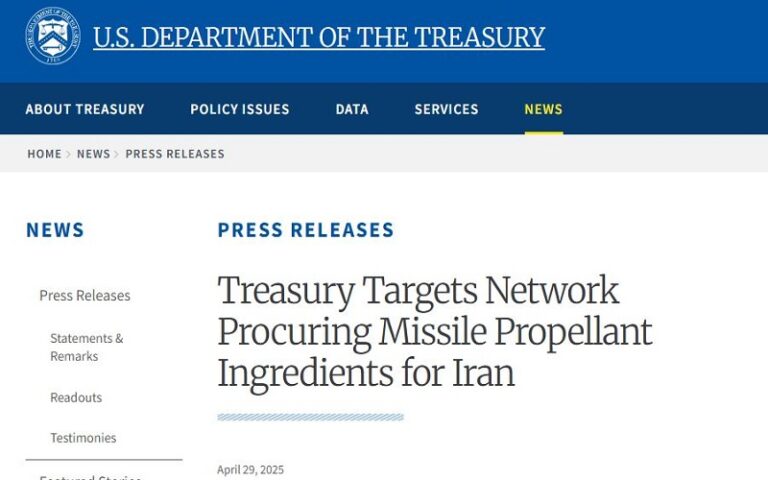
On Tuesday, April 29, the U.S. Department of the Treasury sanctioned six entities and six individuals in Iran and China for their involvement in a network that operates on behalf of the Islamic Revolutionary Guard Corps (IRGC) to procure materials used in ballistic missile fuel production.
This network has played a role in transferring sodium perchlorate and dioctyl sebacate from China to Iran.
According to reports, the explosion at Rajaei Port was caused by shipments of sodium perchlorate that had recently been transported from China to Iran and stored at the site.
Both sodium perchlorate and dioctyl sebacate are key components used in the production of solid fuel for rocket motors, which are utilized in ballistic missiles.
U.S. Treasury Secretary Consults Global Banks on Iranian Oil Sanctions“Iran’s aggressive development of missiles and other weapons capabilities imperils the safety of the United States and our partners,” said U.S. Secretary of the Treasury Scott Bessent. “It also destabilizes the Middle East, and violates the global agreements intended to prevent the proliferation of these technologies. To achieve peace through strength, Treasury will continue to take all available measures to deprive Iran’s access to resources necessary to advance its missile program.” Among those sanctioned is the SAMAN TEJARAT BARMAN TRADING COMPANY in Iran, along with several members of its board of directors. Mohammad Asgari, along with Abed Zargar Bab Aldasht (CEO), Hamed Zargar Bab Aldashti (Chairman of the Board), Zahra Zargar Bab Aldashti (Vice Chair), Forough Modarres Fathi (Board Member), and Abbas Pour Kazemi (Chief Auditor), are among the individuals listed in the sanctions.
Iranian Officials Report a “Massive Cyberattack” Against National Infrastructure
Coinciding with the explosion at Rajaei Port, Behzad Akbari, the CEO of Iranian regime’s Infrastructure Communications Company, announced a “massive and sophisticated cyberattack” against the country’s infrastructure, stating that the attacks had been identified and preventive measures had been taken.
On Monday, April 28, Akbari posted on the social media platform X (formerly Twitter) that these large-scale attacks had occurred on Sunday, April 27.
The CEO of the Infrastructure Communications Company did not provide further details about the origin or objectives of the attacks but stated that the attacks had been identified through the efforts of security and technical teams.
Iran and Hezbollah’s Cyber Attacks on Israel Have Tripled Since October 7 AttackThese attacks occurred one day after the fire and explosion at Rajaei Port in Bandar Abbas and the third round of negotiations between Iran’s regime and the United States. The state-run technology news website Digiato, citing the latest report by the Infrastructure Communications Company, wrote: “The number of DDoS attacks doubled in the winter compared to the fall.” The report stated: “Statistics show that while in the fall of 2024, the number of recorded attacks exceeded 57,000, this figure increased to 101,000 in the winter.” This is not the first time that Iran’s regime’s infrastructure has been targeted by cyberattacks. In the most recent instance of such attacks, earlier in April this year, a hacker group announced it had breached the customer database of Mobile Telecommunication Company of Iran (Hamrah-e Aval), the country’s largest mobile phone operator, and accessed the information of 30 million customers. Cyberattacks targeting the servers of the Central Bank of Iran’s main system, 20 other banks, the presidential office, parliament systems, state broadcaster IRIB, the “MAHER” center affiliated with the Ministry of Information and Communications Technology, the fuel distribution network, Tehran Municipality, insurance companies, the Prisons Organization, and Evin Prison are among the cyberattacks that have targeted the infrastructure of Iranian regime in recent years. These attacks have, in some cases, led to the paralysis of these institutions and organizations, or the theft, publication, or sale of their confidential information online.
Massive Explosion at IRGC-Controlled Port in Bandar Abbas Raises Questions and Casualties
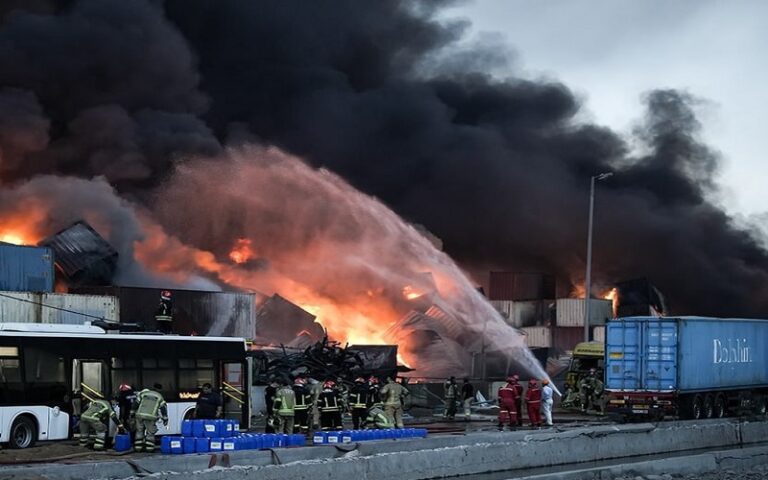
Around 12 noon on Saturday, April 26, coinciding with the third round of Tehran-Washington talks in Muscat, a massive explosion occurred at Rajaei Port in the city of Bandar Abbas. The blast shook the ground within at least a 50-kilometer radius and shattered windows of buildings.
Four days after the incident, videos circulating on social media show that the fire has yet to be contained.
On Monday, official sources reported that 70 people had died and 1,200 others were injured in the explosion at Rajaei Port in Bandar Abbas.
Explosion at Iran’s Largest Commercial Port and Its Impact on the EconomyMeanwhile, a well-informed source told the state-run Etemad newspaper that as of Sunday noon, the Ministry of Health and all its affiliated organizations had been prohibited from releasing any statistics regarding the number of injured or deceased and the broader human impact of the explosion involving shipping containers at the Bandar Abbas port terminal. The executive secretary of the Labor House in Hormozgan province stated that many women and truck drivers had been working at various sites within Rajaei Port and remain missing, with their families searching for them desperately each day. Iranian regime’s officials have yet to announce the cause of the incident, though speculation began in the immediate aftermath of the explosion. Habib Ghasemi, a member of the regime’s Parliamentary Construction Commission, stated that the Rajaei Port explosion resulted from human error and equipment deficiencies. He said: “This incident shows that logistical infrastructure and equipment must be carefully assessed before such accidents occur. It seems that a combination of human error and equipment weakness, or even each independently, could have caused this incident.” The Rajaei terminal where the explosion occurred is under the control of the Islamic Revolutionary Guard Corps (IRGC). Ports owned by or directly linked to the IRGC Navy lack the necessary infrastructure for container unloading. The security firm Ambrey told the Associated Press that evidence suggests the explosion was caused by improper storage of sodium perchlorate at the port. According to the Financial Times, China had shipped consignments of this substance to Iran in January—at a time when Iran’s missile fuel reserves had been depleted following missile launches at Israel by Iran and its ally Hezbollah. A two-week shutdown of this strategic port due to the damage sustained could deal a severe blow to the economy of Iran’s regime. This port is Iran’s most important commercial terminal. Following an increase in toxic air pollutants, the Health Ministry of Iran’s regime declared a state of emergency in Hormozgan Province. The ministry urged people to stay indoors, keep their windows shut, and wear masks if they must go outside.
Iranian Authorities Refuse to Hand Over Body of Executed Political Prisoner to His Family
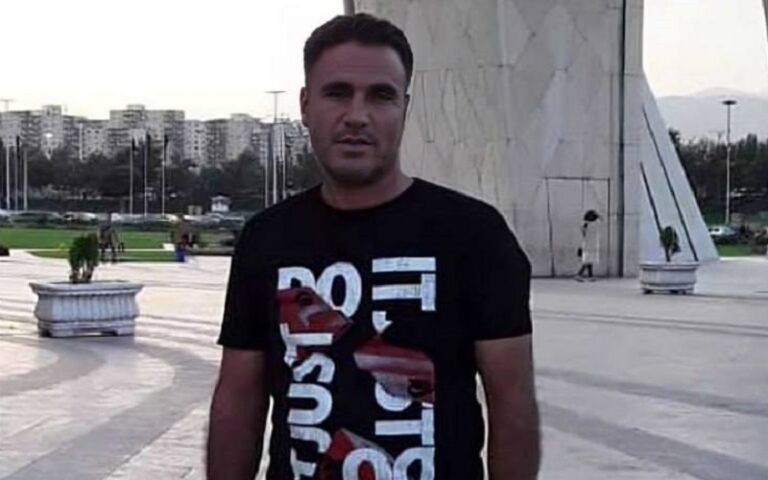
It has been one week since the deputy prosecutor in the northwestern city of Urmia told the brother of Hamid Hosseinnejad Heydaranlou that Hamid had been transferred to Tehran and executed. Hamid was a Kurdish porter (known as a “kolbar”) who was illiterate.
Reports from inside Iran indicate that Ronahi, the 13-year-old daughter of this Kurdish porter who was secretly executed by Iran’s judiciary on the early morning of Monday, April 21, has been denied entry to school and has been “banned from continuing her education.”
Following the summons of Hamid’s brothers to the Ministry of Interior’s intelligence office in Urmia, they were told there is no information about the body of the executed Kurdish porter, and that the family should “just move on with their lives.” Security agents told Hamid Hosseinnejad’s brothers that they had buried the body themselves and would not disclose the location. The family, however, insists on at least seeing some form of proof or a photo of his lifeless body to be sure that he is truly dead, so they do not spend the rest of their lives waiting in uncertainty.
Hamid was sentenced to death by the Revolutionary Court in Urmia, presided over by Judge Najafzadeh, on charges of rebellion through membership in opposition groups.
Iran’s Supreme Court upheld this lower court ruling in mid-March. The confirmation of the death sentence was not even officially communicated to Hamid’s lawyer, Mr. Moziyyan. He only found out about it a month later when he inquired in person. A few days later, he was informed that the case had been forwarded to the enforcement office and that the family should come for the “final visit.”
Prison officials in Urmia had told Hamid’s family that the execution was scheduled for Friday. However, after news of the imminent execution became public and sparked reactions from civil society and human rights organizations, the family was informed that the execution had been “temporarily suspended.”
Nonetheless, on the night of Monday, April 21, the deputy prosecutor in Urmia told Hamid’s brother that he had already been taken to Tehran and executed on Saturday, April 18.
On Monday, April 28, Hamid Hosseinnejad’s brothers were summoned again to the regime’s Ministry of Interior’s intelligence office in Urmia, and the family insisted on seeing the body or being told the burial site, they were told that Hamid had been executed, buried by the judiciary itself, and that his burial place would not be revealed to the family.
“No to Executions Tuesdays” Campaign in Iran, a Protest Against Death Sentences
In the sixty-sixth week of the “No to Executions Tuesdays” campaign, Sanandaj prison joined 41 other prisons in this protest movement. Political prisoners across Iran today, Tuesday, while going on a hunger strike, issued a statement demanding an end to executions.
This week coincided with “the tragic news of the deaths of dozens and the injury of more than one thousand people in a horrific explosion in Bandar Abbas” (a major port city in southern Iran).
“No to Execution Tuesdays” Campaign Marks 65th Week Amid Escalating State ViolenceThe “No to Executions Tuesdays” campaign, offering condolences to “the families of all the victims,” emphasized: “The main culprits of this disaster are the oppressive rulers and the terrorist force of the IRGC [Islamic Revolutionary Guard Corps],” who are “constantly engaged in building missile and nuclear weapons for warfare.” On the eve of International Workers’ Day and Teachers’ Day, members of the campaign congratulated “all the people of Iran, especially workers, laborers, and employed and retired teachers.” Referring to years of repression, political prisoners in this statement reminded: “The working class, teachers, and all laborers have been subjected to oppression and discrimination by tyrannical rulers for seeking their rights, leading to imprisonment and even execution.” The campaign praised “all workers, teachers, retirees, artists, writers, and poets who have stood against executions,” expressing hope that “No to Execution” would become part of the public demand and that the slogan “No to Execution” would resonate during protests. The campaign warned about the “wave of executions in recent weeks.” They announced: “So far in the month of Ordibehesht [April-May 2025], 35 people have been executed, including one woman and two political-religious prisoners.” The names of two political prisoners, “Rostam Zeynoddin from Zahedan” and “Hamid Hosseinnejad Heydaranloo,” who were “brutally hanged,” were mentioned. Mr. Heydaranloo’s body was not handed over to his family, and they are unaware of his burial location.
Iran: Secret Execution of Kurdish KolbarThe campaign described the behavior of Iran’s regime as “inhumane, a clear violation of human rights, and a sign of the regime’s fear of a popular uprising.” It was also mentioned that “the retrial request for two political prisoners sentenced to death, Mahdi Hassani and Behrouz Ehsani, was rejected by the regime’s Supreme Court,” increasing the risk of their execution. These two political prisoners were sentenced to death due to their connection with the People’s Mojahedin Organization of Iran (PMOI/MEK), the largest opposition group to the Iranian regime. According to published reports, “a prisoner named Mohsen Langarneshin, who was sentenced to death on charges of espionage,” has been transferred to solitary confinement, raising concerns about the imminent execution of his sentence. The “No to Executions Tuesdays” campaign warned: “Thousands of prisoners convicted of various crimes are under death sentences, and there is a constant fear that their sentences may be carried out at any moment.” In this regard, “a group of prisoners from Sanandaj prison announced in a letter that starting from Tuesday, April 29, 2025, they have joined the ‘Tuesdays Against Executions’ campaign and, along with other prisons across the country, are going on a hunger strike” to make their protest heard worldwide.
Explosion at Iran’s Largest Commercial Port and Its Impact on the Economy
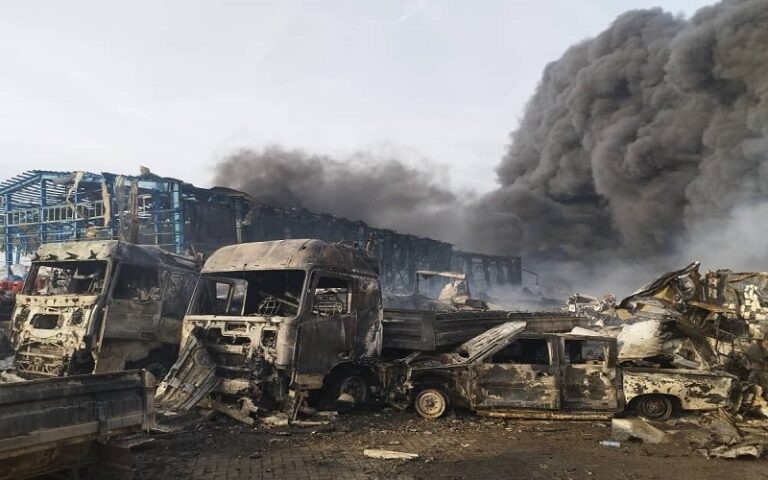
With the explosion on April 26, 2025, at Rajaei Port and the subsequent halt of operations there, approximately 57 percent of Iran’s nominal cargo handling capacity has been taken out of service. This port does not play a major role in the trade of essential goods but holds a special position in the oil products sector.
The Marine Affairs Department of the Ports and Maritime Organization of Hormozgan Province, located in southern Iran, announced after the explosion that maritime and port operations at Rajaei Wharf in Bandar Abbas have been temporarily suspended.
Despite claims by the Iranian regime’s Minister of Roads and Urban Development and some regime-aligned media outlets about the resumption of operations at Rajaei Port, the port is still burning.
At Least 40 Killed in Explosion of Extremely Dangerous Cargo at Rajaei Port in Southern IranThis port, one of Iran’s most important economic terminals, has been burning since noon on Saturday, and the extent of the damage caused by three explosions and more than 36 hours of burning cannot be fully assessed until the fire is completely extinguished. It is estimated that each day of the port’s closure inflicts approximately 25 million dollars in losses on Iran’s economy. Data from the Ports and Maritime Organization of the Iranian regime shows that 57 percent of the country’s nominal commercial port capacity is concentrated at Rajaei Port. This port has a capacity of 160 million tons. The second largest, Khomeini Port, has a nominal capacity of only 60 million tons. The next one, Anzali Port, with a capacity of 13.6 million tons, is located in the north of the country and, due to its geographic position, plays a limited role in international trade. Bushehr Port also has only a nominal capacity of 13.4 million tons. In the container sector, out of the 11 active ports in Iran, 77 percent of the country’s nominal container handling capacity—equivalent to 6,650,000 TEU (Twenty-foot Equivalent Unit, a standard measure where one 20-foot container equals one TEU)—is concentrated at Rajaei Port. The next port in this sector is Bushehr, with a registered capacity of only 550,000 TEU. From March 21, 2024, to March 21, 2025, out of a total of 158,455,624 tons of goods transported through 21 ports across Iran, about 51 percent—equal to 81,020,482 tons—were either loaded or unloaded through Rajaei Port. Approximately 52 percent of all oil products imported or exported through Iran’s 21 ports passed through Rajaei Port. From March 21, 2024, to March 21, 2025, out of a total of 52,542,000 tons of oil products, 27,149,000 tons were either loaded or unloaded at this port.
Share in Foreign Trade
Out of Iran’s total foreign trade worth 130 billion dollars from March 21, 2024, to March 21, 2025, based on customs data from the Iranian regime, 29.197 billion dollars were conducted through the “Special Economic Zone of Rajaei Port,” indicating that this zone accounts for twenty-two percent of the country’s total foreign trade. In imports, out of a total of 72 billion dollars in goods brought into the country, 20.254 billion dollars were imported through this zone, reflecting a 21 percent share. In exports, out of 58 billion dollars’ worth of goods exported, 8.944 billion dollars were shipped through this zone, indicating a fifteen percent share.Estimating the Impact of Port Activity Suspension
In May 2024, about half of the country’s total cargo handling, equivalent to 6,844,265 tons, was carried out through Rajaei Port. Eighty-seven percent of containerized goods during the same month, equivalent to 1,886,536 tons, were loaded or unloaded at this port. Based on this, it can be estimated that each day of halted activity at this port would equate to a stoppage of approximately 221,000 tons of various goods and 61,000 tons of containerized goods. Additionally, in May of last year, about half of the country’s oil products—equivalent to 2,309,000 tons—were transported through this port, meaning that each day of suspension would result in the delay of approximately 75,000 tons of oil products.Continued Protests of Iranian Retirees and Workers on the Eve of International Workers’ Day
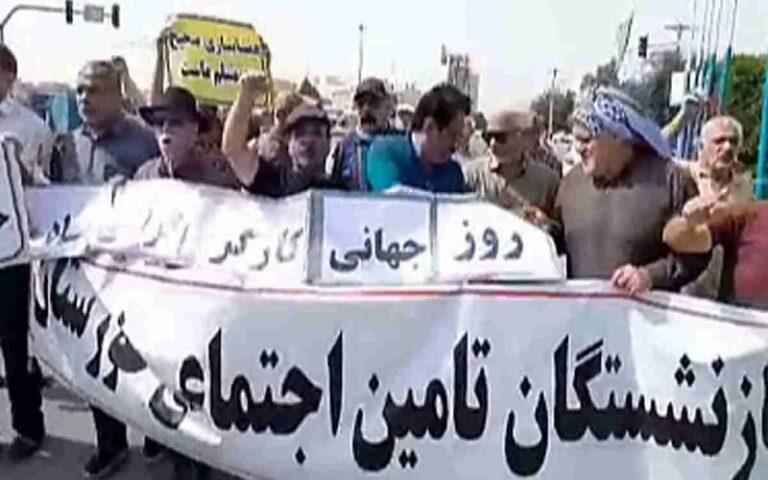
On Sunday, April 27, 2025, various cities across Iran witnessed protests, gatherings, and protest marches by different segments of society, from retirees to workers and truck drivers.
Protest Gathering of Steel and Mining Retirees in Isfahan, Kerman, and Tehran
Retirees from the steel and mining industries in the cities of Isfahan, Kerman, and Tehran held protest gatherings to object to poor living conditions, delayed paychecks, and the unfulfilled promises of officials. Protesters chanted slogans such as “Astronomical thefts, public misery” and “Only in the streets will we win our rights,” demanding an end to discrimination and the securing of their basic rights.March of Social Security Retirees in Kermanshah and Khuzestan
In Kermanshah, retirees covered by the Social Security Organization gathered in front of relevant offices to protest the policies of the Supreme Labor Council and the worsening economic situation. Slogans such as “Supreme Labor Council, supporter of capitalists” and “Imprisoned teachers must be freed” were among their demands. In Khuzestan province, retirees in the cities of Ahvaz, Shush, and Haft-Tappeh held major gatherings in front of the governorates. They protested against poverty, corruption, and repression with slogans like “From Khuzestan to Sistan, shame on these managers” and “Under the burden of inflation, the people’s backs are broken.” They also criticized the lack of adequate healthcare, medical services, and educational facilities.Truck Drivers and People of Behabad in Yazd Protest Against Transfer of Chah-Gaz Mine
In Behabad County in Yazd province, central Iran, local people and truck drivers protested against the twenty-year transfer of the Chah-Gaz mine to the Choghart company in Bafq and Chadormalu company. Protesters viewed this move as a threat to local livelihoods and employment and demanded the cancellation of the auction and attention to regional interests. They emphasized that mineral resources must serve local development and employment for native residents.Strike of Titanium Mine Workers in Kahnuj
Local workers at the Kahnuj Titanium Mine in Kerman province also staged a protest in front of the company against the dismissal of more than 70 local employees without clear reasons. This crisis began in mid-March with the dismissal of ten workers and intensified in recent days with another 60 workers losing their jobs under the pretext of contract expiration. The workers are demanding reinstatement, an end to anti-worker policies, and local residents’ access to the wealth of the region’s mineral resources. These protests reflect the depth of public dissatisfaction with the economic, social, and political conditions. Protesters demanded justice, welfare, and an end to discrimination and corruption with slogans such as “We won’t live under oppression” and “Shame on these managers.”At Least 40 Killed in Explosion of Extremely Dangerous Cargo at Rajaei Port in Southern Iran
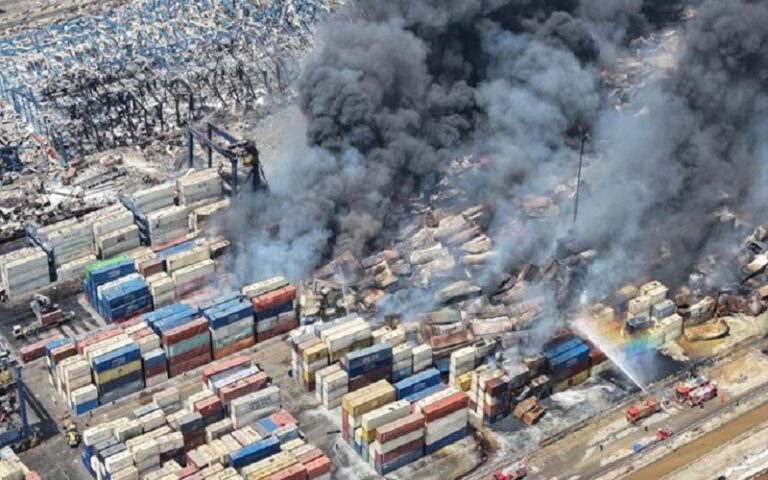
On the evening of Saturday, April 26, 2025, a massive explosion occurred at Rajaei Wharf, one of the strategic docks of Bandar Abbas, causing extensive damage. Numerous videos circulated showing the state of the dock after the explosion, including damage to vehicles, infrastructure, and the spread of fire. However, according to provincial and security officials, the cause of the explosion has not yet been identified.
The Director General of Crisis Management for Hormozgan Province announced a few hours after the explosion, as smoke covered the skies of Bandar Abbas, that all schools, universities, and government offices in Bandar Abbas County would be closed on Sunday, April 27.
Mohammad Ashouri, the governor of Hormozgan Province, stated on Sunday evening that the death toll from the incident at Shahid Rajaei Port had reached forty people, with nine hundred others injured or wounded.
The full shutdown in Bandar Abbas was announced following a warning from the Iranian regime’s Ministry of Health, stating that the potential release of pollutants “such as ammonia, sulfur dioxide, and nitrogen dioxide into the city’s atmosphere” had placed air quality in an emergency pollution condition.
Saeed Jafari, CEO of Sina Marine and Port Services Development Company, told the regime-affiliated ILNA news agency: “The strength and blast wave, the destruction radius, and other characteristics of yesterday’s explosion indicate that the cargo involved was extremely dangerous and, according to the FAL Convention and port regulations, should have been officially and in writing declared as dangerous goods by the shipping company to the port authorities. However, this cargo was declared, packaged, and delivered as ordinary and non-hazardous cargo.”
Earlier, The New York Times reported, citing an individual connected to the Iranian regime’s Islamic Revolutionary Guard Corps (IRGC) who wished to remain anonymous due to the sensitivity of the security matter, that the explosive material at Rajaei Shahr Port was “sodium perchlorate, one of the main components of solid rocket fuel.”
Rajaei Wharf is one of the busiest docks at the port. The fire has spread extensively and has yet to be brought under control.
Mohsen Heydarian, commander of Abdolkarimi Air Base in Bandar Abbas, announced the dispatch of a fire station, equipment, and medical staff from the Ninth Tactical Fighter Base to assist victims of the Rajaei Port incident. Some media outlets reported around 1:00 AM on April 27 that the fire had been partially brought under control.
The firefighting facilities in Bandar Abbas are reportedly inadequate. There was not even a bulldozer available to build embankments around the fire site.
According to the state-run Mehr News Agency, Mojtaba Khaledi, spokesperson for the Iranian regime’s Red Crescent Society, announced that the number of those injured in the explosion at Rajaei Port has reached 1,242 people.
Eyewitness reports indicate that the condition of the wounded is tragic. Although details are scarce, many of the injured are reportedly in critical condition, with several cases of amputations. Many people have sustained eye injuries due to metal debris striking them like shrapnel. Car windows shattered over people’s faces and bodies, and windows of homes and buildings both near and far from the dock were blown out. Victims were not limited to those present at the wharf; people farther away from the site were also injured by the blast.
Several noble doctors and nurses in the city are posting the names of the injured and wounded admitted to their hospitals on Instagram and their personal accounts; meaning even this simple task of providing information cannot be handled by the regime, and the burden has fallen on the people.
The regime’s Tasnim news agency, quoting an employee from one of the offices at Rajaei Port, reported: “Some employees are still trapped under the collapsed roofs, and we are trying to rescue them.”
Internet speed in Bandar Abbas has dropped drastically, and within one or two hours after the explosion, the Intelligence Organization of the IRGC took full control of the Rajaei Port area, port facilities, and adjacent customs buildings.
After being deployed, the security forces expelled the port and customs protection guards from the area and are not allowing anyone to enter. Some people had parked their cars in the parking lots of Rajaei Port and the customs area, but the security forces are not allowing them to retrieve their vehicles.
Rajaei Wharf is located in Hormozgan Province, near the city of Bandar Abbas. Since the 1980s, it has been Iran’s main container and commercial port, bearing a significant share of the country’s foreign trade.
At least 4,000 people have been directly employed in an area covering 2,400 square kilometers.
Rajaei Port alone handles 58 percent of non-oil operations, 43 percent of oil operations, and 85 percent of container operations of Iran’s ports. It has access to international open waters and is connected to the country’s road and rail transportation networks.
More than 40 berths for docking ocean-going vessels have been operational at Rajaei Port, and despite the severe U.S. sanctions on Iran’s maritime trade following the withdrawal from the JCPOA, Rajaei Port has continued to play a vital role in Iran’s economy.
