

U.S. Warns Iran’s Regime: Any Assassination Attempt on Donald Trump Will Be Considered An “Act of War”

The United States has warned Iran’s regime that any assassination attempt against Donald Trump, the former president and current candidate for the U.S. presidency, will be considered an “act of war” and will be met with a response.
On Monday, October 14, Reuters news agency quoted a U.S. official as saying that the United States warned the Iranian government to halt all plots against Donald Trump, stating that Washington considers any assassination attempt on him an act of war.
This official, who wished to remain anonymous, said that Joe Biden, the president of the United States, is regularly informed about the threats and has instructed his team to counter the Iranian regime’s plots against Americans.
According to the Reuters report, senior U.S. officials, under Biden’s orders, have sent messages to the highest levels of the Iranian government, warning them to stop all plots against Trump and former U.S. officials.
According to this U.S. official, Iran has been told that Washington would consider any assassination attempt on Trump an “act of war.”
Meanwhile, the Iranian regime has denied any involvement in U.S. affairs.
On September 24, Trump’s campaign team announced that U.S. intelligence officials had informed Trump of threats from the Iranian government.
The White House, emphasizing that the U.S. has been closely monitoring Iranian threats against Trump for years, warned of “severe consequences” should the Iranian regime attack any American citizen.
Sean Savett, spokesperson for the National Security Council, said that this is considered a national security matter of the highest priority, and the U.S. strongly condemns Iran for these brazen threats. He added that any attack by Iran on any American citizen—including those currently serving or formerly serving the U.S.—would have severe consequences.
Previously, the U.S. Department of Justice charged three Iranians, allegedly employed by the Islamic Revolutionary Guard Corps (IRGC), with targeting members of Trump’s election campaign in a wide-ranging cyber plot.
Iranian officials have repeatedly stated that they would take revenge for the killing of Qassem Soleimani, the former commander of the Quds Force.
Reuters reported that since 2020, the Iranian regime has been involved in at least 33 assassination or kidnapping attempts in Europe and the United States.
In connection with this, a Pakistani citizen, accused of attempting to hire a “hitman” on behalf of the Iranian government in the United States, has been arrested and is set to face trial.
In this regard, a Pakistani citizen was previously arrested in the United States on charges of attempting to hire a “hitman” on behalf of the Iranian government and is set to stand trial.
EU Sanctions Iran Air and Iran’s Deputy Defense Minister over missile shipments to Russia
On Monday, October 14, European Union foreign ministers gathered to discuss the escalating conflicts in the Middle East, as well as new measures to support Ukraine against Russia, and they approved new sanctions against the Iranian regime.
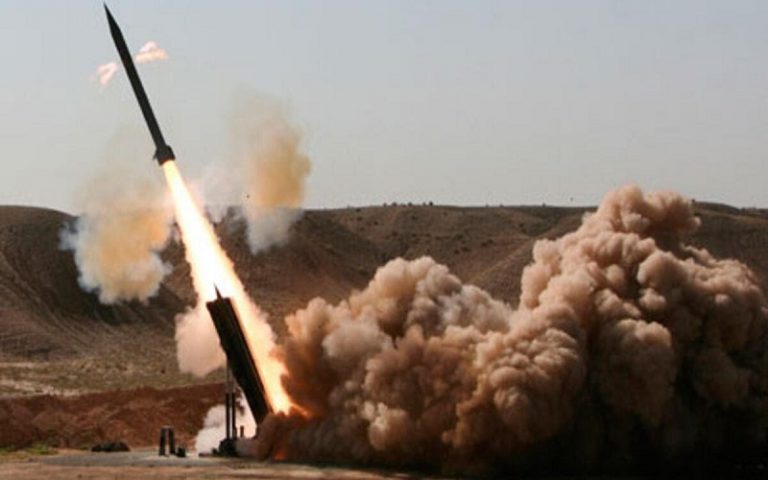
The EU sanctions target companies and individuals involved in Iran’s ballistic missile program, who have transferred these missiles and other weapons to Russia for use in the war against Ukraine.
During this meeting, the EU decided to impose new sanctions on 14 individuals and entities connected to the Iranian regime, including Iran Air.
The EU has added three Iranian airlines—Iran Air, Mahan Air, and Saha Airlines—along with two logistics companies to its sanctions list.
These companies have been identified as responsible for transporting and supplying Iranian-made drones and related parts and technologies to Russia through their logistics suppliers, with these weapons being used in the aggression against Ukraine.
Two companies that manufacture rocket and missile launchers have also been added to the EU sanctions list.
The European Council also sanctioned Seyed Hamzeh Qalandari, Iran’s regime’s Deputy Defense Minister, as well as commanders of the Quds Force of the Islamic Revolutionary Guard Corps (IRGC), the Khatam-al-Anbiya Construction Headquarters, and the IRGC Aerospace Force, along with the CEOs of the Iran Aircraft Manufacturing Industrial Company (HESA) and the Iran Aerospace Industries Organization.
The list of individuals sanctioned by the European Union includes: Behnam Shahriyari, Ali Shadmani, Ali Jafarabadi, Mehdi Gogardchian, Reza Khosravi Moghadam, Seyed Mirahmad Noshin, and Seyed Hamzeh Qalandari.
These individuals will be subject to asset freezes and travel bans to the European Union. Additionally, the provision of financial and economic resources, either directly or indirectly, for the use of these individuals or their affiliated entities is also prohibited.
Iran Air, Mahan Air, and Saha Airlines, as well as Basamad Electronic Pouya Company, Teyf Tadbir Engineering Company, Iran Alumina, and Shahid Haj Ali Moheb Research Center.
The European Council had warned earlier this April that if the transfer of drones, ballistic missiles, and related technologies to Russia continued, Iran would face punitive actions, including sanctions.
Iran’s regime has repeatedly denied the accusations of sending ballistic missiles to Russia, particularly since the start of the Ukraine war and their alleged use against Ukraine.
The European Union is struggling to find a way to control and halt the escalating violence in the Middle East and to prevent it from turning into a full-scale regional war.
Iran: 36 Executions in Past 7 Days, Including 2 Child Offenders
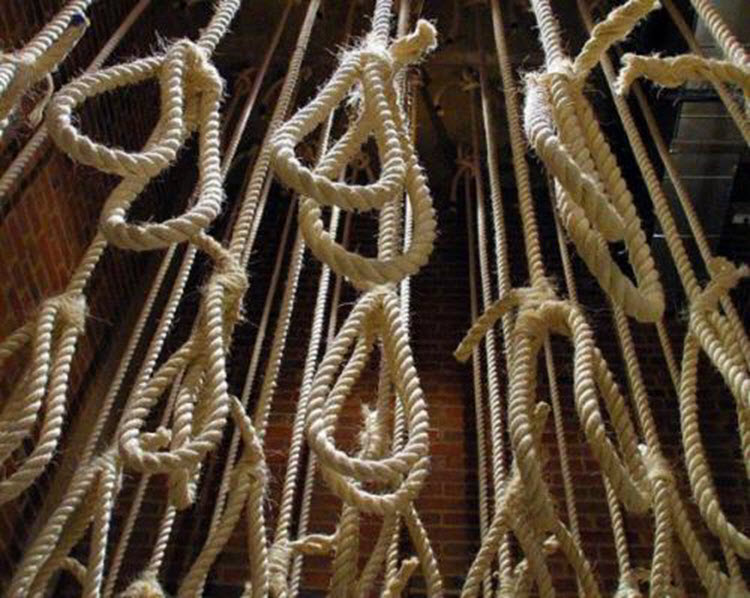
The “No to Executions Tuesdays” campaign, which consists of hunger-striking prisoners from over 22 prisons across Iran, issued a statement on October 15 during its 38th week. The statement said, “Simultaneously with the World Day Against the Death Penalty, the execution-driven regime in Iran executed seven individuals in various prisons.”
According to the campaign’s statement, on October 9 alone, 19 people were hanged, bringing the total number of executions last week to over 36.
Two children, identified as Mehdi Barahouyi and Ali Shirvani, who were 17 and 15 years old at the time of their arrest, were among those executed, in clear violation of the “Convention on the Rights of the Child.”
The statement further revealed that on October 13, the Iranian judiciary referred the cases of eight individuals accused of theft to the court, requesting the punishment of hand amputation.
This level of violence coincided with the World Day Against the Death Penalty and is a clear indication of the Iranian regime’s blatant violation of international human rights laws, aimed at instilling fear and suppressing potential protests and uprisings.
The statement also praised Ms. Mai Sato, the UN Special Rapporteur on human rights in Iran, for reflecting the warnings of the protesting prisoners involved in the “No to Executions Tuesdays” campaign in her recent remarks.
However, the statement emphasized that they expect more urgent and serious action from Ms. Mai Sato, the Human Rights Council, and all international human rights organizations to stop this killing machine, stressing that the lives of many vulnerable prisoners depend on such effective measures.
The prisoners who are protesting executions as part of this campaign have called on the public and media to advocate for the abolition of the death penalty. Their goal is to institutionalize the fight against executions and create “a free, equal, and peaceful country, free from violence and executions, with an independent judiciary.”
On October 15, as a form of protest, a hunger strike was held by members of this campaign in the following prisons: Evin Prison (women’s ward, wards 4 and 8), Ghezel Hesar Prison (units 3 and 4), Karaj Central Prison, Greater Tehran Prison, Khorramabad Prison, Arak Prison, Isfahan’s Asadabad Prison, Nezam Prison in Shiraz, Bam Prison, Mashhad Prison, Lakan Prison in Rasht (both men’s and women’s wards), Qaemshahr Prison, Ardabil Prison, Tabriz Prison, Urmia Prison, Salmas Prison, Khoy Prison, Naqadeh Prison, Saqqez Prison, Baneh Prison, Marivan Prison, and Kamyaran Prison.
After 15 years in prison without any leave, Maryam Akbari Monfared’s imprisonment continues

Maryam Akbari Monfared, one of the longest-serving female political prisoners in Iran, has been in prison for 15 years without a single day of leave. Her sentence was completed on October 11, 2023, in Semnan prison, but with the enforcement of an additional two-year prison sentence from a case opened against her while in prison, she will remain incarcerated.
Over the years, several cases were opened against Akbari Monfared, which were dismissed with acquittals. However, the latest case, without presenting evidence, resulted in a two-year prison sentence.
Akbari Monfared’s 15-year sentence ended in October, but she has been sentenced to an additional two years due to another case. Additionally, the “Execution of Imam Khomeini’s Order” organization, affiliated with the Iranian regime, has requested the seizure and confiscation of her family’s assets.
This new case has been referred to Branch 6 of the Revolutionary Court, which handles cases related to Article 49 of the Constitution, and a review hearing was scheduled for August.
For the past 46 years, the Islamic Revolutionary Courts have used this article to confiscate the assets of many citizens, political prisoners, Baha’is, and other dissidents in non-transparent processes.
Maryam Akbari Monfared was arrested in 2009 and sentenced to 15 years in prison for “acting against national security.”
The Iranian regime executed three of her brothers and one sister in the 1980s for “membership in the People’s Mojahedin Organization of Iran (PMOI).” The PMOI is the largest opposition group to the Iranian regime, which in 1988 saw 30,000 of its members and supporters executed by the regime.
Akbari Monfared has three daughters and is one of the oldest female political prisoners in Iran.
In January 2020, after enduring years of imprisonment in Rajai Shahr Prison (Karaj), Qarchak Varamin Prison, and Evin Prison, she was exiled to Semnan Prison.
She is held in the general ward of Semnan Prison without adherence to the principle of separation of crimes and in poor sanitary conditions.
In July 2023, a group of female political prisoners and Akbari Monfared’s former cellmates protested against the fabrications of charges against her in a published letter, calling this process “the judiciary’s revenge for her pursuit of justice.” They demanded her immediate and unconditional release.
Amnesty International and other human rights organizations have repeatedly objected to Akbari Monfared’s continued imprisonment without a single day of leave and her denial of medical services.
Iran’s $7 Billion Trade Deficit and Dependence on a Handful of Countries

Mohammad Ali Dehghan Dehnavi, head of Iran’s Trade Promotion Organization, stated that in the first half of this year (March 21 to September 21), Iran’s non-oil foreign trade deficit reached $7 billion. This is compared to the historic record of $17 billion last year.
On October 13, Mohammad Ali Dehghan Dehnavi announced that in the first six months of the year, Iran’s total non-oil exports amounted to $25.8 billion, while imports reached $32.5 billion.
The last time Iran had a positive non-oil trade balance was in 2018. Iran’s trade deficit has grown so much in recent years that since the early months of Ebrahim Raisi’s administration, the regime’s customs included oil exports in their reports to mask the increasing foreign trade deficit.
Aside from the trade deficit, the latest Central Bank report shows that over $20 billion in capital flight occurred in the first nine months of last year (from March 21, 2023), marking a historic record. Since then, the government has stopped publishing capital account data and recently blocked access to such data, making the Central Bank’s website inaccessible from outside Iran.
The significant gap between Iran’s non-oil exports and imports (trade imbalance) and the regime’s tactic of including oil, electricity, and technical engineering services in customs reports come as tanker tracking firms report that Iran’s daily oil exports over the past two months have dropped by 400,000 barrels compared to previous months.
Additionally, in the first 10 days of October, Iran reduced its oil shipments by 70% to 600,000 barrels per day due to fears of retaliatory Israeli attacks on its oil facilities.
Thus, Iran’s oil revenues are expected to decline significantly in the second half of this year (from September 22, 2024, to March 20, 2025).
According to figures provided by the head of Iran’s Trade Promotion Organization, 79% of Iran’s imports and 75% of its non-oil exports are dependent on just five countries, with China at the top of the list.
Tanker tracking companies also report that 95% of Iran’s oil exports are dependent on the Chinese market, with the remainder going to Syria.
In Iran, Disabled People Receive Less Than $16 in Pensions
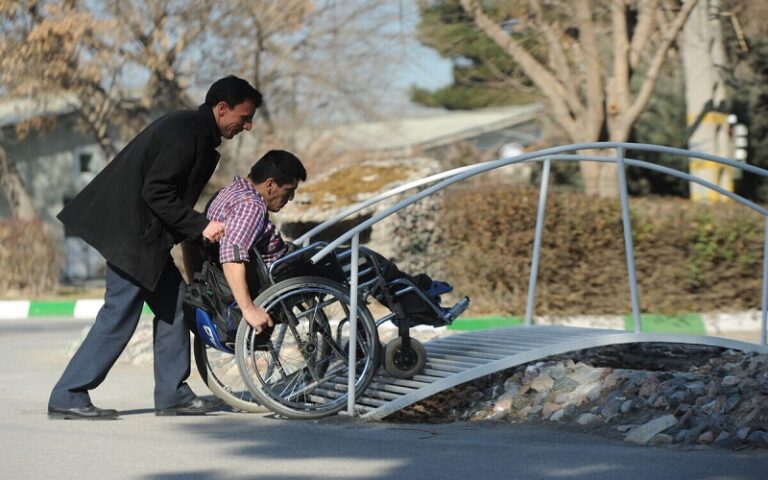
With increasing inflationary pressure in Iran and household livelihoods at risk, people with disabilities face more challenges than ever before, with no clear outlook for their livelihoods. Some disability pensioners say that disabled retirees are now at the bottom of the pension income hierarchy, and with pensions below 10 million rials (approximately 16 dollars), their difficulties have worsened.
The state-run ILNA news agency, quoting disabled retirees, reported that in recent years, the prices of many goods have increased by up to 400%, creating a “strange gap” between wages and the cost of living.
The report mentions Article 27 of the Comprehensive Law for the Disabled, which requires the government to ensure that the minimum social security salary is provided to people with severe and very severe disabilities. However, even this minimum is not being paid.
This news agency, quoting a representative of disabled retirees and an advocate for disability rights, wrote, “In the past two years, the disabled community has been abandoned by the Welfare Organization. The worst period for disabled individuals has been these past two years since the organization’s leadership changed.”
This representative emphasized, “Currently, the pension for a disabled person is about 9.7 million rials (approximately 16 dollars)! In other words, the pension for a disabled individual has still not reached 10 million rials.”
The ILNA report states that there are over 600,000 severely and very severely disabled individuals in the country who are unemployed, and the law does not apply to all of them.
Behrouz Morvati, a disability rights activist, stated in August that last year’s protests were aimed at enforcing Article 27 of the Law for the Protection of Disabled Persons with a proposed subsidy of 100 million rials (approximately 160 dollars), but “we don’t even receive 20 million rials in total. This amount doesn’t solve any problems for disabled individuals.”
In June, a group of “independent activists” wrote a letter to the UN Convention on the Rights of Persons with Disabilities, highlighting the participation of the head of the Iranian Welfare Organization at the 17th conference of this international body. They emphasized the Iranian regime’s disregard for the rights of its disabled citizens.
In this letter dated June 10, it was noted that Ali Mohammad Ghaderi, head of the Welfare Organization, attended the 17th Global Conference on the Rights of Persons with Disabilities, even though “the Iranian regime has ignored the provisions of the 2006 UN Convention, and the recommendations sent to Iran, and has not even implemented the 2017 Law for the Protection of Disabled Persons domestically.”
Tehran Prosecutor Seeks Hand Amputation for Eight Thieves Amid International Condemnation
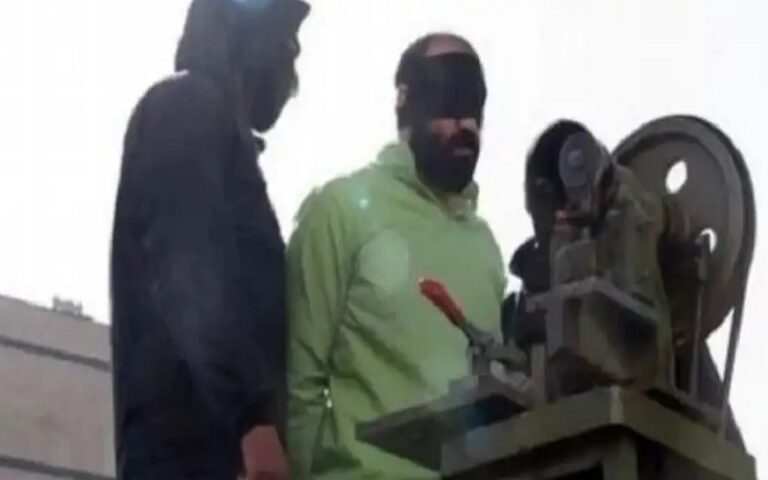
The prosecutor’s office in Tehran has requested the punishment of “hand amputation” for eight thieves in a joint case, with an indictment that has been referred to the court for sentencing. This comes amid sharp condemnation from human rights organizations in a recent statement, criticizing the resurgence of hand amputation sentences by the Iranian regime’s judiciary.
According to the state-run Hamshahri Online newspaper, the eight individuals, for whom hand amputation under the regime’s so-called Islamic law (“Had”) has been requested, are accused of forming a theft gang. In the summer of 2021, they allegedly broke into a house in northern Tehran and stole property worth 50 billion rials (approximately 80,000 dollars).
After their arrest with the help of CCTV footage, the special theft prosecutor issued a request for “hand amputation” as a punishment, and their trial will be held soon.
Previously, the Tehran Criminal Court had issued a sentence of finger amputation for two main suspects in another theft case.
The punishment of hand amputation is one of the penalties that has faced widespread criticism from international organizations due to its contradiction with human dignity.
Under the International Covenant on Civil and Political Rights, the imposition of inhuman and degrading punishments is prohibited. Nevertheless, Iran’s regime continues to implement such sentences, disregarding both domestic and international objections.
U.S. Imposes New Sanctions on Iran’s Regime
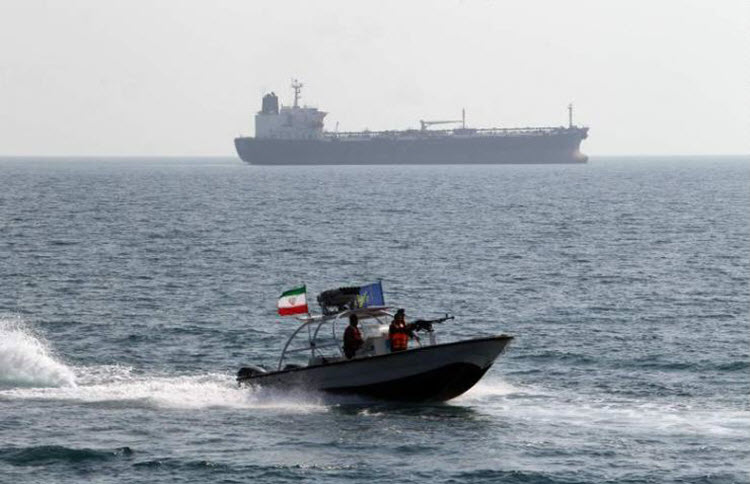
The U.S. government has announced the expansion of sanctions against the Iranian regime’s oil and petrochemical sectors in response to Tehran’s missile attack on Israel.
The U.S. Departments of Treasury and State department announced the list of these sanctions on the evening of October 11.
The new sanctions target key sectors of Iran’s economy, aiming to deprive the Iranian government of funding for its nuclear and missile programs.
Jake Sullivan, National Security Advisor of the United States, stated in a press release that the U.S. had previously made it clear that Iran’s dangerous missile attack on Israel would face severe consequences.
Sullivan noted that the attack targeted Tel Aviv, Israel’s most populous city, and could have killed hundreds, if not thousands, of innocent people. He wrote that fortunately; the attack was thwarted thanks to the collaboration between the U.S. military and Israeli Defense Forces.
On the evening of October 1, Iran’s regime fired about 200 missiles at Israel, and Israel has pledged to respond to the attack.
This was the Iranian regime’s second missile attack on Israel, and according to Iranian officials, it was in retaliation for the deaths of Ismail Haniyeh and Hassan Nasrallah in Tehran and Beirut.
The regime’s previous attack on Israel occurred on the night of April 13 in response to an attack on its consulate in Damascus.
According to the White House National Security Advisor’s statement, the new sanctions include actions against the “ghost fleet” that illegally transports Iranian oil to buyers around the world.
The U.S. Treasury Department announced that the new sanctions target 16 companies, and 17 ships involved in transporting Iranian oil and petrochemical products.
Max Maritime Solutions FZE, based in the United Arab Emirates, and three ships under its management, CARNATIC, BENDIGO, and SALVIA.
According to the Treasury Department, this company and its subsidiary ships carried out nearly 12 ship-to-ship transfers of Iranian oil in 2023, most of which was later sent to refineries in China.
The ship LUNA PRIME, formerly known as Selene, owned and managed by Hong Kong-based Cathay Harvest Marine Ltd. This ship also transferred Iranian oil to several refineries in the People’s Republic of China and conducted a ship-to-ship transfer with an Iranian tanker near Singapore, carrying tens of thousands of tons of Iranian heavy crude oil.
Liberia-based Elza Shipping SA is the registered owner of the ELZA, which has been involved in transferring hundreds of thousands of barrels of gas condensate from an Iranian ship, as well as ship-to-ship transfers near Singapore, transporting tens of thousands of tons of South Pars gas condensate.
Jazira Das International Oil Products Trading LLC, based in the UAE, as the recipient of falsified shipment documents, has passed off millions of barrels of Iranian crude as UAE oil and coordinated the transport of several Iranian oil shipments with Chinese oil companies under the name of the U.S., obscuring the involvement of Iran’s National Oil Company.
The Harry Victor Ship Management and Operation L.L.C., which manages the ships GOODWIN, ANHONA, and WEN YAO, has transported several petrochemical shipments for Iran’s Triliance Petrochemical Company.
Sanctions from the U.S. Department of State:
The U.S. Department of State also announced sanctions on six companies and six ships involved in Iran’s oil and petrochemical trade.
Engen Management NV, based in Suriname, which operates as the commercial manager of the HORNET in the transport of Iranian oil.
Strong Roots Provider NV, based in Suriname, which serves as the commercial manager of the BERG in transporting Iranian oil.
Glazing Future Management NV, based in Suriname, which operates as the commercial manager of the VORAS in the transport of Iranian oil.
India-based Gabbaro Ship Services PVT LTD, which acts as the technical manager of the HORNET in the transport of Iranian oil.
Alya Marine Sendirian Berhad, based in Malaysia, which operates as the commercial manager of the SHANAYE QUEEN in the transport of Iranian oil.
Celia Armas Ltd, based in China, which operates as the commercial manager of the OCTANS in the transport of Iranian oil.
The U.S. Department of State has also sanctioned six ships: HORNET, BERG 1، VORAS، SHANAYE QUEEN، CAROL and OCTANS.
Iran’s Regime Is Hiring Criminals for Assassinations in The West
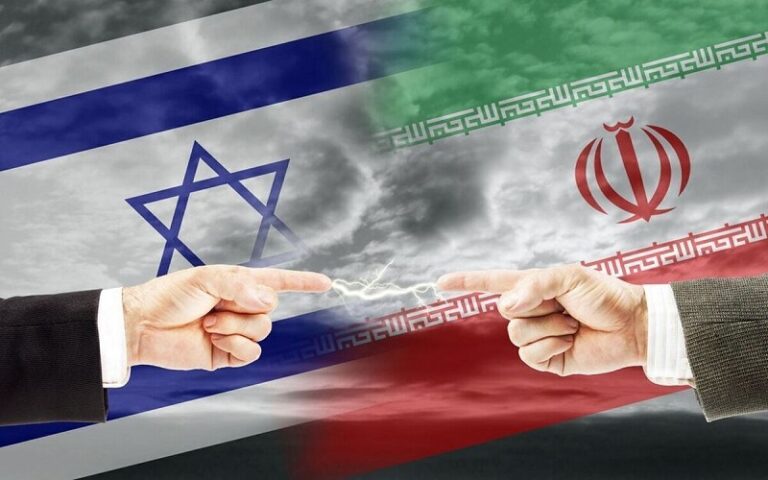
Reuters has recently published an investigative report titled, “Murder for hire: Inside Iran’s proxy war with Israel in the West” that includes examples of the Iranian regime’s collaboration with professional criminals for assassinations, threats, and abductions of Tehran’s opponents.
According to court documents and government officials, Reuters has found that since 2020, at least 33 assassination or abduction plots have occurred in the West.
Local and Israeli officials have attributed the use of criminals for assassinations in the West to the Iranian government.
One of these plots was an attack on a building in Athens, Greece, where a Jewish center and the Kashrut restaurant were located.
Sayed Fakhar Abbas, a Pakistani national, hired an old acquaintance of his in Greece for this attack.
Abbas promised to pay him €15,000 for each killing.
In April 2022, they discussed using explosives and arson on WhatsApp.
Abbas demanded documented proof to verify the number of casualties to avoid any issues with receiving payment.
Without mentioning any specific group or organization, Abbas asked him to carry out the operation in a way that would satisfy the employer.
Greek police have examined hundreds of pages of documents, messages, and security statements detailing how Sayed Irtaza Haider was recruited by Abbas.
Haider, a Pakistani national, was employed to plan the attack on Athens. Last year, Greek authorities arrested Haider and another Pakistani.
These individuals are facing terrorism charges, but they have pleaded not guilty.
Abbas, the mastermind behind the operation, has been charged with terrorism and is wanted in Pakistan on murder allegations. However, his whereabouts are unknown.
Israeli intelligence service Mossad, which assisted Greece in the investigation, stated that the hiring of criminals for assassinations in the West was orchestrated by the Iranian regime and is part of an international network of terrorists and criminals directed by Iran.
Although the Iranian regime has denied Mossad’s claim, the methods used in previous plots have been similar. Documented evidence shows that Iran has repeatedly used criminals for assassinations in the West.
Reuters has managed to track down two other similar cases that appear to be linked to Pakistani nationals.
The targets of the plots attributed to the Iranian government have included senior U.S. officials, Iranian journalists, and opponents of the Iranian regime abroad.
The campaign of former U.S. President Donald Trump recently announced that U.S. intelligence agencies have received information about assassination threats from the Iranian government against him.
Brett Holmgren, Director of the United States National Counterterrorism Center, has stated that since 2020, the Iranian regime has increased deadly plots by non-Iranian criminals against former U.S. officials, opponents of the Iranian government, Jews, and Israeli targets.
Ali Khamenei, the Iranian regime’s Supreme Leader, has repeatedly called for the destruction of Israel, and many Iranian officials have vowed to kill Western officials as well.
Most of these threats are carried out by non-Iranian criminals to avoid directly implicating Tehran.
The increase in plots attributed to the Iranian government in the West has coincided with escalating tensions between Iran’s regime and Israel.
Last month, a German court sentenced an Iranian-German individual to prison for planning to burn down a synagogue on behalf of the Iranian regime. He had thrown a Molotov cocktail at the synagogue.
In the U.S. as well, since 2020, five cases related to assassination or abduction have been attributed to the Iranian regime.
Recently, a Pakistani man has been accused of collaborating with the Iranian regime to assassinate a U.S. official.
By hiring non-Iranian criminals, the Iranian regime is effectively trying to cover its tracks in these crimes.
Iran’s Regime is Plotting to Assassinate U.S. Politicians
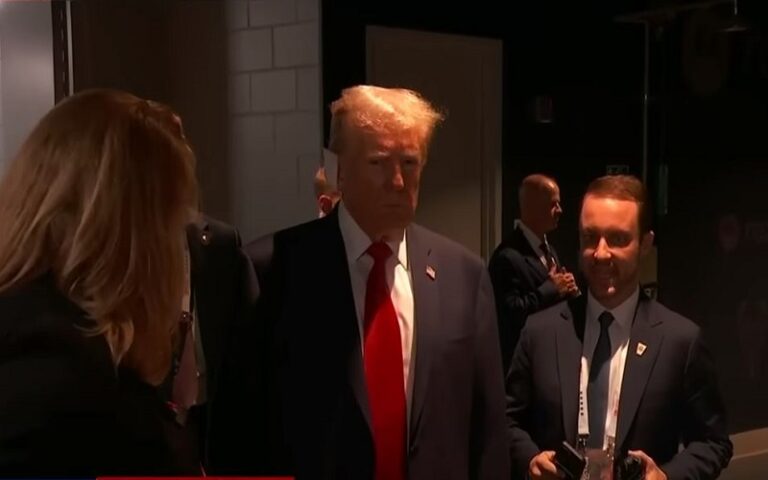
Politico has published a report on the Iranian regime’s efforts to assassinate Donald Trump and other senior U.S. officials following the death of Qassem Soleimani, the former head of the terrorist IRGC Quds Force.
The report states that since Soleimani’s death, Iran’s regime has consistently threatened retaliation, and U.S. officials have concluded that these threats are real and serious.
U.S. intelligence officials have also warned that these threats have increased in recent months.
For example, two failed assassination attempts on Trump were made in the summer of 2024, although direct links to Iran have not been proven.
“Tehran isn’t bluffing — and it isn’t giving up anytime soon.”
Politico notes that Iran’s threats to assassinate U.S. officials, particularly Trump and those involved in Soleimani’s killing, are broader and more dangerous than previously reported.
Matthew Olsen, U.S. Assistant Attorney General for National Security, has stated that Iran’s regime has clearly shown its intent to seek revenge on former U.S. officials.
The report references interviews with 24 U.S. officials who are directly aware of the attack on Soleimani and the subsequent threats.
Many of them have emphasized that Iran’s assassination threats are much more tangible than the threatening posts on social media.
They have also reported hacking attempts and digital surveillance against former officials and their families.
Additionally, there has been discussion of the Iranian regime’s efforts to track a U.S. official during an overseas trip.
The report mentions the U.S. government’s efforts to protect former officials from these threats.
However, some of these officials do not receive government support and are forced to secure their own protection.
One individual who spoke to Politico, Megan Reiss, former National Security Advisor to Mitt Romney, said that many of those targeted by Iranian threats have received no support.
Politico also highlights the significant budget allocated for protecting these officials, noting that around $150 million is spent annually to safeguard those targeted by Iran’s threats.
Some officials believe that the threats have reached a level where the killing of a U.S. official may occur, which would be considered an act of war.
The report discusses the impact of Qassem Soleimani’s death on U.S.-Iran relations, explaining that Soleimani was one of the close confidants of Iran’s Supreme Leader, Ali Khamenei.
Following his death, Iran’s regime responded with missile attacks on U.S. bases in Iraq, which resulted in no casualties.
However, the regime’s proxy forces in the Middle East continued rocket and drone attacks on U.S. forces, while Tehran also began planning assassinations of U.S. officials.
Politico goes on to mention Iran’s efforts to assassinate former Trump administration officials, including John Bolton, the former National Security Advisor.
In 2021, a member of the Iranian Revolutionary Guard Corps (IRGC) sought to hire an assassin to kill Bolton in the U.S.
The report concludes by emphasizing that threats against Trump are also increasing.
In July 2024, the FBI arrested an Iranian agent who was attempting to arrange the assassination of a U.S. political figure in retaliation for Soleimani’s death.
Trump’s campaign has also called for increased security measures for him in light of these threats.
