

Livelihood Basket in Iran Has Increased to Approximately 370 Million Rials Per Month
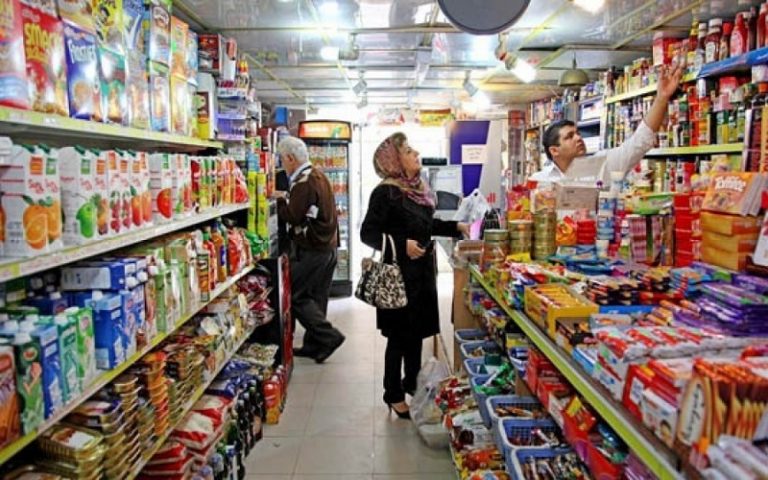
The state-run ILNA news agency reported that the cost of the household livelihood basket in Iran has increased to 367.8 million rials (approximately 583 USD), stating that wages do not even cover one-third of living expenses.
Currently, the minimum monthly wage for workers covered by labor law, who are married and have children, is around 110 million rials (approximately 174 USD).
ILNA emphasized in its report that in recent months, the living costs of working families have increased due to heavy inflation affecting all goods and services. It added that in September, bread prices in various provinces rose by at least 25%, and in early October, the government officially raised the prices of milk and dairy products by 20%.
According to this news agency, taking these price increases into account, the livelihood basket calculated by labor activist Faramarz Tofighi for September is based on data from the Pasteur Institute and the Statistical Center of Iran, which includes official rates of food items.
He said: “The minimum wage for 2024 only covers 29% of living expenses, or the 367.8 million rials livelihood basket. In simpler terms, workers receiving the minimum wage are able to meet only 29.62% of their monthly living costs.”
The rising prices have led Mohsen Bagheri, a worker member of the Supreme Labor Council, to criticize the prolonged wait for the council’s tripartite meetings.
Bagheri said that since the beginning of this year (March 21), not a single meeting of the Supreme Labor Council has been held, and this approach is a violation of the explicit law.
The Supreme Labor Council is responsible for setting the annual minimum wage, but its performance has been heavily criticized by independent labor activists and unions.
Meanwhile, Hamid Haji-Esmaeili, a labor market expert, told the state-run Khabar Online news website that the main reason why workers, retirees, and consequently employees, are demanding wages to be set twice a year is the rising and fluctuating prices throughout the year, as well as the inflation that occurs over the course of the year.
So far, the government of Massoud Pezeshkian has not taken any action regarding the livelihood problems of workers and other wage earners. This comes despite the fact that in the short period since the 14th government took office, the prices of certain consumer goods have seen a significant increase by government order.
Iran’s Health Ministry Is Disregarding Nurses’ Rights
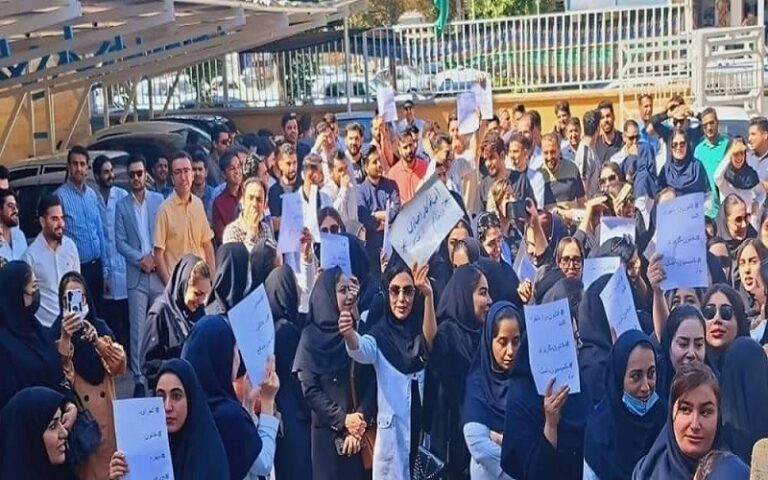
The state-run newspaper Donya-e-Eqtesad, in a report titled “Nurses Between Heaven and Earth,” quoted Mohammad Sharifi-Moghaddam, Secretary-General of the Nurses’ Association, as saying that the Ministry of Health is neglecting the real rights of nurses, and the new health minister has yet to take any meaningful action.
In its October 10 report, Donya-e-Eqtesad wrote that for nearly 17 years, no one has listened to the nurses, and despite paying a large portion of their claims, it is unclear what the situation in the nursing community is like.
The newspaper highlighted these questions: Will the annual migration of 2,000 nurses decrease? Will 50,000 newly graduated nurses join Iran’s nursing community each year? And will nurses who are currently working for Snapp (a popular ride-hailing service in Iran) return to hospitals?
The newspaper’s focus on these questions is because nurses’ issues go beyond unpaid wages. A nursing activist told Donya-e-Eqtesad: “It is still unclear; the nursing committee that was supposed to be formed in the parliament—where has it gone, and which of the demands are currently being followed up?”
Sharifi-Moghaddam also told the newspaper: “Some of the payments made so far have been related to overdue mandatory overtime,” and he emphasized that this mandatory overtime was against the nurses’ will.
Read more:
According to Sharifi-Moghaddam, one of the main demands of the nurses is the full implementation of nursing services, which was approved by the parliament in 2007.
The Secretary-General of the Nurses’ Association also stressed that five or six staff members, from nurses to head nurses, are involved in caring for a single patient. He added that their total wage for each patient is 2.7 million rials (approximately 4.4 USD), of which 14% goes to the hospital director.
He added: “In the current situation of the nursing community in Iran, many people take the nursing entrance exam to prepare for migration, while many nurses are changing professions and working for Snapp. Fifty thousand have graduated, but they are not being employed.”
Javad Tavakoli, a member of the regime’s Central Council of the Nurses’ Association and a member of the Nursing Board of Mashhad, posted on X: “The Ministry of Health continues to either not hear or not understand the nurses’ demands.”
Tavakoli added: “Nurses are saying our issue is removing service barriers. The formula for calculating overtime wages and special rates needs to be changed. The Ministry of Health keeps saying they are paying overdue overtime wages (200,000 rials per hour, equivalent to 32 cents) and a very minimal rate.”
In recent months, nurses have held nationwide strikes and labor protests in response to the failure to implement the tariff law, mandatory overtime, and meager wages, which have received widespread support from labor unions.
Iranian Political Prisoner Sentenced to Death Goes On Indefinite Hunger Strike
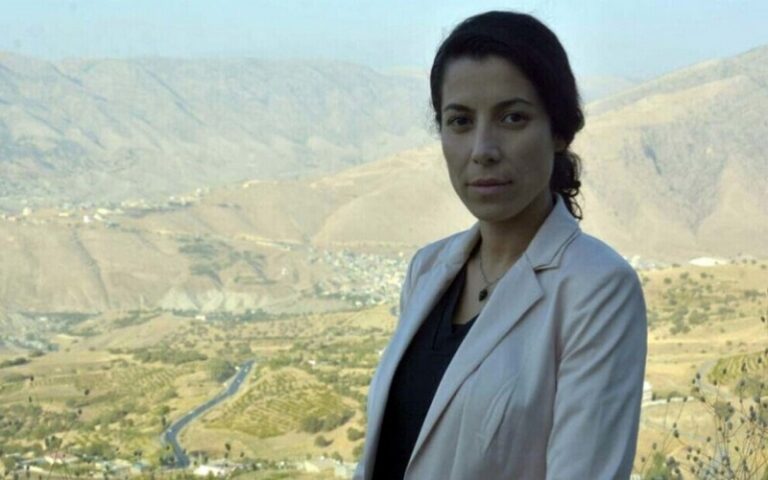
Varisheh Moradi, a political prisoner held in the women’s ward of Evin Prison, has announced that she is going on a hunger strike to protest the deprivations she has faced and the executions carried out by the Iranian judiciary.
On October 10, news and human rights sources reported that this political prisoner stated she would go on an “indefinite hunger strike” in protest of the increasing number of death sentences and executions in Iran, as well as the uncertainty of her own status and the restrictions imposed on her.
A source close to Varisheh Moradi’s family confirmed to Hrana (a human rights news agency) that she “has started a hunger strike in protest of her continued detention and the uncertainty of her situation, as well as being deprived of visits with her family and lawyer since May of this year, a restriction ordered by Judge Abolqasem Salavati, and the increasing number of death sentences in Iran.”
Varisheh Moradi is imprisoned on the charge of “Baghi” (rebellion) through her membership in a Kurdish opposition group. “Baghi” refers to opposing and fighting against the Islamic ruler, a charge in the Iranian regime uses for those who rise against the regime.
The first court session was held on June 16 in Branch 15 of the Islamic Revolutionary Court, presided over by Judge Abolqasem Salavati, with the defendant’s lawyers present. The second session was held on October 5.
Ms. Moradi was arrested by Iranian intelligence agents in the suburbs of Sanandaj on July 31, 2023, and transferred to Tehran. In January 2024, after the completion of her interrogation, she was moved from Ward 209 of Evin Prison to the women’s ward.
The Iranian judiciary has previously sentenced several political and ideological prisoners to death on the charge of “rebellion,” and some have been executed in recent years.
Two other female political prisoners, Sharifeh Mohammadi and Pakhshan Azizi, are also currently on death row.
Executions Intensify in Iran on the Eve of World Day Against the Death Penalty
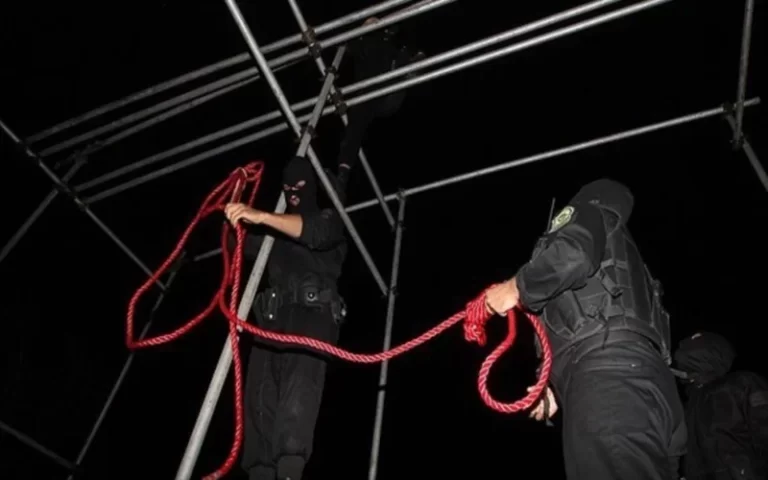
October 10 is the World Day Against the Death Penalty. However, the Iranian regime, under the guise of religion, continues to execute people using death sentences.
Global resolutions, as the first step toward the complete abolition of this inhumane punishment, were passed for the first time in 2007 and again in 2008 by the United Nations General Assembly.
The Council of Europe and the European Union have emphasized in a statement their strong opposition to the death penalty under any circumstances.
Amnesty International Report
According to Amnesty International, 144 countries have abolished the death penalty. Of these, 112 have legally abolished it, and 32 do not carry out executions. In its 2023 annual report on the death penalty, Amnesty International recorded at least 1,153 executions worldwide that year.Unrelenting Executions in Iran
The Iranian regime carries out public hangings in front of family members of the victims, and even children, crushing their hearts, minds, and spirits. Amnesty International’s report states that in 2023, the Iranian regime alone was responsible for more than three-quarters of the world’s executions, amounting to 853. The actual number of executions in Iran is likely much higher.The Dire Situation in 2024
The situation has worsened significantly in 2024. Since the beginning of the year, at least 559 people have been executed in Iranian prisons. More than 30 executions took place just on October 1 and 2. Iran remains the only religious dictatorship in the world today. This religious fascism survives due to two factors: internal repression and external killings and terrorism. Over the past year, the Iranian regime has intensified its interventions in Middle Eastern countries and the killing of people in the region, aiming solely to suppress protests within Iran and prolong its rule.182 European Goods Banned From Being Loaded with Iranian Trucks
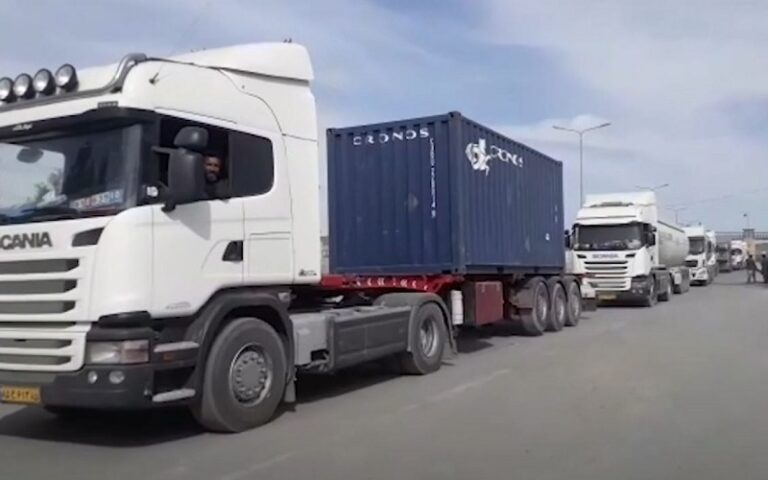
Ali Mahmoudi Sarai, the chairman of the Iran Transportation and Logistics Federation, announced on Tuesday, October 8, in an interview with the regime’s ILNA news agency about the new sanctions from the European Union against Iranian trucks.
According to Sarai, for more than a month, the loading of 182 European goods with Iranian trucks has been “prohibited.”
While France has stopped issuing transit permits, known as “Zola,” for Iranian truck drivers since the beginning of 2023, similar news has emerged regarding Germany and Italy’s refusal to provide visas to Iranian truck drivers.
According to Mahmoudi Sarai, currently only Italy and Germany, albeit in a limited manner, are issuing visas to Iranian drivers among European countries.
Previously, the prolonged process of issuing visas for Iranian truck drivers had caused them to be grounded and unable to export their shipments.
Last year, even Russia had delayed many Iranian truck drivers at the borders due to the lack of visa issuance.
During the time that Iranian trucks have been banned from entering Europe, Turkish truck drivers have filled their place in the transportation market and are moving through Europe without problems.
Apart from Europe’s opposition to issuing transit permits for Iranian trucks, the international insurance coverage for trucks known as “Green Insurance” has also become another obstacle for Iran’s road transit to Europe.
Iranian trucks are unable to obtain Green Insurance due to EU sanctions, and according to reports, they purchase this insurance from intermediaries at the Bulgarian border at three times the price.
Fatemeh Ghanbarzadeh, the vice president of the Transportation, Transit, and Logistics Commission of the Iranian Chamber of Commerce, recently reported efforts to lift Iran’s suspension from the “Convention on the Harmonization of Green Card Insurance” and stated that “the necessary assurances regarding the adoption of required mechanisms have been provided to the Green Insurance Office in Geneva.”
Despite benefiting from a suitable geographical position for exporting goods and services, Iran has been deprived of revenues from transit and road transport due to sanctions.
On the other hand, the Iranian regime’s passivity in developing transit infrastructure, along with sanctions, has led to the creation of corridors in the region that bypass Iran.
The “Zangezur Corridor,” which connects Azerbaijan through Armenia to Nakhchivan and Turkey, is one of these routes that has recently sparked significant criticism regarding the cooperation between Russia and the Iranian regime.
UN Special Rapporteur: Death Penalty in Iran Must End

Mai Sato, the UN Special Rapporteur on Iran, called for the abolition of the death penalty in Iran in a video message ahead of October 10, “World Day Against the Death Penalty.”
In a video posted on X, Ms. Sato emphasized that this day holds particular significance for Iran due to the alarming increase in the use of the death penalty by the regime, with over 500 executions in the current year.
The UN Special Rapporteur on Iran has identified one of her major concerns as the targeted use of the death penalty by the Iranian government against women activists and supporters of the 2022 protest movement following the death of Mahsa (Jina) Amini in the custody of the morality police in September 2022. Ms. Sato stated that Iranian regime officials responded to the demands of this movement, including accountability regarding human rights and gender equality, with increased violence and punitive measures. In part of her message, the UN Special Rapporteur on Iran also referred to the so-called “Noor” plan and the “Chastity and Hijab” bill in the Iranian regime, which she emphasized further showcases the forms of governmental oppression aimed at creating an atmosphere filled with fear and pervasive control. Mai Sato, while praising the courage of the Iranian people, especially women and girls, despite increasing pressure and repression, also mentioned the campaign “No to Executions Tuesdays” in Iranian prisons; an initiative led by political prisoners who go on hunger strikes every Tuesday to oppose the death penalty.10 October is #WorldDayAgainstTheDeathPenalty. 500+ executions were reportedly carried out in #Iran since Jan '24. This includes the use of #CapitalPunishment against women activists &supporters of the Woman, Life, Freedom movement. I join the call to end #DeathPeanlty in this📹 pic.twitter.com/k79W4kZ4ll
— Mai Sato (@drmaisato) October 9, 2024
11 Prisoners Executed in Iran on The Eve of World Day Against the Death Penalty
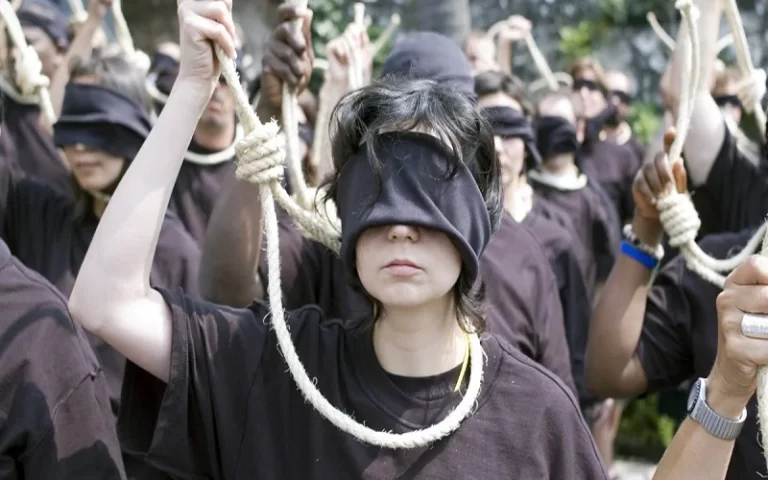
On the eve of World Day Against the Death Penalty, judicial authorities in Iran executed 11 prisoners, including a woman and a retired educator, at Ghezel Hesar Prison in Alborz Province early on Wednesday, October 9.
On Wednesday, at least 11 prisoners, including six “security” prisoners, a woman, and a retired educator, were executed by the judicial authorities of the Iranian regime at Ghezel Hesar Prison in Alborz Province.
Previously, the Iranian regime has repeatedly sentenced its opposing citizens to death under charges such as “espionage, corruption on earth, warfare, and rebellion,” executing some of them.
According to this report, among those executed were two citizens from Sistan and Baluchestan identified as “Ahmad Narouei, 33 years old, and Mohammad Eshaq-Zehi, 31 years old, both from and residing in Zahedan.” Another executed individual was identified as Saeed Safaie, approximately 55 years old, from Harsin in Kermanshah Province, who was a retired educator.
One of the executed individuals has been identified as Mehdi Barahuyi, who reportedly was underage at the time of his arrest and was less than 18 years old.
Concurrently with these executions and on the eve of World Day Against the Death Penalty, Mai Sato, the UN Special Rapporteur on Human Rights in Iran, stated in a video message for the 24-hour support program of the “No to Executions Tuesdays” campaign that at least 500 executions have been reported in Iran since the beginning of the current Gregorian year, which, according to her, includes the use of the death penalty against female activists and supporters of the nationwide protests of 2022.
Additionally, between October 10, 2023, and October 8, 2024, at least 811 people were executed by hanging in various regions of Iran, with four of these executions taking place in public.
During this period, death sentences were issued for 186 prisoners, with the ruling for three of them being execution in public.
The Iranian regime has increased the number of executions amidst its adventures in the Middle East. In this way, the regime aims to prevent the outbreak of widespread protests like that occurred in 2022.
October 10th is designated as World Day Against the Death Penalty. This day was first introduced and named in 2003 by the “World Coalition Against the Death Penalty” to support the abolition of the death penalty and raise awareness of the conditions of prisoners sentenced to death.
Increasing Assassination Attempts by The Iranian Regime in Britain, MI5 Chief Warns
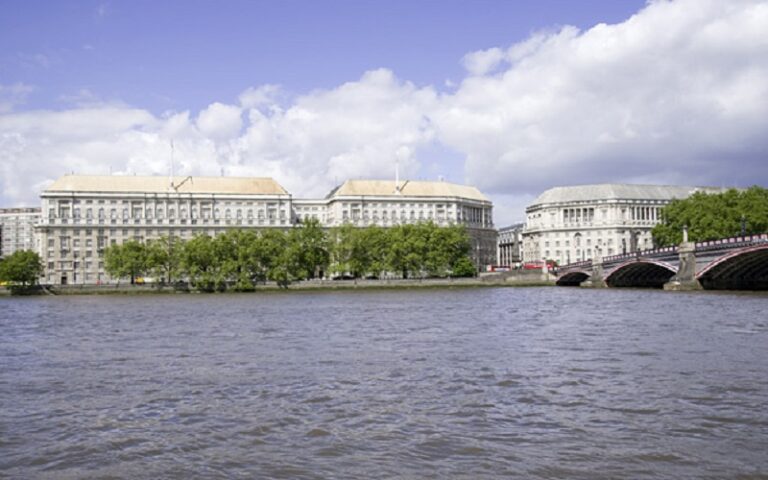
The Director-General of the UK’s domestic security service, MI5, reported a “stunning” rise in assassination attempts by the Iranian and Russian regimes on British soil.
On Tuesday, October 8, Director General Ken McCallum, in presenting his annual report, warned of the threats from Tehran and Moscow, as well as growing concerns about the activities of the Islamic State group (ISIS) and al-Qaeda.
According to this security official, “hostile” countries hire criminals to carry out their “dirty work.”
Ken McCallum stated at the London Counter-Terrorism Operations Center that since January 2022, MI5 and British police have responded to 20 plots backed by the Iranian regime, which posed potentially deadly threats to British citizens and residents.
This security official added that after the death of Mahsa Amini in the custody of the regime’s morality police in September 2022, London witnessed consecutive plots by the Iranian regime.
Following Mahsa Amini’s death, widespread protests erupted among Iranians inside and outside Iran, sparking a massive wave of opposition to the Iranian regime.
In April, Reporters Without Borders described the increasing threats against Iranian journalists in the UK as “unprecedented” and called on the British government to take action to protect their lives.
On Monday, August 6, 2023, the British Prime Minister’s office stated that the Iranian regime poses “a serious threat” to the UK and its allies, and “a direct danger” to Iranian dissidents and opposition members residing in Britain.
In another part of his speech, McCallum emphasized that like Russia, Iran uses everyone from drug traffickers to petty criminals for its operations.
McCallum warned that if Israel retaliates against a missile strike from Iran, Iran could expand its targets to include Britain.
According to him, escalating conflicts in the Middle East increase the risk of Iran’s aggressive activities spreading to the UK.
McCallum also mentioned that Israel’s conflicts with Iran-backed militias, including Hamas in Gaza, Hezbollah in Lebanon, and the Houthis in Yemen, could potentially trigger terrorist attacks in Britain.
Previously, the British Home Secretary had described Iran’s Islamic Revolutionary Guard Corps (IRGC) as the biggest threat to the UK’s security, stating that the IRGC had increased its threats on British soil and employed criminal gangs to suppress opposition.
Iran’s Regime Uses the “Nazer” App to Monitor Ambulances and Identify Protesters
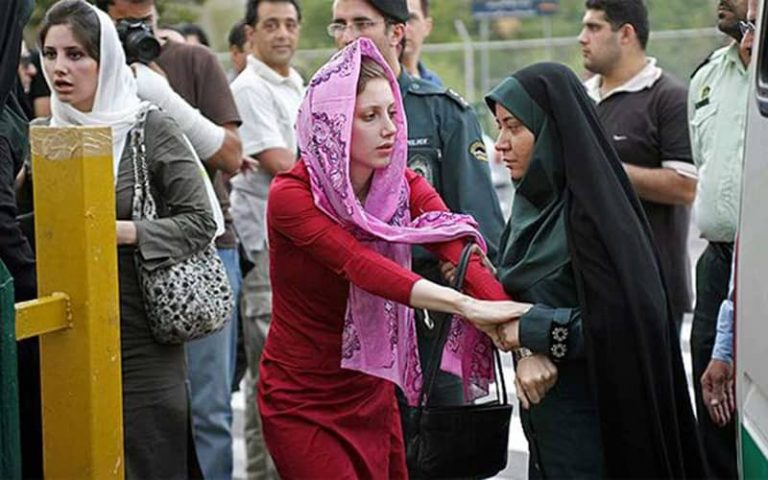
Filterbaan, an organization active in internet access rights in Iran, reports that the regime’s “Nazer” app, initially designed to monitor the enforcement of mandatory hijab, is also being used to track ambulances and identify protesters.
In a report on October 8, Filterbaan pointed out that ambulances are among the vehicles listed for reporting violations, highlighting that enforcing mandatory hijab laws is a priority for the regime, “even during medical emergencies.”
Filterbaan noted that “Nazer” was initially designed to track hijab violations in vehicles, but now it also monitors behaviors like alcohol consumption, breaking fast during Ramadan, and public protests. The report added that the Nazer app is part of the government’s policies to suppress lifestyle choices that don’t align with its laws.
Filterbaan further explained that its research shows the latest version of “Nazer” has been developed to increase surveillance over citizens’ lives, allowing the reporting of vague concepts such as “behaviors contrary to public norms.” Additionally, the new version aims to identify participants in protests and suppress peaceful gatherings.
According to the report, the Nazer app is a powerful surveillance tool with broad capabilities for monitoring and controlling citizens, particularly targeting women. It seeks to criminalize a wide range of lifestyle choices, as well as suppress dissenters, critics, and political activists, thereby violating rights outlined in international human rights documents and even the regime’s own laws.
The new “Nazer” aims to identify protest participants and suppress the freedom of peaceful assembly.
Filterbaan also noted that the Nazer app is not available to the general public in app stores. Instead, it is distributed through specific channels like police websites and Iranian messaging platforms like “Eitaa” to select individuals and regime supporters, indicating its targeted use.
This internet rights organization highlighted the term “unrest” in the updated version of Nazer, stating that the app criminalizes peaceful protests and dissenting voices. It stressed that this approach reflects the regime’s policy of ignoring citizens’ rights to peaceful assembly and classifying protests as “disruption of public order.”
According to Filterbaan, the Nazer app was originally designed to allow its users—police forces and approved volunteers like hijab enforcers—to “report individuals violating mandatory hijab laws while driving.”
Now, the app can identify the exact position of passengers inside a vehicle and classify them into three roles: driver, front passenger, and rear passenger, which “makes violation reporting more precise and allows for more accurate punishment of citizens.”
The report states that the new version of “Nazer” includes a comprehensive list of all car models available in Iran.
The Nazer app was designed and produced by the “Naji Research and Development Company” for use by the regime’s law enforcement and security forces.
Earlier, in continued efforts by the Iranian regime to control citizens, Mehdi Omidvar, spokesperson for the Iran Chamber of Guilds, announced on October 2 that based on the orders of the Public Places Supervision Unit of the police, a “Public Places Video Surveillance System” has been established, giving regime law enforcement and intelligence officials the ability to monitor commercial and service units via video.
The bill known as the “Hijab and Chastity” law has been approved by the Guardian Council and sent to the Regime’s Majlis (parliament). In addition to violent enforcement of mandatory hijab for women, this bill calls for broader “gender segregation” in universities, administrative and educational centers, parks, recreational areas, and even in the medical sectors of hospitals.
“No to Executions Tuesdays” Campaign: 30 Executions in Two Days
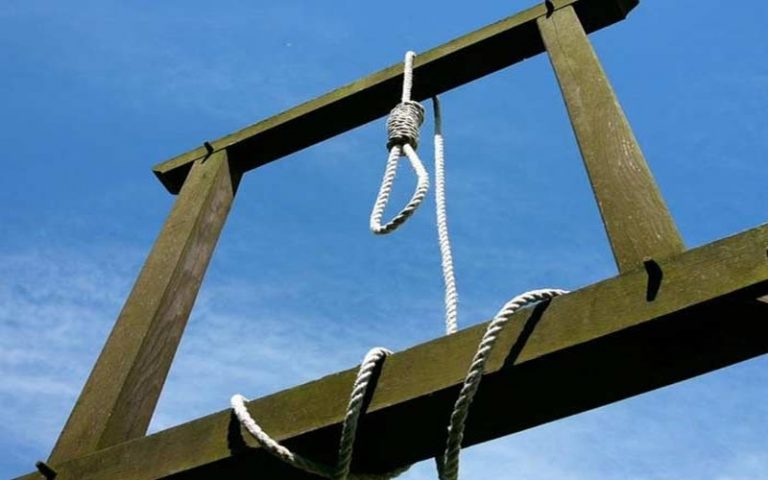
The “No to Executions Tuesdays” campaign entered its 37th week of hunger strikes in 22 different prisons across Iran on October 8, ahead of the “World Day Against the Death Penalty.”
In this week’s statement, the “No to Executions Tuesdays” campaign reported that at least 30 people were executed in various prisons across the country on October 1 and 2, including three women. Additionally, Mahmoud Dehmordeh, a death row prisoner in Zabol prison, died of a heart attack due to a lack of medical attention.
According to the statement, last week, a political prisoner named Hamid Hosseinnezhad Heydranlou was sentenced to death by the Revolutionary Court of Urmia. He had been detained since April 2023 and was subjected to severe torture. He was sentenced illegally, without due process, on the charge of “rebellion” (defined under Iran’s regime laws as opposing the Islamic ruler, typically referring to those who stand against the regime).
On the occasion of the “World Day Against the Death Penalty,” declared by the UN General Assembly, the “No to Executions Tuesdays” campaign harshly criticized the Iranian regime as one of the world’s worst human rights violators and called for serious global attention to the human rights situation in Iran.
The campaign stressed that since the beginning of 2024, nearly 450 people have been executed in Iran, while many other countries are moving towards abolishing the death penalty.
The members of the campaign have called on national and international political, civil, and human rights organizations to take action to “save the lives of death row prisoners in Iran” and urged the global community to “hold the leaders of the Iranian regime accountable for four decades of crimes against humanity and the mass killings of prisoners.”
The hunger strike on Tuesday, October 8, as a form of protest by the campaign members, took place in the following prisons: Evin Prison (Women’s Ward and Wards 4 and 8), Ghezel Hesar Prison (Units 3 and 4), Karaj Central Prison, Greater Tehran, Khorramabad, Arak, Isfahan’s Asadabad, Shiraz Nezam, Bam, Mashhad, Lakan Rasht (Men’s and Women’s Wards), Qaemshahr, Ardabil, Tabriz, Urmia, Salmas, Khoy, Naqadeh, Saqqez, Baneh, Marivan, and Kamyaran Prison.
