

Houthis Unveil a Missile Similar to Iran’s “Hypersonic Missile”
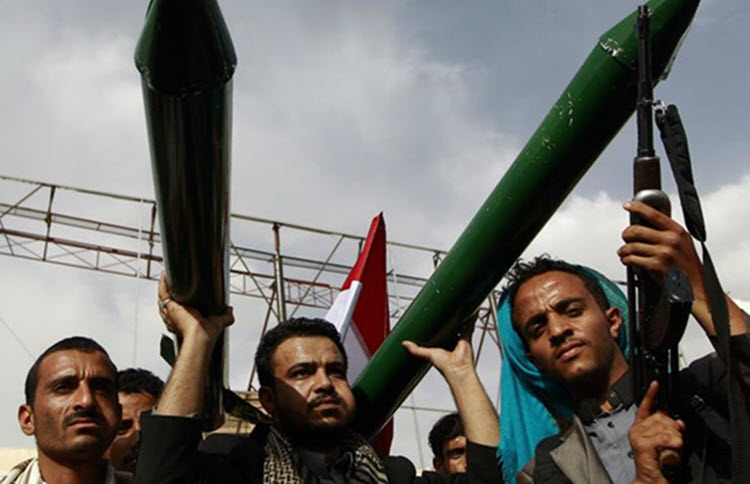
On Thursday, June 6, the Associated Press announced that the Houthis in Yemen, who are supported by the Iranian government, unveiled a new solid-fuel missile in their arsenal, which resembles a missile previously showcased by the Iranian regime and described as “hypersonic.”
The Houthis launched this new missile, named “Palestine,” towards the port of Eilat in Israel on Monday, triggering air raid sirens, but no reports of damage or casualties have been released.
Images released by the Houthis late Wednesday, June 5, show the missile rising on a mobile launcher and rapidly firing with white smoke emanating from its engine. According to the Associated Press, white smoke is common in solid-fuel missiles.
Solid-fuel missiles, which are faster than liquid-fuel missiles, are more efficient for Houthi missile attacks because their launch sites have been repeatedly targeted by the United States and its allies in recent months due to attacks on ships in the Red Sea.
The Houthis claim that the “Palestine” missile is their own creation. However, this militia, which controls parts of Yemen, the poorest country in the Arab world, does not have the capability to manufacture complex guided missile systems.
The Iranian regime has armed the Houthis despite the UN arms embargo during the Gaza war. While the regime claims it does not supply weapons to the Houthis, weapons, missile fuel, and parts manufactured by the Iranian regime have been found on ships seized by the United States and its allies.
Although Iranian media described the “Palestine” missile as Houthi-made, the design elements on the missile resemble other missiles manufactured by Iran’s Islamic Revolutionary Guard Corps (IRGC), including the “Fattah” missile.
The Iranian regime’s mission to the United Nations did not immediately respond to the Associated Press’s request for comment on the resemblance between the “Palestine” missile and the “Fattah” missile.
Excessive Dam Construction Causing Mass Destruction to Iran’s Nature
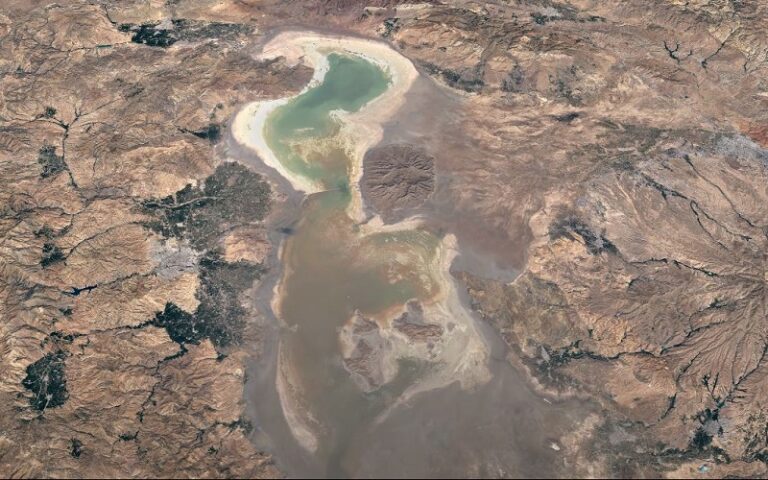
Abbas Mohammadi, director of the Mountain Watch Association and environmental activist, warned about the drying up of Lake Urmia, stating that the dam construction by the Iranian regime’s Ministry of Energy, costing tens of billions of dollars in recent years, “has been futile and our water situation is getting worse day by day.”
Criticizing the Ministry of Energy’s excessive dam construction and its destructive impact on pastures and “valuable archaeological sites,” he said the result of these actions has been “the submergence of many of Iran’s pastures, historical monuments, valuable archaeological sites, and the displacement of people.”
This civil activist, discussing the destructive impact of the Ministry of Energy’s policies on the drying up of Lake Urmia, told the Khabar Online website that “dozens of dams have been built on the rivers that flow into this lake, blocking the water paths that should feed the lake.”
The director of the Mountain Watch Association, pointing to the minimal impact of recent years’ rainfall on preserving Lake Urmia, warned that “whenever there is a slight increase in rainfall, various types of unsustainable and water-intensive agriculture develop, and there is absolutely no control over water consumption.”
He also spoke about the dangers of excessive drilling of multiple wells around Lake Urmia, stating that “they have done something to the land that it absorbs the water, leaving nothing to replenish the lake. All these factors have led to the drying up of Lake Urmia.”
Mohammadi warned about the intensifying water environmental crises, stating that at least “200 billion cubic meters of the country’s irreplaceable water resources” have been wasted and “by building dams or useless flood barriers, we have diverted rivers from their natural flow.”
This environmental activist spoke about “water wastage,” stating that “1,000 square kilometers, which is 3.5% of Iran’s land,” has subsided, and “3,000 square kilometers of this area subside by more than 10 centimeters per year.”
In another part of his conversation with Khabar Online, Mohammadi criticized the Iranian regime’s tourism policies, saying that “turning Ashuradeh Island in the Golestan region into a tourist destination,” carried out by the Thirteenth Government, was done without regard to “construction in the Caspian Sea area.”
For years, civil and environmental activists have been warning about the excessive extraction of groundwater and land subsidence.
In January 2024, the head of the National Cartographic Center stated that the average rate of subsidence in Iran is five times the global average and said that the average subsidence in Iran has reached 15 centimeters.
However, it seems that no serious action has been taken in this regard over the years.
The Ministry of Energy has formed a committee titled “Adaptation to Water Scarcity,” but experts say this committee has not taken the slightest action regarding aquifer extraction, aquifer deficits, and land subsidence.
Iran’s Nuclear Program Has Become a Serious Challenge to International Security, U.S. Warns
The United States representative to the International Atomic Energy Agency (IAEA) read the U.S. statement on Wednesday, June 5, coinciding with the issuance of an IAEA resolution against the Iranian regime.
The statement emphasized that the Iranian regime’s nuclear program has created a serious challenge to international security.
“Iran’s nuclear program poses such a serious challenge to international security,” the statement reads in part.
This statement, appreciating the efforts of the Director General and the IAEA Secretariat in engaging with the Iranian regime on serious and unresolved issues related to the implementation of Iran’s safeguards agreement under the Treaty on the Non-Proliferation of nuclear weapons (NPT), adds:
“We appreciate the Director General’s detailed reporting on these critical issues, which is essential to the international community’s understanding of the nature of Iran’s nuclear program and the serious shortcomings in Iran’s cooperation with the Agency to date.”
The U.S. statement described the current approach of the Iranian regime regarding the nuclear issue as “highly problematic” and specified:
“Iran has thus far failed to provide the legally required cooperation necessary to resolve long outstanding safeguards issues involving evidence of nuclear material at undeclared locations. Iran’s lack of cooperation continues despite the resolutions adopted by the Board in recent years.”
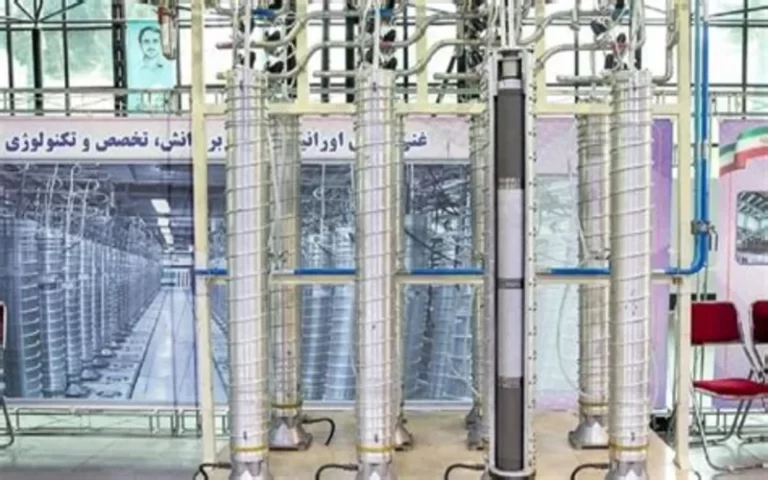
“Iran has repeatedly responded to the resolutions adopted by this Board in recent years with escalation instead of cooperation, including by producing 60 percent enriched uranium at its heavily fortified, underground facility at Fordow.” The statement added.
On June 5, the United States supported the resolution presented by the governments of France, Germany, and the United Kingdom, and specified that this resolution should be an initial step towards achieving a sustainable and effective solution for the Iranian regime’s nuclear program.
The U.S. also emphasized that Iran still has the opportunity to choose a different path from its current course and to provide the full cooperation required under its safeguard obligations.
The Board of Governors, consisting of thirty-five member countries, approved a resolution against the Iranian regime on Wednesday, calling on Iran to accelerate its steps to cooperate with the IAEA, the United Nations’ nuclear watchdog, and to revoke its recent decision to bar experienced inspectors.
France, Germany, and the United Kingdom welcomed the adoption of the resolution in a joint statement and said they hope the Iranian regime will use this opportunity to resolve significant issues so that no further action by the council will be necessary.
These three European allies of the United States in the Joint Comprehensive Plan of Action (JCPOA) further emphasized in their joint statement that the Iranian government must cooperate with the IAEA and provide credible technical explanations.
Twenty countries voted in favor of this resolution, twelve countries abstained, and only Russia and China opposed it.
IAEA Issues Statement on Iran’s Non-Cooperation on Nuclear Program
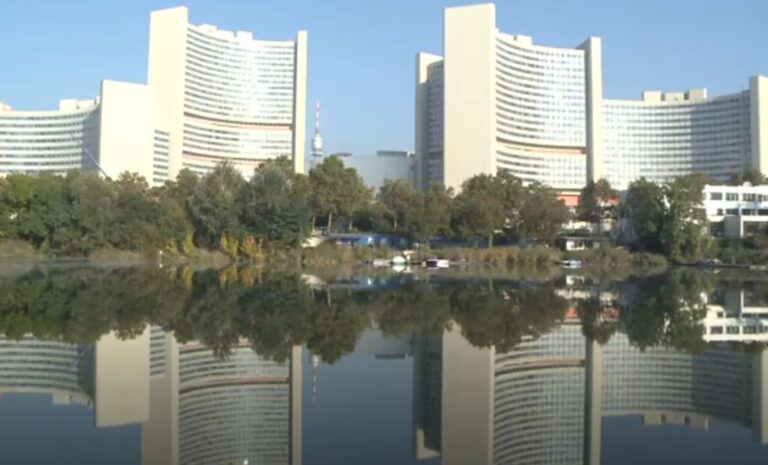
The Board of Governors of the International Atomic Energy Agency (IAEA) passed a resolution against the Iranian regime on Wednesday.
The Board of Governors, consisting of 35 member countries, has asked Iran in this resolution to take steps to cooperate with the agency more quickly and to revoke its recent decision to ban the entry of experienced inspectors.
According to Reuters and citing diplomats, 20 countries voted in favor of this resolution, 12 countries abstained, and only Russia and China opposed it.
Eighteen months ago, the Board of Governors also issued a resolution requiring the Iranian regime to cooperate with the agency’s investigations regarding uranium particles of anthropogenic origin found in locations where nuclear activities had not been previously declared to the agency.
While the number of sites under investigation has decreased from three to two, the Iranian regime has yet to provide the agency with a convincing explanation of how the uranium particles entered these sites.
Rafael Grossi, Director General of the International Atomic Energy Agency, said on Monday, June 3, that Iran’s stockpiles of enriched uranium, including stocks enriched up to 60%, continue to increase.
Rafael Grossi also said regarding the monitoring of Iran’s nuclear program that the agency’s stream of information on the production of centrifuges and their activities is fragmented. The Iranian regime has limited the agency’s monitoring of its nuclear program.
Grossi said it has been more than three years since the Iranian regime temporarily suspended the implementation of the Additional Protocol, and therefore, the agency has not had complementary monitoring access to Iran’s nuclear program for over three years.
Grossi also said regarding the public statements of Iranian regime officials about the government’s ability to build nuclear weapons and the possibility of changing nuclear doctrine that these actions only increase his concerns about the accuracy and completeness of Iran’s safeguard statements.
He said he once again asks the new Iranian government (the one that took office after Ebrahim Raisi was killed in a helicopter crash) to continue the high-level talks and technical exchanges that began as a result of the May meeting with Hossein Amir-Abdollahian (the Foreign Minister who was killed along with Raisi) and Ali Bagheri Kani, the current acting Foreign Minister.
In recent months, Iranian regime officials have threatened that they may produce nuclear weapons.
Ali Akbar Salehi, former Foreign Minister and former head of the Atomic Energy Organization of Iran, also indirectly stated in a television program in late February 2024 that Tehran has “the necessary capability to build an atomic bomb.”
These remarks come while Iranian regime officials have previously claimed that a fatwa by the supreme leader of the Iranian regime forbids the development of nuclear weapons.
The U.S. State Department spokesperson, reacting to the repeated nuclear threats by Iranian regime officials and referring to the recent threats about the possible change in the regime’s nuclear policy, said that the United States guarantees that Iran will never attain nuclear weapons.
Iran: Farmers Hold Protest Rallyin Ahvaz
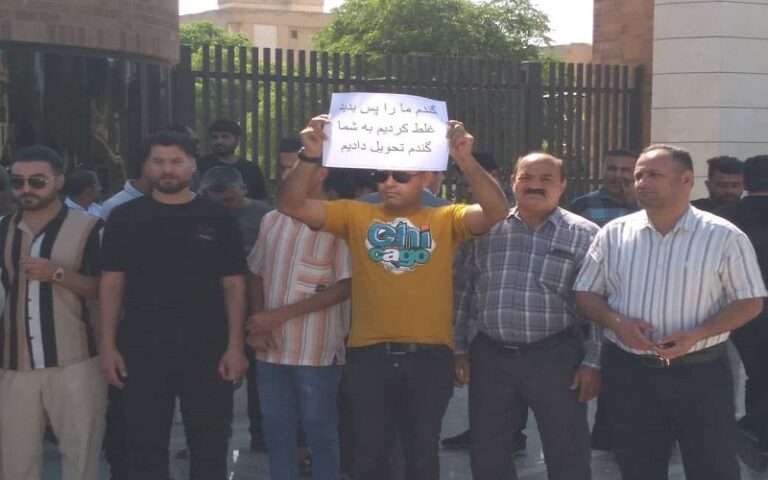
On Wednesday, June 5th, hundreds of wheat farmers held a protest in front of the Khuzestan Governor’s Office in Ahvaz, demanding payment for their crops.
According to reports the government owes farmers millions of dollars.
During the protest state security forces attempted to disperse the protesting farmers.
The state-run IRNA news agency reported that the wheat farmers, holding placards, protested the non-payment of their claims. It quoted Azim Sathi-Nejad, a representative of the protesting farmers, saying that they had delivered the wheat to the Grain Administration on April 20th, and according to the law, the payments should have been made within 24 hours of delivery.
According to the report, Mohammad Razi Jalali, Deputy Coordinator of Economic Affairs of the Khuzestan Governorate, promised some of these farmers that their payments would be made next week. This promise was made while on the same day, Ali Bahadori Jahromi, the government spokesperson, said, “The necessary resources for settling the purchased guaranteed wheat from the farmers have been allocated so that the payments can be made swiftly, and we aim to pay all the wheat costs within the first six months.”
However, in contradictory statements, Alireza Mohajer, Deputy Minister of Agriculture, said on the same day that the payment for the wheat sold at the guaranteed price to the government would begin next week.
In the promises of these two regime officials, no mention was made of the amount of debt that needs to be paid to the wheat farmers.
Meanwhile, according to the state-run Young Journalists Club (YJC), Attaollah Hashemi, head of the National Wheat Farmers Foundation, said, “From March 30th until today, about 1.35 million tons of wheat worth approximately 220 trillion rials (approximately $367 million) have been purchased from wheat farmers, but not a single rial has been paid.”
In this context, on June 1, Shargh newspaper quoted Ali Gholi Imani, head of the Wheat Farmers Empowerment Foundation, as saying, “Since the beginning of the harvest season, 2.7 million tons of wheat from farmers in 12 provinces have been purchased, valued at over 460 trillion rials (approximately $767 million), but only 23 trillion rials (approximately $38.3 million), or about five percent, of the farmers’ claims have been paid.”
The regime’s ISNA news agency also wrote on Wednesday that the value of wheat purchased by the government is around 400 trillion rials (approximately $666.6 million), of which only 23 trillion rials has been paid.
Referring to the heavy government debt to wheat farmers, Shargh added that this situation “has made them indebted and dependent on brokers because the government’s annual delays in paying farmers have caused liquidity shortages, delaying planting cycles, and consequently, disrupting and disorganizing the agricultural product market.”
According to Shargh, farmers say that they have set late May and June as the time for harvesting their crops to pay their loan installments to the banks, but now the government has not paid for their crops, and the banks have imposed late payment penalties on them, putting pressure on the farmers.
The newspaper wrote: A large number of farmers, after harvesting spring wheat, need to plant their second crop, but they do not have the necessary liquidity to buy pesticides, fertilizers, seeds, etc., and the timing for planting their second crop has been delayed.
Shargh noted that this issue has caused the average working age of farmers to exceed 57 to 58 years, and young people no longer have an interest in entering the agricultural sector.
In recent years, the guaranteed purchase price of wheat has been a contentious issue between the government and wheat farmers.
Standard Chartered Accused of $100 Billion in Financial Transactions with Tehran-Supported Groups
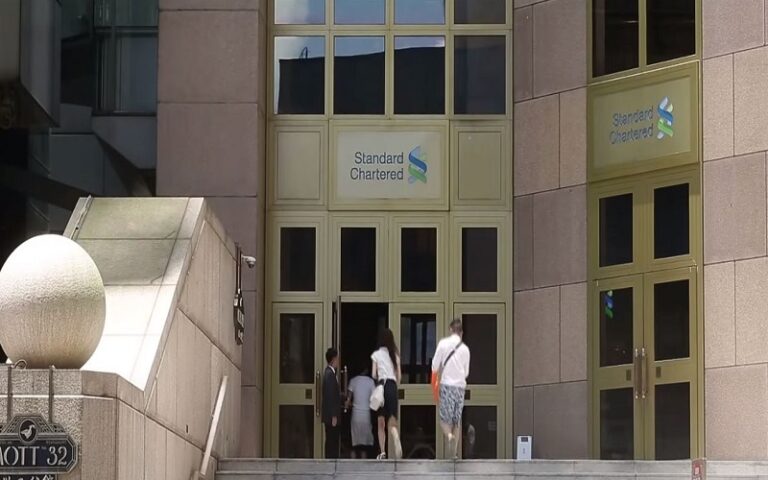
Reports published regarding documents from a New York court indicate that the UK bank Standard Chartered conducted $100 billion in transactions with sanctioned companies and terrorist organizations supported by the Iranian regime.
These documents focus on the statements of two whistleblowers who claim that between 2008 and 2013, Standard Chartered conducted $100 billion in transactions with groups supported by the Iranian regime, such as Hamas and Hezbollah in Lebanon.
The alleged transactions are part of the evidence presented by these whistleblowers, including Julian Knight, a former executive at Standard Chartered, who is urging the U.S. government to file a lawsuit against the bank.
Mr. Knight claims that previously undisclosed transactions reveal how the bank aided terrorist groups supported by the Iranian regime on a larger scale than previously thought.
Standard Chartered, which is based in the UK and conducts most of its business abroad, was fined twice for its connections to transactions linked to the Iranian regime in 2012 and 2019 but was never prosecuted.
In the new case, it is stated that the bank continued these transactions years after claiming to have stopped dealing with Iranian entities and foreign terrorist organizations.
It is further claimed that Standard Chartered facilitated billions of dollars in banking transactions for the Iranian regime, terrorist groups, and their front companies. These transactions are considered violations of U.S. sanctions and carry serious consequences.
The case alleges that the groups involved in the financial transactions include Hamas, Hezbollah in Lebanon, the Taliban, and al-Qaeda.
This comes after Standard Chartered paid $1.7 billion in fines over the past decade for money laundering to avoid U.S. criminal prosecution.
The whistleblowers are seeking to overturn a ruling that dismissed their previous complaint so they can proceed with the case.
They say that they provided these documents, which include numerous “legal transactions,” to U.S. authorities in 2012 and 2013.
The whistleblowers claim that upon closer examination of the documents, they discovered more transactions that had previously been overlooked.
Standard Chartered, while denying these allegations, says it is confident of being exonerated in court as it stopped trading with Iran in 2007.
Fivefold Increase in Chain Suicides in Iran’s Medical Community
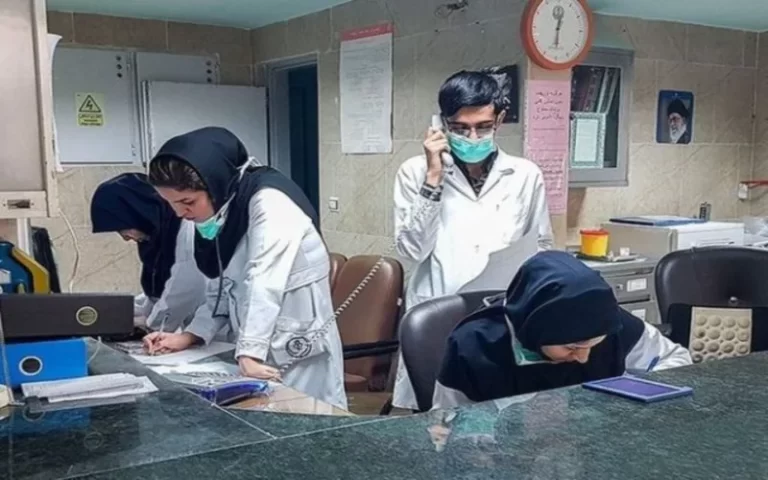
A study shows that the suicide rate in Iran’s medical community has increased fivefold, with “three suicides resulting in death” among healthcare staff reported this year alone.
Khabar Online website reports that the “chain of suicides” among healthcare staff in the new Iranian year (starting March 21) with the death of a young doctor named Parastoo Bakhshi, a cardiologist at Delfan Hospital.
A month later, in May, two more suicides were reported. The death of Dr. Samira Al-e-Saeedi, Associate Professor of Rheumatology and a member of the Rheumatology Research Center at Tehran University of Medical Sciences, occurred in early May, and the second incident, a week later, was the suicide of Dr. Zahra Maleki, a project doctor in Jask.
According to this study, the phenomenon of “doctor suicides” has been reported under various titles such as “sudden death” of a certain doctor since 2018, and since 2019, the medical community has experienced two different waves of suicides.
The second wave of doctor suicides occurred in the past three years, during which 13 interns committed suicide, and in January 2024, the wave was repeated with the suicides of three more residents within a week.
Hadi Yazdani, a physician with a professional doctorate in medicine, likened suicide in the medical community to a “domino” and, referring to the feelings of helplessness, hopelessness, and utter despair in these cases, said: “The death of Dr. Parastoo Bakhshi is the start of a chain and could be the source of other suicides.”
He emphasized that “the issue of systematic deficiencies in the Ministry of Health and its existing regulations, such as the project law, the distribution of personnel, the special cases commission, and the interference of local forces in the work of project doctors” are the most common motivations for suicide among healthcare staff.
According to this study, high workloads, numerous responsibilities, inadequate salaries, and lack of job security are fundamental problems for healthcare staff.
According to the Khabar Online website, based on statistics approved by the Migration Observatory, “74 percent of doctors and nurses expressed a desire to emigrate by the summer of 2022,” and the number of doctors emigrating last year exceeded 4,000.
Previously, the spokesperson for the Iranian Medical Council acknowledged the increase in suicides in the medical community, stating that “the very high workload and the mismatch between the salaries received and the activities performed are one of the reasons for the suicides of residents,” and said that these suicides are “multifaceted and complex.”
In an interview with the state-run ILNA news agency, Reza Laripour had said: “A resident these days cannot rent a house and cover daily living expenses in Tehran on their own, so with a sense of hopelessness about their career future and the destruction of their previous perceptions of entering the medical field, they first enter a period of stress and anxiety and after developing depression, turn to suicide.”
In January, the Iranian Psychiatric Association wrote a letter to Ebrahim Raisi, the then-president of the Iranian regime, reporting the high suicide rate among residents and warning that the continuation of this trend could lead to the “collapse of the country’s healthcare system.”
European Countries Submit Critical Resolution Against Iran to IAEA Board of Governors
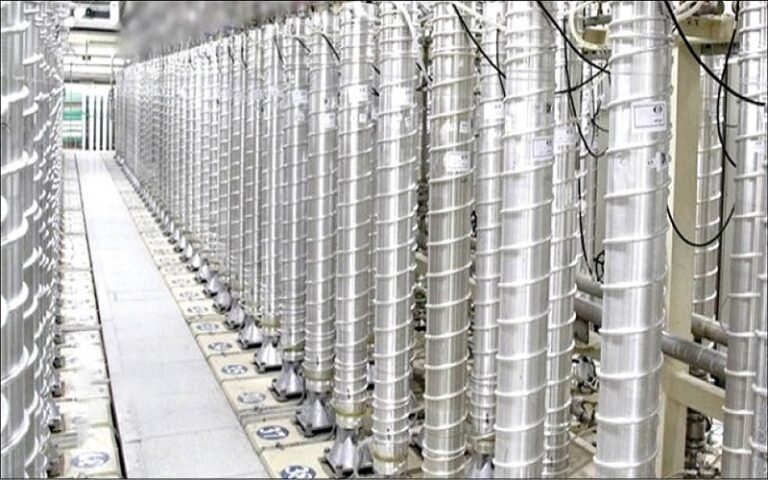
France, Britain, and Germany on Monday, June 3, in a draft resolution to the International Atomic Energy Agency (IAEA) Board of Governors, criticized Iran’s lack of cooperation with the agency.
Agence France-Presse (AFP) confirmed the submission of this critical resolution against Iran, quoting two diplomats.
Reuters also reported that in the draft submitted to the Board of Governors on Monday, it once again called for clarification about the uranium particles found at three undeclared sites in Iran, similar to two years ago.
The Wall Street Journal and Reuters reported last week that the United States did not support the submission of this resolution against Iran.
Reports indicate that France, Britain, and Germany, the three European countries that are part of the JCPOA (Joint Comprehensive Plan of Action), distributed a draft resolution against Iran to the members of the IAEA Board of Governors last week.
The five-day meeting of the IAEA Board of Governors began on Monday at the agency’s headquarters in Vienna, and it is expected to focus specifically on the status of Iran’s nuclear program.
IAEA Director General Rafael Grossi said on Monday at the start of the Board of Governors meeting that despite his visit to Tehran last month, he is deeply regretful that Iran has not yet reversed its decision to bar the agency’s experienced inspectors.
According to Mr. Grossi, Iran has increased its 60% enriched uranium stockpile and has halted its commitments under the Additional Protocol for over three years, during which the agency has been unable to access supplementary information in Iran and has lost continuous knowledge about the production and inventory of centrifuges, rotors, heavy water, and uranium ore concentrate in Iran.
The IAEA Director General clarified that no progress has been made in resolving the outstanding safeguards issues, Iran has not provided credible technical explanations regarding uranium particles of human origin found at the Varamin and Turquzabad sites, and it has not informed the agency about the current locations of nuclear materials and equipment contaminated with uranium particles.
Diplomats told the Wall Street Journal last week that if a resolution against Iran is not issued by the IAEA Board of Governors, the agency’s authority as a nuclear watchdog will be weakened, and the West’s credibility in countering potential proliferation threats will be undermined.
These diplomats emphasized that the three European countries believe the time has come to take a firm stance against Tehran’s continued non-compliance with non-proliferation commitments.
The last time the IAEA Board of Governors passed a resolution against Iran was 18 months ago, calling for immediate cooperation from the Iranian regime with the agency, particularly in clarifying the discovery of uranium traces at three undeclared sites.
In confidential reports sent to its members and a copy of which was obtained by Reuters on Tuesday, May 27, the IAEA states that no progress has been made in the past year on implementing the provisions of the March 4, 2023, agreement.
Tehran also continues to prevent many senior IAEA uranium enrichment experts from entering the country.
Three diplomats previously told Reuters that the draft resolution submitted by the three European countries to the Board of Governors focuses on investigations into Iran’s nuclear program and likely calls for Rafael Grossi to provide a “comprehensive report” on Iran’s nuclear activities, which would be more extensive than the usual quarterly reports of the agency.
In its latest quarterly report, the IAEA says that Iran has increased its 60% enrichment level to such an extent that if enrichment continues to the 90% level, it will have the capacity to produce three nuclear bombs.
Western powers say that such a level of enrichment has no civilian justification, and the IAEA has also stated that no other country enriches uranium to this level without the intention of building a nuclear weapon.
The Iranian regime claims that it does not intend to produce nuclear bombs and that its nuclear program is peaceful.
One day after Rafael Grosi’s statements regarding the status of the Iranian regime’s nuclear program and the possibility of reviewing and approving a resolution regarding Iran at the current meeting of the Council of Governors, Mohammad Eslami, the head of the Atomic Energy Organization, said, “If a resolution is approved or political pressure is applied, we will definitely react, and we have announced this.”
During his trip to Shahr-e Kord on June 4, Eslami stated, “We are in the phase of reducing commitments, and the criterion for us is the strategic action law of the Islamic Consultative Assembly to lift sanctions.”
Grossi: Enriched Uranium Stocks in Iran Have Increased
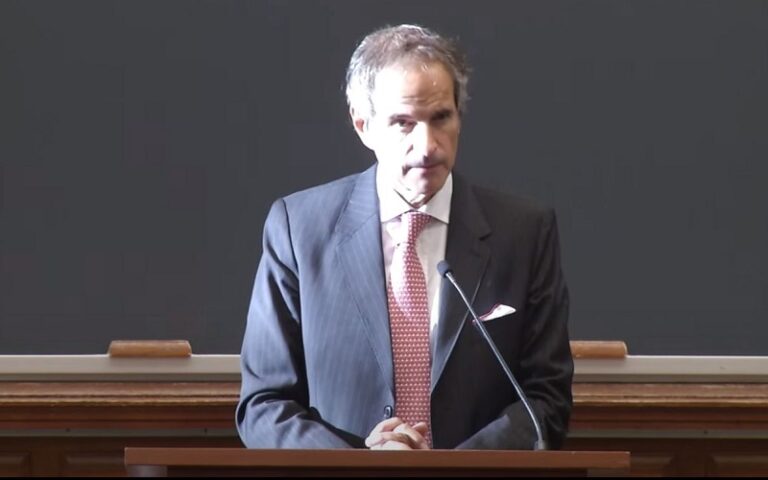
Rafael Grossi, Director General of the International Atomic Energy Agency (IAEA), an organization affiliated with the United Nations, said on Monday, June 3, that Iran’s enriched uranium stocks, including uranium enriched up to 60 percent, continue to increase.
He made this statement in a speech to members of the IAEA Board of Governors, announcing that this issue has been included in the latest verification and monitoring report on Iran’s nuclear program, which has been made available to the Board members.
The Board of Governors is one of the two policy-making bodies within the IAEA.
Rafael Grossi also stated that Iran has limited the IAEA’s oversight of its nuclear program, resulting in the disruption of the Agency’s information on the production of centrifuges, the number of stored centrifuges, their rotors and blowers, heavy water, and uranium ore concentrate.
He said it has been more than three years since Iran temporarily halted the implementation of the Additional Protocol, and therefore, the IAEA has not been able to have supplementary monitoring access to Iran’s nuclear program for over three years.
Grossi, addressing other challenges the IAEA faces with Iran, stated that there has been no progress in resolving the remaining safeguards issues.
He said that the Iranian government has not provided the IAEA with “credible technical explanations” regarding uranium particles found in Varamin and Turquzabad, nor has it informed the Agency about the current location or locations of nuclear materials or contaminated equipment.
Those uranium particles were of anthropogenic origin, meaning they were not naturally present there. Grossi said that Iran has not yet implemented the modified Code 3.1, as it claims to have suspended its implementation.
This provision requires Iran to provide the IAEA with design information as soon as it decides to construct any nuclear facility. He stated that these unresolved issues must be addressed to enable the IAEA to ensure that Iran’s nuclear program is exclusively peaceful.
He also expressed concern over public statements by Iranian officials regarding the government’s ability to produce nuclear weapons and the potential change in nuclear doctrine, saying that these actions only heighten his concerns about the accuracy and completeness of Iran’s safeguard declarations.
In recent months, Iranian officials have threatened that the government might produce nuclear weapons.
Grossi visited Tehran in early May and met with Hossein Amir-Abdollahian, who was then the Iranian Foreign Minister, and Mohammad Eslami, head of the Atomic Energy Organization of Iran. He said that during this visit, he presented “several concrete proposals” to reinforce the joint statement issued on March 4, 2023, for increased oversight of Iran’s nuclear program.
However, Grossi expressed deep regret that Iran has not reversed its decision to prevent some of the most experienced IAEA inspectors from entering its nuclear facilities.
He said he still welcomes Iran’s agreement that the March 2024 joint statement continues to provide a framework for cooperation with the IAEA and resolving the remaining issues.
He once again called on the new Iranian government to continue the high-level dialogues and technical exchanges initiated during the May meeting with Hossein Amir-Abdollahian (the Foreign Minister who was killed along with Raisi) and Ali Bagheri Kani, the current Acting Foreign Minister.
Khamenei: Hamas Attack on Israel Was Exactly What the Region Needed
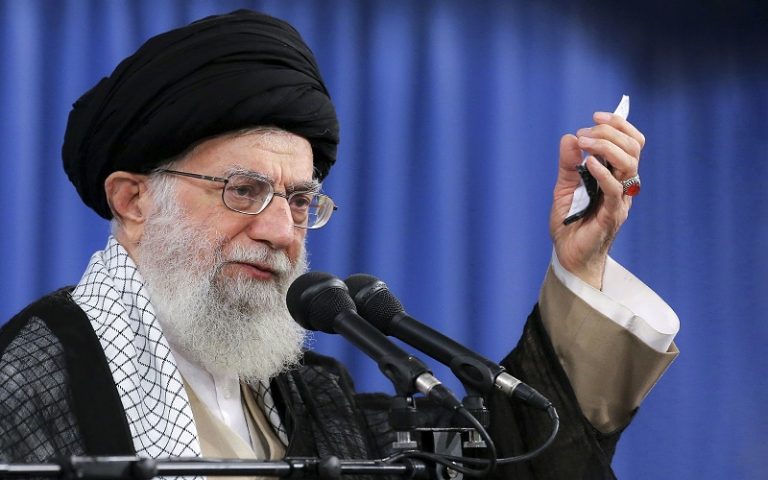
On Monday, June 3, during a government ceremony marking the anniversary of Ruhollah Khomeini’s death in southern Tehran, Iranian regime supreme leader Ali Khamenei said, “The Hamas attack on Israel was ‘exactly what the region needed,’ and Israel has ‘suffered setbacks from which it will not recover.'”
According to Khamenei, the Hamas attack coincided with a plan by the United States, Israel, and “some regional countries to change the dynamics in the region.”
The President of the Palestinian Authority, in this statement, highlighted the devastating consequences of the Hamas attack on Israel on October 7, including the death of “more than 36,000” Palestinians, the injury of “83,000 people,” and the destruction of Gaza’s infrastructure, including hospitals, schools, mosques, churches, and the displacement of thousands of Palestinians. He described Khamenei’s remarks as sacrificing the blood of Palestinians and thousands of Palestinian children, women, and elderly.
Ten days ago, Hassan Nasrallah, the leader of Lebanon’s Hezbollah group, which is designated as a “terrorist group” by the US and some Western countries, said that Iran supports its proxy groups with “money, weapons, training, expertise, and experience,” and that Ebrahim Raisi had “a great commitment” in this regard.
In the same session, Khamenei, in remarks seemingly directed at supporters of negotiations with the West, said that Raisi “did not trust the enemy’s smile.”
Khamenei also attacked critics of Raisi, who was killed in a helicopter crash, saying, “I felt sorry for Raisi; during his lifetime, some were not willing to say a word of these things.”
Immediately after the Hamas terrorist attack on October 7, Iranian regime officials, while expressing their firm support for it and continuing their decades-long policy, repeatedly called for the destruction of Israel.
The day after the October 7 terrorist attack, Lebanon’s Hezbollah, the main proxy arm of the Iranian regime, began launching rockets toward northern Israel, and tens of thousands of Israeli citizens have been forced to leave their homes.
In this context, Yemen’s Houthis, also supported by Iran’s regime, have attacked commercial ships passing through the Red Sea and the Bab-el-Mandeb Strait, causing disruptions in global shipping.
Other militia groups supported by the Iranian government in Iraq, Syria, and Lebanon have also occasionally carried out attacks against Israel and US military bases in the region.
