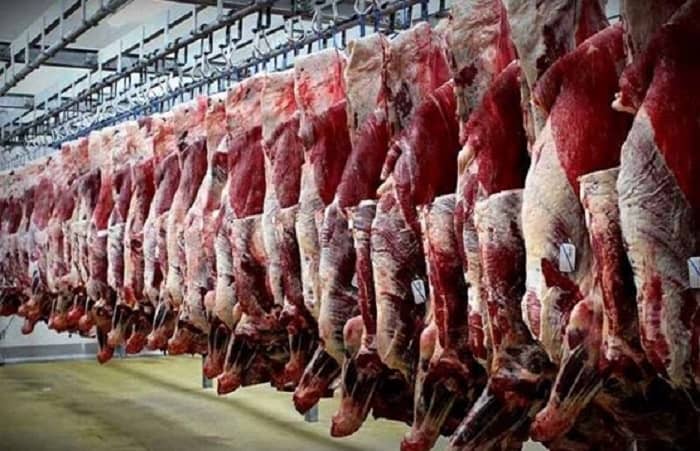
Mehdi Yousefkhani, the head of the Tehran Union of Poultry and Fish Sellers, reported a decrease in demand for fish due to the reduced purchasing power of the people.
Yousefkhani told the regime’s ILNA news agency on Sunday, June 2, “The current trend in the market for various aquatic animals, including fish, is that the prices of both farmed and wild-caught fish are higher than what people can afford.”
He added that currently, throughout all seasons of the year, there is a decline in demand for both wild-caught and farmed fish.
According to this trade official, the price of fish plays a significant role in people’s choices and given that the prices of farmed fish are significantly lower than those of wild-caught fish, the demand for farmed fish is higher.
ILNA news agency reported that the current prices are 6.75 million rials per kilogram for sturgeon, 2.4 million rials per kilogram for farmed salmon, and 2.3 million rials per kilogram for farmed trout.
Additionally, the price for red snapper is 2.5 million rials per kilogram, and various types of fresh shrimp are sold for an average of 4 million rials per kilogram.
This is not the first time that trade officials, government centers, and media outlets have reported a decrease in the purchase of fish and other protein products in Iran.
Previously, the Vice President of the Iranian Canning Syndicate had stated that canned tuna was a staple food for workers and students, but now many people have removed canned tuna from their shopping baskets due to its high price.
Earlier this year, the Statistical Center of Iran, by publishing the year-on-year inflation rate for 2023, announced that various types of meat were leading in price increases with a 50.9% inflation rate.
On Saturday, June 1, the Statistical Center of Iran also announced that among the 53 food items in May, the highest price increase compared to the previous month was for lamb, beef, and veal.
Following the death of Iranian regime president Ebrahim Raisi, media outlets supporting the regime tried to highlight the 5% growth in GDP in 2023 as Raisi’s success.
However, according to experts’ assessments, none of the mentioned GDP growth drivers have had a positive impact on people’s livelihoods and are not sustainable.
Meta announced the deletion of dozens of accounts linked to the Iranian regime for violating the company’s policies on creating fake accounts and engaging in coordinated activities to mislead people. All these accounts were directed from Iran.
According to the published report, Meta identified and deleted 22 Facebook accounts, 8 pages, 8 groups, and 23 Instagram accounts in the first quarter of 2024.
The fake accounts belonged to fictitious personas in this network, consisting of several distinct subsets, and posed as Israeli citizens living inside or outside the country.
These seemingly Israeli individuals managed groups, pages, and also handled content posting.
Meta emphasized that the Iranian regime’s deception operations through these accounts were not limited to the company’s platforms, and the mentioned personas were also active on other platforms like Telegram, YouTube, X (formerly Twitter), and TikTok to legitimize their activities.
According to Meta, individuals in this network primarily published news and current events about Israel in Hebrew. A group of these accounts introduced themselves as right-wing supporters of Benjamin Netanyahu and published content in his support until the October 7th Hamas attack against Israel.
However, immediately after the start of the Hamas-Israel war, these accounts began posting content criticizing the Israeli government’s policies regarding the ongoing war.
One branch of this network, in an effort to create division, published content supporting Itamar Ben-Gvir, an Israeli politician and Minister of National Security.
Another group of identified accounts posed as liberal Israeli women and published content about anti-government protests in Israel.
The published report noted that these network accounts were identified and deleted before they could gain a significant audience. The groups and pages of this network had a total of 2,300 followers before being deleted.
On Instagram, about 2,300 followers followed the accounts of this network. Last year, Meta also reported the deletion of fake accounts belonging to the Iranian regime.
In one of these instances, a regime-affiliated network, posing as independent media, published content aligned with Iranian government policies to influence the opinions of Turkish citizens.
In recent days, other companies, including TikTok and OpenAI, have reported identifying and deleting accounts of the Iranian regime from their platforms in similar reports.
In its report, OpenAI stated that a media cover group named International Union of Virtual Media was misusing ChatGPT services for propaganda activities.
TikTok’s report also indicates that the Iranian regime was creating fake accounts on this social network to attract an audience and influence the minds of American and British citizens.
The crash of the helicopter carrying Ebrahim Raisi and his entourage, followed by the change of the head of government, signifies the beginning of a new chapter in the Iranian regime’s domestic policy, foreign affairs, and energy diplomacy.
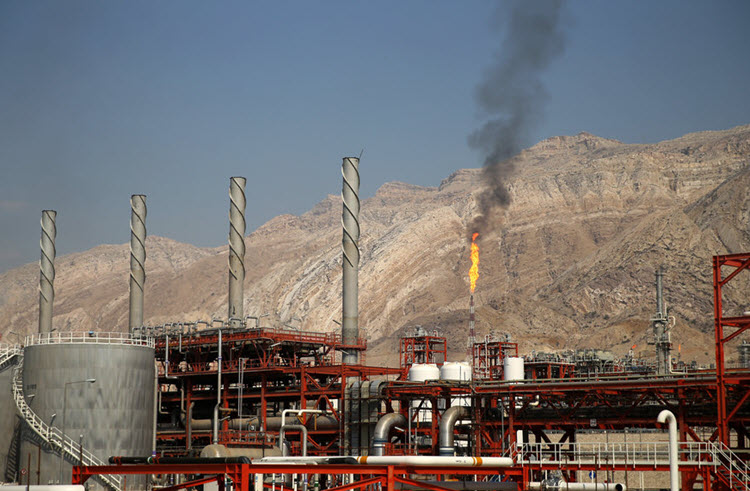
Iran’s energy industry faced numerous challenges during Raisi’s administration, but after his helicopter crash, regime media frequently talked about the increase in Iran’s oil exports in recent years despite ongoing U.S. sanctions and the successful diplomacy of Raisi’s government.
According to the International Energy Agency, Iran spent $100 billion on energy subsidies last year, which could undermine the government’s efforts to reduce the budget deficit. Ultimately, the financial burden of these subsidies will fall on the people, who often face inflation and reduced purchasing power due to government borrowing.
Iran’s $36 Billion Oil Exports in 2023
On March 21, Mohammad Reza Rezvani-Far, Deputy Minister of Economic Affairs and Finance and Head of Iran Customs Administration, stated that Iran exported $35.87 billion worth of oil, $370 million worth of electricity, and $1.293 billion worth of technical and engineering services last year.
Increased Oil Exports by Offering Greater Discounts to China
The topic of increased Iranian oil exports in recent years, especially during Raisi’s presidency, is highlighted by the fact that China, as a major buyer of Iranian oil, has benefited the most from importing cheap oil from Iran following the U.S. withdrawal from the Joint Comprehensive Plan of Action (JCPOA).
Nevertheless, independent energy experts, citing statistics and global oil prices, have expressed doubts about the amount of Iranian oil sold last year.
If, according to the oil minister Javad Owji, Iran managed to sell $35 billion worth of oil and gas condensates last year, it should be noted that part of this export, as previously mentioned by Owji, came from gas condensates stored by the previous government (about $5 billion).
Considering the price of oil at $83, if the cash sales figure claimed by Owji is divided by the average oil price, the price of the oil sold can be easily determined.
Last year, Iran received payment for only 1.153 million barrels of oil per day.
For example, if the Oil Ministry claims exports of 1.25 million barrels per day, the discount amounts to $3 billion, which is 8%.
If exports were 1.5 million barrels, the discount would be $10 billion, or 28%, and if exports were 1.8 million barrels, the discount would be $19 billion, or 54%.
It is noteworthy that sanctions not only impact export discounts but also lead to reduced production and the deterioration of oil industry equipment.
The Unsolvable Problem of Energy Imbalance
Despite the efforts of various governments in Iran over the past decade, the problem of natural gas and gasoline shortages has not been fundamentally resolved. Gholamreza Dehqan Nasrabadi, a member of the Iranian regime parliament, pointed out: “Energy imbalance is a reality. In the gas sector, the average annual imbalance is 132 million cubic meters, and during peak consumption, this amount reaches 315 million cubic meters per day, leading to gas cuts in industries and a halt in gas exports, which affects the country’s foreign exchange earnings.”
Continued Imbalance in Gasoline Production and Consumption
The gasoline imbalance is related to various factors, such as the aging of vehicles.
Iran-made cars consume twice as much fuel as the global standard, and if global gasoline consumption standards were applied to domestically produced cars, Iran could reduce its daily gasoline consumption to 60 million liters and earn $15 billion by exporting 50 million liters of gasoline.
Imbalance in the Diesel Sector
Until last year, there was a balance between diesel production and consumption in Iran, but gradually the imbalance in diesel production and consumption became apparent. However, it should be noted that diesel consumption differs from gasoline.
According to official statistics, about 20% of the diesel allocated to power plants in the country is smuggled.
To partially address the diesel imbalance, Raisi’s government imported approximately $830 million worth of diesel last year.
Emergency Plan to Increase Iran’s Oil Production Capacity
At the second meeting of the Economic Council, chaired by acting president Mohammad Mokhber, the plan to increase crude oil production by the National Iranian Oil Company and the plan to reduce petroleum product consumption were reviewed and approved.
According to this plan, the country’s oil production must increase from 3.6 million barrels per day to 4 million barrels per day, which would increase crude oil production by up to 400,000 barrels per day.
This plan was approved despite the current oil production capacity of Iran not reaching 3.6 million barrels per day, and the next government will also not be able to easily increase Iran’s oil production capacity to 4 million barrels per day in the short term.
One should not overlook the gradual decline in Iran’s oil production capacity, as 80% of Iran’s oil wells are in the second half of their production life.
The current situation of Iran’s energy industry has become more complicated due to international sanctions and weak infrastructure.
The reduction in foreign investments and fluctuations in the global oil market have exacerbated these problems.
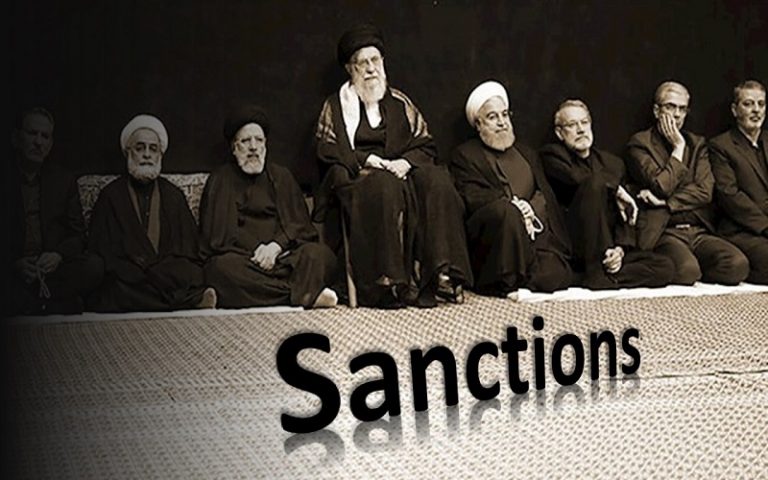
Abram Pili, Deputy Special Representative for Iran Affairs, welcomed the new European Union sanctions against individuals and entities within the Iranian regime on Friday, May 31, stating that the United States will continue to counter Iran’s range of threats.
In a post on the social media platform X, Abram Pili wrote:
“We welcome today’s sanctions by the EU against several Iranian individuals and entities involved in developing missiles and drones and proliferating them to militant proxies and terrorists.”
On Friday, May 31, the Office of Foreign Assets Control (OFAC) of the U.S. Department of the Treasury announced in a statement the sanctioning of four entities and one individual involved in the Iranian regime’s drone program.
“Treasury’s Office of Foreign Assets Control (OFAC) is targeting four entities associated with OFAC-designated Rayan Roshd Afzar Company (RRA) that have procured critical parts for Iran’s unmanned aerial vehicle (UAV) program. Additionally, OFAC is targeting an Iranian executive of Iran Aviation Industries Organization (IAIO), a subsidiary of Iran’s Ministry of Defense and Armed Forces Logistics (MODAFL) that oversees UAV manufacturers Iran Aircraft Manufacturing Industrial Company (HESA) and Qods Aviation Industries (QAI).”
On the same day, the European Union also sanctioned six individuals and three entities of the Iranian regime for their roles in transferring drones to Russia and providing drones and missiles to “militant groups and entities undermining peace and security in the Middle East and the Red Sea.”
The individuals sanctioned by the EU include Esmail Qaani, Mohammad Reza Ashtiani, Gholamali Rashid, Afshin Khajehfard, Hossein Hatefi Ardakani, and Mehdi Dehqani Mohamadabadi. The three entities added to the EU’s sanctions list are Khatam-al Anbiya Central Headquarters, the IRGC Navy, and the Kavon Electronics Company.
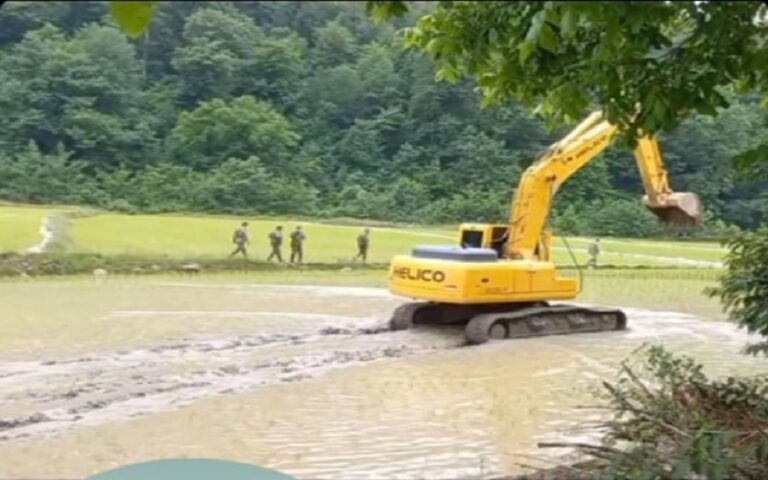
Reports indicate the destruction of rice fields belonging to Bahá’í families in the village of Ahmadabad, Sari County, the capital of Mazandaran Province, by regime agents.
Based on videos released, a group of agents from the regime used bulldozers to destroy the rice fields and their crops on Tuesday, May 28.
More than 80 Bahá’í families in Ahmadabad, a village in the Kalijan district of Sari County, have owned agricultural land and have been farming for generations to earn their livelihood.
The destruction of rice fields by the Iranian regime is cruel, constitutes economic apartheid, and aims at religious cleansing to drive Bahá’ís from their lands.
In March 2023, the regime’s forces, on behalf of the government, claimed ownership of about 100 hectares of agricultural land, rice fields, and walnut orchards belonging to Bahá’í families in Ahmadabad.
According to this report, the agents have not provided any official documentation or compensation to justify the confiscation of the land.
The systematic repression of Bahá’ís, the largest non-Muslim religious minority in Iran, and the confiscation of their lands is considered forced displacement.
At the same time as the destruction of the Bahá’í rice fields, two members of a Bahá’í family were arrested by IRGC intelligence agents in Rasht.
No information has been released about the charges or the whereabouts of these two Bahá’í citizens.
Since the current regime came to power in Iran in 1979, extensive deprivations have been enforced against the Bahá’ís.
Human Rights Watch has described the Iranian regime’s actions in persecuting Bahá’ís in Iran as crimes against humanity.
Additionally, on Monday, May 27, a Bahá’í citizen was arrested by the IRGC’s terrorist intelligence agents in Ahvaz.
According to human rights sources, this Bahá’í citizen was taken to an unknown location after being arrested.
Sepideh Rashidi was arrested in Ahvaz
Sepideh Rashidi’s family home was searched by intelligence agents in January 2024, and some of her personal belongings, such as a computer and mobile phone, were confiscated.
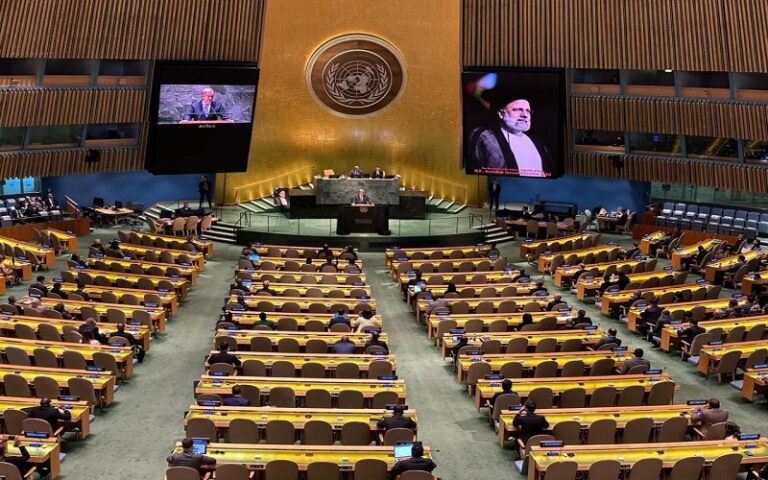
On Thursday, the United States boycotted the memorial ceremony for Ebrahim Raisi at the United Nations, declaring that he was repeatedly and horrifically involved in human rights violations and that this global organization should stand with the people of Iran.
The United Nations General Assembly, comprised of 193 countries, traditionally holds a memorial ceremony for any world leader who dies while in power.
On Thursday, the General Assembly held a program to memorialize Ebrahim Raisi, the President of the Iranian regime, who recently died in a helicopter crash. The ceremony included speeches about Ebrahim Raisi.
The majority of seats in the General Assembly Hall were empty, with few attendees present at the ceremony.
The Associated Press wrote about the ceremony, noting that what happened on Thursday was highly unusual, as only representatives from the regional groups of Africa, Asia-Pacific, and Latin America and the Caribbean spoke.
The report adds that at the memorial ceremony for Ebrahim Raisi in the General Assembly, there were no remarks from the Western European or Eastern European groups, nor from the United States, which is usually the last representative as the host country.
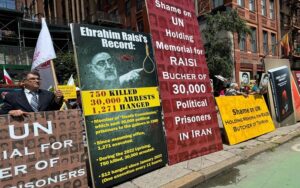
Iranian Resistance supporters protest UN memorial for Ebrahim Raisi
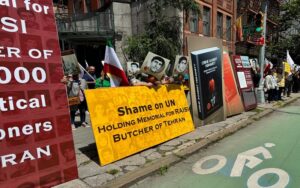
While the tribute ceremony was being held in the General Assembly, supporters of the Iranian Resistance rallied outside the United Nations headquarters held banners reading “Shame on the UN for holding a memorial for Raisi, the Butcher of Tehran.”
Iranian Resistance supporters protest UN memorial for Ebrahim Raisi
Before the Assembly convened, 45 officials, experts, ambassadors, and current and former prosecutors of the United Nations sent a joint letter to António Guterres, the UN Secretary-General, protesting the tribute to an individual involved in mass atrocities.
Raisi was involved in numerous severe human rights violations, including the extrajudicial executions of thousands of political prisoners, primarily members of the People’s Mojahedin Organization of Iran (PMOI/MEK) in 1988. Some of the worst human rights abuses occurred during his tenure.
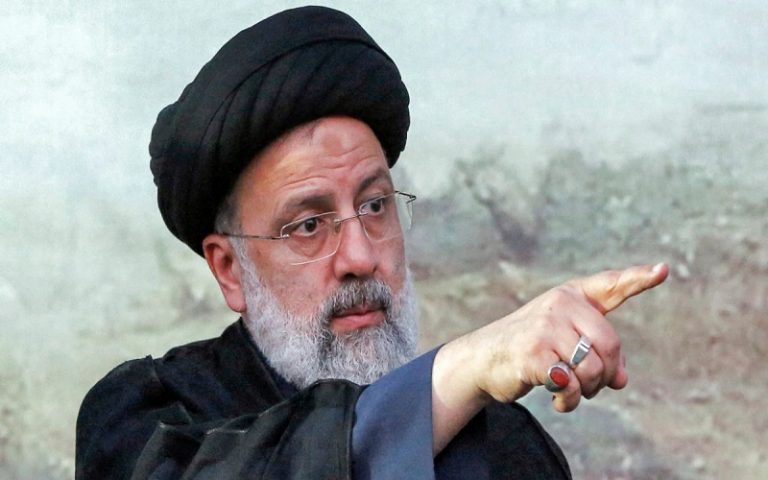
Ebrahim Raisi, once considered a potential successor to Ali Khamenei, the Supreme Leader of the Islamic Republic, is accused of numerous human rights violations. He was one of the four-member “Death Committee” responsible for sending over 30,000 political prisoners to execution squads in the summer of 1988. He was also implicated in the massacre of protesters during the nationwide protests in 2022, the murder, arbitrary detention, enforced disappearance, and torture of thousands of protesters, and the violent harassment of women and other serious human rights violations.
Reuters reported on May 29, citing an American official, that the United States will boycott the UN General Assembly’s tribute to Ebrahim Raisi and the victims of the helicopter crash on May 30.
According to the Reuters report, this American official, who requested anonymity, emphasized that “some of the worst human rights abuses on record, especially against the women and girls of Iran, took place during Raisi’s tenure as head of the government of the Islamic Republic.” The official stressed that US representatives “will not participate under any circumstances” in this UN event, which was scheduled for Thursday, May 30.
It is said that the 193-member UN General Assembly traditionally convenes to pay respects to leaders who were heads of state at the time of their death, during which speeches about the deceased leader are delivered.
A minute of silence by the UN Security Council in memory of the victims of the helicopter crash involving senior officials of the Islamic Republic, held on May 21 with the presence of the US Deputy Ambassador to the UN and the UN Secretary-General at the office of Iran’s UN representative, paying respects to Ebrahim Raisi, the head of state, and his Foreign Minister Hossein Amir-Abdollahian, faced widespread protests from Iranians and political figures from other countries.
The administration of US President Joe Biden was also severely criticized by some Republican members of Congress for expressing condolences to Iran over the death of Ebrahim Raisi and his associates. These Republicans called Ebrahim Raisi the “Butcher of Tehran” and deemed the US government’s condolence message inappropriate. However, White House National Security Spokesman John Kirby considered the message customary and stated that Raisi was undoubtedly a man whose hands were stained with the blood of many Iranians.
Ebrahim Raisi, the head of the thirteenth government of the Islamic Republic, his Foreign Minister Hossein Amir-Abdollahian, the Friday prayer leader of Tabriz, and several others were killed after their helicopter crashed in a forest in East Azerbaijan Province on May 19.
A look at Ebrahim Raisi’s performance shows that from the time the current Iranian regime came to power until his death in the northwestern heights of Iran, he violated people’s rights in various ways and is recognized as one of the most significant violators of human rights in Iran.
“Execution Ayatollah,” “Massacre Ayatollah,” “Butcher of Tehran,” “1988 Executioner,” “Death Judge,” and “Member of the Death Committee” are some of the titles given to Ebrahim Raisi because of his actions.
After the 1979 revolution and following protests by opposition groups, Hadi Marvi, a representative of Ruhollah Khomeini, the founder of the Iranian regime, took the 18-year-old Ebrahim Raisi to Masjed Soleyman to take his first steps in violating people’s rights.
After returning from Masjed Soleyman, Raisi was sent to Shahrud and established and managed the ideological-political complex of the Shahroud Training Garrison Zero-Two for a period.
Entering the Judiciary
In 1980, at the age of 20, Raisi began his career in the judiciary of the Iranian regime as a deputy prosecutor in Karaj. A few months later, he was appointed as the prosecutor of Karaj by the order of the Chief Prosecutor of the Revolutionary Court.
During this time, as a deputy prosecutor and prosecutor of Karaj, he played a fundamental role in suppressing leftist groups and the People’s Mojahedin Organization of Iran (PMOI). Political prisoners in Karaj knew him as an interrogator and torturer in their cases until 1982.
In 1982, while serving as the prosecutor of Karaj, Raisi also took on the responsibility of being the prosecutor of Hamedan and for four months simultaneously suppressed opponents in both cities.
A while later, he was introduced as the prosecutor of Hamedan Province and remained in this position until 1984.
In 1985, Raisi took on his first judicial management role in the capital, and in the first step, he was appointed as the deputy and successor to the Revolutionary Prosecutor of Tehran.
Three years later, due to his extensive role in suppressing political activists, he caught the attention of Khomeini and was sent on special missions to the provinces of Lorestan, Kermanshah, and Semnan.
Execution of Political Prisoners in the Summer of 1988
The execution of political prisoners in the 1980s is one of the darkest parts of Raisi’s record.
As the Deputy Prosecutor General of Tehran, Raisi was present in the Death Committee and sent several thousand people to their deaths between August and September 1988.
The exact number of victims of these executions is unknown, but according to the People’s Mojahedin Organization of Iran, over 30,000 people were executed during this period.
Political prisoners were executed for collaborating with organizations opposing the Iranian regime, particularly the PMOI and other opposition groups.
Amnesty International, on May 22, in a statement, highlighted Raisi’s direct role in forced disappearances and extrajudicial executions of thousands of political opponents in the 1980s, including 1988.
In its statement, Amnesty International noted that in May 2018, Ebrahim Raisi publicly defended the mass killings and described them as one of the proud achievements of the regime. It said that for decades, survivors and families of the victims have been cruelly deprived of truth, justice, and reparations and have been prosecuted for demanding accountability from the officials.
After the death of Ruhollah Khomeini and the beginning of Ali Khamenei’s era as the leader of the Iranian regime, Raisi was appointed as the prosecutor of Tehran and held this responsibility for five years from 1989 to 1994.
The General Inspection Organization and Deputy Judiciary
After that, in 1994, Raisi was appointed as the head of the General Inspection Organization and remained in this position until 2004.
During this period, Raisi filed numerous cases against journalists and recorded other instances of human rights violations in his track record.
From 2004 to 2014, he served as the First Deputy of the Judiciary. From 2014 to 2016, he was the Prosecutor General of the regime, and in 2012, by Khamenei’s order, he was also appointed as the Special Clergy Prosecutor and fabricated cases for many opposing clerics.
Presidency of the Judiciary
Ali Khamenei, the leader of the Islamic Republic, appointed Ebrahim Raisi as the head of the Judiciary on March 7, 2019.
During his tenure as the head of the Judiciary, Raisi continued his previous practices of imprisonment, torture, execution, and various violations of the rights of the Iranian people.
In the first six months after Raisi assumed the presidency of the Judiciary, the issuance of sentences increased by 119% compared to the same period during Larijani’s presidency.
According to statistics provided by human rights organizations, Raisi was responsible for the execution of more than 400 people during his two-year tenure as head of the Judiciary.
Among the executed were political opponents and protesters such as Navid Afkari, Mostafa Salehi, Rouhollah Zam, and Heydar Abdollahpour, the execution of at least seven juvenile offenders, 25 women, and the execution of a man on charges of drinking alcohol.
In those two years, in addition to executions, Raisi issued prison sentences, flogging, and fines for hundreds of political, civil, and labor activists and supporters of various critics and opposition groups.
Presidency
Raisi became the president of the regime on June 18, 2021, and until his death in a helicopter crash on May 19, 2024, he continued to violate the rights of the Iranian people in various ways.
A year after Raisi took office, nationwide protests in Iran began following the death of Zhina Mahsa Amini, a 22-year-old Iranian Kurd, in September 2022 after being arrested by the morality police.
These protests quickly turned into a nationwide uprising in Iran, and according to statistics from human rights organizations, the Iranian government killed over 750 protesters during the crackdown on these protests and executed at least nine more protesters.
As the president and head of the Supreme National Security Council, Raisi had a direct role in the killing, execution, and suppression of citizens during these protests.
Violations of women’s rights, religious minority rights, workers’ rights, nurses’ rights, and teachers’ rights are other instances recorded in Raisi’s human rights violation record.
He was sanctioned by the U.S. Department of the Treasury in November 2019, and in 2011 his name was included alongside 80 Iranian regime officials in a proposed sanctions list by the European Union.
Now, many of the families seeking justice for victims of the Iranian regime, upon hearing the news of Ebrahim Raisi’s death, still demand his trial and state that his death does not mean the closure of his criminal cases.
In recent years, the rental crisis for tenants in Tehran and other cities across Iran has become one of the major social and economic problems.
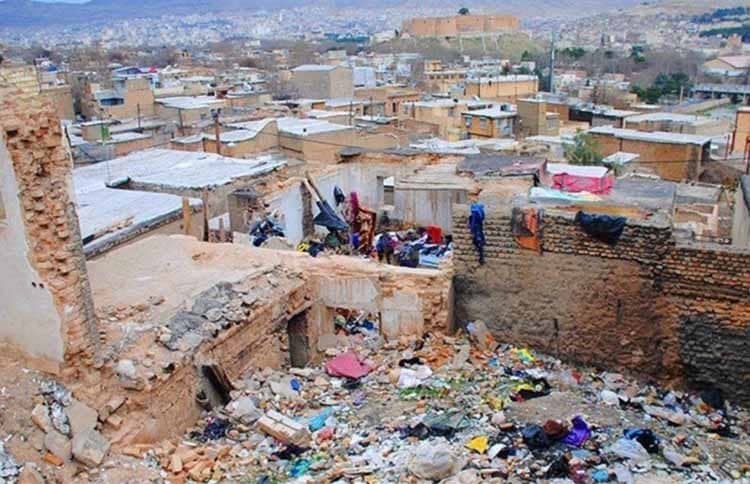
The uncontrolled rise in rental prices, the shortage of suitable housing, and economic pressures have forced many Tehran residents to leave the city and move to the outskirts. This issue has not only affected individuals’ quality of life but has also created new problems.
Families who lived in the city center until a few years ago are now forced to relocate to the outskirts. It is still unclear how long this trend will continue.
The fate of tenants depends not only on inflation but also on factors such as housing prices, the exchange rate of the dollar, housing deposit loans, and overall government policies.
Since 2019, housing inflation has specifically outpaced the national average inflation rate, with rental rates increasing more than the inflation rate each year.
According to official statistics, housing costs account for between 40 to 60 percent of monthly household expenses.
The market does not support 60 to 70 percent increases in housing prices seen in 2020 and 2021. Some more optimistic forecasts suggest that the market cannot even support last year’s 50 percent increase.
Based on inflation expectations for this year, the rental inflation rate will be around 45 percent. Last year, this rate was about 40 percent. In recent years, the cost of renting housing in Tehran has increased sharply, and many tenants are unable to pay these amounts.
For example, in some central areas of Tehran, rental prices have risen so high that even middle-income families cannot afford to rent housing.
Issues and Challenges Faced by Tenants
This uncontrolled increase in rental prices is due to various factors including inflation, the devaluation of the national currency, and a shortage of housing in the market.
The lack of suitable housing in Tehran is another factor contributing to the rental crisis and tenant issues. With population growth and domestic migration to Tehran, the demand for housing has increased.
However, the supply of housing has not kept pace with this demand, resulting in a housing shortage. Many new housing projects have been delayed due to financial and administrative problems, and some have been halted due to the lack of suitable investors.
This shortage of suitable housing has caused prices to rise sharply, putting more pressure on tenants. Economic pressures from the recession, unemployment, and reduced purchasing power have also exacerbated the rental crisis and tenant issues in Tehran.
Many families, due to unemployment or low income, are unable to pay high rents. These economic pressures have caused people to seek cheaper housing in the outskirts of the city.
The rental crisis and rising prices have forced many Tehran residents to leave the city and move to its outskirts.
The outskirts of Tehran have become the primary destination for these individuals due to lower housing prices, but this move also comes with its own set of problems.
In an interview with the state news agency ISNA, Mohammadreza Bakhshipour, head of the Education Department of Neka County, described migration from villages to cities as a serious crisis leading to the depopulation of rural areas. He mentioned that unfortunately, the number of students in rural schools has decreased to the point where each class has only 10 students.
One of the most significant problems of living in the outskirts is the lack of urban infrastructure and public services. Many peripheral areas of Tehran suffer from shortages in healthcare, education, and welfare facilities. The lack of adequate public transportation also means that people face serious difficulties accessing city centers.
Additionally, population growth in the outskirts can lead to social and environmental problems.
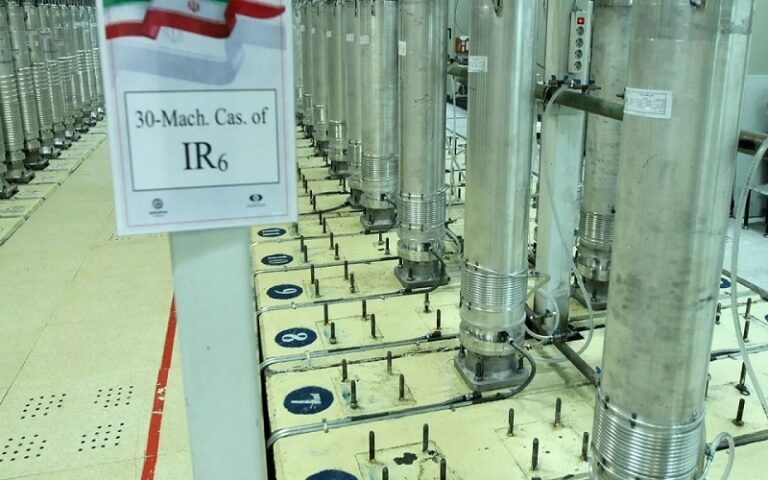
Two confidential reports from the International Atomic Energy Agency (IAEA) state that Iran’s stockpile of uranium, enriched to near the threshold required for making a nuclear bomb, is continuously increasing and talks to improve cooperation between Iran and the agency have stopped.
The agency faces numerous challenges in carrying out its mission in Iran, and Rafael Grossi, the Director General of the agency, says Iran is implementing only a small portion of its commitments under the joint agreement signed last year.
In one of the confidential reports sent to the agency’s members, a copy of which Reuters obtained on May 27, it is stated that there has been no progress in the past year regarding the implementation of the provisions of the March 4, 2023, agreement.
About two weeks ago, Rafael Grossi traveled to Tehran to discuss with Iranian officials the aim of improving bilateral cooperation and enhancing agency oversight.
On May 7, upon returning from his trip to Iran, the Director General of the International Atomic Energy Agency called the state of Iran’s cooperation with the agency unacceptable and demanded a change in Iran’s approach.
He also announced in a conversation with reporters in Vienna that both parties had reached a mutual understanding and that Tehran had told him it was ready to work on specific actions.
However, following the death of Ebrahim Raisi, the President, and Hossein Amir-Abdollahian, the Foreign Minister of the Iranian regime, in a helicopter crash, negotiations between Tehran and the agency have stopped.
In another part of its confidential report, the International Atomic Energy Agency states that its Director General, in contact with the new Iranian government, has emphasized the necessity of continuing negotiations and the agency’s readiness to resume high-level technical talks that began on May 6 and 7.
“France and Britain are pushing for a new resolution at next week’s Board meeting, which the United States has so far not supported, diplomats say. Iran usually bristles at such resolutions, taking nuclear-related steps in response,” Reutersadded.
It has been about 18 months since the last resolutions of the agency’s Board of Governors against the Iranian regime were passed.
In these resolutions, Iran was ordered to promptly provide the necessary conditions for the agency’s snap inspections and to answer the agency’s questions regarding the discovery of uranium traces at undeclared facilities.
Although the number of facilities under investigation has since been reduced to two, Iran has not yet explained how the uranium traces ended up at these facilities.
In another part of the new report to the agency’s Board of Governors, referring to the discovered uranium traces, it is stated that the Director General regrets the unresolved old issue regarding safeguard regulations at Iran’s facilities.
Reuters also reported on May 24, citing diplomats, that the United States and three European countries have disagreements over dealing with Iran through pursuing a resolution against the country in the IAEA Board of Governors.
The Wall Street Journal also claimed on the morning of May 28 that the Biden administration is pressuring its European allies to ease off on pressuring Iran over its nuclear program to avoid escalating tensions with Iran before the November U.S. presidential election.
The report states that the United States opposes the efforts by Britain and France to criticize Iran at the Board of Governors meeting scheduled for June and is even pressuring some other countries not to participate in the resolution vote at the Board of Governors session.
The Iranian regime usually describes the adoption of such resolutions as a political move against Iran’s interests and reacts by taking new steps in its nuclear program.
In the second IAEA report, it is noted that Iran’s stockpile of 60% enriched uranium increased by 20.6 kilograms in the quarter ending May 11, bringing it to over 142 kilograms. However, shortly afterward, Iran reduced the enrichment level of 5.9 kilograms of this stockpile.
This is while the agency reported in its March report that Iran had reduced its 60% enriched uranium stockpile, which is close to the weaponization threshold, compared to November 2023.
According to the agency’s measurement criteria, the volume of Iran’s 60% enriched uranium is sufficient that, if further enriched to 90%, it would be enough to produce three nuclear bombs.
Western powers say that enriching uranium to 60% concentration has no credible civilian justification. In contrast, Iran has always emphasized that the goals of its nuclear programs are peaceful.