

The Destabilizing Impact of Appeasing Iran’s Regime in the Middle East
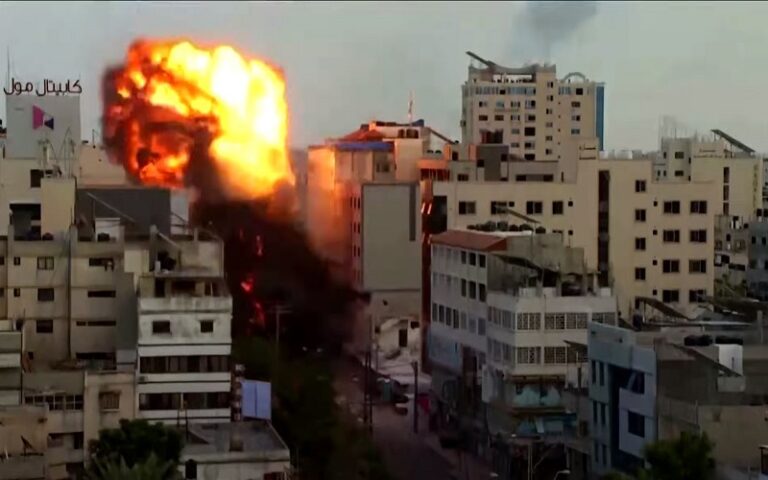
The recent outbreak of conflict in the Middle East has underscored the critical role played by Iran in the region’s instability. Despite claims of non-involvement, Iran’s support for proxy forces has been instrumental in fueling the ongoing crisis. The events that transpired post-October 7 triggered intense discussions, most of which centered on Iran’s role in the crisis. Initially, Iranian regime officials vehemently defended the attack, hailing it as a significant victory. They later tried to distance themselves from the event, shrugging off any responsibility.
Therefore, to address the crisis comprehensively, most analysts agree that the key lies in addressing its root cause: Iran. However, there is difference on how way to approach the problem
The prevailing crisis in the Middle East can be largely traced back to the West’s policy of appeasement towards Iran. By ignoring the destructive actions of the Iranian regime, the West has unintentionally allowed Iran’s regime to spread terror in the region. In a new report, the National Council of Resistance of Iran (NCRI) emphasizes, “The Iranian regime has been instrumental in financing, arming, and training proxy forces in various countries, resulting in the proliferation of violence.”
The proponents of the appeasement policy toward Iran’s regime warn that any firm stance toward Tehran’s provocative actions can lead to an all-out war with the regime.
But contrary to the narrative propagated by the Iranian regime and its lobbies, a direct war with the United States and the West would pose an existential threat to the regime.
Instead, the regime employs a calculated strategy of exporting internal crises and engaging in foreign warmongering to safeguard its grip on power. The NCRI highlights, “The regime’s interventions in other countries through proxies are solely aimed at maintaining its grip on power, concealing internal crises, and preempting uprisings that could threaten its rule.”
The policy of appeasement has not only failed to prevent war but has inadvertently enabled the Iranian regime to fuel conflicts in the region. Proxy forces backed by Iran, such as those in Iraq, Syria, Yemen, and Lebanon, have instigated sectarian wars and caused immense loss of life. The consequences of this misguided policy are evident today, with the Middle East embroiled in yet another significant conflict. The NCRI emphasizes, “Turning a blind eye to these interventions and appeasing the regime only serves to fuel its strategic objectives.”
The oppressive control exerted by the clerical regime is at the heart of the ongoing crisis. The regime’s survival depends on diverting attention from domestic discontent and avoiding direct confrontation with powerful adversaries. Instead, it strategically intervenes in the region through proxies to maintain control and perpetuate its rule.
A transformative shift is essential to bring lasting resolution to the crisis in the Middle East. Regime change in Iran is imperative, as the current regime’s existence relies on its ability to export crises and manipulate conflicts. By appeasing Iran’s regime, the international community inadvertently supports its destabilizing actions and perpetuates the cycle of violence. The NCRI warns, “The intricate web of crisis creation and warmongering in the region is intrinsically tied to the regime’s survival instincts.” Recognizing and addressing the root cause of the crisis is crucial for promoting stability and accountability in the region.
Amidst General Surge in Executions, Iran Increasingly Focuses on Political Cases
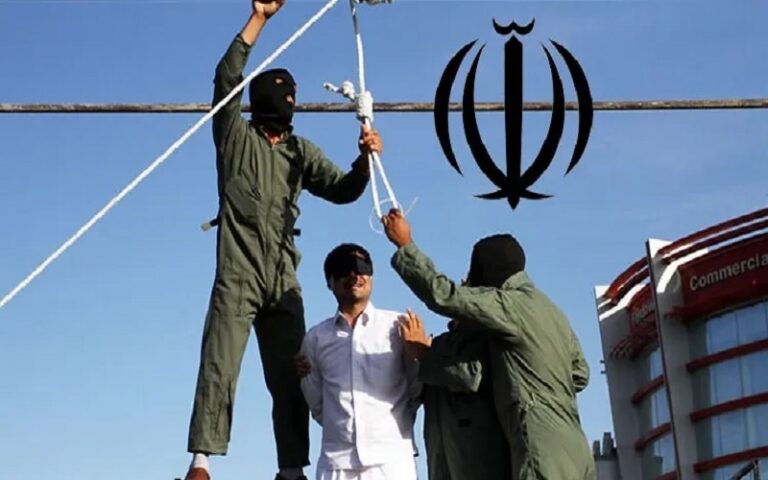
A number of human rights advocacy groups have issued warnings about an apparent increase in the rate of politically motivated executions in Iran, and the potential for more of the same. Numerous prior statements have focused on a general uptick in the country’s already world-leading execution rate, which has resulted in more than 850 death sentences being implemented in 2023 – an eight-year high. And although it is widely understood that that trend was largely motivated by the Iranian regime’s desire to stifle dissent through public intimidation following a nationwide uprising in September 2022, the latest developments suggest that Tehran may be growing bolder with its suppressive tactics.
One of the most recent executions was carried out on a young man on November 21, who was arrested during the protests that broke out in September 2022, in reaction to the killing of Mahsa Amini by “morality police” who objected to the arrangement of her mandatory hijab. Milad Zohrevand was officially held responsible for the death of a regime operative who was involved in efforts to suppress the demonstrations. But it remains unclear what, if any, evidence the judiciary had to support this conclusion, which may have been used as a pretense for execution of a political dissident.
Prior to Zohrevand, at least seven protesters were executed on similar grounds. The questionable nature of those convictions was underscored by the fact that multiple individuals were held legally responsible for the death of one security agent, without the judiciary making any effort to establish who actually carried out the act of killing. In fact, neither Zohrevand nor any of the others were convicted of murder. Instead, vaguely-defined involvement in the relevant deaths was cited as evidence that they were guilty of the equally vaguely-defined capital crimes known as “enmity against God” and “spreading corruption on Earth.”
Zohrevand’s execution did not strictly come as a surprise to human rights defenders or observers of Iranian affairs, though its precise timing was not expected. Many commentators anticipated that Tehran would execute more protesters in time, despite the first seven examples being confined to December 2022 and January 2023. It was generally understood that dozens of other protesters were facing death sentences but also that Iranian authorities were biding their time before implementation, on account of strong international scrutiny of human rights issues in the wake of the uprising.
It is not obvious what prompted the regime to abandon its sense of caution, but one contributing factor may be a perception that the ongoing war between Israel and Hamas is an effective distraction from issues in the surrounding region. It is also possible that Tehran is banking on its foreign adversaries being unwilling to stoke further tensions which could cause the conflict to spill out beyond its current boundaries. Iran is already involved in the regional conflict through its proxy forces, which have launched attacks against the regime’s adversaries.
Whatever the details of Tehran’s decision-making process may be, the effect is that the judiciary is moving ahead not only with executions stemming from the 2022 uprising but also with those that target other forms of dissent, and those that violate other international standards regarding capital punishment and human rights. Also the Islamic Republic has reportedly executed at least three men for their participation in another nationwide uprising, in November 2019. No such executions had been carried out in the previous three years, but much like with the 2022 uprising, it was widely understood that persons detained during it had remained at risk of much greater punishment.
The regime’s immediate reaction to the 2019 uprising was some of the worst repression in the history of the Islamic Republic. Approximately 1,500 people were killed in mass shooting incidents in various localities, mostly at the hands of the Islamic Revolutionary Guard Corps. The 2022 uprising saw the fatal shooting or beating of around 750 people, with a further 30,000 being arrested and placed at risk of subsequent violence as well as capital punishment.
The recent spate of executions indicates that for participants in either uprising, or for political dissidents in general, this threat persists for as long as they remain within the grip of regime authorities. One of the participants in the 2019 uprising, Gholam Rasoul Heydari, was hanged on November 22 with little warning, despite the fact that he had formally been sentenced to life in prison and not to death.
Somewhat similarly, on November 25, the judiciary executed 62-year-old Ali Saber Motlagh after he had already served a lengthy prison sentence and been released, before being arbitrarily arrested again in 2020 and ultimately held responsible for the 1981 killing of a security agent. Persons familiar with his case believe that the only genuine motive for the execution was Saber Motlagh’s alleged connection to the main democratic opposition group, the People’s Mojahedin Organization of Iran, which made his death a potentially powerful symbol of escalating crackdowns on organized dissent.
Saber-Motlagh’s execution also coincided closely with another instance of arbitrary re-arrest, which in turn recalled attention to the frequent lack of due process in the Islamic Republic, especially in politically-motivated cases.
It is little wonder that human rights organizations have reported upon the absence of legal representation in the cases involving several of the people who have been executed in recent days. As is also typical of politically motivated cases in the Islamic Republic, many if not all of the defendants were convicted, in whole or in part, on the basis of apparently false confessions that were extracted via torture.
Naturally, this sort of legal malpractice aids the Iranian regime in securing not only death sentences but also a range of other punishments for political detainees. Just as naturally, the pace of implementation for these lesser sentences appears to be accelerating alongside the pace of executions. As one example, HRANA reported recently that five activists in Tehran had simultaneously been sentenced to prison terms totaling 20 years for “assembly and collusion against national security.”
One of those defendants, Kamran Rezaie Far, had previously been sentenced to death, in a separate case, for “spreading corruption on Earth.” In light of other recent cases where executions were carried out abruptly and without a valid, current sentence to justify them, there is almost certainly a danger of that sentence being reinstated, whether formally or informally. If it were, the question on the minds of many human rights defenders would be what, if any, response the international community would give to such a clear violation of basic human rights principles.
Many such activists have already been critical of the international response to crackdowns on dissent following the Mahsa Amini uprising. And although Tehran has been loudly and almost universally condemned for crimes like execution of juvenile offender Hamidreza Azari, the regime evidently does not expect those statements to be backed up by genuine action. This is evidenced by the fact that the judiciary proceeded to execute another juvenile offender, Adel Damani.
Iran’s Regime Hikes Mobile Internet Tariffs by 30%

While protests over the quality and limitations of internet communications in Iran continue, the Regulatory Authority for Telecommunications and Radio Communications announced a 30% increase in the tariffs of communication operators in Iran.
News agencies in Iran reported that the CEOs of communication operators have committed to improving the quality of their services in response to this price increase permit.
Among the accepted conditions for operators, it has been announced that the amount of 5G coverage will increase by 10%, the coverage of 4G in the country will reach 96%, and the average internet speed will increase by 30% in the next six months.
Some experts believe that considering the overall policy of the Iranian regime about internet and extensive censorship, as well as the operators’ track record, these commitments will ultimately not lead to an improvement in the quality of internet services consumed by the people.
According to activists, the internet provided in Iran is listed as one of the weakest and slowest in the world.
In July 2023, the Tehran Electronic Commerce Association addressed this issue in a report and stated that the quality of the internet in Iran is in a “crisis” situation. According to the association’s report, internet in Iran is disrupted, limited, and slow.
It has been emphasized that “among the top 100 countries in terms of gross national product, Iran ranks second in terms of the most disrupted internet, second after China in terms of limited internet in the world and is among the 5 countries with the slowest internet speed.”
In its report, the Tehran Electronic Commerce Association wrote, “Iran, with two runner-up positions, one honorable diploma, and a negative score of 294, is the champion of low-quality internet in the world.”
This is happening while the regime’s supreme leader, Ali Khamenei, emphasized in July 2023 in a meeting with judges and employees of the judiciary the request for “restricting and purifying the virtual space.”
In this meeting, Khamenei called for the judiciary to deal with those who publish news and current events in Iran in both the virtual and non-virtual spaces.
Khamenei’s emphasis came at a time when internet restrictions and filtering in Iran are at their highest level.
In late July 2023, a report was published stating that Iran, in 2023, was introduced as the “world record holder in creating internet restrictions” by imposing 14 new restrictions in the first half of the year.
According to areport by the Al-Monitor, based on statistics provided on Surfshark, a VPN provider, the increase in restrictions in Iran coincided with high civil protests and unrest, and many disruptions occurred during the nationwide protests in 2022 and after the killing of Mahsa Amini by the regime’s morality police.
With the intensification of internet censorship in Iran, the market for proxy servers that circumvent government censors has flourished, and according to estimates, the average monthly income in this sector has exceeded 5 trillion rials (approximately $10 million). Reports indicate that the economic attractiveness of this sector has led to the involvement of organizations and institutions affiliated with the Iranian regime and the children of officials indirectly in this market.
The Ministry of Sports and Youth also reported during the nationwide protests in 2022: “70 percent of users use VPNs, and out of this number, for every eight people, one person uses a paid VPN.”
Furthermore, in February, a report was published stating that the internet shutdown and filtering in Iran from October 2022 to the end of January 2023 has caused approximately 100 trillion rials (approximately $200 billion) in monthly losses to the Iranian economy.
Mohammad Hassan Asafari, a member of the parliament, stated in an interview with the state-backed student news agency (ISNA) about the chaotic market of buying and selling VPNs in the country: “The income and financial turnover of filtering profiteers exceed 500 trillion rials ($1 billion) per year, and they don’t pay any taxes.”
One of the ways for the regime to collect information and invade individuals’ privacy on the internet is through managed proxy servers.
US Forces Sink Houthi Ships In Response to Attack on Vessels in the Red Sea
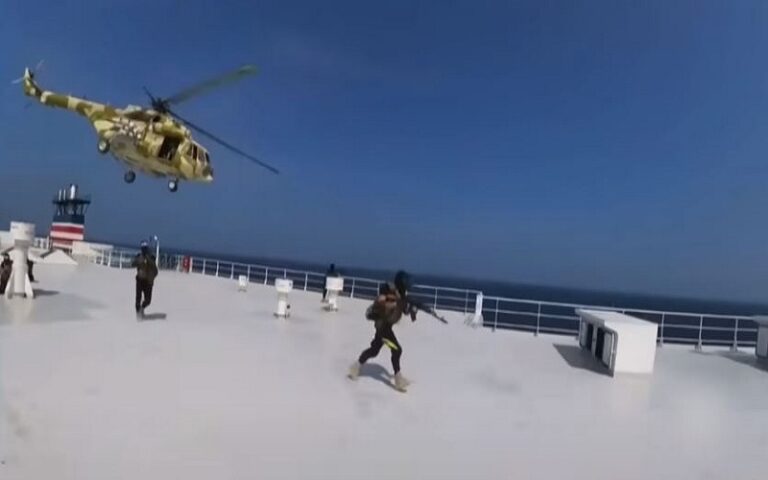
In a statement, the United States Central Command (CENTCOM) declared that A US Navy warship named USS Gravely shot down two anti-ship ballistic missiles that were launched from areas under Houthi control in Yemen on Saturday night.
CENTCOM stated that early on Saturday that Maersk Hangzhou, a cargo ship with Singaporean and Danish flags, was hit by a missile while passing through the southern Red Sea, prompting a response from the warships Gravely and Laboon. According to CENTCOM, in response to a distress call from the commercial vessel Maersk Hangzhou, US forces targeted and sank three out of four boats belonging to the Houthis that intended to seize the ship. The boats and their crew were submerged. According to the CENTCOM statement, at 6:30 a.m. local time on Sunday, the Maersk Hangzhou sent a distress call stating that four boats with armed personnel intended to seize it. In response to this request, attack helicopters from the USS Iwo Jima and Gravely took flight and, in response to the firing from the Houthi-affiliated boats, sank three boats. The fourth boat left the scene of the conflict. CENTCOM stated that this is the 23rd illegal attack registered by the Houthi rebels in Yemen against international ships since November 19, when the group began its attacks on ships in the Red Sea, claiming revenge against Israel for its military operations in Gaza. According to CENTCOM, no damage has been reported, and according to reports, the ship was able to continue its voyage. The Houthi attacks, supported by Iran’s regime, have forced some of the world’s largest shipping and oil companies to halt transit through one of the most important maritime trade routes, potentially causing a shock to the global economy. These attacks have disrupted global trade, and major shipping companies have been forced to take longer and more expensive routes around the Cape of Good Hope in Africa instead of the Suez Canal. The Red Sea is a point of entry for ships that carry about 12% of global trade through the Suez Canal and is vital for the transportation of goods between Asia and Europe.Iranian-backed Houthi small boats attack merchant vessel and U.S. Navy helicopters in Southern Red Sea
— U.S. Central Command (@CENTCOM) December 31, 2023
On Dec. 31 at 6:30am (Sanaa time) the container ship MAERSK HANGZHOU issued a second distress call in less than 24 hours reporting being under attack by four Iranian-backed… pic.twitter.com/pj8NAzjbVF
On December 19, the United States formed a naval coalition called Operation Prosperity Guardian to protect ships in the waters of the Red Sea near Yemen, which is said to have been joined by twenty countries. After that, Maersk announced on January 3 that it would stop shipping through the Red Sea. However, on Sunday, December 31, it was announced that due to the recent attack, all transits through this area would be suspended for 48 hours. David Cameron, the British Foreign Secretary, said on Sunday that he had told Hossein Amir-Abdollahian, the Iranian Foreign Minister, in a phone call that Iran must take action to stop the Houthi attacks in the Red Sea. The Houthis aggression are part of the larger scheme of attacks that Iran-backed militias have been carrying out since the beginning of the war in Gaza. So far, the regime’s proxy forces have carried out more than 100 attacks against American targets alone. There is growing consensus that without addressing the threats posed by Iran’s regime, there will be no peace in the Middle East in the near term.I spoke to @Amirabdolahian today about Houthi attacks in the Red Sea, which threaten innocent lives and the global economy. I made clear that Iran shares responsibility for preventing these attacks given their long-standing support to the Houthis.
— David Cameron (@David_Cameron) December 31, 2023
UN Condemns Executions in Iran, Calls for Moratorium on Death Penalty
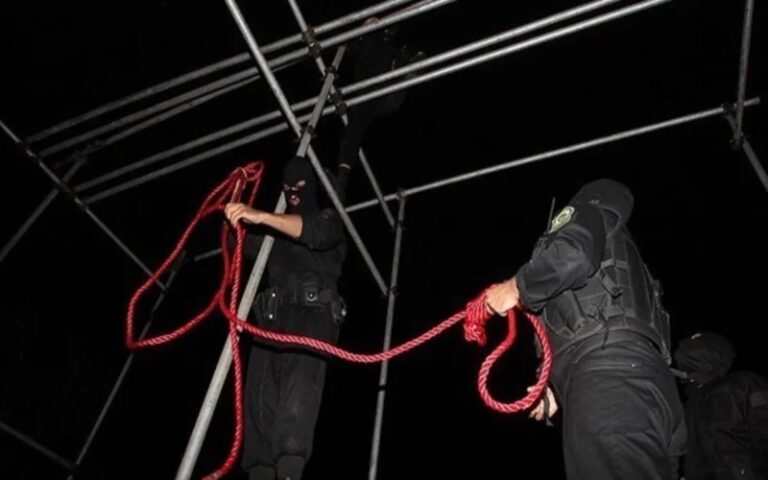
The United Nations High Commissioner for Human Rights has described the execution of four more individuals in Iran without a fair trial as appalling.
The UN Office of Human Rights announced on Friday, December 29, through a post on the social media platform X that Volker Türk, the UN High Commissioner for Human Rights, characterized the execution of three men and one woman in Iran without a fair trial on alleged charges of “espionage” as appalling.
According to the Office of Human Rights, Volker Türk called for “an immediate halt to any further executions and an official moratorium on use of death penalty” in Iran.
The judicial authority of the Iranian regime announced early Friday morning the execution of four individuals in West Azerbaijan Province, on charges of “waging war against god and corruption on earth through intelligence collaboration” with Israel. The Mizan News Agency, affiliated with the judiciary, has identified these four individuals as “Vafa Hanareh, Aram Omari, Rahman Parhazo and Nasim Namazi.” Hengaw, a human rights organization, had previously announced that the death sentences of Vafa Hanareh, Aram Omari, Rahman Parhazo were carried out at 11 p.m. on Thursday, December 28, in Urmia Central Prison. Hengaw stated that the execution of Nasim Namazi has been temporarily suspended. According to the statement by the organization, citing an informed source, government authorities have informed the families of these prisoners that they will not deliver the bodies of these three prisoners to them. Branch Three of the Revolutionary Court in Urmia had sentenced five individuals named Vafa Hanareh, Aram Omari, Rahman Parhazo, Mansour Rassouli, and Nasim Namazi to death on charges of “participation in intelligence collaboration and espionage for the benefit of Israel” in mid-February of the previous year. The death sentences of these prisoners were officially confirmed by Branch 39 of the Supreme Court of the country in recent days. According to reports, these defendants, who are from Urmia, were “abducted” by the intelligence forces of the city in the past two years and have spent “several months in solitary confinement” under “physical torture.” Aram Omari Bardiani, one of the condemned prisoners in this case who was arrested in the fall of 2021, had previously stated that despite not even knowing what Mossad was, he was forced under torture to make forced confessions about collaboration with Israel. Mansour Rassouli, another condemned defendant, had previously been identified by Israeli media as an agent of the Quds Force of the Islamic Revolutionary Guard Corps (IRGC), and reports had been published about the “interrogation” of Mossad agents inside Iran by him. In addition to the five condemned individuals, five other residents of Urmia have also been sentenced to 10 years in prison on similar charges. The names of these defendants are Kamran Hanareh, Fakhreddin Dudkanloui Milan, Ashkan Osmannejad Gandoog, Hassan Omarpour, and Amir Moshtaghe Gangcheen. International human rights organizations have repeatedly warned about baseless security charges against citizens in Iran, as well as the lack of transparency in the judicial process for their cases.#Iran: UN Human Rights Chief @volker_turk deplores execution of 3 men and 1 woman today, allegedly for spying, following trials marred by serious due process concerns. Urges an immediate halt to any further executions and an official moratorium on use of death penalty.
— UN Human Rights (@UNHumanRights) December 29, 2023
11 IRGC Members Killed in Israeli Attack in Syria
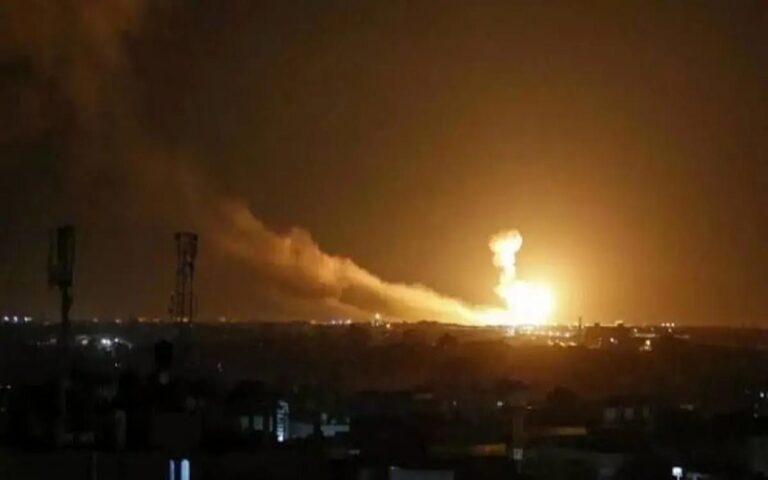
On Friday, December 29, Saudi media reported that 11 commanders and members of the Islamic Revolutionary Guard Corps (IRGC) were killed in an Israeli strike on Damascus airport on Thursday night.
Citing unnamed sources, Al-Hadath and Al-Arabiya added that the IRGC commanders and affiliated paramilitary groups supported by the Iranian regime were waiting to receive a “high-level delegation” during the attack.
According to these reports, one of those killed in the attack was Nourat Rashid, a commander of the paramilitary groups affiliated with the Iranian regime in eastern Syria.
The Saudi media outlets did not disclose the identities of the killed commanders and members of the IRGC during this attack.
However, according to Fars News Agency, run by the IRGC, Ramazan Sharif, the spokesperson of the IRGC, denied the news of 11 IRGC members being killed in the bombing of Damascus airport.
Meanwhile, Syrian information and military sources announced on Friday that Israel targeted the main air defense base of the country on the evening of Thursday, December 28. This was the latest attack of its kind since the October 7 attack by Hamas against Israel.
The Syrian Observatory for Human Rights also said this was the 73rd Israeli attack on Syria during the current calendar year, but it did not mention the number or possible identities of the casualties resulting from it.
In recent years, numerous attacks have been carried out against the IRGC and Iranian regime-affiliated paramilitary groups in Syria, attributed to Israel. However, Israel rarely claims responsibility for these attacks.
In an op-ed in The Wall Street Journal, Naftali Bennett, the former Prime Minister of Israel, revealed that during his tenure, he had ordered the Israeli forces to attack Iran twice.
The attack attributed to Israel on Thursday evening took place three days after another deadly attack on the outskirts of Damascus, in which “Seyyed Razi Mousavi, also known as Seyyed Razi, a seasoned advisor of the IRGC in Syria” was killed.
Israeli media referred to Seyyed Razi Musavi as the “highest-ranking member of the IRGC after Qasem Soleimani, who was killed in a targeted attack.”
A day after the killing of this senior IRGC member in Syria, Yoav Gallant, the Israeli Defense Minister, stated that his country had responded to attacks against it “in Iraq, Yemen, and Iran.”
On the same day, the Persian-speaking spokesperson for the Israeli Defense Forces (IDF), while refraining from confirming or denying Israel’s involvement in the killing of Razi Mousavi, announced that any attack on Israel’s borders would be met with a decisive response from the IDF.
Iranian Families Incur More Costs As Prices of Basic Goods Continue to Increase

According to the latest report on inflation and price trends by the Iranian regime’s Statistical Center, the consumer price index (CPI) for households reached 217.0 in December 2023, representing a 2.9% increase compared to the previous month and a 44.4% increase compared to the same period last year.
Based on this report, the year-on-year inflation rate for households in December exceeded 40%, meaning that on average, families have spent 40.2% more than in December of the previous year on purchasing an “identical basket of goods and services.”
Consequently, the month-over-month inflation rate in December 2021 also increased by one percentage point compared to the previous month.
In a report published on Thursday, December 28, the state-run Etemad daily wrote about the examination of the inflationary situation in Iran and the new report by the Statistical Center, stating, “This report shows that after five months of implementing the strictest recessionary policies in the monetary sector, known as stabilization policies, inflation has returned to over 40%, and monthly inflation has also shifted its eight-month record.”
According to Etemad, statistical evidence indicates that the monthly and point-to-point inflation increase is primarily due to the rise in the prices of food, beverages, and tobacco products. In December, monthly inflation for food exceeded 4%, surpassing the overall inflation rate. Furthermore, the average inflation rate in this sector has also surpassed 50%, with a significant portion of food inflation occurring in the two categories of protein products and fruits and vegetables.
According to the Statistical Center, in December 2023, the average monthly inflation rate for households in the country was 2.9%. For the major group of “food, beverages, and tobacco,” this figure was 4.1%, while for the major group of “non-food goods and services,” it was 2.3%.
In this report, hotels and restaurants, clothing and footwear, tobacco, entertainment and culture, education, food and beverages, and miscellaneous goods and services were all above the average point-to-point inflation rate. However, housing, water, electricity, gas, and other fuels decreased below the average index line in December, unlike in November.
However, the inflation trend is not uniform across income deciles and has not been the same for December. For example, the inflation rate for food in the first decile was 5.2% on a monthly scale, whereas for the tenth decile, which represents the wealthiest income group, this figure was 3.5%.
According to the definitions of responsible institutions, an inflation rate exceeding 2% per month indicates a critical increase in commodity prices.
The increase in the official inflation rate occurs under conditions where the Minister of Economy of the government claims that the government’s monetary policies, which have led to a reduction in liquidity in recent months, have brought down the inflation rate.
Under this pretext, the government has prevented an increase in the wages of workers and retirees, and in the draft budget for the persian Calendar year 1403 (March 2024-March 2025), it has only envisaged an 18% increase in the salaries of employees and retirees. In this regard, some media outlets have stated that this amount may be considered for increasing the minimum wage for workers covered by labor law.
In the current situation of Iran’s economy, the point-to-point inflation can indicate the depth of the country’s economic crisis in a more transparent way.
500 Textile Workers in Iran’s Borujerd Dismissed in Past 9 Months

Reports from Iran indicate that 500 textile workers in Borujerd (western Iran) have been dismissed since the beginning of the current Persian calendar year (beginning from March 21). In the meantime, Moslem Moradi, the governor of Borujerd, has called for a “comprehensive inspection of the company” by the provincial auditors.
The dismissal of 500 workers from the textile industry in Borujerd comes as, according to reports, workers in some industrial units have faced actions such as dismissal or wage deductions after protesting against wage conditions or demanding the implementation of job classification plans.
The state-run ILNA news agency has written about whether blocking workers’ entry cards, as happened in the recent case of protesting workers at the National Steel Company in Ahvaz, is legal or not.
The news agency has also asked the Ministry of Labor to intervene in the punishment of employers for personnel without the formation of a “committee.”
The critical living conditions of workers have led to increased dissatisfaction among the workforce in society, and workers from various units have resorted to protest gatherings to pursue demands such as the implementation of job classification plans, job benefits, and payment of delayed paychecks.
The critical conditions of the workers have also had consequences such as “suicide,” and in this regard, in recent days, two workers in the Chovar petrochemical company committed suicide.
According to media reports, the workers tried to take their lives by hanging themselves after the employer banned them from entering the workplace. Workers at the Chovar petrochemical factory in Ilam province also claim that the factory manager carried out a mass dismissal and told 13 workers that they were no longer needed, which led to the suicide of two contract workers on December 21 in protest against the dismissals.
In another incident, workers from all sections of the Iranian National Industrial Group’s steel factories in Ahvaz went on strike on December 23 following the CEO’s ban on the entry of 21 workers and the failure to fully implement the job classification plan.
The strike has continued for a week, and Ali Mohammad, the CEO of the group, announced in response to the strike that the ban on the employment of 21 workers was carried out “in coordination and with the decision of the Khuzestan Supply Council” so that, according to him, “production lines are not disrupted.”
According to Article 48 of the Labor Law, the job classification plan must be implemented for all workshops that are covered by the Social Security Law and have more than 50 employees.
According to this legal article, in order to prevent the exploitation of other jobs, the Ministry of Labor is obligated to prepare and implement the job evaluation and classification system using the job standards and customs in the country.
IRGC Commander Walks Back Comments Claiming Oct 7 Attacks Were Retaliation to Killing of Qassem Soleimani
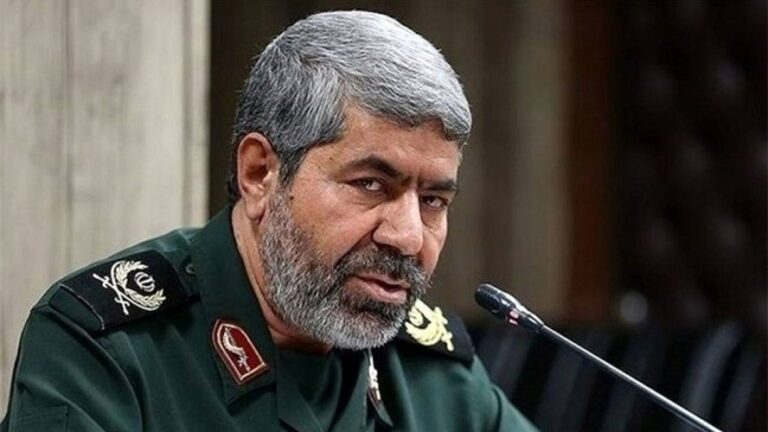
In a statement released on its Telegram channels, Hamas denied the remarks of Ramazan Sharif, the spokesperson for the Islamic Revolutionary Guard Corps (IRGC), regarding the “Al-Aqsa Storm,” the name Hamas uses to refer to the October 7 attack on southern Israel.
Ramazan Sharif, the spokesperson for the IRGC, stated in a press conference in Tehran on December 27 that the Hamas attack on Israel on October 7 was “one of the retaliations of the resistance axis for the killing of Qasem Soleimani,” in which Israeli forces “lost over 200 commanders and suffered more than 1,500 casualties.” Qassem Soleiman was the notorious commander of the IRGC Quds Force, who was killed in a US drone strike near Baghdad, Iraq, in September 2020. Soleimani was killed along with Abu Mahdi al-Muhandis, the commander of the Iran-backed Hashd al-Shabi terrorist militia group in Iraq.
Hamas, in its statement, “denied the credibility of Ramadan Sharif’s remarks” and wrote:
“We have repeatedly reiterated the motives and reasons behind the Al-Aqsa Storm, which primarily involves the threats to Al-Aqsa Mosque.”
“We also affirm that all acts of Palestinian resistance in response to the Zionist occupation and continued hostilities against our people and sacred sites are justified.”
Hossein Salami, the Commander-in-Chief of the IRGC, walked back Sharif’s statements and said, “We have not yet taken revenge for the killing of Qasem Soleimani.”
Salami stated that contrary to the spokesperson’s remarks, the Islamic Republic has not yet avenged the killings of Qasem Soleimani and Abu Mahdi al-Muhandis, adding that “we will do it in due time.” He further added that the revenge for Soleimani’s killing “will be carried out in its own specific domain.”
Since the beginning of the war in Gaza, Iran’s regime has been trying to play a dual game where it tries to claim credit for attacks against Israel and U.S. allies while at the same time rejecting any responsibility. The regime is afraid of the implications of a widespread war that might it in direct confrontation with other nations, especially as it is trying with little success to contain the pent-up anger of the Iranian people, which manifests itself in daily protests.
Iran’s Gold Traders Continue Strike for 6th Day
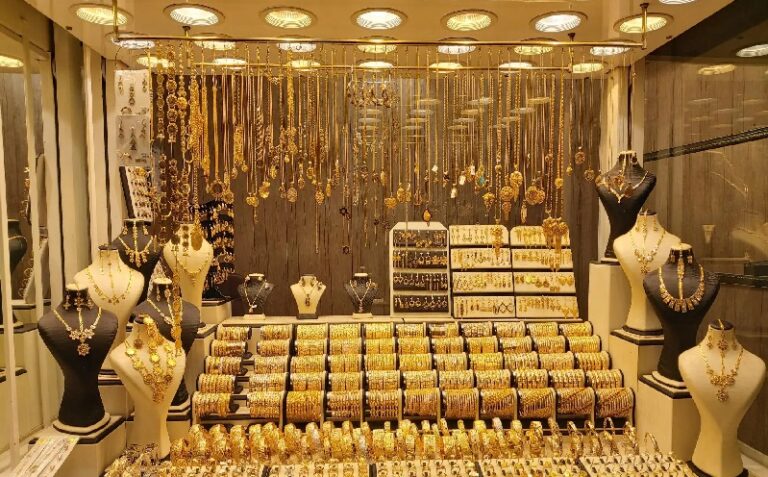
Reports from various markets in different cities of Iran indicate that the gold traders’ strike continued for the sixth consecutive day on Thursday, December 28.
Gold traders in Tehran, Isfahan, Hamadan, Mashhad, Qom, Yazd, Arak, Tabriz, and several other cities went on strike on Thursday, similar to the previous days.
The strike in this sector began when gold traders were required to register their information and gold inventory on the National Trade Website (NTSW). Alongside this obligation, the registration of buyers’ information in government online systems has also become mandatory. These measures collectively led to the discussion of imposing a 25% capital gains tax, eventually resulting in the strike.
On December 26, the third day of the strike, the spokesperson of the Tax Organization denied these claims and alleged that those who have been able to evade taxes for years by exploiting non-transparent and shadow economic spaces have spread rumors like a 25% gold tax.
The official IRNA news agency, while denying the implementation of a tax at this stage, implied that local taxes in this sector would be intensified and stated, “According to the latest statistics from the Tax Organization, the tax on gold traders’ earnings is zero for 34% of them, and 20% of gold traders pay approximately 50 million rials (approximately $100) in taxes annually. These figures are incomparable to the taxes paid by employees and other trades considering the profits gold traders make.”
According to IRNA, “All purchases, sales, and profit-making must be registered on the government tax website, as local taxes are levied based on this system.”
With the continuation of the strike, Mohammad-Hadi Sobhanian, the head of the Tax Organization, also reacted to the issue and stated that currently, gold is taxed like other businesses and trades based on their operational profits, and there is no new tax on the agenda.
On Wednesday, December 27, the Minister of Economy, Ehsan Khandouzi, in response to the ongoing strikes on its fifth day and its expansion to more cities, said, “There is false news circulating about the gold traders’ tax, which is not true. We do not have any new policies in this regard.”
Regarding the obligation to register information on the comprehensive trade website, Khandouzi also stated that this system is under the supervision of the Ministry of Industry, and the Minister should provide explanations regarding it.
The gold market strike has entered its sixth day today, while domestic media remained silent about it in the past days. However, today, the news website EcoIran, affiliated with the Donyay-e-Eghtesad Institute, addressed the issue in a report and wrote, “On Wednesday, the fifth day of the gold market strike, it was said that the gold markets in Isfahan, Mashhad, Kashan, Arak, and Qom are still closed.”
With the approval of Article 12 of the capital gains tax bill in the regime’s parliament, gold has been introduced as one of the targeted assets for tax collection from buying and selling profits. Some analysts believe that with increasing pressure in the tax area, a tax on the capital gains of gold will also begin.
Currently, the capital gains tax on housing and automobiles is being implemented.
