Around 1,500 Engineering Professors Have Emigrated from Iran’s Top Universities in Past Five Years

Karen Abrinia, secretary of the Iranian University Professors’ Trade Association, reported that at least 1,500 engineering professors from Iran’s top universities have emigrated over the past five years. Ebrahim Azadegan, a professor at Sharif University of Technology—one of Iran’s most prestigious institutions—also said that currently, one professor leaves the university every week. The state-run news website Khabar Online published a detailed interview with Karen Abrinia on Monday, October 20, discussing the emigration of professors and students as well as the securitized atmosphere in Iranian universities. They emphasized that security vetting processes often disqualify top academics and professors for reasons such as “signing a statement,” “being single,” or “having a photo taken in a café in the U.S.” According to the secretary of the Iranian University Professors’ Trade Association, from the 2018–2019 to the 2023–2024 academic year, 25% of the six thousand professors in engineering and technical fields at top universities have emigrated.
Growing Wave of Professor Migration Poses Serious Challenge To Iran’s Scientific Future
At the Faculty of Mechanical Engineering at the University of Tehran, about ten professors either took early retirement to continue their work abroad or went on sabbatical and never returned. Citing official statistics, Abrinia stated that between 2000 and 2020, about 66,000 students emigrated from Iran. However, unofficial figures suggest that around 200,000 students left Iran during the same period.

Academic Emigration Intensified After the Mahsa Amini Movement

Abrinia said that when university professors signed a statement in 2022 calling for a calm academic environment, it caused significant problems for them, and many young professors were told their contracts would not be renewed. In an interview with Khabar Online, Ebrahim Azadegan emphasized that after the nationwide protests of 2022 and over the past three years, Sharif University of Technology has faced a “disaster.” Nearly 70 professors have left the university, and suitable replacements have yet to be found. Azadegan added that these days, one professor leaves the university every week; they either take unpaid leave or go abroad for research opportunities and conferences—and never return. Azadegan described the events of 2022 as some of the most difficult days for Sharif University, recalling that during the protests, the campus was attacked, many professors and students were “beaten without cause,” and an intense security atmosphere took hold. On October 2, 2022, security forces and plainclothes agents of Iran’s regime surrounded Sharif University, arrested between 30 to 40 students, and opened fire on students attempting to leave the campus. Azadegan said that even now, women stationed at the university gates “warn” students about their attire, the campus is filled with surveillance cameras, and students are still summoned to disciplinary committees for defying the mandatory hijab rules.

The Regime Welcomes the Departure of Critical Professors

Abrinia went on to say that in some cases, the authorities are pleased when critical professors emigrate, believing such individuals “cause trouble.” The secretary of the Iranian University Professors’ Trade Association also cited the conduct of university security offices, the securitized mindset, and the humiliating treatment during faculty selection processes as key factors driving emigration. Abrinia gave an example from the current administration, saying that a professor was once made to sit in a room, handed a Quran, and told to “read.” In another case, a young professor was told, “Why haven’t you married yet? If you don’t marry by next year, we won’t renew your contract.” She added: “The situation has become such that a professor educated at one of the world’s best universities is made to sit across from someone—I don’t even know if they have a high school diploma—to be interrogated and asked absurd questions that undermine their credibility.” Azadegan also cited an example where Sharif University rejected a philosophy PhD graduate from Princeton University simply because of a photo showing him with several male and female friends in a café in the U.S. However, according to him, the real reason was that the authorities did not want someone educated in the U.S. to teach at Sharif University and used the photo as a pretext. He added that a philosophy graduate from the Sorbonne was told: “Why did you even come back? We will never allow your ideas to be taught at our university.”

After the War, Academic Emigration Declined Due to Visa Restrictions

Abrinia noted that after the 12-day war (a reference to the recent conflict in the Middle East), the rate of emigration among professors and students declined—not because the war discouraged migration, but because foreign countries have become less willing to issue visas to Iranians. She recalled that when obtaining visas was easier, most professors emigrated to the U.S., Canada, Europe, and Australia, but recently many have also been moving to neighboring countries such as Saudi Arabia, Turkey, and the United Arab Emirates. Azadegan added that among those who left Sharif University’s philosophy department, most have relocated to the United Kingdom, the United States, and Germany. According to him, professors and students from technical and engineering disciplines emigrate more frequently than those from the humanities, and most end up working in private companies rather than universities.

Malnutrition Responsible for About 35% Of Deaths in Iran

0
The state-run news website Rouydad24 reported that with the worsening economic crisis and a sharp decline in people’s purchasing power, an increasing number of Iranian citizens can no longer afford essential food items, and malnutrition has now become the cause of about 35% of deaths in the country. In the report published on Monday, October 20, it stated: “From the reduction in the consumption of dairy and meat to shortages of fruits and vegetables, the nutrition crisis in the country has sounded the alarm for public health and household economies.” Rouydad24, quoting Ahmad Esmailzadeh, head of the Community Nutrition Improvement Office at the Ministry of Health, wrote that every year between 400,000 to 420,000 people die in Iran, and according to estimates, about 35% of these deaths are related to “nutritional deficiencies and problems.”
Iran’s Regime Agriculture Minister Admits to ‘Toughest Conditions Of Food Security’
According to the report, the decline in consumption of dairy, meat, fruits, and vegetables, along with the increase in obesity among children and pregnant women, and widespread deficiencies in essential vitamins and minerals, has created a new public health crisis in the country that could pose a serious threat to future generations. Earlier, on October 8, Gholamreza Nouri Ghezeljeh, Iran’s regime agriculture minister, described the rising prices as “logical” and claimed that food prices in Iran “are still cheap compared to global prices.” Based on the Ministry of Health’s estimates, at least 10,000 people in Iran die each year due to a lack of omega-3 fatty acids, about 10,000 from insufficient fruit and vegetable consumption, and roughly 25,000 more due to a deficiency of whole grains and bread in their diet. Between 50% to 70% of Iran’s population also suffers from vitamin D deficiency—a crisis that directly leads to weakened immune systems and an increase in bone-related diseases. Dairy and meat are consumed at less than half the recommended levels Rouydad24 continued in its report: “Fluctuations in food prices and rising inflation have played a major role in reducing the consumption of essential items. Dairy and meat, which are among the most important protein sources, are consumed at less than half the recommended amount due to price increases. Even supplements and vitamins have become unaffordable for many.”
Iran’s Economy in Freefall: A Looming Hunger Crisis
According to the report, the worsening economic conditions and declining purchasing power have placed a heavy burden on families, leading to a deeper crisis in food security and public health in deprived provinces such as Sistan and Baluchestan, Kerman, and Hormozgan. Rouydad24 added: “The consequences of this crisis are not limited to mortality. Overweight and obesity among children, stunted growth in deprived provinces, and the increasing prevalence of chronic diseases such as hypertension and diabetes are all linked to dietary patterns.” On October 16, Hassan Sadeghi, head of the Veterans’ Workers Union, warned that the poorest segment of society has risen from 30% to about 45%. He continued: “If this trend continues, by the end of the current year, a larger portion of the middle class will fall below the poverty line.” In recent weeks, rampant inflation and the rise of foreign exchange rates have deepened concerns about Iran’s deteriorating economic situation—a trend that has intensified following the activation of the UN sanctions “snapback mechanism.” On September 27, Iran’s Statistical Center announced that the annual inflation rate for September was 37.5%, the year-on-year inflation rate was 45.3%, and the monthly inflation rate for September was 3.8%.

Juvenile Offender Executed in Sepidar Prison of Ahvaz

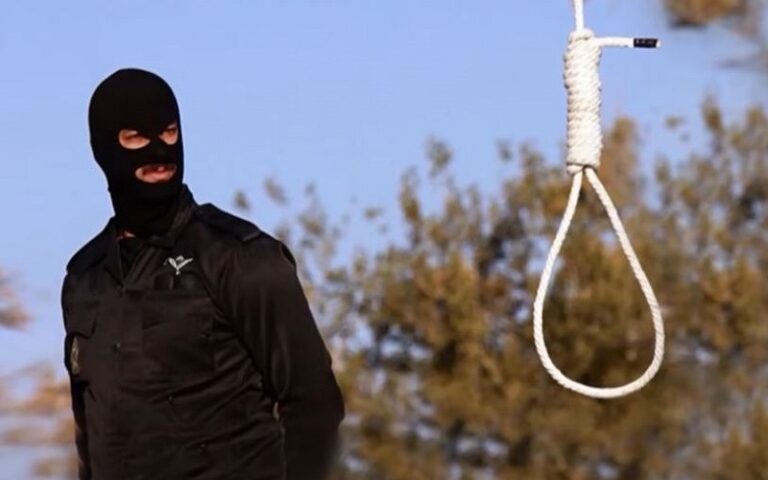
The death sentence of Ali Aghajeri, a juvenile offender who was arrested at the age of seventeen following a family dispute in the city of Behbahan, was carried out in Sepidar Prison of Ahvaz. The human rights news agency HRANA reported on Monday, October 20, that about five years ago, when Aghajeri was only seventeen, he was arrested during a group altercation over farmland. According to the report, one person was killed in the fight, and the criminal court sentenced Aghajeri to death on charges of premeditated murder. A source close to Aghajeri’s family said that his relatives had tried over the years to pay blood money and seek forgiveness from the victim’s family, but their efforts were unsuccessful. As of the time of this report, judicial authorities and Sepidar Prison officials have not officially confirmed the execution. The execution of individuals who were under eighteen at the time of their alleged crime is a blatant violation of the Iranian regime’s international obligations, including the Convention on the Rights of the Child, to which Iran is a signatory. In a statement the National Council of Resistance of Iran (NCRI) announced the number of executions carried out over the past year as follows: “Over the past year (from October 1, 2024, to September 30, 2025), the religious fascism ruling Iran has recorded a bloody and unprecedented record of cruelty and crime. During this period, the execution of 1,654 prisoners was documented across 31 provinces, representing a 2.3-fold increase compared to the same period the previous year (with 851 executions), and a 2.8-fold increase compared to the year before that (with 693 executions).” These figures were compiled based on verification networks and independent sources due to the judiciary’s secrecy On October 16, Amnesty International announced that more than one thousand executions have been reported in Iran since the beginning of 2025 and called for an immediate halt to all executions. The international human rights organization reported that executions in Iran are carried out following unfair trials and are intended to suppress protests and minorities. Hussein Baoumi, Amnesty International’s Deputy Director for the Middle East and North Africa, said on Thursday, October 16, “UN Member states must confront the Iranian authorities’ shocking execution spree with the urgency it demands.” He added that since the start of the 2022 protests, officials of Iran’s regime have used the death penalty “to instill fear among the population, crush dissent and punish marginalized communities.” In this context, political prisoners across various prisons have expressed their opposition to the growing wave of executions in Iran through sit-ins, issuing statements, and participating in “No to Execution” campaigns. In this context, political prisoners across various prisons have expressed their opposition to the growing wave of executions in Iran through sit-ins, issuing statements, and participating in “No to Execution” campaigns.

Around 70,000 Iranian Nurses Have No Desire to Work

Mohammad Sharifi-Moghaddam, secretary-general of the Nurses’ Association of Iran, reported that “around 60,000 to 70,000” unemployed nurses in Iran are unwilling to return to work. Speaking to the state-run Ham-Mihan daily on Saturday, October 18, Sharifi-Moghaddam said, “A salary below 200 million rials (approximately 180$) for a woman with two children only covers childcare expenses, and she must also bear the emotional cost of being away from her children. Therefore, staying home is actually less costly for her.” Emphasizing that nurses lack motivation to work, he added that officials in the Ministry of Health “have no understanding of these wages because their own salaries are in the hundreds of millions of rials.”
Thousands of Unemployed Nurses Show Little Interest in Job Postings
He had previously stressed that harsh working conditions, psychological stress, and wage inequality have caused many nurses to lose interest in their profession and seek ways to leave hospital work altogether. According to Sharifi-Moghaddam, some nurses have shifted to jobs in insurance and medical equipment, while others have turned to unrelated fields such as nail care or driving for ride-hailing apps.

Nursing graduates are not entering the workforce

Mansoureh Khavari, head of nursing at Mahdieh Hospital, also stated on October 18 that nurses’ salaries do not reflect their workload or the difficulty of their jobs, leading nursing graduates to show little interest in entering the workforce. She said that the situation has become so unfavorable that the number of applicants for the nursing employment exams is lower than the available quotas allocated to medical universities. Khavari added, “If nurses’ working conditions, overtime, and pay were aligned with the difficulty of their work, the situation would change, and more graduates would be eager to join the workforce.” In another Ham-Mihan report, Karim Abedini, a nurse in the adult chemotherapy ward of a Tehran hospital, said that in some hospital wards, two nurses and one assistant are responsible for as many as 30 patients. According to healthcare system standards, there should be three nurses per 1,000 citizens or two active nurses for each hospital bed. Ideally, the nurse-to-bed ratio should be about two nurses per bed, but in Iran, the national average is around 1.1, dropping to as low as 0.8 in some provinces. Abbas Ebadi, deputy minister of nursing at the Iranian regime’s Ministry of Health, announced on August 30 that since March 21, 2025, a total of 570 nurses have emigrated from Iran. He stated that the country currently needs 100,000 nurses. Sharifi-Moghaddam also stressed on October 11 that the official statistics on nurse emigration are inaccurate, as many leave the country without formal migration documentation.

Iran’s Regime Preparing to Counter Reinstated U.N. Sanctions

On Sunday, October 19, The Washington Times reported that while Western powers are celebrating the reinstatement of U.N. sanctions against Tehran, analysts warn that without a coordinated, multilateral pressure campaign, the Iranian regime could evade the actual enforcement of these penalties. Germany, the United Kingdom, and France—signatories to the 2015 nuclear deal (JCPOA)—triggered the 30-day “snapback” mechanism in a letter to the U.N. Security Council on August 28 to restore the organization’s sanctions. The sanctions include an arms embargo, diplomatic travel restrictions, asset freezes, and extensive limitations on Iran’s nuclear program.
Iranian Regime Puts Iran’s Oil on Sale in China with Bigger Discounts
The Washington Times wrote that experts say these sanctions will likely have little impact on Iran’s oil sales, the regime’s main source of revenue. China, one of the regime’s key allies, imports about 1.5 million barrels of oil per day from Iran—a revenue stream worth billions of dollars that helps fund Tehran’s military projects and foreign operations. According to data from the U.S. Energy Information Administration, Iran exported around 587 million barrels of oil in 2024—an 11% increase from the previous year—earning approximately 43 billion dollars in revenue. In line with U.S. President Donald Trump’s maximum pressure policy, the U.S. Treasury Department imposed new sanctions in October on Chinese refineries, shadow fleets, and unregistered ships carrying illicit oil shipments.

Cooperation between the Iranian regime and Russia

The Washington Times further quoted experts warning that the revenue from oil sales to China could be used to purchase weapons and defense technologies from Russia. According to the paper, although the U.N. sanctions include strict arms restrictions, some analysts believe Russia—due to its ongoing war in Ukraine and sense of immunity from punishment—may choose to disregard these limitations. On October 2, Russia’s Foreign Ministry announced in a statement that the comprehensive strategic treaty between Moscow and Tehran, signed in January 2025 at the Kremlin by Russian President Vladimir Putin and Iranian regime president Masoud Pezeshkian, had officially entered into force. The agreement covers military and educational cooperation as well as joint development of nuclear technology—an area that the new U.N. sanctions are specifically intended to restrict. Iran’s uranium enrichment facilities were destroyed during the twelve-day war with the United States and Israel in June. Tehran has vowed to rebuild them, but the reimposed sanctions could make access to necessary equipment difficult.

The need for U.S.–European coordination

Richard Nephew, program director at Columbia University’s Center on Global Energy Policy, emphasized that the success of the pressure campaign depends on full coordination between the U.S. and Europe. “I think the bigger impact is gonna be on the proliferation side, potentially making it harder for Iran to get bits and pieces of nuclear kit,” Mr. Nephew said. “But you don’t have a big U.N. infrastructure the way you did in the past, so that makes it hard to imagine you’re gonna have dramatic effects now, unless the U.S., Europeans and others are really willing to step up enforcement.” The United States and Israel maintain their position that Iran must never be allowed to obtain a nuclear weapon. Both countries have warned that if the Iranian regime rebuilds its nuclear program, further airstrikes will follow.

Iran’s Regime Is Rebuilding Its Axis of Influence in the Region

The British newspaper The Sun quoted Israeli intelligence experts reporting that the Iranian regime is working to rearm Hamas and rebuild its regional axis of influence. The newspaper added that this move could be a prelude to a new round of conflict with Israel. Raz Zimmt, a former officer of Israeli military intelligence, said that Tehran, after the weakening of its proxy forces in Lebanon, Syria, and Gaza, is trying to use the current opportunity to rebuild its power and “is more determined than ever to create a nuclear weapon.” Zimmt, referring to the comments made by Ali Akbar Velayati, advisor to the Iranian regime’s supreme leader, about the possibility of renewed conflict, warned that despite suffering heavy losses during the twelve-day war, Iran has found greater motivation to pursue nuclear weapons.
Hezbollah Secretly Rebuilding Itself with Help from Iran’s Regime
On October 9, Velayati wrote on the social media platform X: “The start of the ceasefire in Gaza may be the behind-the-scenes end of the ceasefire somewhere else.” He referred to the countries “Iraq, Yemen, and Lebanon.” U.S. President Donald Trump, in response to Hamas’s threats, said that if the group refuses to disarm, the United States “will disarm them swiftly and severely.” According to Trump’s twenty-point peace plan, Hamas must hand over all its weapons for the Gaza agreement to be implemented. Zimmt emphasized: “Israel should be aware of the fact that Hamas is down but not out. So, I think it should be considered by Israel as a temporary situation.” Following the peace agreement between Israel and Hamas, the Iranian regime’s Ministry of Foreign Affairs issued a statement supporting the accord, saying that Tehran has always supported any action or initiative that ensures an end to the war, the withdrawal of Israeli troops, the delivery of humanitarian aid, the release of Palestinian prisoners, and the restoration of Palestinian rights. However, experts believe that the Iranian regime’s role in supporting armed groups and Israel’s reaction to any potential threat from Iran could determine the future political and security landscape of the region.

The Iranian regime’s effort to rebuild Hezbollah

The French daily Le Figaro also reported on Hezbollah’s covert efforts to rebuild itself, writing that although the group has agreed to disarm in southern Lebanon, it continues to hold weapons in other areas under its influence and, with the help of Iranian regime operatives and extensive internal restructuring, is secretly rebuilding its organization. According to the report, about two weeks later, Iranian regime forces led by Esmail Qaani, the commander of the Quds Force of the Islamic Revolutionary Guard Corps (IRGC), intervened and rebuilt Hezbollah’s military structure within ten days, though the group’s political leadership remained vacant.

Retired Oil Industry and Social Security Workers Hold Protest Gatherings in Several Iranian Cities

As the Iranian regime continues to fail in addressing retirees’ demands, a group of retired oil industry workers held a protest in front of the Ministry of Oil building in Tehran. At the same time, groups of retired steel industry workers in Isfahan and Social Security retirees in several other cities also staged demonstrations. On Sunday, October 19, oil industry retirees gathered to protest the incomplete implementation of the pension equalization plan, the failure to fully pay retirement bonuses, and the privatization of health and medical services. The retirees addressed Mohsen Paknejad, the Iranian regime’s oil minister, chanting slogans such as “Incompetent minister / resign, resign,” demanding his resignation. Some protesters also chanted slogans such as “Workers and retirees / unity, unity,” “Retirees’ pensions only lasts one week,” “Never to humiliation,” and “The retiree’s refrigerator is emptier than before.”
Strikes and Labor Protests Held in Several Iranian Cities
In recent years, retired oil industry workers have repeatedly gathered in front of the Ministry of Oil, holding placards and banners to demand solutions to their healthcare, livelihood, and professional problems.

Gathering of steel industry and Social Security retirees

On October 19, a group of retired steel industry workers in Isfahan held a protest rally and march in the city, chanting slogans such as “Wealthy country / what has become of you?” At the same time, groups of Social Security retirees held protest gatherings in cities including Ahvaz, Shush, Rasht, and Kermanshah. According to videos shared on social media, some retirees in Shush chanted slogans such as “Our enemy is right here / they lie it’s America.” The state-run ILNA news agency reported that the Social Security retirees’ demands included free healthcare as stipulated in Article 54 of the Social Security Law, pension adjustments based on Article 96 of the same law, and the right to a decent standard of living. ILNA added that the protesters stressed that Social Security “belongs to the insured” and that its “independence and capability” must be preserved. In another report, ILNA wrote that on October 19, bakers in Tehran held a protest in front of the capital’s Bakers’ Union over the non-payment of bread subsidies. According to the report, a day earlier, bakers in Mashhad had also held a protest against the non-allocation of bread subsidies. In recent years, retirees and workers across various cities in Iran have repeatedly held protests and marches over the regime’s failure to meet their demands. The deteriorating living conditions of workers, retirees, and pensioners have led to a sharp increase in the number of their protests in recent years.

Hezbollah Secretly Rebuilding Itself with Help from Iran’s Regime

The French newspaper Le Figaro reported on Hezbollah’s covert efforts to rebuild itself, writing that although the group has agreed to disarm in southern Lebanon, it still holds weapons in other areas under its influence and, with the help of agents from Iran’s regime and extensive internal restructuring, is secretly rebuilding its organization. A Hezbollah member told Le Figaro that after the death of Hassan Nasrallah, for ten days no one answered the phones. We were like a body in a coma. Only the southern units continued operating under the emergency protocol established for the leader’s disappearance.
Iran’s Weapons Route Obliterated, Hezbollah Leader Admits
According to the report, about two weeks later, forces from Iran’s regime led by Esmail Qaani, the commander of the IRGC Quds Force, intervened and rebuilt Hezbollah’s military structure within ten days, although the group’s political leadership remained vacant. Based on Le Figaro’s investigation, around 1,200 Hezbollah fighters were killed during this period. The group’s new structure has been formed under high secrecy, relying on a younger and more dynamic generation. Ali Fayad, a member of the Lebanese Parliament, told the newspaper that today they have a new military structure that is highly secretive. The chain of command has been shortened, and no one knows who is responsible for what. The newspaper also reported that despite maintaining its weapons depots in the Beqaa Valley and north of the Litani River, Hezbollah has decided not to intervene in the event of an attack on Iran. Meanwhile, Israeli drones continue to fly over Lebanon’s border regions, and many southern villages, including Naqoura and Alma al-Shaab, remain in complete ruins. Despite more than 1,500 ceasefire violations and around 300 deaths in Lebanon, Hezbollah has so far not launched a military response to Israeli attacks. Its only action has been to pay about $12,000 to rebuild destroyed homes. However, the financial crisis caused by the collapse of Bashar al-Assad’s regime in Syria has strained Hezbollah’s funding sources. Le Figaro also discussed internal criticism of Nasrallah’s leadership, noting that his critics accuse him of entering the war in solidarity with Hamas but acting too cautiously. The newspaper emphasizes that despite its military weakening, Hezbollah still maintains significant influence in Lebanon’s political structure, holding 27 seats in parliament and retaining broad support among the Shiite population. A Lebanese diplomat told Le Figaro that Hezbollah is no longer an immediate threat to Israel, but it remains powerful within Lebanon. A Western intelligence source, speaking about the group’s covert activities, said that they crawl like a snake in the dark. They have not disappeared — they are just waiting for the right moment. In conclusion, Le Figaro wrote that despite its weakening, Hezbollah remains standing and is rebuilding its command structure while maintaining its popular base.

Iran’s Execution Crisis: 1,500 Death Row Prisoners Defy Regime in Sixth Day of Hunger Strike

The Defiant Hunger Strike Unfolds In the shadow of Tehran’s sprawling prisons, a desperate cry for life echoes louder today: over 1,500 death-row inmates at Qezel Hesar Prison have entered the sixth day of a mass hunger strike, protesting the Iranian regime’s relentless execution machine. Launched on October 12, 2025, this unprecedented act of defiance— the largest collective protest in Iranian prisons in recent memory—unites political dissidents and ordinary convicts in a unified demand: “No to executions!” As the strikers weaken from denied food and medical care, regime officials escalate threats of solitary confinement and imminent hangings, turning the prison into a battleground of wills. Surge in State-Sanctioned Executions The hunger strike erupted amid a horrifying surge in state-sanctioned killings. Since the start of 2025, Iran Human Rights Monitor (Iran HRM) has documented more than 1,200 executions, including protesters, ethnic minorities, and political prisoners subjected to sham trials marred by torture and forced confessions. Amnesty International reports an even graver toll: over 1,000 lives ended by the gallows this year alone—the highest annual figure since 1988—averaging four executions per day. This bloodletting disproportionately targets marginalized groups, such as Ahwazi Arabs, Baluchis, Kurds, and Afghans, often on vague charges like “enmity against God” or drug offenses that violate international law. Under President Masoud Pezeshkian’s administration, which began in 2024, the pace has only accelerated, coinciding with the fragile June 2025 ceasefire that ended the brief Iran-Israel conflict. Critics draw chilling parallels to the post-Iran-Iraq war era, when the regime unleashed a massacre claiming up to 30,000 lives, mostly supporters of the People’s Mojahedin Organization of Iran (PMOI/MEK). Targeting Political Prisoners: Faces of Resistance At the heart of Qezel Hesar’s uprising is a shared terror of repetition. Inmates, inspired by the unyielding resistance of PMOI-affiliated political prisoners, chant against the “execution machine” that has claimed over 30 lives in the strike’s first three days alone. Among the 17 MEK-linked dissidents now on death row are figures like Farshad Etemadi-Far, Masoud Jamei, and Alireza Mardasi, sentenced in July 2025 by Ahvaz’s Revolutionary Court on fabricated “waging war on God” charges after years of abuse. Others, including Behrouz Ehsani and Mehdi Hassani, were executed shortly after their Supreme Court appeals were rejected. Recent victims include Pejman Toubrehrizi, Nima Shahi, and Hamed Validi, condemned in September following brutal interrogations. Regime’s Brutal Crackdown The regime’s response has been as brutal as it is calculated. On the strike’s fifth day, October 17, Tehran deputy prosecutor Mullah Hosseinzadeh and prison heads confronted the inmates, offering a grim bargain: end the protest by midnight, or face “the worst treatment.” Guards have jammed mobile signals, transferred 16 strikers to solitary for execution, and sent 14 to infirmaries in critical condition. This mirrors broader tactics: state media glorifies the 1988 atrocities as a “successful historical experience” ripe for revival, while authorities bulldoze mass graves at Behesht Zahra Cemetery to erase evidence of past crimes. Political prisoner Saeed Masouri, a leader in the “No to Executions Tuesdays” campaign, smuggled out a letter from Qezel Hesar warning: “Just as in 1988, a crime is in progress.” Parallels Between 1988 Massacre and 2025 Crisis  1988                                                                            2025 | Ceasefire after Iran-Iraq War                       | Ceasefire after Iran-Israel War | | Fatwa targeting political prisoners             | IRGC media calls to “repeat” 1988 executions | | Secret “death commissions”                          | Revolutionary Courts issuing rushed sentences | | Focus on MEK supporters                              | 17+ MEK affiliates on death row | | Concealment of burial sites                           | Destruction of Behesht Zahra graves | Global Alarms and Calls for Action These echoes have alarmed global watchdogs. Ten UN Special Rapporteurs warned in July 2025 that the crackdown constitutes “ongoing crimes against humanity.” Amnesty International echoes this urgency, imploring UN member states to demand an immediate halt to all executions during the October 30 Third Committee dialogue on Iran. Recommendations include quashing unfair death sentences, revoking lethal drug laws, and pursuing universal jurisdiction arrests for torturers. Iran HRM and the National Council of Resistance of Iran (NCRI) amplify the prisoners’ “Testament of Qezel Hesar,” a call for public rallies outside Iran’s parliament on October 19 and worldwide solidarity under #StopExecutionsInIran and #SOS1500DeathRowInIran. As strikers sew their lips in silent protest and families are barred from gravesides, the world faces a stark choice: intervene now, or witness history’s silent rerun. Silence equals complicity. The international community must condition ties with Tehran on ending this spree—before another midnight tolls in Qezel Hesar.

More Than 20 Deadly Plots by Iran’s Regime Against Dissidents Discovered by MI5

Ken McCallum, the head of the United Kingdom’s domestic intelligence agency (MI5), announced that the country faces an increasing threat from hostile states such as Russia, China, and Iran’s regime. He said that the agency has tracked more than 20 potentially deadly plots supported by the Iranian regime. On Thursday, October 16, McCallum stated that the number of individuals under investigation for activities related to state threats has increased by 35%, and hostile nations are increasingly resorting to brutal and violent methods usually associated with terrorists. He said that his agency had disrupted a stream of hostile espionage operations from Russia and had tracked more than 20 potentially deadly plots backed by Iran’s regime.
Australian Government Introduces Bill to Designate IRGC As Terrorist Organization

Tehran’s transnational role in silencing dissidents

McCallum said that Tehran is actively attempting to silence its critics across the globe, citing examples such as Australia exposing Iran’s regime involvement in antisemitic plots and Dutch authorities reporting the foiling of a failed assassination attempt. He also noted that the terrorist threat to the UK remains very high, stating that MI5 and British police have foiled 19 late-stage attack plots since the beginning of 2020. In his annual speech at MI5 headquarters in London, McCallum said that in 2025 the agency is facing an unprecedented scale and variety of threats from both terrorists and hostile state actors. The UK has repeatedly spoken of hostile activities that it attributes to Russia, Iran’s regime, and China—allegations that all three countries have denied. Earlier this year, six Bulgarian nationals were sentenced to prison for spying on behalf of Russia. Additionally, five men were convicted of arson attacks on Ukraine-related businesses in London—an act that British authorities said was ordered by Russia’s Wagner mercenary group. McCallum emphasized, that they will continue to trace the chains of command to those who give the orders—those who think they are anonymous and untraceable behind their screens.