

“Pay for Treatment” in Iran’s Notorious Qarchak Prison
Political Prisoners in Critical Conditions in the Women’s Ward of Iran’s Evin Prison
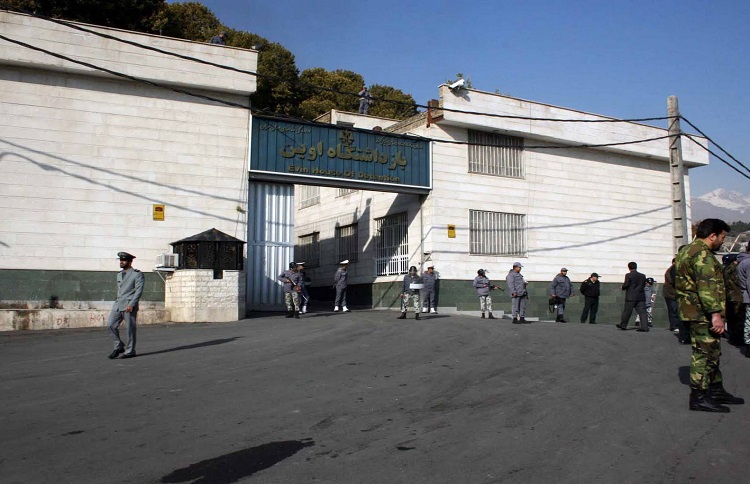
Women political prisoners held in the women’s ward of Evin Prison are spending late autumn 2025 under conditions that, according to received reports, involve widespread deprivation of the most basic sanitary, welfare, and medical facilities. This alarming situation continues while repeated warnings by prisoners and their families have so far been met with no effective or lasting action by prison authorities.
In the early hours of October 9, dozens of women political prisoners were transferred from Qarchak Prison in Varamin to the women’s ward of Evin Prison. This transfer, which was initially carried out with promises of improved conditions, has in practice led to an intensification of problems and additional pressure on these prisoners. According to informed sources, conditions in the women’s ward of Evin Prison are not only no better than Qarchak, but in some cases are reported to be far worse.
At Least 66 Fuel Porters Killed in Road Accidents in Iran in 9 Months
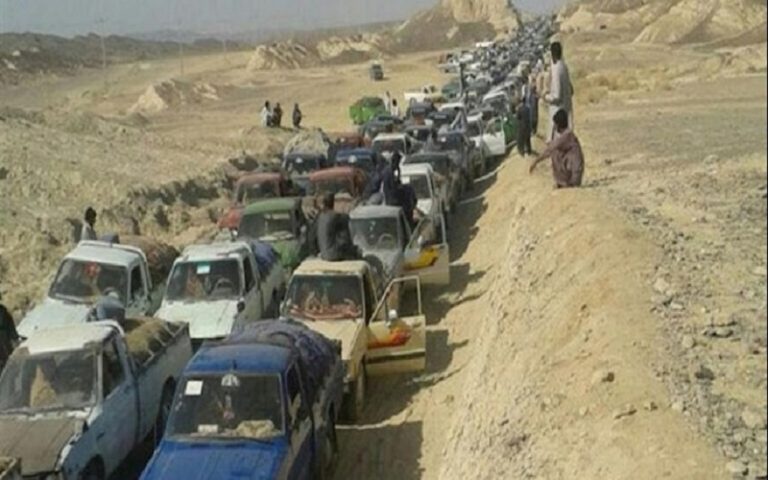
According to media reports, over the past nearly nine months, at least 66 fuel porters have lost their lives in road accidents in Iran. A large portion of these fatalities occurred on roads in the southern part of Sistan and Baluchestan province.
The state-run Ham-Mihan newspaper reported in its Sunday, December 14 issue that from the beginning of Persian months of Farvardin until mid-Azar of the current year (from March 20 to early December), the identities and deaths of 62 fuel porters on roads in southern Sistan and Baluchestan were recorded, nine of whom were teenagers.
According to Ham-Mihan, these figures do not include fuel porters traveling on roads in southern Kerman, Minab, Hormozgan, Bandar Abbas, and other roads in southeastern Iranian provinces, and when these cases are included, the death toll in less than nine months reaches at least 66 people.
Gasoline Price Increase Begins Across IranHam-Mihan cited “widespread school dropout” in Sistan and Baluchestan province as one of the factors contributing to the spread of fuel portering, writing that in some villages, teenagers enter fuel portering from the ages of 12 to 14. Citizens in Baluch-populated regions of Iran have for years been forced into fuel portering due to the collapse of agriculture, economic poverty, widespread unemployment, and the lack of job opportunities. This is a high-risk occupation that exposes them to shootings, chases, and deadly road accidents. The state-run Mehr news agency wrote on December 7 that following a collision between a fuel-carrying vehicle and a passenger car on a road in Kerman, 13 members of a fuel-porter family lost their lives. Danesh Dadollahzehi, a secretary and social activist in Iranshahr, told Ham-Mihan newspaper that the primary reason children, teenagers, and young people turn to fuel portering is that the job is very accessible to them and the fuel price difference between Iran and Pakistan is very large. He continued by saying that one of the main problems is the devaluation of the national currency: “That child who does fuel portering says, I spend one week, prepare a load of diesel, and earn 200 million rials. Some people take the load directly to the border, and others transport it over shorter distances and deliver it to depots.” The social activist added: “Whereas a civil servant with a master’s degree and an official job, with experience like mine—19 years—earns about 250 million rials (approximately 195 dollars). That child says if I become a clerk or laborer, I will earn 190 to 200 million rials per month (approximately 150 to 156 dollars), while on the other hand I can earn 800 to 1,000 million rials per month (approximately 625 to 780 dollars); for this reason, he accepts that risk.”
12 million Liters of Fuel Smuggled Out of Iran Every DayHam-Mihan also pointed to the dangers posed by fuel-carrying vehicles for other citizens and reported accidents in which, in addition to fuel porters, occupants of other vehicles have also lost their lives. On November 9 as well, following a collision and fire involving two fuel-carrying vehicles on the Sarbaz–Mehrestan route, at least four Baluch citizens, including one teenager, lost their lives. The Baluch Activists Campaign reported in March 2025 that over the past seven years, at least 1,010 fuel porters in Baluch-populated areas of Iran have been killed or injured as a result of shootings by military forces or their pursuits.
Iran Marks 99th Week of ‘No To Executions Tuesdays’ Campaign in 55 Prisons Nationwide
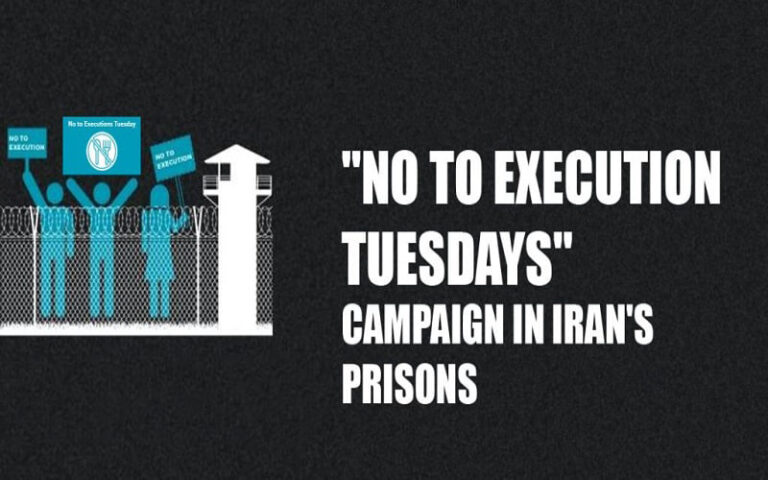
The ninety-ninth week of the “No To Executions Tuesdays” campaign continues with hunger strikes by prisoners in 55 different prisons across Iran. In this week’s statement, the “No To Executions Tuesdays” campaign, referring to the rising number of executions, states:
“The oppressive government ruling Iran has intensified the pace of executions over the past week and has executed at least 67 individuals, and since November 22 it has sent nearly 271 people to the gallows.
“These executions are carried out without fair trials, without effective access to independent lawyers, and in media silence; a process that indicates the institutionalization of execution as a tool of political and social repression.”
The full text of the statement for the ninety-ninth week of the “No To Executions Tuesdays” campaign is as follows:
Continuation of the “No To Executions Tuesdays” campaign in its ninety-ninth week in 55 different prisons
This week, the “No To Executions Tuesdays” campaign coincides with the International Day of “Reconciliation,” a day that globally symbolizes an end to violence. But in Iran, the authoritarian Iranian regime continues at a terrifying pace to replace justice and dialogue with the noose. Reconciliation is not possible without truth and justice, and execution negates justice and absolutely denies any possibility of social reconciliation. This campaign has now continued for ninety-nine tireless weeks in 55 prisons across the country; a collective effort from inside prisons to defend the “right to life” and confront the policy of death. The oppressive government ruling Iran has intensified executions over the past week and has executed at least 67 individuals, and since November 22 it has sent nearly 271 people to the gallows. These executions are carried out without fair trials, without effective access to independent lawyers, and in media silence; a process that demonstrates the institutionalization of execution as a tool of political and social repression. This week, Ramin Zelleh, a political prisoner held in Naqadeh Prison, was sentenced to death by Branch One of the Revolutionary Court in Mahabad on the charge of “baghi” (armed rebellion against the state).Kurdish Political Prisoner Sentenced to Death After Minutes-Long TrialAlso in the past week, the death sentences of six political prisoners held in Ghezel Hesar Prison and members of the “No To Executions Tuesdays” campaign—Babak Alipour, Pouya Ghobadi, Vahid Bani Amerian, Akbar (Shahrokh) Daneshvar Kar, Mohammad Taghavi, and Abolhassan Montazer—were once again issued by Branch 26 of the Tehran Revolutionary Court. Ehsan Rostami, a well-known activist in the field of books and publishing, was charged with “baghi” on December 11 and transferred to solitary confinement in Evin Prison; a move that increases the risk of intensified pressure and the issuance of a death sentence. Continuing these repressions, the Iranian regime arrested a number of participants at the memorial ceremony for the late Khosrow Alikordi. This action is a continuation of the same policy of elimination and intimidation of society.
Suspicious Death of Lawyer Representing Protesters in IranWhile condemning these repressions and the rapid executions carried out by the execution-oriented ruling authorities, the “No To Executions Tuesdays” campaign calls on the honorable people of Iran, awakened consciences, and international human rights organizations to be the voice of prisoners sentenced to death, to republish and follow up on their cases, and to provide practical and media support to their families. In the ninety-ninth week, the “No To Executions Tuesdays” campaign participants are on hunger strike on Tuesday, December 16, in 55 prisons across Iran.
Iran’s Pharmaceutical And Infant Formula Reserves Will Last Less Than Two Months

Two members of the board of directors of the Iranian regime’s Pharmacists Association warned about the consequences of removing subsidized foreign currency for some imported medicines, the economic pressure on patients, and the inefficiency of the insurance system. According to one of them, Iran’s reserves of medicines and infant formula have fallen to less than two months, and there is a possibility of shortages of 800 types of medicines over the next three months.
Hadi Ahmadi, a member of the board of directors of the Iranian regime’s Pharmacists Association, said on Sunday, December 14, in comments to the state-run ILNA news agency, that the country’s pharmaceutical market is unstable, noting that the exchange rate rises on a daily basis and this situation directly affects medicine prices.
Stocks of Hundreds of Medicines in Iran Have Fallen Below Three MonthsAccording to him, although part of pharmaceutical raw materials is supplied with subsidized currency, about 70% of drug production costs consist of packaging, auxiliary items, and other requirements that follow the free-market exchange rate, and only 30% is allocated to raw materials. Warning about the decline in citizens’ purchasing power, Ahmadi added that many patients face higher prices when visiting pharmacies and therefore either buy incomplete courses of medicine or forgo purchasing them altogether. This guild official stressed that the current situation disrupts treatment processes and ultimately increases healthcare costs. Widespread medicine shortages, long queues, and relentless price increases in Iran have created serious difficulties for the lives of millions of patients. In recent weeks, numerous reports have been published about the decline in the country’s pharmaceutical reserves and the consequences of removing subsidized currency on medicine supply. Younes Arab, chief executive of the Iran Thalassemia Association, said on December 10 that some families even offer the “sale of a kidney or cornea” to buy medicine for their children.
How Iran’s Government Controls Drug Trafficking and the Counterfeit Drug MafiaThe state-run Tejarat News website also reported that rising healthcare costs for women have led to delays in vital health care, noting that the cost of painkillers and essential tests for many women—especially in the absence of adequate insurance coverage—has postponed critical medical care. In the continuation of his interview with ILNA, Ahmadi accused insurance companies of failing to fulfill their obligations and said that under these conditions the greatest pressure falls on patients. This member of the Pharmacists Association’s board also reported an intensification of medicine shortages, adding that some pharmaceutical items are either scarce or distributed on a rationed basis. He cited the drug Pearl as an example, saying that despite domestic production it is either unavailable on the market or difficult to access. Common and widely used medicines such as Prednisolone have also faced shortages.
Shortage of about 800 types of medicines in the next three months
Babak Mesbahi, a member of the board of directors of the Iranian regime’s Pharmacists Association, emphasized in an interview on December 14 with DidbanIran, a news website, that the problems of the pharmaceutical market are not limited solely to rising exchange rates. He said that in past experiences, increases in the exchange rate have merely led to higher debts for distribution companies and liquidity shortages in pharmaceutical factories. Pointing to the role of insurance companies, this guild official warned that even if medicine prices are adjusted, if insurers do not cover the increases, “the system will once again become disrupted.” He added that responsibility for the financial protection of patients lies with insurance companies, and that forcibly keeping medicine prices low without supplying other components of the chain has weakened the pharmaceutical industry. Mohammad Abdehzadeh, head of the Health Economy Commission of the Tehran Chamber of Commerce, said on December 10 that the total claims of pharmaceutical companies from public and private companies and pharmacies in both sectors have exceeded 1.5 quadrillion rials (approximately 1.171 billion dollars). Alireza Chizari, head of the Association of Producers, Suppliers, Distributors, and Exporters of Medical and Pharmaceutical Equipment of Tehran Province, also reported on December 13 a “sevenfold surge” in medicine prices in Iran since the removal of subsidized currency for medicines. Continuing his interview with DidbanIran, Mesbahi said that the country’s pharmaceutical reserves average less than two months, and that similar conditions exist regarding infant formula. According to him, about 800 types of medicines will face shortages over the next three months.IAEA Resumes Inspections in Iran but Lacks Access to Key Facilities
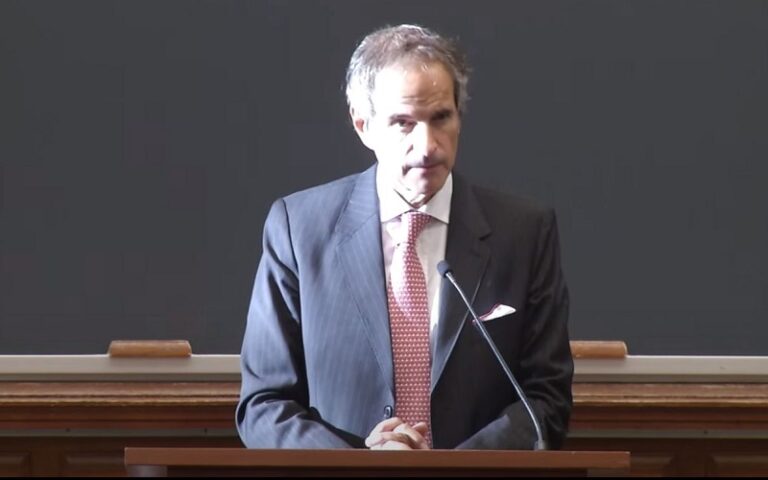
Rafael Grossi, Director General of the International Atomic Energy Agency (IAEA), announced that the agency’s inspections in Iran have resumed, but inspectors still do not have access to the key nuclear facilities of Natanz, Fordow, and Isfahan.
These key facilities suffered serious damage in U.S. strikes during the 12-day war.
Grossi said in an interview with Russia’s RIA Novosti news agency on Monday, December 15, that the agency’s activities in Iran are very limited and inspectors only have access to facilities that were not targeted by U.S. and Israeli attacks.
Abbas Araghchi, the foreign minister of Iran’s regime, had said on December 8 that resuming the agency’s inspections is currently not possible because “there is no protocol or guideline” for inspecting facilities he described as “peaceful.”
What Did Grossi Achieve During His Visit to Tehran?However, in the interview with RIA Novosti, Grossi stated that inspections of those Iranian nuclear facilities that are on the list agreed upon by Tehran and the agency have resumed, and that this is of great importance to the IAEA. He added that it is obvious that Fordow, Natanz, and Isfahan are of greater importance, as they still contain significant amounts of nuclear material and equipment, and the agency must gain access to them. On the other hand, Mohammad Eslami, head of the Atomic Energy Organization of Iran’s regime, on December 15 criticized the positions of the international agency and once again opposed inspections by the IAEA of key nuclear sites in Iran. He added: “There must be a protocol for the agency to inspect nuclear centers that were attacked in order for permission to be granted. An agency that has neither condemned the attacks nor has guidelines for such conditions has no right to claim inspections.” Eslami continued: “That the [agency], under pressure from three European countries, the United States, and Israel, puts pressure on us is not important to us and has no effect.” On December 13, the IAEA director general reported efforts to find a “sustainable solution” to Tehran’s nuclear file and said the Iranian regime’s stockpile of 400 kilograms of 60%-enriched uranium remains intact. Grossi had previously confirmed that Tehran still has the capacity to build a nuclear weapon. On May 31, before the war, the International Atomic Energy Agency stated in a confidential report that Iran had carried out clandestine nuclear activities at three sites that have long been under investigation. In recent days, speculation about the future of Tehran’s nuclear program has increased, and the Iranian regime’s insistence on continuing it has heightened the likelihood of a reaction from the international community, particularly the United States, Israel, and the European troika. Russian President Vladimir Putin said on December 12 during a meeting with Masoud Pezeshkian, the president of Iran’s regime, in Turkmenistan that Moscow will continue to support Iran’s regime on the nuclear file. The Al-Monitor website reported on December 7, citing European diplomats, that Israel is likely to carry out another military attack on the Iranian regime in 2026 even without the approval of the Donald Trump administration.
Teachers, Retirees, And Workers Hold Protest Rallies in Cities Across Iran
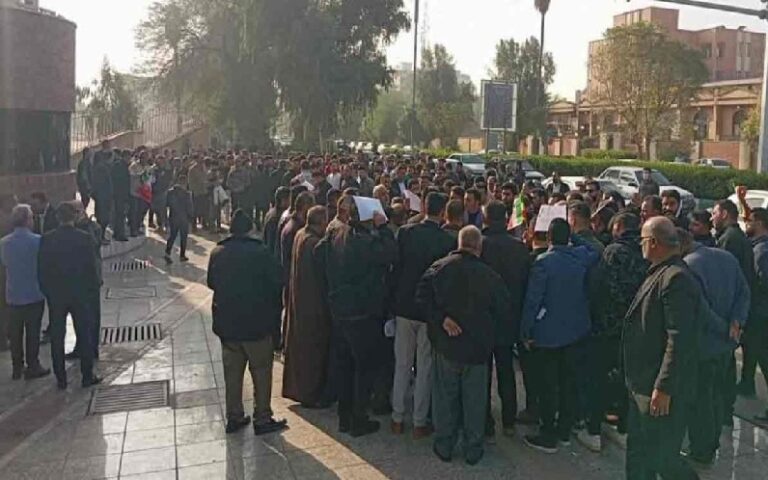
Groups of teachers in Tehran, workers of the Mian-Ab agro-industrial complex, bakers in Ahvaz, workers of the Zareh-Shuran mine, dismissed workers of the Koushkan transformer manufacturing company, workers of the Pasargad Alloy Steel Complex, and retirees of the Social Security Organization and the steel industry held protest gatherings in various cities across Iran.
A group of those who passed the 2025 Ministry of Education recruitment exam—commonly referred to as “green scorecard” candidates—held a protest gathering in Tehran on Sunday, December 14.
Workers And Nurses Hold Protest Rallies in Cities Across IranParticipants in the protest traveled from across Iran to gather in Tehran in front of the Ministry of Education building to protest the lack of response to their demands. During the gathering, they addressed officials of the Ministry of Education and chanted protest slogans. At the same time, workers of the Mian-Ab agro-industrial complex in the Karkheh area of Khuzestan province entered the tenth day of their protest gatherings on Sunday, December 14, and went on strike. On the tenth day of their protests, the workers criticized the production situation at the factory and, in comments to the state-run ILNA news agency, called for the removal of the factory’s management. One worker said that “weak management and non-transparent decisions” over the past two years have caused a serious decline in the profitability of the production unit, creating widespread concern among employees. A group of bakers in Ahvaz also gathered in front of the Khuzestan governor’s office on Sunday, December 14, and after chanting slogans, entered the building. The Ahvaz bakers cited “reduced flour quotas and the failure to pay bakery subsidies” as the reasons for their protest. Participants in the gathering chanted slogans including “Empty promises are enough; our tables are empty,” demanding immediate attention to their demands. In recent weeks, bakers in Tehran, Mashhad, Isfahan, Qom, Kermanshah, Birjand, and several other cities had also staged protests over their conditions and the non-payment of bread subsidies. A group of dismissed workers from the Koushkan transformer manufacturing company in Zanjan also held a protest on Sunday, December 14, in the presence of representatives of the Ministry of Energy, demanding that their grievances be addressed. Previously, dismissed workers of this industrial unit had held protest gatherings over the non-renewal of their employment contracts after years of service. Workers of the Pasargad Alloy Steel Complex in Fars province went on strike for the second consecutive day on Sunday, December 14. As labor protests in industrial units continued, a video received by Iran International shows that a group of workers at the Khusf cast iron factory in South Khorasan province also held a protest over the lack of transportation services and the death of their colleagues in a road accident. Alongside these protests, retiree gatherings continued in several cities.
Retiree protests
Retirees of the Social Security Organization held protest gatherings on Sunday, December 14, in various cities including Rasht, Shush, Karkheh, Haft-Tappeh, and Kermanshah. The state-run ILNA news agency wrote: “These retirees are demanding the implementation of Article 96 of the Social Security Law, an increase in pensions in line with the poverty line, access to free healthcare, and the payment of workers’ year-end bonuses.” Social Security retirees in Rasht chanted slogans such as “Imprisoned protesters must be freed,” “No to execution, no to execution, no, no, no,” and “Inflation, inflation, theft from people’s pockets.” Retirees of the Steel Fund in Isfahan also protested the failure to fulfill their demands regarding healthcare and pensions. ILNA, quoting retiree news sources, wrote that these protests mainly involved demands such as “the failure to properly adjust salaries,” “delays in resolving healthcare problems of retirees in hard and hazardous jobs,” and “opposition to the merger of the Steel Fund with the National Pension Fund,” among others. Social Security retirees in Kermanshah and Shush, along with retirees of the steel industry in Isfahan, chanted slogans such as “Austerity and restraint imposed on the nation” and “Unity, unity, against oppression and corruption.” In recent years, retirees, workers, and pensioners have repeatedly held protests and marches in various Iranian cities over the failure to meet their demands. The living conditions of these groups have led to a significant increase in the number of labor protests and gatherings. The human rights website HRANA wrote in a report on March 19 that in 2024, at least 3,702 protests and strikes took place across various sectors of the country.Workers And Nurses Hold Protest Rallies in Cities Across Iran
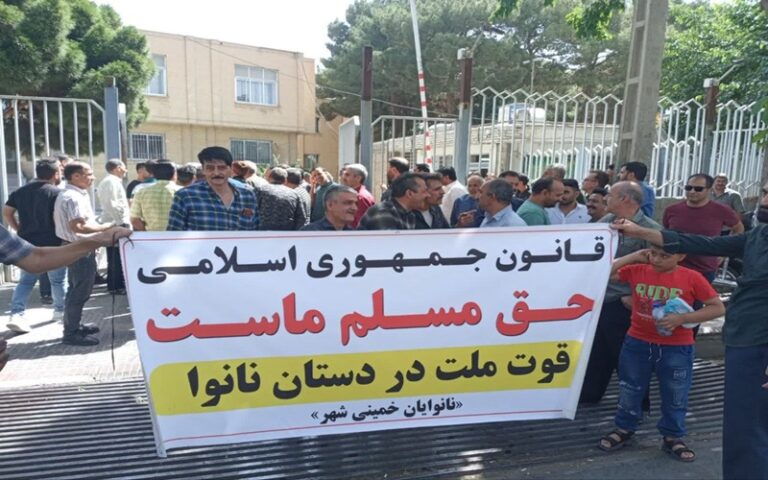
Simultaneously with labor and professional protests in three Iranian cities, four worker and retiree organizations issued a statement supporting the demands of thousands of workers at the South Pars gas refineries and third-party contract workers over the past week.
Hundreds of workers at the “Pasargad Steel” factory in Kavar County, Fars Province, went on strike and gathered in front of the factory entrance on Saturday, December 13.
According to the state-run ILNA news agency, they protested their “low” wages and benefits and said: “Our livelihood is not being provided.”
5,000 Contract Workers Participate in Largest Union Protest in Iran in Recent YearsAccording to the report, “reviewing the wage structure, paying attention to meritocracy in appointing managers, and addressing concerns about discrimination” were among the demands of the Pasargad Steel workers. During the gathering, they held placards reading, among other slogans: “The knife has reached the bone,” “How long injustice and the pain of bread,” and “Workers are awake – they hate exploitation.” ILNA wrote that Behnam Nahid, the governor of Kavar, told media outlets: “The workers of this factory do not have overdue wages, and their demands relate to some benefits that were paid to them in addition to their salaries.” He attributed the delay in paying benefits and bonuses to the factory’s “electricity imbalance.” In recent years, labor protests in various regions of Iran have shown an upward trend. In their strikes and gatherings, workers have protested low wages, non-payment of wages and insurance, privatization, layoffs, and temporary employment contracts.
Nurses’ gathering in Sanandaj
A number of nurses also gathered on Saturday, December 13, in front of the human resources building of Kurdistan University of Medical Sciences in Sanandaj. At the gathering, nurses said that life cannot be lived on promises. According to the report, they emphasized that the only remaining path forward is protest. In recent years, nurses at state hospitals have repeatedly gone on strike and held gatherings in various Iranian cities to protest living conditions and harsh working conditions. Among the demands raised in these protests are “transparency in tariffs and the method of allocating performance pay, fairness in tariff payments between physicians and other medical staff, timely payment of arrears and financial claims, hiring new staff, and reducing the workload of healthcare personnel.”Gathering of municipal service workers in Kermanshah
In Kermanshah as well, a number of municipal service workers gathered in front of the governorate building on Saturday, December 13. According to ILNA, these workers protested the lack of employment contracts and the non-payment of three to four months of overdue wages. They said that despite “repeated visits” to municipal officials, they have received no response, and it is unclear when their demands will be paid. The workers noted that due to unpaid wages, they cannot afford rent or daily expenses, and their tables are empty.Support by four independent organizations for labor protests
The Haft Tappeh Sugarcane Workers’ Syndicate, the Coordinating Committee to Help Form Workers’ Organizations, Khuzestan Retired Workers, and the Union of Retirees group on Saturday issued a joint statement supporting the December 9 strike and gathering of five thousand workers in the South Pars region and the December 10 gathering of one thousand third-party contract workers in front of the regime’s parliament. Referring to the conditions of workers in South Pars, these independent labor organizations wrote: “Asaluyeh is a camp with absolute exploitation, unbearable pollution, and numerous workplace accidents, where the capitalist system has taken control of workers’ health and even their lives at a small cost.” They added that Asaluyeh is “a free zone where employers, at their own discretion, impose long working hours and low and unequal wages on workers.” The four organizations emphasized that the “oppression and repression” of workers by the government, the ruling establishment, and employers has never been able to impose “submission and obedience” on them. The signatory organizations described the December 9 and 10 labor protests in South Pars and Tehran as “a day demonstrating the continuation of unity and struggle” by workers who have based their “charter of struggle” on demands that unite the majority of workers around them. The demands referenced in the statement include “reforming the job classification plan and the wage equalization system, implementing the two-on two-off rotational plan for administrative and support staff, determining the status of leased-vehicle drivers, organizing the situation of safety support forces, observing labor law and customary workplace conditions, paying camp allowances, and providing air transportation for contract workers.”University of Arkansas Dismisses Faculty Member After Praise for Khamenei
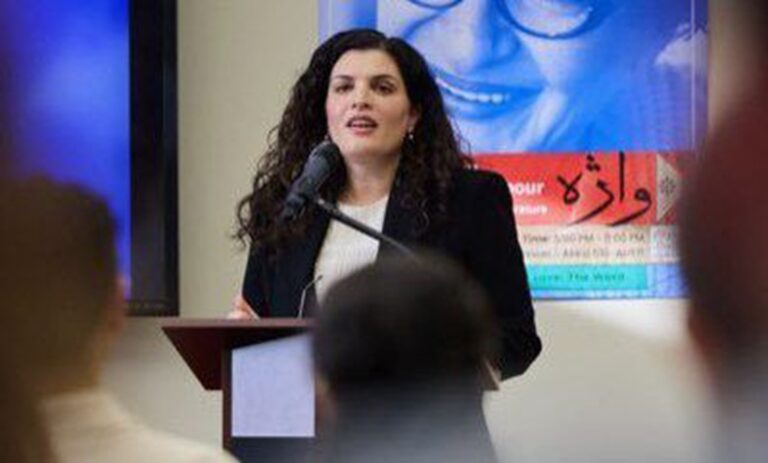
The New York Post reported the dismissal of Shirin Saeidi from the University of Arkansas following her praise of Ali Khamenei, the supreme leader of Iran’s regime.
Quoting a spokesperson for the University of Arkansas, the New York Post reported that Shirin Saeidi, director of the university’s Middle East studies program, was removed from her position following reports about her support for Iran’s regime and her adoption of anti-Israel positions.
The newspaper wrote on Saturday, November 13, that Saeidi was accused of using official University of Arkansas letterhead to support Ali Khamenei, the leader of Iran’s regime, as well as publishing harsh and critical positions against Israel.
Documents provided to the New York Post by the “Coalition Against Iranian Regime Apologists,” a U.S.-based group, show that Saeidi had previously used university letterhead to call for the release of Hamid Nouri, a former deputy prosecutor at Gohardasht Prison.
Using the alias “Hamid Abbasi,” he was arrested on November 9, 2019, at Arlanda Airport in Stockholm, and on July 14, 2022, he was sentenced by the Stockholm District Court to life imprisonment for his role in the execution of political prisoners, on two charges of “war crimes” and “murder,” a sentence that in Sweden is equivalent to 25 years in prison. He took part in the massacre of political prisoners, who were mostly members and supporters of the People’s Mojahedin Organization of Iran.
In June 2024, he was exchanged for Johan Floderus and Saeed Azizi, two Swedish citizens who had been imprisoned in Iran.
According to the New York Post, in several posts published in November on the social media platform X, Saeidi praised Khamenei and prayed for his health.
In some of these posts, Israel was described with phrases such as “terrorist regime” and “genocidal regime.”
The University of Arkansas spokesperson told the New York Post that as of December 12, Saeidi is no longer with the Middle East studies department and that the university is reviewing her use of official letterhead in accordance with the institution’s policies.
Saeidi and individuals like her attempt to rewrite history by exploiting Western academic spaces.
Hossein Mousavian, A Former Iranian Regime Diplomat, Has Been Dismissed from Princeton University After Fifteen YearsThe lies of such individuals lead to the distortion of facts about Iran’s regime. In early August, Princeton University in the United States also announced that Hossein Mousavian, a former diplomat of Iran’s regime, had “retired” from the university. Mousavian is accused of involvement in the killing of a number of prominent opponents of Iran’s regime in Europe.
$116 Billion In Export Earnings Has Not Returned To Iran Over Past Seven Years
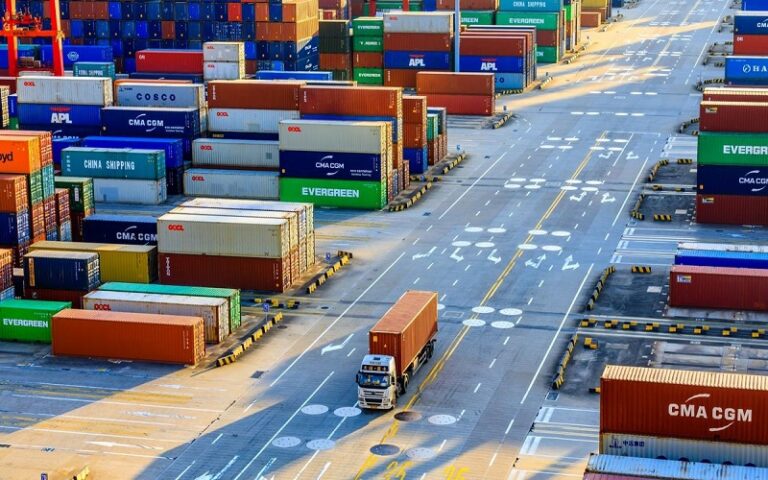
Hossein Samsami, a member of the Economic Commission of the Iranian regime’s parliament (Majlis), citing non-oil export statistics, announced that from 2018 through December 2025, more than $116 billion in export earnings has not returned to the country.
On Saturday, December 13, Samsami, referring to the country’s “limited foreign exchange resources,” said that the “failure to fulfill foreign exchange commitments” by some exporters under these conditions has placed additional pressure on the economy and the production cycle.
Iranian Regime’s Oil Exports to China Surge Sharply in JuneHe warned that this situation directly affects the activity of the real sector of the economy. According to Samsami, this is happening while the country’s “real producers” have for months been waiting in line for foreign exchange allocations totaling more than $20 billion to import raw materials, parts, and production machinery. The removal of preferential foreign exchange for products such as rice and the severe shortage of foreign currency resources in recent weeks have once again become one of the serious challenges facing Iran’s economy, a situation that experts say could place additional pressure on the food market and household livelihoods. The shortage of foreign currency has limited import capacity and sharply increased the cost of procuring essential goods in the country. Continuing his remarks, Samsami emphasized that the failure to allocate foreign currency directly has a negative impact on the continuity of production, employment, and the final prices of goods. The member of parliament added: “The lawmaker has clearly defined obligations regarding the return of export earnings, and any delay or leniency in this matter amounts to the violation of producers’ rights and harm to national interests.” He called for serious action by the government and the Central Bank, the publication of statistics on offending exporters, and the creation of conditions for the “return of foreign currency to the official economic cycle and the facilitation of producers’ access to foreign exchange resources.” Hossein Raghfar, an economist and university faculty member, had previously pointed to the non-return of $80 billion in foreign currency over the past five years, describing this figure as evidence of a political will not to return the funds and warning that this trend has intensified class inequality.
One hundred percent increase in the prices of essential goods in one year
Saddif Badri, a member of the presidium of the Iranian regime’s parliament, announced on December 13 that many essential goods have seen price increases of up to 100% over the past year, and that many common medicines, and even medicines for patients with special conditions, have either become scarce or are being sold at very high prices. According to him, in the past, 40% of the cost of medicine was paid out of patients’ pockets, but this figure has now risen to 70%. He added that this has placed heavy pressure on households, while insurance providers are also evading their responsibilities under various pretexts. As a result of the Iranian regime’s ineffective policies in economic, domestic, and foreign affairs over recent decades, runaway inflation has severely affected the lives of citizens, especially low-income groups, and the prices of essential goods, including medicines and healthcare services, have faced an unprecedented surge.Sevenfold Increase in Medicine Prices in Iran
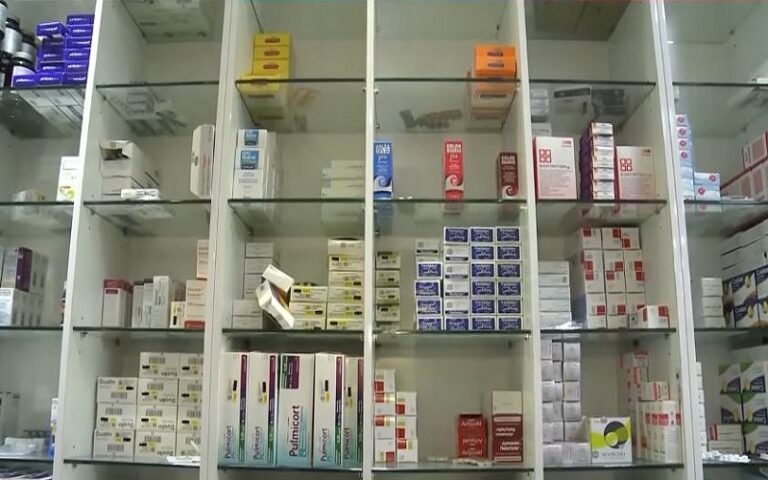
The head of the Association of Producers, Suppliers, Distributors, and Exporters of Medical and Pharmaceutical Equipment of Tehran Province reported a “sevenfold surge” in medicine prices in Iran since the removal of preferential foreign exchange for medicines.
Alireza Chizari told the state-run ILNA news agency on Saturday, November 13: “We are currently witnessing a surge in the foreign exchange rate for medicines and medical equipment. In some cases, [the price of a medicine] has risen from four thousand and 200 tomans to 28 thousand and 500 tomans, which shows a sevenfold increase in medicine prices.”
Stocks of Hundreds of Medicines in Iran Have Fallen Below Three MonthsAt present, the price of each U.S. dollar is around 1.25 million rials. He added that this price increase has occurred while people’s incomes have not risen: “Except, of course, for 20% to 30% of society whose salaries increase every year.” At the same time, Iraj Khosronia, head of the board of the Association of Internal Medicine Specialists, said in an interview with the state-run House of Economy website that with the removal of preferential foreign exchange for insulin, 30% to 50% of diabetics will not be able to afford this medicine. According to him, nine million insulin-dependent patients will be exposed to the risk of heart and eye diseases following the removal of preferential foreign exchange. Mohammadreza Zafarghandi, the Iranian regime’s minister of health, treatment, and medical education, announced in December 2024—when the issue of activating the snapback mechanism had not even been raised—the removal of preferential foreign exchange for medicines and medical equipment, saying that medicines would be imported using the NIMA exchange rate. Following these remarks, and starting in January 2025, pharmaceutical companies increased the prices of their products by up to fivefold. In February 2025, the Social Security Organization reported price increases for more than 400 medicines covered by the organization. The removal of government foreign exchange for medicines and medical equipment in the 2025 budget bill revealed its effects starting in March 2025.
Criticism of the role of government institutions in the chaotic state of medicine supply
Chizari also blamed government institutions for the current “chaotic situation” in the field of medicines. He said: “Regarding the transfer of foreign exchange for medicines and medical equipment, one of the subsidiaries of the Ministry of Oil has still been unable to pay foreign currency to international suppliers, creating a very bad situation.”Iranians Are Giving Up Visiting Doctors Due To High Cost of Treatment and MedicineThe trade official did not name the state-owned company but added that the company had pledged to reduce its debt to the Central Bank to zero by November. Chizari emphasized: “50% of the current problems in the field of medicines and medical equipment stem from the performance of this very company.” According to him, insurance claims in some cases have been overdue for nine months, and some medical centers have been in debt for more than two years.
