The Rise in Dairy Prices and Its Elimination from Iranian Households’ Tables

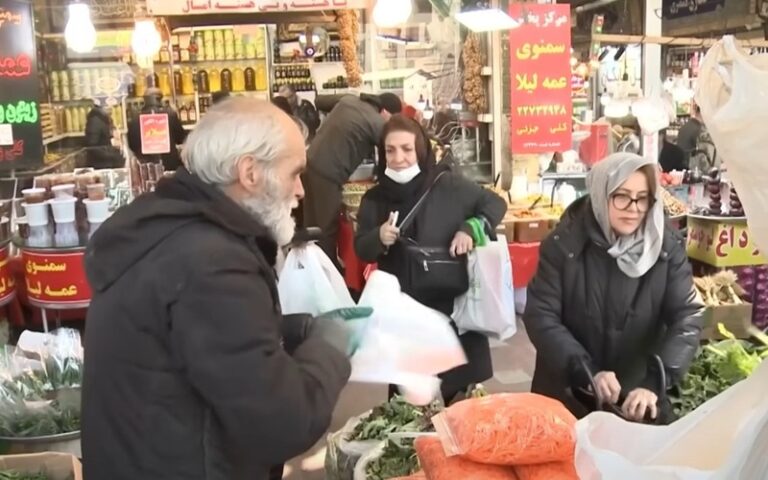
The Iranian regime’s inability to contain the economic crisis has led to the continued rise in the prices of essential goods, including dairy products, placing unprecedented pressure on household budgets. In recent days, dairy prices have risen sharply, and in some areas, the cost of a single pack of cheese or a container of yogurt has exceeded an entire family’s daily budget. Many people have said they can no longer afford to buy dairy products. Some have written that they haven’t purchased any dairy items for months, and families have opted to buy only “necessary and cheap” items.
Iran’s Dairy Market Faces Impending 42% Price Hike
Similar accounts show that dairy has become a “luxury item” for many, even though nutrition experts have always considered it a core component of a healthy diet. For some, comparing dairy with other goods reveals a broader crisis. A large portion of public reports circulating on social media point to a steep increase in dairy prices. One of the most frequent complaints is the constant price fluctuations. Messages from some citizens indicate that the price hikes in dairy are so severe that, for some low-income families, buying dairy products now equals one to three days of wages. These accounts point to the emergence of a serious nutritional crisis—one that, amid the Iranian regime’s inaction, poses a threat to public health. The gradual elimination of dairy—especially for children and the elderly—can lead to irreparable consequences. In the absence of supportive policies, the dairy crisis is merely a small symbol of the widespread nutritional poverty plaguing Iran.

The 80th Week of the “No To Executions Tuesdays” Campaign Took Place Across 48 Different Prisons

The 80th week of the “No to Executions Tuesdays” campaign was held. This followed the brutal crackdown on campaign participants in Ghezel Hesar Prison, which included the execution of two political prisoners and the forced transfer of Saeed Masouri to an unknown location—demonstrating the campaign’s unwavering determination to achieve its demands. In their statement, the prisoners referenced recent executions, the barbaric amputation of fingers of three inmates in Urmia prison, Amnesty International’s stance on the issue, and the lack of information regarding the fate of several political prisoners in Unit 4 of Ghezel Hesar after they were violently assaulted. Prisoners who participated in the 80th week of the “No to Executions Tuesdays” campaign said that the intensified repression is intended to instill fear and silence a society that, since the 1906 Constitutional Revolution, has thirsted for justice and freedom.
Systematic Human Rights Violations and a Threat to Saeed Masouri’s Life After 25 Years of Imprisonment
The full statement of the political prisoners who participated in the 80th week of the “No to Executions Tuesdays” campaign is as follows: “We begin the 80th week of the ‘No to Executions Tuesdays’ campaign across 48 different prisons. Since last week, at least 30 prisoners—including two women—have been executed, and one execution was carried out in public. The cycle of violence and executions continues without pause. Last week, in an extremely savage and inhumane act, the fingers of three inmates were amputated in Urmia Prison. Amnesty International strongly condemned this act in a statement and called Iran’s judiciary “a cog in the machinery of torture.” The UN Special Rapporteur, Ms. Mai Sato, described it as an “inhuman and degrading” act.
Mai Sato Condemns Iran’s Amputation Sentences for Three Prisoners
We begin the 80th week of the campaign under circumstances where we still have no information about the fate of several campaign members held in Unit 4 of Ghezel Hesar Prison. On July 26, they were brutally attacked by prison guards and security agents, then transferred to solitary confinement in the secure ward of Unit 3. Some of them were returned to the ward after five days. The political ward is now fully restricted and heavily surveilled with multiple security cameras installed. There is still no news on the whereabouts of five of them: Loqman Aminpour, Hamzeh Savari, Reza Salmanzadeh, Sepehr Emamjomeh, and Mostafa Ramezani. Zartosht Ahmadi Ragheb has again been transferred to the secure ward. The condition of Saeed Masouri is extremely concerning. What we know is that Zahedan Prison refused to accept this campaign member, and he is currently held in solitary confinement in the special ward of Unit 1 in Ghezel Hesar Prison, under harsh and uncertain conditions. We, the members of the “No to Executions Tuesdays” campaign, condemn the brutal assault, abuse, and torture of prisoners and salute the resistance and steadfastness of our executed and defiant comrades. We express our gratitude to all those who have echoed and continue to echo the pain and suffering of the prisoners. We believe that the intensification of executions, repression, amputations, and the constant use of blatant violence serves no purpose other than to inject fear and silence society—a society that, since the 1906 Constitutional Revolution, has yearned for justice and freedom, and has persistently defended human dignity and the right to self-determination, paying the price daily through imprisonment, execution, and torture. We continue to call on all awakened consciences and freedom-seekers—both inside the country and internationally—to amplify the cry of “No to executions” by actively supporting the “No to Executions Tuesdays” campaign. Expanding this campaign—despite the regime’s efforts and its overt and covert backers—must be prioritized by all possible means. Today, Tuesday, August 5, our comrades in the secure and special wards of Ghezel Hesar Prison are on hunger strike along with participants from 48 other prisons involved in the “No to Executions Tuesdays” campaign.

The Snapback Mechanism Increases Likelihood of Global Consensus Against Iran’s Regime

The state-run daily Farhikhtegan, in an article about escalating tensions, warned of the possibility of military conflict and the formation of global consensus against Iran’s regime if the European countries potentially activate the so-called “snapback mechanism.” On Monday, August 3, Farhikhtegan reported that if sanctions are reimposed, measures such as a ban on arms sales to Iran, freezing assets linked to sanctioned entities such as the Islamic Revolutionary Guard Corps (IRGC) and Iran Shipping Lines, mandatory inspections of suspicious cargo, and a ban on financial and insurance services in the nuclear field will be on the international community’s agenda.
European Troika: We Are Ready to Activate the Snapback Mechanism
The newspaper wrote: “Oil sales are not directly subject to UN Security Council sanctions. Although the scope of UN sanctions is narrower compared to the unilateral sanctions imposed by the U.S. and Europe, they carry greater psychological and diplomatic weight due to their multilateral nature. Moreover, because of the interpretability of the sanctions language, member states can implement these sanctions strictly or leniently based on their political will.” According to Farhikhtegan, Russia’s refusal to deliver the S-300 missile system to the Iranian regime and Pakistan’s decision to halt the gas pipeline project from Iran to Pakistan and India—known as the “Peace Pipeline”—are examples of how political will shapes countries’ implementation of sanctions. In recent days, speculation has intensified regarding the European troika’s decision to activate the snapback mechanism. Officials of the Iranian regime, during a meeting in Istanbul with representatives from Germany, France, and the United Kingdom, threatened that if the snapback mechanism is activated, Tehran will withdraw from the Nuclear Non-Proliferation Treaty (NPT).

Return of sanctions and “political legitimization of military actions”

Farhikhtegan continued its report by warning that the activation of the snapback mechanism, in addition to its economic and trade consequences, could lead to the formation of a “global consensus against Iran.” It wrote: “The return of UN Security Council resolutions imposes two risks on Iran: the economic consequences of the reinstated sanctions on Iran’s economy, and the groundwork for securitization and potential military action against Iran.”
Iran’s Regime Threatens to Cause Insecurity in the Region If Snapback Sanctions Are Enacted
The newspaper added: “Countries can use the sanctioning environment created by the UN Security Council to politically legitimize military actions, even if those actions lack legal legitimacy.” According to this report, Tehran’s potential move to withdraw from the Nuclear Non-Proliferation Treaty (NPT) in response to the European troika could escalate tensions both regionally and globally, and increase the likelihood of military confrontation. Alaeddin Boroujerdi, a member of the National Security Commission in the Iranian regime’s parliament, stated on July 29 that during the Istanbul negotiations, European countries sought a six-month extension before using the trigger mechanism, but Iran’s regime rejected the proposal.

The “vital” role of China and the UAE

Farhikhtegan also addressed the “vital” role of China and the United Arab Emirates as Iran’s economic partners, warning that the return of international sanctions could affect Tehran’s economic ties with Beijing and Abu Dhabi. The newspaper wrote: “In recent years, the UAE has become Iran’s main hub for financial and goods exchange, under tacit U.S. approval. A large portion of Iran’s imports of essential goods comes through the UAE. If sanctions return, the United States may invoke UN Security Council resolutions to demand that the UAE limit its economic ties with Iran.” The newspaper added: “China is Iran’s main oil buyer and the second-largest exporter of goods to Iran. Past sanction experiences show that Beijing has taken a dual-track approach… What is certain is that China will not openly defend non-compliance with UN sanctions, but it may implement them in a limited and interpretive manner. Therefore, a gradual reduction in trade relations (rather than a complete cut-off) is likely.” On August 3, The Jerusalem Post, citing Chinese researchers, reported that the “Ayatollah’s regime” in Iran is on the brink of collapse and no longer aligns with China’s strategic interests in the region. Al-Hadath TV reported that the United States, as part of its efforts to achieve its objectives regarding Iran’s nuclear program, is consulting with China to stop it from continuing oil purchases from Iran. According to the report, Beijing, in response to Washington’s pressure, has stated it would be willing to halt imports from Tehran—if it can receive oil at a lower price elsewhere.

Iranian Regime’s FM: Government Remains Committed to Legislation Suspending Cooperation With IAEA

Kazem Gharibabadi, deputy foreign minister of the Iranian regime, stated during a session of the National Security and Foreign Policy Commission of the parliament that the government is committed to the law suspending cooperation with the International Atomic Energy Agency (IAEA). Ebrahim Rezaei, spokesperson for the Majlis (Parliament) National Security Commission, said on Sunday, August 3, that Gharibabadi presented a report to the commission about the Istanbul meeting with the three European countries, as well as his recent trip to New York.
A Decade After the Signing of the JCPOA, Will the Snapback Mechanism Be Triggered?
Rezaei quoted the deputy foreign minister as emphasizing that the law passed by parliament regarding the suspension of cooperation with the IAEA is “mandatory and enforceable.” Meanwhile, Al Mayadeen, a Lebanese outlet affiliated with Hezbollah, reported on August 3—citing “informed sources”—that during next week’s visit by IAEA officials to Tehran, a “new chapter” in relations between the two sides will begin. The outlet added that the upcoming trip is “political” in nature and that IAEA inspectors will not be part of the visiting delegation. On July 2, Iranian regime president Masoud Pezeshkian issued an executive order to implement the law titled “Obliging the Government to Suspend Cooperation with the International Atomic Energy Agency.” This law had previously been approved by the regime’s parliament and ratified by the Guardian Council.

Gharibabadi: Europe has no right to trigger the snapback mechanism

Continuing his remarks in parliament, Gharibabadi stated that Iranian regime foreign minister Abbas Araghchi had sent a letter to the UN Secretary-General and members of the Security Council, declaring the activation of the snapback mechanism to be “legally and procedurally unfounded.” Gharibabadi said: “The European countries have not honored their commitments under the nuclear agreement and therefore have no right to activate the snapback mechanism.” He added: “In terms of sanctions, activating [the snapback mechanism] does not add anything new to the existing sanctions, but it has psychological effects that must be managed.” On August 2, German Foreign Minister Johann Wadfull stated that Tehran’s long-range missile program threatens not only Israel but also Europe and must be part of the negotiations with the Iranian regime. He also said he did not have much hope for the success of these negotiations. Gharibabadi further emphasized that the Iranian regime is coordinating with China and Russia on how to respond to the potential activation of the snapback mechanism by the European troika, and that a trilateral meeting has already taken place. Gharibabadi’s remarks about coordination between Tehran, Beijing, and Moscow on the Iranian regime’s nuclear dossier come amid previous criticisms regarding the level of support China and Russia have shown for Iran’s regime during Israeli attacks. On August 3, Yadollah Javani, the IRGC’s political deputy, responded to these criticisms—specifically, why China and Russia did not support Iran during the 12-day war—by saying that Tehran had not asked them for assistance. He added: “Long-term agreements with these two countries do not obligate them to defend the Iranian regime during wartime.”

Water Reserves in 19 Major Iranian Dams Fall Below 20%

As Iran’s energy crisis intensifies, a new report reveals that the water reserves in 19 of the country’s major reservoir dams have dropped to below 20%. On Sunday, August 3, Iranian media published statistics showing that from the beginning of the water year to August 2, only 23.26 billion cubic meters of water have flowed into Iran’s dams. This figure reflects a 42% decrease compared to the 40.2 billion cubic meters recorded during the same period last year.
Industry Struggles and Public Anger Grow Amid Water and Power Crisis in Iran
Currently, there are around 22.02 billion cubic meters of stored water in the country’s dams, yet 57% of total dam capacity remains empty. The situation is even worse for the major dams that supply drinking and agricultural water. According to reports, more than 80% of the storage capacity of 19 major and vital dams in Iran is empty. Among these dams, 16 are classified as being in a “red” status, with water reserves ranging from 0% to 15%. Shamil and Niyan dams in Hormozgan are at 0%. The combined reserves of the Golestan and Boostan dams in Golestan Province stand at 1%, Rudbal in Fars Province also has 1%, Esteghlal Dam in Hormozgan has 4%, and both Lar in Tehran and Doosti in Razavi Khorasan have 6%. Other dams on this red list are located in provinces such as Gilan, Kerman, Zanjan, Baluchestan, Markazi, and South Khorasan. The water levels behind Amir Kabir (Karaj), Lar, and Latian dams have reached their lowest points in modern history. This represents a state of water bankruptcy, with irreversible damages. On August 3, Mohsen Biglari, a member of parliament from Saqqez and Baneh, reminded the chamber that the country’s drinking water needs are less than 10%, and addressing regime president Masoud Pezeshkian, said: “It is not fitting for any government to be unable to manage such a small amount of drinking water to prevent its people from facing hardship.” Mohammadreza Rezaei Koochi, head of the parliament’s Construction Commission, also stressed that due to the “lack of proper forecasting by the Ministry of Energy,” Tehran is now facing a serious shortage of drinking water. According to Rezaei Koochi, the rise in population and rainfall patterns had made this situation foreseeable, but proper planning was not carried out. The MP said the Ministry of Energy is attempting to solve Tehran’s problem by transferring water from dams in neighboring towns but added: “This is not a fundamental solution.” Abbas Keshavarz, research deputy of the National Water Studies Center at Iran’s Chamber of Commerce, also told the state-run ILNA news agency that the situation had been trackable since the start of spring. He added: “Why were no measures taken in March and April, and now we have reached a crisis?” He described the situation as “a strategic failure in water policy and management.”

It Would Take 70,000 Years to Restore Iran’s Groundwater Resources

As Iran’s water crisis intensifies, Mohammad Darvish, an environmental activist, stated that restoring the country’s groundwater resources would require at least 65,000 to 70,000 years. At the same time, a British publication warned that Tehran may be only weeks away from “Day Zero”—the day when water taps in the city run dry. The state-run Etemad newspaper, on Saturday, August 2, published a report titled “We Must Wait 70,000 Years for Groundwater to Return,” citing environmental expert and university professor Mohammad Darvish. The article noted that Iran has reached a stage of desertification so advanced that even if water extraction stops, the aquifers cannot be restored.
Water Crisis in Iran: An Uncertain Future
Darvish explained that Iranians have extracted 150 billion cubic meters more than what has been naturally recharged into aquifers over the past three decades. This has led to land subsidence across at least 57,000 square kilometers, averaging one centimeter per year. In an interview with Etemad, when asked, “So, should we never hope for groundwater restoration?” Darvish responded: “You can wait, for at least another 65,000 to 70,000 years. If you have the patience, you can hope that groundwater conditions will return to their ideal state.” According to Darvish, today’s situation in Iran is the result of years of excessive extraction and neglect of aquifer replenishment. He described Iran’s condition as the “final stage of desertification,” stating that many lands no longer have the capacity for construction, road-building, or even laying pipelines and towers, and are effectively unusable. According to Darvish, based on a report by the Geological Survey of Iran, annual land subsidence now affects 100,000 square kilometers, reaching a rate of two centimeters per year—up from just 11,000 square kilometers in 2016. This alarming growth signals the rapidly accelerating nature of the crisis.

Weeks Away from Day Zero

The British magazine The Week reported on Iran’s critical water situation, stating that Tehran—a city of 10 million—may be only weeks away from Day Zero. The publication defined Day Zero as the day when water taps across large parts of Tehran run completely dry. According to the report, Iran is on the brink of water bankruptcy—a crisis driven by drought, climate change, and mismanagement of resources. Analysts warn that it could become a serious threat to Iran’s regime. At the same time, Tehran’s water authority announced the closure of public restrooms due to water shortages—a decision that seriously impacts the daily lives of children, workers, patients, and city commuters. Masoud Pezeshkian, the president of Iran’s regime, warned on July 31 that the country is “on the verge of a serious water crisis.” He had previously stated: “If urgent decisions are not made, we will face a situation in the future that will not be solvable.” The Week, referring to statements by regime officials, wrote that the water shortage crisis is not only due to recurring droughts, but also the result of excessive groundwater extraction, inefficient agricultural practices, and uncontrolled urban water consumption. Experts warn that without long-term planning and immediate reform of consumption patterns, the water crisis could not only fuel social unrest but may also become a serious threat to the country’s environmental and political stability.

Iran Ranks 97th Out of 100 Countries in Internet Quality

The Internet and Infrastructure Commission of the Tehran E-Commerce Association published a report stating that Iran ranks 97th among 100 countries in terms of internet speed, disruptions, and restrictions. Despite these limitations, studies indicate that the number of Starlink satellite internet users in Iran is growing. Hamidreza Ahmadi, deputy chair of the commission, said on Sunday, August 3, that Iran remains among the worst in the world in terms of internet quality, marked by being “highly disrupted,” “restricted,” and “slow.” Cuba, Turkmenistan, and Sudan are the only three countries ranked lower than Iran.
War, internet blackout, anxiety; connection with Iran has been severed

100 Startups Demand an End to Internet Restrictions

The commission emphasized in its report that although hearing “Iran ranks at the bottom of internet quality indexes” for the fifth time may no longer come as a surprise, society must not grow accustomed to the poor-quality internet endured by end users. According to the report, Iran’s poor internet quality can only be resolved through changes in domestic policy—such as lifting censorship and improving the network by eliminating deliberate disruptions imposed under the pretext of blocking VPNs. The report also included a statement from 100 Iranian startups demanding an end to internet restrictions. Their demands include lifting censorship, increasing international bandwidth and speed, and removing restrictions on emerging protocols such as HTTP/6 and IPV6.

Fast and Secure Internet Protocol Remains Blocked in Iran After the War

The Tehran E-Commerce Association report stressed that various internet disruptions are evident in Iran’s network, some of which were recorded even before the recent war and still persist. Pouya Pirhosseinlou, head of the Internet and Infrastructure Commission, said during the unveiling of the fifth Internet Quality Report on August 3 at Iran’s Chamber of Commerce that, unlike other services, the HTTP/3 communication protocol has not been unblocked following the 12-day war. He stated that an official or security directive from Iran’s Supreme Council of Cyberspace has ordered the continued blocking of this protocol.
Approval of Accelerated Implementation of Class-Based Internet in Iran
HTTP/3 is the latest generation of internet data transfer protocol, offering default encryption, faster speeds, and greater stability—particularly on unstable or mobile networks. While it enables faster and more secure access to websites, its technical features that facilitate bypassing censorship have led to it being restricted or blocked in Iran.

93% of Young Iranians Use VPNs

The commission’s deputy chair stated that in their fifth internet quality report, a special survey conducted in collaboration with ISPA found that 93% of Iranian youth aged 15 to 30 use VPNs. According to the survey, 86% of all internet users in Iran rely on VPN services. It also shows that 62.2% of users did not use VPNs or proxies before 2022, when social media and messaging apps like Telegram and Instagram were filtered. Despite censorship, Instagram remains the first choice for 63% of Iranian internet users. The survey further reveals that the number of Starlink users—described as a super VPN—is increasing monthly in Iran. Nima Ghazi, head of the E-Commerce Association, stated that while the official narrative promotes growing the digital economy to 10% of Iran’s GDP, every action being taken in the country contradicts this goal.

At Least Four American Citizens Detained in Iran

According to a report by The New York Times, citing human rights groups, at least four dual Iranian American citizens have been detained in Iran—two were arrested after the 12-day war and the other two in 2024. On Saturday, August 2, The New York Times quoted sources such as the nonprofit organization Hostage Aid Worldwide, which is in contact with the families and friends of the detainees, reporting that at least two American men and two American women have been arrested in Iran. According to these sources, three of the individuals are still being held in prison, while one has been barred from leaving the country. Reports indicate that all four were residents of the United States and had traveled to Iran to visit their families.
Former French Hostage: The Iranian Regime Treats Prisoners Like “Animals”
The families of three of the Iranian-American citizens have requested that their names not be made public, fearing it could worsen their situation. Two senior officials of Iran’s regime, speaking on condition of anonymity, confirmed to The New York Times that Tehran recently detained two dual U.S. citizens—one a man from New York and the other a woman from California. They stated that the arrests are part of a broader crackdown aimed at identifying what the regime calls a network of “agents linked to Israel and the United States.” One of the detainees arrested after the 12-day war is a 70-year-old Jewish man from New York who works in the jewelry industry and has children and grandchildren. According to human rights groups and his colleagues and friends, he has been interrogated over his travel to Israel. Another detainee is a woman from the state of California who had been held at Evin Prison but was transferred to an undisclosed location following Israel’s attack on the prison. Another Iranian-American woman was detained in Iran in December 2024 and placed under a travel ban. She is currently outside of prison, but both her Iranian and American passports have been confiscated. According to her American lawyer, who requested anonymity due to the sensitivity of the case, the woman works for a U.S. technology company and runs a charitable foundation for underprivileged children in Iran. Reports indicate that after the 12-day war, Iran’s regime judiciary escalated her case and filed charges of “espionage” against her. Reza Valizadeh, a former reporter for Radio Farda, is another Iranian-American citizen imprisoned in Iran. He has been sentenced to 10 years in prison on charges of “collaboration with a hostile government.” For decades, Iran’s regime has pursued a policy of arresting foreign and dual nationals—a practice widely known as “hostage diplomacy.” Under this strategy, hostages are used to secure the release of Iran’s frozen assets or to gain the freedom of Iranian nationals imprisoned in the West for involvement in “terrorist activities.” According to The New York Times, these arrests are likely to further intensify the already tense political climate between Tehran and Washington. U.S. President Donald Trump has previously stated that the United States will not tolerate the unjust detention of its citizens by foreign governments and that securing their release is a top priority for his administration. The U.S. Department of State has said it is “closely monitoring” reports of American citizens being detained in Iran. Following the war, the U.S. State Department issued a new advisory, warning American citizens not to travel to Iran “under any circumstances.”

Majid Kavousifar: A Hero Who Mocked the Executioner’s Gallows

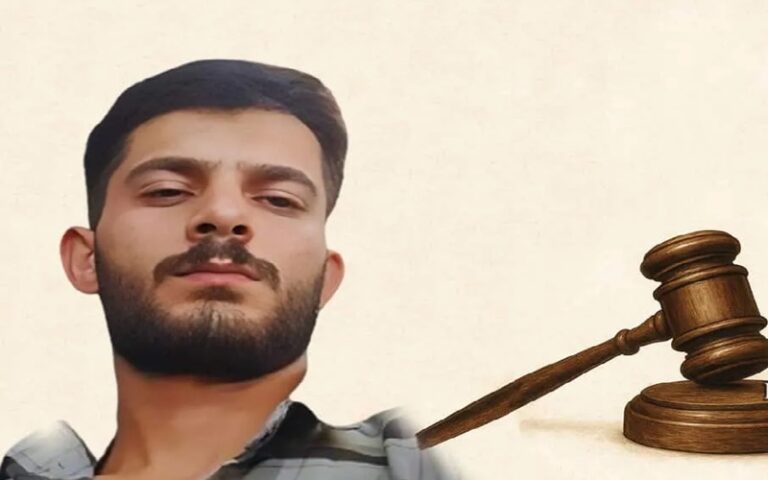
On August 2, 2007, Majid Kavousifar was hanged by the repressive judiciary of Iran’s regime—with a smile on his face. Majid was a young man who, on August 2, 2005, shot and killed Hassan Ahmadi Moghaddas—Deputy Prosecutor of Tehran and Head of the Ershad Judiciary Complex (the so-called Morality Prosecutor’s Office on Vozara Street)—on Bucharest Street in Tehran. Moghaddas was responsible for the imprisonment, torture, and execution of many people and political and social activists.
Iran’s Regime Executes Political Prisoners Mehdi Hassani and Behrouz Ehsani
After fleeing the country, Majid and his nephew Hossein Kavousifar went to the United Arab Emirates and sought asylum at the U.S. embassy. However, embassy officials handed them over to Emirati police, who in turn extradited them to the Iranian regime. Following his extradition, the Iranian regime sentenced Majid Kavousifar to death in a show trial. Exactly two years after the killing of Hassan Ahmadi Moghaddas, on the same date, he was hanged.

Death Sentence Issued by “Judge” Salavati

His death sentence was issued by the notorious judge Abolqassem Salavati. It is worth noting that “Judge” Salavati was sanctioned by the U.S. State Department on December 19, 2019, for his role in extrajudicial executions. While the U.S. added Salavati to its sanctions list, it has never addressed the role of its embassy in handing over Majid Kavousifar to the executioners of Iran’s regime.
Iran hangs judge’s killers in public

Majid Kavousifar Approached the Gallows Smiling and Waving

As Majid Kavousifar was taken to be executed, he smiled and waved to the people with his hands bound. Reuters selected the photo of Majid Kavousifar and his nephew Hossein Kavousifar—smiling triumphantly as they were hanged from a crane—as its Photo of the Decade. The photo, taken by a Reuters photographer, captured the moment the two young Iranians were hanged on August 2, 2007. In its caption, Reuters wrote: “The Iranian regime hanged Majid and Hossein on Thursday in front of hundreds of onlookers for killing a judge who had imprisoned a number of dissidents.”

Air Pollution in Tehran Claimed 6,000 Lives Last Year

Media outlets in Iran reported that air pollution in the capital claimed the lives of 6,000 Tehran residents last year. The state-run news website Etemad Online wrote on Friday, August 1: “Air pollution is a long-standing issue for Tehran residents; in the first half of the year, they grapple with dust storms, and in the second half, with temperature inversion.” According to data from the Tehran Air Quality Control Company, the capital experienced only six days of clean air between March 21 and July 27. During the same period, there were 75 days of moderate air quality, 39 days classified as unhealthy for sensitive groups, five days as unhealthy for all groups, and three days as very unhealthy and hazardous.
Iranian Regime Blamed as Main Culprit Behind Environmental Pollution
Citing this data, Etemad Online wrote: “Although 23 agencies are responsible for air pollution management, since the beginning of this year (March 21), Tehran residents have had to endure polluted air nearly every third day.” Earlier in June, the research center of Iranian regime’s Majlis (parliament), citing evaluations by the Ministry of Health, announced that in 2023, air pollution was the cause of premature death for over 30,000 people in 57 cities with a combined population of around 48 million. The economic damage caused by air pollution across the country is estimated at around $23 billion. Following persistent air pollution and dust haze in Tehran, Reza Shahbazi, deputy head of the Geological Survey and Mineral Exploration of Iran, warned on July 8 that the dried-up Salehiyeh wetland in the southwest of the capital has become the primary source of dust storms.

Reasons Behind the Regime’s Failure to Contain the Air Pollution Crisis

Etemad Online further cited “fragmented responsibilities among agencies and lack of enforceability” as the main reasons behind Tehran’s continued air pollution.
Surge in Mazut Consumption in Iran Amid Rising Exports of Clean Fuels
According to the report, proposed solutions include “establishing a single authority with executive power, providing sustainable funding for pollution-reduction projects, banning the use of outdated vehicles, and holding underperforming institutions accountable.” Urban affairs expert Mohammadreza Tavakolian criticized the current situation, stating that despite clearly defined responsibilities for the relevant agencies, the lack of sufficient funding and enforceability has left many laws and plans unimplemented, remaining only on paper. On July 31, the state-run website Tejarat News reported that contrary to previous promises by Iranian regime officials, the burning of mazut (heavy fuel oil) has become an “official and relied-upon option” for the regime in managing its energy crisis—a practice that continued even last year. The outlet noted the regime’s inability to handle the energy crisis even with mazut-burning, writing: “People are forced to endure air pollution, power outages, and numerous illnesses all at once.”