Global Leaders Rally Behind NCRI’s Provisional Government Amidst Historic Upheaval in Iran

As Iran grapples with the fallout of massive nationwide uprisings and devastating foreign military strikes that have decapitated its top leadership, a coalition of international dignitaries gathered virtually to back a transitional democratic roadmap. The conference, titled “Iran at a Crossroads: Supporting the NCRI Provisional Government Based on Its Ten-Point Plan,” convened former heads of state, foreign ministers, and human rights advocates to address the rapidly materializing power vacuum in Tehran. The summit took place against a backdrop of unprecedented volatility. In late December 2025 and January 2026, a nationwide uprising swept through hundreds of Iranian cities. The clerical regime’s response was characteristically brutal; according to figures cited at the conference, the crackdown left nearly 40,000 protesters dead and more than 300,000 wounded. Weeks later, on February 28, 2026, targeted military strikes by the United States and Israel heavily degraded the regime’s military infrastructure, resulting in the deaths of Supreme Leader Ali Khamenei and numerous senior officials. In a frantic bid for survival, the surviving establishment installed his son, Mojtaba Khamenei, as the new Velayat-e Faqih.

A Blueprint for Transition

Addressing the conference, Maryam Rajavi, President-elect of the National Council of Resistance of Iran (NCRI), outlined the structure and mission of the newly announced Provisional Government. She characterized the installation of Mojtaba Khamenei as a descent into a “hereditary clerical monarchy” and proof that the regime is entirely devoid of solutions for its survival. “At a time when Iran and the entire region are engulfed in a devastating war, in the name of peace and freedom, I call upon the world to recognize the only solution to Iran’s grave crisis,” Rajavi stated. “This solution is the overthrow of the regime by the Resistance through an organized uprising and the Army of Liberation.” Rajavi detailed the Provisional Government’s mandate, which is anchored in the NCRI’s Ten-Point Plan. The plan guarantees universal suffrage, the separation of religion and state, gender equality, the abolition of the death penalty, and a non-nuclear Iran. Former Canadian Foreign Minister John Baird emphasized the practical mechanics of this transition, noting that the provisional government would operate on a “strictly limited six-month mandate to transfer sovereignty to the people of Iran.” The initiative has garnered widespread international backing. Giulio Terzi, former Foreign Minister of Italy, revealed that a joint statement endorsing the Provisional Government has been signed by more than 1,000 global parliamentarians, former heads of state, and ministers. Terzi described this as an “unprecedented endorsement” that reflects a growing global consensus around a legitimate framework for a peaceful transition.

The Role of Ground Forces

While the world’s attention has been captivated by the aerial bombardments, speakers emphasized that lasting political change cannot be achieved from the skies alone. The conference highlighted the heavy operational burden borne by the PMOI Resistance Units on the ground. In the past year alone, these internal networks conducted roughly 3,000 anti-repression operations. Rajavi disclosed that during the January uprising, the Resistance Units played a decisive role in protecting protesters by targeting the regime’s repressive centers. The human cost has been severe, with more than 2,000 fighters reported missing since January. A pivotal turning point was highlighted: on February 23, 2026, just days before the foreign military strikes, 250 fighters of the Liberation Army attacked Ali Khamenei’s heavily fortified residence. The brazen assault, which left 82 fighters killed or arrested, shattered the regime’s aura of invincibility. General Wesley Clark, former Supreme Allied Commander Europe of NATO, acknowledged the shifting military reality. Noting that foreign air forces are actively sweeping the skies and destroying the infrastructure of the IRGC and the Basij, Clark told the Resistance Units, “There’s no stopping the aircraft overhead. The defeat of the regime is inevitable.” However, he stressed that the ultimate outcome depends on the organized opposition: “Between now and then you must act, courageously but cautiously. You must continue to strike at the fragments of the regime while preserving your strength.”

Rejecting the “Hereditary” Alternatives

As the clerical regime falters, a significant portion of the conference was dedicated to neutralizing what speakers described as a foreign-backed campaign to resurrect the deposed Pahlavi monarchy through Reza Pahlavi, the son of the former Shah. Dignitaries were unified in their rejection of replacing one dictatorship with another. “Democracy is not hereditary. Being someone’s son does not give you the right to lead a country,” stated Esther Rodriguez, Vice President of the Assembly of Madrid. She warned that the Shah’s son’s refusal to distance himself from his father’s repressive regime makes him a problematic figure for a people looking toward a democratic future. Nobel Peace Laureate Tawakkol Karman situated the current crisis within Iran’s broader history of foreign interference, recalling the 1953 coup that overthrew the democratically elected government of Mohammad Mossadegh and reinstated the Shah. Karman warned Western nations against attempting to “replace the dictatorial regime with the Shah regime again,” viewing such maneuvers as attempts to control Iran’s strategic resources. “Western countries should support the Iranian people, not the war against the will of the Iranian people,” she argued. Baroness O’Loan, a member of the UK House of Lords, exposed the deceptive political tactics utilized by monarchist factions. She revealed that supporters of Reza Pahlavi had gathered signatures from UK parliamentarians ostensibly in support of Iranian women, only to fraudulently use those signatures to lobby the UK government on behalf of the Shah’s son. “This was wrong,” O’Loan declared, citing it as an example of the faction’s lack of democratic integrity.

Calls for a Policy Shift

With the regime in its death throes, the conference participants urged Western governments to formally abandon the remnants of their appeasement policies. Guy Verhofstadt, former Prime Minister of Belgium, called on the European Union and the United States to open a “structural and structured dialogue with the democratic opposition,” arguing that social media condemnations are no longer sufficient. Speakers also raised alarms about the enduring security threat posed by the regime’s overseas apparatus. Citing a recent intelligence report, Baroness O’Loan highlighted an acute rise in assassination and kidnapping attempts by Iranian state agents in the UK since 2022. She echoed Rajavi’s call for immediate diplomatic severing, demanding, “We must close the embassy and work with our allies to help you.” As the geopolitical landscape of the Middle East undergoes a seismic shift, the consensus among the international leaders was clear: foreign military intervention and attempts to install hereditary rulers cannot substitute the will of the Iranian people. Real stability, they argued, relies on recognizing the NCRI’s Provisional Government and supporting the internal resistance forces who have bled for a secular, democratic republic.

16 Day of War; Trump: Mojtaba Khamenei Will Surrender If He Is Wise

0
On Sunday, March 15, on the sixteenth day of the war between the United States, Israel, and Iran’s regime, military and political developments continued at a faster pace. New attacks inside Iran, proxy clashes in Iraq, and missile and drone strikes against Persian Gulf countries indicate that the scope of the war is still expanding, while political efforts to end it remain uncertain. In the most important political development, U.S. President Donald Trump said on Saturday, March 14, that he is not yet ready to reach an agreement with the Iranian regime to end the war. In a roughly 30-minute phone interview with NBC News, the American television network, he said the Iranian regime is interested in a deal, but the conditions it has offered are not good enough. Trump emphasized that any agreement must be very firm and decisive and must include the complete abandonment of Iran’s nuclear ambitions.
Day 15 of the War: Major U.S. Attack on Kharg Island and $10 Million Reward for Mojtaba Khamenei
Trump also announced that he is cooperating with several countries to draft a plan aimed at securing maritime navigation in the Strait of Hormuz. This comes as the Islamic Revolutionary Guard Corps (IRGC), the Iranian regime’s main military force, has threatened to block this vital global energy corridor. The U.S. president said that if the Iranian regime attempts to disrupt the free passage of ships, Washington will reconsider its decision to refrain from targeting energy facilities. He also commented on the situation of Mojtaba Khamenei, the son of Iranian regime supreme leader Ali Khamenei, saying it is unclear whether he is still alive. Trump added that no credible image or evidence of his presence has been released and that reports have circulated about him being wounded or even killed. The U.S. secretary of defense had previously said that Mojtaba Khamenei was injured and may have suffered serious damage. On the military front, the Israeli military announced that it has launched a new wave of large-scale attacks against targets in western Iran. Following these strikes, reports emerged of explosions being heard in the cities of Isfahan, Khomein, Hamedan, Dezful, as well as in western areas of Tehran. Precise details about the extent of the damage or the exact targets of these attacks have not yet been released. At the same time, the U.S. military announced that it carried out a heavy attack on Kharg Island, Iran’s main oil export terminal in the Persian Gulf. According to Trump, the operation destroyed almost all military targets on the island, but its oil facilities were deliberately not targeted. He emphasized that Washington refrained from striking the oil installations to prevent the destruction of energy infrastructure and broader economic consequences. Tensions also increased in Iraq. Security sources in the country said that the U.S. Embassy in Baghdad was targeted by a drone attack. The incident occurred several hours after separate strikes against positions of the militia group Kataib Hezbollah, an Iran-backed armed group in Iraq, which resulted in the killing of three of its members, including a commander. Reports also indicate that one of the group’s senior commanders was wounded. Following these developments, the U.S. Embassy in Baghdad urged American citizens to leave Iraq immediately and to avoid visiting the embassy or the U.S. consulate in Erbil, the capital of Iraq’s Kurdistan Region. On the regional front, several Persian Gulf countries also reported missile and drone attacks. Saudi Arabia announced that its air defense systems intercepted six ballistic missiles over Al-Kharj province. This area hosts Prince Sultan Air Base, a major Saudi air base that is also used by U.S. forces. In Kuwait, several drone attacks were reported against the country’s international airport, damaging its radar system and causing a temporary closure of the airspace. In the United Arab Emirates, a drone was intercepted in the emirate of Fujairah, and the falling debris caused a fire and injured one person. Qatar also said it intercepted four ballistic missiles and several drones. Meanwhile, the foreign minister of the Iranian regime, Abbas Araghchi, in a conversation with his French counterpart, claimed that the United States and Israel are responsible for insecurity in the region and called on other countries to refrain from actions that could escalate the conflict. Overall, these developments show that on the sixteenth day of the war, while military pressure on the Iranian regime has increased, the risk of the conflict spreading across the entire Middle East remains serious, and the prospect of a quick end to the war is still unclear.

National Council of Resistance of Iran Warns About Dire Situation of Prisons

0
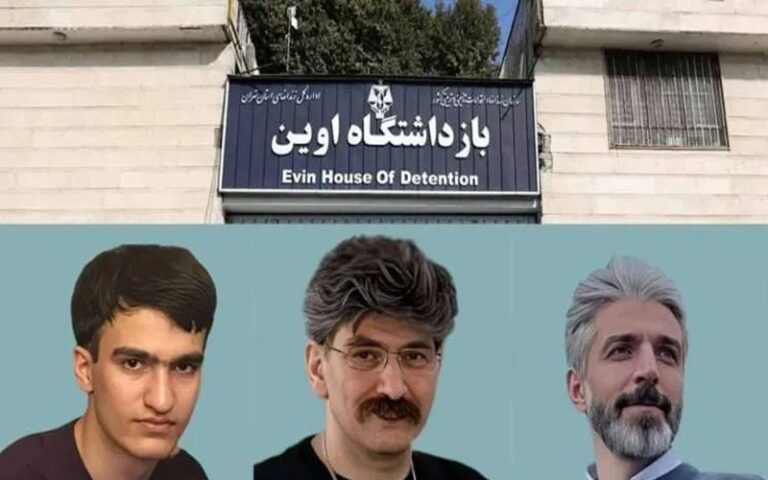
In a statement, the National Council of Resistance of Iran (NCRI), an Iranian opposition coalition, warned about the condition of prisoners in Iran under wartime circumstances and announced that the lives of thousands of prisoners, especially political prisoners, are in serious danger due to the lack of shelters inside prisons, the severe shortage of basic facilities, and intensified repression by security forces. The statement says that as airstrikes and bombardments expand across different parts of the country, millions of citizens have left their homes to stay safe from the attacks, but prisoners inside prisons have no possibility of taking shelter or leaving their places of detention. According to the council, prisoners are not only exposed to the dangers of military attacks but also face a severe crisis in meeting basic needs such as food, water, and sanitary facilities.
Three Members of Tehran-Backed Kataib Hezbollah Killed in Baghdad
According to reports that the council says it has received from inside prisons, the situation in some facilities is extremely critical. A report from Fashafouyeh Prison in Tehran states that after strikes hit areas around the prison, a number of prisoners tried to leave the prison compound to save their lives, but forces known as “NOPO” (the Iranian regime’s special police unit) prevented them from leaving by firing pellet rounds, using tear gas, and even live ammunition.

The dire situation of Iran’s prisons

According to these prisoners, after this incident living conditions inside the prison became significantly harsher. Food rations have been reduced, access to water and bathing facilities has been limited, and repeated electricity and gas outages have created numerous problems. It has also been reported that access to the prison store and many essential items, including food, hygiene products, and medicine, has nearly disappeared, and the possibility of making phone calls outside the prison is also being cut off. Another part of the statement refers to the situation in Ahar Prison. According to this report, after the bombing of Sarab Prison in the early days of the war, all prisoners and staff from that prison were transferred to Ahar. This transfer has sharply increased the prison population in Ahar Prison and pushed conditions to a critical stage. According to local sources, the overcrowding is so severe that many prisoners do not even have enough space to sleep and are forced to rest on the floor. Shortages of food and sanitary facilities have also created serious problems for prisoners. The situation in Gonbad-e Kavus Prison has also been described as critical in the reports received. Prisoners in this facility are said to be facing severe shortages of food, and some of them are suffering from hunger. In addition, the absence of a prison store and the departure of some administrative staff from their posts have caused serious disruptions in addressing prisoners’ problems. According to these reports, the increase in the number of prisoners after recent protests has also led to severe overcrowding in prison wards. In this context, Maryam Rajavi, the president-elect of the Iranian Resistance (a title used by the NCRI), in the first days of the war called on the international community to take action for the immediate release of prisoners, especially political prisoners. She emphasized that keeping prisoners under conditions of bombardment constitutes a double crime and that the international community must act to prevent their lives from being endangered. At the end of its statement, the National Council of Resistance of Iran called for the immediate attention of international institutions and human rights defenders to the situation of prisoners in Iran and warned about the humanitarian consequences of the continuation of these conditions.

Three Members of Tehran-Backed Kataib Hezbollah Killed in Baghdad

0
Iraqi security sources announced that the United States Embassy in Baghdad was targeted by a drone attack on the morning of Saturday, March 14. According to witnesses, after several explosions were heard, black smoke was seen rising above the area of the U.S. Embassy located in Baghdad’s Green Zone, a heavily fortified district housing government buildings and foreign diplomatic missions.
IRGC Threatens Public with a Harsher Crackdown
The attack occurred several hours after two separate strikes on positions of Kataib Hezbollah, the militia backed by Iran’s regime, in Baghdad. According to security sources, those strikes resulted in the deaths of three members of the group, including one commander. According to reports by local media outlets, in one of these attacks, which targeted a house in Baghdad, Ahmad al-Hamidawi, a senior leader of Kataib Hezbollah, was wounded. However, these reports have not yet been independently confirmed. At the same time, Iraqi security sources said that on Saturday evening another drone also targeted the Baghdad International Airport complex, an area that includes a military base and U.S. diplomatic facilities. According to these sources, the drone was intercepted, but its crash caused a large fire outside the airport compound.

Day 15 of the War: Major U.S. Attack on Kharg Island and $10 Million Reward for Mojtaba Khamenei

0
On March 14, the fifteenth day of the war, while tensions in the Middle East continue to escalate, the United States announced that it carried out a major attack on Kharg Island—an operation that U.S. officials described as one of the most powerful military operations in the region. At the same time, reports indicate an increased U.S. military presence in the Middle East, new warnings from Iran’s regime to European countries, and growing concerns about the security of the Strait of Hormuz. U.S. President Donald Trump announced on Friday, March 13, that under his order the U.S. Central Command (CENTCOM) carried out a major attack on Kharg Island. In a message on the social media platform Truth Social, he said that all military targets on the island had been completely destroyed. Trump described the operation as one of the most powerful air strikes in the history of the Middle East and referred to Kharg Island as one of the most important assets of Iran’s regime.
Mojtaba Khamenei’s First Message; A Display of Authority or a Sign of a Deep Power Crisis?
Despite the attack, the U.S. president emphasized that the island’s oil infrastructure was not targeted. According to him, this decision was made for humanitarian and ethical reasons. Trump also warned that if Iran’s regime attempts to disrupt the passage of ships through the Strait of Hormuz, that decision could change and oil facilities might also become targets. He further claimed that Iran’s regime does not have an effective defensive capability against U.S. attacks and reiterated that Tehran will never obtain nuclear weapons.

Increased U.S. Military Presence

At the same time, media reports indicate an increased U.S. military presence in the region. The Wall Street Journal reported that the U.S. Department of Defense has approved a request from U.S. Central Command to deploy additional forces to the Middle East. According to U.S. officials, part of an amphibious ready group along with a Marine expeditionary unit will be deployed to the region. According to the report, the amphibious assault ship USS Tripoli, which had previously been stationed in Japan, is heading toward the Middle East along with U.S. Marines. American sources say the unit includes several warships and about 5,000 Marines and sailors. The Associated Press also reported that about 2,500 U.S. Marines and at least one amphibious assault ship is moving toward the region—an action that indicates a significant increase in Washington’s military presence in the Middle East. On the other side of the crisis, officials of Iran’s regime have continued their threats. Ali Bahreini, the regime’s representative at the United Nations office in Geneva, warned in an interview with Euronews that any base or facility used to launch attacks against Iran would be considered a legitimate target for Iranian military forces. When asked whether this threat also includes military bases in Europe, he said Iran would defend its country “with any action that may be necessary.”

$10 Million Reward for Information on Mojtaba Khamenei

In another development, the U.S. Department of State announced a $10 million reward for information regarding Mojtaba Khamenei, the new leader of Iran’s regime, and several other senior officials of the government. The measure was announced under the Rewards for Justice program and also includes figures such as Ali Larijani, Eskandar Momeni, Esmail Khatib, and Yahya Rahim Safavi. Washington stated that information helping to identify the location of these individuals or bring those responsible for terrorist activities to justice would qualify for the reward.
IRGC Threatens Public with a Harsher Crackdown
Meanwhile, concerns about the security of the Strait of Hormuz have increased. John Healey, the United Kingdom’s Secretary of State for Defence, said that London is prepared to participate in operations to clear the strategic waterway if Iran’s regime lays mines in the area. He stated that Britain’s autonomous naval mine-hunting systems could be used to clear shipping routes. However, he emphasized that no direct evidence of minelaying in the area has been found so far. U.S. Central Command also announced that American forces have so far destroyed 16 mine-laying vessels affiliated with Iran’s regime. Tensions continue to expand and concerns about regional security and vital global energy routes are increasing.

Mojtaba Khamenei’s First Message; A Display of Authority or a Sign of a Deep Power Crisis?

0
With the introduction of Mojtaba Khamenei as the new leader of Iran’s regime and the release of his first official message, Iran’s political atmosphere has entered a new phase. The message, issued under extremely critical circumstances amid ongoing war and mounting internal and external pressures, has been viewed by many observers as an attempt to consolidate the position of the new leadership. The message included a range of political and military positions—from emphasizing the continuation of the war and threatening to close the Strait of Hormuz to speaking about opening new fronts and stressing the presence of Basij forces in the streets. However, a closer examination of the message suggests that behind the aggressive rhetoric and authoritarian slogans, signs of concern and crisis within the power structure can also be observed.
Trace of Mojtaba Khamenei in A Multi-Hundred-Million-Euro Deal in Vienna
The first key point in the message is the attempt to establish the legitimacy of the new leadership. Following the death of Ali Khamenei and the discussion surrounding succession, a major question has been whether transferring power to his son could gain consensus within the regime’s power structure. One of the main objectives of Mojtaba Khamenei’s message appears to be conveying that the transfer of power occurred within a legal framework and with the support of official institutions. His reference to being chosen by the Assembly of Experts—the body constitutionally responsible for selecting the supreme leader—and emphasizing the support of government officials appears to be an effort to respond to criticisms that view the new leadership as an example of hereditary power transfer within the system of clerical rule.

Mojtaba Khamenei Surrounded by Crises

However, the way the message was released has itself raised questions. The statement was published without any image or video, which some analysts interpret as a sign of caution—or even concern—at the highest levels of power. At moments like this, political leaders typically attempt to demonstrate their authority through public and symbolic appearances. The release of a non-visual message could therefore indicate the sensitivity and complexity of the political situation within the ruling establishment. Another major theme in the message is the emphasis on continuing the war. The new leader has attempted to portray the ongoing conflict as a necessity for defending the country and even as the will of the people. However, this claim does not align well with social realities in Iran. Numerous reports of protests and public dissatisfaction suggest that a significant portion of society is unhappy with the continuation of the conflict and its economic and human consequences. In such circumstances, insisting that the war reflects the people’s decision appears less like a reflection of social reality and more like an attempt to legitimize the continuation of the regime’s military policies. Another key element of the message is the threat to close the Strait of Hormuz. This threat has long appeared in the political and military rhetoric of Iran’s regime and is usually highlighted during periods of heightened tension with global powers or regional countries. However, the implementation of such a threat would have far-reaching consequences for the global economy as well as Iran’s own economy. Closing the Strait of Hormuz would not only disrupt the main route for transporting a large portion of the world’s oil but would also severely affect Iran’s own oil exports. For this reason, many experts view the threat more as a tool of political and psychological pressure rather than a realistic operational option.

Opening New Fronts in the War

At the regional level, Mojtaba Khamenei’s message also reflects an effort to demonstrate Iran’s power and influence. The reference to opening new fronts and using allied forces in the region is part of a strategy that Iran’s regime has pursued for years to expand its influence across the Middle East. However, the current regional situation and international pressures may increase the costs of such an approach for the ruling establishment. Perhaps the most important part of the message is the emphasis on domestic issues and the role of Basij forces in “maintaining the scene.” This section indicates that concerns about protests and internal unrest remain one of the regime’s main worries. Emphasizing the presence of Basij forces and loyal elements in the streets is essentially an attempt to maintain social control and prevent the expansion of potential protests. In recent years, the government has repeatedly faced large waves of protests, and this experience has made the control of the streets one of its top priorities. Overall, Mojtaba Khamenei’s first message represents a mixture of displays of authority and signs of concern. On one hand, the aggressive tone and emphasis on continuing the war and issuing regional threats are attempts to portray strength and stability under the new leadership. On the other hand, the repeated focus on domestic issues and the role of repressive forces suggests that concern about the internal situation remains one of the regime’s most significant challenges. For this reason, the message not only reflects the future direction of the ruling establishment but also reveals the depth of the political and social crises it faces.

IRGC Threatens Public with a Harsher Crackdown

0
As concerns grow within Iran’s regime about the possibility of a new wave of public protests, the Islamic Revolutionary Guard Corps (IRGC) has announced that if street protests occur, protesters will face a harsher response than in the past. According to a statement released on March 12 by the IRGC Intelligence Organization, the agency claimed that “the enemies of the Islamic Republic” are attempting to create an atmosphere of fear and encourage street protests in order to produce instability and unrest in the country. The statement also called on forces affiliated with the IRGC and the Basij militia paramilitary organization under the IRGC—to maintain a constant presence on the ground.
IRGC and Basij Checkpoints Targeted in Drone Attacks in Various Cities
Another part of the statement referred to the January protests and claimed that at that time it had also warned that street unrest would serve as a prelude to a military strike. The IRGC Intelligence Organization now claims that opponents of the government are once again seeking to organize protests and has therefore threatened that if protest gatherings take shape, demonstrators will face a stronger blow than that of January 8. At the same time as this warning, the IRGC issued a separate statement reacting to previous protests and verbally attacking participants with harsh language. In that statement, some protesters were described as “neo-ISIS,” and it was emphasized that any future gatherings or street protests would face a harsher reaction from security forces. The publication of these threats comes at a time when Iran’s political and social atmosphere is facing increasing tensions following recent developments, regional war, and mounting economic and security pressures. Many observers believe that issuing such statements reflects serious concern within the ruling establishment about the possibility of a new wave of popular protests.

UK Defense Secretary Warns of Dangerous Attacks by Iran’s Regime in Parliament

0
Amid escalating military tensions in the Middle East, officials in the British government have warned about widespread attacks by Iran’s regime. The UK Defense Secretary presented a report to the House of Commons, the lower chamber of the British Parliament, outlining the scope of these attacks. He described the actions as dangerous, reckless, and indiscriminate. His report included statistics on missile and drone attacks as well as the military response by the United Kingdom and its allies.

The UK Defense Secretary’s report on attacks by Iran’s regime

During a session of the UK House of Commons, John Healey, the United Kingdom’s Secretary of State for Defence, presented a report on recent developments in the region. He said Britain’s policy toward the actions of Iran’s regime is based on three principles. The first principle is defending British forces and interests in the region. The second is full coordination with NATO allies and regional partners. The third is adherence to legal foundations in military decision-making.
IRGC and Basij Checkpoints Targeted in Drone Attacks in Various Cities
According to him, the United Kingdom has been deploying military equipment to the region since January. Typhoon fighter jets, F-35 fighter aircraft, radar systems, and counter-drone teams were stationed at various bases. These measures were taken before the start of the recent clashes involving Iran’s regime. The UK Defense Secretary stated that the recent attacks by Iran’s regime have been very extensive. He said that on the first day of these attacks alone, targets in 10 countries were struck. Some of these targets were military, but civilian facilities were also damaged. Among the targets were hotels in Dubai in the United Arab Emirates and in Bahrain, as well as Kuwait International Airport in Kuwait. According to the report, British forces stationed at a US military base in Bahrain were only a few hundred meters away from the impact site of one of the missiles fired by the Islamic Revolutionary Guard Corps (IRGC) of Iran’s regime. In addition, a drone that was likely launched from Lebanon or Iraq struck a British base in Cyprus.

Statistics of missile and drone attacks by Iran’s regime

The UK Defense Secretary announced that Iran’s regime has so far launched more than 500 ballistic and cruise missiles. In addition, more than 2,000 drones have been used in these attacks. These strikes have targeted several countries across the region. He also said that even after Masoud Pezeshkian, the president of Iran’s regime, apologized to Persian Gulf countries, the attacks continued. In one of these attacks, Bahrain was targeted and 32 civilians were injured. In another attack, a water desalination facility was damaged. The UK Defense Secretary emphasized that the British government fully condemns the attacks by Iran’s regime. He said these actions have endangered the lives of hundreds of thousands of people. Among those at risk are British citizens and members of the country’s armed forces.

The United Kingdom’s military response to threats from Iran’s regime

Continuing the report, the UK Defense Secretary described Britain’s military actions to counter threats from Iran’s regime. He announced that British F-35 fighter jets shot down several Iranian drones over Jordan. Typhoon fighter aircraft also destroyed targets that were heading toward Qatar. British counter-drone units also repelled several additional attacks against coalition bases in Iraq. These actions were carried out in the framework of defending British forces and regional allies.

Concerns about the expansion of the regional crisis

The UK Defense Secretary also expressed concern about rising tensions in Lebanon. He stated that Hezbollah is an organization affiliated with Iran’s regime. According to him, the group represents a serious threat to regional security. In the report presented to Parliament, the defense secretary emphasized that the current crisis in the Middle East could have far-reaching consequences. He said Britain’s adversaries are closely monitoring developments in the region. Under such circumstances, the British government is seeking to protect its forces and its interests.

IRGC and Basij Checkpoints Targeted in Drone Attacks in Various Cities

0
Amid escalating clashes, reports indicate that checkpoints belonging to the Islamic Revolutionary Guard Corps (IRGC) and the Basij militia were targeted in drone attacks in several cities across Iran; attacks that, according to regime sources and field reports, have left significant casualties among security forces. Fars News Agency, which is affiliated with the IRGC, reported that preliminary investigations indicate Israeli drones were launched to target checkpoints in Tehran. According to the report, in attacks on the evening of Wednesday, March 11, in several parts of the capital, at least 10 security and Basij forces stationed at checkpoints were killed. According to the outlet, checkpoints in District 14 (Mahallati Highway), District 15 (in front of Hashemabad gas station), District 16 (Fadaiyan Eslam Street), and District one (the end of Artesh Boulevard) were among the locations directly targeted.
Twelfth Day of the War; U.S. Central Command Urges Civilians to Stay away from Iran’s Ports
Field reports also indicate continued attacks on checkpoints in Karaj. According to one witness, several checkpoints in the city were targeted and the sound of drones flying overhead was heard in the sky. Reports have also emerged about checkpoints being targeted in Fardis, a city in Karaj County. In Tehran as well, residents reported drones flying over the areas of Velenjak, Niavaran, and Dorous. Witnesses say air defense systems and security patrols were activated to counter the drones but were unable to shoot them down. At the same time, reports indicate that in some locations, including near Tajrish Square, forces stationed at checkpoints temporarily removed the barriers and left the area. Similar attacks have also been reported in other cities. According to local sources, a Basij checkpoint on Amir Kabir Boulevard in Shiraz was targeted in an attack early Thursday morning. Videos published from the city of Qorveh in Kurdistan Province also show that Basij and IRGC bases in that city were targeted in aerial attacks. Meanwhile, the Israeli military announced that dozens of its fighter jets, based on precise intelligence, targeted a series of IRGC command centers, internal security bases, Ministry of Intelligence facilities, and military infrastructure in Tehran and other parts of Iran. According to the Israeli military, during these attacks individuals operating in an IRGC command center in Tehran were identified and targeted within seconds after being detected. According to the statement, the targets included command centers of the IRGC Aerospace Force, a complex at Imam Hossein Military University (an IRGC-affiliated military academy in Tehran), Basij and IRGC bases, and facilities used for the storage and production of ballistic missiles. The Israeli military stated that this operation is part of the current phase of attacks aimed at damaging the operational infrastructure and key capabilities of Iran’s regime. At the same time, some figures close to the government have also referred to casualties at the checkpoints. For instance, Meysam Motiee, a pro-regime cleric and political figure, announced that in an attack on a checkpoint at the end of Artesh Boulevard in Tehran, four people were killed and about 10 others were wounded. In response to these developments, Mohammad Bagher Ghalibaf, the Speaker of the Majlis (parliament) of Iran’s regime, published a message calling on people to remain present in the streets. Addressing the people of Iran, he wrote: “Your presence in the streets has confused and angered the enemy. This small soldier of yours has three requests from you: the streets, the streets, the streets. Your children in the armed forces are risking their lives to defend Iran—strengthen their position by holding the streets.” Scattered reports from various cities across Iran indicate that checkpoints, which in recent weeks had been widely deployed in neighborhoods and streets, have become one of the main targets of aerial and drone attacks; a development that regime sources say is intended to reduce the presence of security forces in the streets.

Twelfth Day of the War; U.S. Central Command Urges Civilians to Stay away from Iran’s Ports

0
On Wednesday, March 11, as clashes in the region continued, new developments occurred in the military and security sphere. The United States Central Command (CENTCOM) warned in its latest statement that Iran’s regime is using civilian ports along the Strait of Hormuz for military activities, a move that the command says could place civilian lives at serious risk. According to a statement released by the United States Central Command, known as CENTCOM, the naval forces of Iran’s regime have stationed their ships and military equipment inside ports that are normally used for commercial shipping traffic. The command emphasized that such actions could expose civilians and port workers to the risk of military attacks.
Khamenei’s Five-Kilometer Underground Shelter in the Heart of Tehran
In this context, CENTCOM urged Iranian civilians to immediately distance themselves from all port facilities where the regime’s naval forces are present. At the same time as this warning, reports emerged of airstrikes inside Iran. Images released on Wednesday show that several locations in northern Tehran were targeted by air attacks. Reports accompanying these images refer to areas including Pasdaran, Dowlat, and Qolhak neighborhoods. Precise details about the extent of damage or possible casualties have not yet been released, but the strikes indicate the continuation of military operations against targets linked to the regime’s security and military structures in Iran’s capital. In another development, U.S. President Donald Trump said in a brief interview with the news website Axios that the war with Iran’s regime may soon come to an end. In the five-minute interview, he said that almost nothing remains to be targeted and added that whenever he decides, the war could end. Trump also emphasized that some smaller targets remain in different locations, but according to him the course of military operations is approaching its final stage. According to U.S. officials, in recent days several targets linked to the presence of foreigners in Iraq—including hotels, foreign businesses, and diplomatic facilities—have come under attack. It has also been reported that the U.S. Embassy building in Baghdad was targeted by a rocket attack in recent days. At the same time, the U.S. government has increased political pressure on the Iraqi government to curb the activities of militias affiliated with Iran in that country and to push Baghdad to distance itself further from Tehran’s policies.

Tensions in the Strait of Hormuz and the Sinking of 16 IRGC Mine-Laying Vessels

As airstrikes against the regime’s military targets continued, serious threats and warnings about the possibility of minelaying in the Strait of Hormuz—one of the world’s most strategic waterways—became one of the main focuses of recent developments. In the most significant development, Donald Trump issued a warning to Iran’s regime in a message on Truth Social, stating that any mines placed in the Strait of Hormuz must be removed immediately. He emphasized that if such actions have been carried out and the mines are not removed, Tehran will face unprecedented military consequences. This warning came as the United States Central Command, known as CENTCOM, announced that its forces had destroyed several vessels belonging to the naval forces of Iran’s regime, including 16 mine-laying boats near the Strait of Hormuz. Meanwhile, the Ministry of Defense of the United Arab Emirates announced that the country’s air defense systems intercepted and destroyed missiles and drones launched from Iran. These developments indicate that the scope of tensions has extended to other countries in the region. The Islamic Revolutionary Guard Corps (IRGC) announced the continuation of its missile operation called “True Promise 4” and said that new waves of attacks had been carried out. However, U.S. military officials say the intensity of Iran’s missile attacks has decreased in recent days. A senior Pentagon spokesperson stated that about 140 American soldiers have been wounded since the start of the war. Inside Iran, the security atmosphere has also intensified. The regime’s prosecutor general warned that “any cooperation with the enemy” abroad would be met with confiscation of property and heavy punishments and called on citizens to report suspicious cases to the prosecutor’s reporting system. At the same time, the commander of the regime’s Law Enforcement Force threatened that any protest gathering during wartime conditions would face severe crackdowns. On the other hand, the World Health Organization warned that attacks on oil facilities could cause a phenomenon known as “black rain,” which could create serious respiratory problems for residents of affected areas. Meanwhile, some diplomatic sources at the United Nations reported that the representative of Iran’s regime has claimed that in the recent bombings about ten thousand civilian locations were destroyed and more than 1,300 civilians were killed figures that have not yet been confirmed by independent sources.