

Inflation in Iran and the Limits of What an Agreement with the United States Can AchieveThe annual inflation rate also indicates that the average prices of goods and services during the year ending in July 2026 were 66% higher than during the corresponding previous period. The Consumer Price Index (CPI) reached 676.9 points in July, reflecting a 3.1% increase compared with June. In July 2026, rural households experienced the highest inflationary pressure compared with the national average. Point-to-point inflation in rural areas reached 106.9%, while monthly inflation was recorded at 3.4%. In recent months, accelerating inflation and sharp increases in the prices of essential goods have placed significant economic pressure on households and created serious challenges for the livelihoods of a large segment of society. On July 27, Eghtesad News, an Iranian news website, reported that as the economic crisis has intensified, installment payments have become increasingly common in Iran’s healthcare market, with services such as dental care and even medications now being offered on installment plans, a trend reflecting the further decline in households’ financial capacity.
Iran’s Statistical Center: Point-To-Point Inflation in July Reached Nearly 88%

Amid Iran’s deepening economic crisis and mounting pressure on household livelihoods, the Statistical Center of the Iranian regime announced that the point-to-point inflation rate reached 87.9% in July 2026, while annual inflation rose to 66%.
Point-to-point inflation measures price changes in a given month compared with the same month of the previous year, while annual inflation compares the average prices over the past 12 months with the average prices during the preceding 12-month period.
As a result, Iranian households paid nearly 88% more on average in July 2026 than they did in July 2025 to purchase the same basket of goods and services.
Serious Drug Shortage in Iran as Officials Assure Supplies for Arbaeen Pilgrims
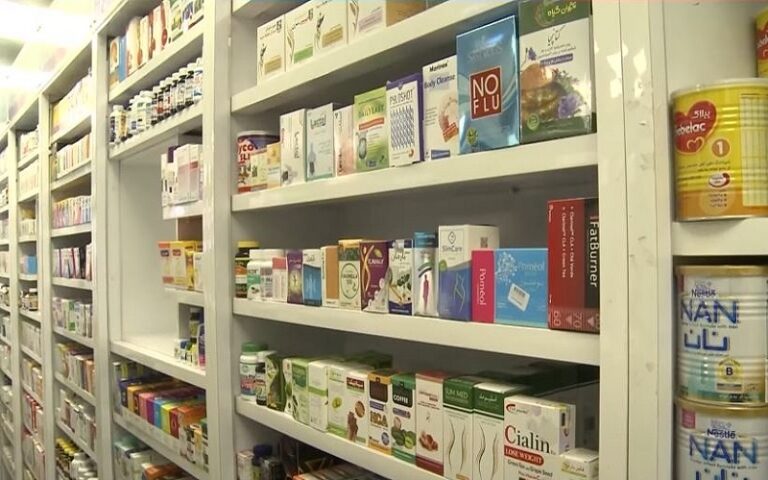
Salman Eshaqi, spokesperson for the Health and Treatment Commission of the Iranian regime’s Majlis (parliament), described the country’s drug shortage as a “serious and critical” issue. At the same time, Jafar Miadfar, head of the Iranian regime’s Emergency Medical Services Organization, said there is no concern about supplying intravenous fluids and medicines needed for Arbaeen pilgrims.
On Monday, July 27, Eshaqi cited “unjust sanctions” and the “war” as the main factors worsening the drug crisis and said difficulties in securing imported raw materials have also driven up medicine prices.
He stressed that domestic production capacity and pharmaceutical technology development centers should be strengthened to reduce the sector’s vulnerability.
Iran: Growing Demand for Installment Payment Plans for Medical ServicesThe regime lawmaker added: “Damaged infrastructure can be rebuilt, but there is one vital infrastructure whose neglect can cause irreparable damage and even result in patients’ deaths, and that is the sustainable supply of medicines and the public’s easy access to them.” On July 24, Homayoun Sameh Najafabadi, a member of the Health Commission of the Iranian regime’s Majlis, cited the “naval blockade and transportation disruptions” as factors increasing costs and complicating the shipment of medicines. He said delays in allocating foreign currency, combined with liquidity shortages, have created further obstacles to drug imports. These remarks come as Khabar Online, an Iranian news website, reported on July 26, citing Rasoul Nazari-Fard, founder of a pharmacy specializing in patients with rare diseases, that many patients must visit several pharmacies to find certain medications, while those same drugs are readily available on the black market, through intermediary networks, and on social media. Nazari-Fard stressed that part of the pharmaceutical market’s problems stem not from production but from the distribution system and weak oversight of medicine supplies. He continued: “The access of numerous individuals to certain systems, along with insufficient oversight, can facilitate the issuance of fake or fraudulent prescriptions, which ultimately result in medicines being obtained through the official distribution network and then sold on the black market.”
Iranian regime officials emphasize medicine supplies for the Arbaeen Ceremony
Amid warnings about medicine shortages in Iran, the head of the Emergency Medical Services Organization announced on July 27 that the necessary measures have been taken to supply medicines and intravenous fluids needed for Arbaeen pilgrims. Miadfar said: “During the recent funeral ceremony [of Ali Khamenei], we had no problems supplying intravenous fluids, and we are also fully prepared for the Arbaeen period.” He announced that the Health Ministry has introduced special measures to prevent heatstroke among participants in the Arbaeen pilgrimage, which marks the 40th day after the martyrdom of Imam Hussein, the third Imam of Shia Muslims. He added that necessary medicine stocks have been positioned at Iran’s six border crossings and that about 300,000 units of intravenous fluids have been allocated for the event. Earlier, on July 19, Pirhossein Kolivand, head of the Iranian Red Crescent Society, announced that sufficient medicines and medical equipment had been supplied and dispatched for the Arbaeen ceremonies, and that five hospitals in Iraq along the route from Najaf to Karbala have been made available to Iranian medical teams to provide healthcare services.Iran: Growing Demand for Installment Payment Plans for Medical Services
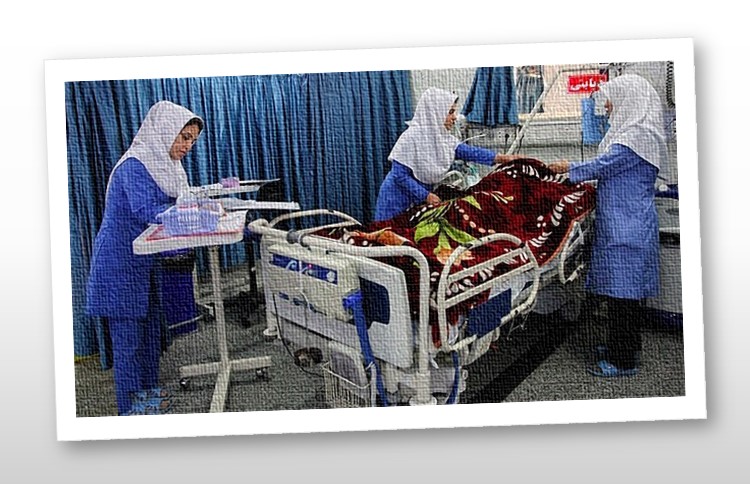
Amid rising prices and the deepening cost-of-living crisis in Iran, Eghtesad News website reported that installment payments are becoming increasingly common in the country’s healthcare market, with services such as dental care and even medications now being offered through installment plans. The trend reflects the further deterioration of households’ financial capacity.
On Monday, July 27, Eghtesad News reported that some patients, due to financial hardship, negotiate with doctors for discounts on consultation fees and, in some cases, receive treatment through installment payments.
Drug Crisis: Chemotherapy Costs in Iran Have Increased TenfoldAccording to the report, dental services are currently the “most prominent showcase” of installment-based healthcare, with many clinics and platforms offering services such as implants, orthodontics, root canal treatment, and dental veneers through installment payments, loans, or multi-month repayment plans. The outlet added: “A toothache does not wait until next month’s paycheck. Someone with an infected tooth or in need of a root canal cannot always postpone treatment. Therefore, installment payments are both an opportunity and a warning; an opportunity because they make treatment possible, and a warning because an essential living expense has been shifted into debt for future months.” In recent months, accelerating inflation and sharp increases in the prices of essential goods have placed significant economic pressure on households and created serious challenges for the livelihoods of a large segment of society. According to the latest report from the Statistical Center of Iran, point-to-point inflation in rural areas surpassed 100%, reaching 108.1%.
Buying medications through installment plans
Eghtesad News further reported that installment payments are no longer limited to dental services, as some online pharmacies and credit service providers now offer installment plans for medications, dietary supplements, and health-related products. The report stated: “When even medication is sold on installment, it means the pressure of rising costs has extended beyond consumer goods to the most essential aspects of life.” According to the report, healthcare apps and websites also use discount codes and promotional offers for online consultations with physicians, psychologists, and psychiatrists. Eghtesad News added that the question now is whether this trend has improved access to healthcare or instead pushed patients toward choosing the cheapest option rather than receiving complete treatment.Economic pressure and incomplete treatments
Eghtesad News continued: “Some doctors say they see patients who attend the initial consultation but postpone laboratory tests, imaging, medication, or follow-up appointments. In ongoing treatments, such delays are more dangerous; patients abandon physiotherapy halfway through, stop therapy after two sessions, or take only half of their prescribed medication so it lasts longer.” According to the report, economic pressures are even more evident in psychotherapy, with some patients requesting delayed payment for sessions or reducing the number of appointments. The report stated: “Psychotherapy is supposed to be a place to talk about anxiety, burnout, and the pressures of life, but sometimes the cost of the session itself becomes one of those anxieties.” Eghtesad News concluded by warning that the growing prevalence of installment-based healthcare reflects weaknesses in the financing of Iran’s healthcare system and the high share of out-of-pocket spending by patients for treatment, medications, and other medical services.US Sanctions Global Network Supporting Mahan Air and IRGC
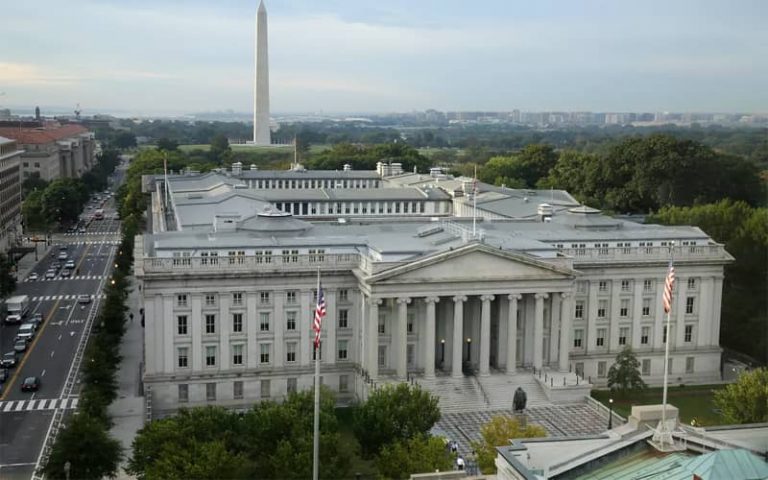
The U.S. Department of the Treasury announced on Thursday, July 30, that its Office of Foreign Assets Control (OFAC) had imposed sanctions on six companies and individuals in China, India, Russia, and Iran for cooperating with Mahan Air and the Islamic Revolutionary Guard Corps (IRGC), which the United States has designated as a terrorist organization.
According to the Treasury Department, these individuals and companies were part of Mahan Air’s international support network. Washington says the airline has for years played a role in transporting personnel of the IRGC Quds Force, as well as moving military equipment, drones, and weapons.
US Sanctions Network Involved in the Sale of Iranian Liquefied Petroleum GasThose sanctioned include Shanghai Wings and Shanghai Elite International Travel in China, Skiez Travels and Logistics in India, Air Cargo Pro in Russia, and DadeNegar Startup Studio in Iran. Tang Xin, the CEO of Shanghai Wings, was also sanctioned separately. U.S. Treasury Secretary Scott Bessent emphasized that any individual or entity providing financial, commercial, or logistical services to the IRGC or Mahan Air is contributing to the continuation of a network that Washington considers terrorist and will face the risk of sanctions. Under this decision, the assets of the sanctioned individuals and companies within U.S. jurisdiction will be frozen, and foreign institutions that conduct business with them may also be subject to U.S. secondary sanctions.
Retirees Keep the Flame of Civil Protest Alive in Iran
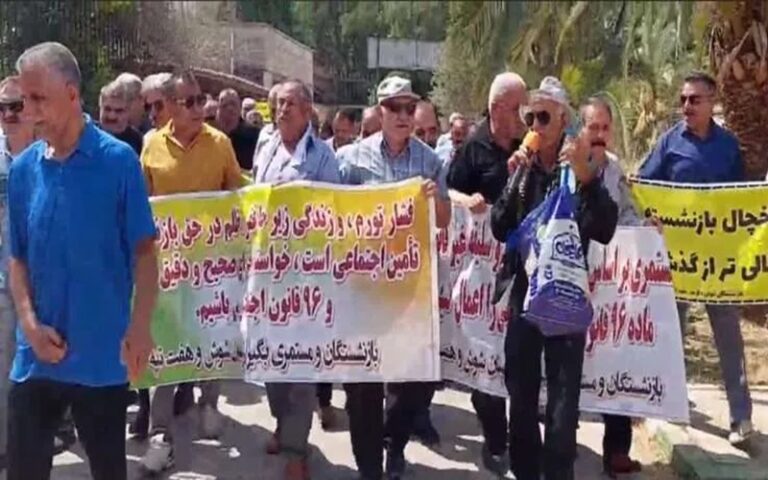
Retirees in Iran are now forced to take to the streets in the scorching heat of summer and the freezing cold of winter. They stand in front of Social Security offices and government buildings, risking insults, beatings, arrest, and fabricated legal cases—not for special privileges, but for their most basic rights: a dignified livelihood, accessible healthcare, and the respect earned through a lifetime of work.
For weeks, Sundays have become the day of retirees’ protests in cities across Iran.
The significance of these protests extends beyond their economic demands or the number of participants each week. The “Protest Sundays” have become a recurring public gathering, gradually taking on a meaning that goes beyond a labor-related protest.
What gives these protests political and social weight is their persistence. Through their repeated presence, retirees prevent government promises, waves of repression, or new crises from pushing their demands aside.
Iranian Regime Executes Two More Protesters from the January UprisingA group denied the right to form independent and free organizations has, in this way, created an informal institution—one without offices, budgets, or official platforms, but sustained through continuity, local networks, and shared experience. A significant part of the protests focuses on enforcing existing laws. Retirees are demanding pensions that reflect the real cost of living, full implementation of pension equalization, payment of overdue benefits, enforcement of Article 96 of Iran’s Social Security Law, and access to free or affordable healthcare.
Why do retirees’ protests matter?
Retirees are among the groups that the Iranian regime has traditionally viewed as low-risk, conservative, and dependent on official institutions. The prevailing assumption is that old age, illness, reliance on healthcare, and dependence on pensions would keep them off the streets. Yet in recent years, this very group has become one of the country’s most persistent forces for labor and civil protest. The retirees’ movement emerged from economic demands, but at some demonstrations its slogans have expanded to broader social issues. Protests against war, executions, the arrest of labor activists, and the imprisonment of teachers and workers show that parts of the movement have drawn a connection between economic injustice and political repression. Slogans such as “Enough warmongering, our tables are empty” and “Inflation, high prices, no to war and destruction” show that retirees do not see war and economic hardship as separate issues. Slogans opposing executions and supporting workers, teachers, and imprisoned activists also expand the boundaries of what would otherwise be a purely labor-related protest. When retirees demand the release of political prisoners and imprisoned labor activists, the issue of pensions becomes linked to the rights to protest and freedom of expression.Small Protests and Moments of Social Upheaval
Iran’s experience over the past decade shows that large-scale protests rarely emerge in a vacuum. Before public anger erupts across dozens or hundreds of cities, society often passes through a period of smaller demonstrations, strikes, and scattered protests. These protests may appear to focus on different issues: wages, water shortages, electricity, unemployment, compulsory hijab, corruption, the collapse of financial institutions, the arrest of an activist, or the death of a citizen in custody. Yet the repetition of these scattered protests creates a shared experience. Different segments of society come to realize that, despite their different grievances, they share common underlying causes: poor governance, systemic corruption, lack of accountability, and the suppression of the right to protest. In the months leading up to the January 2018 nationwide protests, demonstrations by victims of failed financial institutions were among the clearest signs of economic discontent. Those gatherings were not the sole cause of the uprising, but they helped create an environment in which limited economic demands quickly evolved into broader protests against the political system. Before the nationwide protests of 2022, Iran had already witnessed successive waves of demonstrations by workers, teachers, retirees, farmers, women, and families seeking justice. The killing of Mahsa Jina Amini was the decisive trigger, but public anger was not born that day. Her death connected years of accumulated humiliation, violence, discrimination, and unanswered protests. The same pattern can also be seen in the January 2026 protests. Before the unrest spread, signs of public dissatisfaction were already visible in strikes, labor demonstrations, and protests over inflation and economic conditions. In all three cases, a specific event or demand grew into a broader protest only after society had already experienced sustained grievances, demonstrations, and repression. Social movements cannot be predicted with precision, and every major wave of protest requires a combination of conditions, a triggering event, and the ability to connect different social groups. But smaller protests can provide the invisible foundation for such moments by reducing fear, creating a shared language, building experience with public demonstrations, and expanding solidarity. These movements may not, by themselves, lead to nationwide protests, but they can play the same role that smaller demonstrations played in earlier periods: preserving the memory of protest and keeping networks prepared to connect when an unpredictable moment arrives.The Broad Geography of a Shared Demand
One of the defining features of the retirees’ movement is that it is not confined to Tehran. The continued presence of retirees in Ahvaz, Shush, Kermanshah, Rasht, and many other cities shows that the crises of livelihoods and healthcare are nationwide. At first glance, the Sunday protests may appear to be small and scattered gatherings, but the history of protests in Iran has repeatedly shown that major waves of unrest are often built from the convergence of such local circles. No one can say with certainty when or how the retirees’ Sunday protests or the “No to Executions Tuesdays” campaign will connect to broader social movements. But it can be said that these movements prevent both the streets and the prisons from becoming places of absolute silence.United States Launches Major Attack on Iranian Regime Targets
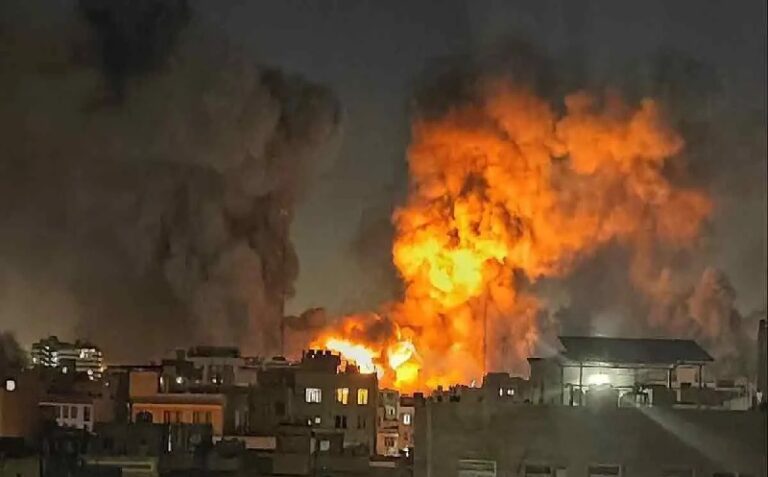
U.S. Central Command (CENTCOM) says the latest strikes were a response to missile attacks by the Islamic Revolutionary Guard Corps (IRGC) against American forces in the region.
— U.S. Central Command (@CENTCOM) July 30, 2026The Wall Street Journal reported that a proposal for a 10-to-14-day air campaign to weaken the Iranian regime’s missile capabilities is under consideration. U.S. Central Command (CENTCOM) announced early Thursday, July 30, the completion of a new round of military operations against targets in Iran. According to CENTCOM, the operation, which began at 8:00 p.m. Eastern Time, was carried out in response to missile attacks by the Islamic Revolutionary Guard Corps (IRGC) against U.S. forces and bases in the Middle East, particularly in Jordan. CENTCOM described the operation as “a powerful response” to attacks by the Iranian regime. At the same time, a U.S. official told The Wall Street Journal that the latest strikes were broader in scope than previous operations, targeting multiple locations across Iran. Axios also quoted a U.S. official as saying that the United States had launched a new wave of airstrikes against targets in Iran.
Five Iranian Missiles Intercepted Over Jordan
Hours after the U.S. operation concluded, the IRGC launched another round of missiles. The Jordanian Armed Forces announced that the country’s air defense systems intercepted and destroyed five ballistic missiles fired from Iran. Earlier, videos circulated on social media showing missile launches from the cities of Khomein, Yazd, and Tabriz. This marks the second consecutive day that missiles launched from Iran toward Jordan have been intercepted. On Wednesday, despite a several-day pause in U.S. strikes, the IRGC also fired missiles toward Jordan. Since the latest round of hostilities began, U.S. military bases in Jordan have been among the primary targets of the IRGC’s missile and drone attacks.Reports of Explosions in Several Iranian Provinces
At the same time as the U.S. strikes, multiple reports emerged of explosions in the provinces of Khuzestan, Hormozgan, Fars, and Bushehr. The Khuzestan Governor’s Office confirmed explosions near Ahvaz, Shadegan, Arvand Kenar, and the outskirts of Abadan. In Hormozgan Province, explosions were also reported in Bandar Abbas, Qeshm Island, and Kish Island. In Fars Province, reports indicated explosions in Kazerun and Nurabad-e Mamasani. Meanwhile, local sources reported hearing explosions in Borazjan and the city of Bushehr.Joint U.S.-Saudi Strikes Target Iranian Regime-Aligned Forces in Iraq
In a parallel development, joint U.S. and Saudi Arabian strikes against positions held by groups backed by the Iranian regime in Iraq reportedly killed at least 20 people, according to news sources. The sources said the escalation has further diminished the prospects for renewed negotiations between Tehran and Washington. Wall Street Journal: CENTCOM Commander Has Proposed a Large-Scale Air Campaign Against Iran The Wall Street Journal, citing informed sources, reported that General Brad Cooper, commander of U.S. Central Command (CENTCOM), has prepared a plan for an intensive air campaign against Iran and presented it to U.S. President Donald Trump. According to the sources, the proposal envisions a 10-to-14-day campaign aimed primarily at significantly degrading the Iranian regime’s missile capabilities and disabling a substantial portion of its offensive capacity. The sources also said that General Cooper believes limited, intermittent strikes have failed to stop threats to shipping in the Strait of Hormuz or the Iranian regime’s missile attacks against U.S. forces.Iranian Regime Backs Down on Executions Over Ghezel Hesar Prison Hunger Strike
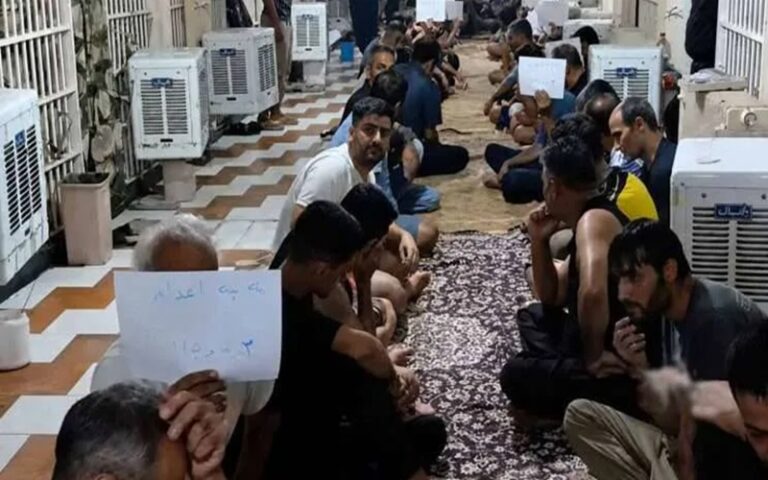
After 16 days of a widespread hunger strike by approximately 1,500 death row prisoners in Unit 2 of Ghezel Hesar Prison, the Iranian regime’s judiciary and officials from the Prisons Organization were forced to negotiate with the prisoners’ representatives. They offered promises to halt executions, return six prisoners from solitary confinement, and review the cases of those sentenced to death.
According to published reports, on Tuesday, July 28, a delegation consisting of officials from the Iranian regime’s Prisons Organization and administrators of Ghezel Hesar Prison—including the director general of Tehran Province’s prisons, the head of Tehran Province’s Clemency and Pardons Commission, the warden of Ghezel Hesar Prison, and several prison security and administrative officials—met with representatives of the prisoners in Unit 2.
Hunger Strike By 1,500 Death Row Prisoners in Ghezel Hesar Prison Marks 15th DayThe meeting took place as the prisoners’ collective hunger strike, launched in protest against executions and the transfer of several death row inmates to solitary confinement, entered its 16th day, raising growing concerns about the physical condition of the hunger strikers. According to the sources that published the report, prison officials announced during the meeting that executions in drug-related cases in Unit 2 of Ghezel Hesar Prison would be suspended until amendments to the anti-narcotics law are finalized. They also promised that the six death row prisoners who had been transferred to solitary confinement for execution would be returned to the general wards. Another commitment made during the meeting was to re-examine the cases of all death row prisoners in the unit. According to the officials, the cases will be reviewed by Clemency and Pardons Commissions through a process that could take up to six months. Reports indicate that prison officials initially attempted to persuade the prisoners’ representatives to end the strike. However, the prisoners insisted on maintaining their unity and pursuing their demands, stating that only the actual implementation of the promises could serve as the basis for deciding whether to continue or end their protest. The prisoners also warned that they would resume their hunger strike if executions restart or if the officials fail to fulfill their commitments. This is the second time in the past year that the Iranian regime’s judiciary has been forced to back down and make concessions following an organized protest by death row prisoners at Ghezel Hesar Prison. However, past experience has led both the prisoners and human rights organizations to view the implementation of these promises with skepticism. In recent weeks, the hunger strike by prisoners in Unit 2 of Ghezel Hesar has become one of the largest collective protests by death row prisoners in Iran, once again placing the expansion of executions and the condition of prisoners sentenced to death at the center of public attention and the focus of human rights organizations.
Reuters Reveals the Credibility Crisis at the Heart of Reza Pahlavi’s Campaign
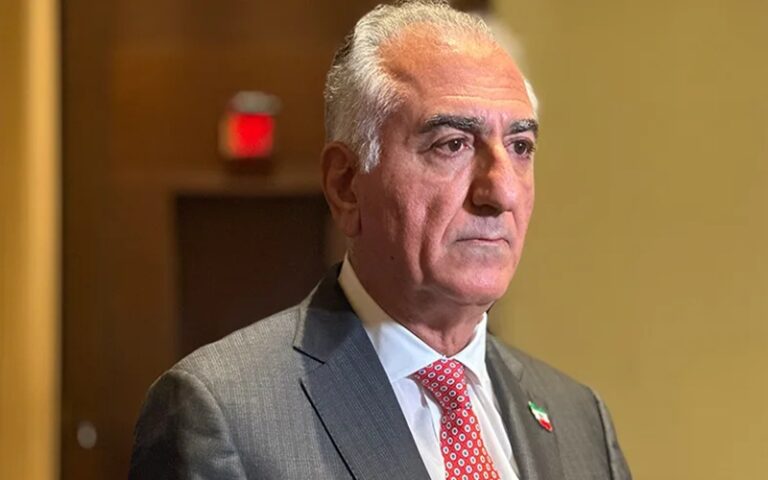
A major Reuters investigation has cast serious doubt on Reza Pahlavi’s attempt to present himself as the natural leader of a transition in Iran. Behind the speeches, foreign meetings, wealthy donors and social-media declarations, Reuters found a campaign struggling with political isolation, failed coalition-building, donor disillusionment, violence and intimidation by some supporters.
Reuters’ headline was itself revealing: “Regime change? Inside Reza Pahlavi’s faltering bid to lead Iran.” The word “faltering” was not merely rhetorical. It reflected the central finding of an investigation based on interviews with more than 50 people, including current and former associates, as well as a review of legal records, videos, photographs and social-media material.
A moment of prominence followed by political rejection
Pahlavi appeared to reach the height of his political visibility when he received an enthusiastic reception at the Conservative Political Action Conference in Texas. Supporters treated him as a potential future leader, and a group of wealthy Iranian-American business figures reportedly contributed more than $3 million to his campaign. But Reuters concluded that the event may have represented the high-water mark of his rise rather than the beginning of a successful leadership project.Why Can Reza Pahlavi Not Learn to Remain Silent?The Trump administration subsequently distanced itself from him. The US President Donald Trump publicly questioned whether Pahlavi would be accepted inside Iran. According to Reuters, a senior American diplomat also urged an Iranian-American activist addressing the United Nations Security Council not to mention Pahlavi by name. Vice President JD Vance later stated explicitly that the United States had never said it intended to install Pahlavi as Iran’s next leader. The message was unmistakable: despite years of lobbying in Washington and cultivating relationships with Western political circles, Pahlavi had failed to secure official American recognition as a credible governing alternative. Some of his own financial backers were also becoming dissatisfied. Reuters reported that donors advised him to work more seriously toward opposition unity and to respond more forcefully to harassment and violence by radical supporters. According to people familiar with those discussions, he listened but did not follow their advice. One donor stopped contributing after concluding that Pahlavi was not responding to the concerns of those financing his political activities.
Visibility is not an organized movement
Pahlavi’s greatest political asset remains his name. But recognition and nostalgia are not the same as possessing an organized democratic movement capable of surviving repression, directing events and managing a national transition. Reuters noted that Pahlavi does not appear to command a mass organization inside Iran comparable to those built by successful historical opposition leaders. Pahlavi countered that he communicated with leaders of more than 1,000 groups spanning labor, universities, religious communities and ethnic organizations. Reuters, however, said it could not independently confirm how many such groups were actually working with him. That distinction is central. A political leader seeking responsibility for a country of more than 90 million people cannot rely solely on social-media popularity, unverifiable contacts or crowds at diaspora events. He must demonstrate an accountable organization, identifiable leadership structures, a coherent strategy and the ability to unite people beyond his existing base. Reuters found little evidence that Pahlavi had achieved this.A record of failed coalition-building
Pahlavi repeatedly presents himself as a unifying transitional figure rather than a candidate seeking personal power. Yet Reuters documented the collapse of several efforts in which he participated to unite Iran’s deeply divided opposition. The most prominent example was the 2023 coalition formed by Pahlavi and several other opposition figures. The initiative quickly disintegrated amid disputes over leadership, direction and representation. Reuters also reported allegations that Pahlavi’s wife had dismissed other opposition figures as “nobodies” compared with her husband. The significance of the incident goes beyond the disputed quotation. Other members of Pahlavi’s circle have used rhetoric portraying criticism of him as collaboration with the Islamic Republic. One senior aide wrote that people were either with Pahlavi or with the regime and suggested that anyone weakening him was serving the enemy. Such rhetoric is fundamentally incompatible with democratic pluralism. A movement that treats criticism of its leader as treason is not demonstrating readiness for democratic government; it is reproducing the political intolerance it claims to oppose.Violence and intimidation by some supporters
The most damaging part of the Reuters investigation concerns a series of violent or threatening incidents involving Pahlavi supporters in Britain, Austria, the Netherlands and Canada. Reuters documented allegations involving the beating of a Kurdish journalist, threats against restaurant owners who refused to display the pre-revolutionary flag, harassment and publication of personal information, intimidation of political opponents, and confrontations outside opposition meetings. Two Pahlavi supporters were also charged in Canada with the murder of a former supporter who had become a critic. They had not been convicted at the time of the report. When violence, threats and accusations of treason repeatedly emerge from sections of a political movement, its leader has an obligation to confront them consistently, publicly and before the damage becomes impossible to ignore. Critics interviewed by Reuters argued that Pahlavi had not spoken clearly, frequently or forcefully enough against intimidation conducted in his name. His later promise to establish stricter rules for aides raises another question: why were such standards not already in place in a movement claiming to be prepared to lead a democratic transition?The IRGC contradiction
Reuters also raised questions about Pahlavi’s record regarding the Islamic Revolutionary Guard Corps. Pahlavi has repeatedly portrayed himself as an early and determined advocate for designating the IRGC as a terrorist organization. But two activists involved in a campaign to secure that designation told Reuters that his practical involvement was limited largely to social-media statements and an opinion article. According to their accounts, he declined to sign a joint statement, did not attend major campaign demonstrations and did not send a representative. One activist said Pahlavi had effectively boycotted their campaign. Pahlavi responded that some activists may have wanted to use his name to advance their own initiatives rather than the broader cause. This discrepancy between public positioning and reported conduct becomes more serious when examined alongside Pahlavi’s changing claims about contacts inside the regime’s military and security institutions. For years, Pahlavi presented outreach to members of the armed forces, the Basij and the IRGC as a central component of his transition strategy. A Washington Examiner opinion article by academics Kazem Kazerounian and Hossein Saiedian reviewed statements attributed to Pahlavi over more than two decades. The authors noted that in 2002 he spoke of communicating with clerics, Revolutionary Guards and bureaucrats by telephone, fax and email. In 2018, he described increasingly frequent direct communication with representatives of military and paramilitary forces. In 2025, Pahlavi launched what was presented as a secure channel through which military, police, security and government personnel could indicate willingness to break with the regime. By July 2025, he reportedly claimed that more than 50,000 government and military insiders had registered. He later suggested that large sections of the armed and security forces had quietly signaled support. In a February 2026 interview with Hugh Hewitt, Pahlavi said more than 160,000 people had applied through the initiative and that many were members of the security forces, military or civilian bureaucracy who wanted to participate in a future transition. The figure was politically extraordinary. If Pahlavi truly had access to such a large network of prospective defectors, it should have represented one of the most significant organized challenges ever faced by the Islamic Republic. Yet no independently verified list, representative sample, command structure or visible wave of institutional defections has been produced publicly. Nor did the reported network demonstrate a measurable ability to change the balance of power during the major confrontations that followed.From extensive contacts to informal messages
The Washington Examiner authors contrasted Pahlavi’s earlier descriptions with Reuters interview in which he denied communicating with the IRGC’s senior command and characterized his contacts as individual regime members discreetly reaching out through social-media messages. The authors argued that this was not a minor clarification but a substantial retreat from earlier claims of phone calls, faxes, daily communication with representatives and a secure platform attracting tens of thousands of applicants. The deeper problem, however, remains unanswered. What happened to the claimed 160,000 applicants? How many identities were verified? How many were members of the military, the IRGC, police or civil administration? What structure connected them to Pahlavi’s team? What evidence demonstrates that they represented real institutional defections rather than unverified online submissions? Neither the Reuters investigation nor Pahlavi’s public statements cited in these reports provide independent confirmation answering those questions.A leader by declaration, not demonstrated capacity
Pahlavi says the Iranian people have asked him to lead the transition and that he has accepted the responsibility. But leadership cannot be established through self-declaration. Reuters’ investigation depicts a political figure who remains famous but has failed to convert recognition into unity, discipline or an independently verifiable organization inside Iran. His coalition efforts have collapsed. Some donors have become disillusioned. Washington has declined to endorse him. Some supporters have engaged in behavior that damages any claim to democratic tolerance. And his claims of extensive support within Iran’s coercive institutions remain unsupported by evidence accessible to independent scrutiny. Pahlavi describes himself as a bridge to democracy. But a bridge must be anchored on both sides. On one side, he has foreign media visibility. On the other, Reuters found no clearly demonstrated mass organization inside Iran ready to assume responsibility for a transition. The distance between those two realities is not a minor weakness in his campaign. It is the central reason his bid to lead Iran is faltering.US, Saudi Arabia Strike Iran Regime-Backed Militias
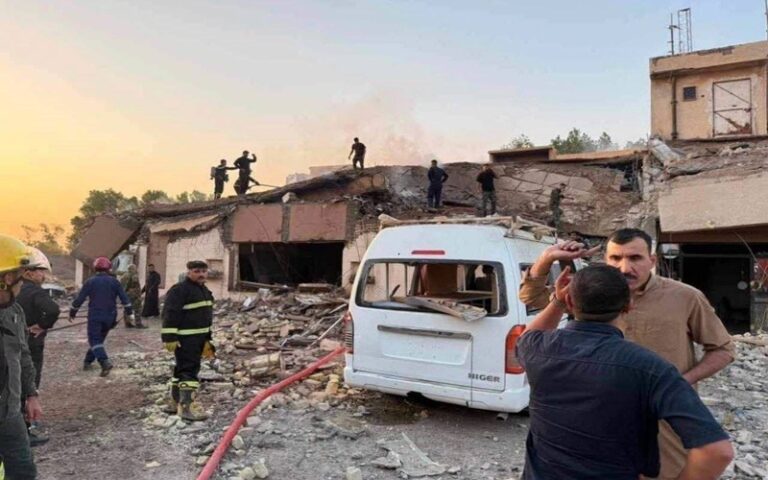
The U.S. military announced that U.S. and Saudi Arabian fighter jets carried out a joint operation early Wednesday, July 29, targeting positions of militias backed by the Iranian regime in Iraq. According to U.S. Central Command (CENTCOM), the strikes were conducted in response to more than 30 drone attacks launched over the previous 72 hours against U.S. forces and Saudi Arabia’s energy infrastructure.
CENTCOM said in a statement that the operation targeted terrorists aligned with Iran’s regime—groups that, according to the command, had been directed by the Islamic Revolutionary Guard Corps (IRGC) to attack U.S. forces and Saudi energy facilities.
— U.S. Central Command (@CENTCOM) July 29, 2026According to the statement, U.S. and Saudi aircraft carried out precision strikes against multiple logistics centers, weapons depots, and positions belonging to these groups in several areas of eastern Iraq. CENTCOM also emphasized that the recent attacks against U.S. forces had been unsuccessful. U.S. Central Command stated that Iran-aligned militias had attempted more than 600 attacks against American citizens and facilities between February and April 2026. The command warned that if the attacks continue, the IRGC and its proxy groups will face further military responses from the United States.
Reports of Casualties Among Popular Mobilization Forces
At the same time, the state-run Fars News Agency, citing Iraqi and “local sources,” reported that several bases of the Popular Mobilization Forces (PMF) in the provinces of Karbala, Nineveh, and Diyala were targeted in the U.S.-Saudi strikes. According to the report, the headquarters of Brigade 30 in the Nineveh Plains and the second headquarters of the Badr Organization in Diyala Province were among the targets.Migration from Southern Iran in the Shadow of the Iranian Regime’s WarmongeringFars also reported that seven members of PMF Brigade 30 were killed. It added that fighter jets were seen flying over Karbala, Babil, and Najaf, while several explosions were heard south of Baghdad. Meanwhile, Iraq’s official news agency reported that two members of the Popular Mobilization Forces were wounded in an airstrike on the organization’s command headquarters in Basra. The PMF also said in a statement that the attacks killed and injured several of its members and caused material damage to several buildings.
Saudi Arabia: We Are Not Seeking Escalation
Saudi Arabia’s Ministry of Defense announced that the kingdom’s armed forces, in coordination with U.S. Central Command, carried out targeted strikes against groups backed by the Iranian regime in Iraq. Riyadh holds these groups responsible for the recent drone attacks on Saudi oil facilities. The ministry stressed that Saudi Arabia is not seeking escalation but will respond to any aggression against its security and interests. The announcement came just hours after Riyadh reported intercepting and destroying several drones launched from Iraqi territory. According to Saudi officials, this was the second such drone attack in less than two days. Turki Al-Maliki, spokesperson for Saudi Arabia’s Ministry of Defense, also said on Tuesday that the intercepted drones had been launched by groups backed by the Iranian regime in Iraq, adding that Saudi Arabia reserves the right to respond at a time and place of its choosing.Iranian Regime Rejects the Allegations
The Iranian regime, however, denied any role in the attacks against Saudi targets. An unnamed Iranian military official told Iranian state television on Wednesday that attributing the attacks on U.S. and Saudi interests to Iran was “a major miscalculation.” Meanwhile, Iraqi Prime Minister Ali al-Zaidi ordered an investigation into the recent drone attacks, saying that Baghdad would not allow Iraqi territory to be used to launch attacks against neighboring countries. The Popular Mobilization Forces (PMF) are a coalition of predominantly Shiite militias that has been formally integrated into Iraq’s security forces and includes several groups closely aligned with the Iranian regime.Iranian Regime Executes Two More Protesters from the January Uprising
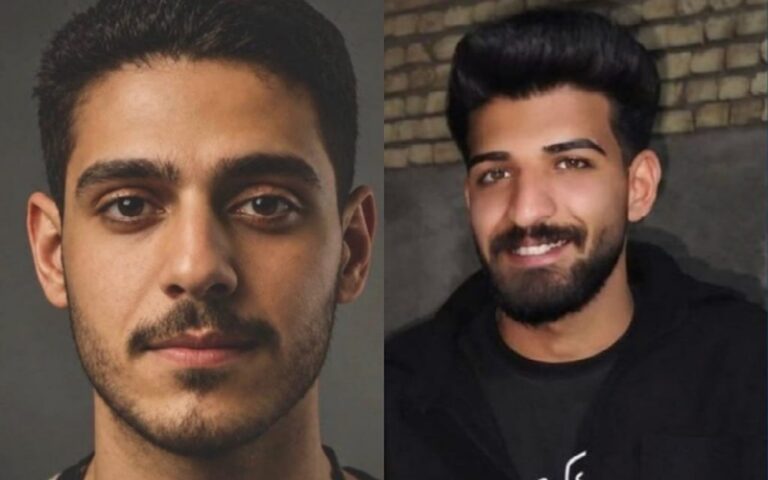
State-run media in Iran reported on Tuesday, July 28, that the Iranian regime had carried out the executions of Abolfazl Sepahi Badjani and Amirhossein Safari Hosseinabadi in connection with the January 2026 protests in Malek Shahr, a district of Isfahan.
With these executions, four of the 12 defendants in this case in Isfahan have now been executed.
News of the executions of these two additional defendants in the so-called Alikhani Square case in Isfahan was released as numerous messages and videos on social media showed overnight gatherings of people protesting the executions, coinciding with the dawn call to prayer.
The state-run Fars News Agency and Mehr News Agency published identical reports stating that the executions were carried out publicly in Alikhani Square.
Iranian Regime Executes Two Defendants in Isfahan ProtestsState-run media, including the Mizan News Agency, affiliated with Iran’s judiciary, identified the two men as “among those responsible for the killing of four Law Enforcement Command officers” in Isfahan’s “Alikhani Square” and claimed that during the January 8 protests they had “injured and set these officers on fire.” The case relates to the events of January 8 in the area around Ali Khani Square, where officials of the Iranian regime said that four members of the Basij paramilitary force and the Special Units police were killed. Following those deaths, 59 people were arrested in Isfahan, and a large criminal case was opened against them. Meanwhile, several citizen reports and videos posted on social media early Tuesday showed large numbers of people gathering in streets near the execution site to protest the executions, amid a heavy security presence and heightened tensions. Some of the videos show and capture protesters chanting “Shameless, shameless” while the dawn call to prayer was broadcast during the executions, as security forces rode motorcycles through the crowd. Reports have also circulated on social media of clashes between protesters and the Special Units police at the site, as well as internet disruptions across Isfahan. Radio Farda said it could not independently verify these reports. The executions were carried out early Tuesday, July 28, 2026, just hours after Mai Sato, the United Nations Special Rapporteur on the situation of human rights in Iran, announced that a group of UN experts had urged the Iranian regime to immediately revoke the death sentences of the remaining 10 young men charged in this case in Isfahan.
Earlier, the UN Independent International Fact-Finding Mission on Iran had also called on the Iranian judiciary to halt the executions of protesters arrested during the January demonstrations, including the defendants in this case. The 12 protesters arrested in Isfahan, who were in their late teens or early twenties at the time of their arrests, were sentenced to death in a closed-door mass trial. Before the two men executed on Tuesday morning, two others—Gol Mohammad Mohammadi and Erfan Esfandiari—were executed on July 19. According to experts, the defendants’ closed-door mass trial violated fair trial standards. They say the death sentences were based on forced confessions broadcast on state television, while the charges and individual criminal responsibility of each defendant were not clearly established.کارشناسان سازمان ملل احکام اعدام صادر شده برای ۱۲ مرد جوان به دلیل مشارکت در اعتراضات ژانویه ۲۰۲۶ را محکوم کرده و خواستار توقف فوری اعدامها شدند.
— Mai Sato (@drmaisato) July 27, 2026
کارشناسان اعلام کردند که محاکمه گروهی و غیرعلنی این متهمان با استانداردهای دادرسی عادلانه مغایرت دارد و نسبت به بازداشتهای…
