

Nine Months of Uncertainty for Four Political Prisoners in IranThe names of those arrested in May 2025, one month before the 12-day war, had already been submitted by the National Council of Resistance of Iran (NCRI) to the United Nations and human rights organizations. Hamed Validi, a 45-year-old civil engineer, and Nima Shahi, a 38-year-old technical worker from Karaj, were arrested on May 13 in Tehran along with their relatives and subjected to interrogation and torture. Any claim of their connection to Mossad is outright false and reflects the regime’s desperation and its severe need to fabricate such lies against its opposition. On May 27, the Iran Human Rights Society announced that more than 20 days after the simultaneous arrest of 15-year-old Elina Validi along with her parents, Hamed Validi and Fatemeh, the Validi family still had no information about the fate or whereabouts of the teenager. Elina’s mother, Fatemeh, is being held in inhumane conditions in quarantine at Fardis Prison in Karaj and is deprived of the basic rights of a prisoner, including phone calls, family visits, and access to financial and hygienic facilities. In this regard, the National Council of Resistance of Iran (NCRI) issued a statement, in which it called on “the High Commissioner, the Human Rights Council, the United Nations Special Rapporteur on Iran, the International Fact-Finding Mission, and other human rights bodies to take immediate action to save the lives of political prisoners Hamed Validi and Nima Shahi and to refer this case to the International Fact-Finding Mission.”
Iran’s Regime Sentences Political Prisoners to Death Under False Charges of Cooperation with Mossad
At the same time as the activation of United Nations sanctions, the Iranian regime’s judiciary used its repetitive trick of linking opposition members to Israel, sentencing two political prisoners to death and two others to a total of 26 years in prison.
The head of the judiciary in Alborz Province, without naming names, announced: “The preliminary ruling in the case of a four-member spy network linked to Mossad and the Monafeqin [the regime’s derogatory term for the MEK opposition] in Karaj has been issued, and the court sentenced two defendants to death and imprisonment, and two other defendants to prison… the total prison term handed down to the defendants exceeds 26 years.” (Mizan News Agency, September 27)
New Restrictions Imposed on the Cryptocurrency Market in Iran

At the same time as the Central Bank of Iran’s regime imposed widespread restrictions on the cryptocurrency market in response to the reactivation of the snapback mechanism (triggering of UN sanctions), Tasnim News Agency, affiliated with the Islamic Revolutionary Guard Corps (IRGC), warned about the possibility of Tether freezing Iranians’ assets. This report may have been published to exert psychological pressure on investors.
On Sunday, September 28, Tasnim wrote that Tether might “with intensified restrictions or stricter compliance with sanctioning regimes, put part of domestic investors’ capital at risk of being frozen.”
The agency added that Tether’s data shows that so far “thousands of accounts” belonging to Iranian users have been blocked.
All Engines of Iran’s Economic Growth Have Stopped WorkingIt does not appear that Tasnim’s report contained new information, as the issue of blocking cryptocurrency accounts suspected of being linked to Iran has been raised for years. On September 27, just hours before the official reinstatement of UN sanctions, the Central Bank of Iran’s regime announced a new directive restricting the purchase and holding of stablecoins such as Tether. Asghar Abolhasani, the deputy governor of the Central Bank, stated that the maximum annual purchase of stablecoins for each individual or legal entity is $5,000, and users will only be allowed to hold up to $10,000 worth of stablecoins in their balance. He warned those holding more than $10,000 worth of stablecoins that they must comply with the Central Bank’s ceiling within the next month. This measure is seen as an attempt to mitigate the effects of the return of international sanctions on Iran’s economy. This comes while regime officials in recent weeks have tried to downplay the impact of the activation of the snapback mechanism on developments in Iran. On July 20, the daily bulletin of the IRGC’s political bureau, predicting the activation of the snapback mechanism, called for “psychological preparation of society” to deal with the economic shock resulting from the return of sanctions. Part of that bulletin stated: “Oversight and transparency of digital exchanges and cryptocurrencies are essential. In the absence of regulations, this sector has become a gateway for capital flight and increased currency tensions.” In recent years, Iran’s regime security and military institutions have widely entered the cryptocurrency market. On June 18, during the hack of the “Nobitex” exchange, it was revealed that at least $90 million belonging to these institutions had been wiped out. According to reports, the attackers were able to distinguish assets belonging to the regime’s affiliated networks from those of ordinary customers.
Nine Months of Uncertainty for Four Political Prisoners in Iran
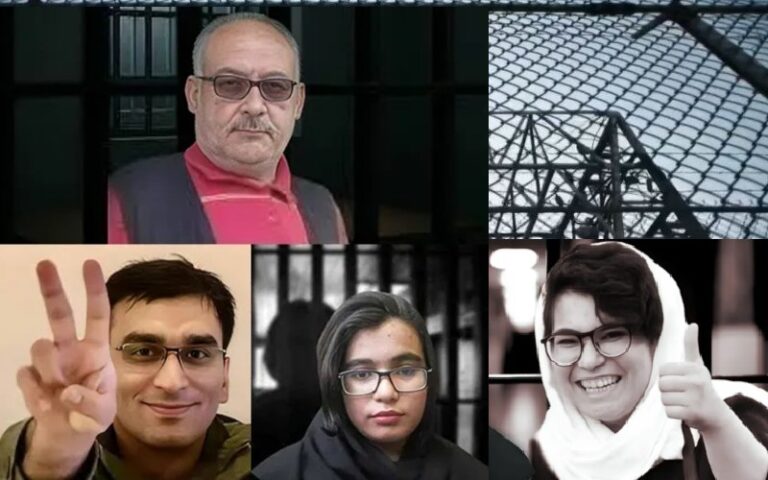
In late January 2025, Bijan Kazemi, Arghavan Fallahi, Amirhossein Akbari-Monfared, and Mohammad Ali Akbari-Monfared were each separately arrested, but a common scenario by Iran’s regime security apparatus linked them together: the killing of two senior judges of the Supreme Court, Mohammad Moghiseh and Ali Razini, who were reportedly shot in their offices at the Supreme Court building by a janitor on the morning of Saturday, January 18, 2025.
For over eight months, these citizens have remained in limbo without any evidence, documentation, or even confessions.
Recently, Bijan Kazemi’s hunger strike forced the authorities to transfer him from a safe house in Qom to Ward 7, Hall 1 of Evin Prison.
Maryam Akbari Monfared Faces Paralysis as Iranian Regime Blocks TreatmentBijan Kazemi, a 44-year-old citizen from Kuhdasht, had previously been arrested in his hometown in 2020 and sentenced by the Revolutionary Court to three and a half years in prison on stereotypical charges. He served two years of this sentence in Khorramabad Prison, one of Iran’s most deprived facilities, before completing the rest under electronic monitoring outside prison. On January 19, just one day after the killing of the notorious Supreme Court judges Moghiseh and Razini, Bijan was noisily arrested in Kuhdasht. Arghavan Fallahi, a 25-year-old woman, had previously been arrested along with her father and brother during the nationwide protests of 2022. She was arrested again in late January 2025. Arghavan spent more than four months in solitary confinement in Ward 241 of Evin Prison without any charges. Immediately after her arrest, her father, who has been imprisoned since 2022, was also placed in solitary confinement for renewed interrogations. This raised concerns about further fabricated cases against the father and daughter. Mohammad Ali Akbari-Monfared, father of Amirhossein and of well-known political prisoner Maryam Akbari-Monfared, is himself a former political prisoner from the 1980s. He and his family have repeatedly been harassed over the years. His daughter Maryam was arrested in 2009 on the charge of “enmity against God through membership in the People’s Mojahedin Organization of Iran (PMOI/MEK)” and sentenced to 15 years in prison. As her term neared completion, she was given an additional two years while still behind bars. Amirhossein, a 22-year-old young man, was arrested at his home in Karaj on January 19, 2025, following the killing of Razini and Moghiseh. A few days later, on January 21, his father Mohammad Ali was also arrested. Mohammad Ali, now 85 years old, has poor conditions in prison, and because he suffers from a leg disability, his son staged a hunger strike in protest at his father’s situation. According to the Iran Human Rights Society, on August 27, 2025, Amirhossein went on a hunger strike in Fashafuyeh Prison in protest of his father’s condition, as at that time his father had been transferred from prison to Shohada Tajrish Hospital. Arghavan Fallahi has been charged with assembly and collusion and propaganda against the regime. Her father remains in prison and under pressure. Authorities have denied Arghavan her psychiatric medication. She has become very thin, and prison officials have not allowed her mother to bring her any clothing, leaving her without proper clothes to wear. Regarding Bijan Kazemi, the judiciary of Iran’s regime has only two words: he will not be released. No reasons are given, nor are his family or lawyer provided with further explanations. About two months ago, his lawyer—who is not even allowed access to the case file—was told only that “further investigation is needed.” Ms. Khosravi, Bijan Kazemi’s mother, has previously written that neither Bijan himself, nor she as his mother, nor his lawyer are aware of the charges against him. This appears to be in violation of legal procedures and seems intended to give interrogators free rein for further fabricated scenarios.
UN Snapback Sanctions Imposed on Iran’s Regime 10 Years After JCPOA
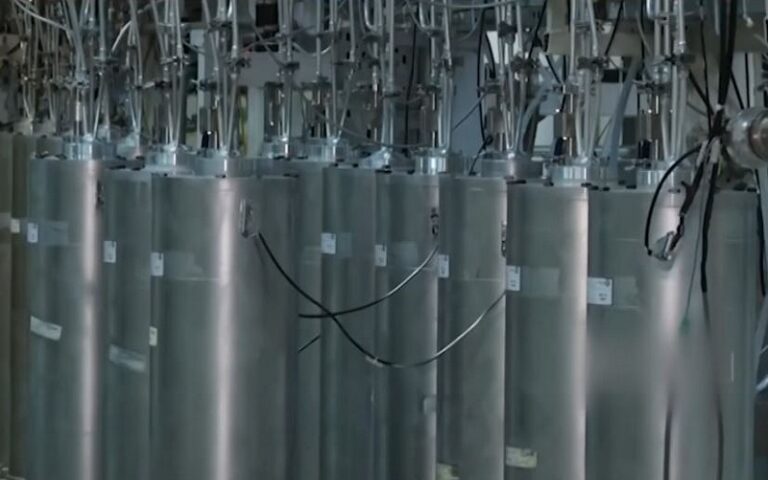
The United Nations sanctions that had been lifted 10 years ago with the signing of the nuclear deal known as the Joint Comprehensive Plan of Action (JCPOA) were reinstated at 3:30 a.m. Tehran time, on Sunday, September 28.
The JCPOA, signed in 2015, was intended to limit Iran’s regime’s nuclear activities in exchange for the lifting of some sanctions, and it was agreed upon between Tehran, the United States, China, Russia, and three European countries.
The “snapback” mechanism, which has now reinstated all lifted sanctions after 10 years, was part of this agreement.
In this regard Mrs. Maryam Rajavi, the president elect of the National Council of Resistance of Iran declared: “The six UNSC resolutions on the clerical regime’s nuclear program have been reinstated after a 10-year suspension. Appeasement was no longer an option. These resolutions are essential to prevent the religious dictatorship from acquiring the bomb and must be enforced firmly.”
The United Kingdom, France, and Germany, the European parties to the JCPOA, had previously said that Iran’s regime had violated the deal, which was signed to prevent Tehran from acquiring nuclear weapons. This claim was based on reports from the International Atomic Energy Agency (IAEA), which stated that Iran’s nuclear program had advanced beyond its civilian needs. On August 28, the UK, France, and Germany gave Iran’s regime a 30-day deadline to reach a clear agreement and prove compliance with the JCPOA to prevent the reactivation of the snapback. Despite the opportunity, Tehran took no effective steps to stop the return of sanctions. In a statement following the implementation of the snapback, the three European countries emphasized that this action “focuses on the rapid reinstatement of restrictions imposed by UN resolutions.” In their statement, the three European countries stressed that the original goal of negotiations with Iran in 2013 and 2015 was to prevent Tehran from “acquiring, developing, or producing nuclear weapons,” and that “given Iran’s repeated violations of these commitments,” they had reactivated the snapback mechanism. The foreign ministers of the UK, France, and Germany said they welcomed the reinstatement of UN resolutions through the snapback process and called on Iran and all countries to fully comply with these resolutions. The three European countries emphasized that these resolutions are not new but rather a set of sanctions and restrictive measures previously imposed by the UN Security Council over Iran’s nuclear proliferation activities. Due to Iran’s repeated violations, they were compelled to activate the snapback, making these resolutions enforceable again. In recent days, Iranian regime officials have tried to downplay the impact of the snapback on the country’s situation; nevertheless, the return of sanctions caused the U.S. dollar exchange rate to jump above 1,120,000 rials in Iran’s free market on Saturday. Masoud Pezeshkian, Iran’s regime president, said just hours before the sanctions returned that it was unacceptable for Iran to be “paralyzed.” On Saturday afternoon, after returning from the UN General Assembly meeting, he said, “We have great capabilities, and together we will find a way out of the problems.” Referring to his and the regime’s foreign minister Abbas Araghchi’s talks with European officials about the snapback, Pezeshkian said: “We reached apparent agreements with them, but after they talked with the U.S., they came up with various excuses.” He claimed that the U.S. had demanded Iran “hand over all of its enriched uranium” in exchange for a three-month delay in sanctions—a proposal Pezeshkian said was “unacceptable” for the regime. On Saturday night, Iran’s regime foreign minister Abbas Araghchi, in an interview with state-run IRIB, admitted that the return of sanctions “has damages and consequences,” but accused the three European parties to the JCPOA of trying to turn the snapback into “a monster” to force Iran “to pay ransom and grant concessions.” He also said that during negotiations to prevent the activation of this mechanism, all of Iran’s proposals were rejected by the other side. After the 12-day war with Israel, during which the United States also targeted three key nuclear facilities in Iran, the regime suspended its cooperation with the IAEA. Iran’s regime still holds stockpiles of uranium enriched up to 60%, but since the 12-day war, no accurate information has been released about their storage sites or status. The Iranian regime’s foreign ministry also announced that its ambassadors to France, the UK, and Germany had been recalled to Tehran for “consultations.”The six UNSC resolutions on the clerical regime’s nuclear program have been reinstated after a 10-year suspension. Appeasement was no longer an option. These resolutions are essential to prevent the religious dictatorship from acquiring the bomb and must be enforced firmly.… pic.twitter.com/bEppo38pYY
— Maryam Rajavi (@Maryam_Rajavi) September 27, 2025
Amnesty International: More Than One Thousand People Executed in Iran in 2025
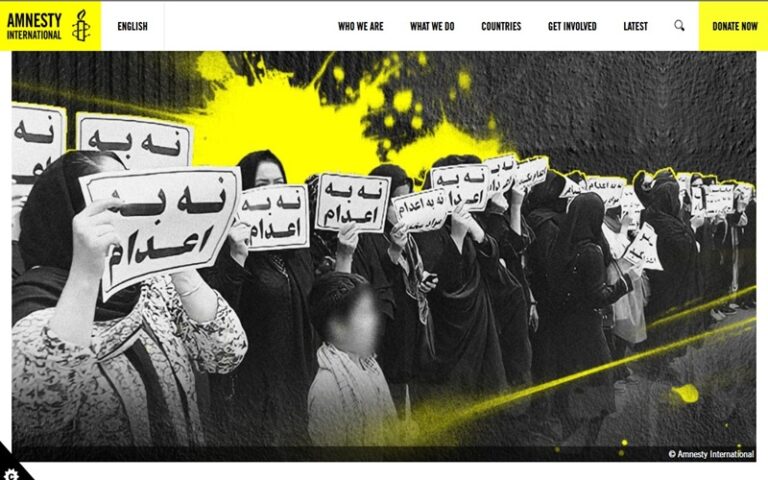
In a new report, Amnesty International announced that officials of the Iranian regime executed more than one thousand people in less than the first nine months of 2025. This figure represents the highest annual number of executions in the past fifteen years.
This international organization called for the “immediate halt of all executions, the annulment of death sentences, and the establishment of an official moratorium aimed at the complete abolition of the death penalty,” urging other governments to pressure Tehran to stop the scheduled executions.
The report emphasized that since the nationwide uprising in 2022, the authorities of Iran’s regime have increasingly used executions as a tool to suppress dissent and protests.
The Iran Human Rights organization had earlier reported that in the first nine months of the current year, it was able to confirm one thousand executions in the country.
More Than 1000 Executions in Iran Over Past Nine MonthsThese statistics show that the number of executions has reached the highest level in the past thirty years and is on the verge of setting a new record. Amnesty International further wrote in its report that this year, coinciding with Israeli military strikes against the Iranian regime and escalating regional tensions, executions under so-called “security charges” have intensified in Iran. The organization warned that victims of this trend include political dissidents, ethnic minorities—particularly Afghans, Baluch, and Kurds—protesters, and prisoners convicted of drug-related crimes. The report mentioned cases such as the execution of Babak Shahbazi in September of this year and accused the Revolutionary Courts of “holding unfair trials and issuing heavy sentences without respecting defendants’ rights.” Amnesty International also noted that at least two Kurdish women, Pakhshan Azizi and Verisheh Moradi, are on the verge of execution, while the number of Afghans executed in Iran has risen alarmingly over the past two years. Another part of the report highlighted the growing wave of drug-related executions, which violate international standards. The Iran Human Rights organization also stated in its recent report that 50% of those executed in the first nine months of this year had been sentenced to death for “drug-related charges” and 43% for “premeditated murder.” Amnesty International further pointed out that after the recent tensions between the Iranian regime and Israel, officials such as Gholamhossein Mohseni Ejei, the regime’s judiciary chief, have called for speeding up trials and carrying out executions for those accused of collaborating with “hostile states.” Meanwhile, the parliament has also passed a bill to expand the scope of the death penalty. Amnesty International concluded by stressing that the death penalty in all circumstances is a blatant violation of the right to life and constitutes a cruel and inhuman punishment, urging the international community to take decisive action to stop this trend immediately. In recent months, the rise in executions and the issuance and confirmation of death sentences for political prisoners in Iran have sparked a wave of protests inside and outside the country. At present, in addition to ordinary prisoners who are hanged daily in Iran’s prisons, around 70 inmates across the country face the risk of confirmation or execution of their death sentences on political charges, while more than 100 others are at risk of receiving death sentences on similar charges.
Iran’s Carpets Industry on the Decline as Economy Continues to Spiral Down
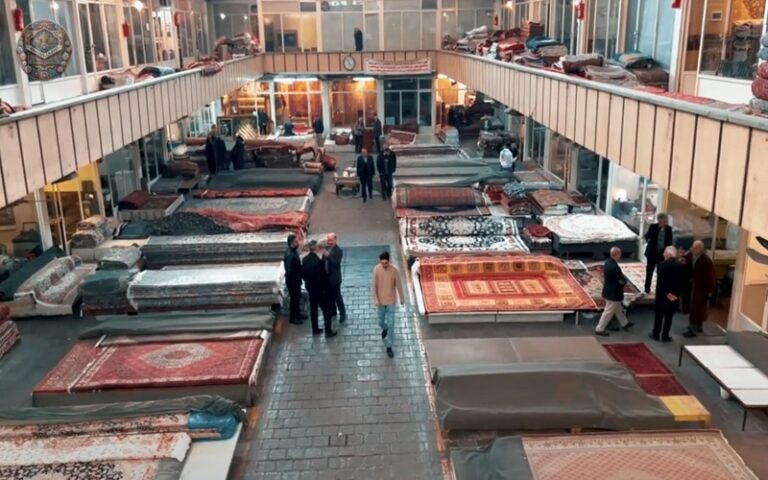
Handwoven Persian carpets, long regarded as one of the most important cultural and artistic symbols of Iran and once holding a prominent position in global markets, are now facing an unprecedented crisis.
Exports that brought Iran more than $2 billion in the 1990s have now dropped to around $40 million; a figure that, according to Agence France-Presse (AFP), represents a decline of more than 95%. Many experts see this not only as a direct consequence of international sanctions but also as the result of a combination of economic and managerial problems inside Iran.
Iran’s Carpet Exports Plummet by Over Tenfold
Market collapse after sanctions
The return of U.S. sanctions in 2018 marked a turning point in the decline of Iran’s carpet industry. These sanctions cut off access to Iran’s largest carpet market—the United States—which, according to government officials, accounted for more than 70% of handwoven carpet exports. Official statistics from Iran’s customs indicate that carpet exports amounted to only $41.7 million in the last Persian calendar year. These exports went to 55 countries, with Germany, the United Arab Emirates, Japan, and China topping the list of buyers. However, these numbers are a far cry from the golden days of carpet exports, when the industry, alongside oil, was considered one of Iran’s main pillars of export revenue.Competitors filled Iran’s gap
The decline of Iran’s carpet industry created an opportunity for competitors such as India, China, Nepal, and Pakistan to expand their share of the global market. By producing cheaper carpets, these countries captured a large portion of Iran’s traditional markets. Some of these products have even entered Iran’s domestic market, leading Iranian carpet sellers to complain about falling sales at home.Tourism and shifting tastes
According to AFP, the decline in foreign tourism has also dealt a heavy blow to the industry. For decades, Western tourists visiting Iran would buy handwoven carpets as souvenirs or gifts. But with travel advisories and the continued tense relations between Iran’s regime and the world, the number of tourists has dropped sharply.Structural and economic problems
Experts argue that the reasons for the decline go beyond sanctions. Faulty currency policies, restrictions on repatriating export earnings, high production costs, and lack of effective government support have all pushed this historic industry to the brink of collapse. The fall of the rial against the dollar has also endangered the domestic market for handwoven carpets. Iranian families, who once considered carpets an inseparable part of their homes, are now turning to machine-made rugs.Hope for revival or the end of an era?
Government officials still speak of the possibility of reviving the industry. Mohammad Atabak, the Iranian regime’s minister of commerce, said this past summer: “We have lost important international markets, but we hope to revive this industry by reforming trade and currency regulations.” He also pointed to new agreements aimed at facilitating carpet exports. However, many carpet industry professionals believe the only path to survival is adapting to the needs and tastes of today’s markets.A heritage at risk of being forgotten
The Persian carpet, whose origins date back to ancient times, is today more at risk than ever before. With shrinking domestic and international demand and low-cost competitors dominating the global market, there is a real danger that handwoven carpets will be reduced to the status of a historical relic—a priceless heritage that was once a source of national pride but now hangs by a thread from complete extinction.Iran: Political Prisoner Somayeh Rashidi Dies After Denial of Medical Care, Prisoners Commemorate Her Life
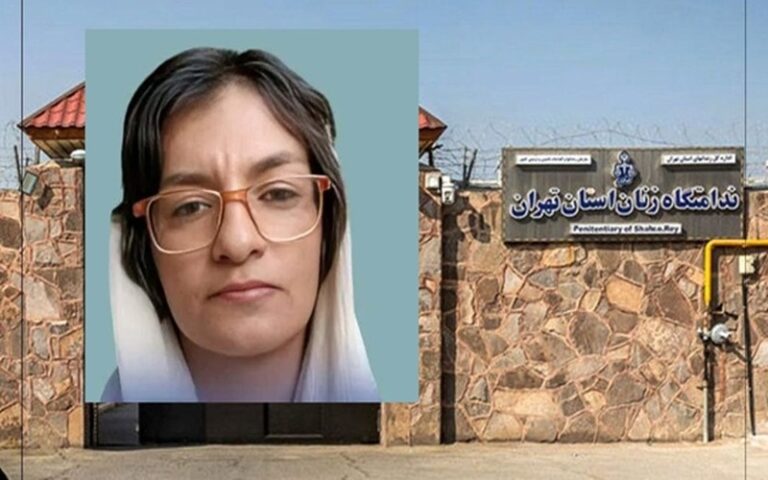
On Thursday, September 25, 2025, political prisoner Somayeh Rashidi, a 42-year-old garment worker and activist, died in Qarchak Prison after Iranian authorities systematically denied her medical treatment. Her death has sparked outrage among fellow prisoners and human rights defenders, who say she is the latest victim of the regime’s deliberate policy of medical neglect used as a weapon against dissent.
A number of prisoners, chanting slogans such as “Death to the dictator, death to Khamenei, damn Khomeini,” sang and cried out: “Somayeh is ill, yet she too has become a martyr.” Audio recordings from ceremonies in Qarchak and Evin prisons testify to the defiance of those who gathered to commemorate her.
Critical Condition of Political Prisoner Somayeh Rashidi; On the Verge of Death in Qarchak PrisonArrest and Brutality Somayeh Rashidi was arrested on April 28, 2025, after writing anti-government slogans in a poor neighborhood of southern Tehran. Relatives confirmed she was beaten savagely during her arrest, with officers slamming her head against a wall. This violence set the stage for her slow death inside prison walls. Mizan, the regime’s judiciary news agency, reported that she had previously been arrested in 2022 and 2023 for alleged links to the People’s Mojahedin Organization of Iran (PMOI). After her conditional release, she was again accused of reestablishing contact with the PMOI before being detained in April 2025. According to political prisoners’ testimony, she was also detained on May 2, 2025, after writing the slogan “The worker is awake and despises both mullahs and Shah.” Following 24 hours in an undisclosed detention center and psychological torture, she was transferred to the women’s ward of Evin Prison. Health Condition Ignored Somayeh had long suffered from epilepsy and was under medication for it. Inside Qarchak Prison, her condition worsened due to poor conditions and denial of medical care. Fellow inmates reported that she suffered repeated seizures and severe headaches, yet each time she sought help, prison staff accused her of “feigning illness” and sent her back to her ward. The prison’s so-called doctor, Mirza Baqi, dismissed her symptoms as malingering and prescribed inappropriate neurological drugs unrelated to her condition. When she was finally transferred to a hospital on September 16 after a severe seizure, doctors found her in critical condition, with no chance of recovery. Despite public warnings by the NCRI Women’s Committee on September 21 that her life was in imminent danger, authorities did nothing. Instead, regime media spread disinformation, claiming she was an addict or that her family had refused to post bail—allegations her cellmates say were lies meant to obscure the state’s responsibility. State Propaganda and Denial Following her death, the regime’s Basij-run Student News Agency (SNN) released a video of Somayeh chanting “Death to Khamenei, hail to Maryam Rajavi” in an apparent attempt to depict her as a collaborator with foreign enemies. The outlet further claimed she was using “illegal drugs,” suggesting her death was due to addiction. Political prisoners strongly rejected this narrative, insisting: “Somayeh and others like her are not condemned to death because of addiction, but because of their fighting spirit and refusal to submit, which makes them enemies in the eyes of these executioners.” They added that the authorities’ smear campaign was designed to cover up the beatings, denial of medical treatment, and torture that ultimately killed her. A Broader Pattern Human rights advocates emphasize that Somayeh’s case is not an isolated tragedy but part of a systematic policy. Just days earlier, two other women—Jamileh Azizi on September 19 in Qarchak and Maryam Shahraki on September 12 in Fardis Prison—died after their medical emergencies were dismissed. Somayeh’s death recalls decades of repression in Iran’s prisons, including the massacre of 30,000 political prisoners in 1988. Fellow inmates described her as a witness to “the killing of many innocent women and girls” in Qarchak and beyond. “Somayeh was neither the first nor will she be the last to be imprisoned and massacred in the prisons of this homeland,” they wrote. Calls for Accountability The National Council of Resistance of Iran (NCRI) condemned her death as a state-sanctioned crime. In a statement, the group urged the United Nations Special Rapporteur on Iran, the Human Rights Council, and the Special Rapporteur on Violence Against Women to investigate and take “urgent action to save the lives of sick prisoners, especially women, in the Qarchak torture center.” The NCRI stressed that the responsibility lies squarely with Supreme Leader Ali Khamenei and his apparatus. “The blood of Somayeh Rashidi is on the hands of Ali Khamenei and the entire regime. They are directly responsible for this heinous crime.” Legacy For many Iranians, Somayeh’s story represents not only an individual tragedy but also the broader struggle for freedom and dignity under an oppressive regime. Her death has become a rallying cry within Iran’s prisons and beyond. The prisoners’ commemoration, their chants of defiance, and their testimony underline that her fight lives on in those who continue to resist.
More Than 1000 Executions in Iran Over Past Nine Months
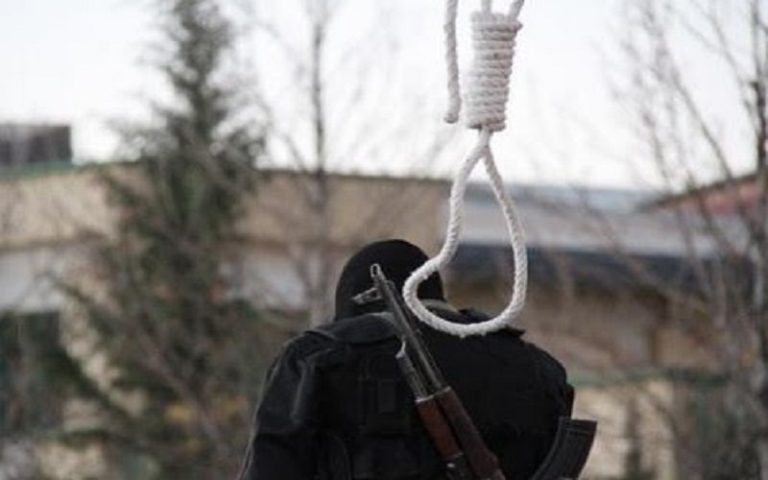
Between August 23 and September 23, Iran’s regime judiciary executed at least 178 people, bringing the total to at least 1,000 executions in the first nine months of 2025. This figure shows that the number of executions has reached the highest level in the past 30 years and is on the verge of setting a new record.
On Tuesday, September 23, Iran Human Rights Organization reported that at least 64 executions took place just in the past week, confirming that from January 1, 2025, until today, it has been able to verify 1,000 executions in the country.
The human rights organization estimated the average number of executions per day during this period at nine, noting that this is a minimum figure, and due to reporting limitations from Iran, the actual number is likely higher.
Among those executed, 50% were convicted on drug-related charges, 43% for “premeditated murder,” 3% for “enmity against God and corruption on earth,” 3% for “rape,” and 1% for “espionage.”
Furthermore, only 11% of all executions were reported by Iranian media, while the rest were carried out secretly without public announcement.
Iran’s Regime Executes Political Prisoners Mehdi Hassani and Behrouz Ehsani
242% increase in executions compared to September 2024
In other news, the human rights website HRANA, in its latest monthly report on the human rights situation in Iran, wrote that at least 178 people were executed in prisons across the country between August 23 and September 23 of this year. In its September 23 report, HRANA stated that over the past month it had recorded at least eight new death sentences and four confirmations of execution sentences for prisoners in Iran. These statistics show that over the past month, Iran’s regime executed on average six people per day—one person every four hours. The figures reveal that the number of executions increased by 126 cases, or 242%, compared to the same period last year. Arbitrary executions without fair trials constitute crimes against humanity, and the execution crisis in Iran must be placed at the top of the global community’s agenda in dealing with Iran’s regime. No dialogue between countries committed to human rights principles and Iran’s regime is acceptable without addressing the execution crisis in Iran.Continuation of protests against execution sentences
These developments come as the “No to Executions Tuesdays” campaign, in its 87th weekly statement on September 23, addressed the freedom-loving people of Iran and all human rights supporters, declaring that silence in the face of such violent and inhumane policies is unacceptable.The 87th Week Of ‘No To Execution Tuesdays’ Campaign In 52 PrisonsThe campaign described life as a fundamental human right and executions as unjustifiable violence against this right, declaring: “Our voice must be louder than any repression and injustice. Every week, every Tuesday, we rise in memory of the victims of execution, for justice and defense of life.” Prisoners involved in the ” No to Executions Tuesdays” campaign began a hunger strike on January 29, 2024, demanding a halt to the issuance and implementation of execution sentences. By its 87th week, inmates in 52 prisons across Iran were on hunger strike. In recent months, this campaign has become one of the key protest movements inside Iran’s prisons, with weekly hunger strikes and sit-ins by inmates keeping alive the voice of opposition to execution sentences and unjust judicial processes.
NCRI Supporters Rally In New York For Second Day To Protest Pezeshkian’s Presence At UN General Assembly
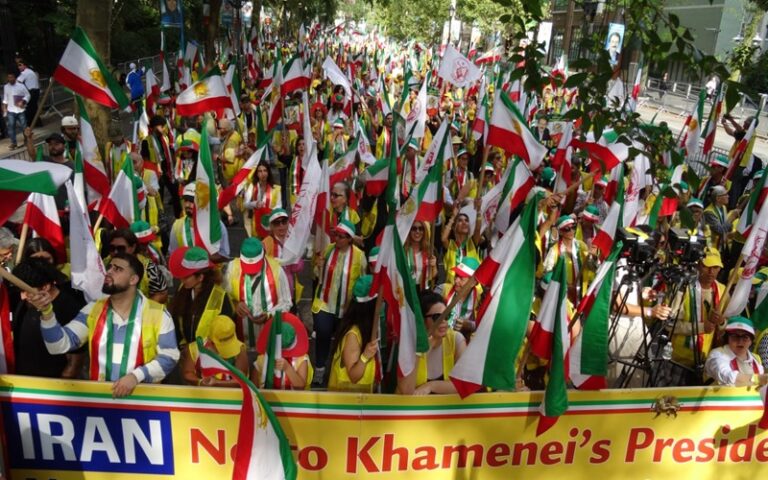
Thousands of Iranian Americans and NCRI supporters gathered outside the UN headquarters in New York on September 24, 2025, denouncing regime president Masoud Pezeshkian’s appearance at the General Assembly and affirming support for Maryam Rajavi and the NCRI. The crowd’s central slogan rang out: “No to the Shah, no to the mullahs—yes to a democratic republic.”
Maryam Rajavi addressed the rally in an audio message, hailing participants as the “true voice of the Iranian people before the United Nations.” She said the protests in New York mirrored those in Tehran, Mashhad, Ahvaz, Tabriz, Zahedan, and even inside prisons. “The message is very simple and clear: Overthrow and democratic change—a democratic republic, with freedom and democratic rights,” she declared. Rajavi highlighted 1,817 executions in just 14 months, calling the regime guilty of crimes against humanity. She urged an end to appeasement, insisting: “The seat of the Iranian people at the United Nations must not be given to a regime of executions and massacres.” Stressing Tehran would never abandon nuclear ambitions, she credited the NCRI’s 133 revelations with preventing a bomb and closed with: “We want neither a mullah nor a Shah. The era of all forms of dictatorship, whether religious or monarchical, is over. Our message for Iran’s future is simple: the sovereignty of the people—the people’s republic.”
Former U.S. Attorney General Judge Michael Mukasey described the regime as weaker than ever: “I don’t think it’s an overstatement to say that conditions are more favorable now for the collapse of the regime than they have been in decades.” He dismissed Pezeshkian as “simply a mouthpiece for the mullahs” and urged preparation for accountability: “We should be compiling testimony and documentation of what they did — the massacres, the phony trials, the executions — so that the evidence is at hand.” Rejecting claims for a return to monarchy in Iran, he said only Rajavi’s Ten-Point Plan offered a credible democratic vision. Soona Samsami, NCRI’s U.S. Representative, told the rally: “We are here for one reason: to reject the president of a regime that massacres prisoners, suppresses women and youth, and races for nuclear weapons. But this is also a message of hope because there is an alternative. There is an organized resistance and a leader with a vision: Mrs. Maryam Rajavi.” Former Congressman Judge Ted Poe echoed that message, framing freedom as “a God-given right, not a gift from dictators.” Quoting America’s Declaration of Independence, he added: “Whenever any government becomes destructive to these ends, it is the right of the people to alter or abolish that government. That sounds like something y’all would say.” He praised the Resistance’s roots in opposing dictatorship: “It didn’t start with the mullahs. It started with removing another dictator, the Shah.” Poe warned against monarchy’s return: “You gave your lives to get rid of a dictator because you wanted to be free. Now some are talking about replacing that dictator with one of his family members. That is not a good idea.” Highlighting women and youth, he said: “So many young women have given their lives just for what you’re standing here for today. Woe be to the mullahs — they do not know what they’re dealing with.”2nd DAY👏👏 Thousands of Iranian Americans and their supporters getting ready for another HUGE RALLY to say (LISTEN)⬇️ yourself 😤#2025FreeIranNYRally #OurChoiceMaryamRajavi @ABC7NY @NBCNewYork @NY1 @abc @GettyImages @AP_Images Watch👆🏻 pic.twitter.com/UvD4U7a81Q
— OIAC: Organization of Iranian American Communities (@OrgIAC) September 24, 2025
Former U.S. Ambassador to Morocco Marc Ginsberg reflected on decades of support: “I have stood against the mullahs, inspired by the democratic ideals of the people’s resistance and Madam Maryam Rajavi, who I respect and admire so much as a friend and as a leader.” He praised Resistance Units inside Iran: “Thanks to the Resistance Units of Iran who have sacrificed under Maryam Rajavi, your friends and your family, that axis of resistance is no longer.” On monarchist claims, he said Iranians would not “turn back the clock to the days of kings doling out little bits and pieces of democracy while they rule from the throne.” Ginsberg credited the MEK’s intelligence for blocking Tehran’s nuclear weapons and described Ashraf 3 as “not just a place, it is an ideal. It is an aspiration for freedom and justice.” He warned that the regime fears Rajavi as “an iron lady whose network inside Iran has chipped away piece by piece at the edifice of this regime.” Young Iranian Americans also voiced personal connections. Maryam Hosseini, said: “Even in the darkest prisons, they cannot extinguish the light of freedom. No to the Shah. No to the mullahs. Yes to a democratic republic.” Emma Vali Beigi, relative to a political prisoner executed during the 1988 massacre, declared: “The Shah’s regime was also a repressive force. We cannot afford to choose between one dictatorship and another. Iran deserves better.” She recalled nine uprisings since 2018 where protesters shouted: “‘Down with the dictator! Down with the oppressor! Be it the Shah or the mullahs!’” Mani Mansourpour, holding a photo of his uncle executed in 1988, said Pezeshkian represents “Khamenei and all the crimes associated with him for over four decades,” urging UN action against executions and in favor of the Iranian people’s right to overthrow the regime. Hadi Shakibanejad condemned normalization of tyranny: “Our beloved Iran is under occupation by a murderous regime that calls itself the Islamic Republic. But this regime is neither Islamic nor a Republic.” He ended with the rally’s chant: “No to the Shah, no to the mullahs! Our choice, Maryam Rajavi.”Message to the New York Rally
— Maryam Rajavi (@Maryam_Rajavi) September 24, 2025
You are the voice of the Iranian people, not the president of the Supreme Leader!
So, we have every right to ask: What is the representative of such an anti-human regime doing here?#2025FreeIranNYRally pic.twitter.com/LZCrfmxPgx
Two British Tourists Arrested In Iran to Stand Trial on Charges of Espionage
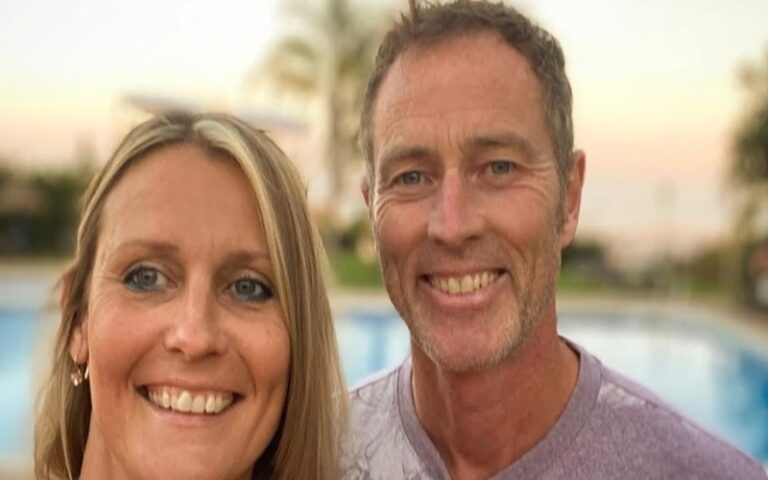
Lindsay and Craig Foreman, a British couple who were arrested in Iran nearly nine months ago on charges of “espionage,” are scheduled to be tried at Tehran’s Revolutionary Court on Saturday, September 27, 2025. They are being held in Evin Prison and Qarchak Prison in Varamin.
The British couple are expected to appear in court for their final hearing while their family remains “completely in the dark” about the upcoming session.
Joe Bennet, the couple’s son, said they are living in horrific conditions and facing repeated human rights violations. He called on the British government to take action.
This news comes about a month after the two British citizens were suddenly transferred to a court in Tehran, an event that their relatives said they had no prior knowledge of, and to this day no details have been provided to them.
Iranian Regime Confirms Arrest of French-German Tourist Lennart MonterlosSky News reported on August 29, 2025, that the couple appeared in court in Tehran on August 27, accompanied by a state-appointed lawyer they had only recently met. At that time, their son expressed deep concern about the judicial process. It is reported that they were pressured and tortured by security agents to extract forced confessions, including being held in solitary confinement for long periods and subjected to sleep deprivation. Lindsay and Craig Foreman, both 52 years old, had previously lived in East Sussex, England, but moved in 2019 to Andalusia in southern Spain. Lindsay worked as a life coach, and Craig was a carpenter. During their travels to different countries, they carried out a research project in which they asked people about the meaning of a “good life” and documented diverse experiences and cultures. The couple entered Iran from Armenia as part of a world motorcycle trip. After staying in the cities of Tabriz, Tehran, and Isfahan, they planned to head to Kerman, but on January 3, 2025, they were arrested on charges of “espionage.” The Foreman family are not the only Europeans imprisoned in Iran. European officials and human rights activists consider the Iranian regime’s arrests of Western citizens as “state hostage-taking.” They believe that the Iranian regime uses these individuals as leverage to pressure the West in order to gain concessions.
