

Iran’s Subsidence Five Times the Global AverageThis official from the Ministry of Roads and Urban Development of Iran’s regime had previously reported that Iran ranks third in the world in terms of the extent of land subsidence. On August 30, Mehdi Zare, a professor at the Seismology Research Institute, warned that the draining of groundwater, in addition to causing land subsidence, could also lead to “changes in stress on active faults.”
Evacuation of 40 Schools And A Residential Complex in Northern Isfahan Due to Land Subsidence
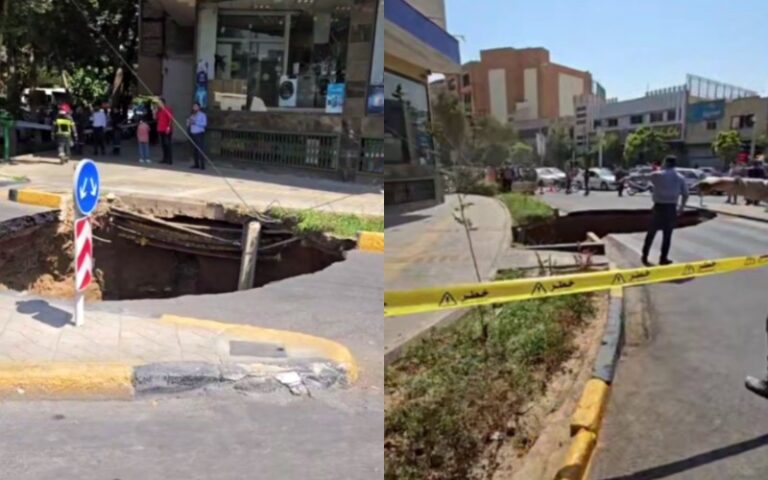
The head of the risk division at the Road, Housing and Urban Development Research Center announced that with the expansion of land subsidence, a residential complex and 40 schools in northern Isfahan have been evacuated.
On Thursday, September 11, Ali Beitollahi, in an interview with the state-run ILNA news agency, described Isfahan as “the most dangerous city” in terms of land subsidence and said that, similar to Tehran, Mashhad, and other cities in Iran, excessive extraction of groundwater is the main cause of this problem.
Beitollahi added: “Isfahan has faced an aggravating factor, which is the permanent cutoff of water flow in the Zayandeh Rud river… From the mid-2010s, with worsening drought, the river began to dry up temporarily every few months, and by 2018 and 2019 it became a permanent cutoff. When water is not flowing on the surface, it does not infiltrate underground, and aquifers are not recharged.”
EU, US Warn Iranian Regime: Resume IAEA Cooperation Now
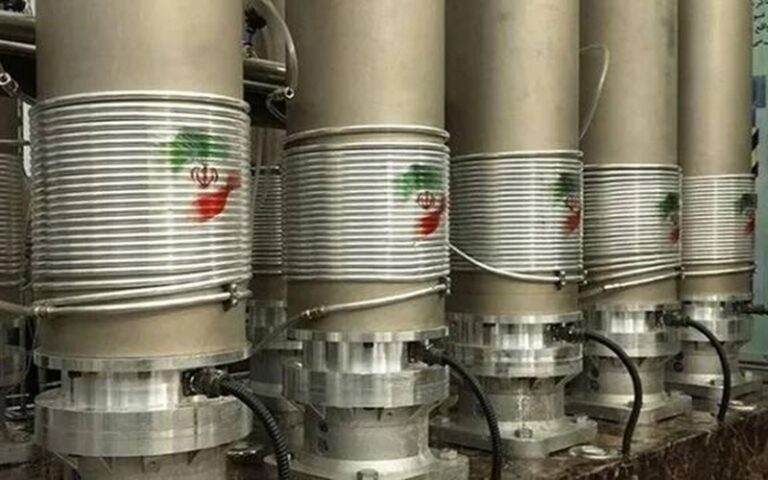
This week, the IAEA Board of Governors’ meeting in Vienna became the stage for serious warnings from Europe and the U.S. about the state of Iran’s nuclear program.
In a statement, the European Union stressed that Iran must immediately resume cooperation with the IAEA, declaring that Tehran’s withdrawal from its commitments under the 2015 nuclear deal (JCPOA) and its halt of safeguards cooperation have “seriously undermined” the agency’s ability to assess the nature of Iran’s nuclear program.
The EU representative, referring to the initiation of the “snapback mechanism” at the UN Security Council, said that a critical moment has arrived, and Tehran must take immediate and concrete steps to show it is seeking a diplomatic solution.
Europe also welcomed the recent agreement between Iran and the IAEA to resume inspections, reminding that its immediate and full implementation is “non-negotiable.”
NCRI-US Reveals Iran’s Secret Nuclear Weapon Program – The Kavir PlanAt the same time, Howard Solomon, the U.S. representative to the IAEA, called immediate action by Iran’s regime “vital and necessary” and warned that if non-cooperation continues, the Board of Governors must be ready to take tougher measures. He described Iran’s suspension of its nuclear commitments as “unacceptable and deeply concerning,” emphasizing that Washington is ready to negotiate in good faith, but it is Tehran that refuses to engage. The three European countries—Britain, France, and Germany—also issued a joint statement declaring that future promises are not enough and that Iran must show evidence of diplomatic readiness today. They warned that the IAEA’s oversight of Iran’s nuclear program has “almost reached zero” and that thousands of kilograms of enriched uranium remain unverified. These countries also pointed to recent reports about the construction of new enrichment facilities in Isfahan, which, due to Tehran’s lack of cooperation, have not even been open to inspection. According to them, Iran is the only country without nuclear weapons that has enriched uranium beyond JCPOA limits and has provided no credible civilian justification for it. In contrast, Russia criticized Europe and the U.S. for pressuring Iran. Russia’s mission in Vienna described the stance of the three European countries as “stubbornness” and said they had failed to resolve issues related to the JCPOA. Mikhail Ulyanov, Russia’s representative, suggested that the original JCPOA parties hold urgent consultations to prevent a new crisis. In conclusion, the EU and the U.S. stressed that diplomacy will only be meaningful if Iran fully resumes cooperation with the IAEA. Otherwise, triggering the snapback mechanism will automatically reinstate UN Security Council sanctions against Iran’s regime.
Ministry of Intelligence Bars Baha’i Citizens in Iran From Entering Universities

At the same time as nationwide entrance exam candidates logged into the website of the National Organization for Educational Testing to view their scores and select their majors, hundreds of Baha’i students encountered a “disqualification” message and were prevented from choosing their fields of study. According to officials, this decision was enforced by order of the Ministry of Intelligence.
On Wednesday, September 10, Amirkabir Newsletter reported that officials of the National Organization for Educational Testing, in response to protests by Baha’i citizens, denied responsibility and said the decision had been made by the Ministry of Intelligence and communicated to them.
This professional association described the Ministry of Intelligence as the body that considers Baha’i education a “threat to national security.”
Iran desecrating Baha’i cemeteryOfficials of the testing organization said that, as in the past, the Ministry of Intelligence believes Baha’i access to universities endangers national security. The structural exclusion of Baha’is from higher education has persisted since the clerical regime came to power. A 2024 Human Rights Watch report labeled this repression a “crime against humanity through persecution and harassment” and detailed systematic prevention of university entry, expulsions of Baha’i students, and administrative discrimination. UN human rights rapporteurs on Iran have repeatedly condemned the Iranian regime’s persecution of Baha’is, especially its denial of education to Baha’i students, calling these actions a clear example of Tehran’s disregard for international human rights treaties. The state-run Amirkabir Newsletter added that this deprivation has been imposed despite Article 30 of the constitution, which obligates the government to provide free education until the end of high school and to expand free higher education for everyone. However, it wrote that for Baha’i citizens this guarantee has been “reduced to nothing more than words on paper.” The association added that while Baha’is pay taxes like other citizens, they are deprived of fundamental rights such as education, employment in many professions, and even the right to bury their dead in public cemeteries. The Amirkabir Newsletter concluded by stressing that depriving Baha’is of education is not an “exception” or an isolated error but rather part of the Iranian regime’s “structural policy of discrimination” against this community. Since 2006, Baha’is in Iran have faced a recurring scheme after the release of entrance exam results: labels such as “incomplete file” or “lack of general qualifications” have been used as tools to block them from continuing higher education. The Baha’is, the largest non-Muslim religious minority in Iran, have faced systematic repression since the 1979 revolution. Over the past year, pressure from security and judicial institutions on them has intensified. According to unofficial sources, Iran’s Baha’i population is estimated at over 300,000. However, the Iranian regime’s constitution only recognizes Islam, Christianity, Judaism, and Zoroastrianism as official religions.
45 days of Hunger strike by 4,000 Aluminum workers in Arak
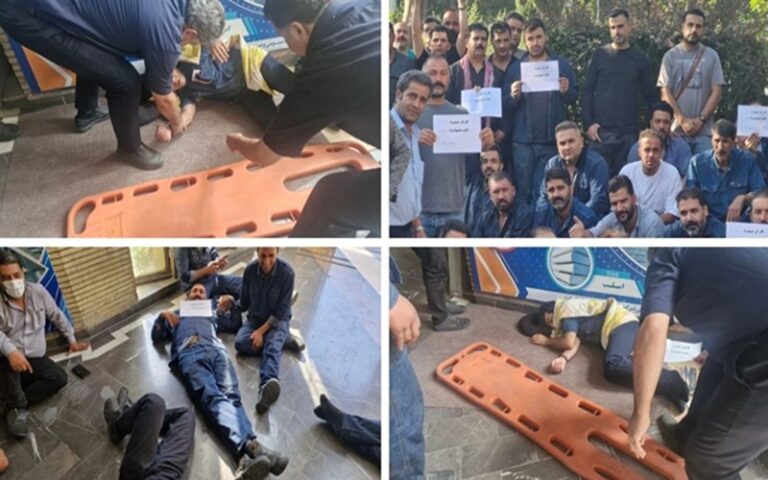
Forty-five days after the start of a hunger strike by about 4,000 workers of Arak Aluminum Company (IRALCO), they continue their protest against what they call “gross violations of human rights.” Since September 9, some workers have escalated to a dry hunger strike, refusing even water.
Workers who have joined the dry hunger strike and refused water began experiencing health complications on the morning of Wednesday, September 10, with several transferred to hospitals.
Information circulating on social media shows that in addition to their hunger strike, Arak Aluminum workers have staged sit-ins and gatherings inside factory grounds, chanting slogans demanding the resignation of company officials and attention to their other demands.
Protest Gathering of Retirees, Workers, Students, and Border Residents in the StreetsPublished images show the protesting workers holding placards with slogans such as “Workers will die but will not accept humiliation,” underscoring their determination to persist until their demands are met. Videos received show that on September 9, these workers also stopped work and gathered in the company yard, citing “management’s disregard for their demands.” The workers launched their hunger strike in protest against “gross violations of human rights” and the “destruction of the company,” but company management and local officials have not responded to their legitimate legal demands. The workers declared: “The shares of this vast industrial complex, built with the effort and sweat of workers and the nation’s capital, must be taken from the hands of special groups who are destroying the company and placed under collective and transparent public ownership.” The continuation of the hunger strike by Arak Aluminum workers poses a serious threat to their lives and health, and in the absence of any response from officials, concerns are growing about the risk of a human catastrophe. According to the 2024 annual report by HRANA (Human Rights Activists News Agency), at least 2,255 protest gatherings, 1,377 labor strikes, and 70 professional strikes were recorded in Iran. These figures show that labor protests are nationwide in scope; however, the situation of Arak Aluminum workers has become urgent due to their dry hunger strike and reports of hospitalizations, and without swift action, the risk of an escalating crisis is grave.
VPN And Proxy Services Have Become a $500 Million Market in Iran

A board member of Iran’s Virtual Business Association announced that the annual turnover of Iran’s VPN and proxy market is around $500 million, which is one of the reasons internet censorship remains in place in the country.
On Monday, September 8, Pashootan Pourpezeshk told the state-run website Eghtesad120 that estimates suggest the VPN market in Iran generates between 30 to 50 trillion tomans (approximately $300–500 million) annually.
He explained that given the volume of Instagram-based commerce, these figures are not unrealistic, adding that such economic dimensions are one of the main reasons why numerous obstacles exist against lifting internet censorship in Iran.
Iran Ranks 97th Out of 100 Countries in Internet QualityOn June 3, the state-run daily Shargh reported, citing unofficial estimates and independent research centers, that the VPN and proxy market in Iran is worth between 30 to 60 trillion tomans ($300–600 million) annually. The report emphasized that these numbers have sharply increased in the years following the widespread blocking of platforms such as Instagram, WhatsApp, Telegram, and YouTube.
Tax collection from Instagram bloggers despite the ban
In another part of his interview with Eghtesad120, Pourpezeshk said that since September 2022, censorship in Iran has intensified and access for many businesses has become restricted. According to him, more than 700,000 online shops are active on Instagram in Iran, and the market value of goods and services traded on the platform is estimated at 75 to 85 trillion tomans (approximately $750–850 million) annually. The board member highlighted contradictions in Iran’s tax policies, noting that although Instagram is blocked, the Tax Administration imposes taxes on content creators and sellers on the platform based on their number of followers and banking transactions. He added that while their income is officially recognized for taxation, when it comes to losses and restricted access, they receive no support. Earlier, on September 7, Behzad Akbari, head of Iran’s Telecommunications Infrastructure Company, stated that around 80% of internet users in Iran use VPNs and 70% of the country’s internet traffic runs through them. This situation persists even though lifting censorship was one of the campaign promises of Iranian regime president Masoud Pezeshkian. However, after winning the election, his officials urged citizens to be patient regarding this pledge. For more than two decades, the Iranian regime’s restrictive internet policies have limited free access, forcing many users to rely on VPNs and proxies to access blocked websites and social media platforms. The widespread use of such software is one of the main reasons behind the declining quality and slow speed of internet in Iran. At the same time, reports have surfaced that certain companies and individuals close to the regime are profiting from the VPN market.A New Oil Smuggling Scandal Involving Iranian Regime Leaders
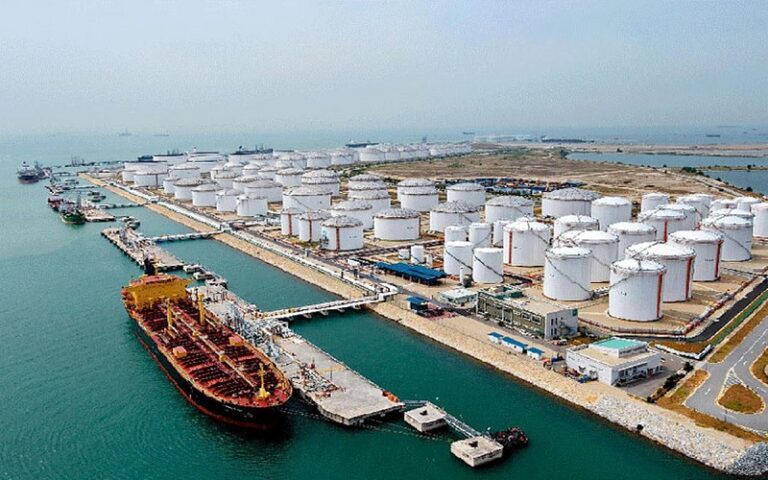
Following the revelation of new details in the case of Iran’s oil smuggling, the Iraqi prime minister ordered the formation of a special committee. This order came after the U.S. Treasury Department sanctioned a wide network of violators.
The purpose of this committee is to investigate suspicions of corruption in oil and petroleum product smuggling. This network had been selling Iranian regime oil on the market by falsifying its origin as Iraqi oil.
This move is considered an effort to protect Iraq’s national economy and public assets. The wide-ranging diplomatic activity in Baghdad highlights the importance of this matter for the Iraqi government.
Iranian Regime’s Oil Exports to China Surge Sharply in JuneOn September 6, Iraqi Prime Minister Mohammed Shia al-Sudani ordered the formation of this high-level committee. It consists of relevant institutions and is tasked with reviewing information and reports related to corruption and suspicious operations in Iraq’s ports and territorial waters. In an official statement, al-Sudani stressed that there would be no leniency in this case. He added that the committee must submit the necessary recommendations for legal action to the cabinet after completing its investigations. According to the Iraqi prime minister, the ultimate goal of this measure is to protect national assets and combat corruption. These measures follow accusations by U.S. President Donald Trump’s administration that the Iranian regime has been evading sanctions through oil smuggling and the use of Iraqi ports. The Iraqi government is trying to prevent the U.S. from imposing sanctions on its oil sector. Iraq’s State Oil Marketing Organization (SOMO) on September 2 denied any oil smuggling or crude oil mixing operations in the country’s ports and territorial waters. This denial came only hours after Washington announced sanctions on a network of companies and oil tankers. The network was run by an Iraqi trader named Walid al-Samarrai. According to the U.S. government, al-Samarrai smuggled Iranian regime oil onto the global market by falsifying documents to present it as Iraqi oil. These allegations highlight the complexity and scale of the oil smuggling operation. Earlier, in July, the U.S. had sanctioned another network led by an Iraqi trader, which was accused of smuggling oil worth billions of dollars. They carried out this scheme by disguising or mixing Iranian regime oil with Iraqi oil.
Smuggling concealment methods and ties with the “shadow fleet”
These tankers used various methods to conceal their illegal activities, including nighttime transfers and falsifying the Automatic Identification System (AIS).The U.S. Sanctions Iranian Oil Transport, Purchase, And Processing NetworkThese tankers also hid their operations by deliberately creating gaps in their location reports. The U.S. Treasury Department announced that the ships in this network carried out ship-to-ship transfers with tankers from the Iranian regime’s sanctioned “shadow fleet.” These exchanges were meant to obscure direct ties to Iran’s oil sector. On August 8, SOMO’s CEO Ali Nizar also denied any operations of mixing Iranian oil with other countries’ oil. He dismissed the allegations as baseless and stressed that no oil smuggling takes place in Iraqi ports. Ali Nizar, without directly naming the Iranian regime, described the claims regarding oil smuggling and mixing with oil from neighboring countries as groundless. He stressed that no oil mixing or smuggling takes place in Iraq’s ports and territorial waters. According to the U.S. Treasury Department in July, companies linked to “Salim Ahmed Said” had been buying and transporting Iranian regime oil since at least 2020. These companies, operating under the cover of legitimate Iraqi trade, either mixed the oil with Iraqi oil or disguised it as Iraqi crude. The value of these transactions amounted to billions of dollars. Nizar further emphasized that no international institution has provided evidence to substantiate these claims. He described the concerns as “baseless and lacking scientific backing.” Explaining the documents published in this regard, he said that they related to “financing operations.” He added that the documents do not concern oil tankers entering Iraqi ports to load fuel oil or petroleum products and mixing it with imported crude.
Strong Ties Between Houthis and Iranian Regime Arms Supply Network Remain Intact
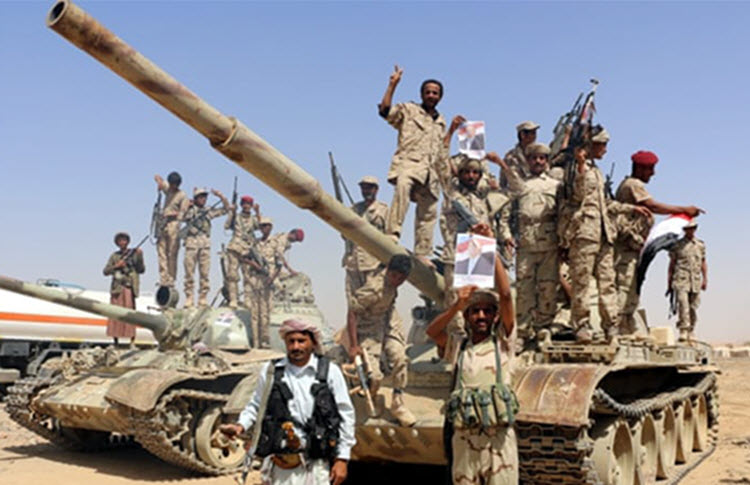
The Conflict Armament Research (CAR) center, in its latest report, stated that the Houthis in Yemen continue to rely on foreign support, and much of the equipment seized from smuggled arms shipments shows strong links between this group and supply networks connected to the Iranian regime.
The UK-based CAR center, in its September report, wrote that Houthi forces remain dependent on foreign support to strengthen their air defenses and conduct attacks, including against ships in the Red Sea.
According to the report, the seizure of a large maritime shipment by Yemen’s National Resistance Forces just two days after the ceasefire between the Iranian regime and Israel was “the largest capture of advanced Iranian conventional weapons” in their history. The center added that document analysis revealed an unprecedented number of advanced missiles and anti-ship systems, most of which were directly linked to supply networks affiliated with the Iranian regime. The CAR report also stated that in the shipment’s accompanying documents, which covered an unprecedented scale of various missiles, the contents were listed as “agricultural products, machinery, and chemical fertilizers,” with no mention of weapons.In July 2025, CAR investigators documented a sample of a major maritime interdiction by Yemen’s National Resistance Forces of a dhow carrying a large quantity of advanced weapon systems bound for a Houthi-controlled port. 🧵 (1/4) pic.twitter.com/kKAH2v6NQf
— CAR (@conflictarm) September 3, 2025
US Seizes Weapons Shipments Sent by Iran’s Regime to the HouthisThe Iranian regime has consistently denied sending weapons directly to Yemen and insists that the Houthis are capable of producing their own long-range missiles and drones. On August 14, U.S. Central Command (CENTCOM) announced the interception of weapons shipments bound for the Houthis, noting that the seizures were carried out by Yemen’s National Resistance Forces.
Warnings from think tanks
The Washington-based Middle East Forum warned, based on the CAR report, that Western—particularly U.S.—strikes on Houthi positions, no matter how precise, will be futile unless Iran’s arms supply lines to the Houthis are cut. The International Institute for Strategic Studies (IISS) has warned that the Houthis’ technical capabilities are increasing. The Royal United Services Institute (RUSI) also stated that tactical missile interceptions alone cannot address the widening strategic gap. The Center for Strategic and International Studies (CSIS) highlighted the resilience of the Iranian regime’s smuggling networks, which enable the Houthis to constantly replenish and modernize their arsenal.Continued detention and torture of Mohammad Banazadeh Amirkhizi
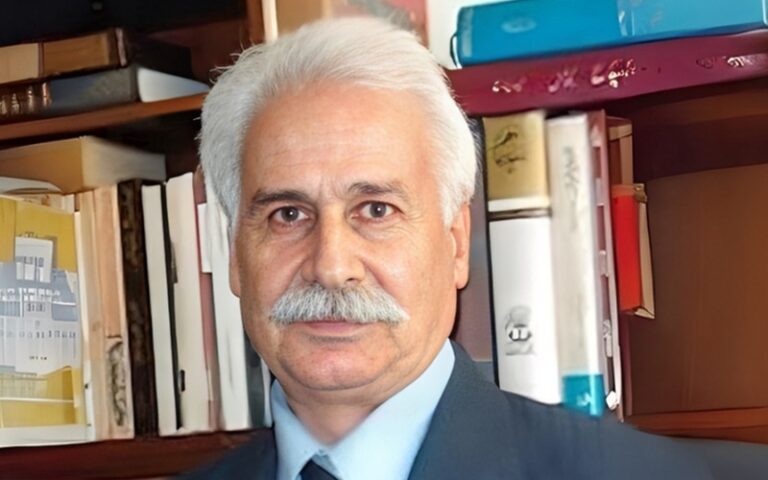
Mohammad Banazadeh Amirkhizi, a 79-year-old political prisoner and a survivor from the justice-seeking families of the 1980s, is still being held under very difficult conditions in the Qom Ministry of Intelligence detention center. Despite multiple illnesses and a critical physical condition, he not only has no access to medical care, but is also kept in solitary confinement under interrogation and severe psychological pressure.
Sudden and unlawful arrest
On the morning of Monday, July 28, security forces entered the home of Mohammad Banazadeh Amirkhizi in Tehran without presenting a judicial warrant and forcibly took him away. After his transfer to the Ministry of Intelligence detention center in Qom, his family was left in complete uncertainty and has only been able to have a few short phone calls with him under the control of security agents.Iran’s Regime Executes Political Prisoners Mehdi Hassani and Behrouz Ehsani
Critical physical condition
Informed sources have reported that Mr. Mohammad Banazadeh Amirkhizi suffers from severe health problems, including heart disease, a torn knee meniscus, prostate cancer, and general weakness due to old age. Doctors had previously emphasized that he requires specialized and continuous medical care. However, judicial and security authorities have so far prevented any form of treatment or medical follow-up and have even denied him permission to undergo basic tests. This has effectively placed him at serious risk of a slow death. Since his arrest, Mohammad Banazadeh Amirkhizi has been denied access to a lawyer. His long-term solitary confinement, deprivation of family visits, lack of medical facilities, and repeated interrogations all constitute clear examples of psychological torture. Human rights activists emphasize that such treatment is incompatible with both international human rights laws and even Iran’s own domestic laws. He was also arrested in 2009 and 2016 for supporting the People’s Mojahedin Organization of Iran (PMOI/MEK) and spent about 10 years in Evin and Gohardasht prisons. On July 15, 2021, he was released from Gohardasht Prison in Karaj after completing his sentence, but he remained under restrictions, including a forced exile order.Arrest as part of systematic repression
The arrest and torture of Mohammad Banazadeh Amirkhizi must be seen in the broader context of the Iranian regime’s repression of dissidents, especially the justice-seeking families of the 1980s. His re-arrest sends a clear message from the regime to other justice-seeking families: “Stay silent or pay a heavier price.”Reserves of Five Main Dams in Iran Have Dropped to Zero
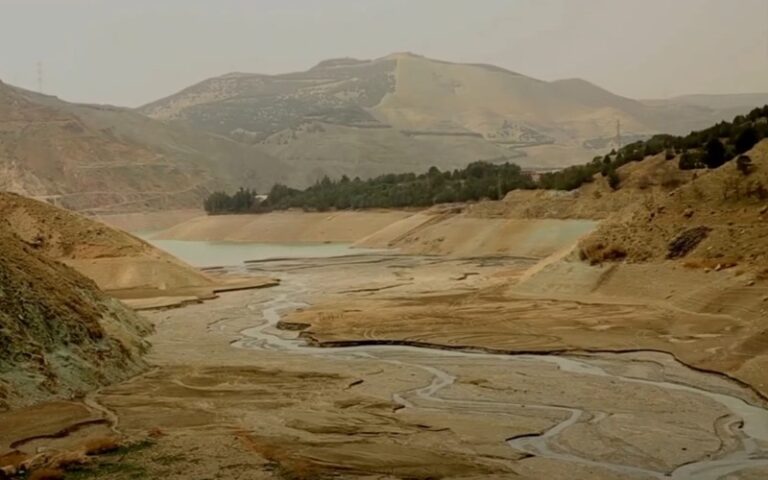
The latest data from Iran’s Water Resources Management Company shows that between September 22, 2024, and September 6, 2025, the reserves of five major dams in Iran have fallen to zero.
With the worsening water crisis and the regime’s inability to manage resources, new official reports indicate that 19 large dams in the country are facing severe drought.
Voshmgir, Golestan, and Boostan dams in Golestan province, Rudbal Darab dam in Fars, and Shamil and Niyan dams in Hormozgan have completely dried up.
In Gilan, the Sefidrud dam holds only 3% of its capacity, while in Zanjan, the Taham dam has reached a warning level with just 9% of reserves.
Three Dams in Iran Dried Up, Eight More Near CollapseThe Tanguieh dam in Sirjan and the Nesa dam in Kerman are also in critical condition, with only 7% capacity. In recent months, frequent water and power outages have severely affected citizens’ daily lives and disrupted industrial production and economic activities. While Iranian regime officials call on people to save water and change consumption patterns, they have proven incapable of addressing the structural and managerial roots of the water and electricity crises. Data from the Water Resources Management Company also shows that in eastern Iran, the Chahnimeh reservoirs in Sistan and Baluchestan are at 13% capacity, and the Nahrin dam in South Khorasan is at 12%, ending the water year with minimal reserves. The Lar dam in Tehran province is only 3% full, while the Latian and Mamloo dams have 14% reserves, both in poor condition. In Razavi Khorasan, the Doosti and Torogh dams are also in a critical state, with only 5% capacity. On September 7, the state-run daily Ham-Mihan reported that with reservoirs running dry, the likelihood of water rationing by late September has increased. According to the report, although Masoud Pezeshkian’s government has planned to transfer water from the Taleghan dam, the volume is “insufficient to meet Tehran’s needs.” On September 4, the ISNA news agency wrote that consecutive years of drought, declining rainfall, and the water shortage crisis have affected agricultural production, including wheat. Earlier, on August 12, the spokesperson of Iran’s water industry warned of the unprecedented severity of the crisis, stating that 70% of Iran’s plains are in “prohibited” or “critically prohibited” status, with more than 300 plains—including Tehran—facing the serious threat of land subsidence. On August 11, the Water Resources Management Company reported that a total of 58% of the country’s dam reservoirs were empty.
The 85th week of the ‘No to Execution Tuesdays’ campaign in 52 prisons across the country
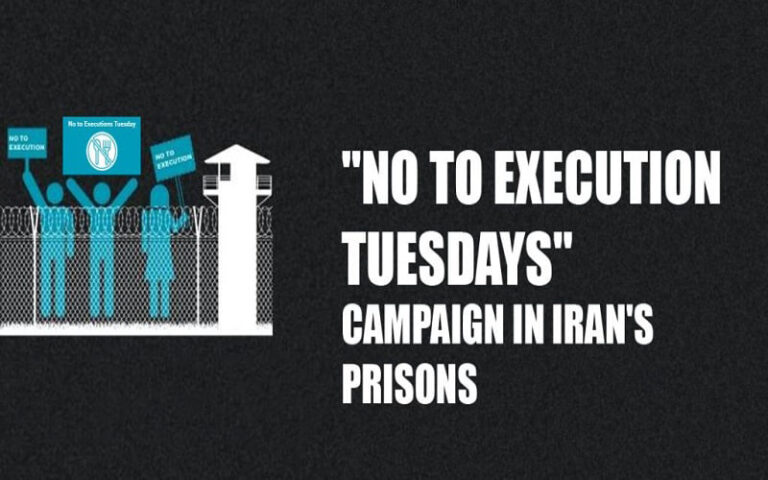
In the 85th week of the “No to Execution Tuesdays” campaign, political prisoners in 52 prisons across Iran are on hunger strike to protest the widespread and unjust issuance of execution sentences. In a statement issued by the political prisoners on this occasion, referring to the execution of political prisoner Mehran Bahramian and the protests of the people of Semirom, it read:
“We invite all honorable and freedom-loving people, following the example of the justice-seeking families and the noble people of Semirom, to raise the flag of ‘No to Execution’ in every city and every street.”
Rise In Executions in Iran; Ten Prisoners Hanged in One DayThis 85th week of the “No to Execution Tuesdays” campaign was marked by the participation of Sabzevar Prison, bringing the campaign to 52 prisons. With the expansion of this campaign, we are witnessing widespread resistance from prisoners and society against the policy of repression and executions. Expansion of the “No to Execution Tuesdays” campaign with the addition of Sabzevar Prison to 52 prisons in the 85th week The cruel and inhuman execution of political prisoner Mehran Bahramian in the city of Semirom not only deprived one person of the right to life, but also ignited flames of anger and protest in the hearts of his family and the noble people of the city. The dignified strike by shopkeepers and justice-seeking people of Semirom is proof that our people will not remain silent in the face of these crimes and will continue their struggle until they achieve their rights. In another criminal act by the ruling religious dictator, in silence and without media coverage, two Sunni prisoners of conscience, Eskandar Bazmandegan and Mohammad Kashfi, were hanged in Adel Abad Prison in Shiraz. Shocking statistics show that since August 23, 92 prisoners, including four women, have been executed. In just the past week alone, the execution-driven regime took the lives of 46 individuals. According to available figures, since March 21, a total of 756 people have been executed, with 100 of those executions carried out in Ghezel Hesar Prison—meaning more than 13% of executions occurred there. According to reports, a group of prisoners in Sabzevar Prison have announced that, in protest against the regime’s wave of executions, they are joining the “No to Execution Tuesdays” campaign and will go on hunger strike every Tuesday. The members of the “No to Execution Tuesdays” campaign wholeheartedly declare: Execution is a tool for the blatant violation of human rights and the suppression of freedoms and they demand the immediate and complete halt of executions across the country. The voice of this campaign is the voice of solidarity and support for all the victims of inhumane policies in Iran, and until justice, freedom, respect for human rights, and human dignity are achieved, this voice will continue to resonate and multiply inside prisons. We invite all honorable and freedom-loving people, following the example of the justice-seeking families and the noble people of Semirom, to raise the flag of “No to Execution” in every city and every street. Life is a fundamental right of every human being, and no government has the right to take it away. In honor of the blood that has been shed and the families drowned in grief, it must be shouted: No to executions, no to dictatorship and repression, yes to justice and the sovereignty of the people. On Tuesday, September 9, 2025, in the 85th week, the members of the “No to Execution Tuesdays” campaign will be on hunger strike in 52 prisons.
