


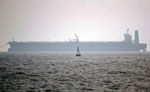
 Bloomberg: Iranian oil tankers are contending with longer delays in shipments and some are idled amid increasing pressure on buyers to curb purchases from what was once OPEC’s second-biggest producer. Bloomberg
By Michelle Wiese Bockmann
 Iranian oil tankers are contending with longer delays in shipments and some are idled amid increasing pressure on buyers to curb purchases from what was once OPEC’s second-biggest producer.
NITC, the Tehran-based tanker owner, has 42 crude oil carriers and 13 were delayed in transit since Oct. 21, according to data compiled by Richard Hurley, a senior maritime consultant at IHS Fairplay in London who has tracked vessel movements for two decades. Four NITC ships with cargoes are idling while they await orders and four others have switched off their signals and are presumed to be anchored, the data show.
Iran is reliant on NITC ships because EU sanctions imposed in July barred about 95 percent of the global tanker fleet from carrying the nation’s crude. NITC has renamed vessels, switched their flag states and signaled inaccurate information about where they are registered, according to the data from IHS, which maintains the United Nations’ shipping database.
“Iran is finding it harder to place cargoes,” Hurley wrote in an e-mail. “China, while still a major purchaser, seems unwilling to take all the cargoes which are being sent to her and has been letting some ships wait at anchor for several weeks. India, while still a purchaser, is not taking much.”
Two phone calls and e-mails over two days to Habib-ullah Seyedan, NITC’s commercial director, weren’t answered.
Nuclear Program
Oil exports from Iran slumped 46 percent this year compared with 2011, according to data from Clarkson Plc (CKN), the world’s largest shipbroker. No NITC vessels delivered cargoes to Turkey since Nov. 22 or to India since Nov. 12, according to data from IHS Fairplay, a unit of Englewood, Colorado-based IHS Inc. (IHS) Banks in countries that fail to cut imports risk losing access to dollars under a U.S. law that took effect June 28. China and India have waivers that expire this month.
The U.S. and 27-nation EU want to curb Iran’s nuclear activities, which they say are aimed at producing weapons, a charge the government in Tehran has denied. The sanctions are costing Iran about $98.9 million a day in lost oil sales, data compiled by Bloomberg show. The exports once provided about half of government revenue.
Signals from 31 NITC tankers show they are registered in Tanzania-Zanzibar, according to IHS data. A Zanzibar government official said in October that no Iranian ships were registered in the east African territory and the country’s ship registry confirmed the vessels aren’t entitled to fly the flag.
Satellite Signals
The Baikal, an NITC vessel that called at the Greek island of Syros last week, was flying the Tanzanian flag, according to Panayiotis Karamitsos, the local harbor master. It left without unloading or refueling. The Majestic, another NITC vessel, was sighted by an IHS employee near Singapore on Nov. 24 with its stern painted to show it was flagged in Zanzibar, Hurley said.
“I can’t remember an occasion when there was a fleet with so many ships apparently broadcasting out-of-date registrations,” Hurley said. IHS captures data from 54,000 vessels updating their positions every three minutes via signals to satellites and shore-based antennae.
The Tular, Leadership, Baikal and Blackstone are loaded and idling while they await orders, according to IHS Fairplay. Four others have switched off their transponders, an indication they are anchored, Hurley said.
NITC tankers are also signaling that they are classified by the Korean Register of Shipping, Germany’s Germanischer Lloyd or France’s Bureau Veritas, according to IHS data. The three so- called classification societies, which verify compliance with international safety and security rules, have said they are no longer providing services to Iranian vessels or intend to end the relationship. One NITC ship isn’t signaling a known classification society.
The International Monetary Fund said in October it expected Iran’s economy to contract 0.9 percent this year. The forecast was based on data from before the slump in the country’s rial, which “will likely have a further negative impact on economic outcomes in the coming year,” Masood Ahmed, head of the IMF’s Middle East and Central Asia department, said in an interview in Dubai on Nov. 11.


