


 AFP: Gulf Arab leaders meeting in Abu Dhabi appealed on Tuesday to Iran to “respond positively” to talks with world powers about the Islamic republic’s contentious nuclear programme.
By Taieb Mahjoub
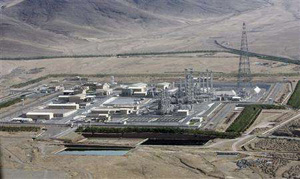 ABU DHABI (AFP) — Gulf Arab leaders meeting in Abu Dhabi appealed on Tuesday to Iran to “respond positively” to talks with world powers about the Islamic republic’s contentious nuclear programme.
Gulf Cooperation Council states “welcome international efforts, including those made by the P5+1, to peacefully resolve Iran’s nuclear crisis and hope it will respond positively to these efforts,” said a joint GCC statement.
They stressed the “right of all countries in the region to develop civilian nuclear energy within the standards and under the supervision of the International Atomic Energy Agency (IAEA).”
They also said these standards had to be applied to all countries in the Middle East, including Israel, the region’s sole if undeclared nuclear weapons state.
The statement came at the conclusion of a two-day summit of the council bringing together Bahrain, Kuwait, Oman, Qatar, Saudi Arabia and the United Arab Emirates.
Bahrain and Saudi Arabia signed cooperation agreements on civil nuclear technology with the United States in 2008, while other Gulf Arab states including Kuwait and the UAE have similar deals in place with atomic powers.
The six Gulf nations, which began their annual summit Monday with their fears exposed over Tehran’s nuclear drive, courtesy of WikiLeaks, also urged Iran to be a “good neighbour.”
They insisted on “commitment to the international legitimacy principles, peacefully resolving conflicts and making the Middle East including the Gulf region free of mass destruction and nuclear weapons.”
Iran on Tuesday wrapped up two days of talks in Geneva with the P5+1 grouping of UN Security Council permanent members Britain, China, France, Russia and the United States plus Germany.
The summit came after US diplomatic cables released by the whistleblower website WikiLeaks revealed fears among Gulf Arab states that Iran’s nuclear programme masks a drive to build an atomic bomb, a charge Tehran denies.
Saudi Arabia’s King Abdullah was quoted in one of the leaked cables as saying the United States should “cut off the head of the snake” in reference to military action against Iran.
And Bahrain’s King Hamad told US General David Petraeus the Iranian “programme must be stopped… The danger of letting it go on is greater than the danger of stopping it.”
The GCC countries, fearing the growing influence of Shiite Iran in the region, did not hide their anger at being excluded from talks on Iran’s nuclear programme, which resumed after a 14-month hiatus.
The talks came just days after Tehran triggered heightened concern in the West by revealing it had taken a new step in the nuclear fuel cycle, producing its first home-grown batch of the raw material for enrichment, uranium yellowcake and making it “self sufficient,” according to the country’s atomic chief.
European Union foreign policy chief Catherine Ashton described the Geneva talks as “detailed, substantive,” as the seven countries agreed to meet again by the end of January in Istanbul.
Tehran is under four sets of UN sanctions over its refusal to suspend uranium enrichment, the sensitive process which can be used to make nuclear fuel or, in highly extended form, the fissile core of an atom bomb.
Iranian President Mahmoud Ahmadinejad on Tuesday called on the six world powers to lift international sanctions against his country if they want the talks to bear fruit.


