


Iran Focus
London, 31 Mar – Earlier this month the new White House administration announced a large package of sanctions targeting Iran, Syria, and North Korea for their efforts to transfer illicit materials and technology. The sanctions targeted 30 entities in 10 separate countries, a range of entities who are complicit in the transfer “of sensitive items to Iran’s ballistic missile program,” according to the State Department.
However, on Thursday, senior State Department officials said that the new package of sanctions targeting the Islamic Republic would not halt the country’s missile development.
The new sanctions come while Iran provides missile technology and supports terror organizations across the Middle East, including Hezbollah, as wells as continuing to trade nuclear and missile technology with North Korea, also hit with sanctions.
Still, senior State Department officials say that sanctions alone are not enough to put an end to Iran’s continued production of ballistic missiles, banned under international law.
“We got a number of measures, and they’re not just sanctions that we engage in to slow down and prevent Iran from advancing its ballistic missile program,” a senior State Department official stated during a conference call with reporters, writes Adam Kredo in his article for the Washington Free Beacon.
The official pointed out several U.S. efforts to prohibit shipments of arms and other materials to Iran, as well as efforts by the United Nations meant to highlight Iran’s illicit activities. He said that sanctions are “just part of a series of things that we do to counter Iran’s ballistic missile program. Sanctions alone are important, sanctions shine a public spotlight and limit the activities of the sanctioned entities and also discourage other entities from engaging in those activities.” He added, “We’ll admit that alone they are just one tool that is part of a larger tool kit. We’ll continue to look at other opportunities to sanction where appropriate.”
According to the State Department, the United States will continue to look for other opportunities to sanction Iran’s ballistic missile program, as well as its human rights abuses. Iran’s missile procurement remains “one of most significant security concerns in the region,” according to a senior State Department official, and the latest sanctions underscore “our commitment to counter these activities.” The official added, “We will continue to counter Iran’s support for terrorism, its ballistic missile program, and human rights abuses,” and the new sanctions “should come as no surprise to Iran.”
U.S. official and military personnel maintain that Iran continues to pose the largest threat to regional stability in the Middle East.
On Wednesday, U.S. Central Command leader General Joseph Votel warned Congress that officials have “not seen any improvement in Iran’s behavior” since the nuclear deal went into effect. Votel described Iran as “the most significant threat” to U.S. forces and allies in the region.
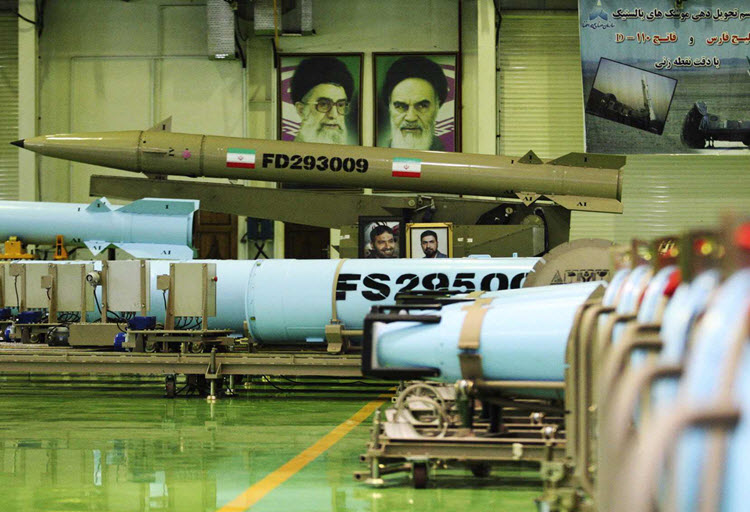
Iran’s ballistic missile program is sophisticated enough to strike several U.S. allies, making it the most pressing threat in the region. In a statement announcing the latest sanctions, the State Department said, “Iran’s proliferation of missile technology significantly contributes to regional tensions. As an example, we have seen indications Iran is providing missile support to the Houthis in Yemen. This destabilizing activity only serves to escalate regional conflicts further and poses a significant threat to regional security.”
The State Department declined to comment regarding possible sanctions on Iran’s Revolutionary Guard Corps, or IRGC.


