Home Blog Page 243

Ebrahim Raisi and a Record Full of Zeros

Before Ebrahim Raisi took office as president he made many promises and ‘predicted’ progress in dealing with Iran’s miserable economic situation, ensuring the Iranian people that their living conditions will improve. He was also trying to assure the regime’s supporters that his presence will save the regime from a collapse.

Despite his efforts, many people refused to believe the hollow promises and the country witnessed the most widely boycotted election in its history.

Addressing one of Raisi’s lies, the state-run Donya-e Eghtesad daily wrote, “The claim of creating one million jobs by the head of the judiciary of the Islamic Republic and the candidate for the 2021 presidential election provoked many reactions. Seyyed Ebrahim Raisi considered single-digit inflation possible and claimed that ‘70% of the country’s economic capacity is inactive. By activating these capacities, we can create one million jobs a year’.”

The question remains as to how the regime would rewrite and improve the economy, which is a victim of the regime’s massive corruption, plunder, and theft?

Following the implementation of the government’s new plan to remove the preferred currency from basic items, one of the regime’s so-called reformists admitted, “The economic situation is not good. Even today we must admit that we are in a state of war, and we have no choice but to ration the goods. If this does not happen, then there would be famine, followed by public discontent and even riots, in which case, the system will also be threatened.”

These warnings are no longer just about what might potentially occur. Every day, the Iranian people are taking to the streets to protest the regime, with most of their slogans aimed at the regime’s leaders.

This situation has become so intense that it has created a society where the people are increasingly getting ready for a new revolution. This is not just a political analysis; the economic statistics of the regime also confirm this fact. During his election campaign, Raisi had promised that he would decrease the exchange rate for each dollar to 15,000 rials. In one quick move, he would lower the inflation by 50 percent, lowering the figures to a single digit.

He claimed that no one in his government would speak about money printing and that the people’s food baskets would not be tight with the sanctions. He also claimed that creating one million jobs annually would be as easy as a pie, as would creating four million housing units. Marriage loans and large amounts of money to set up bankrupt factories would also be easily provided.

However, less than a year after he took the office, none of those promises were delivered. The protests all over the country represent a damning rebuke. Although it has been repeated many times, it should be noted that the average income of the Iranian people is not only much lower than the minimum wages of countries such as the UAE, Saudi Arabia, and Turkey, but it is also less than the minimum wages of small countries such as Azerbaijan and Oman.

The state-run daily Shargh wrote, “Reports from the Ministry of Labor show that about 60% of Iranians do not have sufficient income and suitable jobs. About 14,200 million Iranians have low-income jobs and are without insurance.”

It further explained, “About one-fifth of Iranians are taxi drivers! (3.4 million SNAP drivers and 1.4 million Tepsi drivers, about 300,000 taxi drivers and private taxi drivers). About 35 to 40 percent of Iranians are tenants and about 20 million are slum dwellers and homeless. About 25 percent, or one-fourth, of the population, are slum dwellers and homeless.”

While the regime claimed and advertised that with the help of subsidies the lives of the Iranian people would improve, the reality of the situation shows that they are continuing to loot the people of their much-needed incomes.

The state-run daily Arman wrote, “The volume of cash subsidies until the electronic card is provided, has caused problems for the government with some banks accusing the government of withdrawing funds from banks to provide cash subsidies. In this regard, Vahid Shaghaghi Shahri, an economist, said that ‘Governments have been taking money from the banks for many years.’”
Budget Deficit and Khamenei’s Fear of Collapse

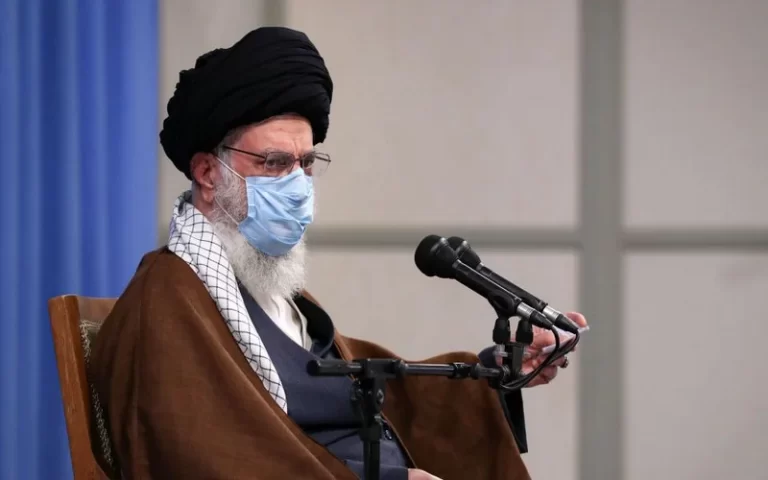
In a meeting with the Iranian regime’s parliament members, supreme leader Ali Khamenei suggested some actions to improve the country’s economy, as though Iran’s economy is normal, and everything is on the right track. In reality, the economy is in pieces and the regime is facing a huge budget deficit.

According to the state-run media, Khamenei claimed, “The composition of the budget is still not corrected, while the government is the one that has been addressed.”

The question that remains is whether the regime knows that there are many errors in the regime’s budget and why have they neglected to correct the mistake.

The answer is very simple. They are fully aware of the situation, but they are no longer able to correct the budget because of the corruption and theft that has engulfed all parts of the ruling system.

On December 22, 2021, the state-run daily Afkar News wrote, “The 2022 budget was presented without much change in the budgeting system and like previous years. This is a budget that has fundamentally major drawbacks and is not compatible with upstream laws.”

The budget is based on the export of oil and gas, and any shortage is compensated for by borrowing from the central bank and the fiat money.

In the budget of 2022, it was discovered that more than half of the budget had a deficit, with the general budget deficit amounting to close to 300 trillion rials, which was supposed to be supplemented y revenues from the sale of oil and the sale of government bonds and companies.

At the time, Khamenei warned the regime’s parliament that they should not increase the budget deficit by increasing expenditures, for which there is no revenue.

However, in the case of wasteful expenses, there are many examples in which the traces of Khamenei and the Iranian parliament are obvious.

Hassan Khoshpour, the former senior director of the Planning and Budget Organization, said, “The conduct of the 2022 Budget Consolidation Commission made it clear that not only it is futile to expect efficiency when the legislature and the executive branch are unified, but the budgeting process is merely a list of expenditures (mostly current expenditures) with no long-term development perspective, regardless of the possibility of their realization.”

It has recently become clear that the regime gave hollow promises in the budget circular, and that there is no programmed budget. Under the supervision of Khamenei’s office, the budget program has been converted into a traditional budget program that fails to support any progression and the country’s primary necessities and instead is giving free rein to the officials to partake in even more corruption.

An example of this is the decision of the regime’s Parliamentary Integration Commission, which increased housing and marriage deposit loans and allocated resources for the housing sector amounting to 440 trillion rials. It also compelled banks to provide resources amounting to 200 trillion rials for employment and implemented inefficient and harmful programs.

These actions were carried out with Khamenei’s full knowledge and coordinated with the government and the parliament. The growth of liquidity and inflation by such harmful programs, which has now increased to between 40 and 50 percent, is crushing the Iranian people. This is the real reason for the increase in more and people suffering from starvation.

From the very first days of the 2022 budget discussion, it was stated many times that one of the major parts of the budget expenditure, ‘ whose the bitter fruits the poor have tasted’, is the unaccounted money that has been flowing into the regime officials’ pockets in the name of cultural institutions. Yet, Khamenei orders the parliament not to approve unaccounted expenses!

The official news agency, IRNA, showed the reality of the situation. “At first glance, it seems that dozens of cultural institutions have been excluded from receiving the budget, while an inquiry from the Program and Budget Organization showed that there has been no change in the total number of institutions receiving the cultural budget and all cultural institutions have been merged into 10 main institutions. In fact, it is a budget that should be divided between these institutions and many other institutions whose names are not mentioned in the bill,” it wrote.

A recent analysis has shown that the budget of the seminary service center has increased by 100% compared to last year.

The state-run daily Tejart News wrote, “The budget of the seminary service center is 28 trillion rials. In 2021 it was 14 trillion rials. As stated in this bill, the budget share of the seminary service center is more than the Environmental Protection Organization.”

IRNA added, “The budget of the Environment Organization in the budget bill of 2022 is 21 trillion rials. Forty-three religious’ organizations in the budget of 2022 received 72.52 trillion rials, some of which received alone more than the budget of organizations such as the General Staff of the Crisis.”

Another example of this corruption belongs to one of the regime’s institutions, known as the Culture and Guidance of Qom. In talking about the regime’s support for the Institution, its director-general said, “In previous years, the concern of the Public Culture Council was that we need credit to support cultural activities. Fortunately, last year, a row under Table 17 was seen in the country’s budget to support cultural activities, and six trillion rials were distributed among cultural institutions. This year, 6.5 trillion rials have been allocated in the budget to support cultural activities.”

Why is Khamenei due to speak this month about the budget, when the regime is not due to draft a budget bill and review it in parliament?

It appears that after the many protests in recent weeks, due to high prices and starvation, Khamenei is keen to warn the officials to ‘steal’ less. Regardless of his intentions, it is far too late to attempt to rectify the situation as none of them can affect any changes.

Iran’s Regime: We Have Lost the Momentum of the JCPOA

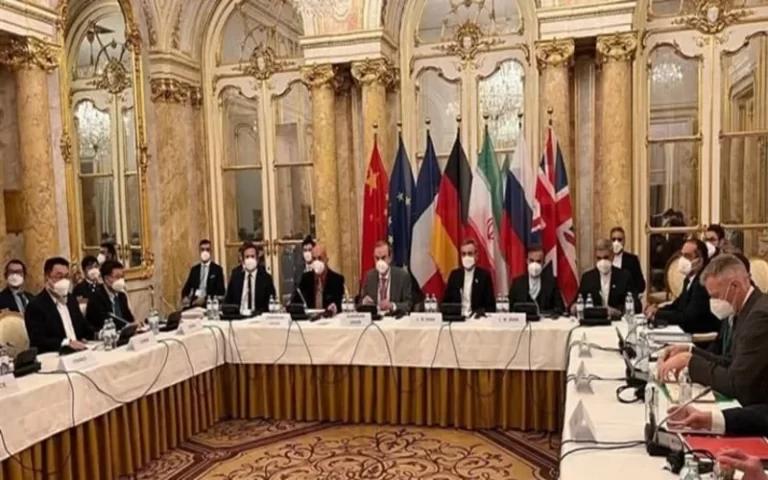
The Iranian regime expected that they would be able to revive the Joint Comprehensive Plan of Action (JCPOA) after a two-month deadlock, but with the decision of the US president Joe Biden to keep the regime’s Revolutionary Guards (IRGC) on the Foreign Terrorist Organization (FTO) list, their hopes were dashed.

Before this decision was made, a draft agreement had been reached, and the only obstacle to finalizing it was the regime’s demand to pull out the IRGC from the US government’s FTO list.

While facing many financial problems, the regime had hoped that this progress would allow it to gain access to its frozen money and assets in many overseas accounts blocked due to the US sanctions.

During European Union official Enrique Mora’s visit to Tehran, Josep Borrell, the High Representative of the Union for Foreign Affairs and Security Policy, announced that the EU had prepared a package of proposals under which the United States would remove the Revolutionary Guards from the FTO list but would maintain the sanctions against the organization.

At the same time, Western media outlets had claimed that during Mora’s visit, the regime had agreed to resume talks on issues other than the removal of the IRGC from the US list of terrorist organizations, which was the focus of the last round of Vienna talks.

Concurrent with this news, which shows clearly the regime’s weakness exacerbated in the aftermath of the recent protests, regime president Ebrahim Raisi made the groundless claim that “we will not postpone the progress of the country until the lifting of sanctions so that others can decide for us, and we have shown this in practice and announced in the official forums that our strategy is the strategy of the leadership, but at the same time, we pursue the issue of lifting sanctions.”

US State Department Spokesman Ned Price stated that the Vienna talks are only focused on nuclear issues and if the regime wants to discuss issues that are outside the JCPOA, the US government is more than ready to participate in these talks, provided that the regime is prepared to make concessions.

Mehdi Zakerian, the regime’s international law expert, gave an interview with ISNA about the regime’s refusal to back down and its costs. He said, “Unfortunately, it seems that the other side, the United States, has long been reluctant to resolve the issue. In the US view, it has been able to manage its other issues and problems in the region and other parts of the world with the presence of other countries. And this is not good for Iran’s reputation and future, especially at the regional level. Unfortunately, in the analysis, news, and reports, the disagreement with Iran and the revival of the JCPOA do not do much harm to the international community.”

The situation has become so difficult for the regime that its Foreign Minister and his political deputy chose not to discuss the JCPOA in public and took the matter behind closed doors in the regime’s parliament. As for the news media, they only made some general remarks.  Since the last deadlock, regime officials have avoided attending any live programs.

This reaction shows that the regime is terrified of the exposure of its weakness and the Iranian people’s reaction.

In recent months, the regime had hoped to gain concessions from the Ukrainian war, which explains why many officials and media outlets started to support Russia’s invasion. But as always, the developments did not turn out as the regime had wished.

In an interview with ILNA, Sasan Karimi, one of the regime’s experts, said, “When we reached the end of 2021 after Russia delayed the invasion of Ukraine, there were changes in Iran’s policy, and some analysis was that our oil would be sold to energy carriers in the world at a higher price. Russia will not pay attention to sanctions against us.”

He added, “The second issue was that the West would refrain from dealing harshly with Iran because of the protracted JCPOA process and would try not to push Iran further toward Russia in the context of Russia’s war with Ukraine. As a result, Iran’s case was unlikely to go to the Security Council. Regardless of the support or non-support of Russia and China, the return of UN Security Council sanctions against Iran does not require the vote of these two countries.”

Karimi further stated, “These two points caused Iran to slow down the pace of the negotiation and ultimately stop it. I called this process of reviving the JCPOA ‘a small victory, but the prelude to a great defeat.’ We missed the chance of reviving the JCPOA. That is, we missed the opening that was created to provide the opportunity to invest and sell oil in the world, and on the other hand, we were able to sell 800,000 barrels of oil.”

Corruption Main Cause of Accidents in Iran

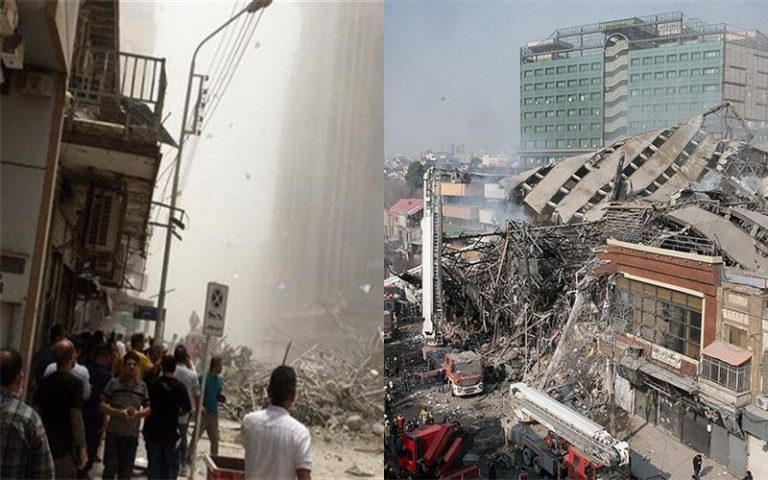
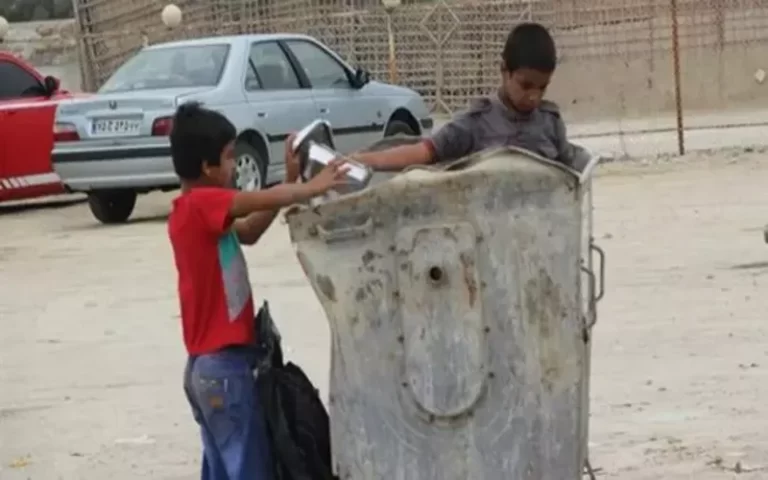
The release of a painful video of an abandoned baby in a bin in Tehran coincided with the collapse of the Metropol building in Abadan. These two events show the depth of the effects of the regime’s corruption and looting on a rich country like Iran, and more importantly, its people.

The truth of the matter is that Iran has more than enough resources to prevent such bitter episodes from happening, but thanks to the Iranian regime’s politics, none of the wealth is reaching the Iranian people. As a result, people are forced to live their life constantly confronted by dangers created by the regime. No one is excluded, from an abandoned baby to those who seek to gain a little more wealth by investing their property in businesses such as the Metropol building in Abadan.

This is a bitter, painful, breathtaking, and unfortunately, believable story that highlights the hidden cruelty under the skin of Iran’s cities.

In reference to this widespread corruption, the regime’s state-run daily Arman-e Meli wrote in its publication, “We should not lose sight that in fatal accidents with a high number of casualties there is a footprint of corruption. We must now understand more than ever that corruption, selfishness, and personal and group utilitarianism threaten people’s lives besides they are plundering them.”

It added, “These corrupt relations and disregarding rules and regulations are suddenly becoming evident in places such as the Metropol building in Abadan which create disasters. Weak managements that are determined solely based on political, familial, and acquaintance relationships, even if they are not tainted with corruption, create the ground for corruption, and corruption spreads like a thousand-headed cancer and keeps no place safe from pollution.”

Highlighting the need to learn from these tragedies, the Arman-e Meli also stated, “Let’s learn for once, at least from the suffering of the survivors and victims of the Abadan Metropol, that there is no compliment and that problems cannot be solved by a few administrative orders. We need big and courageous changes in structures and decisions to define everything around national interests, security, and safety.”

The collapse of the Metropol building happened despite promises from the regime’s officials, after a similar accident in Tehran concerning the Plasco building, that construction projects would be fundamentally overhauled and strict regulations will be enacted, with controls and oversight to prevent accidents, but this did not happen.

Now the 10-story building in Abadan has collapsed, killing 28 people so far, and even worse, no one knows how many people are left under the rubble. The possibility of the rest of the building collapsing, just like in the Plasco incident, is a danger to rescuers, who are mostly civilians. Videos on social media have routinely shown that during similar accidents, and even during natural disasters, the regime does not provide any aid to those affected, and the people are left to deal with the aftermath on their own.

In Iran, all accidents have an unusual number and occurrence. No one can ever give you the exact number of the people dying, or better said killed or injured, due to the regime’s policies on the streets, factories, or construction sites, and the regime’s penchant for hiding the truth.

The Untold Story of Iran Regime’s Assassinated Qods Force Commander

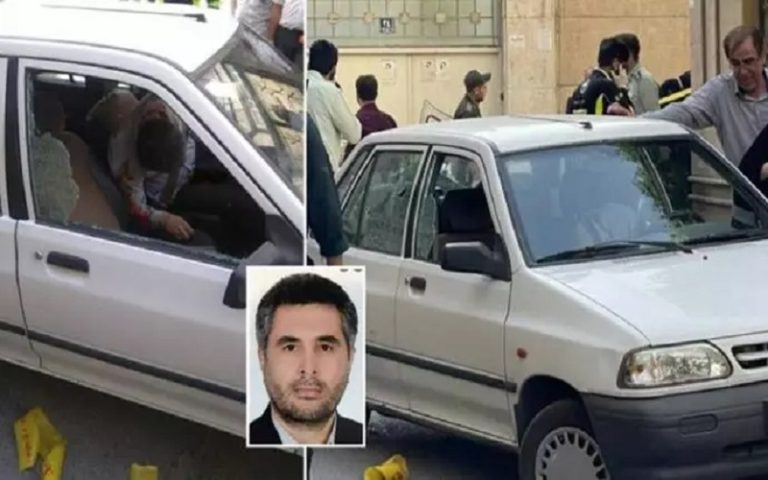
On the evening of May 22, IRGC Colonel Hassan Sayad Khodai, one of the senior commanders of the Iranian regime’s Quds Force, was shot dead in Tehran.

Khodai was born in 1972, growing up in Miyaneh city in East Azerbaijan province. He joined the regime’s Revolutionary Guards (IRGC) in his teens in 1987.

The state-run Nasim news agency reported that ‘Colonel Khodai was responsible for transferring missile technology to the Hezbollah in Lebanon.’

According to the ‘Defa Press (Defense Press)’ website, affiliated with the regime’s Ministry of Defense, Khodai was formerly the Deputy Minister of Research and Technology Development of the Defense Industries Organization.

The ‘Quds’ telegram channel, heavily affiliated with the regime’s Quds Force, announced, “Colonel Khodai had just returned from his mission in Syria a few days ago.” The regime’s media have also reported that he was close to Qassem Soleimani, the eliminated commander of the Quds Force.

Quoting Israeli media, the regime’s state media also claimed, “Colonel Khodai was also responsible for planning terrorist attacks and kidnapping Israelis.”

Without giving details, in a statement by the Revolutionary Guards, the incident was attributed to ‘counter-revolutionary and global arrogance’ groups, which could refer to countries such as Israel.

The IRGC also said that Khodai was a ‘defender of the sanctuary’, a term used for Iranians who are active on behalf of the state in Syria or Iraq. Iran is a key ally of Bashar al-Assad in his bloody campaign against the people of Syria.

Khodai is the most prominent IRGC official to be killed in Iran since the elimination of leading nuclear physicist Mohsen Fakhrisadeh in November 2020, known as the father of Iran’s nuclear weapons program. Tehran had blamed Israel for the attack on Fakhrisadeh’s convoy near Tehran. It later came to light that he had been acting in the role of Deputy Secretary of Defense.

In January 2020, Qassem Soleimani was killed in a US drone strike in Iraq. Soleimani had commanded the Quds Force of the IRGC, which is responsible for the regime’s foreign operations, warmongering, and global terrorism.

With a great deal of fanfare, the regime vowed to take revenge for these killings but has never actually followed through with such hollow announcements.

The Twitter account of Noornews, which is said to be close to the Supreme National Security Council of the regime, wrote, “The killing of Sayad Khodai is crossing the red line without calculation, which changes many equations. The perpetrators of this crime will pay a heavy price.”

IRGC’s Commander-in-Chief Hossein Salami, also claimed, “The blood of Martyr Sayad Khodai will not go unanswered.”

Not Even India Invests in Iran’s Ports

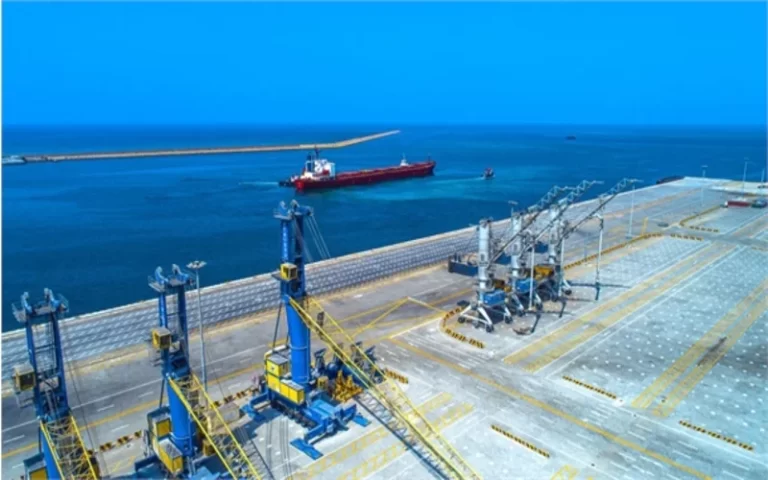
Over the past few years, India has been expanding Iran’s port of Chabahar, seeking to send goods through this route to markets in Afghanistan, Central Asia, Northern, and Eastern Europe. However, India has now changed its decisions and abandoned the Iranian regime, in favor of joining the Persian Gulf Cooperation Council’s Rail Network (GCC) instead.

This railway starts in Muscat, Oman, and connects all six Gulf Cooperation Council member states in Eastern Arabia. The project, which has been under construction since 2009, is 2,177 km long and will be operational by 2025. It is worth mentioning that these countries have the largest and most advanced ports in the Persian Gulf region.

The ports of these countries, including the one in the UAE, are among the five largest ports in the world, and the countries bordering the Persian Gulf have now decided to connect their transport infrastructure by creating a common railway from Israel to Turkey, and then connecting to Europe from there.

This has been a huge hit on the Iranian regime, especially the regime’s Revolutionary Guards (IRGC), which intended to take advantage of handing over the port of Chabahar to India to assist in their smuggling operations.

In addition to the losses for the regime’s organizations, this decision will have disastrous consequences for Iran’s economy in the future, because it will lose a significant source of revenue as the country with the longest coast and many ports in the Persian Gulf. Needless to say, the regime has not improved any of Iran’s ports since the beginning of its reign.

On Tuesday, May 17, the state-run daily Shargh quoted Ali Ziaei, a regime’s transport industry analyst, as saying that India had turned a blind eye to Iran’s Chabahar port for the transit of its goods.

According to the newspaper, the railway network will reach the port of Haifa in Israel and then extend to Turkey. Following the normalization of relations between the Arab countries of the Persian Gulf and Israel, the completion of this railway network has gained astonishing speed as The UAE and Israel have invested heavily in building and upgrading their current infrastructure. It has come to light that India, Saudi Arabia, the UAE, and Israel have been pursuing a joint economic project called the India-Middle East Food Corridor for a long time.

India, as one of the world’s food giants and, of course, a large economy, is seeking to manage its water resources and modernize agriculture with this project, and Israel, as one of the most advanced countries in the world in the field of industrial agriculture, is helping India in this regard.

Ziaei explained, “In my opinion, India and the United States deceived Iran. While the US exempted the Chabahar port from the sanctions and India demonstrated a passive presence in this port, they caused the development of Chabahar port to be postponed and now India has left Chabahar port and joined the Persian Gulf railway project.”

He emphasized that the regime’s passivity in developing its trade infrastructure has eroded golden opportunities for transit through Iran’s borders and that it any hope of reviving them or creating new opportunities is practically lost.

Khamenei’s Wrong Decisions and Its Poisoning Result

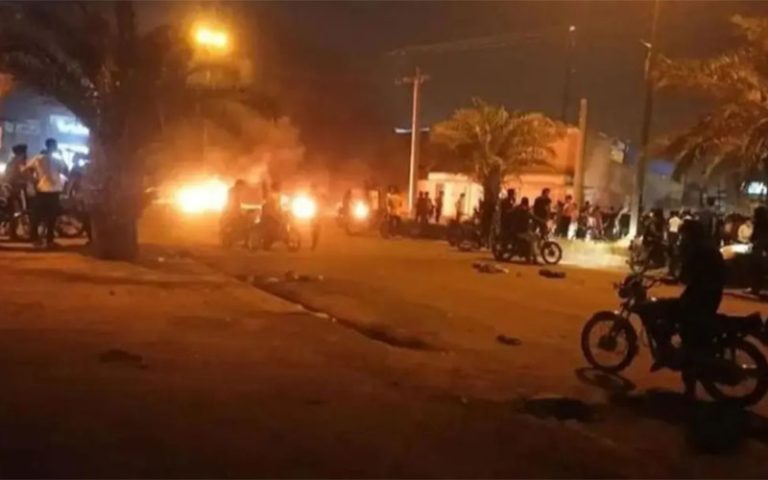
In recent days, many demonstrations have taken place across Iran, protesting the Iranian regime’s decisions to increase the price of some of the most basic goods, like bread and chicken. Following this decision, the regime took many security measures to prevent a scene of nationwide protests, akin to those in November 2019 which began soon after the regime announced a price hike for gasoline.

During the protests, the slogans chanted by the people were directed at the regime’s highest officials, from its supreme leader to its president. This alone shows that the people’s main demand is no longer economic, but rather that they seek a regime change, as their tolerance of the regime has reached its threshold.

Looking back, it is clear to see just how big of a mistake the regime Supreme Leader Khamenei made in his decision to appoint Ebrahim Raisi as president.

In his opening remarks in 2022, Khamenei referred to the appointment of Raisi as ‘the great sweetener of 2021’. However, since Raisi became President, there have been failings after failings. Khamenei is desperate to defend Raisi’s policies; after all, he is the one who put him in charge in the first place.

The fact is that Khamenei has tied the regime’s destiny with a gordian knot which will only intensify the people’s protests. It has gotten to the point that a state-run media outlet, the Jomhuri Eslami, called for the resignation of Raisi in an article titled ‘Declaration of Serious Danger’, referring to the total collapse of the ruling body and the explosive conditions of the society.

The paper wrote, “Now even your pro-government forces are protesting your actions, and we know that the efforts of a group of pro-government forces to justify the opposition of their forces are like milking the ram. Now that you cannot solve the problems, bravely step aside, and leave the work to skilled people to save the people and the country from this dangerous vortex.”

Khamenei knew very well what crises he would face when he assembled candidates for high positions within the regime. By picking totally incompetent people, men well known for their crimes and other atrocities, Khamenei has revealed his evil intentions.

Ebrahim Raisi, infamous for his role in the 1988 massacre of 30,000 political prisoners, took the position of the presidency. Many IRGC officers, incumbent or retired have been appointed to the cabinet as ministers or their deputies.

Most local officials and governors of the country have also been chosen from among the former and present commanders of the IRGC. Even the regime’s judiciary, by order of Khamenei, is under the control of one of the most criminal clerics e, Gholamhossein Mohseni Ejei, who once bit off the ear of someone who had disagreed with him.

The regime’s parliament is under the control of Mohammad Bagher Ghalibaf, former State Security Force Commander who has bragged about being a club-wielder on the streets, and members of parliament have, once again, been selected mostly from the members of the Basij and IRGC officers. The only reason for such an arrangement is the regime’s fear of the people and its main opposition group the People’s Mojahedin Organization of Iran (PMOI/MEK), as well as the National Council Resistance of Iran (NCRI).

A few months ago, Khamenei stated that a ‘foreign enemy’ was threatening the regime’s existence but could not specify who or what this enemy was. In the months since his remark, it is apparent that that ‘foreign enemy’ is none other than the MEK and its resilient and expanding Resistance Units.

Iran: Officials Promote Starving Citizens Under a ‘Great Economic Plan’

Over the past four decades, the Iranian regime has been infamous for making false statements. As a result, citizens today no longer even believe the date of state-run papers. Iranian officials continue to spread incorrect data and have launched a misinformation campaign against protests, leaving thousands of citizens in an uproar.

The people of Iran are forced to contend with not only dealing with the regime’s financial mismanagement and failures but also their state-backed propaganda and misguiding statements. However, their perseverance in continuing and extending their protests across the country proves that the mullahs have failed to deceive society. With no other way to quell the unrest, the regime’s officials have resorted to increasing security measures and launching bloody crackdowns on defenseless protesters.

A Great Economic Plan or Starving Citizens?

Since its inception, the regime has exploited international, regional, and domestic crises to refuse people’s rightful demands. As authorities and commanders of the Islamic Revolutionary Guard Corps (IRGC) have lined their pockets with national resources, more and more Iranian families have fallen below the poverty line.

Adding to the crisis, systematic corruption has further intensified financial turmoil in the country. Since Ebrahim Raisi—the butcher of 1988—took office in August 2021, the IRGC expanded its domination of Iran’s economy more than ever to compensate for its vast expenditures of fueling extremist entities in the Middle East and launching terror plots across the globe.

Instead of avoiding terrorism, nuclear-bomb-making projects, and meaningless hostility against regional states and the West, Raisi’s government is more focused on offsetting its budget deficits at the expense of citizens by removing subsidies and rationing essential items under ridiculous pretexts, including ‘countering smuggling’ and ‘Russia’s invasion of Ukraine.’

Mocking the regime’s claims, citizens have stated, “Ukrainian officials have yet to ration bread while their country has been invaded, but Iranian authorities rationed bread due to the war in Ukraine. Woe to such amount of glory.”

“The regime falsely advertises removing subsidies and shrinking the food basket of impoverished citizens as a ‘great economic plan.’ However, the only outcome of its lies is starving society,” observers say. “The people of Iran no longer endure starvation and suffering, and the regime’s plundering policies led thousands of people to anti-regime protests across Iran.”

Who Are Profiteering Individuals?

On Sunday, May 13, the Day-news website quoted the State Security Force spokesperson Mehdi Hajian as he expressed his concerns about society’s volcanic situation, saying, “Implementing a ‘great economic plan’ will bring side effects in every country, and profiteering individuals pursue their interests.”

Today, the people of Iran are well aware that IRGC commanders and state-backed mafias are controlling almost the entire financial system. In July 2011, the regime’s former President Mahmoud Ahmadinejad described IRGC commanders as “smuggler brothers.”

On July 4, 2011, in a specialized conference on ‘New Strategies in Prevention and Combating Smuggling Commodity and Currency,’ Ahmadinejad stated, “Corruption will be created immediately when several people obtain above-the-law allowances. The figures are not low; the annual revenue associated with smoking in Iran is between $1.3 and 1.48 billion. This figure tempts international smugglers, let alone our smuggler brothers.”

Read More: IRGC Commander Hassan Ra’yat: Profile of a Mafia Leader in Iran

Over recent years, Iranian citizens have repeatedly revealed the locations of the IRGC’s warehouses, where the state-backed mafia was hoarding essential hygienic items and pharmaceutics drugs during the country’s worse health crisis, the coronavirus pandemic.

“Since March 21, we discovered 3.3 million liters of cooking oil, more than 5,300 tons of wheat and flour, 2,700 tons of livestock products, and 3,300 tons of rice, hoarded or smuggled. Meanwhile, we identified and detained 1,284 accused persons and delivered them to the judiciary,” said Hajian.

However, the security official neglected to clarify why these essential goods have been scarce in the markets despite their counter-smuggling and counter-hoarding achievements?

Hajian later implicitly admitted the state-backed mafia’s role in the smuggling and hoarding operations, stating, “This amount of smuggling is definitely impossible to be conducted individually. We should amplify supervising measures at the country’s entrance gates and adopt excessive restrictions. The police should access the data of the Industry, Mine, and Trade Ministry.”

After Coronavirus, Iran’s Regime Kills People Through Starvation

Multiple protests have recently erupted in various cities across Iran, following the 100 to 400 percent increase in the prices of bread and other staple goods.

Having previously experienced a price increase of gasoline in November 2019, which sparked a nationwide uprising, the Iranian regime’s officials, fearing a popular backlash, are blaming this increase on international events and fictitious factors.

On May 9, Iran regime supreme leader Ali Khamenei defended the regime president’s economic policies and said, “Today, the work that the government is doing in the field of economy is important and needs the help of everyone, that is, all the institutions, the various branches, the people, the groups must all help the government, God willing, to achieve these results. Patience is also necessary.”

Read More: A Part of Khamenei’s Economic Empire in Iran

Contrary to Khamenei’s claims, in a speech in the regime’s parliament, Behzad Rahimi referred to the poverty and hunger of the Iranian people, saying, “After eliminating meat, rice, fruit, pasta, nuts, and fancy bread, how can we respond to the increase in pasta by several hundred percent? Before they shrunk the people’s purchasing power, do not make any compliment, and officially announce that people should clean up their tables and eat dry bread while standing up.”

The truth is that the Iranian regime is running a killing machine, starting with the mass execution of political prisoners in 1988, then the killing of 1,500 people in November 2019, and finally with the help of the expansion of the coronavirus. Now it seems that this trend is continuing, with high prices of everyday goods being unaffordable for most people, the regime is practically forcing starvation on society.

Raisi desperately tried to defend the performance of the government, saying, “The issue of people’s lives during the coronavirus was a serious concern. 700 Iranian families were grieving every day.”

He has forgotten that over the past two years, the Iranian government never announced such a statistic, and he neglected to mention that they refuse to announce the real number of the people slaughtered during the November 2019 protests, fearing the furious reaction of the Iranian people.

However, inadvertently, he confirmed the statistics that had previously been announced by the Iranian Resistance, which was more than a half-million people.

On August 24, quoting Dr. Holakouee, a professor at Tehran University of Medical Sciences, the regime’s state-run daily Shargh wrote, “The death toll should be two and a half to three times the official number. But I say you can increase the death toll up to seven times.”

Raisi ridiculously claimed that around 300,000 rials [~$1] would be available in living aid to the people, but did not state when or how this would be achieved and implemented nationwide.

He said: “At the beginning of the year, we want to have a price change for some basic goods. It is currently planned that such support will be given for two months, then it will be turned into an electronic coupon. It will be a living aid for a month or two until the technical infrastructure for the electronic coupon is fully prepared.”

Barely a day after Raisi’s remarks, the regime’s minister of agriculture stated, “Because the necessary infrastructure is not available for the allocation of the coupon, cash deposits will be made.”

The state-run daily Tejarat News were quick to quote one of the regime’s economists in their publication, who warned that, “New cash subsidies cannot be withdrawn.”

Jalil Rahimi Jahanabadi, a member of the regime’s parliament, warned the regime about the people’s fury on his Twitter account and said, “Releasing the price of flour and calculating it at the world rate in dollars; It is a big mistake. If people’s expenses are to be at world prices, their income must be at the world level and in dollars too, not the worthless rials. Let’s not test people’s patience. The threshold of people’s tolerance has reached the lowest possible level for years.”

Immediately after the price of flour was increased by five to ten times, the regime promised the Iranian people that with more cash subsidies, it would prevent the transfer of the cost of increasing the price of bread to them. According to the regime’s Minister of Economy, around 77 million people in Iran are entitled to receive a ‘living subsidy’. The supposed amount of the subsidy for about 30 percent of those people is 400,000 rials [~$1.33], while for a further 60 percent, the subsidy will be 300,000 rials.

Discussing the ridiculousness of providing subsidies to 77 million people, the regime’s Telegram channel Chand Sanieh wrote that a number of households will not be entitled to receive any subsidy. They said these included, “Families who have made three foreign trips in the last four years, families who have a car over 300 million rials [~$1,000] or a public car over 400 million rials [~$1,333] , those whose income is over four million rials and a family of five whose income is over eight million rials per month.”

As a result of this subsidy, workers’ wages will be not increased. In addition to that, teachers and other employees, except government employees and nurses, will not be eligible to receive any subsidy. Therefore, the regime’s promise to provide living subsidies for 77 million people is a lie.

Fearing the people’s reaction, the regime’s interior minister has said, “People receive subsidies for the increase in the price of these four basic commodities,” while the minister of agriculture has claimed that the increase in the price of some products would be offset by the payment of subsidies.

Requirements for a Simple Life in Iran; the Unattainable Dream

It is no exaggeration to say that Iran’s economy is in a major freefall. All economic indicators are suggesting that the economic realities in Iran are deteriorating fast, and with the continuing trend of skyrocketing inflation, the prices of basic goods such as bread, meat, and rice are rising daily.

Discussing the effects of the economic crises on society, the state-run media continue to about the dismissals and strikes of workers who have not been paid their salaries for months, many of whom work in government-run factories.

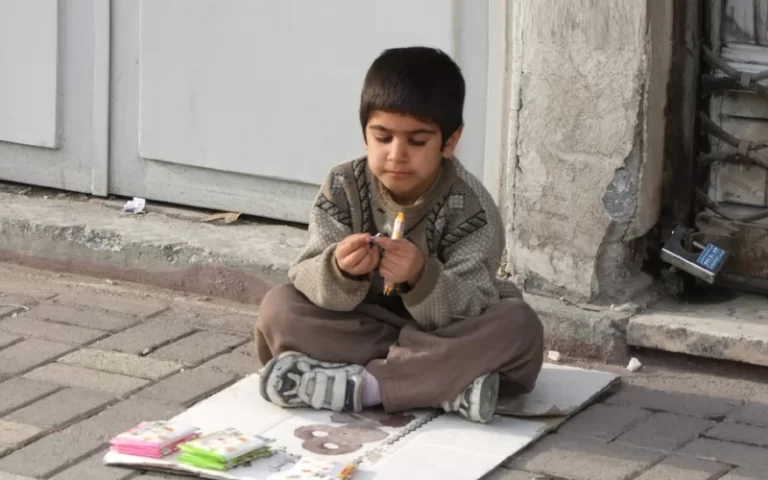
With housing prices rising by about 50 percent in recent months in some areas, even owning a house in Tehran has become practically impossible for most people.

Since 2018, the value of Iran’s currency against the US dollar has fallen by more than 70 percent. The official inflation rate is reported to be about 40 percent, when in fact the true rate is much higher. As a result, more than half of Iran’s population of 82 million lives below the poverty line. Unofficial estimates also suggest that the unemployment rate across the country is much higher than the official rate of 11 percent.

Compared to the past year, the prices of milk, yogurt, and eggs have increased by more than 80 percent. According to the State Statistics Agency, the prices of vegetables and meat have also risen by more than 70 percent and even staple foods, such as bread and rice, have had their prices increased by more than 50 percent.

The cause of the vicious inflation rates is the government printing more banknotes to account for the shortages in the local currency, but without backing up its already mounting debts. As a result, many people have been left extremely impoverished. Even government figures show that last year, the number of citizens living below the official poverty line, who were earning less than $46 a month, increased by more than 40 percent.

In an editorial titled ‘Serious Danger!’, Masih Mohajeri, the editor of the Jomhuri Eslami newspaper, wrote, “Bread did not become more expensive during the (Iran-Iraq) war. At that time, I heard from the Prime Minister that he had heard from Khomeini that the government wants to increase the price of bread by one rial and he (Khomeini) immediately objected.”

On April 15, the state-run ISNA news agency reported that the regime’s president Ebrahim Raisi was unhappy with the rise in prices of basic goods and had ordered regulators to investigate the ‘hidden causes’. Stating that the price is unreasonable and unjustifiable, Raisi tried to put blame on unknown sources and said, “It is unacceptable that a certain company or factory in the private sector can suddenly increase the price of its goods.”

These are the words of a president who admits his complete inability to control prices, even though he has repeatedly promised to fight inflation since taking office last year.

This comes at a time when food, housing, fuel, and basic commodity prices have risen to unprecedented levels in recent months. As always, the mullahs blame the economic and social problems of the people on imaginary and unknown factors, rather than accept and take responsibility for their own actions.

Raisi has repeatedly blamed the previous government of Hassan Rouhani, those who tried to destabilize his government, and so-called smugglers and promised to improve the situation in the future. Now he must answer the question, how long does it take to realize that the country cannot be run on the basis of‘ speech therapy’? This is a term coined by the state media to describe Raisi’s penchant to give speeches filled with false hope and hollow promises.

Even someone loyal to the regime, like Mohajeri, said, “Do not try to deceive the people or call the critics of the current situation, of which you are the founder, counter-revolutionary, and dependent on the United States and Zionism. The truth is that the people are not buying anymore such ridiculous excuses.”

Immediately after these comments were made, rival media outlet, the Quds Online blamed the Jomhuri Eslami, writing, “If honesty and courage are the criteria for the author of this analysis, he should first apologize to the public opinion and the system for presenting toxic analyzes that have affected the economy and the people of the country, not now that the government has achieved great success in curbing hereditary challenges.”

Looking at the current political climate, it appears that the power struggle between the various factions of this corrupt regime has reached new levels that have never been seen or felt before.

It is also worth mentioning that Raisi was the only presidential candidate that Khamenei wanted to come into power and on various occasions, he has approved and praised him and his government, even though this administration’s failings over this past year have been catastrophic.

As a result, one of the regime’s most influential newspapers is calling for Khamenei’s resignation. This should be considered a serious alarm for the Supreme Leader and a step forward for freedom and democracy for the Iranian people.