Home Blog Page 248

Dropouts, Mullahs’ Annual Gift for Iran’s Youths

Dropping out of school in order to work and help their families has become one of the main social crises for children in Iran. Many children, even before having the chance to start their education properly and build their own future, are forced to stop studying, leaving these dropouts facing extremely bleak economic and social prospects.

Millions of children and youths across the country are routinely denied or have limited access to education. For those who are fortunate enough to have the opportunity for some level of public schooling, this is often limited to a primary education, which will not help these children enough to build a brighter future for themselves.

Even for those who do attend high school, the promise for a future based on their education is dim, which is causing many students to drop out, in addition to the students who are forced to leave the school at the very first stages.

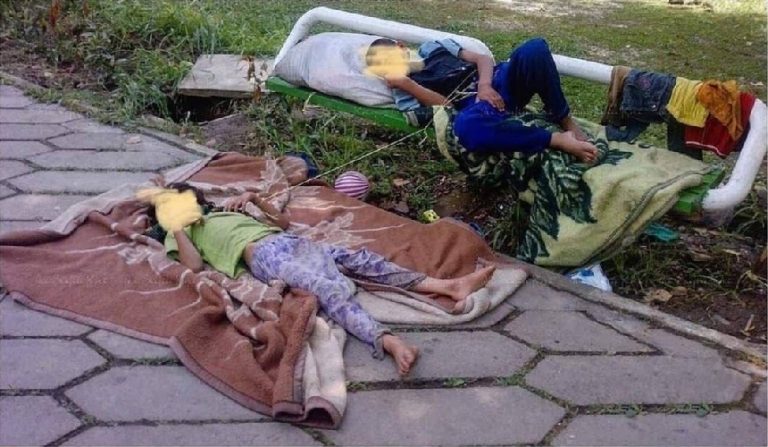
This crisis has created a society of children who are left on the streets, struggling to survive. Across Iran, the number of these children has now reached one million.

By examining the recent publications from the Iranian regime’s media outlets, we will find thousands of reasons and statistics for such a situation. Although many of these state-run outlets are hiding the real reason behind this crisis, namely the government corruption, inequality, and wrongheaded educational policies.

According to Alireza Kazemi, the regime’s acting Education Minister, in 2021, “210,000 elementary school students and 760,000 high school students” dropped out of education.

The Statistics Center of Iran has announced the dropout statistics of “primary and secondary schools” in the academic year 2020-2021 which is “about 970,871 thousand students.”

This statistic of dropouts in Tehran alone is the highest number in the country. We can only imagine how extreme the situation is in other regions of the country, especially in the poor and border regions.

Behrouz Nazari, the Director of the Research Group on Education and Studies Development and the Development of the University Jihad Organization said, “Tehran is one of the cities with a high number of working children and school dropouts.”

Completely disregarding the regime’s corruption and the social inequality in Iran, he added, “Environmental poverty causes children to be sent to work centers instead of studying.”

Along with the shocking numbers of dropouts in Iran, another aspect that is adding to this crisis is the decline in the quality of education that children are receiving. Many officials are trying to attribute this situation to coronavirus, but this problem existed long before the pandemic began. Ironically, many families were forced to keep their children out of school because they could not afford to pay for tablets and laptops.

Alireza Kazemi explained, “I am talking about the low quality of education in the pre-Coronavirus era, when the skills of reading, writing, and literacy in education were not of high quality, even at that time.”

This is a sad situation for the country’s hope and its future. With the spread of such systematic destruction, the acceleration of dropouts cannot be compensated, and it will only harm future generations and subsequently, the country’s progression.

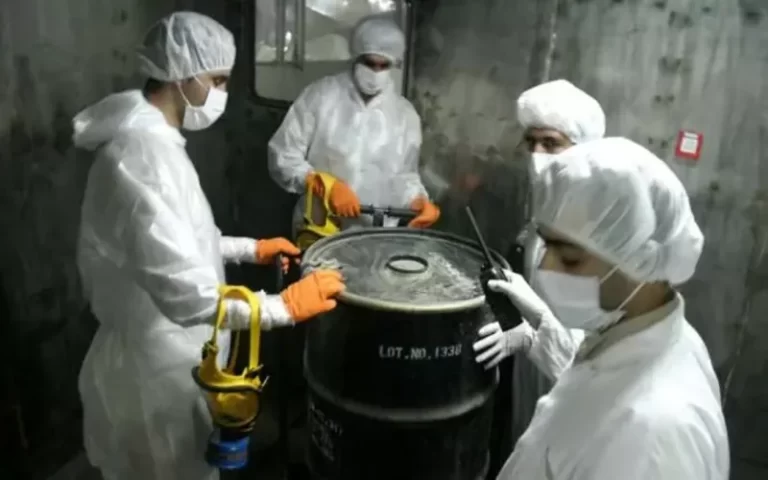
During Obama’s presidency, the US government handed over about $1.7 billion in cash to the regime. Simply calculated, even with just half of this money, the regime could eradicate unemployment and the crises of child labor and dropouts, but with the regime’s priorities like its nuclear and missile projects, this is unimaginable.
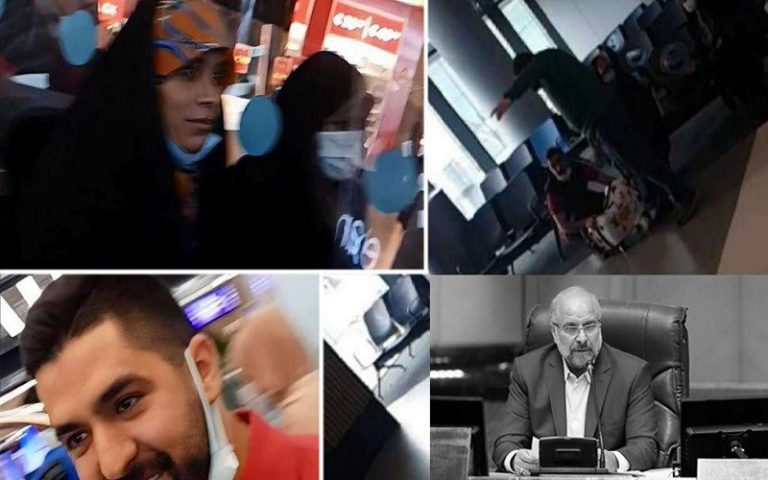
Iran Regime’s Endless Scandals

Over the past few days, one of the biggest news stories in the Iranian regime’s media has been about its parliament speaker Mohammad Bagher Ghalibaf’s daughter traveling to Turkey to buy nursery items, or as the media have referred to it, ‘baby-stuff-gate’.

The reaction from the Iranian people has been sheer bewilderment as this news is completely irrelevant in comparison to the regime’s hundreds of cases of embezzlement, astronomical thefts, and human rights violations. By this logic, this story should not have generated any attention.

Rightly so, it has triggered a lot of mockery and outrage from the Iranian people, as well as curses against the regime, with the story being one of the main discussions on social media over the past few days. People on social media mocked Ghalibaf’s absurd claims of supporting the poor and republished his fake and fraudulent list of assets and wealth, which he had presented during the presidential election race in 2017.

Some people have even said that men like him, and their families, have no need to travel abroad to buy something at all when they could easily order the goods instead. They have concluded that the whole story of the baby-stuff purchase was a diversion to hide something much bigger, like the regime’s money launderings, in which regime officials, like Ghalibaf, have a first-hand experience.

Addressing such an issue requires other evidence and documents. That is not the purpose of this text but examining the reasons for such a widespread social reaction is certainly worth investigating.

One of the most ingrained commonalities among the regime’s officials is their unimaginable charlatanism, a distinctive characteristic that they have inherited from the regime’s founder Ruhollah Khomeini.

In contrast, one of the characteristics of Iran’s vibrant society is its instant reaction to the regime’s actions. While the people have reached the end of their tether, nothing is left in the socio-economic and political sphere of this country that is broadcast and does not excite society’s reaction.

Now, if we add to the two characteristics mentioned above a little from the elixir of ‘freedom,’ which is the result of people’s restricted access to the internet, we gain something strange.

In a situation where all the regime’s media are censored, this little access to the free world of information, which is finding a way out through thousands of the regime’s barriers, filters, and the narrow internet bandwidth, is increasingly disgracing the regime and exposes the depth of its corruption.

Now, we can understand why the regime’s supreme leader Ali Khamenei and the regime’s officials are doing everything they can to implement the so-called ‘internet protection plan’,’ because any revelation of the regime’s corruption and crime becomes a direct threat to the regime.

The overwhelming majority of Iranians have experienced this regime with flesh and blood, but it has taken a lot of time and many sacrifices for them to reach such a position.

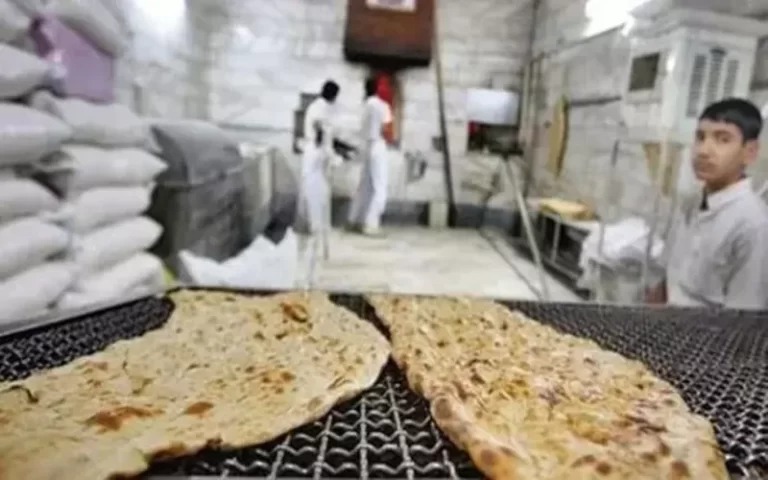
This has become even more dangerous for the regime as many of its supporters are turning away and questioning the entire system, especially since many people are struggling to survive, and cannot even afford a loaf of bread, while most of the regime’s major officials live in luxury and opulence.

‘Tribal Managers’ a New Challenge for Iran’s Regime

The term “tribal managers” is a new expression that the Iranian regime’s economic experts are using for the government’s managers and officials. This group of managers, who are unqualified and uneducated in the fields of their responsibilities, suffer from the absence of any strategic plan to govern the country.

Nepotism has become a frequent occurrence in the regime’s political affairs, and qualified managers are being marginalized. Naturally, a president like Ebrahim Raisi, who lacks any formal education, is unwilling to choose qualified managers and ministers to run the country’s economy and improve the people’s living conditions. His task and that of his government over the past couple of years have demonstrated that the government lacks a proper and qualified administration.

In a report which has exposed the reality of Raisi and his government, showing just how appalling the situation of the regime’s government is, the state-run daily Ebtekar wrote, “Of course, in his economic promises, the president emphasizes things like building one million houses, creating one million jobs, and reducing the inflation to single digit in one year. This seems a bit exaggerated, assuming the acceptance of the possibility of achieving the above goals in the allotted time, it must be acknowledged that its implementation requires a plan and, more importantly, the management of affairs by skilled and knowledgeable executives. In the most optimistic case, it should be said that some members of Raisi’s cabinet do not have such qualifications.”

During the presidential election, Raisi launched a system called “the Government managers introduction system.” The idea was merely a publicity stunt to attract votes, a demagogic ploy to convince society’s technocrats not to confront the regime’s so-called principlist faction.

Discussing this manager introduction system, Ebtekar wrote, “We must cry for the country’s management system, whose head of state is so empty-handed in identifying competent managers that he has resorted to such an inefficient tool. Is he not in charge of recruiting, training, and educating creative managers in the country? To elect top executive directors, should the head of state action in a manner like a job advertisement?”

The paper also asked, “Finally, assuming that a competent manager has been introduced, which manager who has passed the qualification test will be able to identify the competent person?”

This is a fair question and not far from reality. So far, many of the appointed managers are the most corrupt individuals in the country, and naturally, they will employ people like themselves.

The Ebtekar daily introduced the people chosen for the country’s administration as “traditional managers” and warned the government, “the continuation and non-transition from traditional management to scientific management in the not-too-distant future will ground the country and trap it in a vicious circle.”

What we have witnessed in four decades of the regime’s medieval system is that none of the regime’s decisions are logically based, so, therefore, they are not capable of solving any of the country’s problems.

Why Have Iran’s Nuclear Talks Stalled?

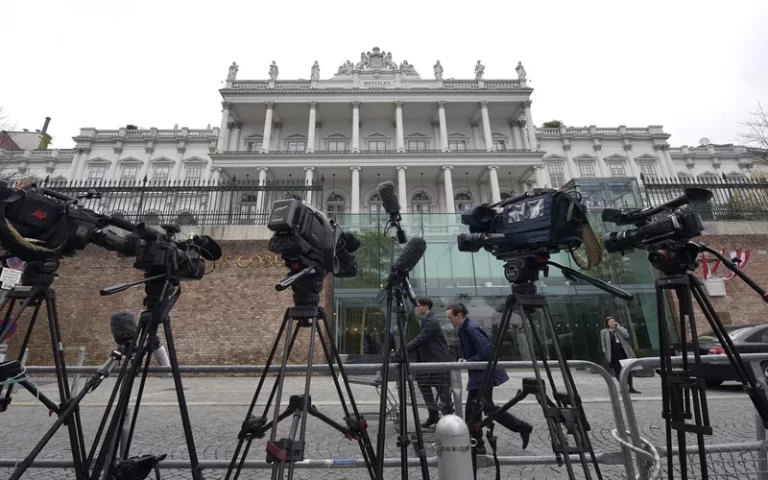
The Iranian nuclear talks in Vienna have been stalled for more than a month, and there have been several reasons cited for this stalemate. According to most experts, and even Iran regime’s officials, one of the most important issues is whether the regime’s Revolutionary Guards (IRGC) will remain on the US government’s Foreign Terrorist Organization (FTO) list, in which they were included in 2019 during Donald Trump’s presidency.

There are many obstacles in the path of the removal of IRGC from the FTO list. Those opposing the IRGC’s removal from the FTO are striving to ensure that the Biden administration does not provide such a concession to Iran.

Speaking at the US Senate Armed Services Committee, the Chairman of the US Joint Chiefs of Staff, General Mark Milley, said, “In my personal opinion I believe the IRGC Quds Force to be a terrorist organization and I do not support them being delisted from the Foreign Terrorist Organizations (FTO) list.”

In an open letter to the current US President Joe Biden, 70 national security professionals opposed the delisting of the regime’s IRGC as a foreign terrorist organization.

In another open letter, 46 retired US generals and admirals opposed the ongoing nuclear deal and urged the US government to avoid getting involved. Retired US Air Force Gen. Charles Wald said: “That just doesn’t sit well with us because the IRGC is the most malicious group in the region.”

Recently, a former member of Iran’s nuclear negotiation team Seyyed Hossein Mousavian wrote in an article for the Middle East Eye that the remaining obstacle to continuing the talks was the issue of not removing the IRGC’s name from the terrorist list. He wrote, “US allies in the region, particularly Israel and Saudi Arabia, have opposed removing the IRGC from the terrorist list, arguing that it could increase Iran’s threats in the region, and Republicans in the US Congress oppose such a move. Nevertheless, this is a red line for the Iranian government.”

“US Special Envoy Robert Malley recently reiterated that Washington would maintain sanctions against the IRGC even if the organization is eventually removed from the list,” Mousavian continued, before warning about the regime’s malign activities in the Middle East, “There are two related considerations here. Without the participation of the IRGC, no agreement with Iran on regional crises will be possible.”

The main reason for this stalemate is simply the lack of trust in Iran-US relations, and this distrust has become increasingly widespread due to the regime’s breach of promises. It should be noted that over the past few years, many of these breaches have been exposed by the Iranian opposition, namely the People’s Mojahedin Organization of Iran (PMOI/MEK) and the National Council Resistance of Iran (NCRI).

Now, the question remains as to whether the issue of the IRGC is the only factor that has stopped the talks, and if this issue could be fixed, what direction will the JCPOA talks take?

To put it simply, both sides are trying to extract maximum concessions from one another. The regime wants to get the IRGC delisted because of its legal consequences, which has created big problems for various companies who want to work with the regime, i.e., companies affiliated with the IRGC. The regime has lost most of its financial resources to realize its regional objectives.

Both sides have said that the ball is in the other party’s court. The regime’s reason for this is that Washington is reluctant to remove the IRGC from the FTO because the regime is not giving them the necessary guarantees. For example, the regime has been asked not to pursue the issue of Qassem Soleimani’s assassination and not to interfere in other countries, but they have not heeded this request.

On April 18, the state-run daily Donya-e Eghtesad wrote, “The problem is that the Americans do not want to implement the JCPOA of 2015, but instead want Iran to fulfill all its obligations under the JCPOA. In fact, they want something more than what the 2015 JCPOA provided. One of these was the issue of the IRGC and its place on the terrorist list.”

The paper added, “If the IRGC remains on the terrorist list, it means that the United States does not want to implement the 2015 JCPOA. If the US removes the IRGC from the list, they have demands from Iran, one related to missile discussions and the other related to regional discussions. For this reason, the JCPOA is no longer acceptable by the Americans, because the JCPOA, did not address the missile and regional issues.”

This daily emphasized that the problem is not only the IRGC, adding, “In the unlikely possibility that Iran would accept the inclusion of the IRGC on the terrorist list until we reach an agreement, but the problem also will not be solved.

“First, a group of members of Congress insists that any document in the Vienna talks should have the approval of Congress, which would mean the document would not be finalized. In fact, it is not possible to pass any document in Congress, and on any issue, either Republicans or Democrats will oppose it.

“Another reason is that even if Congress were to approve the document related to the JCPOA, the life of the agreement would not be more than two or three years, because Republicans have vowed that if they get into the White House, they would destroy any deal.”

For these reasons, the regime has no other options but to accept a new deal or reject everything and pay for the consequences, one of them being the expansion of social crises and people’s protests.

Iran Regime’s Media: “Officials Do Not Know What Poverty Is”

Despite the Iranian regime’s claims to improve the living conditions of the Iranian people this year, poverty is still on the increase every day. According to the state-run daily Aftab-e Yazd, “93 percent of Iranian households are dependent on subsidies.”

It should be noted that the subsidy given by the government to each person is about $2, which does not even cover a simple meal. The situation is so disastrous that many of the regime’s experts have warned the government about the consequences of not fulfilling the people’s expectations, which could ultimately lead to another uprising.

In an article entitled, “From social tantrum to increasing protests,” the state-run Jahan-Sanat daily warned regime officials, writing, “The current practice leads to social tantrums on the one hand and increasing social protests on the other.”

The state-run Etemad daily echoed this concern in an article entitled, “Current situation, slightly worse.” it wrote, “A simple look at inflation, which is above 40 percent, unemployment which is above 9 percent, misery index which has reached 49 percent, the need for one million housing per year and drought and the threat of natural disasters and the massive volume of social anomalies convince even the most optimistic people that the current situation is worrying.”

In recent remarks, Alireza Monadi, one of the regime’s MPs, expressed his concerns, stating, “Poverty is rampant on the outskirts of Tabriz so that today some people buy oil with a spoon and lease bread.”

The regime’s media mocked regime officials, with the Aftab-e Yazd daily writing on April 9, “Officials do not know what poverty is,”.

The same day, the Jahan-e Sanat daily wrote, “When you read the news and reports of some media outlets, they show the situation so safe and secure and the state of the country as pleasant and convenient as if people live in another country or even another planet and the rulers and their supporters live elsewhere.”

It added these officials talk as if “The price of a kilo of tomatoes has not reached 300,000 rials, and the price of meat and rice have not soared, and they are not wiped away from the people’s tables. Here, where people live, prices are so high that the general concern of people is to provide for their family, and medicine is one of the most important necessities of life.”

The state-run daily Hamdeli discussed the rampant poverty spreading across the county. “Only a few people are now unaware of the strange increase in prices and even the formation of long queues in some cities of the country to purchase the simplest necessities of life, such as tomatoes. The fact is that in recent days the prices of many basic commodities have risen sharply,” it wrote.

It further explained the figures of these dramatic price hikes, stating, “Tomatoes, which were 70,000 rials per kilogram when Raisi came to power, have now reached 400,000 rials. In some cities, it is reported that the price of just one tomato has reached 40,000 rials. The price of milk powder, which was previously 387,000 rials, has now increased by 44 percent to 690,000 rials. In the last eight months, the price of the Pride automobile has increased by 800 million rials. The same is true of rice and meat. Red meat has reached 200,000 rials and each kilo of rice has reached 100,000 rials.”

As the Iranian people fall further into the spiral of extreme poverty, Raisi’s government continues to claim that the economic situation in Iran has improved, and oil revenues have increased. Nevertheless, this is having no effect on improving the livelihood of the people.

This is because the increased oil revenues will not be used at all to improve the country’s economy and the livelihood of its people. Instead, the revenues are being spent on the regime’s malign activities and nuclear ambitions.

According to Mansour Owji, the regime’s Minister of Oil, the state-TV announced that oil revenues have increased three to four-fold, claiming, “Last year, our country sold $1,27 billion in gas, but this year this figure has increased to $4,6 billion, and all this amount has been received.”

If this claim is right, none of this added revenue has been spent on the improvement of the people’s livelihood as Raisi had promised. Perhaps this is because according to the regime’s supreme leader Ali Khamenei, revenues should not be spent on the welfare and comfort of the people but on strengthening the regime’s foundations. Of course, Khamenei does not say what he means by foundations. He may pretend that this is about economic foundations, but it is apparent he is talking about preserving the regime.

Iran: Khamenei Turns Schools Into Seminaries

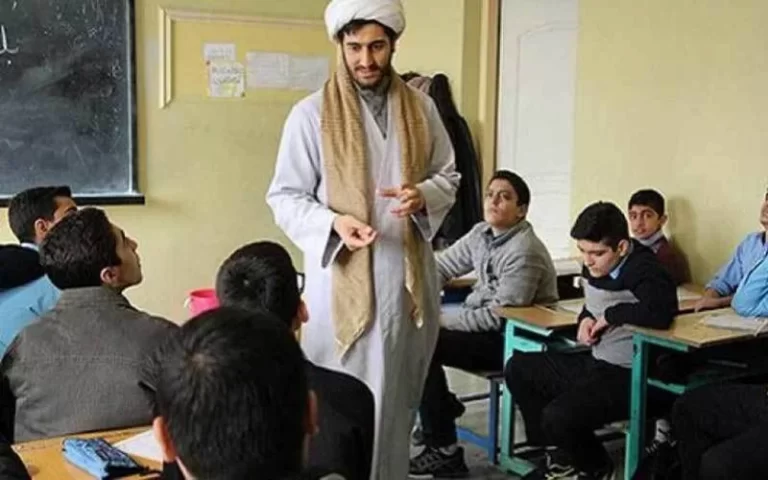
The state-run media in Iran have recently acknowledged that the authorities are intending to recruit seminary graduates to teach students in schools across the country. Observers have described this decision as turning schools into seminaries and spreading the Iranian regime’s outdated and hateful thoughts among the younger generations.

Over the past 43 years, the theocratic regime has extended its clutches over all of Iran’s social, financial, medical, political, and cultural issues. Currently, the mullahs’ plan to conquer education is forcing freedom-loving teachers and educators to resign or succumb to the situation.

Some 25,000 Graduated Mullahs Will Be Recruited

Since the mullahs took power in Iran, they began occupying schools, educational institutions, and universities, recruiting regime loyalists to take up positions in these academic offices.

Between 1980 and 1983, hundreds of professors, students, and scientists were laid off or arrested. The religious dictatorship pursued a campaign of purging dissidents, intellectuals, and supporters of political movements like the People’s Mojahedin Organization of Iran (PMOI/MEK) under the excuse of the “Cultural Revolution.”

A decade later, based on a cooperation contract between the Education Ministry and Seminaries in 1996 and by the Parliament [Majlis] enactment, the ministry was obligated to formally recruit 25,000 male and female mullahs.

In April 2021, the Education Ministry officially declared that the purpose of the contract and Majlis’s enactment was to “Islamize the schools.”

The regime’s approaches in recent years have shown that they are accelerating their efforts to inject their medieval thoughts into Iran’s educational structures by recruiting more mullahs in academic infrastructures. The Supreme Council of Cultural Revolution (SCCR) has played a crucial role in this respect.

SCCR’s Role in Recruiting Mullahs in Education Centers

Observers believe that the regime is attempting to gain its fundamental interests through such decisions. The SCCR has recently approved an enactment, tasking the Education Ministry to allocate 10 percent of its recruitments among the newly graduated mullahs to take up these academic roles in education institutions across the country.

Article 28 of the Farhangian university’s contract systematically paves the way for recruiting mullahs instead of professional and experienced teachers and educators. According to the article, principals can hire mullahs to compensate for their deficit in human resources—teachers.

The Mullahs’ Military Service in Schools

In its June 2021 directive, the Education Ministry declared that the mullahs ‘can’ serve their military service in schools. In Iran, military service is compulsory, meaning that all men above 18-year-old should spend at least two years in the armed forces or under military supervision.

However, mullahs are supposed to be exempt from conscription, but based on the latest statistics, around 2,000 mullah-soldiers are ‘serving’ in schools. The Majlis has also ordered the education department to facilitate and accelerate the mullahs’ presence in schools and pay their salaries and bonuses during these two years.

The Education Ministry has recently announced that it officially recruited 440 mullahs as teachers during the last academic year. The seminaries, however, have formally blamed the ministry for the low recruitment numbers in recent years. They stated, “We are not satisfied with this number of recruitments.”

This is while the regime and education officials have consistently rejected the pursuant demands of thousands of experienced teachers, educators, and those who have trained hundreds of students during the literacy movement, for recruitment. Officials have also denied hiring hundreds of thousands of college graduates despite their crowded rally outside the ministry and other government offices.

Seminary’s Center for Training Teachers

The regime has established a center for training mullah teachers, paving the path for mullahs to enter academic institutions and schools, with the seminaries holding more than 8,000 sessions advertising the recruitment of mullahs in schools.

Evidence has shown that the theocratic regime is intensively trying to strengthen the domination of its seminaries throughout Iran’s education system. Regarding the growing defiance of the mullahs among Iran’s young generation, this is an implicit admission to the authorities’ fear of the youths’ anti-regime activities during recent months.

Iran, an “Attractive Model” or a Fragile Regime

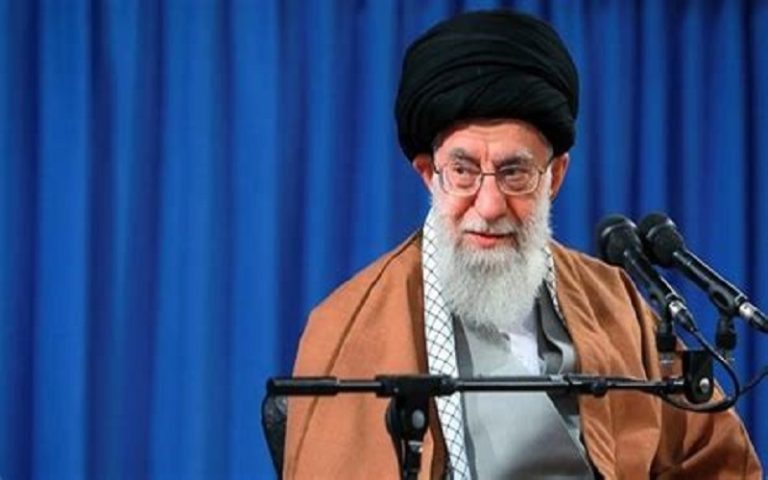
In his latest meeting with the Iranian regime’s most senior officials, the regime’s supreme leader Ali Khamenei claimed that the “power system of the Islamic Republic and its achievements in various fields have become an attractive role model for nations.”

The question is, which other countries and nations around the world are now following Khamenei’s claimed, “attractive model?”

Regarding the damages to the regime with this policy, Abbas Abdi, one of the regime’s experts said, “Instability in foreign relations plays an important role in the stalemate of economic growth and has negative psychological effects on people. Iran is still embroiled in a variety of conflicts. The sanctions and the JCPOA, the Middle East and the issues of Syria and Lebanon, Yemen’s war, Iraq and its Kurdistan, Afghanistan, and the refugee crisis, possibly Pakistan’s problems, and to some extent, indirect involvement in the Ukraine conflict are among them.”

He added, “In addition, problems may arise between Baku and Armenia at any moment and affect Iran. Relations with the southern countries of the Persian Gulf, except for Oman and Qatar, are not stable, and we have our problems with Turkey. Oil exports and economic exchanges can also be problematic at sea and for the (oil) tankers. In short, the combination of these conditions increases the country’s risk index.”

‘Instability in foreign policy’ and its effect on “increasing the country’s risk index” is one of the characteristics of a government that suffers from a weakness in domestic politics and administration. The Iranian government is heavily involved in incurable crises and is relentlessly trying to dispatch these crises to other regions.

Discussing this ‘attractive model’, Khamenei was forced to confess the widespread desperation among the regime’s officials. He said, “Making the people lose hope and making them feel we have come to a dead-end is an act of oppression against the people and the Revolution.”

This is the paradox of his speeches as he uses terms that are expressed only by a government that is more fragile than ever. For this reason, the regime cannot adopt a consistent and long-term policy.

Khamenei said, “It is due to the passivity that man feels deadlocked and says that nothing can be done anymore; This is a dangerous poison. For a manager of a complex, it is toxic to feel stuck. And the enemies try extremely hard to instill this feeling in all of us in various forms. By meeting, talking, chanting, doing interviews, via the news, by some operational activities… they try to create despair, passivity, impasse, and the like among their opponents. This is damaging.”

Hopelessness, passivity, and impasse have become the common terms with the “attractive model” for the regime’s officials. Repeating these terms makes it crystal clear that the purpose of speaking about other subjects is to marginalize the regime’s main issue. Therefore, Khamenei is then forced to motivate the regime’s officials constantly and remind them that they are still not overthrown.

The truth of the matter is that the growing activities of the Iranian Resistance led by the People’s Mojahedin Organization of Iran (PMOI/MEK), from its Resistance Units to its enlightening efforts on the internet, have created a great danger for the regime.

Iran Regime’s JCPOA: Surrender or Remorse

Since the new round of nuclear negotiations began, the Iranian regime has tried desperately to promote that it has the upper hand in the negotiations and that by insisting on its red lines, it has succeeded in bringing the US government to its knees and gaining some significant concessions. It has gone even further in making the preposterous claim of managing to create a schism among the World powers.

The mullahs are completely caught up in their self-made illusion, talking about deserving compensation because of the sanctions against them, while at the same time demanding that those sanctions be lifted. They are creating a foggy atmosphere, touting claims that both sides of the deal have reached a 95 percent agreement, and, therefore, they have dismissed any disagreements as insignificant or marginal.

However, the concerns put forward by the regime’s own media and experts are highlighting the reality of the situation. In an article entitled, “Delay in the revival of the JCPOA is dangerous,” the state-run Etemad daily wrote, “Decision-makers need to make new assessments and calculations of new regional arrangements and orientations. Assessment outside of the cumbersome considerations in Iranian official circles, however, shows that the delay and hesitation in the rapid signing of the JCPOA is a loss of a historic opportunity, and the loss of this opportunity will undoubtedly lead to historical regret.”

In an article entitled, “Vienna’s opportunity is being lost,” the state-run Mardom Salari daily quoted former regime official Kourosh Ahmadi, who warned the regime that they should not count on China’s help to circumvent the sanctions to sell oil, emphasizing that, “the revival of JCPOA could also end some of the political tension between the government and the outside world.”

A statement addressed to the Iranian regime’s president Ebrahim Raisi, by 250 members of the regime’s parliament has shown a new aspect of the dispute and disappointments of the regime regarding its future. Analyzing this statement, shows the obstacles officials face in reaching the desired agreement.

Paragraph one of the statement states, “In the new negotiations, the United States needs to guarantee a law that it will not withdraw from the JCPOA, and the issue will be adopted in a completely legal manner in its decision-making bodies such as Congress.”

It can be seen that the current US government has not guaranteed that it, or any future government, will not leave the JCPOA, and any such agreement will not be approved by Congress.

Regarding this matter, Fowad Izadi, from the regime’s principlist faction, made a remarkable point, saying, “A majority in the House of Representatives opposes what Mr. Robert Malley is doing in Vienna; occasionally, they make a statement or write a letter. The majority Republicans and Democrats, and in the US Senate, for example, there are now 49 to 50 Republican votes (against the negotiations).”

He added, “Four to five Democratic senators have officially stated that they do not agree with the Vienna process, and if five or six people join the group, then the US Senate will have the ability to break any agreement you have reached in Vienna. This means that it will repeat what happened last time.”

The second paragraph of the statement read, “One of the main conditions of negotiations is the absence of threats after the agreement. But the existence of a trigger mechanism actually means maintaining the threat and the failure of negotiations. Therefore, it is necessary to obtain the necessary guarantees in such a way that if the United States enters the JCPOA, the trigger mechanism will not be applied under various pretexts.”

From this paragraph, it can be understood that the application of the trigger mechanism in case of a possible agreement is one of the biggest concerns for the regime. If the Bidenadministration decides to return to the 2015 JCPOA, this will allow them the use the trigger mechanism.

The third paragraph expresses concern over the imposition of new US sanctions during the negotiations, stating, “Unfortunately, during the negotiations, the United States imposes new sanctions on government individuals, institutions, and agencies, which points to a destructive intention in the negotiations. So it is necessary to specifically prohibit the enactment and imposition of new sanctions and state that the lifted sanctions will not be re-imposed.”

This clause shows that even if the nuclear sanctions are lifted, others will be implemented that will address the missile program, terrorism, and human rights issues. This would mean that in practice, their temporary suspension will not benefit the regime.

Gradual death of Iran’s soil, subsidence, an irreversible threat

Iran’s soil is experiencing a slow and silent death. Despite the many warnings of domestic and international experts, the regime has not done anything to stop the destruction of the country’s environment, and in fact, its exploitive actions are only increasing the destruction.

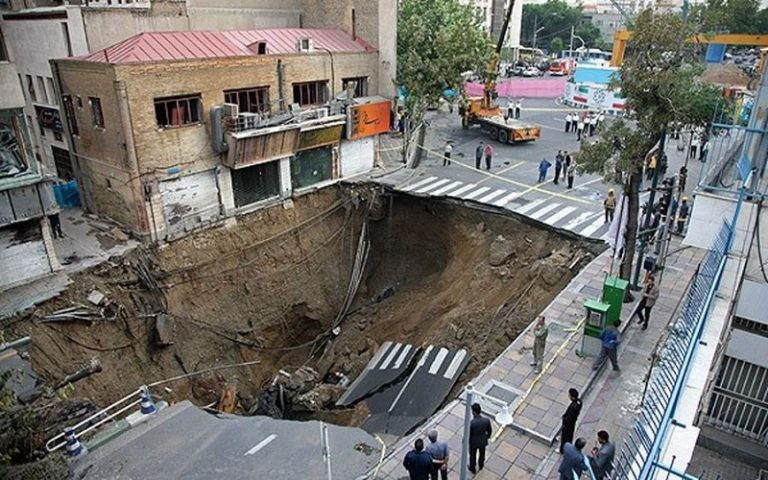
Since 2005, water and soil experts have consistently warned that Iran is suffering from irreversible environmental destruction. They have said that Tehran’s ground is subsiding around 17cm annually, and this is not just happening in Tehran; many other cities are reporting the same situation. For example, reports have indicated that fields in Varamin, east of the capital, have subsidence of 12cm, while Mashhad city in the northeast, reported that this year the fields around the city, as well as the ground of the city have subsided by 24cm.

The state-run news agency ISNA reported that the reason behind this disaster is the prodigal groundwater withdrawal. It wrote, “When the amount of withdrawal is more than the amount of sustenance of the aquifers, the earth moves downwards and finally the soil particles are compressed and, in such conditions, the phenomenon of subsidence finds another meaning and that is the ‘death of aquifers’.

It added, “Because the aquifer particles are compressed due to subsidence and can no longer return to their real state. Hence the phenomenon of subsidence is referred to as ‘an irreversible risk’.”

The damage in the cities is already weakening the foundations of buildings and structures, with dangerous cracks appearing in the buildings making them uninhabitable. Longitudinal structures, such as roads and railways, power lines, gas and oil pipes, power plants, and refineries, must be carefully aligned and any diversion from this will have severe and dangerous results. These situations, it is creating a life-risking situation for the Iranian people.

The head of Iran’s geological water group of the Geological Survey of Minerals and Exploration has indicated that “in 13 years in some basins, four times as much water that has entered the plain, has been withdrawn by various means, including agriculture.’ So, it would not be strange to witness a ‘water depletion on the horizon.’

In this regard, in an interview with ISNA, Dr. Iman Entezam stated other facts about this environmental crisis. He said, “The groundwater situation in the country is somewhat clear to everyone, and we have witnessed a decrease in groundwater reserves since about 1993-1994 due to improper withdrawal, the creation of illegal wells, climate change, and lack of proper water management in the country that happened all over the country.”

Other regime experts have said that subsidence is nothing new and that it has been occurring in the country for the past 10 to 15 years, and it is only now that they are realizing its results. They have begun referring to this phenomenon as ‘Earth cancer’ because the regime is now in a situation where it is unable to do anything about it anymore.

One of the reasons that the experts have said is having a major effect on the water scarcity in the country is the regime’s unscientific dam creation, which has destroyed the country’s indigenous engineering. These dams are the main causes of the vast evaporation of the country’s water resources that are accumulated behind these dams. As a result of the mismanagement of the resources, the regime has completely destroyed the country’s dryland farming.

With the amount of agricultural capable soil, theoretically, Iran would be able to produce and provide enough cereal for the whole of the Middle East region.

The most dangerous province in the country in terms of subsidence is Isfahan in central Iran. It is the only metropolis in the country where subsidence has severely penetrated the city. The subsidence rate in the Tehran plain is said to be about 6 to 7cm., and the regime does not seem to be concerned at all. Around the world, in cases where the subsidence rates are higher than 7cm, warning sirens are usually sounded to alert people to the danger it may cause.

The subsidence rate in Fars’s province is also high, like in other provinces. While the main faults of the country are mainly located in Kerman province, this province is also facing subsidence which has dramatically increased the risk factor of impending disasters.

North Khorasan, in the northeast, which has suffered major natural crises such as floods and earthquakes, mostly above five magnitudes on the Richter Scale, must now add to its books the risks of dangerous subsidence.

The plains of Yazd-Ardakan and Abarkooh in Yazd province have been noted to have the highest rates of subsidence in the province. Due to the lack of groundwater resources, lack of catchments, and reliance on internal resources, Markazi (Central) province is also facing rising levels of subsidence. Across Iran, it has been noted that around 609 plains in the country are currently exposed to subsidence.

Iran’s Regime a Specialist in National Wealth Devastation

Under the rule of the Iranian regime, national wealth and the people’s capital have been squandered. Without any regard for the country’s future and progress, the regime has wasted more than four decades of the country’s resources, and they are not ashamed of constantly insulting the Iranian people with their voracious and shameless appetite.

Alireza Erafi, the director of the seminaries in Qom, said in an interview, “I used to say in the Al-Mustafa University that if you want to lend money to a seminary student, put an amount where there is no accounting, and the seminary students are free to take whatever they want and then return it.”

He added, “Even if an amount is lost, there is no problem, but it is worthwhile to strengthen that sense of freedom of choice and return of the loan by the student without any external factors. This gives him a personality that is above all these professions and makes the seminary spiritual and moral.”

These shameless remarks have caused a public backlash, and some have questioned whether, after 43 years of ‘stealing’ and ‘wasting national wealth’, there is still any money left to those scholars and mullahs should have free access?

This report addresses some aspects of the plundering of the resource and its effects on the Iranian economy.

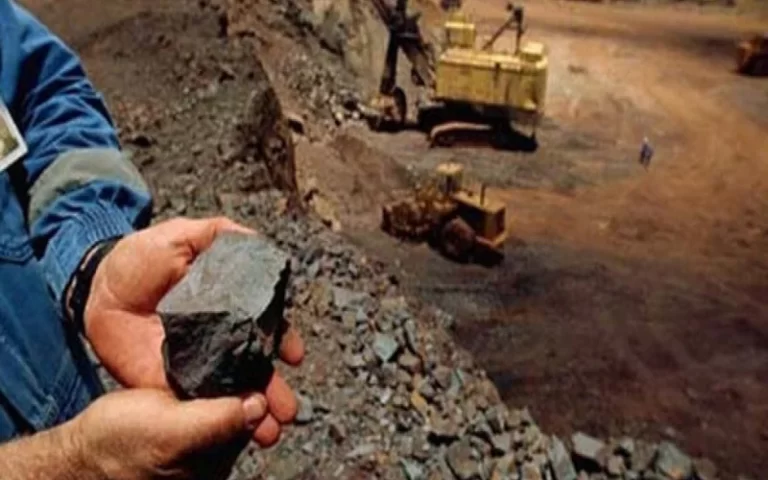
The Iranian regime rules a country that, according to credible reports, possesses eight percent of the world’s natural resources, and almost all elements of the Mendeleev table can be found in abundance in this land.

However, the ‘Iranian Welfare Information’ database, affiliated with the regime’s Ministry of Labor and Social Welfare, reported on April 4 that 93 percent of Iranian households are dependent on subsidies, of which 35 percent are poor, 57 percent are from the middle class and eight percent are considered rich, of them are in the ranks of the regime’s elite and supporters.

According to the report, a statistical study by the Deputy of Social Welfare in the Ministry of Cooperatives, Labor and Social Welfare, shows that 77.4 million people need the support of subsidies to be able to manage their livelihoods. Of this figure, 27,103 million people live in poverty.

The existence of a large bureaucratic apparatus and numerous religious institutions that do not provide any public services are among the reasons for wasting Iran’s financial resources.

Economic corruption is another cause of the destruction of national wealth. As Transparency International recently announced, Iran currently ranks 150th out of 180 countries in terms of the corruption perception index.

Statistics released by the regime’s Ministry of Economy and Finance show that the regime had sold over 1,370 trillion dollars of oil by the end of 2017. A large sum with which any country could rise from its ashes and join the club of the developed countries, but because of the regime’s economic destruction, Iran is not even among the developing countries. The only subject that is developed in Iran, is inflation, high unemployment, low economic growth, stagnation, stagflation, etc.

After former regime president Mahmoud Ahmadinejad took office, the price of oil rose to $140 a barrel. During his eight-year tenure, Iran is said to have generated more than $700 billion in oil revenues. But contrary to Ahmadinejad’s claims, not a single dollar of this huge income was seen on the people’s table.

After Mahmoud Ahmadinejad’s term, Hassan Rouhani signed the 2015 nuclear deal with 5+1 known as the JCPOA, which freed up about $150 billion in frozen regime assets in various countries. But again, nothing of this enormous wealth reached the people.

The regime situation is so disastrous that instead of supporting the people, it is fleecing them more and more and compensating its budget deficit from their pockets. An example of this claim can be seen in the stock market where, according to many regime officials and experts, the Rouhani government earned three quadrillion rials from the people’s assets and investments.