Home Blog Page 250

Corruption in Iran Spiraling Out of Control

0

According to the Iran regime’s media reports, the 2021-2022 public-private partnership bill will pave the way for legalized corruption in the coming years.

The 2021-2022 budget bill has run into problems. Serious doubts about the realization of the budget line to the staggering increase in taxes and sales of government assets and the scandals over rising prices of energy carriers and the impact of removing preferential currency from some imported goods account for this.

Moreover, another case that has become a source of great concern among the regime’s economists is the so-called ‘Public-Private Partnership Bill’.

According to the regime’s media and Ahmad Tavakoli’s ‘Transparency and Justice Watch Organization,’ the ‘public-private partnership bill’ is currently being pursued under two parallel axes in the Iranian parliament. Tavakoli belongs to the regime’s principlist faction close to supreme leader Ali Khamenei.

First, in the 2021-2022 Budget Consolidation Commission, under the note of the four budget laws of 2021-2022, Ebrahim Raisi’s government intends to recognize transfers to the private sector.

Secondly, in the Civil Commission of the regime’s parliament, it has been decided to review and decide on the bill proposed by the regime and instructions by the Planning and Budget Organization.

According to this instruction and note, some 86,000 projects are to be selected within two months of the date of the budget announcement, without even specifying the mechanism of this selection and even though the owners of these projects must submit these projects within one month.

‘Transparency and Justice Watch’ quotes Ahmad Tavakoli as saying that the corruption that is being observed now has started from the top of the regime and should be pursued by the officials and agencies in charge of monitoring and dealing with those who are corrupt.

On November 2, 2021, the state-run daily Shargh wrote, “The background to the Public-Private Partnership bill shows that it was drafted by a group of profiters so that they can institutionalize corruption, graft, and discrimination in the legislative and executive process through legislation. According to official statistics and statements, there are more than 86,000 semi-finished construction projects in the country. Ten billion rials in credit was allocated to complete each one.”

The report says that no government can bear the cost of completing these projects, so under this pretext, they try to hand them over to their friends for a small price, which is the source of disputes and conflicts of rival mafia currents.

Mohsen Renani, a regime economist, said that considering the amount of debt owed by the government and the prospect of a huge budget deficit even with the help of oil and tax revenues, the regime cannot complete these projects.

Renani concludes that in this case, it is ‘rational’ to create a process as soon as possible so that some of these semi-finished projects could be transferred to the private sector or even to foreign investors, and they try to complete these projects.

On the surface, it seems that this might work, but the problem occurs when according to Renani’s remarks and as the regime’s Court of Audit has reported,  several of these transfers to the private sector (meaning companies affiliated with the IRGC), are 68 percent corrupt.

Renani mentions Moghan Animal Husbandry as an example, whose real value was 40 trillion rials, but the regime’s profiteers estimated falsely its value to be 18 trillion rials, and it was handed over to some of the regime’s elements under the pretext of privatization.

Renani also pointed to the period from the beginning of privatization in Iran in 1991 to the end of 2019 and concluded that 900 government-run projects and enterprises have been transferred to the private sector, the total value of which is currently estimated at 7,200 trillion rials.

He cites a report by the Court of Audit of 2018, when several major examples of corruption in the privatization of state-owned companies were highlighted, with the lowest level of corruption standing at 52 percent of the wealth of these companies.

Considering this percentage of corruption in 30 years after the Iran-Iraq war, the equivalent of 3,740 trillion rials of the wealth of the Iranian people has been looted by those in power.

According to him the ‘Public-Private Partnership’ bill, which is currently being quietly approved by the regime’s parliament, could create corruption equivalent to 15,600 trillion rials in the country, which will flow directly from the pockets of the Iranian people into the pockets of the corrupt officials.

He estimated that this amount was equivalent to four times the corruption of the privatization policy over the past 30 years leading up to 2019.

Farshad Momeni, a regime’s professor of economics, said that the so-called ‘public-private partnership bill’ would take the most corrupt part of the government (i.e., ‘government transactions’) to darker chambers of the government and will quietly attach this wealth of the people to the wealth of the regime’s nobles.

Quoted by the regime’s state-run news agency ILNA on March 21, 2021, he warned, “According to the Organization for Economic Cooperation and Development (OECD), public transactions, which have an annual value of nearly 20,000 trillion rials in the country, have the highest volume of bribes exchanged among the eight branches of government and equivalent to 57 percent of total government bribes.”

Some of the regime’s economists said the negative consequences are no less than the possible consequences of a 25-year contract with China.

The amount of corruption in this bill is so huge that Renani said, “The scale of corruption in all privatizations in the 30 years after the war (with Iraq) is roughly equivalent to a banknote going  1,440 times around the earth. It can be said that the ‘public-private partnership’ bill, which is now being passed quietly in parliament, has a ‘corruption capacity’ equivalent to 6,000 banknotes around the earth, i.e., more than four times the total privatization corruption of 30 years after the war.”

Taxes, a Corrupt Cycle To Plunder Iran’s Impoverished People

Taxes can be defined simply in a few sentences. For example, it can be said that tax is a part of the property or income or the price of some consumer goods or any natural or legal person, which is calculated and received by the government according to the law. And it is an important source of government revenue.

Taxes are an important tool to regulate the wealth in favor of poor people. And government’s tax revenues are used to improve public service and welfare.

But in the budget bill of the Iranian regime, we see another explanation. Here the regime is using taxes to compensate for the portion of the budget that has been allocated to its malign activities. This approach pushes more people below the poverty line every day.

The regime has increased taxes by 62 percent compared to the last year to generate an income of $21 billion.

The maximum amounts of this forecast are as follows:

  • VAT: About $6 billion
  • Corporate tax: About $5.4 billion
  • Import tax: About $3.2 billion
  • Tax on businesses and guilds: About $1.3 billion
  • Wage tax on public and private employees: About $1.9 billion

In this regime, everything is upside down. The law applies to everyone except the regime’s companies and financial institutions. Every small company and business is obligated to offer its balance sheet and performance account and profit and loss, but the regime’s institutions and companies are not required to do so.

In September 2019, the state-run website Eghtesad News wrote: “60 percent of Iran’s national wealth is in the possession of the four institutions ‘Execution of Imam Khomeini’s Order, ‘Khatam-al Anbiya Construction Headquarters’, Astan Quds Razavi’ and ‘Mostazafan Foundation, none of which has any connection with the government and the Parliament.”

The Execution of Imam Khomeini’s Order, controlled by the regime’s supreme leader Ali Khamenei, is a conglomerate of companies and holdings with billions of dollars of income. This institution has not provided any financial information about its assets and activities.

As far as the Khatam-al Anbiya Construction Headquarters is concerned, the regime’s National Defense University website quoted its former commander, Saeed Mohammad, as saying, on May 21, 2021, “The base was established to implement the country’s super-projects and accomplished many things. The production of more than 40 percent of the country’s gasoline, daily production of 150 million cubic meters of natural gas, construction of 4,000 km of the country’s railway network, construction of about 50 percent of the country’s dam reservoirs, and construction of 900 km of freeways are just part of Khatam’s 30-year record.”

He also explained why the Headquarters’ financial records and tax payments are not made public. “To prevent the exposer of the financial information of the base, trusted people should be hired to carry out these processes, and for this reason, a special tax branch has been appointed for the base with specific people,” he said.

The HQ’s records and assessments made by experts showed that the IRGC participates in, owns, or manages about 80 percent of all economic projects in Iran.

But that is not all. This HQ owns more than 60 piers in southern ports and smuggles billions of dollars into the country each year.

Astan Quds Razavi is now an economic empire with hundreds of different companies and institutions. Its subsidiaries add all their revenues to Khamenei’s assets. This institution is exempt from taxes by the order of the regime’s previous supreme leader Ruhollah Khomeini on April 9, 1989.

Iran: IRGC’s Massive Corruption Aggravates Internal Fissures

0

Corruption and mafia relations within the Iranian regime’s Revolutionary Guards (IRGC) have an intriguing back story. This organization now has nearly full control over Iran’s economy. After the ruinous Iran-Iraq war, the regime gifted the country’s economy to the IRGC to be able to justify its existence, just as it was losing its legitimacy by the end of the eight-year war.

Since then, IRGC has continued its activities as an economic entity in parallel with its main duty as the regime’s guardian and the main force for domestic repression. Every day we see new scandals about the corruption of this organization leaked to the public, which exposes the main reason for all the people’s misery and the bankruptcy of the country’s economy.

On February 10, an article released by RadioFreeEurope exposed the extent of the IRGC’s astronomical corruption. The article read, “Radio Farda has obtained an audio file of about 50 minutes, most of which was a secret meeting and conversation between Mohammad Ali (Aziz) Jafari, the then Commander-in-Chief of the Revolutionary Guards, and Sadegh (Mirza Hassan) Zolghadrnia, the Former Economy and Construction Deputy of the Revolutionary Guards in 2018, regarding the corruption of the forces related to the IRGC Quds Force, the IRGC Cooperative Foundation and the Tehran Municipality.”

The regime’s first response to any criticism about their crimes and corruption is usually public denial. However, their officials and state media have been quick to take the stage and show their frustrations about this latest leak, which has highlighted the gaps in the regime’s security that have led to this information becoming public knowledge.

According to the Fars news agency on February 14, Ramezan Sharif the spokesperson to the IRGC said the evidence that this case is real while trying to exonerate Qassem Soleimani, the eliminated mastermind of the regime’s Quds Force terror organization. “For the past five years, the IRGC supervisory apparatuses have been suspected of mismanagement and misconduct in one of the companies affiliated with the IRGC Cooperative Foundation, according to their current methods and continuous surveillance. After a thorough and professional investigation, the case was referred to the courts, and the judiciary, in cooperation with the IRGC, issued verdicts against the offenders, who are currently serving their sentences,” he said.

Talking about Soleimani, he added, “This incident once again showed that the high-ranking martyr Commander Haj Qassem Soleimani could not be tolerated by the enemy and the theory that the enemy fears the martyr Qassem Soleimani more than (the living) Qassem Soleimani has been proven as an undeniable fact.”

On February 14, Hossein Shariatmadadri, the managing editor of the media outlet Kayhan, regime Supreme Leader Ali Khamenei’s mouthpiece, reacted to the disclosure of Soleimani’s role in this corruption case and exposed the regime’s squandering of the country’s wealth for its warmongering activities across the Middle East.

He said, “In a part of the conversation, Qassem Soleimani was also mentioned, and it was noted that the Quds Force was supposed to have a share in the profit of the mentioned company. Which part of this story is disgusting and rude?! Qassem Soleimani received a share for the Quds Force, how did he spend it?”

But even that is not the regime’s main concern about the revelation of such cases. It is the increasing disillusion among its forces and losing its credibility.

Mojtaba Tavangar, a member of the Economic Commission of the regime’s Parliament, whose speech was quoted by the parliament’s news agency ICANA on February 13, said, “The fact that some people inside the country are using this audio file to attack the speaker of the parliament is, willingly or unwillingly, propagandizing against the system and completing the puzzle of the enemies against the IRGC.”

On February 13, the state-run website Nameh News quoted a statement made by Mansour Haghighatpour, a member of the regime’s principlist faction, which highlighted the serious disputes at the core of the regime. The quote read, “With the release of the audio file, they have decided to hurt (Parliament Speaker Mohammad Bagher) Ghalibaf to get rid of him and synchronize the three branches. This audio file was from 2018, why did they publish it after four years?”

Finally, Mohammad-Ali Abtahi, a former regime Vice President, warned about the social consequences of such revelations on his Telegram Channel on February 13: “The figures, which are easily expressed in the recent audio file by high-ranking officials, remind people of all the budget cuts they hear in response to their demands. Each of these files, if not met with a logical response, would be a painful shock that could tear down the rest of the strands of weak public confidence in the government.”

He added, “Ignorance affects public opinion slowly but badly. The most crucial point is that the grandeur of the security apparatuses will be damaged with all these hacks and leaks?”

What Is the Message of Iran’s Enraged Society?

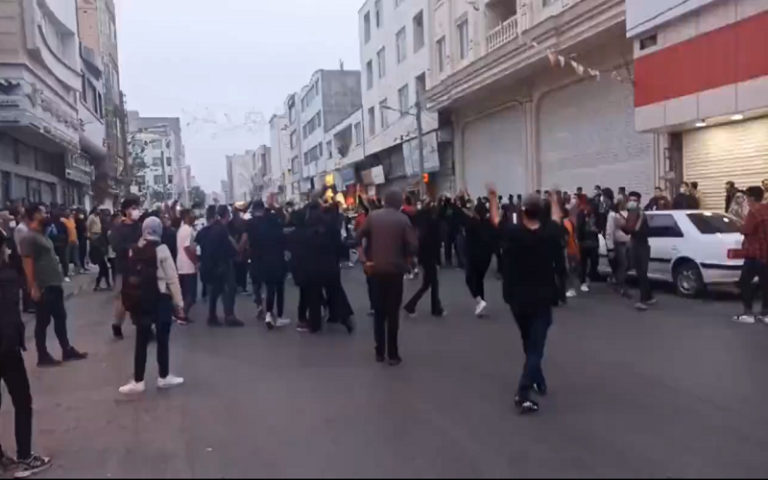
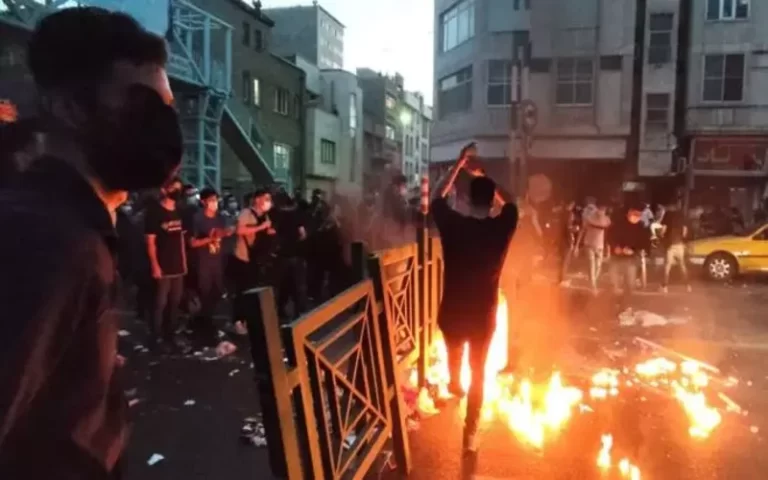
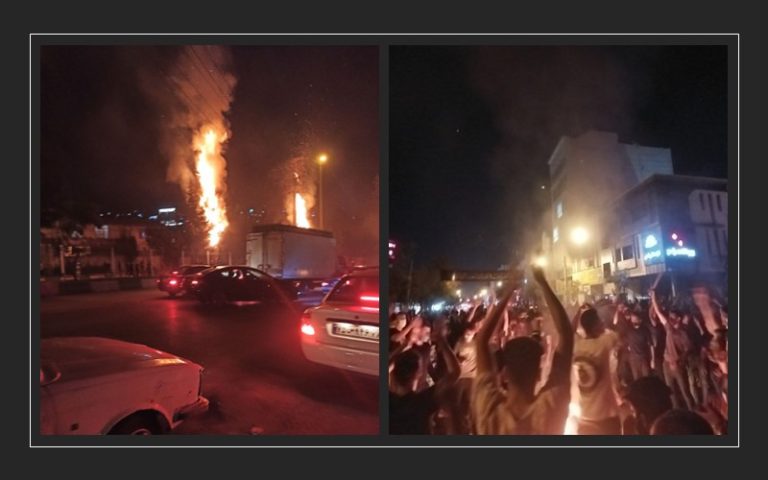
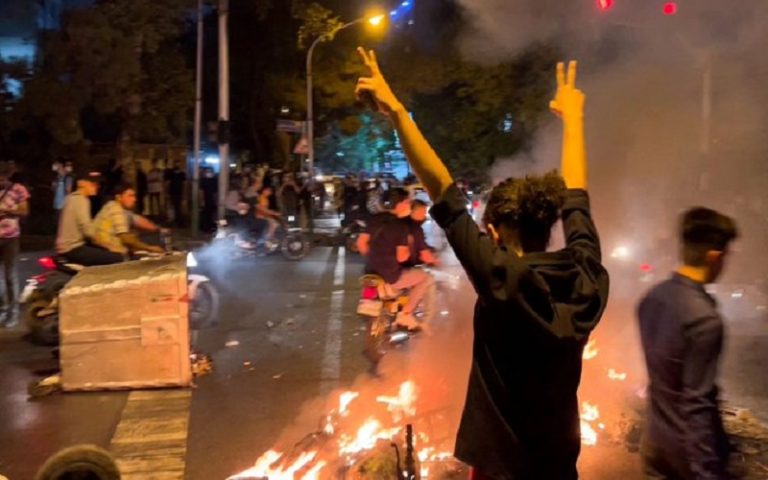
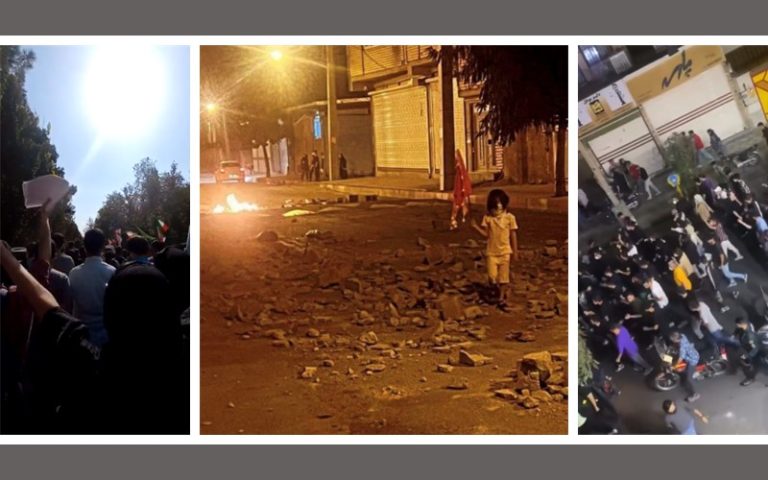
The potential of Iranian people’s rage against the regime is increasing and demonstrates itself in many forms. It reached a turning point during the November 2019 protests but was suppressed by the regime brutally. Now, however, officials are criticizing the regime’s conduct because they fear the consequences of their actions in the coming months and years.

In the second round of hearings in the Aban Tribunal, a London-based unofficial court that is dealing with the crackdown on the November 2019 uprising, a member of the regime’s Revolutionary Guards painted a horrific picture of the savagery with which the security forces crushed the uprising.

“I am a senior Revolutionary Guards officer in Tehran. I volunteered to testify in this court. I witnessed mass arrests and interrogations. Unfortunately, I was part of the arrests and witnessed the interrogation,” he said, adding, “The forces were ordered that they were free to open fire, arrest, interrogate, enter homes that suspects might have fled to. There was no need for a warrant from the prosecutor’s office. They were told to confiscate vehicles, destroy vehicles, do anything you can to quell the protests.”

On the second and third days… they deployed the Bassij, Imam Ali Units, and Saberin Units to use full force against the protesters. I witnessed buses full of arrested protesters. There were many protesters, injured and intact, female and male, young and old. They were handed over to the detention centers of the Revolutionary Guards.

“I witnessed interrogations, beatings, lashings. The protesters were stripped naked in the cold, in groups of 50 and 100. I don’t even think you can pack and beat animals as they did.”

Another witness, a police officer, said: “They sent me to the roof of the police station and told me just shot and do not care about these thugs who are gathering in front of the door and want to capture the police station.

“Shoot anyone who tries to enter the station. Looking from the roof we saw around 200 to 300 people. And other police officers who were on the street were shooting the protesters. Around 10 to 15 people were wounded, and a person who was shot near the door was on the ground with blood around his head. And I could not distinguish whether he is alive or dead.

“I cried, and felt bad and depressed, seeing the scene of the blood from above and those 10 to 15 people who were shot and injured lying on the ground.

“I didn’t know what I’m doing. At noon I delivered my gun and went home. And the next day when I returned to the station three plainclothes agents asked for me and took me and started the interrogation and asked why I left the roof. They beat me severely. They interrogated me for three days in the same way and asked me why I did not shoot the people. Why do I feel sick? Why did I not cooperate? Why did I not follow the orders of the commander?

“The people gathered in front of the door were not threatening us, because they did not have firearms, and we could stop them without shooting. They could stop the people with batons and protect the station, because I did not see any guns by the protesters, and no one shot at us.

“Nothing threatened the police and the station. With bare hands, you cannot capture a station. You need heavy weapons. They [the regime] feared that its organizations surrendered [to the people]. And therefore, they shot so hastily. And they had no problem killing the people.

“The order for this must come from the highest ranks. Which means from the city’s Security Council or even higher.”

The combination of these confessions with the regime’s political, social, and cultural crisis makes it clear that the regime is facing popular rage. Daily news and reports, and officials’ reaction to popular protests reflect their anxiety.

Comments by Mojtaba Mirdamadi the regime’s Friday prayer leader in Isfahan on February 4, 2022, show the regime’s predicament and its inability to control the country’s critical situation.

“If one day we don’t have the support of this leader, they will cut off your heads first,” he warned, adding, “Be careful! If we lose this power, we will have nothing.”

This reveals that the wall of repression is beginning to crack and once the wall collapses the regime will end up in the ash heap of history.

Iran Regime’s Officials Warn Each Other: “The Enemy Holds the Key to Cyberspace”

The expansion of social networks and the development of communication have weakened the Iran regime’s censorship apparatus. Even while the regime has recruited many of its supporters to fight against global awareness reaching the people and expanding the regime’s censorship.

Until now evidence has shown that the regime is the main loser in this war despite its huge investments in information censorship such that even its supreme leader Ali Khamenei has warned that cyberspace has become “unbridled.”

He even once said that if he would not have been the regime’s supreme leader, he would have taken control of the country’s cyberspace.

Khamenei’s and the regime’s main concern about cyberspace is the expansion of activities that target the establishment, particularly in the past few years.

And the youths of Iran while becoming aware of other solutions for a prosperous life and the knowledge to run a democratic government, are echoing the voice of change which is propagated by the regime’s main opposition the People’s Mojahedin Organization of Iran (MEK/PMOI).

Therefore, it is not without reason that the regime’s officials close to the leadership constantly repeat Khamenei’s warnings about cyberspace.

They urge institutions tasked with censorship to act before it is too late. Because according to Morteza Agha Tehrani the Chairman of the regime’s Parliamentary Cultural Commission, quoted by the state-run daily Entekhab on February 10, 2022, as saying, “The enemy holds the key to cyberspace,” warning that “this enemy can hold the management of the country’s cyberspace in its hands and create problems for the nation whenever it wants.”

On February 11, the Friday prayer of Mashhad, Iran’s second-largest city, Ahmad Alamolhoda, displayed his fear about the enmity against the regime in cyberspace and said that the enemy had made cyberspace its field and “it is attacking us with all its might.”

Then addressing Mohammad Bagher Qalibaf, the regime’s parliament speaker, who was participating in the Friday prayers ceremony of Mashhad, he said:

“As the Commander-in-Chief of the Soft War Defense, you should approve the law on cyberspace regulation in the parliament as soon as possible.”

And the same day, Seyed Ahmad Mehdinejad the Friday prayer leader of Semnan expressed his concern: “In this virtual and non-virtual space, (the enemies try) to separate the youth from the revolution and the Islamic system.”

Isfahan’s Friday prayer leader Ahmad Salek cautioned parents, “to be aware that in cyberspace sworn enemies are active and that it tries to “show a dark image of the country.” In cyberspace, the enemy has been successful,” he added.

Similarly, parliament deputy Reza Taghavi lamented about this situation, when quoted by the state-run news agency IRNA on February 11: “The enemy has chosen the polluted cyberspace as a stage to assault the thoughts and ideas of the (system) and has attacked all the honors of this nation in this space.”

Such expressions of concern demonstrate how paranoid the regime officials are. As Alamolhoda said, “The enemy has control over 85 percent of cyberspace from outside and seeks to create a wedge between the people and the system.”

‘Women Killing’ Has Become Prevalent in Iran’s Regime, Why?

In the Iranian city of Ahvaz, a heinous crime took place recently where a man beheaded his 17-year-old wife, with the help of the victim’s brother, and proceeded to display her severed head in public.

This is just one of the many shocking murders of women in Iran. Over the past years, many such crimes have been committed, but only a few of them have been made public. This crime and many others like it have increased so much that the regime’s official media is forced to report them to highlight the extent of the violence against Iranian women.

According to the state-run daily Setareh-e Sobh, which reported this case on February 8, ‘women killing’ has become prevalent in the south region of the country, and “from the summer of 2019 until the summer of 2021 more than 60 cases of women killing have been reported. A point to consider is that among the killed are victims aged between 11 and 15.”

The state-run Shargh daily spoke about the increase in crimes against women across the country, writing, “Looking at the atrocities against women in recent years, whether reported publicly or hidden from the public, are not specific to one particular class. From Gilan to Khuzestan, from Sanandaj to Urmia, every corner of this country is witnessing women killing, and this shows that we are facing a more serious crisis than a counterculture or tribal-religious prejudice.”

The prevalence of such painful social catastrophes stems only from the degenerate ideology of the clerical regime and its misogynist policies, which has institutionalized dual repression against women such that crimes against women and killing them has become a common occurrence in every corner of the country.

In an article titled “A few words about the murder of women in Khuzestan,” the state-run daily Mostaghel wrote, “Let me write a few words here. Both from the suffering of being a woman and from the suffering of being an Arab in a society that examines all faults, sins, and mistakes entirely dependent on ethnicity, but deliberately prevents pointing the tip of the arrow at the government, sovereignty, and hidden and overt social factors.”

The paper added, “Those who tell us not to again defend the ‘savage Arabs beheading their wives’ are in reality, the invisible accomplices of the women killing. Because instead of questioning the anti-human and anti-woman laws, which have either been written before or are being written or produced or propagandized with the help of governments, they are pointing the tip of their arrows at the Baluchis, the Kurds, and the Arabs.”

The situation has become so tragic that this state-run daily was forced to criticize the regime’s social experts, who are searching for the reason for such events in ethnic problems. “Throwing the ball in the court of the ‘women killing Arabs’, ‘lizard-eating and girl killing Arabs’, ‘pride worshiping Arabs’, etc. who are people with civilized roots, is exactly complements the project whose ultimate end is internal repression,” it added.

In an article pointing to the responsibility of the regime, the state-run Hamdeli daily wrote, “The pillars of government are involved in these crises such as “judicial, governmental, seminary and clergy policymakers.”

Finally, the state-run daily Javan quoted the speeches of someone from social media on February 8, and wrote, “These things have become normal for the irresponsible officials. Every day, all kinds of crimes, murders, and rapes take place in this suffering country. But the biggest unsolved dilemma is how the irresponsible officials who have set the society slip into such a situation do not have a guilty conscience, how they sleep at night, and how they sing the victory anthem during the day and trash talks. Can anyone tell why???”

The fact is that since the onset of this regime and the establishment of the velayat-e-Faqih system (absolute rule of the clergy), its reactionary and misogynist culture has paved the way for such crimes against women. Women are the first victims of this system. This makes it even more imperative that it is overthrown as soon as possible.

Iran: Growing Class Divisions and Attitudes Toward Low-Paying Jobs

Poverty affects a substantial portion of Iran’s population, and as activities like garbage collecting expand it has become a common job with low incomes especially for children who are the first victims of poverty created by the mullahs.

This is the result of an unequal distribution of wealth and huge class disparities. The recycling mafia exploits the poor intentionally.

A mafia in the hands of the administration of the municipalities and recycling plants. The state-run daily Arman wrote about this on February 4, “Today’s Iranian society is polarized into two categories: the rich and poor.” This means that the middle class is disappearing.

It added, “The implications of this class gap are clear, as the rich are getting richer and the weak are getting weaker. For example, an imbalance between the body and the soul is like an imbalance between the shape and content of society, and this imbalance eventually causes serious harm to the soul and the body and destroys both.”

On February 2, 2022, the state-run daily Jahan-e Sanat echoed the same thing, “The average per capita income of Iranians has reached $ 2,200 per year. However, that does not mean that the per capita income for all Iranians is fair and equals $ 2,200 per year. Many of the country’s income deciles have much lower per capita incomes – up to one-eleventh of this figure per year.

“The average income of employees, retirees with the 250,000 rials to a dollar exchange rate and 50 million rials per month is about 600 rials per year, which is less than about 2,200 dollars per year. This figure will undoubtedly be lower for the working class.”

In contrast to the plight of the poor, we see the astronomical incomes of the regime’s officials. This situation has created a society in Iran that is submerged in economic crises and odd and menial jobs. This explains why the ads to sell kidneys and other organs are covering up the city walls.

According to different statements, collected from the regime officials, 24 million people are without any income, more than 16 million people only source of income is a subsidy of 450,000 rials (about $2), and less than eight million people receive e,500,000 rials in pensions from the Welfare Organization or the Relief Committee.

This means that now nearly 50 million people live below the poverty line. And forecasts about the country’s economic situation say that soon more people will fall from the middle class to the lower class. Of course, these figures are not entirely true, as the media and government experts admit that the Ministry of Welfare never correctly announces the poverty line figure out of fear of public outrage.

In discussing poverty in Iran, the state-run daily Aftab News wrote on January 6, “In the past, the absolute poverty line was about 100 million rials, which can increase up to 120 million rials due to the recent soaring prices and the lack of salary increases.

“Other official statistics show that between 20 and 30 million people in the country are below the absolute poverty line. If this situation continues and there is no change in economic policies, these figures will increase daily. However, it will be out of control in the future. Ninety percent of Iranians experience poverty in different ways throughout their lives. Even if they earn more than 120 million rials, they have experienced poverty in many ways.”

This situation is the result of the 43-year –rule of the mullahs, who promised a prosperous nation to the people under the ‘rule of the oppressed’ in the first few days after the 1979 revolution.

The regime’s Association of Combatant Clerics stated in a statement commemorating the anniversary of the 1979 revolution and published by the state-run website Ensaf News on February 1, “Today our society faces major economic, political, cultural and international crises. The middle-class is shrinking and pushed into the poor class with every passing moment.

“We are seeing the emergence of irresponsible classes, individuals, or institutions that enhance their standing, particularly through the pursuit of profits and the abuse of destructive sanctions.

“People say: ‘Forget your promises of the free water, electricity and affordable housing and focus on our most basic needs. People are suffering from unemployment, stagflation, poverty, and despair. And the shameful and massive corruption combined with the waste of natural and human capital is a great danger that threatens the country and the nation.”

The Outlook for Iran’s Economy and the Regime’s Bleak Prospects

0

Despite the hollow promises of the Iran regime’s officials from its president Ebrahim Raisi, who promised a better economic prospect and boom of 8 percent, to the minister of Ehsan Khandouzi who had claimed that inflation will decrease in the next year, regime experts say something else.

And one of the obvious facts of a collapsed economy is the regime’s decision to make up for the budget deficit out of the people’s pockets, which is based on a 60 percent increase in taxes.

The state-run daily Arman on January 27 criticized the regime’s budget plan and wrote: “The 2022-2023 budget is associated with uncollectible revenues, and current budgets that have increased, have fueled inflation. Construction budgets, which could serve as a safety valve to improve the economic situation, are also insignificant. There is no mention of the seventh plan, according to which the 2022-2023 budget was to be closed.”

And Reza Hosseini, member of the Parliamentary Committee on Industries and Mines, said in remarks published by the state-run daily Bahar News that the budget for 2022 also shows that next year people should see inflation and rising prices, and I think there will be so much pressure on people so that they will forget the debate about the stock market.”

“The outlook for next year’s economy is frightening,” he added.

Arman daily asked Farshad Momeni an economic expert, “will inflation and soaring prices decrease next year due to the government’s recent policies and decisions?” Momeni replied, “The claim that inflation will be reduced in next year’s budget is a scientifically invalid claim.”

In discussing the three main pillars of corruption that have implicated the regime’s government, he said: “Iran has been captured by a trilateral anti-development alliance. A pillar of this three-pronged alliance is the short-sighted rent-seeking government. The second pillar of unproductive groups includes rent-seekers, usurers, and brokers, and the third pillar is the promoters of vulgar market orientation.

“When important decision-making institutions take over the mafia kind approaches, they impose very heavy costs on the country’s economy. The Planning and Budget Organization says that an appendix of justice will be prepared for this budget by the order of the President. You have to make a misery attachment.”

Before that, with much fanfare, tRaisi issued a statement, published by the state-run news agency IRNA on November 25, 2021, in which he introduced the “facets of the works in the budget, based on justice” and claimed, “that the correct and fair system of allocating budgets in different parts of the country and proportion to the capacities and needs will advance the economic problems of the country in a direction that will eradicate absolute poverty.”

But the reality is that by this budget, as in the past, the 4 percent wealthy minority – regime’s elements – will become richer, and the majority will become poorer, and the country’s production will nosedive.

In an article entitled, “a costly avalanche is on the way,” the state-run daily Eghtesad Saramad wrote on January 27, 2022, “The creeping and imperceptible fever of the high prices has shivered the frail bodies of the wage-earners, especially the workers and the retirees, for some time.

“Not to include consumer prices on basic goods, VAT on all food and essential household needs, and finally, the increase in electricity bills based on the declared consumption pattern; these three components, which have gradually and unintentionally entered the field of workers’ lives in the form of government regulations, will increase the actual cost of living by the end of February.”

“Is this objective and tangible increase in the cost of living, basically calculated in the inflation basket of the Statistics Center of Iran?”

The regime’s economic experts dismiss the possibility of improving the economic situation and predict that next year poverty will increase, the country’s economic capacity will shrink, and unemployment and inflation will rise.

Corruption Permeating Iran’s Economy

Following the latest speeches of the Iranian regime’s president Ebrahim Raisi, the regime’s state media are expecting new and promising changes in Iran’s economy, hoping for improvement in the stock market, an increase in the incomes of Iranian workers, and that the resolution of many of the country’s crises.

However, they still remain skeptical as Raisi’s speeches did not provide any practical solutions for a way out of the present crises. Due to the existing problems and the taxes that have been imposed on the people, there is barely any chance of an increase in production or an economic boom.

As a result, whatever Raisi does, if he does anything at all, is likely to have very little effect on the country’s society and social affairs. One such example is the migration of inner-city dwellers to the outskirts of the cities. This, of course, will have social consequences and will likely further expand poverty, and subsequently involve the regime with security consequences that many of its media and officials are worried about or are warning about.

The impoverished middle class is already struggling to survive, having lost much of their purchasing power, leaving them looking towards migrating abroad in their droves for a better life.

The regime, on the other hand, is just adding to its mistakes as the country continues to lose its experts and capable professionals, and with it, the ability to solve the problems Iran is facing today. The government is simply clueless. On the assumption that they will collect wealth taxes, they put propositions in the budget that have nothing to do with economic principles and the welfare needs of society.

In an article discussing the confusing economic situation in Iran, the state-run Fararu daily wrote on January 27, “Someone bought a car for three or four billion rials about three years ago. The price of this car has suddenly jumped to over 10 billion rials due to the successive fluctuations of inflation, in which the people had no role. This person, who had been having trouble repairing his car, must pay a tax under the title of ‘luxury car’ to the government from 2022. In fact, we are facing a class in the country that can be classified as ‘penniless billionaires’.”

Exposing Iran’s weak economy and discussing the Iranian government’s criminal imposition of taxes on the impoverished classes, who are already suffering under the heavy burden of the uncontrollable inflation, the daily further stated, “lacking the power to deal with influential institutions with special relations, the government is shifting the tax burden to people who have already succumbed to inflationary shocks. At present, the rich of Iran and the merchants do not pay taxes but take full advantage of the inflationary conditions. As much as 2,300 trillion rials of energy subsidies are paid monthly. A significant part of this energy subsidy goes to the pockets of the affluent classes of society.”

Laying out details of Iran’s mass corruption, the Fararu daily highlighted that the increase of corruption, in turn, has had disastrous consequences for society. said it wrote, “…inequality, class divisions, public dissatisfaction, budget deficits, waste of financial resources, etc. have increased, and most importantly, productivity has disappeared.”

The daily also added, “The 20-year-old wealth tax plan has been on the table of MPs for 20 years and is decaying. Why are such important plans not approved? Creating such a plan requires transparency, and since some influential institutions in our country oppose the principle of transparency and find it problematic, this plan will not be approved. In such a situation, the people should be given the right to complain that the authorities intend to take from the pockets of the people to solve problems such as budget deficits, etc.”

The West Must Take Iran’s Domestic Situation Into Account

0

As negotiations over the future of the 2015 Iran nuclear deal resume in Vienna, the Western parties to that deal are in danger of reneging on their earlier promises that the talks could not continue indefinitely.

After the negotiations resumed in November following five months of delays by the new Iranian administration, several American and European officials set late January or early February as an unofficial deadline for their Iranian counterparts to accept a compromise that trades immediate restrictions on their nuclear program for relief from US sanctions. Instead, Tehran has only hardened its posture, demanding all sanctions relief upfront, along with impossible guarantees that no future administration will be able to walk away from it as US President Donald Trump did in 2018.

Now that we have reached the unofficial deadline, there is still little sign of progress in the nuclear talks. Virtually all negotiating parties have attempted to preserve an air of optimism, but the Americans and Europeans have also been compelled to repeat that the window is closing and that major differences persist between the two sides. For their part, the Iranians have said much the same thing, and hardline Ebrahim Raisi continues to mechanically repeat that a deal is possible only if the US makes the “political decision” to suspend sanctions without precondition.

This situation has persisted for so long that it would be plain foolish to suppose that there could be a breakthrough in the time it takes for “early February” to come to an end. This is all the more apparent because the US and its allies have shown no real commitment to exerting serious pressure on the Iranian regime, which might compel Tehran to drop its ultimatums and accept an agreement.

Now, with the unofficial deadline already expiring, there is new speculation about the possibility of direct talks between Tehran and Washington. But given the current state of indirect negotiations, there can be little doubt that the Iranian regime would spin such a meeting as evidence that the US is succumbing to Iranian pressure, instead of the other way around. This is not a narrative that Washington can afford to passively accept, least of all at a time when it is so vital for the mullahs to project an image of strength, both at home and abroad.

Domestically, that image has waned and would continue to do so if the US and its allies stood their ground in the nuclear talks and demanded concessions on penalty of a dramatic increase in economic, diplomatic, and possibly even military pressure. Such pressure, or even the mere threat of the same, would go a long way toward emboldening an Iranian Resistance movement that has been gaining momentum in its efforts to overthrow the regime for at least as long as the current disputes over the nuclear deal have been going on.

In January 2018, several months before Trump pulled the US out of the Joint Comprehensive Plan of Action, Iran was rocked by a nationwide uprising that popularized explicit calls for regime change in more than 100 cities and towns. Supreme Leader Ali Khamenei soon acknowledged that the protests had been facilitated by an organized opposition movement under the banner of the People’s Mojahedin Organization of Iran, which Iranian state media had long sought to dismiss as a cult-like group without the strength or popular support to challenge the mullahs’ hold on power.

The uprising eventually contracted in the wake of dozens of killings and thousands of arrests, but it inspired a series of interconnected protests that the NCRI’s President-elect Maryam Rajavi referred to as a “year full of uprisings.” This in turn set the stage for another, even larger nationwide uprising in November 2019, which featured now-familiar slogans like “death to the dictator” being repeated across nearly 200 localities. Since then, unrest has been ongoing among at least some of those localities, and the regime’s internal warnings about the social influence of the MEK have never ceased.

Moreover, Iranian teachers have been holding simultaneous protests in 125 cities for several days, calling attention not only to their poverty-level salaries but also to the regime’s repressive response to this and other protest movements. At least four teacher activists were arrested on Monday, while earlier in January the Secretary-General of the Iranian Teachers Trade Association was sentenced to six months in prison.

None of this has slowed down the pace of activism, which is certainly unsurprising because 1,500 peaceful protesters were killed during the November 2019 uprising, only for new protests to break out in more than a dozen provinces just two months later. In fact, within the broader activist community, gestures of defiance have only continued to grow bolder.

At the start of January 5, a statue of the notorious commander of the terrorist Qods Force Qassem Soleimani was set on fire a few hours after it was unveiled to mark the second anniversary of his elimination. And on January 27, 27 state-controlled radio and television channels were disrupted, with the images of Maryam and Massoud Rajavi, and video clips of the latter speaking broadcast.

The fact is that the clerics are keenly aware of their vulnerability in the face of an increasingly disenchanted and furious population. Under such circumstances, Western countries must refrain from throwing the regime another lifeline and instead stand with the Iranian people as they struggle for liberty.