Home Blog Page 255

Fresh Sanctions To Prevent Tehran From Receiving U.S. Items To Advance Nuclear Program

With ongoing threats to the United States’ national security from the Iranian regime, the U.S. Commerce Department’s Bureau of Industry and Security (BIS) has placed new sanctions upon Iran by taking action against thirty-seven business entities operating across Asia and the Middle East who are diverting or attempting to divert U.S. items to the regime’s military programs.

The U.S. Secretary of Commerce, Gina M. Raimondo said, “The scientific pursuit of biotechnology and medical innovation can save lives. We cannot allow U.S. commodities, technologies, and software that support medical science and biotechnical innovation to be diverted toward uses contrary to U.S. national security.”

She urged that the U.S. will continue standing strong against the Iranian regime to prevent them from turning ‘tools that can help humanity prosper into implements that threaten global security and stability’.

The recent actions by the BIS were taken and implemented under the authority of the Export Administration Regulations (EAR), and in particular, the Export Control Reform Act of 2018.

The U.S. Department of Commerce said, “The Entity List is a tool utilized by BIS to restrict the export, re-export, and in-country transfer of items subject to the EAR to persons (individuals, organizations, companies) reasonably believed to be involved, have been involved, or pose a significant risk of being or becoming involved, in activities contrary to the national security or foreign policy interests of the United States.”

In regards to the list of entities across Asia and the Middle East that the BIS has found to be involved with assisting the Iranian regime with their activities, the BIS has announced that they have imposed license requirements for all items that are subject to the EAR, with no license exceptions available for any exports, reexports, or in-country transfers to these entities. The BIS has also imposed a license review policy in relation to the presumption of denial for where these entities are concerned.

The companies that have been met with these latest sanctions are organizations that have supplied or attempted to supply any items belonging to the U.S. to the regime that could provide support for their nuclear weapons and missile program.

The thirty-seven entities have all been added to the list as the requirements identify and permit such classification of any entity that has been found to have been ‘acting contrary to the national security or foreign policy interests of the United States’.
Beware of Iran’s State-Sponsored Cyber Attacks

0

It is one of the most far-reaching security vulnerabilities in the history of the Internet, and gradually more and more hackers are trying to exploit it. State attackers are also trying to capitalize on the problem called Log4shell, which startled IT professionals around the world over the weekend. This is what IT security companies report.

The problem lies in the utility program Log4j, part of the widely used Java technology. It should only log what happens on a computer server. However, computers connected to the network, e.g., from online games or cloud providers, can be taken over by hackers via the vulnerability. Products from Amazon, Cisco, or IBM are always affected. The vulnerable technique is so widespread that professionals still find it difficult to gauge which and how many services are affected.

The IT security company Checkpoint has counted the attack attempts: on Saturday, twelve hours after the vulnerability became known, it was 40,000, after 72 hours it was more than 800,000. Because of the extremely rapid growth, Checkpoint speaks of a ‘cyber pandemic’.

The state hackers try to exploit Log4shell, reported among others, the Microsoft security team, which monitors and analyzes groups of hackers. State groups from China, Iran, North Korea, and Turkey would take advantage of Log4shell. They tried to adapt the attack technique for the vulnerability, which has been known since last week, for their purposes and to merge it with existing malware. In this way, unauthorized persons could completely take over computers remotely.

The Iranian group, named Phosphorus by Microsoft, used the vulnerability to install ransomware on target devices without authorization. Such software encrypts data on victims’ systems, rendering those systems unusable. It is often used to extort ransom from such ‘shackled’ companies and organizations. According to the analysts, the group uses ransomware to make money or simply to cripple its targets. The Chinese group called Hafnium is also attacking software infrastructure via Log4shell. Other groups have taken root in systems through the gap and are now selling access to them to ransomware hackers. The IT security company Mandiant also reports that it has observed Iranian and Chinese state hackers exploiting Log4shell.

According to Microsoft, however, so-called mass scans make up the largest part of Log4Shell activity: attackers practically feel their way through the Internet, looking for vulnerable devices. Botnets – armies of hijacked computers interconnected by criminals – also use this technology. However, some of the scans measured are likely to be traced back to IT security experts who want to protect devices rather than take them over. As on the weekend, hackers installed so-called coin miners on their victims’ computers. The attackers want to use their computing power to secretly generate cryptocurrencies for themselves. Windows and Linux systems are equally affected.

The Apache Software Foundation, which takes care of Log4j, has made a security update available to close the gap. The US cybersecurity agency, meanwhile, set a deadline. It urged federal agencies to download the update by Christmas. However, the update originally provided by the foundation did not fully protect systems. Version 2.15.0 of Log4j left a hole open which attackers could use to paralyze the software. The new update 2.16.0 closes this gap. Anyone who runs servers in the network should immediately take action.

Another state-sponsored hacking activity by the Iranian government has been spotted by security researchers in recent weeks which is targeting telecommunication and IT service providers in the Middle East and Asia.

The campaign has been conducted over the past six months, and there are tentative links to the Iranian-backed actor, famous as the MERCURY (MuddyWater, SeedWorm). This was reported by the Threat Hunter Team at Symantec. Information was collected from recent attacks against Israel, Jordan, Kuwait, Saudi Arabia, the United Arab Emirates, Pakistan, Thailand, and Laos.

Working Conditions for Iranian Nurses Will Worsen if Their Problems Aren’t Solved

0

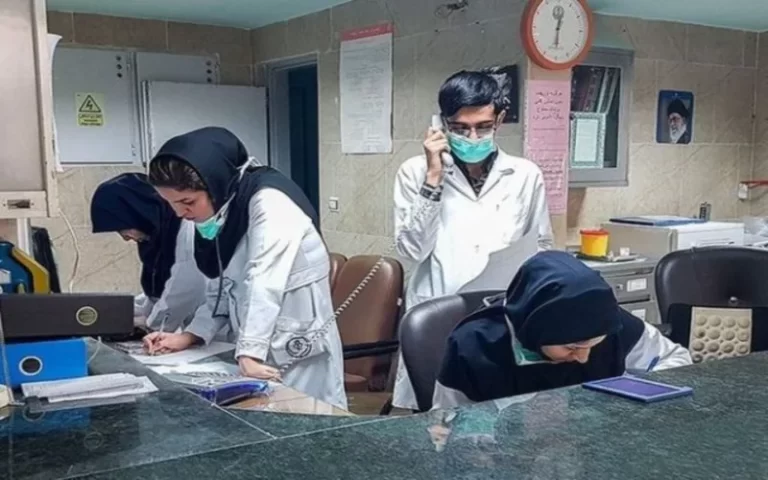
Nurses around the world are a vital part of every healthcare system as they are instrumental in providing direct and indirect care to patients across a wide variety of health matters. Where there are shortages of nurses, you will find severely diminished levels of patient care and often poor outcomes for the patients.

Back in 2008, the estimation was that around 90,000 nurses were working in Iran at the time, however, to provide optimal care to patients, approximately 220,000 nurses were needed.

Nursing is a high-risk and harmful job. In general, nurses are often exposed to stresses such as abnormal mental and physical conditions during their shifts; infection with pathogens and viruses such as Coronavirus, hepatitis, and AIDS; and exposure to radiation and carcinogens. Their job is completely different from that of an employee sitting at a desk.

The Iranian regime’s previous deputy health minister, Iraj Harirchi stated that there are only 1.6 general practitioners, dentists, and specialists for every 1,000 people in Iran, whereas, to meet the country’s demand, 2.5 doctors are needed for the same amount of people.

These figures fall short of the ratio that the World Health Organization stated that they wish to achieve around the world by 2030, which is 4.45 doctors, nurses, and midwives for every 1,000 people.

Long before the coronavirus pandemic swept through Iran, and the world, Iran was already struggling to retain their medical professions, with many deciding to emigrate abroad for better pay and better work/life balances.

According to a quote from the Secretary-General of Nurses’ Home, Mohammad Sharifi Moghaddam from the Jahan-e Sanat Newspaper in May, he said that every month, between 100 and 150 nurses leave Iran.

Dr. Armin Zareian, Chairman of the Board of Directors of the Nursing Organization, announced on April 11 that 500 nurses per month were emigrating to North American and European countries.

Mohammad Mirzabeigi, the head of the Iranian Nursing Organization stated the nurses are working in tough conditions, with significant increases in workload due to the pandemic. He went on to explain that around 100,000 nurses caught the Covid-19 virus while working and at least 130 have died as a result.

Added to the numbers of nurses leaving to find work abroad, he stated that between 2018 and 2021, around 16,000 nurses have retired from the profession without their positions being replaced, further adding to the shortages across the country. The remaining nurses must work a lot of overtime to fill in the gaps and take on more responsibilities and patients to keep the healthcare system working, which not only affects themselves, but their job performance levels.

Despite such alarming statistics, the Iranian government has done nothing to improve their job conditions. At times, the government has hired temporary and short-term nurses to replace the ones with seniority to save money and, of course, at the expense of people’s lives.

Across Iran, nurses and other medical practitioners are treated poorly compared to their counterparts all over the world. As a result of the poor treatment, many nurses have taken to the streets in recent months to demand better working conditions, better pay, and job security.

With the Iranian regime doing little to solve these issues, it is evident that the situation will only worsen soon, and more and more nurses will decide to seek out better job opportunities abroad. This in turn will severely affect Iran’s already fragile healthcare system and cause major impacts on patient care in the future.

One cannot blame Iranian nurses who have chosen to continue their careers beyond their country’s borders. The regime of the Ayatollahs is the sole and primary reason for the misery of Iran’s nurses and the people of Iran, in general.

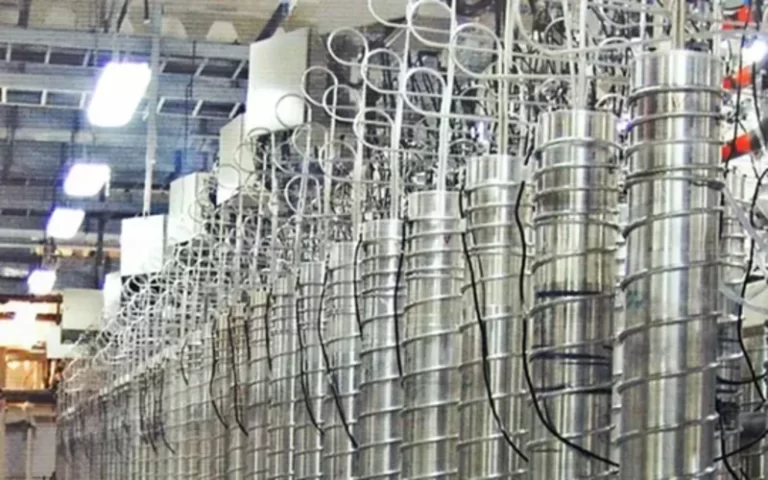
Iran, Stuck in a Nuclear Quagmire, Is Playing for Time

The Mullahs in Iran after their 8-year destructive war with Iraq and finally accepting the cease-fire agreement found out that without a nuclear weapon and expansion of their terror ambitions in the Middle East and around the world, they would be not able to save their turbans.

The Secretariat of the National Council of Resistance stated on March 10, 1994, in which the regime’s latest decisions to acquire nuclear weapons were revealed at a meeting of the regime’s Supreme Security Council attended by the regime’s supreme leader Ali Khamenei.

At this meeting, the regime’s heads decided to follow the line of the regime’s nuclearization, under the shadow of the world’s negligence.

With astronomical funds invested in this project, and the regimes’ success to hide its goals from public opinion, the regime’s access to a nuclear bomb was not out of the scope.

The regime would have been successful if its opposition, the National Council Resistance of Iran (NCRI) and the People’s Mojahedin Organization of Iran (PMOI/MEK), did not reveal this with consciousness.

This is something that Iran’s state media has admitted constantly.

“Even though Iran had officially announced its determination to complete the Bushehr power plant and join the ranks of nuclear technology holders since the middle years of the imposed war (Iran-Iraq war), the pressure on the Islamic Republic dates to 2002; Where (Mojahedin) on 23 August of that year in a press conference keyed the project of pressure on nuclear Iran. (State-run news agency Tasnim, July 25, 2015)

In this way, the Iranian Resistance was able to trap the regime and prevent it from becoming a nuclear power. The issuance of several UN Security Council resolutions in this regard in the highest international authority and global sanctions created a great obstacle to the regime’s progress in nuclearization.

Because of the international appeasement policy with the regime and its continuation after a series of erosive negotiations, the major world powers, known as the P5+1, issued an agreement with the regime called the Joint Comprehensive Plan of Action (JCPOA). But despite the hollow hopes of the P5+1, this did prevent the regime from following up its nuclear ambitions.

Ali Akbar Salehi, the then head of the regime’s Atomic Energy Organization, revealed on August 28, 2017, during a discussion on pouring cement into the Arak reactor, the regime’s intention to maintain the nuclear bomb project:

“From the start, some photos created by Photoshop showed that cement was poured into the hole and the main tank of the reactor and the upper part of it. We must declare that no cement was poured into the main hole, we only poured cement into the pipes that were taken out for renovation. There are similar ones in the country, and we can bring them back if we want. No cement poured in the main hole of the reactor, we waited two years and did not talk about it because we could not say anything.” (ISNA, August 28, 2017)

The US withdrawal from the nuclear deal on May 8, 2018, formally invalidated the deal.

As the new US administration took office, the regime thought that the US would unconditionally return to the 2015 JCPOA and lift the sanctions imposed under the Trump administration, but time has shown that this speculation has no base. And it is spinning on another heel. The most important reasons for this can be listed in four areas:

  1. The serious protests of Iran’s people in the past years have increased the price of appeasement with the regime and this policy is now on the corner.
  2. Its democratic alternative has been removed from all black terrorist groups lists and its members are now in Albania out of the regime’s reach, therefore despite their situation in Iraq now the regime is under attack.
  3. The regime is not able to use its terror and hostage-taking levers to put pressure on the negotiating counterparts.
  4. The P5+1 countries while knowing the regime’s situation, did not accept to rejoin the JCPOA of 2015 and are expanding their demands to the regime’s missile and meddling in the Middle East projects.

The regime was aware that its only solution to return the balance between itself and the world powers is to increase the amount of its enriched uranium and violate the JCPOA’s commitments.

For this it was looking after two excuses:

  1. It had relative confidence that the new government in the US, will not take any military action against the regime or at least in a short time.
  2. By dragging and slowing down the negations it hoped to be able to reach the nuclear bomb to prevent any new deal and a JCPOA for its human rights, missile, and terrorism cases.

The resumption of Vienna talks made it clear to the negotiators that the regime is seeking to buy time to reach an irreversible point of achieving an atomic bomb.

US State Department spokesman Ned Price announced on December 9, 2021: “It is precisely why we have been very clear that Iran will not be able to play for time, that Iran’s nuclear escalations and its provocations won’t give Iran any additional leverage in these negotiations. The only thing these provocations and these escalations will do is to bring us closer to the point of a potential crisis.”

With the deadlock in the Vienna talks and the growing atmosphere of mistrust between the two sides, there are now two more options left for the regime:

  1. Accepting a JCPOA Plus, which, according to Khamenei, means ‘endless degradation.’
  2. Withdrawal from the negotiations and returning to the era before the JCPOA which means that its nuclear case will move to the Security Council, with the effect of the return of all sanctions of that council and facing Chapter 7 of the UN Charter including the activation of the trigger mechanism.

Given this deadly dilemma, Khamenei can no longer benefit as much as he did before by buying time. This is a fruitless game in the nuclear trap and will have serious consequences for the regime. Although negotiations are not yet fully concluded, there are whispers of a military option.

The Revival of the JCPOA Is a Losing Battle

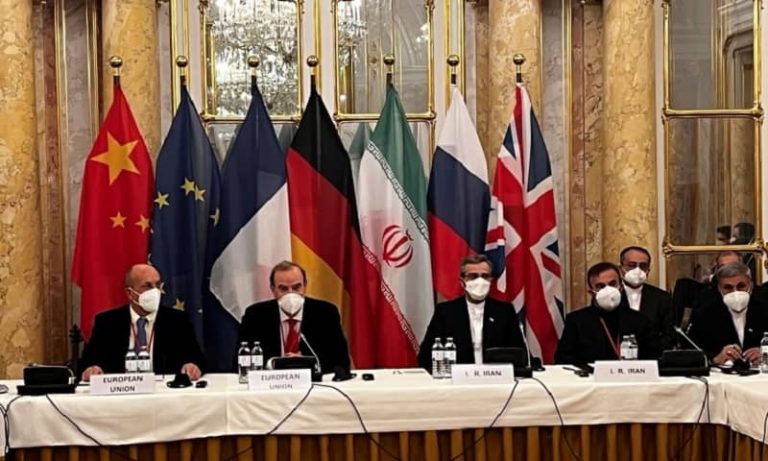
Following the latest session of nuclear deal negotiations with the Iranian regime, European diplomats acknowledged on Tuesday that the nuclear deal will soon be an ‘empty shell’, and that they have yet to get into ‘real’ negotiations with the regime.

The acknowledgment on behalf of the European authorities highlights yet again that the negotiations and efforts to revive the highly-flawed deal, formerly known as the Joint Comprehensive Plan of Action (JCPOA), are futile.

The National Council of Resistance of Iran (NCRI) said, “The negotiations had been delayed for five months following the appointment of Ebrahim Raisi but resumed at the start of the previous week, with the stated goal of restoring all parties’ compliance with the 2015 agreement.”

European Union diplomat Enrique Mora, who chaired the talks last Thursday, maintained an optimistic outlook on the negotiations, claiming that following the meeting he saw a ‘renewed sense of purpose’ from all of the parties involved in regards to reaching an agreement to revive the JCPOA.

However, his optimism was not shared by the British, French, German, and American diplomats, who criticized the regime heavily for their excessive demands and refusal to cooperate with the proceedings.

German diplomats at the negotiations urged the regime on Thursday to come back to the talks with ‘realistic proposals’, while Liz Truss, the British Foreign Secretary stated that it was the regime’s ‘last chance to sign up’ and that ‘it’s in their interests to do so’.

The NCRI said, “These remarks from the highest-level officials may indicate that the international community is preparing a final push to salvage the negotiating process by convincing Tehran of the need for compromise. So far, Iranian delegates to the talks have mainly reiterated their demand for the US to remove all sanctions that were imposed or re-imposed after then-President Donald Trump pulled out of the JCPOA in 2018.”

While the regime demanded that only after a sanctions relief had been verified would they consider returning to compliance under the terms of the JCPOA, they have not offered anything in return. Germany and France have accused the regime of ‘abandoning compromises’ that had been agreed upon during the past sessions of talks before June.

Following the United States withdraw from the JCPOA during Trump’s presidency, the latest U.S. president Joe Biden signalled his administration’s willingness to re-enter the agreement as he came to power earlier this year. The question remains, however, if it would be possible to restore the agreement in a way to satisfy all of the signatories, but it seems apparent from previous sessions that this will be an unlikely outcome.

It is no secret that the regime has been buying time during previous negotiations in order to secretly advance their nuclear program.

The NCRI said, “Western powers should know that the JCPOA was an ‘empty shell’ from the first day. The regime never abided by its commitments under the terms of the JCPOA.”

Last month, the Director-General of the International Atomic Energy Agency (IAEA) Rafael Grossi visited Iran for extensive talks with the regime about their nuclear program. These talks ‘proved inconclusive’ and Grossi noted that the decision to ban the IAEA inspectors’ access to the facility at Karaj is “seriously affecting the Agency’s ability to restore continuity of knowledge at the workshop.”

As the Iranian Resistance has previously stated, “Only firmness could break this cycle. The six UN Security Council resolutions must be reactivated. The Iranian regime’s nuclear sites should be dismantled, and the regime should halt enriching uranium. The inspection, anywhere and anytime, should be implemented.”

Western Powers Need to End Talks and Put Further Sanctions on the Iranian Regime

Following a five-month delay, negotiations over the 2015 Iran nuclear deal resumed on December 6 in Vienna. Many participants held an optimistic outlook on the proceedings but no points of progress have been made thus far. All that has emerged is high criticism of the Iranian regime’s extortion tactics and their attempts to reverse the compromises that had been made during the previous sessions of negotiations.

The current round of talks is being chaired by European Union diplomat Enrique Mora, who claimed he has recognized a ‘renewed sense of purpose’ among the member states negotiating and highlighted the need for a resolution to revive the agreement, formerly known as the Joint Comprehensive Plan of Action (JCPOA).

The National Council of Resistance of Iran (NCRI) said, “Of course, commitment to that outcome has never truly been in doubt. The core problem is that the Iranian regime continues demanding the complete, up-front removal of all sanctions imposed or re-imposed after the US pulled out of the JCPOA in 2018.”

The EU remain optimistic about the proceedings of the talks but there is no sign that the regime will step back from their demands or offer anything in return. They have consistently maintained that they would only discuss the reversal of the JCPOA’s terms violations after the sanction relief has been verified.

In the event that the regime continues to stall the negotiating process, France, Germany, the UK and the U.S. have all publicly expressed the need to find alternative measures to hold the regime accountable for their violations.

Speaking to reporters on Thursday, the spokesperson for the US State Department Ned Price stated that the regime will be unable to ‘play for time’ while they advance their nuclear program. He also added that the regime’s strategy of using their nuclear activities for ‘additional leverage’ would depend on them ‘gambling on American weakness’ which they would lose.

The NCRI said, “Yet, Western powers have not stopped appeasing mullahs and giving the regime more time to advance its nuclear program.”

Last month, the US Department of Defense gave a briefing to President Biden’s National Security Advisor Jake Sullivan of a range of military options, and the Director of the CIA, Bill Burns, has recently hinted that the US may demand more than a simple revival of the JCPOA.

The head of the International Atomic Energy Agency (IAEA) Rafael Grossi has previously declared that under current circumstances, it is ‘not possible’ for the JCPOA revival alone to ‘realize its original intent’.

While he did not put forward any recommendations of how to exert pressure on the regime, he did agree to the suggestion of the IAEA Board of Governors formally censuring them for their refusal to cooperate and their consistent violations of the terms of the nuclear deal.

The NCRI said, “The Iranian regime has indeed shown it is only willing to kill time to continue its clandestine nuclear program and acquire a nuclear bomb. Western powers’ insistence on continuing these futile talks would only embolden Tehran to continue its nuclear extortion.”

Further Details of Free Iran Rally Bomb Plot Heard in Latest Session at a Belgian Appeals Court

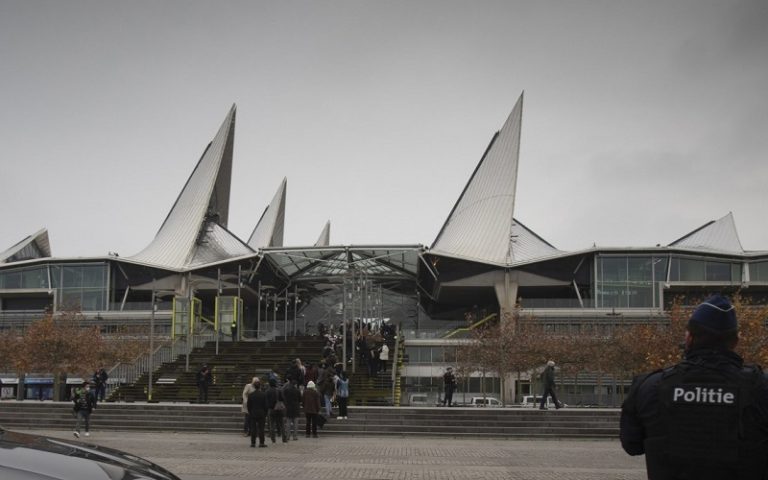
In the latest session of the appeals court for three Iranian terrorists in Belgium last Friday, more information came to light about the failed bomb plot near Paris in 2018. The plot, which was organised by officials holding the highest positions within the Iranian regime, was targeted at an Iranian opposition rally and if it had been carried out, could have resulted in hundreds of casualties. 

Vienna-based Iranian diplomat Assadollah Assadi, was the main figure behind the attack. He financed and controlled all aspects of the plot, personally instructing the three other operatives how to carry it out. Assadi was the one who transported the explosive device from Tehran to Europe, concealed in a diplomatic pouch to avoid security checks. All four men were intercepted and arrested by European authorities before they could enter France to carry out their attack. 

The People’s Mojahedin Organization of Iran (PMOI/MEK) said, “Earlier this year, an Antwerp court stripped Assadi of his diplomatic immunity and sentenced him to 20 years in prison. His accomplices, Nassimeh Naami, Mehrdad Arefani, Amir Saadouni, were respectively sentenced to 18, 17, and 15 years in prison and were stripped of their Belgian citizenship status due to their involvement in the plot.” 

Once Assadi had arrived in Europe with the 500-gram explosive package, he transported it to a pre-arranged meeting location to hand it over to Naami and Saadouni, who were instructed to place the device near where Maryam Rajavi, the President-elect of the National Council of Resistance of Iran (NCRI), would be seated at the rally in Villepinte. Arefani was to act as Assadi’s eyes and ears at the event to make sure everything went as planned. 

The three operatives asked for an appeal of their convictions, claiming that they were unaware that the explosives were deadly, and that they thought the bomb was only meant to scare the crowd. In the fourth session of the appeals court, a number of bomb experts spoke to provide technical details on the effects that the bomb would have caused. 

The MEK said, “According to one of the experts, if the bomb would be detonated, it would function like a bullet, which indicates it was assembled by an expert. The bomb parts were built in a way that they would be spread like shrapnel and could cause severe harm. The blast itself could be deadly.” 

They brought to court a small fragment of what would have been contained in the bomb and explained that the ferocity of the explosion would have launched the small component at a high speed and would have easily killed anyone in its trajectory. 

Another expert stated that the bomb would have become a fireball, burning everything in its surroundings. They claimed that the bomb would be deadly within a 53-meter radius but the destruction caused by the bomb would have extend this range. 

The MEK said, “It is worth noting that during the dismantling of the bomb, a police officer who had been standing at 80 meters was injured, and this is despite the fact that the explosion was partial and was less effective because it happened in an open space. If it was detonated inside the hall or under a chair, it would have caused severe casualties.” 

The judge declared at the end of the session that the appeals court would resume on March 4, 2022, with the final verdict being given by May. 

The three men at the centre of the case are a small part of a larger network of terrorist operatives working on behalf of the regime in Europe. Details of the extent of this network were found in documents obtained from Assadi’s car at the time of his arrest. 

The MEK said, “The Iranian Resistance has demanded that Assadi’s network be exposed and the regime’s operatives in Europe, who are posing as asylum seekers, be stripped of their refugee status and expelled from their host countries.” 

Iran’s Government an Administration With Expertise in Creating ‘Death Roads’

0

According to Iran’s state media reports, in the first half of 2021, some 8,644 people lost their lives in road accidents in Iran. A figure which has grown by 9.6 percent compared to the same period last year. Nearly half a million Iranians have lost their lives in traffic accidents over the past 20 years, the media reported.

“In the first six months of this year, the number of road accidents increased by 67,000 compared to the same period last year, reaching more than 713,” said the RAHVAR police chief (Road and Traffic Police).

Iran is one of the deadliest countries in the region in traffic accidents. The highest number of road deaths in Iran in the last two decades were reported in 2005 with 27,000 deaths over the year. According to an official estimate, between 2011 and 2019, an average of more than 17,000 people were killed on Iranian roads each year.

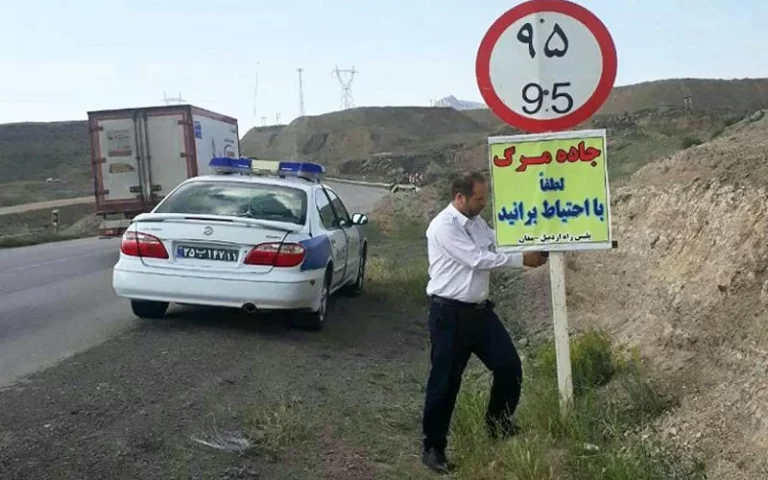
In Iran, roads are known as ‘death roads.’ The death toll on these roads is so high that people suggest that the government should install ‘All Seasons to Die’ warning signs to warn drivers. Given the growth of the population and the increase of means of transportation, the increase of government services is considered an important necessity.

Has the Iranian government taken any action in this regard? The increase in casualties indicates that the worn-out roads and being non-standard is one of the main reasons for the high casualties.

In this regard, the state-run news agency ISNA revealed that “road casualties in Iran are higher than in many other countries and is one of the most important causes of death in Iran. The main causes of road accidents include road depreciation, worn-out vehicles, and non-compliance with traffic laws and monitoring.”

Interestingly, officials of the government admit to this tragedy and reveal the facts. “If the car has the minimum standards, it should not be easily deformed in overturning, while the Pride car is easily pressed due to overturning and the occupants are killed,” the managing director of the Safe Society Association told the state-run Quds newspaper.

Pride’s high share of road accidents in Iran made this car infamous and the people are calling this domestic product the ‘chariot of death.’

Ismaili, the former police chief, blamed all government entities for road safety and said: “They have announced that there are about 5,000 accident hotspots in the country, the repair of which requires 6 trillion tomans. So, when we cannot repair high-risk areas, we have to wait for death in those areas.”

‘The Planning and Budget Organization has not provided a legal budget for road safety and the promotion of traffic culture and education in the last 10 years while ignoring this important will cost the lives of thousands of Iranians yearly,’ said Nofarasti, CEO of the Safe Society Association.”

Now, why this budget is not given for road safety, is not without reason. Observers believe the funds are instead spent on exporting terror and pursuing Iran’s nuclear projects.

“In the public education sector, no organization considers itself responsible for education and culture, and each department acts as an island. Worse, the national media says pay me to give public education in the field of traffic safety, which is a real shame,” said the former police chief.

Iran’s media: Poverty is making regime change imperative

While many political thinkers and observers acknowledge that Iran’s government is on the verge of collapse and overthrow, members of the regime’s so-called reformist faction believe that by insisting on a ‘reform’ process, the overthrow of the Velayat-e-Faqih (supreme religious rule) regime can be prevented.

It can be said with certainty that the regime’s government has lacked popular legitimacy from the beginning of its establishment and the mullahs have usurped the country’s political area from the country’s people.

For decades, the security and intelligence think tanks of the regime, in the form of the so-called ‘reform’ current, sought to delay the process of change and downfall of the regime and are trying any deceit to prevent the overthrow of the regime.

However, evolution rule does not accept any of these desperate struggles, and over time and in the absence of responding to the political, economic, and social needs of the Iranian people, the process of change and overthrow becomes inevitable.

However, the reformist faction of the regimes is trying to delay it and extend the life of the Velayat-e-Faqih system.

In this regard, the Shargh newspaper, affiliated with the regime’s reformist faction, has made a desperate attempt to redeem the regime’s life.

Referring to former President Mohammad Khatami’s message, Shargh still claims that despite the failure of the ‘reform’ project and its end announced by the Iranian people in January 2017 under the slogan ‘reformist, fundamentalist, the whole story is over’ the way out of the many problems of the regime is still ‘reform’.

Shargh daily and the members of the reformist faction are either unaware or pretend to be unaware that if the regime had succeeded in real reforms, nothing would have been left of it and it had gone through a process of collapse and fall many times.

Of course, they do not seem to be unaware. The truth is that they fear the fate of the regime because they all are sitting in the same sinking ship because all of them have cooperated in the regime’s crimes over the past 42 years.

This is the way they are reflecting Khatami’s message as ‘uneasy’. But uneasy is not reflecting the real situation of the regime and its deep concern, while any livelihood and economic protests convert rapidly to a political encounter with the regime’s rule.

Therefore, the Shargh daily refers to ‘revolutionary ideas’ as meaning ‘the violent collapse of political structures’ that should be read as the overthrow of the regime.

But at the same time, it made of Khatami a neo revolutionary whose, ‘revolution failed to achieve what the revolutionary masses dreamed of’ to show the Iranian society the senseless reform path, to prevent a revolutionary change in the regime, and instead of using the word ‘reformist’ because of the ‘social boredom’ of the Iranian people it is trying to find new terms for the dead reformism in the regime.

This group knows very well that if the fire of the revolution and the overthrow spreads, it will burn the ‘reformist’ and ‘principlists’ together, and none of them will face any exception.

Therefore, it refers to the uprising of the lower class as a ‘biting and deeply distressing’ phrase that the elements of the regime feel ‘ashamed and guilty’ of expressing it, but acknowledges that the lower class, which has nothing to lose will ‘may overthrow the remnants of the organization (regime).’

A class that according to this paper may have been on the margins of the mainstream of the revolution in 1978, but that in the coming revolution, will act as a ‘historical actor’ against Supreme Leader Ali Khamenei’s government, regardless of the will of the middle class, which don’t even exist anymore according to the regime’s officials. And what has been left is the majority extreme poor against the extreme reach ruling minority.

Contrary to popular belief, that the suppression of the November 2019 protests silenced the uprising and revolution in Iran, but Shargh is inevitably forced to admit that the November 2019 protests have doubled the ‘confidence’ of the lower classes and ‘the ghost’ of these protests has ‘frightened’ the whole regime.

Shargh goes on to say that future protests have surpassed previous uprisings in severity, with poverty seen as the focal point of anti-‘reform’ tendencies, as ‘the apocalypse of reform’, ‘nightmare’ and ‘the giant freed from the lamp’. It called on the government to focus on ‘reforms’ in the future to prevent the overthrow.

With all these interpretations, the Shargh daily says clearly and unequivocally that poverty has made regime change an imperative thing and it begs the regime officials to believe it, or else.

Khamenei Begs the UAE for Help

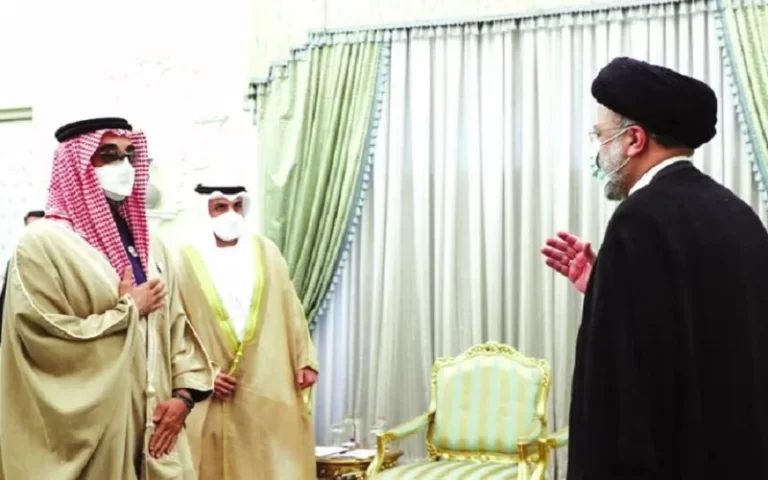
On Monday, December 6, Sheikh Tahnoon bin Zayed Al Nahyan, the UAE National Security Adviser, arrived in Tehran on a one-day visit after years of a freezing relation between Iran’s regime and the UAE to hold talks with some high-ranking Iranian officials as the first high-ranking official of the UAE government.

During his stay, he met with the regime’s National Security Advisor Ali Shamkhani and President Ebrahim Raisi. It is worth mentioning that in 2015, due to the interferences of the Iranian government in the region, the level of relations between the two countries was reduced to the level of staff and since then they have not had ambassadors in each other’s capitals.

Regarding this trip, although the news of its results has not yet been published, according to political and economic experts, the main reason for Iran’s invitation to Sheikh Tahnoon is the extremely critical and deteriorating economic situation in Iran. This situation has led to the highest unemployment rate, inflation, and skyrocketing prices in the history of Iran, and the price of the dollar has reached its highest rate against the Iranian currency.

The majority of Iranians now live below the poverty line, and as a result, Iran has witnessed protests in most cities, the last of which was the uprising by the people of Isfahan.

The situation has become so critical that the regime’s supreme leader Ali Khamenei and his entourage have smelled the overthrow and have realized that if the situation continues in this way, there will not be much time left until another general uprising.

As a result, Khamenei is now forced to withdraw from some of his bullying actions in the Persian Gulf countries, and in fact, he has reached out his hand to these countries to save himself from being overthrown.

In this regard, observers note that some time ago, with the mediation of Iraq, they had several meetings with the representatives of Saudi Arabia with the aim of re-establishing diplomatic and trade relations in Baghdad, but these talks have not yet concluded due to Khamenei’s continued support for the Yemeni Houthis.

The UAE, a relatively small country compared to Iran just 50 years after its independence, with a population of less than 12 million, more than 80% of whom are foreigners, has now become such an economic power that Khamenei is forced to ask for help, which is a shame for the regime which has immense resources that no other country in the Middle East possesses.

According to the World Bank, Iran’s GDP at the current price of the US dollar fell below $ 192 billion last year, which is less than half of 2017 and less than a third of 2012. And Iran’s economic position has dropped from 31st to 51st in the world over the past three years.

During the same period, the GDP of Iran’s neighboring countries such as Turkey and Saudi Arabia, based on the current price of the dollar last year, tripled and the UAE was more than double.

Raisi’s government is scheduled to present its budget for next year to the parliament on Sunday, December 12. A Budget that according to experts, there is no source of income for more than 50 percent of it and is facing a deficit of 50 percent.

The situation is such that even Raisi was forced to confess that if they are not able to provide compensation for this budget deficit, they will face huge problems.

It was not without reason that he met in person with the UAE National Security Adviser, while it is not customary in political practice for the President of one country to meet with the National Security Adviser of another country, and usually in addition to the meeting between the National Security Advisers, at maximum, the Vice President or the foreign Minister perform such a meeting.

But Khamenei’s mistake is that he thinks that by re-establishing relations with neighboring countries, he can open his economic situation and reduce the people’s dissatisfaction and disgust with his regime.

That’s because the source of the regime’s problems is its internal crisis, as Javad Mansouri, the first commander of the Revolutionary Guards, once said:

“The situation in our country will not get better and our problems will not be solved, because the essence of our problems is related to the interior, that is, if gold rains from the sky of Iran, but we do not have a meritocracy and the rule of law, the situation will remain as it is.”