Home Blog Page 263

Iranian Regime’s Cabinet of Criminals: Interior Minister Wanted by Interpol

Two weeks ago, Ebrahim Raisi’s candidates for minister roles in his administration had been approved by the Iranian regime’s parliament. Thieves and terrorists make up the entire cabinet, but Interior Minister Ahmad Vahidi is the most questionable appointee, considering that he is wanted by Interpol for his terrorism involvement.

Ahmad Vahidi was born in June 1958. His birth name is Ahmad Shah Cheraghi. He has been one of the top commanders of the Revolutionary Guards (IRGC) for much of his career. In 1988, when the IRGC’s Quds Force was formed, Vahidi became its first commander.

The Islamic Revolutionary Guard Corps (IRGC) is comprised of four forces. The Quds Force is the most notable. They usually operate outside of Iran, but in times of crisis, they are the ones usually brought in to suppress uprisings.

The other forces of the IRGC include the Ground forces, commanded by IRGC Brigadier General Mohammad Pakpour, the Air Force under the command of IRGC Brigadier General Amir Ali Hajizadeh, and the Navy with IRGC Brigadier General Alireza Tangsiri at the helm.

This isn’t the first time that Vahidi has held a ministerial position. He was previously the Minister of Defence under Mahmoud Ahmadinejad’s administration. In the 1980s, he was one of the officials that helped to found the IRGC’s Intelligence unit.

In 1981, when Rezaei became the IRGC commander, Vahidi became his deputy in charge of the IRGC Intelligence unit. Vahidi particularly focused on organizing the regime’s terrorist activities abroad and supporting the mullahs’ proxy groups.

Mohsen Rezaei once said that the goal of the Quds Force is to form an ‘Islamic International Army’. They have played a key role in political assassinations abroad since their founding, and Vahidi oversaw many of these terrorist acts until 1997.

One such attack took place in Argentina in 1994. July 18 of that year saw a huge truck bomb being detonated outside a Jewish center in Buenos Aires, killing 85 people and injuring over 200. A month later, the Iranian Resistance revealed that the IRGC was behind the bombing and that other regime agencies were involved also.

In 2006, Argentinian federal government prosecutors officially filed a lawsuit against the perpetrators of this attack, including Ahmad Vahidi. Argentine prosecutor Alberto Nisman, who was investigating the AMIA bombing, underlined that Vahidi was involved in planning and carrying out the operation. Nisman was assassinated in his home before going to court.

After Ebrahim Raisi was appointed as the regime’s new president, Agnès Callamard, Amnesty International’s Secretary-General, said the fact, “that Ebrahim Raisi has risen to the presidency instead of being investigated for the crimes against humanity of murder, enforced disappearance, and torture, is a grim reminder that impunity reigns supreme in Iran.”

Raisi, himself, is most notable for his role in the 1988 massacre, which saw the executions of 30,000 political prisoners ordered by then-Supreme Leader, Ruhollah Khomeini.

This cabinet once again shows the regime in Iran is dedicated to human rights violations inside Iran and the export of terrorism abroad. Raisi and his ministers, such as Vahidi, should not be welcomed by world powers but should be tried for crimes against humanity.

Iran’s New Government Faces an Old Problem, Housing

0

Before Iran’s new president Ebrahim Raisi took office, he promised to build one million housings and decrease the number of homeless people, which has become one of the major problems for the country especially for women who have no roof over their heads.

According to a plan called production leap and housing supply, the government is obliged to build one million houses in a year in urban and rural areas.

But many officials are criticizing this plan because the government lacks the needed financial resources to execute such a plan.

The first reason for new housings is the issue of compensating for the shortage of housing against the number of households in the country. According to the latest census of population and housing, while the number of households in the country was reported to be 24.196 million households, the number of housing units in the country was 22.825 million houses.

This means that in the current situation, some households in the country live jointly in a housing unit or their place of residence cannot be referred to as housing such as those in the outskirts of the cities, where on numerous occasions the regime has attacked its residents in the past years and destroyed their self-made housings. So, for each household to have 1 housing unit, the country’s housing market is facing a shortage of 1.371 million shelters.

The second reason for housing demands is due to new marriages. In the last ten years, an average of 783,000 marriages have occurred, it can be said that the housing market must meet this number of new demands, but due to the negligence of the government, the number of marriages has decreased which has created many social challenges for the country.

The third reason for new housing is due to the renovation and rehabilitation of worn-out areas. According to surveys conducted by the Ministry of Roads and Urban Development in 2013 to revise the housing master plan, more than 11.2 million people currently live in 76.4 thousand hectares of deteriorated urban areas in Iran.

Adding to this the probability of earthquakes is increasing the importance of this issue, especially in the capital, that in any major earthquake the number of casualties would exceed millions. It can be said that an average of 21% of the country’s housing units is in a worn-out region.

Referring to the existing statistics indicates that a minimum estimate of 5 million old urban housing units needs to be rebuilt. Besides the worn-out urban regions, the share of non-resistant housing units in the country’s villages is more worrying.

Currently, there are more than 3.2 million non-resistant rural units in the country. As a result, according to the statistics, there are a total of 8 million housing units in the country that need to be rebuilt by 2026.

Over the past four decades, more than 100,000 villages have been destroyed in the country, and many of the country’s population centers have collapsed and the population is concentrated mostly in the capital and metropolises. Many border areas are haunted.

The last reason for new constructions is the debate of natural housing reserves. To regulate the supply and demand market, many countries around the world must always anticipate several uninhabited housing units to respond to the weaknesses caused by the disproportionate distribution of residential units as well as the need for office and commercial units.

Therefore, it seems that about 600,000 units should be planned and constructed as a market reserve in 10 years. But many times, the officials claimed that many empty houses can be considered as the country’s housing reserve.

But the reality is that these units are mostly not habitable for the public because there are too luxurious and expensive or are in tourist areas.

The survey of resource statistics on the need to build a residential unit shows that to solve the problem of housing supply in the country by 2026, it is necessary to produce a total of 22 million housing units in the country from 2016 and within 10 years. Therefore, the country’s real need is to produce 2.2 million units per year, and building 1 million homes per year cannot solve the housing market problem.

Newest Member of Raisi’s Administration Becomes the Only Female Official in the Regime

On September 2, the Iranian regime’s new president, Ebrahim Raisi officially appointed Ensieh KhazAli as the new Women and Family Affairs director, becoming the only female member of Raisi’s administration.

Nevertheless, the former heads of the directorate have repeatedly acknowledged that they had no executive power and that such minute defense of women’s rights would go nowhere in the mullahs’ patriarchal system.

KhazAli’s predecessor, Massoumeh Ebtekar admitted last month that ‘existing biases’ made her job difficult and that ‘there is a sense of discrimination against women’.

The daughter of Abolghasem KhazAli, a former member of the Assembly of Experts, Ensieh KhazAli was born in Qom in 1963. Following in her family’s political footsteps, her sister is part of the Supreme Council of the Cultural Revolution, heading the Cultural and Social Council for Women and the Family.

The KhazAli family was closely associated with Ruhollah Khomeini, founder of the mullahs’ religious dictatorship in Iran. Ensieh KhazAli said that Khomeini had read her wedding sermon personally and set her dowry at 14 gold coins.

As the only member of Raisi’s cabinet tasked with defending women’s rights, affiliated with the regime’s misogynistic faction, she has admitted that despite her education and background, she has never been independent even in her private life.

She stated in an interview that, “men do not like their wives to be out of the house very much. My husband even set the limit of 15 hours per week for my work outside the house. My husband expects that I always accept what he says, and I always do so.”

As the only representative of women’s rights in the government, Ensieh KhazAli advocates for early marriage for girls. In a June 2017 interview, she said that she had married at 16, and her children did so, too.

In a conference held in 2015 at Az-Zahra University, titled ‘Family Sustainability, the Excellence of Society’, she urged that the ‘belief that getting married brings wellbeing to families’ must be promoted, adding that some women are not having as many children if any, because ‘they do not want to sacrifice their comfort for others and see children as obstacles to their interests’.

A former president of the Az-Zahra University, KhazAli implemented the ‘Moral Charter’, which represses female students under moral pretexts at the hands of the university’s security team.

During her presidency, Ensieh KhazAli expelled Atena Farghadani, a civil activist sentenced to prison for insulting the clerical regime’s officials and members of the mullahs’ parliament by drawing cartoons.

Angry at KhazAli for expelling her, Farghadani, a very talented student of Az-Zahra University, and the highest-ranking student in the field of art, designed a cartoon as a response to her expulsion. In a message aimed at KhazAli, she said, “In response to insulting and humiliating me by expulsion from the university, the only good gift I could give you was to design something dormant inside you for years!”

Iran’s ‘Livelihood Basket’ Rate Reaches 11 Million Tomans

At a time when all economic data in Iran shows the shrinking of people’s livelihood basket, especially the lower-income deciles, and many goods, even the simplest and most basic ones, including rice and dairy, are disappearing from the weekly shopping cart of households, the government is advertising the slogan of the impossible control of the Inflation rate.

Meanwhile, the authorities are trying to highlight inflation control as a strategy for the government instead of providing the minimum living basket of the working classes and their families.

Therefore, considering the inflation rate mentioned in paragraph 1 of Article 41 of the Labor Law, more important than the minimum subsistence basket which is an irrevocable obligation in paragraph 2 of this article is a betrayal to the poor and lower classes, while official inflation is still breaking its previous records and there is no sign that it can be controlled for at least the next two and even more years. Even the 60% forecast inflation shows that in a few months, consumer inflation will increase again.

According to the National Statistical Center of Iran, the inflation rate of August 2021 was 45.2 percent, which represents a one percent growth rate compared to the previous month. Spot inflation reached 43.2% in August 2021, meaning households in the country spent an average of 43.2% more than in August 2020 to buy a ‘uniform set of goods and services.’

The spot inflation rate of the major ‘foods, beverages and tobacco’ group increased by 1.5 percent to 58.4 percent and the ‘Non-Edible Goods and Services’ group dropped 1.3 percent to 36.1 percent.

These official statistics show that the nutritional crisis of the working class and wage earners (including employed, retired, informal, seasonal, and project workers) is an ultimately serious crisis, and the greatest pressure from the cost of food is imposed on lower households.

Of course, we should keep in mind that housing costs and housing rent have no place in the statistical basket of the Statistical Center of Iran and the increase in housing costs is not involved in inflation calculations that if the real increase in the rent rate is calculated, in this section we will also have point-to-point inflation of more than 100 percent, i.e., households spending more than 100 percent more than the same month last year.

However, this reduced basket shows that in August 2021, households spent about 60 percent more to finance essential foods than in August of last year. And in the same period, the wage increase won’t reach 40 percent.

Now the question is when the inflation rate (even in the most diminished calculations possible by the Statistical Center of Iran) is rising permanently, how does the Labor Minister claim that wages cannot be raised because employers are losing money and should resort to curbing inflation?

Livelihood basket calculations are based on calculating the rate of raw items of foods and beverages in the food basket, which is unrealistic and does not match the real needs of the people’s baskets, which is the ‘real food’.

The overall livelihood basket is 8.866 million tomans, and if we consider the calculated livelihood basket for the wage negotiations of 2021, which was rated 6.895 million tomans for comparison, we will reach a different number of 1.970 million tomans, so in the most minimal calculations, the cost of living in the first five months, has increased 1.970 million tomans and the level of coverage of the 4 million tomans wages is about 45 percent of the wages. That means the people’s wages cover only about 13 days.

Overall, the ‘livelihood crisis’ is expanding and deepening further. While inflation is increasing without any end in sight, and all official data prove this claim, the minimum livelihood basket rate has reached about eleven million tomans and workers live nearly 19 days each month without any purchasing power as many officials say, while the numbers calculated in this text are the most optimistic figures.

Recap of Atrocities in Iran During August 2021

0

The Iran Human Rights Monitor (Iran HRM) recently published their overview of the events that they reported on during August, heading their report with the leaked footage of Iran’s Evin Prison that went viral on social media.

The hacked security camera footage, published online by the hacker group ‘Edalat-e Ali (Ali’s Justice), showed guards beating prisoners and suicide attempts, as well as scenes of the terrible conditions that inmates have to live in and endure.

In a tweet from the head of Iran’s Prisons, Mohammad Mehdi Haj Mohammadi, he accepted responsibility for the prison conditions and asked for ‘forgiveness’ from God, showcasing a rare admission of the abuses caused by authorities.

Iran HRM said, “In July, at least 26 death sentences were carried out in Iranian prisons. At least 15 executions were carried out for drug-related offenses and 10 were carried out for murder. The details and reason for the execution of another prisoner are not known.”

Amnesty International raised concern over the condition and treatment of political prisoner, Maryam Akbari Monfared. They said that she was held in inhumane conditions in Semnan prison and ‘ill-treated for seeking truth and justice’ for her siblings who were forcibly disappeared and executed in 1988.

Iran HRM said, “The 104th branch of a criminal court in western Iran sentenced a media activist to prison and lashes for “defaming” local officials. The Sanandaj court sentenced Morteza Haghbayan to two years and six months of prison, 90 lashes, and a 10 million toman fine (around 390 USD) for defaming officials in Kurdistan Province and publishing government documents.”

During protests in Naqadeh on August 7, 27-year-old Mohammad Alizadeh was fatally shot by a man who believed him to be affiliated with security forces as he walked behind a group of riot police. Not realizing the extent of his injuries, he refused to seek medical attention for fear of being arrested but he soon fell unconscious and ultimately succumbed to internal bleeding.

Religious persecution was another feature during August. Ali Ahmadi, an Iranian Bahai from Qaemshahr was summoned to serve his prison sentence for following the banned faith. As he suffers from diabetes, heart problems, and thyroid illnesses, they transferred him to the COVID-19 infected prisons which is a severe threat to his health.

Iran HRM said, “Three Christian converts, Milad Goudarzi, Ameen Khaki, and Alireza Nourmohammadi, were sentenced to prison in Karaj near Tehran on August 22.”

The three men were charged with “spreading propaganda and deviant educational activities opposing Islam” and given a fine of 40 million tomans (about $1,412) each. They were sentenced to five years of prison each, which was later reduced to three years.

In terms of civilian deaths at the hand of the regime’s military and armed forces, including the Islamic Revolutionary Guard Corps (IRGC), at least six Iranians were killed in August, and a further nine were injured during indiscriminate shootings by security forces.

As the Delta variant of the Covid-19 virus ravages through cities across Iran, the daily death toll reached 390 in Tehran as of September 1.

Iran HRM said, “State-run media report of hospitals and ICUs brimming with COVID-19 infected patients. At the same time, cemeteries are filled, and provinces report not having enough room to bury the bodies.”

Iranians are angry and blaming Supreme Leader Ali Khamenei for the thousands of deaths in Iran due to the virus, many of whom could have been saved if Khamenei and the regime had not banned the U.S. and UK made vaccines at the beginning of the year.

Iran President’s Economic Mafia Team

After introducing the members of Iranian president Ebrahim Raisi’s economic team, it became clear that this government and its team have no specific plan for the country’s development and an economic boom as they have claimed before.

Instead, their main concern is about who can gain more access to the country’s resources and wealth. The supporters of the so-called ‘Resistance Economy,’ who stand to gain huge wealth from this policy, now have the keys to the country’s main economic veins. Without even carrying about the international economic mechanisms and disregarding the normal economic procedures internationally and regional which is moving the country away from any development.

As an example, Raisi’s economy minister believes that “in the context of sanctions, the implementation of the demands of the Financial Action Task Force (FATF) will make the economic life of the country more difficult.” (State-run website Alef, March 13, 2021)

Reza Fatemi, Minister of Industry, who is coming from an office called, “Astan Quds Razavi Endowment Productivity Foundation and Astan Quds Razavi Investment and Partnership Management and Astan Quds Razavi Deputy Governor” which is a strange and unclear position, has started a plan called ‘Islamic Economy’ with no clear goal.

Hojjatollah Abdul Maleki, Minister of Labor who has worked at the supreme leader’s office and was a member of the Board of Trustees of the Imam Khomeini Relief Foundation and the Central Insurance Jurisprudence Council, proposed as his solution to solving the unemployment crisis and the poor conditions of 40 million working community households as a secret circumvention of sanctions. Because he is against establishing ties with the international economy.

Right after such appointments, many economists who are themselves part of this rent-seeking mafia raised concerns.

Mohsen Jalapour from the Chamber of Commerce questioned the competence of these people and said the country is involved in some mega economic crises and if there is no solution to solve these problems, the country will face huger problems.

And that in such situations it is expected that specialized people are picked up for such positions.

“There is evidence that some of the people in this government who are supposed to take responsibility believe in ‘liquidity guidance.’ Liquidity guidance or phrases like that in Iran’s economy is the code name for politicians who view liquidity as an opportunity and a tool for solving the country’s problems. Since in the past, the output of such thinking has been liquidity growth and a sharp rise in inflation, this thinking can exacerbate inflationary expectations.” (State-run daily Donya-e-Eghtesad, August 25, 2021)

Kamran Nodri, an economic government expert, also expressed his concerns about accelerating inflation by assessing the future of the country’s economic situation and said: “Seeing inflation of 45% in August, the fundamental cause of high inflation is liquidity growth, which was followed by the government’s large withdrawals from the Petty Cash account to finance the budget deficit and has greatly increased the monetary base. With the coming of the new government in Iran, inflationary expectations are now on an increasing circuit and its impact the continuation of the upward trend of inflation.” (ISNA, August 26, 2021)

In a brief look at these expressions, we find out what crises the government is facing. One of the most critical is the government’s budget deficit. In the first four months of this year, 24.5 percent of the government’s resources came from the Treasury petty cash account, the Treasury Department said. That is, printing the money that the Central Bank does.

“During the same period, only 11.6 billion tomans of revenues resulted from oil exports and petroleum products, which is about 9 percent of the approved budget figure for this period.” (State-run daily Eghtesad Online, August 29, 2021)

Interestingly, during this period, only 5 trillion tomans of Islamic financial bonds have been sold and the government has failed to sell about 20 trillion tomans of other published bonds.

Iran Sends Fuel to Lebanon Despite U.S. Sanctions

On September 4 the third shipment of Iranian fuel had been received by authorities in Lebanon despite U.S. exporting sanctions, while Iranian citizens are left to suffer from consistent power outages.

On August 19, AP reported that the leader of Lebanon’s militant Hezbollah group said Thursday that an Iranian fuel tanker would sail toward Lebanon ‘within hours’. This was the first fuel shipment from Iran to Lebanon.

Instead of finding a solution to prevent the constant power outages in Iran, the regime’s Ministry of Energy has done nothing other than announce their plans for ‘scheduled blackouts’. Insufficient fuel for power plants is the excuse that the regime has given for the outages, claiming they have no choice but to use fuel oil instead. The downside of this is that it causes a lot of air pollution, which in turn is worsening respiratory problems in Iranian people.

Constant blackouts in Iran disrupt people’s daily lives and increases the Covid-19 casualties as the oxygen machines stop functioning.

The cause of the constant power outages in Iran is the regime’s plundering of electricity resources. When they are not exporting electricity abroad to generate income for themselves, they are consuming too much of it to extract cryptocurrencies, like bitcoin.

On January 12, eight provinces witnessed widespread and serial blackouts. The blackouts extended to seven other provinces, namely Gilan, Alborz, Central Khorasan, Mashhad, Markazi, Semnan, Qom, and Ardabil.

According to Mostafa Rajabi Mashhadi, the spokesman for the electricity industry, the cause of the blackouts was the lack of fuel needed to run power plants. The regime, on the other hand, blamed the Iranian people for their ‘high usage of gas’.

The regime refuses to use Iran’s vast resources of natural gas and other fuels as it ships them abroad. Besides, since the regime uses fuel oil for power plants, Iran’s electricity is cheaper than other countries.

Saeed Khatibzadeh, Spokesman for Iran’s Ministry of Foreign Affairs on August 30, 2021, said: “It is a sovereign decision for us to sell our oil and fuel to which countries or customers. Neither the United States nor any country is in an extrajudicial position to prevent legitimate trade, while we are very serious about exercising our sovereignty. We went down the same route to sell our fuel shipments to Lebanon, as long as we have customers and demand it will continue.

For the past 4 decades, the clerical regime has always supported terrorist groups in their attempt to export domestic crisis. One such group is the Hezbollah in Lebanon. With support from the Iranian regime, Hezbollah has risen to become a major force in Lebanon, with many members occupying the country’s top positions.

Like Iran, Lebanon is also facing a major poverty crisis. This is leading to Lebanese citizens openly denouncing Hezbollah, blaming them for the crises in the country, as well as the shortages in medicines and fuel and the currency crash.

Tehran is now implicated in conflicts in Yemen and Syria. Hezbollah has been acting as the regime’s boots on the ground in the region, allowing the regime to use its oppressive forces to control Iran’s society.

As the downfall of Hezbollah and a possible uprising in Lebanon would spell disaster for the regime, they choose to support the terror group to protect themselves. However, this decision poses the risk of further pressure from western governments due to the regime’s consistent violation of international sanctions.

The Iranian people’s hatred towards the regime continues to increase as they witness the regime plundering the country’s wealth, leaving them facing crisis after crisis and spiraling further in poverty.

Sending fuel to Lebanon wouldn’t resolve Hezbollah’s problems in the long term. It also rejects the regime’s propaganda of not having enough resources to help its own people amid the Covid-19 outbreak.

Subsidence Destroys Iran’s Economy and Future Generations

0

Deep cracks in the earth’s surface or vast and deep holes that suddenly happen under people’s feet in towns and villages are signs of the phenomenon of land subsidence. Subsidence has now become an environmental, social, and economic threat in the world.

According to the results of the ‘Mapping, the global threat of land subsidence’ article published earlier this year in the journal Science, 19 percent of the world’s population lives in areas exposed to subsidence. Also, 12 percent of the world’s GDP, which is about $8.17 trillion, is produced in areas prone to subsidence.

Subsidence is not only a direct threat to human life and property but also exacerbates flood damage and can even lead to permanent loss of land with various land uses damage to infrastructure and buildings, as well as damage to the environment.

The phenomenon of land subsidence is not the issue of a particular country or logic, but on all continents, some areas are prone to subsidence. North America, Asia, Europe, and South Australia are prominent examples of regions involved with the subsidence phenomenon.

Reports about the damages of this phenomenon show that the economic consequences of subsidence are not just speculation. For example, despite the subsidence phenomenon, the risk of flooding in the world’s coastal cities will reach $635 billion annually by 2050.

The economic consequences of subsidence can be investigated in two categories: direct and indirect. Critical infrastructure such as water management, transportation, energy, and communications are damaged by subsidence, and this is just one of the direct consequences of subsidence.

Damage and destruction of residential buildings and factories is another direct consequence of subsidence in the economy. These damages impose the cost of repair, migration, and uncertainty on the economy. Other direct consequences of subsidence can be considered as its destructive impact on the environment, cultural-historical sites, as well as damages caused by declining performance.

On the other hand, indirect consequences of subsidence can also affect the economy. Among them are increased flood risk, reduced agricultural production, and social and healthcare challenges. According to estimates, $77.7 billion of Iran’s GDP is at risk of subsidence.

Of Iran’s 609 plains, about 500 have fresh waters, all of which are facing subsidence. The results of the latest monitoring on the plains of Iran show that there is currently no plain in the country where freshwater is available but does not face the phenomenon of subsidence.

The reason for this is the indiscriminate harvesting of water from aquifers and the lack of management of water resources by the government.

It is not unexpected that next year’s studies will show that the northern cities of Gilan and Mazandaran have also been added to the total cities involved in subsidence risk, cities that are even not facing drought.

In the plains of Tehran, the rate of subsidence has decreased compared to the previous five years, but its extent has increased. The most dangerous province in the country in terms of subsidence is Isfahan province and Isfahan is the only metropolis in the country that subsidence has penetrated the city.

Therefore, not only can subsidence be considered as a threat to the historical-cultural centers of this province, but also the tourism economy of Isfahan, followed by the livelihood of residents, is threatened by the phenomenon of subsidence.

The most basic way to deal with land subsidence is to reduce water harvesting from underground water resources. Because due to proper administration and control by the government the only solution left for the country is the management of consumption from underground water resources because the loss and damages are not easily reversible.

Anger That Has Robbed Iran’s Officials of Sleep

Public hatred and the rift between the people and Iran’s regime, which mostly is targeting the supreme leader Ali Khamenei these days, has alarmed state media and government officials from both regime factions.

They describe such hatred and rift as mistrust or damage to the public’s trust and see the priority of Ebrahim Raisi’s government to be rebuilding and repairing this loss.

In a meeting with the government of Raisi, Khamenei expressed his fear about the people’s hatred and the people’s increasing distance with the regime, admitting, “The greatest asset is for a government that can win the trust of the people, which, of course, unfortunately, is damaged somehow and need to be repaired.” (State TV Channel One, August 28, 2021)

Khamenei’s remarks have recently become the subject of debate and scrutiny by media outlets affiliated with his faction, and they warn the Raisi administration that, ‘regarding the challenges and obstacles facing the government contained key and helpful materials,’ were in Khamenei’s speeches.

The Kayhan daily on September 2, 2021, warned the government too and wrote, “Social gaps and intensification of social confidence loss”, and “a blatant, risky and even perishing conspiracy”, must be considered, that can overthrow Raisi’s government or any other if it fails to reach its goal and promises given to the people.

The hatred of the people has a devastating outcome for the regime, which is its downfall, as we have witnessed in the past years in the people’s protests.

That is why the Kayhan columnist wrote with concern about people’s hatred and the rift between them and the ruling power that this is “irreparable damage that simply throws a devastating fire on the social capital of a country.”

The Mardom Salari newspaper on September 2, 2021, showed the same fear in an article entitled, “Iran’s recent movements” and said that the leadership of these movements is “not anymore in the hands of the middle class, and the leaders of these movements are aware people from the lower and poor classes.

“Movements in Iran in 2017 and 2019 and somehow in 2021 have fallen into the hands of the poor and lower classes. People who suffer a lot and are wounded by their movements the society and the government.”

Then it admitted that the main opposition of this regime the MEK/PMOI, “is leading the middle class to a politic of violence.” Something that is very dangerous and is remembering the “events of 2017, 2019, and 2021” which had the same nature, which means a movement of the poor classes with a violent and subversive character.

Then while trembling it suggests Raisi “get this situation out of this dilemma and crisis and think of a solution.”

In the impossible assumption, if Raisi wants to take a step, the first step is to address the supercritical state of the economy and people’s livelihoods. But according to state media, the government is more disabled than imaginable.

“The government does not have a well-planned and acceptable economic plan for reforming the country’s economic affairs, and what ministers have promised in the economic debate and the construction of a million housing, and other cases, is more slogan than the program.

“Economists in the country, with every economic point and vision, will say that there are a few percent hopes for reform, but we have not seen a plan yet. Some things are said that have not been studied at all, the capacity of the country has not been studied, the country’s facilities are not estimated, and they promise what is not feasible with these conditions and because it is not practical, it will cause disappointment.” (State-run daily Arman, September 2, 2021)

Therefore, all these promises and the latest moves of the regime’s president, like traveling to poor and deprived areas of the country like Khuzestan and Baluchistan province, can be considered as the regime’s fear of more uprisings, once the people overcome the coronavirus.

Iranian Regime’s Options About Its Nuclear Case Are Next to Zero

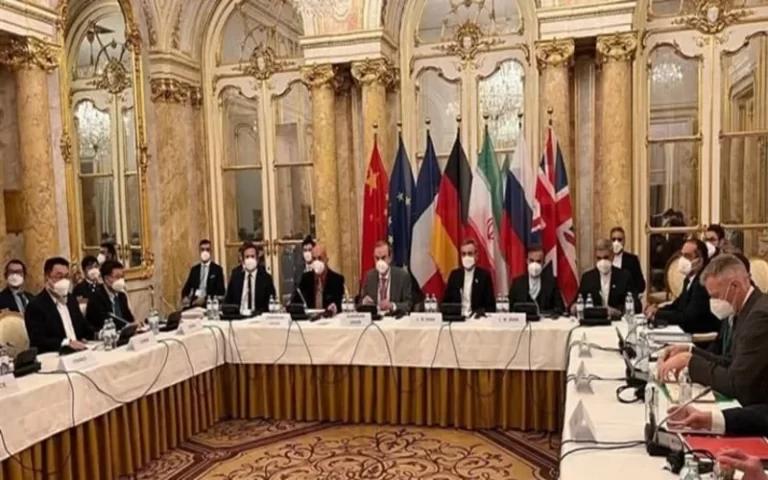
While the faction attributed to Iran’s supreme leader Ali Khamenei, which is now emerging as Ebrahim Raisi’s government, has been arguing and opposing the Vienna talks with world powers over its nuclear program, it now seems to have no choice but to come to the Vienna talks table.

The transfer of power took place in the Iranian government, and one of the issues that should be considered in the foreign policy of the Iranian government is the nuclear issue and the Vienna talks or the JCPOA.

Negotiations that have remained unresolved since June 20, 2021, and after the end of the sixth round, and so far, no decisive policy has been adopted by the Iranian government or at least has not become public.

What is leaking to the media from the lower echelons of the regime’s government shows that the head of government must also sit in the same hot chair as the regime’s former president Hassan Rouhani and his foreign minister Mohamad Javad Zarif.

In other words, although the faction attributed to Khamenei rejects the JCPOA talks by one hand, it is forced to pull it back with its other hand.

‘Negotiating with the West is a decision that political sovereignty must make, and the president is mostly the one who implements this decision,’ the Setareh-e-Sobh newspaper wrote in an article titled ‘The Need to De-escalate Foreign Policy.’

In other words, it is assumed that the political rule of Velayat-e-Faqih, headed by Khamenei, has no choice but to negotiate with the West over its nuclear program.

In another article entitled ‘The United States will likely want more concessions from Iran,’ Setareh-e Sobh eloquently shows the weak and low position of the Iranian government in the possible Vienna negotiations.

This newspaper highlighted the regime’s sickness in such a way that, “Iran should try to take advantage of the same limited concessions that the United States gives to Iran, the new negotiations will differ in content from the Obama administration, the political system should retreat somewhat from its position, there is no other way for the country.”

In another article on the Vienna talks, this newspaper wrote, “now that the government has been consolidated, the opposites to JCPOA have gradually come to terms with the facts and are giving the green light for the talks.”

According to most of the media of the Iranian government and the world and other apparatus of this regime, this government cannot do anything in the economic field without lifting the sanctions because they block any maneuver by the regime.

In addition, the failure to reach an agreement because of the explosive economic and social conditions, the society is a potential threat and danger for the regime and any of which could become a real threat to the Iranian government if the Vienna talks do not take place.

The Farhikhtegan newspaper, quoting a government expert named Diako Hosseini, highlighted this need as follows: “The lifting of sanctions is a priority in the presidency, not the revival of the JCPOA. The generalities of the mainstream government’s approach to the talks are clear, and we will soon see the resumption of nuclear talks between Iran and other countries.”

But with all these assumptions, there is always a sign of contraction and intensification of a conflict with the international community by the Iranian government as an option, albeit with a lower percentage of probability, and it should not be removed from the equations of the Vienna talks in general.

As Diako Hosseini says about the global consensus against the Iranian government in the process of acquiring a nuclear weapon: “The second process goes back to the common concern of these countries (Western countries, Russia and China) about the Iranian government’s acquisition of nuclear weapons.

“There is a concern between China and Russia that if the JCPOA is canceled and international oversight of Iran’s nuclear activities is lifted, Iran could approach the atomic bomb, and if IAEA oversight in the form of IAEA and safeguards is lost, then there is a concern. China and Russia will increase, and it will be possible to reach a consensus against the Iranian government.”