Home Blog Page 269

Khuzestan Water Shortages Protests

The Khuzestan protests over water shortages entered their 12th consecutive day on Monday, with demonstrations spreading to other cities and becoming more centered on regime change, despite the officials’ attempt to squash protests through military might and an internet blackout.

Protests were reported in Alborz, Kermanshah, Tehran, and more but because of the internet blockade, it’s taking longer for photos and videos of the demonstrations or the clashes between protesters and security forces to be released to the wider world.

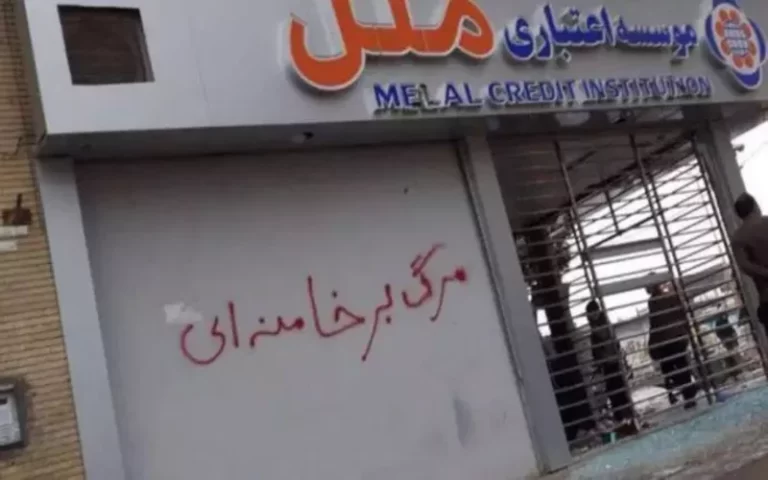
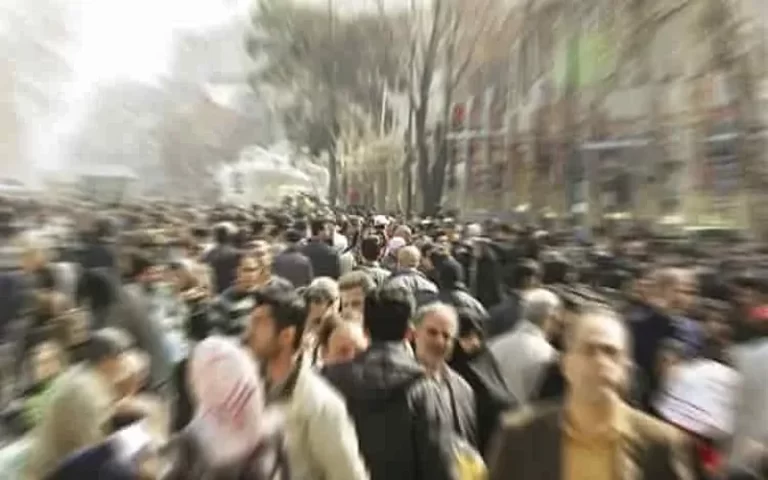
In Tehran’s Jomhuri Street, protesters held a massive rally calling for regime change and for supreme leader Ali Khamenei to resign, chanting “Khamenei, have shame and let go of the state”. They also criticized the mullahs for their terrorism and warmongering.

While, in Kermanshah, several demonstrations have been held in support of the Khuzestan protests, even blocking a road in the Shahrak-e Mahdiyeh district, so security forces opened fire. This was also true in Karaj, where people gather after sunset to chant “From Karaj to Khuzestan, unity, unity”, “Iranians will rather die than live in disgrace”, and “Down with Khamenei”.

The state-run media have warned that these protests could well spur another nationwide protest like that of November 2019 because the people’s anger has only been suppressed over the past two years because of violence by the authorities and pandemic precautions.

The Hamdeli Daily wrote: “Some people enter these protests with political motives… and are leading the protests toward political goals and slogans against the political establishment.”

While the Fars News Agency wrote: “In the Jomhuri Street market after the electricity was cut off, merchants rallied and protested. Several people tried to sway the protests toward political goals.”

Even officials like MP Mohammad Taghi Naqdali began to speak about the water crisis protests and how this could lead to major protests.

He said: “In Isfahan, there is a serious crisis and fire under the ashes… See the situation of farmers and ranchers in front of Isfahan Governor’s Office since yesterday. Today, Khuzestan, despite having several billion or more than 10 billion cubic meters of water behind the dams, is experiencing the crisis that we are witnessing.”

He explained that 5.5 million Isfahan residents are facing a crisis even though there are 300 million cubic meters of water behind the Zayandehrud dam.

He said: “It has been two months since two crises like the Khuzestan’s crisis have come to pass in Isfahan. Today, there is still a crisis.”

Iran’s Failed Economic Policies Lead to Loss of Food Security

In the field of economics, there are two types of challenges. First, urgent issues, and second, long-term problems. In this report, we examine the immediate economic issues facing the Iranian regime’s new government.

The budget deficit and the problem of providing basic goods seem to be the most important immediate challenges facing the government in the field of economy. A budget with a heavy deficit facing Raisi’s government and economic indicators shows the acute conditions that the new government will face at the beginning of its activity, which will begin in the coming weeks.

Meanwhile, the budget deficit, the forecasts of which show a minimum of 300 trillion and a maximum of 450 trillion tomans, is the most important problem facing the new government.

The general budget of the government for 2021 was finalized with resources and expenditures of 1,370 trillion Tomans.

In the meantime, apart from tax revenues and sales of government goods and services, which are projected at about 455 thousand billion Tomans and seem not to be achievable, a significant part of the resources obtained from the transfer of state-owned companies amounting to 256 thousand billion Tomans, sale of securities with 132 trillion Tomans, oil revenues with 349 trillion Tomans and resources from the sale of government property with 45,000 miles are not feasible too.

In this regard, the budget performance of the government in the first four months of this year, although not officially published, but the news and some figures show that the above figures have been achieved to a very small extent which is not significant and will solve nothing.

For example, oil sales revenue is based on daily sales of 1.5 million barrels for $55, while various statistics have stated that the amount of oil sales in 2021 is 700,000 barrels per day and the average price is about $70.

Predicting the continuation of this trend until the end of the year, about 40% of oil revenues, equivalent to about 140 trillion tomans will not be realized.

Regarding the transfer of state-owned companies, although in recent weeks 100 trillion tomans of government debt were transferred to social security in the form of debt relief, the possibility of further transfer, especially through the stock exchange, is difficult due to relatively fragile conditions. Only 100 trillion tomans have been achieved, and no other significant amount can be transferred.

In terms of bond sales, the Central Bank statistics show sales of only 4.9 trillion tomans by the end of July, if the same trend continues, if until the end of the year a figure of more than 15 trillion tomans of bond sales is not achieved, the government will face a deficit of 117 trillion tomans by the end of the year.

Meanwhile, the outgoing government has started the definite expenses foreseen in the budget, including increasing the salaries of employees and retirees, equalizing their salaries, and some other measures, such as increasing job and managerial extras for some groups, which will result in the realization of 100% of current expenses.

In such circumstances, the government has received a salary equivalent to 40 trillion tomans from the central bank at the beginning of the year, which the budget deficit will cause unsettlement and even increase the funds or other inflationary financing methods from the central bank and banks.

The challenge of reducing costs has social and welfare implications for wage earners, and its continuation will lead to budget deficits and rising inflation.

The 13th government’s shortage of basic commodities is set in a situation where the alarm for basic food commodities is already sounding.

Basic food products refer to the price and production of goods such as milk, meat, eggs, etc., the production of which depends on livestock inputs such as cereals.

While Iran is even among the top 10 countries in the world in the production of some of these products such as chicken, but in terms of self-sufficiency in the production of inputs, it is not in a good position at all and this issue has become the Achilles heel for Iranian food security.

Statistics of dependence on the country’s foreign trade statistics last year show that this year, out of a total of about $38.9 billion in total imports of goods, about $12.3 billion, or 31 percent, was allocated to imports of basic goods.

Also, the report of Fars News Agency, quoting the customs spokesman, states that the three goods of corn, barley, and soybean meal as poultry and meat production inputs, weighing more than 13.4 million tons have allocated 58% of the total weight of imports of basic goods to themselves.

What has happened this year is that the dependence of the production of basic goods on the import of livestock inputs has led to an increase in the exchange rate along with general inflation in recent months, causing costs to grow along the supply chain of livestock products.

On July 14 this year, the Ministry of Agriculture Jihad reported that the increase in world prices of imported inputs and other expenditure items in the new year, along with the unprecedented drought in the country, general price inflation and a significant increase in fodder prices compared to the previous year, drastically increase the cost of livestock production.

This, combined with false and seemingly consumer-friendly controls, has led, for example, that farmers were forced to slaughter their livestock and even their productive livestock.

Accordingly, the slaughter of light and heavy livestock in the first two months of 2021 compared to the same period last year increased by 71 and 84%, respectively, and this trend has intensified.

Emphasizing price reform (in the case of raw milk, which can be extended to other parts of the supply chain), the Ministry of Agriculture Jihad has warned that the elimination of productive livestock, in addition to the loss of capital and genetic resources of the country’s livestock, will soon lead to decreased milk and meat production to an alarming point and drastically reduces the total livestock population.

On the other hand, given the 3.5 to 4-year generation gap, there will be no way to compensate for the declining livestock population in the medium term, putting the country at risk of a shortage of milk and meat.

Iran Water Protests Revive Opportunities and Threats From Earlier Nationwide Uprisings

On or about July 15, residents of the Iranian province of Khuzestan began protesting over severe and persistent water shortages, often calling attention to the role that government policies had in creating that situation, as well as the lack of interest the government has shown in providing the people with relief from a worsening crisis. Since then, the protests have continued without interruption and have spread to other areas that are suffering from their own water shortages, as well as to cities whose residents simply wish to express solidarity with Khuzestan’s activist community.

That solidarity was present from the outset, but it has surged with the news of a violent response from Iranian authorities. The government has made a concerted effort to slow the dissemination of reports concerning the repression of dissent, but some information has managed to spread among the activist community in spite of complete internet outages orchestrated by Tehran. Among that information is the fact that over a dozen people have been killed since the unrest began. The People’s Mojahedin Organization of Iran has identified twelve individuals by name who were felled by authorities gunfire, and the pro-democracy Resistance group has noted that a number of other deaths have already occurred, though the identities of those victims have yet to be confirmed.

The PMOI and other on-the-ground observers of the developing situation have also reported mass arrests among direct participants in the protest movement as well as among known and suspected activists whom the regime believes could be involved in planning and organization. The overall situation is worryingly reminiscent of crackdowns on previous protest movements, including nationwide uprisings that took place at the beginning of 2018 and near the end of 2019.

In the first place, around 60 protesters were either shot dead or fatally tortured during and immediately after protests in January 2018. Those protests featured provocative anti-government slogans like “death to the dictator” and thus made ruling officials noticeably concerned about the growth of popular pressure in the direction of regime change. While the 2018 uprising was at its height, Supreme Leader Ali Khamenei took the unusual step of publicly admitting that the PMOI – a group long dismissed as a “cult” in regime propaganda – was a major driving force behind the unrest.

This acknowledgment of political vulnerability made the regime especially sensitive to resurgent unrest in the aftermath of the initial crackdown. PMOI leader Maryam Rajavi, who also stands at the head of the National Council of Resistance of Iran, called for Iranian activists to make the rest of 2018 a “year full of uprisings,” and many groups of protesters obliged her by staging scattered demonstrations that were technically separate from the earlier nationwide uprising but also featured many of the same slogans and explicit calls for regime change.

Those demonstrations helped to keep anti-government slogans in mainstream circulation pending the second uprising in November 2019, and when it erupted spontaneously following the announcement of a sharp increase in government-set gasoline prices, regime authorities responded with outright panic. Supreme Leader Ali Khamenei ordered security forces to restore order by any means, and the Islamic Revolutionary Guard Corps promptly opened fire on crowds of protesters all across the country. Approximately 1,500 people were killed in a matter of days and mass arrests led to at least 12,000 people being detained. Many of the detainees were then subjected to systematic torture over the course of months, as authorities sought to secure false confessions and set the stage for harsh prosecution, including prosecution for capital crimes.

Now many critics of the Iranian regime are understandably concerned that this pattern may be repeating in the present circumstances. Those concerns are amplified by the fact that the IRGC has personally carried out at least 100 arrests, as well as by the fact that both the Iranian judiciary and the executive branch of government will soon be firmly in the hands of hardline figures with a long history of human rights abuses and no qualms whatsoever about promoting mass executions or attacking protesters with fatal intent.

On August 5, Ebrahim Raisi will be inaugurated as Iran’s next president, having been promoted as an apparent reward for his role in the massacre of 30,000 political prisoners in 1988 and his leadership of the judiciary during the November 2019 crackdown. He has already been replaced as judiciary chief by Gholamhossein Mohseni Ejei, an equally notorious hanging judge whose legacy includes participation in a spate of assassinations of expatriate dissidents during the 1980s and 90s.

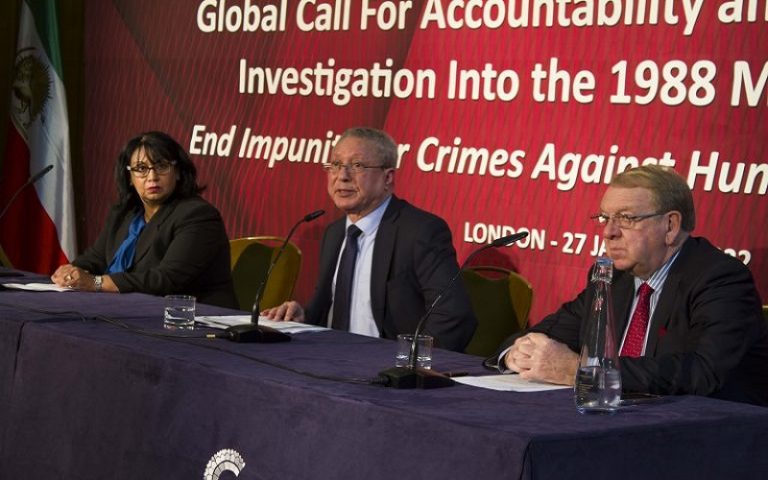
Between July 10 and 12, the National Council of Resistance of Iran held an international summit on Iranian affairs during which dozens of the coalition’s activists and political supporters delivered speeches that emphasized the danger facing the Iranian people and the entire world with the advent of the Raisi era. Maryam Rajavi predicted in one such speech that the new era would be one in which “the hostility and enmity between the Iranian regime and society will intensify more than ever before.” She also suggested that it would be a “litmus test” for European and American commitment to the human rights principles that are so threatened by authoritarian attacks on the Iranian people.

These predictions were already well-founded at the time of the Free Iran World Summit, days before the outbreak of water shortage protests in Khuzestan and at least a week before related demonstrations were recorded in Tehran, Tabriz, Saqqez, Zanjan, Mahashahr, and other localities throughout the Islamic Republic. Now, it is easy to argue that the “hostility and enmity” Mrs. Rajavi was referring to is already emerging on a grand scale, with both positive and negative implications for the Iranian people and their supporters.

On one hand, the new protests demonstrate the continuation of defiant attitudes toward depression which were on display in the months following the November 2019 crackdown, when activists continued to protest the entire Iranian regime despite the fact that 1,500 people had just been killed and others were facing the possibility of capital punishment. On the other hand, the present crackdown underscores the fact that Tehran has faced few, if any, consequences for that mass killing, and therefore may have no real incentive to avoid a similar or worse outcome in the present scenario.

That is presumably why the NCRI, in its statement regarding the deaths of a dozen peaceful protests, reiterated the call to international action that had already been issued repeatedly during the summit. “The Iranian Resistance urges the United Nations Secretary-General, the UN Security Council, the European Union, and its member states to condemn these crimes against humanity and take the necessary steps to confront [the] regime [over] committing crimes against humanity for more than four decades,” the statement said. “The leaders of the regime must be brought to justice and the UN Security Council must initiate any action needed to [achieve] this end.”

Iran’s Officials: “We Are All To Blame”

Because of the destruction of the eight-year Iran-Iraq war which destroyed Iran’s southwestern Khuzestan province the other border provinces, and the aftercoming ignorance of the regime’s officials to rebuild these provinces, there is no room for life and no possibility for it to flourish. But the tragedy had just begun. The Revolutionary Guards (IRGC) and other organizations of the regime pursued nefarious goals and sinister plans for this part of Iran.

Policies that led to the destruction of the environment and added to the devastation caused by this illegal war and lead to poverty and unemployment for the indigenous people of this province.

While most of the facilities and Iran’s oil, gas and petrochemical resources are in this province. last year, the protests of the deprived people of Ghizaniyeh district of Ahvaz, with 83 villages and 250,000 inhabitants, due to the lack of drinking water, raised the question and wonder of many local and foreign media, that how the richest region is experiencing such a miserable situation.

However, after forty-three years of oppressive rule on these people, numerous documents have been revealed that a vicious plan has been developed to crush the people of Khuzestan, which today a glimpse of this is the drinking water scarcity.

It was only a few days ago that Mahmoud Ahmadinejad, the regime’s then-president, revealed a “security plan” for “unbalanced development” in this province.

He said that the Supreme National Security Council had approved a plan after the war to prevent any investment in Khuzestan, as the development of Khuzestan could be a problem for the government.

Khuzestan province has five large and important rivers on which the lives of its people depend. In addition to providing drinking water, they also provide water to farmers. Therefore, any damage, deviation, and shortcoming of these vital resources make life impossible for the inhabitants of this region.

The province has a population of about 5 million people and has 14% of GDP (mainly due to the oil industry) but has an economic participation rate of 40%.

Unemployment of the population between the ages of 15 and 24 in this province is more than 33% and the total unemployment rate is more than 25%. An important part of the unemployed is also university graduates.

Also, more than 25% of the people are below the poverty line and marginalization in the province has gained second place in the country! Social harms have also been placed on other problems, and because of all these factors, migration from the province to other parts of the country is one of the goals pursued by the regime to abandon the main inhabitants of Khuzestan.

Now, in fear of the security situation raised by the regime’s behavior in this province, many scared government officials put the blame on all the officials, saying:

“Khuzestan has not got so many problems overnight that it can be treated overnight. Beyond this issue, it is possible to question from the Hashemi’s government to Rouhani’s government, it is possible to question all the assemblies and all the representatives and all the governors of this province. And this means that in the case of Khuzestan, ‘we are all to blame.’” (Aftab-e-Yazd, July 20, 2021)

Mohamad Kianoush Rad, former MP, about this collective responsibility said: “Unfortunately, all post-revolutionary central governments, left and right, reformist and principlists, have all been involved in transferring water from the Karun tributaries to the central plateau of Iran for consumption in industries such as steel, agriculture, and rice.

“The people of Khuzestan have also realized that by delighting the principlists or reformist, Hashemi, Khatami or Ahmadinejad and Rouhani, and now Raisi, there will be no difference or change in macro water transfer policies.” (Ensaf News, July 19, 2021)

As the protests of Khuzestan’s people and other provinces raised slowly, documents and plans of the Revolutionary Guards were exposed. Mojtaba Yousefi, MP from Ahvaz, protested the implementation of unprofessional and confidential water transfer projects in Khuzestan province and said:

“Khuzestan witnessed a self-made flood of the Ministry of Energy in 2019. Because they wanted to say that Khuzestan has surplus water resources and transfer it.” (ISNA, July 22, 2021)

Expert discussions and scientific evaluations during these forty years, which have been repeated many times, said that water should not be transferred from Khuzestan to other places, or this should be done with the utmost care to preserve the environment and the lives of its inhabitants.

Some many dams should not be built on the rivers, the damage of which is enormous and irreversible. Sugarcane cultivation should not be done with all kinds of environmental damages to plains that cannot bear the burden of such wrong decisions.

It never caught the attention of officials, and the result was that millions of people are now searching for a drop of water.

“An informed source in the Ministry of Energy said: ‘The live and usable (water) volume behind Karkheh Dam is currently 760 million cubic meters based on today’s monitoring, and with this volume of harvest, we are only 54 days away from zero water of Karkheh Dam.” (State-run daily Hamshahri, July 21, 2021)

The Disastrous Results of Iran’s Corrupted Projects

Following the recent protests over the water shortage of the Iranian people mainly in the Khuzestan province, there is no doubt that the Iranian regime has destroyed the country’s environmental system, and day after day while the situation is becoming worse, it adds to the people’s suffering.

Now many provinces of the country, including Khuzestan, Chaharmahal and Bakhtiari, and Sistan and Baluchestan are facing water stress, the role of illegal dams, and the implementation of water transfer projects in creating the current situation has received more attention.

In a shocking interview with Dr. Mohammad Javad Abdollahi, retired head of the Faculty of Geology of the Chamran University of Khuzestan, which was published by the state-run news agency 55 Online on 23 July 2021, one of the thousands of disasters created by this regime was revealed. Below is the translation:

“The year before the construction of Gotvand Dam in 1989 started, the Americans had proposed building the Gotvand Dam 20 km above the current reservoir.

“But in those years, the managers of the Iran Water and Power Resources Management Company believed that the Americans, because they wanted the dam reservoir to be small, raised this spatial difference. Therefore, they decided that the dam lake should be located right on the salt domes of Gachsaran. In 2001, in a letter to the Department of Industries and Mines, I emphasized that the studies conducted on this dam were not enough.

“In 2002, together with engineer Shamsaii, the then director-general of Khuzestan Water and Sewerage, I raised the issue that this dam has problems and could endanger the entire province of Khuzestan in terms of salinity.

“Shamsaii later became the head of the Gotvand Dam. I explained to him that the builders of the dam had basically not considered the geological studies of the area. They had no reports of geological studies. Mr. Shamsai then formed a 20-member group to study the dam. Mr. Shamsai’s study group wrote in his first report, ‘Wherever you prevent losses, there is a benefit.’

“Mr. Shamsaii, as the head of the Khuzestan Regional Water Department at that time, wrote a letter to all government officials asking them to stop the construction of the dam. The letter was sent to the President, the Minister of Energy, the Parliament, and the CEO of the Water and Power Company (Executive Company).

“After the construction of the dam, ironically, Engineer Shamsaii, who was the mayor of Ahvaz at that time, was elected as the head of the dam! After that, they received a series of consultations from different countries and universities in Iran, and it was decided to create a clay blanket to create a gap between the thick layers of salt and the lakebed. The head of the dam called me and proposed.

“At that time, 2.5 billion tomans had been spent for this dam. At that time, I was one of the constant critics of the construction of this dam, and my voice was not heard. Based on my experience and knowledge, I said that this would fail.

“The day of dewatering came and the then President (Mahmoud Ahmadinejad) and the CEO of the Water and Power Company also came for water intake. I was contacted that day and I told the agents of the Water and Power Company to collect and bring up as many machines as you can at the bottom of the clay blanket, because there is no confidence in the stability of this clay wall, and it will definitely break in the next day or two and it does more damage to you. They accepted my advice, and the water intake took place on Wednesday. On Saturday, the head of the same department called me and informed me that the clay blanket had been broken and said, ‘How did you know?’

“10 days after the dewatering operation, the lower part of the dam, which is usually the underlying systems and sensitive devices and control sensors, was filled with salt; This happened exactly 10 days after dewatering; Something that was as clear to us as the daylight, and no one listened to whatever we warned.

“Later studies showed that all the areas around Gotvand and Aghili, the good agricultural lands of these areas are becoming salty due to the spread of salt and evaporation and people are losing all their property and no use can be made of the dam and its saltwater.

“Before the dewatering, we warned many times that the turbines purchased for the dam are for fresh water and you have spent billions for the water that will become saline. Now those turbines have no use for freshwater either. The turbines are now out of order.

“Recently, the public relations manager of Gotvand Dam Water and Power Company invited me to visit the dam. They said there is no salt as you think, and finally, there is a four-meter layer of salt that we take it out! To my surprise, I saw several thin layers of four to fifty meters.

“I asked the young man to choose the 50-meter range for speculation and digging, and to go as far as the 50-meter depth, then they would realize that they would encounter a huge sea of salt. Engineers from the Soil Mechanics Laboratory then estimated that the salt was up to 93 meters thick. After that, our friends in Gotvand Dam said, ‘We know what we have done to this area, and by God do not say anything and it should not become public!’” (state-run news agency, 55 Online, July 23, 2021)

The interesting part is that on the same day, the state-run news agency ISNA reported, “information and statistics related to the country’s dams, including dams in operation, dam project under construction and dams under study was available to the public through the information section of the country’s dams, namely daminfo.wrm.ir on the official website of Iran Water Resources Management Company (wrm. ir), which is a subdivision of the Ministry of Energy.

“According to the latest reports, this website was also available on April 27, 2021, but now access to this site has been blocked and the Ministry of Energy or the Iran Water Resources Management Company has not stated the reason for this.” (ISNA, July 23, 2021)

Iran: Household Expenses Outweigh People’s Income

In 2020, the average annual cost of Iran’s urban household and a rural household was 60 and 24 million tomans, respectively. But the remarkable thing is that household expenses were more than their income.

The survey of household expenditure and income with a 50-year history is one of the most important statistical projects of the Statistical Center of Iran. The overall objective of this project is to estimate the average costs and income of an urban household and a rural household in the country and provinces. In 2020, the number of households surveyed in this project was 19,306 households in urban areas and 18,251 sample households in rural areas of the country.

A look at the most important results of the project in 2020 in urban and rural areas shows that:

– The average annual net expenditure of an urban household was 621,392 Rials, an increase of 31% compared to the same figure a year earlier. The total annual cost of urban households was 161,094 Rials with a share of 26% related to food and tobacco costs and 460,298 Rials with a share of 74% related to non-edible costs. Among food and tobacco costs, the highest share was related to the cost of flour, string, cereals, bread and its products and meat each with a share of 21% and among non-edible costs, the highest share with 50% was related to the cost of housing, fuel, and lighting.

– The average annual income of an urban household was 764,746 Rials, an increase of 38% from the previous year. Accordingly, in 2020, the average annual income growth of urban households is higher than the average annual total expenditure growth. Sources of income for urban households show that 31.4 percent of income came from wage-earning jobs, 15.7 percent of agricultural and nonfarm freelance jobs, and 52.9 percent of miscellaneous household incomes.

– Comparing the percentage of urban households using major living appliances in 2019 compared to 2020 shows that households using refrigerators from 70.2 to 71.9, vacuum cleaners from 91.7 to 91.9, the washing machine changed from 87.1 to 87.3, the stove changed from 99.1 to 98.9, and microwaves and halogen ovens from 12.3 to 12.4 percent. Also, the percentage of urban households using private cars and dishwashers was unchanged with 53.1% and 7.6% respectively compared to the previous year.

– In 2020, the main type of fuel consumed by 94.5% of urban households for heat was natural gas (public network).

– The average annual net expenditure of a rural household was 340,679 Rials, an increase of 30.5% from the previous year. The total annual cost of rural households was 136,442 Rials with a share of 40% related to food and tobacco costs and 204,237 Rials with a share of 60% related to non-edible costs. Among food and tobacco costs, the highest share was related to the cost of flour, string, cereals, bread, and its products with 25.0% and among non-edible costs, the largest share with 32.0% was related to housing, fuel, and lighting.

– The average annual income of a rural household was 420,470 Rials, an increase of 41.6% from the previous year. Sources of income for rural households show that 32.7% of wage and salary jobs, 29.7% of agricultural and non-agricultural freelance jobs, and 37.5% of miscellaneous household incomes have been provided.

– Comparing the percentage of rural households using major living appliances in 2019 compared to 2020 shows that households using personal cars from 32.7 to 34.1, refrigerator-freezers from 50.4 to 52.7, stoves from 98.4 to 98.8, the vacuum cleaner has changed from 65.9 to 67.5, washing machines from 56.5 to 58.1, a dishwasher from 0.5 to 0.4 and microwave and halogen ovens from 2.3 to 1.6 percent.

– In 2020, the main type of fuel consumed was 75.2% of rural households for heat, natural gas (public network), and 13.3% kerosene.

Average household expenditures and income by province

The average annual cost of an urban household shows that Tehran province with 957,016 Rials had the highest and North Khorasan province with 351,943 Rials had the lowest cost in 2020.

Tehran province with 1,098,118 Rials had the highest and Sistan and Baluchestan province with 478,831 Rials had the lowest average annual income of an urban household in 2020.

The average annual cost of a rural household shows that Alborz province with 566,427 Rials had the highest and Sistan and Baluchestan province with 180,395 Rials had the lowest cost in 2020.

Also, Alborz province with 676,897 Rials and Sistan and Baluchestan province with 181,091 Rials, the lowest average annual income of a rural household in 2020.

Iran: “The Conquest of the Power Structure by Brokers and Corrupt People”

Iran supreme leader Ali Khamenei’s faction seeks to attribute the widespread poverty, inequality, class divide, bankruptcy, and current economic misery to the actions of the Rouhani government, thereby relieving Khamenei of these tragic burdens.

The state-run daily Javan on July 7, 2021, in an article entitled ‘Looting the spoils in the 90th minute’ and wrote: “These days, we hear numerous and, of course, disturbing news about the latest efforts of some managers of the twelfth government to take advantage of the facilities entrusted to them by the people and, of course, the people will soon withdraw from them; From approving astronomical rewards and gifts to paying the last installments of large contracts with some media.”

But the fact is that the current economic bankruptcy and its catastrophic situation is not only due to the performance of a government or a faction but to the performance of the integrity of the government, headed by Khamenei and the looting institutions affiliated with his family.

As Mohammad Bagher Ghalibaf at the time as mayor of Tehran gifted “hidden and unknown” estates to some IRGC commanders.

Referring to this event, the state-run daily Arman in an article with the title ‘Two thousand astronomical estates has been gifted” wrote:

“There are hidden and unknown properties and what has been identified in more than 2,000 cases of transfers to individuals and legal entities, often without a contract, some in the form of so-called astronomical properties and some in other ways and removed from the list or territory of municipal properties.

“The method of transferring various properties to Imam Reza (AS) Charity was such that first a few plots of land with an area of ​​about 70,000 square meters were transferred to the Tehran Municipality Investment Organization in the form of internal transfer and then the Investment Organization, although only authorized in order to conclude a partnership contract and not a sale, handed over the property to Imam Reza (AS) Charity, which belonged to the elected officials of the municipal, without receiving any real price.

“Also, according to the report the Real Estate Organization, the Real Estate Organization has donated 159 billion Tomans in cash and non-cash through the Municipality of District 22 and the Real Estate Organization and 11 shops in Karim Khan Diamond Passage through the World Brokerage in exchange for the transfer remittance through the Real Estate Organization.” (Arman, July 14, 2021)

Although Ghalibaf’s corruption became widespread in the media, since he served Khamenei well in assassinating and killing people during various periods of his rule, especially during the uprisings of 1999 and 2009, he has not been investigated at all by the judiciary, now headed by Mohsen Eje’i.

The issue of investigating this corruption was also raised in the parliament, but its investigation plan was not approved and its case was dropped.

One of these cases was the payment of 65 billion tomans in bribes to a member of the Civil Commission of the parliament, which Mostafa Mirsalim exposed member of Khamenei’s faction.

Then the state-run daily Etemad about the blow of the economic mafia on the country’s economy wrote: “What is less talked about is the damage and catastrophic suspicious errors, that is, the question of the interests of the mafia. Now the Iranian economy is held hostage to their interests, and the people, the producers, the government, and the future of Iran’s development are being hurt by this mafia. We are facing the phenomenon of the conquest of the power structure by spongers, brokers, and corrupt people.” (Etemad, July 14, 2021)

Then Abdol Nasser Hemati one of the presidential candidates confessed about this mafia in an interview with the State-TV News Channel on June 13, 2021, and said:

“We have the import mafia, we have the smuggling mafia, we have the domestic distribution mafia, thank God, we have it in all areas. This difference between the free currency and the 4,200 currency itself expanded the import mafia. Now we call it the Mafia. I say those who are looking for rent-seeking are looking to take advantage of this situation.”

The reality of political and economic corruption in the Velayat-e-Faqih system (system of clerical rule) is so obvious that it has been repeatedly acknowledged and warned by state media.

The Hamdeli daily on July 13, 2021, wrote: “Economic and political corruption has hit the Islamic Republic like termites.”

Protests Continue in Khuzestan for the Seventh Night

At night on July 21, the people of the southwestern Iranian province of Khuzestan once again took to the streets in the cities of Ahvaz, Dezful, Shadegan, Ramshir, Mahshahr, Khowr-e Musa, and Masjed Suleiman.

Furthermore, the protests over water shortages in Khuzestan expanded to other parts of the country, and residents of Yazdanshahr, Isfahan province, and Karaj, Alborz province, and Bushehr and Bandar-e Genaveh, Bushehr province, came onto the streets, declaring their solidarity with protesters in Khuzestan.

To silence demonstrators, authorities mobilized a significant number of security forces and members of the Islamic Revolutionary Guard Corps (IRGC) from various provinces and dispatched them to Khuzestan. However, fed-up people, who have nothing to lose, continued protests despite a heavy security atmosphere and the government’s atrocities.

In Izeh city, where people had chanted, ‘Death to [Supreme Leader Ali] Khamenei,’ security forces and IRGC members used live ammunition to disperse defiant youths. As a result of direct shooting at defenseless protesters, several people were killed and dozens more injured.

Simultaneously, the people once again flooded onto the streets in Susangerd and Ramshir despite the government’s cruel suppression. In Shadegan and Masjed Suleiman, outraged people held massive gatherings and marches in support of other cities. They called on citizens to unite against the oppressive government.

In Khowr-e Musa, the people joined the demonstrations and came to the streets. In Behbahan, protesters set tyers ablaze and blocked several roads to slow oppressive forces’ move and prevent more suppression. In Dezful, demonstrators blocked several streets. Security forces tried to intimidate them through air shooting and chasing youths. However, they extremely resisted and pushed back oppressive forces.

Moreover, youths in the Sheiban district of Ahvaz joined the protests against severe water shortages and blocked the main access road in the region. In the Zargan and Malashie districts of Ahvaz, the people once again took to the streets and chanted anti-establishment slogans against the religious dictatorship ruling Iran.

In Yazdanshahr, Isfahan province, the residents of Eidivand district rallied in solidarity with the people of Khuzestan. To disperse protesters, security forces attacked them. In response, people resisted and chanted against Khamenei as the root of Iran’s dilemmas.

In Karaj, Alborz province, the residents of  Mahdasht district went on the rooftops and chanted in support of the people of Khuzestan. “Khuzestan is not alone,” they chanted. Furthermore, the residents of Bushehr and Bandar-e Genaveh cities took to the streets in solidarity with the protesters in Khuzestan and blocked several streets, preventing the government from dispatched oppressive forces to Khuzestan.

The recent protests, which have continued for a week, have severely shocked the authorities. In tandem with oppressive measures, they try to portray a popular image of themselves. Khamenei, who was targeted by outraged chants, reposted his deceitful remarks on Instagram to evade responsibility.

“Officials are tasked to follow up Khuzestan’s problems. If someone thinks about the people, they cannot remain comfortable versus the hard issues in Khuzestan. This is a definite, urgent, and ongoing task of governments to think about the people,” Khamenei posted.

On the other hand, the government continues oppressive measures and dispatches more riot forces to the region. Authorities also disrupted mobile internet to prevent leaking more information about Khuzestan protests and pave the path for more suppression.

“Network data from NetBlocks confirm a significant regional disruption to mobile internet service in Iran beginning Thursday 15 July 2021, ongoing almost a week later as of Wednesday 21 July 2021,” The Internet’s Observatory NetBlocks reported on July 21.

In the Real World, China and Russia Are Turning Away From Iran

Negotiations to revive the 2015 Iran nuclear deal JCPOA have stalled, and the task of the seventh round of talks is still unclear. At a time when there is no clear prospect of talks between Iran and the United States, some of Iran’s political figures say that Iran is turning to the Eastern powers and claim that the problem of sanctions will be solved by signing 25-year cooperation documents between Iran, Russia, and China.

These largely principled political figures, speak about the Chinese $ 400 billion in capital inflows, saying that the way out of the pressure of sanctions is to take refuge in the world’s second-largest economy, China and, of course, Russia.

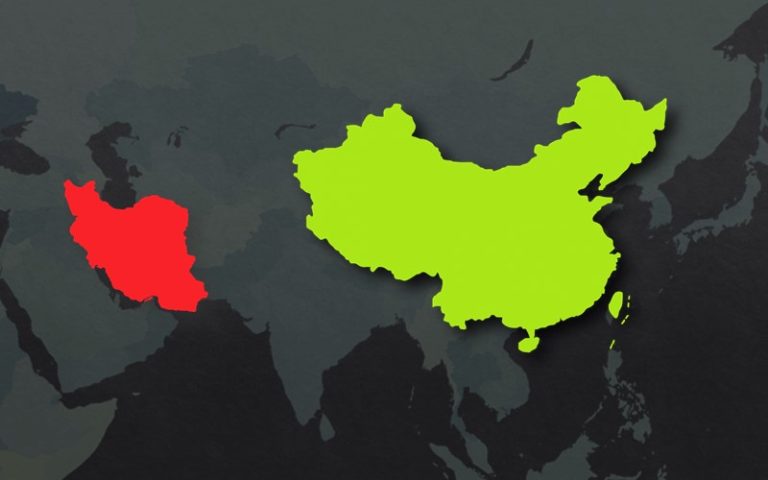
The signing of the 25-year Iran-China cooperation document had many ramifications. Many Iranians, who did not have happy memories of China’s economic interactions with Iran, opposed the signing of the document in various ways, but the signing took place while the regime had previously signed a similar document with Russia.

None of these documents made the years of sanctions on Iran easier. Even in 2016 and after the JCPOA, Iran was able to enter negotiations with the United States to buy Boeing aircraft, but Russia did not accept to sell its Sukhoi aircraft to Iran.

Now that the window on the JCPOA’s revival talks is said to be closing, some opponents and even supporters of the JCPOA in this regime see China and Russia as a replacement to the United States and believe the two Eastern trading partners will be able to move Iran out of the economic stalemate.

But the narratives of some other political and economic figures about how the Eastern powers interacted with Iran are very different and even contradictory.

In the meantime, we can mention the recent speech of Eshagh Jahangiri, Iran’s first vice president, held at the Central Bank.

He said: “We did not think that even India would not buy oil from Iran and would not revalue it, and even Russia and some neighboring countries for which we have sacrificed our children for the independence of their country did so, and we were alone in this economic war and did not retaliate. We could only circumvent the sanctions, move the goods, and bring in the money to buy the goods by adopting policies after the banking sanctions.”

After the sanctions against Iran, China was not only one of the first countries to withdraw its capital from the oil and gas, automobile, and infrastructure projects, such as highway and rail projects, etc., even blocked the regime’s resources. Iran is said to have about $40 billion in blocked assets in five countries, half of which are in China.

But China not only blocked a significant amount of Iranian assets, but also took advantage of sanctions to buy Iranian oil at below world prices and at high discounts, and even, according to petrochemical industry activists, brokered some Iranian oil products, such as urea, and bought it at a cheap price from Iran and exported it to India.

This is a simple example of why many regime’s opponents say that the regime is selling and auctioning the country. Meanwhile, China’s trade volume with the United States, Saudi Arabia, the United Arab Emirates, and even Israel is so large that Iran is not a major trading partner for it, and it seems that it prefers its national interests in trade and, according to economic activists, friendship has no meaning in trade.

It is good to know that currently, the volume of trade between Iran and China has reached the lowest figure in the last 16 years. Majid Reza Hariri, head of the Iran-China Chamber, told ILNA in this regard:

“As our total international and cross-border trade shrinks, so does our share of trade with China, as Iran and China have not had so little trade with each other in the last 15 or 16 years.”

According to him, according to statistics, by the end of 2020, the volume of trade between Iran and China was about $16 billion, which, including the unofficial sale of oil, still does not reach $ 20 billion.

Hariri also stressed: “The decline in our foreign trade last year has been unprecedented in the last 10 or 12 years. In other words, in terms of the volume of our foreign trade, we are back to the mid-1990s, an important part of which was due to heavy sanctions in 2020 and declining oil sales. Naturally, in these circumstances, we cannot provide the necessary currency for imports.”

Referring to some problems in Iran-China exchanges, he said: “However, it is difficult to buy some goods from China and from US-licensed companies that are either American-owned, have US shareholders, or are active in US markets. Of course, this is not a decision made by the Chinese government, but corporate decisions.

“This is a problem not only for vaccines but also for many other commodities from companies that work with Americans, are listed on the US stock exchange, or use American raw materials.

“Businesses ultimately prefer corporate interests even in the case of oil, China has officially stated that it will not accept unilateral US oil and non-oil sanctions. But many Chinese companies do not work with us lest their corporate interests are jeopardized.

“There are other issues, such as port sanctions, all of which affect trade between the two countries. If Iranian ship anchors in a port, the port, and its operator face US sanctions. The oil companies in China are commercial enterprises and do not prefer political issues to commercial ones.” (ILNA, July 18, 2021)

Shoaib Bahman, an expert on Russian issues, told ILNA: “Over the past years, one of the major challenges in Iran-Russia relations has been the development of trade relations. The trade volume between the two countries has always been below $2 billion, which is not a significant figure in international trade relations.

“The amount of trade agreements signed between Iran and Russia reaches more than $25 billion, but you can see that the level of operational trade relations between the two countries is less than $2 billion.”

About the regime’s backwardness in economic relations, he added: “For example, the trade volume between Turkey and Russia is more than $ 30 billion, and the two sides planned to increase this figure to $100 billion, which is a determining factor in political issues.”

He said that even other countries do have not a good economic relation with Iran and added: “And of course, even neighboring countries like Iraq have behaved similarly with Iran’s trading partners, and not only they have considered higher tariffs on imports from Iran than their other partners but repeatedly refused to settle its $5 billion debt with Iran under various pretexts.”

Iran Economic Collapse, As Explained by State Media

The Iranian economic crisis, caused solely by the mullahs’ corruption and failed policies, is now at a critical point as President Ebrahim Raisi prepares to take office, according to the state-run media.

The Setar-e Sobh wrote that the “most important challenge” Raisi will face is the millions of people living under the poverty line, who will “lose their trust in [the mullahs]” if they’ve not already done so.

The Jahan-e Sanat explained on Sunday that 71% of food items have increased in price to a “crisis level”. The largest month-on-month price increases were pasteurized butter (up 121.4%), chicken (118.8%), and cooking oil (89.0%). This essentially equates to an annual inflation rate of 24%. They described the commodity market’s current state as “deplorable”, saying that the government can’t control the market, which is why commodity prices are rising.

The paper quoted economist Massoud Nilly as saying: “We are really on the verge of severe uncontrollable inflation. Currently, financing, energy supply, services, public budget, social services, and the world exchange system are the six priority problems of the country, whose functions are currently completely disrupted.”

Of course, the reason for the inflation mentioned above is banknote printing, which causes liquidity of nearly  $150 billion.

The Hamdeli daily wrote that the 228 trillion Tomans liquidity growth since 2020 has resulted in 25 items increased in price two to five times, meaning that even very cheap food has become a luxury that most Iranians cannot afford.

Hamdeli wrote: “[Based on] the latest statistics released by the Ministry of Industry, Mines and Trade show that the prices of 25 goods have increased by about two to five times in the second month of spring this year alone. It is said that the prices of some types of livestock and poultry feed, rice, oil, poultry, as well as metal and rubber in May this year have increased by more than 100% and between two to more than five times and 40 goods including meat, rice, dairy, Beans, sugar, and tea became more than 50% more expensive.”

The fact is that the government cannot resolve the economic crises that the country is facing because they are responsible for the wrong policies and corruption that have caused the problems in the first place. The people see this, which is why they boycotted the election in June. They support regime change as the only way to change their fate.