Home Blog Page 277

The Challenges of Iran’s Next President

Iran’s next president will face an ocean of ​​challenges, some of which are long-standing, some of which are inherited from the former government, and some of which have recently been added to the ocean of ​​problems that have affected Iran’s economy, politics, and society.

Iran’s governments due to the rule’s wrong policies and the existence of the supreme leader phenomenon never had a bright prospect. And the next president, regardless of who it will be, will face the same fate and will inherit, then add, to the country’s ‘super challenges,’ as many of the state-run media are reporting.

Challenges like the coronavirus outbreak, the economic crises, the country’s budget deficit and the instability in the Middle East which the rule in Iran playing the role of the main source of all the wars in the that region.

Droughts and environmental crises

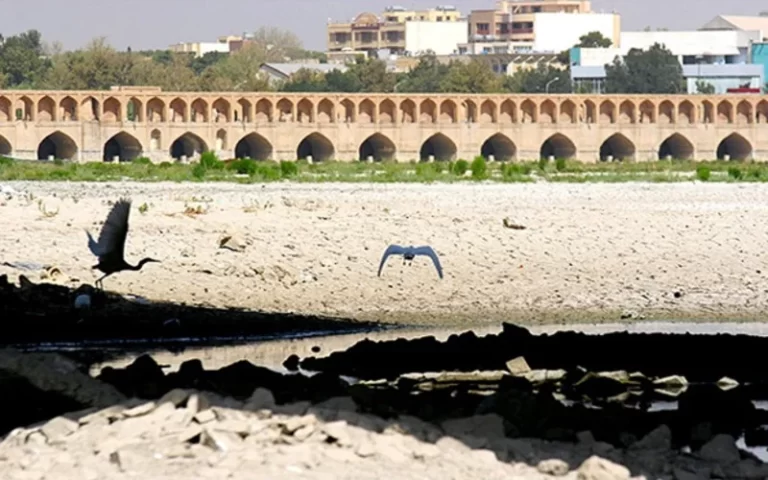
Iran will experience the driest summer in 2021 in the last 50 years. This is not the first time that environmental crises have threatened the country. Lack of a codified and accurate plan for natural resource management. Lack of programs to manage environmental crises such as water scarcity or air pollution in the country. Adding to this, forecasts indicate a decrease in rainfall in the new water year.

In such a situation, if the new government does not see environmental issues in the form of a crisis, it will face a great challenge to formulate a comprehensive plan to deal with these crises, especially drought, and practical management of water resources in the country.

The JCPOA and nuclear negotiations

Iran has been involved in international nuclear negotiations related to the JCPOA since 2013, and now, with the inauguration of the new US administration, negotiations on returning to the JCPOA and the lifting of sanctions have resumed since April this year. But this challenge is more complicated than it predicts. Iran’s government struggling to become a nuclear and an international community with the world powers at the forefront who are trying to prevent this Iran’s goal which is important for the existence of the mullahs’ rule. In between this crisis Iran’s government is trying to use the political gap between the world powers to reach its goal by weakening radical and decisive voices with the support of its lobbies and blackmailing with the help of proxy wars like the 11-day conflict between Hamas and Israel.

Economic and social damage to the coronavirus

Iran’s dead economy because of the government’s long year corruption, looting and investigations in non-sense and non-economic activities has become worse with the coronavirus outbreak the rule’s intentionally ignorance of this danger for the people and the country’s economy.

According to the statistics of Iran’s Coronavirus Economic Impact Monitoring Base in March 2019, the value of the country’s gross national product compared to 2018 had a negative growth of 1.2 units. Other details of the extent of this damage have also been published:

Financial loss of about 202 trillion tomans of union units in Iran and damage of about 1.450 million union units. In addition to economic damages, the coronavirus pandemic has left deep social ills such as rising domestic violence, suicide, and depression in Iran.

Unemployment

As Iran’s economic growth rate picked up negatively in 2020, the Statistics Center of Iran reported a 1.1 percent drop in the unemployment rate in the spring of 2020 compared to the previous year. Further analysis of the labor market by the Research Center of the parliament showed that the reason for the decrease in the unemployment rate was the decrease in the rate of the active population in the labor market, not the increase in employment.

According to the statistics of the Ministry of Cooperatives, there were about 2.4 million unemployed people in the country until February 2020, which is a deterioration due to the continuation of the coronavirus and the beginning of the fourth wave at the beginning of 2021.

Inflation

This well-known crisis is not Iran’s new problem, and the country has been involved in its increasing trend for many years. Inflation has always been on the rise in the 2000s, except for a few years. According to the Statistics Center of Iran, the inflation rate has jumped from 2019 to the end of 2020, and this trend has continued in the first months of 2021.

The annual inflation rate, according to the Statistics Center, was 36.4 percent in 2020 and the point-to-point inflation rate was 48.7 percent. Also, the headline inflation rate in 2020 increased by 1.6 percent compared to the previous year. The trend of inflation jumping continues in 2021, the monthly inflation rate of goods and services group has increased by 2.7 percent and the annual inflation has reached 38.9 percent. Until the monetary policies and fiscal indiscipline of governments as well as the huge corruption are not reformed, the inflation crisis will be on the list of crises in the country at the beginning of each new government.

Government budget deficit

The 100-day debates between the government and parliament over the 2021 budget had one main axis: the non-realization of the resources mentioned in the budget and the budget deficit of 320 trillion tomans of the government.

Eventually, the government and parliament agreed to make changes to the budget in general, but this agreement did not prevent the formation of a budget deficit, and the head of the parliament’s economic commission recently estimated a budget deficit of 350 trillion tomans for 2021.

Shortly after announcing the government’s budget deficit, the country’s treasury announced its decision to issue Islamic securities with government guarantees from the capacity of the 2021 budget law from May 22, marking the resumption of the government’s efforts to offset the budget deficit.

The crisis of pension funds and the increase in the population of retirees

The number of retirees in the country is increasing year by year. The increase in the retirement population comes at a time when equalizing and balancing pensions has put more financial pressure on pension funds, which have been facing financial crises and resource shortages for years.

Most of the country’s pension funds are on the verge of crisis or bankrupt and provide their resources from the government, and perhaps only the social security fund is providing a small part of its resources from government commitments and 70 percent of its resources from insurance.

However, none of the funds have been able to invest their assets to cover their expenses due to wrong policies and are turning into unresolved crises.

Housing market

The housing market, like other major markets in the country, has been plagued with problems such as price spikes and shortages of land and newly built units, because of the government official’s corruption and looting, rising material prices and land hoarding.

Particularly in 2019, the market fluctuated sharply to the point where housing transactions in the capital reached their lowest level in 32 years, reaching 2,855. Housing prices also fell 3.5 percent this year but grew to 11.4 percent in the first months of 2020.

Rising housing prices in 2020 widened the gap between household purchasing power and housing prices, making the housing market inaccessible to consumer buyers. The year 2020 was also a stagnant year in the field of housing construction, and the amount of construction in the capital reached the lowest possible level in the last 17 years.

Population aging and reduced fertility

Iran has become 10 years older in the last 60 years. This is an overview of the aging population of Iran, which was raised by the Senior Advisor to the Ministry of Health in 2020.

A serious crisis that is set to make Iran the world’s oldest country for the next 30 years, fueled by declining marriage and childbearing rates, especially during the coronavirus pandemic. People are afraid of marriage or childbearing due to issues such as fear of the future, despair, economic problems, insufficient income, lack of housing and other problems, and this issue caused the birth rate in 2019 to be about 170,000 less than the previous year.

A trend which is continuing and none of the government’s baseless, worthless, and unprofessional plan due to its fundamental nature will solve this problem.

Meddling in the Middle East and terror

Iran’s government has a long history in interference in other countries affairs, which has started with the foundation of the Islamic Republic by Ruhollah Khomeini, the Iran-Iraq as the first alibi and detonator of all the crises in the Middle East. This trend continued with formation of the Hezbollah in Lebanon, the support of the Houthis in Yemen. Then founding many other proxy groups in all the Middle East countries, especially Iraq after 2003 with the invasion of Iraq by the United States-led coalition.

But that is not all. Another case which is mostly unseen but obvious are the regime’s extraterritorial terror activities which has led to many conflicts and chaos like the assassination of Rafic Hariri, which since then Lebanon has not a stable government. Or the assassinations of many of Iraq’s popular faces which weakened its society and paved the way for the rise of fundamental and extremist groups. But now Iran’s government is facing with a JCPOA+ in which these cases along with its missile case are included, which shows that the world cannot tolerate this regime’s destructive activities anymore.

Eight Executions in Iran Within Two Days

In only two days, May 24 and 25, authorities in Iran hanged at least eight inmates in the prisons of Isfahan and Birjand, human rights defender association No to Prison – No to Execution reported.

Two Executions in Isfahan Prison

At dawn on Monday, May 24, authorities quietly executed two prisoners on drug-related charges in Isfahan Central Prison. Activists identified them Kianoush Ali-Moradi, 50, and Ahmad-Ali Qodrati. Mr. Ali-Moradi was married and had several children.

The official media have yet to report these executions as of this report. The Iranian government continues to implement death sentences against inmates who have been convicted on drug-related charges while relevant officials have frankly admitted that the executions are fruitless. They say that not only are these executions ineffective in combatting drug smuggling, but they have brought reverse effect.

Furthermore, it was supposed that the issuance of death penalty be limited based on new reforms in the Islamic Republic’s constitution applied in 2017. Judges were expected to consider one degree alleviation in drug-related cases. Nevertheless, authorities still hang inmates for insignificant charges.

Execution of Six Baluch Inmates

At dawn on Tuesday, May 25, Iranian authorities mass executed six Baluch inmates in Birjand Prison on drug-related charges. They were from Zabol city, in the southeastern province of Sistan and Baluchestan. However, the judiciary had exiled them to Birjand Prison, in the northeastern province of South Khorasan.

Activists identified one executed inmate as 34-year-old Javad Nakhaei, the son of Ali. There is no further information about the other executed persons. Their families had reportedly been banned from a last visit with their loved ones. These executions were also implemented silently, and state media avoided covering the news.

However, an eight-second video obtained from a morgue shows the lifeless bodies of the executed inmates. Meanwhile, at dawn on May 19, authorities had hanged two other Baluch inmates identified Younes Totazehi and Abdollah Totazehi based on similar allegations in the same prison.

In this respect, since the beginning of the new Persian year on March 21, at least 40 prisoners have been hanged in Iran. Human rights organization reported most of executions are carried out in secret meaning that the actual number of executions is far higher.

According to Amnesty International’s 2020 report, rights organization and activists registered the implementation of at least 283 death sentences across the globe, aside from China. Out of this number, at least 246 cases were implemented in Iran indicating that well over half of worldwide executions were applied in the country. The Islamic Republic is also the record-holder of executions per capita, based on official stats.

In such circumstances, Judiciary Chief Ebrahim Raisi is running in the Presidential election scheduled for June 18, which forecasts much more human rights violations to come in Iran.

Mass Disqualifications in Iran’s Presidential Election

The mass disqualification of the presidential candidates in Iran has become a very serious event for the regime’s officials. Many of them fear the consequences of such an act by the Guardian Council, which is controlled and directed by the regime’s supreme leader Ali Khamenei, and warn about the people’s frustration, despair, and protests.

This time Khamenei decided to sort out the so-called reformist candidates and even people who were accused not to be loyal enough to the supreme leader, which were not even in the reformist wing, showing the critical and fragile situation of the regime, that cannot tolerate anyone anymore, except people like the mass murderer Ebrahim Raisi.

A regime cleric Mohammad Javad Hojjati Kermani, in response to the repression and elimination of the candidates by the Guardian Council, said in a message: “This was a coup de grace to the coffin of the republic of the system. The announcement of mostly one-color candidates for the presidency of 2021 is unbelievable.”

Wwarning about the people’s reaction, he said: “The discouragement and indifference of the whole people, as well as the large number of experts and observers, is very dangerous and is becoming more dangerous every day.”

This person in July 2019 declared the regime’s situation in one sentence and said: “Cancer has taken over the system; from the cultural and moral collapse to the spread of hypocrisy.”

The regime’s Assembly of Teachers and Researchers of Qom Seminary about this situation in a statement on May 27 said:

“The Constitution of the Islamic Republic of Iran introduces the ruling system of Iran after the revolution as a system that emerged from the will of the people, a system whose affairs and mechanisms proceed with the participation of the people in decision-making. Restricting the vote of the people and the republic of the system began when the Guardian Council resorted to approving oversight and made it its dominant practice.

“The indifference of the people has reached the point where in the last few days the spokesman of the Guardian Council has separated the legitimacy of the system from the participation of the people in the elections and has openly stated that the low participation of the people does not affect the legitimacy of the system. The words of the spokesman of the Guardian Council show that the Guardian Council does not recognize the republic and the votes of the people and puts its tastes and desires before the votes of the people.

“Why should the fate of this large country be tied to the tastes of a few people? Given the widespread disqualification of the candidates for the 2021 presidential election, everyone knows that this sham election will be unpopular, with no competition and with minimal participation, and it is the responsibility of the Guardian Council which has lost its legal legitimacy by trying to weaken the republic of the system.”

The state-run ILNA news agency quoting Parvaneh Salahshouri, one of the so-called reformists, on May 27 wrote: “Apparently, people think that whoever becomes president is not important for them, and all presidents have to follow certain orders, so their presence is meaningless.”

Fearing the people’s carelessness which can lead to protests, she added: “When a sense of meaninglessness is formed among the people, they withdraw from participating in the elections, and this withdrawal will gradually lead to social events, which we are more or less witnessing in society.” (ILNA, May 27, 2021)

Even the regime’s former president Mohammad Khatami, who is famous to be one of the heads of the so-called reformist faction but who as president repressed student protests in 1999, frustrated about this event, playing the role of someone who cares about the people, said:

“Real elections are a symbol of systems that have embraced democracy and, in turn, strengthen the golden principle of ‘the people’s right to self-determination.’

“What has happened these days during the introduction of the presidential candidates is the result of an approach, perception and action that has already narrowed the field for the people’s choice, and this time it has appeared more openly and unequivocally.”

Finally warning the regime about the consequences of such a decision, he added: “The republic of the system, which is based on the free vote of the nation and has become less and is fading, and is under more serious threat, and no current, with any affiliation and approach, can and should not be indifferent to this great danger.” (Information base of the head of the reform government, May 27, 2021)

Finally, the excluded candidate Ali Larijani about his exclusion and the dangers facing the entire regime after this event, said the regime will be ripped apart: “We must take internal harmony seriously, else we must rely to an external force. Good governance is impossible without a good economy. People should have a predictable life. The government must speak clearly to the people.” (State-run website Khabar Online, May 27, 2021)

Iranian Authorities Are Rightly Worried About Implications of Electoral Boycott

Iran’s presidential election is scheduled to take place on June 18. The final list of candidates is expected this Thursday, but for weeks, Iranian officials have been warning that the greatest challenge facing any and all candidates may be public antipathy to the electoral process. In April, the state media outlet Hamdeli published an article that said the regime “should worry about the social consequences” of low voter turnout, while another state-run daily newspaper, Jahan-e Sanat, observed that “significant voter turnout is unlikely” in the face of authorities’ persistent disregard for the grievances driving earlier electoral boycotts and mass protests.

The latter article specifically highlighted the continuity between at least two such protests – one in January 2018 and another in November 2019 – and an electoral boycott that activist groups have been promoting in advance of the presidential election. But for those who have been paying close attention to Iranian affairs in recent years, this continuity was already obvious. Among the defining features of the January 2018 uprising were slogans that explicitly rejected both factions of mainstream Iranian politics. These slogans were later adopted by the November 2019 uprising, which spanned nearly 200 cities and towns, and the message was put into practice three months later when the Islamic Republic held its latest parliamentary elections.

For weeks beforehand, authorities urged all citizens to participate in the elections, often emphasizing that even if they found no candidates worth supporting, they should still submit ballots in order to affirm their support for the ruling system. Yet this was the very thing that thousands upon thousands of Iranians had rejected with two successive uprisings and a range of other, smaller-scale protests. Recurring chants like “death to the dictator” conveyed enthusiasm for the prospect of regime change, and by telling both “hardliners” and “reformists” that “the game is over,” protesters made it clear that they would no longer be tricked into allowing two indistinguishable factions to trade control over key institutions while continually subjecting the Iranian people to the same destructive policies and endemic corruption.

Although Supreme Leader Ali Khamenei proclaimed that participation in the February 2020 election was both a patriotic and a religious duty for all Iranians, the actual turnout in that election proved to be the lowest in the 40-year history of the Islamic Republic. This fact was even acknowledged by Tehran’s own statistics, despite the regime’s longstanding history of inflating voter participation numbers in order to create a veneer of greater legitimacy for itself. Its inability to do so last year was a true testament to the staying power of the uprisings’ political message, as well as the undeniable vulnerability that the regime had acquired in their wake.

Khamenei begrudgingly revealed that vulnerability himself at the height of the first uprising. In absence of any other credible explanation for the rapid spread and stark anti-government message of the January 2018 protests, the Supreme Leader stated publicly that the nationwide activist movement had been fueled by the People’s Mojahedin Organization of Iran. Although that group has long been recognized in Western policy circles as the leading voice for democracy in the Islamic Republic, the Iranian regime has always denied its popularity and its organizational strength, referring to it as a “cult” and a “grouplet” and feigning a lack of concern for the challenge that it presents to the theocratic system.

That bravado vanished in the face of the first uprising, and has never returned. Quite to the contrary, Tehran’s tactic acknowledgment of vulnerability has been reinforced with each successive development, as evidenced by recurring warnings from government officials and state media outlets regarding the prospect of further PMOI-led uprisings. These were no doubt the primary “social consequences” of low voter turnout that Hamdeli had in mind last month. And the threat of renewed unrest has only become more apparent in the intervening month.

The electoral boycott movement has specifically begun to overlap with various protests happening throughout the Islamic Republic, each calling attention to a different social or economic crisis. Impoverished pensioners, for instance, have been staging interconnected protests in more and more Iranian cities since early this year, and early this month they began chanting slogans like, “We have seen no justice; we will no longer vote.” The same or similar slogans have been taken up by other activist groups, while “Resistance Units” affiliated with the PMOI have promoted the boycott in terms that harken back to the nationwide uprisings.

The Resistance Units are responsible for staging demonstrations and posting messages in public that describe non-participation in “sham elections” as a means of “voting for regime change.” Many of these messages are accompanied by images of the PMOI’s founder Massoud Rajavi and his wife and prospective transitional president for a democratic Iran, Maryam Rajavi. Some of them also offer a response to Khamenei’s instructions regarding the electoral process, by quoting the Rajavis as saying the patriotic duty of freedom-loving Iranians is not to vote but to deny the system any possible claim to legitimacy.

Whoever “wins” next month’s election, it will certainly be difficult for him to claim legitimacy if the voter participation exceeds or even comes close to the historic lows seen during last year’s parliamentary election. This will be all the more difficult if it is clear to everyone that a mass boycott represents mass endorsement of the democratic Resistance movement behind it. And with that movement being the same one that inspired so many Iranians to directly confront the regime in the final years before the pandemic, the public’s endorsement of regime change should be very difficult to deny.

Iran’s Botched Vaccine Roll-Out

The coronavirus crisis is just getting worse in Iran, with the daily death toll consistently hitting triple digits, even as other countries see their case numbers and deaths drop in the wake of effective vaccine rollouts and public health campaigns.

The state-run Tasnim news agency wrote on May 19: “A periodic comparison of the statistics in the past week shows that the mutated variant of the virus is still active. In some areas, the virus has risen to the point where there is concern that the current small flames of the disease all over the country will suddenly become a worrying crisis or cause the fifth peak throughout Iran.”

As many countries work through the widespread vaccination of the public, the government has significantly limited the number of vaccines delivered, with most medical staff not yet given their shot and no vaccination schedule announced. This is the result of the authorities not only refusing to allow certain WHO-approved vaccines from being distributed in Iran but also stressing that a domestic vaccine would need to be developed, perhaps taking until next year. As a result, vaccination has been delayed, resulting in thousands of unnecessary deaths.

Despite that, according to former President Mahmood Ahmadinejad, all officials have already been vaccinated. It is believed that this was done using the same one that Supreme Leader Ali Khamenei banned in January for its supposed untested nature, despite already being administered to thousands of Brits and Americans at that point. Any other doses of the vaccine have been sold on the black market by dealers affiliated with the state.

The Arman newspaper wrote: “People are asking themselves why only ordinary people are affected by the Covid virus… This has increased the suspicion among the people that there are people who have received the Covid vaccine.”

Food and Drug Administration spokesman Kianoosh Jahanpour denied on May 18 that any Covid vaccine has made its way to the black market, but MP Mohsen Dehnavi said one week earlier than 200,000 doses were missing from official stores and were being sold illegally for 250 million rials (approx. $1,121) per shot.

The Iranian opposition wrote: “The regime is delaying public vaccination to prevent assemblies and mass protests. However, this brutal policy has caused divisions within the regime and its forces and is likely to result in popular protests and uprisings against its leaders, especially Khamenei. This is a government that has not only withheld the vaccine from the people, but has stolen bread from their tables, and has forced the poor people to go to work in the midst of the Covid crisis, or wander the streets looking for work, or looking for food in garbage cans.”

Why Are Medical Interns Committing Suicide?

In May, a state-run news outlet in Iran did a major article on the “suicide of young medical interns”, following the deaths from the suicide of three interns in just 10 days, which is the direct consequence of the pressure put on them by the authorities’ failure to control the pandemic, hire an adequate number of medical staff, or pay them enough to live on.

These medical assistants work in hospitals under the supervision of medical universities, with the following problems:

  • salaries below the minimum requirement
  • long consecutive shifts
  • no insurance
  • insomnia
  • inability to see friends and family
  • unfair 89-day contracts
  • work pressure
  • staff shortages
  • mental and physical problems due to the coronavirus pandemic and patient deaths

It is unclear what the demographics are of those who have died from suicide because their identities are being protected (or hidden). Hossein Kermanpour, the public relations director of the Medical System Organization, said that an investigation is underway and that information was not yet available.


Psychologist Ali Nikjoo said: “The serial suicide of interns is a painful tragedy. Iranian talent has either left the country, become passive in a corner, endure the hardships of life, or end their lives in such a tragic way.”

While the Secretary-General of the House of Nurses, Mohammad Sharifi Moghaddam, spoke about how young hospital interns are being exploited by employment laws and that they don’t have “advocates who could protect their rights” so “they are being discriminated against”.

He said: “To complete their training, they have to spend a lot of time reading and watching training videos on the Internet and even perform surgeries this way. This increases their stress. High pressure to complete training and, of course, very low salaries (approx. $475 to 575) cause a lot of psychological damage for interns.”

The country’s medical student union councils wrote a joint letter to the Minister of Health following reports that four medical interns had died from suicide in Tehran in the first half of May alone. They demanded an investigation into the deaths, as they spoke about how “exploitative laws and coercive instructions” have led to this place.

They wrote: “Interns with reduced rights and long shifts, with a salary of two million Tomans a month, are on duty for dozens of nights.”

This situation is not unique to medical interns, as all workers are exploited under the rulling theocracy, but the interns’ issues are exacerbated by the pandemic.

Iran Protests Over the Weekend

There were several protests by different sectors of Iranian society over the weekend, showing once more that the mullahs are widely unpopular among the people, who support regime change as the only way to improve their lot in life.

On Sunday, janitors and utility workers from the education system gathered outside the education ministry offices in Tehran, Lorestan, and Qazvin to protest salary discrimination and dire working conditions. These protests had taken place in other protests after the administrative court of justice reduced the salaries of many workers in a court ruling.

The state-run IMNA news agency reported on May 15 that these workers get 25-30 million rials per month, but the poverty line for a family of four is 100 million rials a month, so they getting less than a third of what they need to survive. Additionally, they are not given money for their uniform or bonuses, which further impoverishes them.

This is further backed up by the Tasnim outlet in February, which reported that over 16,000 utility workers are employed on less than 28-million-rials per month with no bonuses for overtime.

Also on Sunday, contract teachers from non-profit schools, who have advanced degrees and several years’ work experience, protested outside the parliament to demand that officials address their demands, including full payment of their insurance and benefits, as well as wages on par official teachers.

One teacher said: “Our salaries are sometimes even lower than those of workers. We’re not even given the respect of a simple worker. Majlis members must think about the work conditions of thousands of contract teachers and force the education ministry to employ these teachers.”

At the same time, contract teachers in Sistan and Baluchestan province demanded job security, higher wages, and improved conditions.

On Saturday, medical workers from Tehran hospitals and emergency centres, who are members of the Health System Cooperative Company, protested outside the local judiciary offices because the judiciary is refusing to process the corruption file against a construction project controlled by a businessman associated with the government and has returned the investments made eight years ago.

On the same day, municipality workers in Chabahar protested outside the municipality headquarters over wages that have not been paid in three months.

Meanwhile, water and sewage company workers in Izeh held a rally to protest the salaries that have now been delayed for 10 months.

These protests show that the rulling theocracy is increasingly unpopular.

Update:

Residents of Barangerd Baghmelk village in Khuzestan province closed the Ahvaz-Izeh road (main route to Isfahan province) on Tuesday, May 25, to protest the lack of drinking water They say that even the bakeries in this city cannot bake due to a 5-day water cut, and the residents not able to buy any water tanker which costs more than 100,000 Tomans.

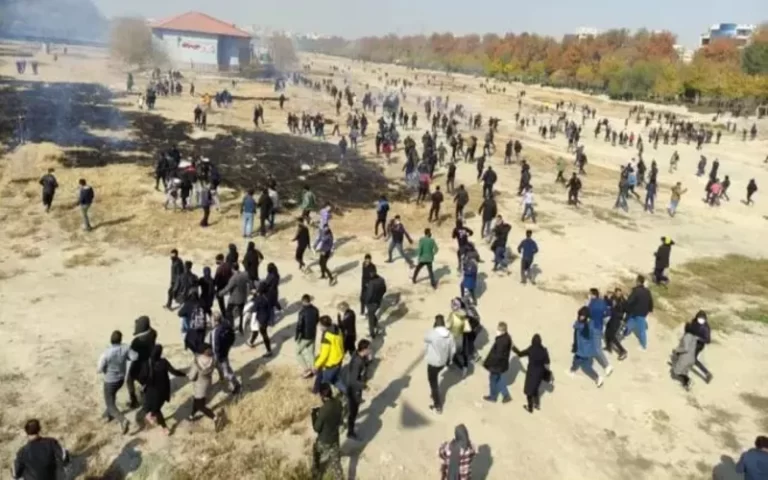
On Tuesday, May 25, a number of the Ziar city farmers in eastern Isfahan rallied to protest water shortages, especially for agriculture. These farmers, clashed with the police who fired tear gas and plastic bullets at them.

On May 26, official oil workers in Tehran, Khark Island, Gachsaran, Abadan, Assaluyeh, Ahvaz, Bahregan, Mahshahr, etc. staged protest rallies. The rally follows a pre-announced call by official oil workers. These employees are protesting against how the government is increasing the salaries in 2021, which according to the is unjust.

Iran: Khamenei-Controlled Council All but Appoints Ebrahim Raisi as President

Following the Guardian Council’s decision, only seven candidates among 529 individuals were allowed to run for Iran’s Presidential election scheduled for June 18. The council practically paved the path for Iran’s current Judiciary Chief Ebrahim Raisi—who has yet to resign from his position—to take office.

The Guardian Council, which is consisted of six faqihs, or expert clerics, appointed by the Supreme Leader Ali Khamenei and six jurists appointed by the Judiciary Chief, himself appointed by the Supreme Leader, barred potential rivals for Raisi’s presidency. Ali Larijani, the former Parliament Speaker; Mahmoud Ahmadinejad, the former President; and Eshaq Jahangiri, the current Vice-President, were among the disqualified candidates.

Raisi urged the council to reconsider the situation of several candidates, fearing public apathy toward the election. “I have made contacts, and I am holding consultations to make the election scene more competitive and participatory,” he sarcastically wrote on the banned Twitter platform while the Judiciary he leads has appointed six members of the 12-member council.

This election is taking place while the gap between the state and society has unprecedentedly widened and deepened. Fifty percent inflation, high prices of essential goods, systematic corruption, and the government’s failure to address the most fundamental grievances of citizens have caused an imminence distrust and even hatred toward the entire ruling system.

Due to his record, Raisi is considered as Khamenei’s favorite candidate for the election. As the deputy prosecutor of Tehran in 1988, he was a leading implementor of the extrajudicial executions that summer based on the Islamic Republic founder Ruhollah Khomeini’s fatwa.

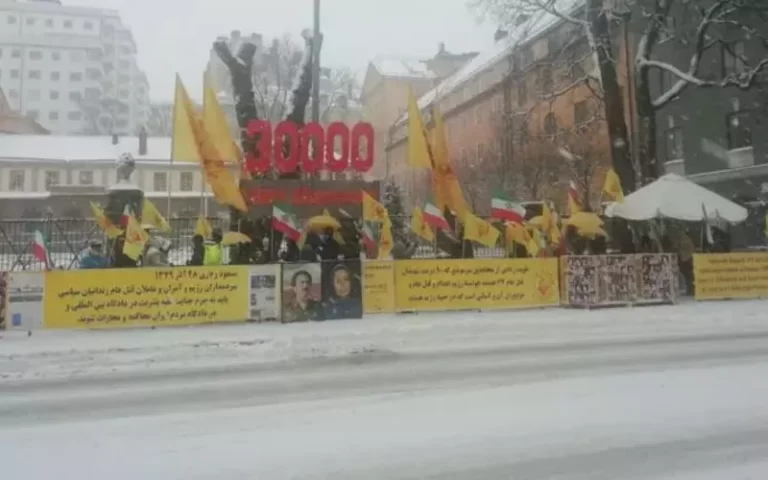
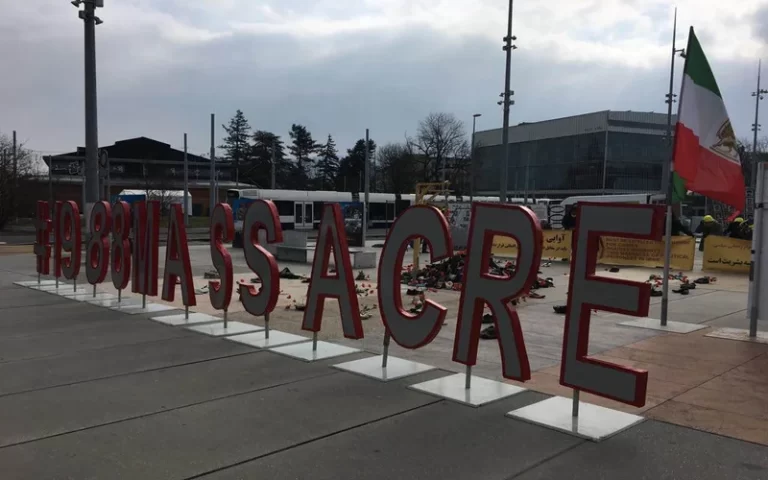
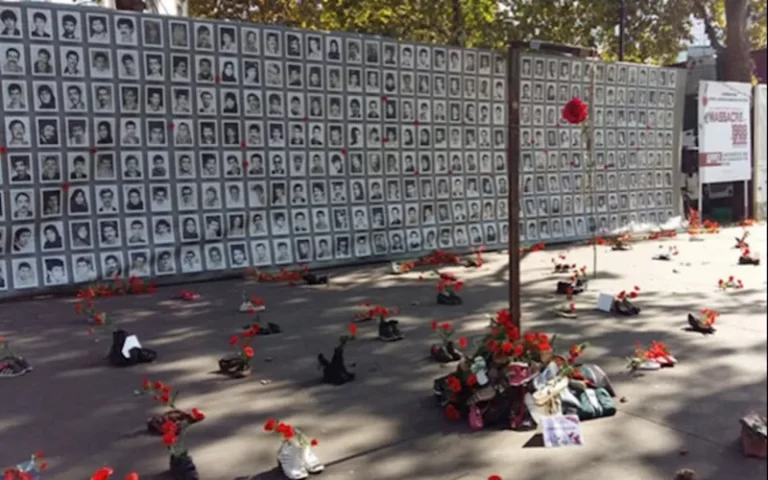
According to the opposition Mojahedin-e Khalq (MEK/PMOI), the government mass executed at least 30,000 political prisoners in 1988, mostly affiliated with the MEK. “Whoever at any stage continues to belong to the MEK must be executed. Annihilate the enemies of Islam immediately,” read Khomeini’s fatwa.

In an open letter published on May 3, some 152 former United Nations officials, human rights experts, and jurists urged UN High Commissioner for Human Rights Michelle Bachelet to establish a commission of inquiry into Iran’s 1988 extrajudicial executions of thousands of political prisoners.

Previously, on September 3, 2020, seven UN special rapporteurs had announced that the 1988 extrajudicial executions and forced disappearances of thousands of political prisoners may amount to crimes against humanity.

Furthermore, in a backlash to Khamenei’s desire to appoint Raisi as President, Iranian dissidents intensified their activities inside Iran and abroad, revealing Raisi’s crimes against MEK members and supporters in 1988 and his harrowing human rights record as the judiciary chief.

However, in flagrant defiance of international and domestic appeals, the Khamenei-controlled Guardian Council qualified ‘lucky Raisi’ and ‘six hopeful losers’ to run for the Presidential competition. With such action, the supreme leader obviously announced his unilateral path for maximum isolation.

Khamenei practically put an end to the Vienna-based nuclear negotiations despite appeaser counterparties’ willingness to offer sanctions relief to Tehran at all costs. In such circumstances, not only does reviving the 2015 Iran nuclear deal not loom but signing any accord is unlikely.

Meanwhile, the supreme leader as the highest authority was forced to ignore the game of reformists versus hardliners. For years, Iranian ‘reformists’ were terrifying the United States and European governments about a ‘hardline administration’ to gain international privileges. Currently, Khamenei fears the popular slogan during anti-establishment protests, chanted, “Reformists, hardliners, the game is over.”

Indeed, Khamenei’s decision made his domestic opponents concerned severely. In a letter to the supreme leader, ‘reformist’ President Hassan Rouhani urged Khamenei to order the Guardian Council to make changes in final lists declared by the council. “The president has ordered the interior minister to avoid announcing the Guardian Council’s lists,” said Mohammad Mohajeri, a journalist and politician affiliated with Khamenei’s faction.

Notably, an official opinion poll conducted by the Broadcasting Organization (IRIB) in May estimates turnout in the vote would be as low as 30 percent, significantly lower than any election held in the past 40 years.

Recently, in a street interview with the state-run Ara TV Channel on May 20, citizens had announced a boycott of the election. “I would not vote alike,” “I don’t vote,” “Why should I vote,” and “Nothing will change with my vote,” said ordinary citizens during the interview.

It is worth noting that the interview had been conducted and aired several days before the Guardian Council’s declaration about candidates. At the time, ‘reformists’ thought that their candidates would drag people to the polls meaning the society had already rejected the current establishment with its entire divisions.

Regarding Khamenei’s recent decision to purge all rivals, the possible turnout would be far lower than any prior estimation. However, the supreme leader seemingly prefers to clarify all opponents and applies his absolute power to countering growing protests inside the country and international isolation abroad.

Iran Economic Crisis Increases Election Boycott

The state-run media in Iran admitted on Saturday that the country is in an economic crisis and that the Iranian people hate the regime for this, which is why the Iranian people are taking part in a nationwide boycott of the elections.

The Ebtekar daily explained in an article on inflation that the price of basic food items has increased by 1.7 million tomans in just a few days.

It wrote: “Today, we can no longer see the effects of wage increases, the same wages that [officials]claimed should not be increased. Now even this small increase has disappeared. In one sentence, this situation could be described: ‘The livelihood security of wage earners is in serious danger.”

While the Aftab-e Yazd daily warned the authorities that the consequences of this crisis could really be the end of the current ruling theocracy, saying that the government has failed to “increase social tolerance” and the officials’ shortcomings, not least the skyrocketing prices of goods, has led to widespread protests.

It wrote: “Pay attention to the list of skyrocketing prices. The prices of various goods, both domestic and foreign, are rising each second, and no one is responsible… Put yourself in the position of a worker or retiree who has a statistic salary. Are these people motivated to have political participation? Even if a candidate gathers one hundred thousand people in a Clubhouse interview, how on earth would that help those whose earnings do not cover one portion of meat per month?”

The Donya-e Eghtesad spoke about the elections, saying that it doesn’t matter who becomes the next president because these economic crises are not solvable under the current ruling theocracy. They suggested that whoever the president is will only maintain the status quo and that this will cause more challenges, including inflation of 50% and zero growth.

The same day, the Javan daily wrote: “Over the past three decades, and especially the last eight years, the people’s faith, hope, beliefs, and trust in the system have been damaged. Thus, the political participation of the people has decreased. People are well aware of the fact that those behind the current situation can demand changes or change the situation in favour of the people.”

The Hamdeli daily advised that the system is lacking “popular legitimacy” and cannot form a “social movement” because it is unable to pull the wool over the eyes of the people with fake notions of reform and it cannot handle the current “political polarization”.

Another aspect of this economic crisis are the high prices of the people’s basic goods.

The state-run news agency ISNA on May 23 on this issue reported about a 70 percent of increase in the prices of six groups of food items. The report then added, that since the beginning of 2021, the increase of inflation in three indicators: monthly, annually and point-to-point has been triggered, while the point-to-point inflation, which indicates the increase in household spending compared to the same period last year, has reached 50 percent.

Oil prices have risen by 30 percent. The unbridled price of the basket of goods of Iranian households in other items is also on the rise. Other items which include these groups: ‘tea, coffee, cocoa, soft drinks and juices’ with an increase of 78.4 percent, ‘milk, cheese and eggs’ with an increase of 75.3 percent, ‘fish and shellfish’ with an increase of 73.1 percent, ‘red meat and poultry’ with an increase of 72.9 percent and finally the group ‘red, white meat and its products’ also increased by 72.9 percent.

In other goods, we can mention the 69.6 percent increase in the cost of ‘sugar, jam, honey, chocolate and sweets’ group, and home appliances and furniture also increased by 67.6 percent.

In terms of the annual inflation, the highest amount belongs to the transport group with 65.1 percent, oils and fats 61.3 percent and furniture and home appliances with 53.7 percent.

Iran’s statistics center said in a report that the annual inflation rate in May 2021 had reached 41 percent, which was an increase of 2.1 percent compared to the previous month.

In its report, the Statistics Center describes the record-breaking liquidity and inflation of 41 percent in the government of Rouhani as the ‘boiling point of inflation’ and wrote:

“Point inflation refers to the percentage change in the price index number compared to the same month last year. The point inflation rate in May 2021 reached 9.46 percent, meaning that the country’s households spent an average of 9.46 percent more than in May to buy a ‘set of identical goods and services.’”

The report also referred to another factor of inflation that takes place through banks, entitled ‘The creation of unruly money by banks, an important factor in causing inflation in Iran’ and wrote:

“Banks create a lot of fiat money on a daily basis, of course, and cause the country’s liquidity to increase continuously. In fact, the main reason for the significant increase in liquidity in Iran, which is a high figure compared to other countries, is the creation of fiat money. The most important loss resulting from this action of banks is the increase in inflation. In fact, it is the creation of unruly money by banks that has caused Iran’s liquidity growth to always be far ahead of economic growth and to create an inflation giant.” (State-run daily Vatan, May 23, 2021)

Iran’s Regime, Fearing Protests, Pleads for Sanctions To Be Lifted

International sanctions have crippled Iran’s regime, and its financial resources and power is almost zero. The regime is no longer able to financially support its proxy groups in the Middle East, and worse it is even not able to pay government officials’ wages.

The situation is so bleak that all the regime’s lobbyists especially in the US are crying and begging the US government for the lifting of the sanctions. We will exclude the people and their situation from these facts because they are the last concern of the regime, and only thing that this regime’s is concerned on them is their fury because of poverty and starvation, resulted by the regime’s policies in wasting their wealth and the country’s national resources in wars and terrorism.

Abolfazl Zohrehvand, a regime-affiliated foreign policy expert and former Iranian ambassador to Italy, frustrated about the situation in an interview with state-run website Nama about the lifting of the sanctions said:

“The issue which is now important is the lifting of all sanctions, and the nuclear or non-nuclear issues are not considered.”

Speaking about the nature of the sanctions, he added: “What has happened so far in Vienna is related to the lifting of sanctions imposed during Mr. Trump’s presidency, and not even to the sanctions imposed during Mr. Obama’s term. The next noteworthy point is that non-nuclear sanctions will not be removed in any way, including the fact that the Revolutionary Guards remains a terrorist organization on the sanctions blacklist.”

About the regime’s freedom in financial exchanges, he added: “During the negotiations, it seems that the central bank is going to be removed from their sanctions so that it will not have any problem in transferring money, but the fact is that U-turn is still under sanctions and we still do not have access to its resources, and they not only will remove U-turn from the sanctions, but other sanctions systems will remain in place.”

He added: “It is possible for us to sell our oil and return some of its money somehow into the country or to import goods in exchange for the sale of oil, and they have mentioned this, but there is no guarantee for the sale of oil and its returning money.  Because U-turn is blocked and it is not possible for us to make financial transactions, which is one of the most important and key issues in sanctions.

“But they promise that we will be able to sell two million barrels of oil for 180 days and their money will be delivered to China, Korea and Japan, and we have to buy goods for that money, and we will easily be able to transfer the money back to the country, because all the ways of transferring money to the country are closed.” (State-run website Nama, May 23, 2021)

Speaking about two other versions of the JCPOA, which the state-run news agency IRNA describes as the Yellow-JCPOA and the Red-JCPOA, is confessing that all the sanctions will be not lifted and is just a delusion.

“However, the other two types of the JCPOA, which are yellow and red JCPOA, because they are related to terrorism and human rights issues, will not be lifted for the time being and will be transferred to a new period of negotiations.” (IRNA, May 23, 2021)

Mocking the president’s claim about the lifting of all the sanctions, it added: “That Mr. Rouhani’s is announcing that all sanctions have been lifted and the country is liberated is a reaction to the election.” (IRNA, May 23, 2021)

Speaking about the regime’s last chance, IRNA added: “The best thing is to move forward step by step. That is, in relation to the fact that we will fulfill our obligations in the JCPOA and return to our obligations in enrichment, which is 5 percent enrichment, and will put some of the centrifuges are under the supervision of the International Atomic Energy Agency, and then we will enter new negotiations on human rights, missiles, Iran’s non-interference in the region, and assistance to groups that are considered terrorists.”

These facts all show that the regime’s claims to prevent the IAEA to have access to its inspection cameras are just hollow bragging, as the regime’s parliament speaker Mohammad Bagher Qalibaf announced on May 23, and is playing with fire, which as experience has shown this will be not fulfilled by the government and will remain just a slogan.