Home Blog Page 285

Iran’s Attacks on the Environment

The Iranian government has been condemned for human rights abuses dozens of times over the past 40 years, but some of the mullahs’ crimes are more subtle with the dangerous aspects remaining covered up for decades more.

One specific crime is the abuse of the environment, which does have an immediate impact on the Iranian people but is also a ticking time-bomb waiting to wreak havoc on the population soon.

In this article, we will be looking at the issues with water management that have reduced safe drinking water, destroyed soil fertility, and even increased migration, as lakes and rivers dry out.

Iran covers about one percent of the world’s land, and its population is about one percent of the world’s population; But the amount of water in Iran is less than one percent of the usable water on Earth.

Twelve of Iran’s 31 provinces will lose all their aquifers within the next 50 years, and with the complete drying up of almost half of Iran’s provinces, a large population will have to migrate.

Statistics, which were almost confirmed by Isa Kalantari, head of the Environment Protection Agency, as he said: “Water shortage, if not managed, will force 50 million people in Iran to leave the country.”

Isa Kalantari: “We have closed the flow of water and we no longer have running water. Iran’s rivers are dead, except for Sefidrud and Karun rivers, which are short of breath. The rest of the rivers do not reach their destination and are not alive.”

The drying of Lake Urmia, which is endangering the lives of those in East and West Azerbaijan Province because they don’t have access to drinking water, all because the government wanted to build big dams and a road for military purposes.

The main water consumption is in the agricultural sector, but the officials of the regime still do not believe that there is a water crisis in this country, especially from the south of Alborz and the east of Zagros to the eastern and southern borders. The remaining per capita water in these areas is less than 2 cubic meters, which means that the country is in crisis, not on the verge of crisis.

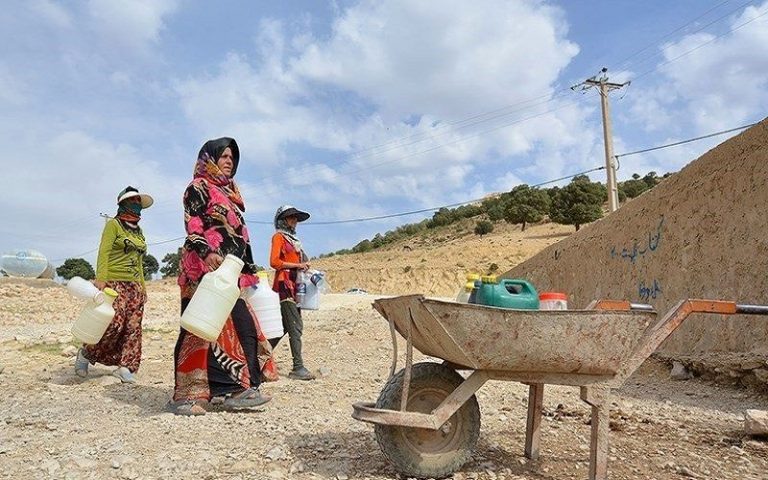
Meanwhile, the residents of Khuzestan are struggling with a shortage of potable water, even though they are located on the banks of Iran’s largest rivers. Experts predict that this will lead to mass migration in the next 50 years. The situation is not better in Sistan and Baluchistan, with only 19% of residents having access to safe water and they rely on tankers in the port city Chabahar.

Women are forced to queue for hours to get this water in pots that they carry back to their families, which is heavy and dangerous. This is especially troubling because the people require water to clean homes, clothes, and bodies in response to the COVID-19 pandemic.

Still, things are much worse for those who can’t get to the tankers because at least 20 children have drowned in the pits dug to collect rainwater

The Iranian Resistance wrote: “Environmental degradation in Iran which is one of the world’s richest countries in terms of environmental diversity, has endangered not only the interests of the Iranian people but also the interests of humanity in general. Iran’s theocratic regime is not only the biggest sponsor of terrorism, but also the biggest destroyer of the environment, and it deserves to be audited by the relevant international agencies and organizations.”

Liquidity and Iran’s Economy on the Verge of Presidential Election

This article is part of our series that explore liquidity in Iran and its harrowing impact on various elements like the country’s financial systems, citizens’ livelihood, industry, and agriculture.

The Islamic Republic is supposed to hold its 13th Presidential election on June 18. Observers argue that Iran’s economic situation is in a volatile situation rather than being in a growing status. They believe that liquidity, inflation, and recession have engulfed the country’s economic structure and are driving it to collapse.

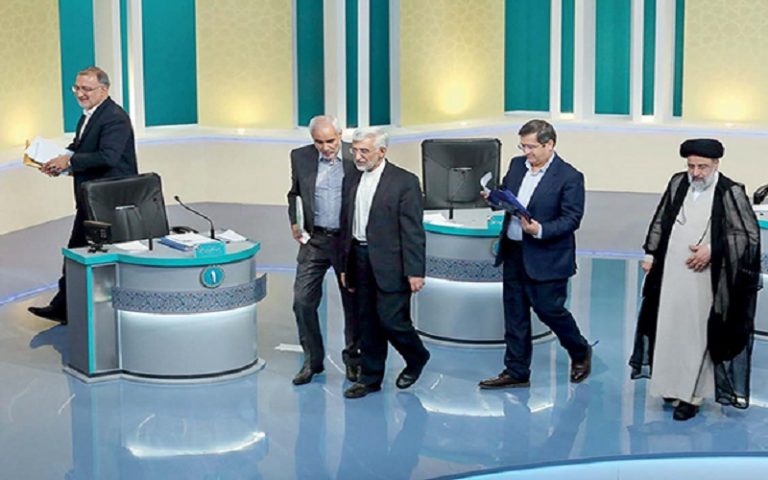
However, on the verge of the Presidential election, the main question is can anyone actually survive Iran’s financial system? In recent televised debates, candidates pointed to several truths like embezzlement cases and lace of education and degrees, which had already been exposed. Although no one questioned and no one provided a plan for how to run the country’s economy?

“If you’ve found any plan of candidates, send it to economists to study,” wrote Aftab-e Yazd daily on May 31. Vahid Shaqaqi Shahri, an economics professor, also said, “I have yet to see any specific plan from candidates.”

In such circumstances, there is nothing remained expect inflation, economic pressure, recession, liquidity, worn-out infrastructures, and people’s empty food baskets from Iran’s economy. The social gap has dramatically expanded while rich ayatollahs’ wealth is estimated to be multiple times the wealth and properties of kings and royal families in the pre-revolution era.

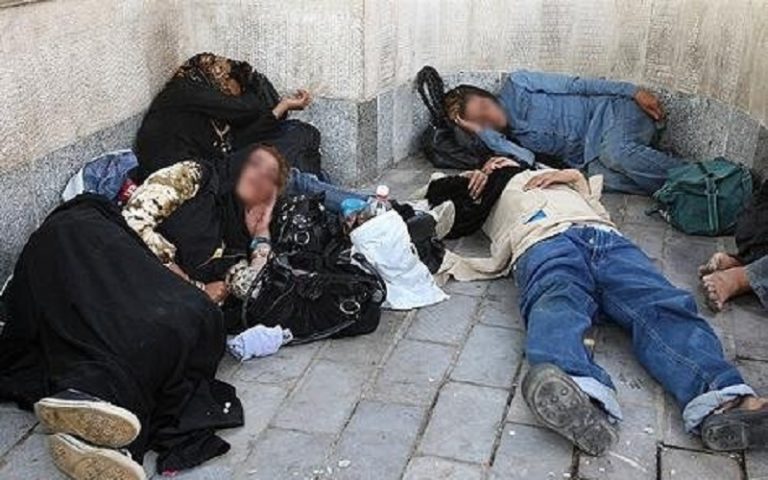
Instead, millions of citizens face horrible phenomena such as organ sale, child laborers, homelessness, and poverty. According to official statistics, more than 90 percent of working families in Iran live below the poverty line.

This figure, of course, does not display the whole reality. Indeed, it only expresses the living condition of those who still have a career. This is while there are millions of unemployed youths, retirees, homeless people, and slum-dwellers who have nothing to lose.

Regarding the candidates’ lack of specific economic plans, it is clear that nothing will change if any candidates take office. In other words, aside from gestures and factional claims, they are all cut from the same cloth, and Iran’s economy would not be glorified via these people, dissidents say.

Liquidity and Its Terrible Impact of Iran’s Banking System

Today, liquidity is one of major dilemmas for Iran’s economy. In the past decades, different administrations tried to ease financial failures through uncountable printing and injecting banknote to the market.

However, in this status quo, printing unsupported banknote has added insult to injuries of society, particularly the low-income classes. In reality, the people have a lot of money, but their purchasing power has been vanished due to a sharp devaluation of national currency rial.

“According to official, in the first nine-month of 2012, the country’s liquidity was 4.3 quadrillion rials [$162.246 billion]. In 2013, this number exceeded 6 quadrillion rials [$173.913 billion]… However, printing destructive banknote significantly increased in next years while more than 50 percent of Iran’s liquidity in history was occurred in only the past three years,” wrote Hamdeli daily on June 9.

“From 2018 to 2020, liquidity amount surpassed 16 quadrillion rials [$90.909 billion], reaching a mind-blowing number of 35 quadrillion rials [$147.679 billion],” Hamdeli added.

Abovementioned clause of Hamdeli’s piece indicates that despite an increase in the liquidity amount—based on rial—however, the value of liquidity against credit monetary units like U.S. dollar and Euro has significantly declined.

In other words, the increasing rate of liquidity has been matched with the national currency’s devaluation tarnishing people’s food baskets dramatically. In this context, outraged people frequently chant in their protests, “Expenses are based on dollars while our salaries are based on rial.”

Presidential Candidates’ Solutions for Financial Issues

Following public grievances and power struggle among different parts of the ruling system, some candidates were forced to present ‘economic plans.’ However, given the lack of a profound cognition of financial crises, they have provided ridiculous solutions, which would complicate dilemmas more rather than solving them.

For instance, Mohsen Rezaei, the former command-in-chief of the Islamic Revolutionary Guard Corps (IRGC), announced that he would increase monthly subsidies from 450,000 rial [$2.20] to 4.5 million rial [$22.00]. Rezaei also introduces himself as an elite economist.

Indeed, in a country that does not have any stable revenue, which has built up its all economy and budget on oil sale—while the oil has yet to extract, refine, and export, a ten-time increase in subsidies will only meet through printing unsupported banknotes. Such decision will only double the liquidity amount and devaluate rial more than before.

“The root of inflation and recession dilemmas should be searched in some officials’ irresponsibility and rational imprudence,” Hamdeli added.

On the other hand, the Supreme Leader Ali Khamenei’s representatives and Friday prayer Imams tout participation in the election as a resolution for economic problems while no candidate has provided a specific plan for financial affairs. “Today, the main solution for difficulties is a strong participation [in the election] and right choice,” said Khamenei’s representative in Qom Sayed Mohammad Saeedi.

“Inflation, raw material sale, social justice, economic infrastructures, privatization, water and environment, families, reduction of population, slum-dwelling, youths’ inability to marry, addiction, social harms, divorce, resistance axis—referring to Tehran’s extremist proxies in the Middle East, etc. are the most important topics that should be addressed by officials in the new era. They should no longer speak about sidelines,” the official IRNA news agency quoted Saeedi as saying on June 10.

Therefore, authorities well realize the country’s current situation from environmental catastrophes to families’ dilemmas, slum-dwelling crisis, addiction, high-prices, inflation, and liquidity. However, no one approaches such major issues avoiding shedding light on institutionalized flaws in the theocratic system.

And maybe the candidates’ refusal to addressing such issues is due to systematic corruption that has engulfed the entire Islamic Republic. In February 2018, Khamenei described the corruption as a seven-headed dragon that “still moves whenever one of its heads was cut off.” Nevertheless, the candidates’ refusal may be for their direct or indirect role in 42 years of corruption and their interests through such worn-out system.

Iran Officials Admit That Elections Are Fake

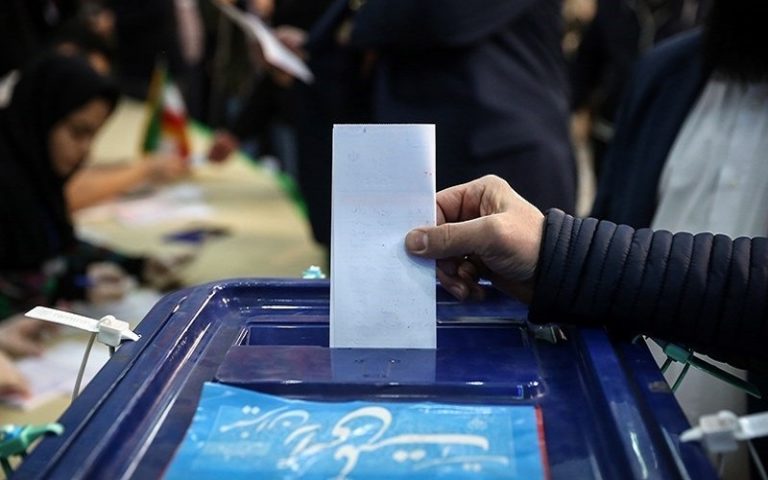
Iranian officials are admitting that the presidential elections on Friday are basically a sham, rather than a true expression of the people’s democratic will.

Former intelligence minister Heidar Moslehi said Monday that the Guardian Council, which is responsible for approving candidates, disqualified high-ranking official Akbar Hashemi Rafsanjani in 2013 because it wasn’t “beneficiary to the system’s interests” which just shows that Iranian elections aren’t fair, but rather rigged in favour of Supreme Leader Ali Khamenei’s preferred candidate.

While Khamenei affiliate Hassan Abbasi admitted in May that there is an irony in holding an election under the mullahs, although he insinuated that the problem began in 1997 under President Mohammad Khatami, insinuating that this is because the mullahs “accepted the western democracy’s model”. (It wasn’t.)

This wasn’t an isolated incident because the Guardian Council disqualified a number of well-known candidates from this year’s election because Khamenei wants to consolidate power and wants to ensure that Judiciary Chief Ebrahim Raisi becomes president. In fact, the mullahs have never held a fair election since it took power in 1979.

Mahmoud Sadeghi, former member of the parliament, referring to the fact that the report on Rafsanjani’s disqualification was prepared by calculating its cost and benefit for the system, reminded of Rafsanjani’s suspicious death in Farah pool and and warned Heidar Moslehi and said: “We will probably see a ‘cost-benefit’ report on his life and death in the near future.” (State-run daily Jahan-e-Sanat, June 15, 2021)

Regarding the revelation of how Rafsanjani was disqualified from the Guardian Council , which is now called Moslehi-Gate, the state-run Arman newspaper wrote: “The scandal of the Moslehi-Gate will have a profound effect on society and show how some expediencies overshadow the fundamental rights of the nation and weaken the foundations of the republic.” (Arman newspaper, June 15, 2021)

Election in Iran is a travesty and a selection process by Khamenei, who is unelected. Khamenei controls the Guardian Council, an unselected vetting body that is tasked with qualifying candidates.

This is why the Iranian Resistance has long stipulated that there is no point in voting, so they want the public to boycott the elections. The Resistance Units carried out activities in 310 areas during May and  250 places in April, which have been widely supported by the Iranian people.

This isn’t surprising because the people are understandably angry at the officials for numerous crimes, including the violent suppression of protesters in 2018 and 2019, which included the arbitrary killings of over 1,500 protesters.  The relatives of those martyrs made a video supporting the boycott and saying that they “neither forgive nor forget” what the authorities did then or for the previous four decades.

The state-run Hamdeli daily wrote Monday: “The scar and wound of the November 2019 incident are fresh. The exact details of the bloody days of November 2019 have not been published yet, and at the same time, no one in the different branches is willing to take responsibility for the decisions made those days. The death toll in November 2020 is still in limbo.”

As Khamenei tries to consolidate power with Raisi, the people are refusing to sweep the mullahs’ crimes under the rug and their restiveness will only increase.

The Plight of Female Street Vendors in Iran

Female street vendors are facing harassment – physical, sexual, and psychological – and violence every day on the metro in Tehran because of the misogynous policies that not only encourage the suppression of women but also prevent women from accessing organizational support.

The number of women peddling in the metro has increased considerably in the past few years. Why? Well, because women prefer to peddle on the underground rather than the street because rising living costs and the economic crisis means that they are forced to take these insecure jobs but are facing pressure from officials who are trying to cut peddling, without fixing the reasons for this, so are just making the lives of these women worse.

Female peddlers are working long hours for little money, but they are desperate to make ends meet through any means as rent and food prices soar. Many of the peddlers are graduates or even employed teachers. Their working environment has led many to suffer from depression and contract the coronavirus.

Of course, we haven’t even looked yet at the harassment or violence they suffer, particularly from municipal officials. Let’s hear from some of the women.

One 35-year-old accounting graduate with three children had her goods confiscated by officials who insinuated that she would be able to get them back in exchange for sexual favours. While a 17-year-old, who is missing school to earn extra money for her family, was sexually harassed by a subway officer.

One 44-year-old, who has been working for 15 years, said: “The more you are available to the officers, the greater the harassment. A friend of mine who was very beautiful was not safe from the municipal authorities. She was married and had children, but they didn’t care. It’s bad enough to be a poor woman with no support. On top of that, it seems everyone wants a piece of your body.”

One 40-year-old with a degree in literature, who used to work as a teacher, has been peddling handicrafts for seven years, saying that officials routinely obstruct her and even stole her goods. A 22-year-old said that she is routinely propositioned by officials who know that she needs money, while a 29-year-old mother said that she’s been working on the subway since being fired after getting pregnant.

This woman said: “No laws protect us. It’s like we don’t exist. All the authorities do is ban our work. They take our goods, and we have to jump through bureaucratic hoops just to get them back.”

Iran Candidates Spend Third Debate Displaying Infighting

The Iranian presidential candidates spent the third debate accusing each other of corruption and other crimes, which showed how the ruling theocracy’s infighting is increasing dramatically as they struggle to hold onto power.

One candidate, Mohsen Mehralizadeh, spoke about how the dissatisfaction of the people with the current system means that the smallest of social issues spark protests and even become a crisis in their own right, highlighting the fuel price increase that preceded the November 2019 major protests.

He said: “Look at the cases of individuals like Isa Sharifi, who was afflicted to [parliament speaker Mohammad Bagher Ghalibaf]; it has been left unattended for four years. He had embezzled billions of tomans. No one cares. Look at the case of Babak Zanjani. If these cases were clarified, people would have trusted.”

Mehalizadeh then admitted that the people’s call for an election boycott is growing by the day because the people are unfulfilled.

Of course, he was far from the only official criticising his rivals and blaming them for the issues facing the country.

Amir Hossain Ghazizadeh-Hashemi acknowledged the coronavirus pandemic, which has ravaged the country and forced people to choose between putting food on the table or possibly dying from Covid. He said that officials and affiliates have enjoyed some benefits but the people are losing their jobs because resources are unfairly distributed.

He said: “If [officials] had a bit of decency, our national athletes were not street vendors, and people were not plundered. People are frustrated because they see no decency in the system.”

Mohsen Rezai, a former Revolutionary Guards (IRGC) commander,  acknowledged that the mafia and children of officials control the economy.

While Alireza Zakani spoke about liquidity increasing six times to 3.5 quadrillion tomans and the monetary base more than doubling to 50 trillion tomans, calling for former central bank chief Abdolnasser Hemmati to answer for this.

He said: “Inflation of 52% is a catastrophe created by the government of Hassan Rouhani. The government has tried to manage itself using people’s belongings. As a result, liquidity has increased sixfold, today there is a conflict between plunderers and those plundered.”

Then, when the issue turned to the November 2019 fuel price increase, with Hemmati trying to deny responsibility for this, Zakani accused him of lying, citing a September 2019 official letter where Hemmati supposedly demanded that the price be increased to fix the budget deficit.

Of course, while they are accusing each other of crimes, none of the candidates really care about the people.

The Iranian Resistance (NCRI) wrote: “The regime’s increasing infighting reflects officials’ fear of Iranian people underlined that they “neither forgive nor forget” the mullahs’ forty years of oppression and corruption. So these so-called candidates are fighting over more power so they could further plunder people.”

Apathy in Presidential Election Is Not Because of Disqualifications, Iranian Officials Say

These days, Iranian officials’ main concerns are over a public boycott of the coming Presidential election on June 18. Regardless of their factions, candidates do their bests to drag citizens to the polls. From making baseless promises to breaching the censorship restrictions and even approaching the Islamic Republic’s redlines, they recognize no constraint to deceive citizens.

These attempts indicate that the authorities forecast a historic apathy and that the ayatollahs no longer enjoy social acceptance. Nevertheless, the people of Iran had already declared they trust neither reformists nor principalists through their meaningful slogans during their nationwide protests. “Reformist, principalist, the game is over,” was a slogan frequently chanted by protesters.

Iran’s Lobbies and Appeasers Lay Blame on Disqualifications

However, Tehran’s lobbies in the West and advocates of the appeasement policy mislead the international community in accordance with their interests, dissidents say. Indeed, they pursue to revive the failed game of “reformists versus hardliners” to take their personal and factional advantages.

For instance, Sina Toossi, the senior research analyst of Tehran’s D.C.-based lobby group NIAC, promotes such false thoughts in favor of ‘reformists.’ Indeed, he is practically running a propaganda campaign for ‘reformists’ while ‘moderate’ President Hassan Rouhani was directly involved in the mass killings of protesters in November 2019, economic failures and the catastrophe in Tehran’s Stock Market, executions of hundreds of people, including political activists, women, and juvenile offenders, and terror activities in the U.S. and EU.

“While the Guardian Council’s action gives Raisi a relatively far easier path to victory, it also fundamentally stains any legitimacy his election would have… Many Iranians will believe this race was decided before it even started,” wrote Toossi in the National News on May 26.

‘Reformists’ and ‘Hardliners’ Admit the Theocracy Has Reached the End of the Rope

Nonetheless, ‘reformists’ and ‘hardliners’ rejected Toossi’s claims a long while ago. In a roundtable on August 11, 2019, ‘hardliner’ Abolqassem Raoufian, the secretary-general of the Islamic ‘Iran Zamin’ party, admitted that the people no longer trust ‘reformists’ or ‘hardliners.’

“The people do not look at reformer and hardliner politicians as a salvation who are able to guarantee a prosperous life and fate for them,” Raoufian said.

Furthermore, ‘reformist’ sociologist Sadeq Zibakalam mentioned the popular slogan of “reformist, hardliners, the game is over,” emphasizing, “This slogan has become known and familiar.”

“I believe that ‘reformists, hardliners, the game is over’ is repeating more and more. This repetition proves that this slogan has been familiar in the society,” Zibakalam said. “If we imagine the Islamic Republic as a tree, at least this political tree had two fruits after 40 years, one of the fruits was the hardline manifesto, and the other was reformism. Both of them have collapsed. Both of them have arrived at the end of the rope. Both of them have lost their credibility.”

“The new generation, educated people, intellectuals, cultured and elite people, don’t give a damn about the hardliners or the reformists,” he added.

Moreover, in an interview with Entekhab website on May 31, Gholam-Ali Haddad-Adel, the former Parliament (Majlis) Speaker and Supreme Leader Ali Khamenei’s advisor, rejected ties between public participation and disqualifications by the Guardian Council.

“Was there 80-percent participation before the announcement of the qualifications leading you to blame the Guardian Council for the low participation?” Entekhab quoted him as saying.

Four days later, Khamenei’s representative and Friday Imam in Sough, Kohgiluyeh and Boyer-Ahmad province, blamed those who criticize the Guardian Council for low participation. “Today, some raise and promote the low participation issue… The reason for non-participation or low participation is not because of disqualifications,” Fars news agency quoted him as saying on June 4.

The Ayatollahs’ Record Is the Main Reason for Apathy

Therefore, contrary to misguiding details spread by Tehran’s foreign propaganda, the main reason for the people’s apathy is not the Guardian Council’s disqualifications. In reality, the people of Iran have vented their anger at the entire Islamic Republic regime. They plainly express their fatigue and frustration over the current ruling system.

They no longer trust the ruling system that has brought them nothing but suppression, corruption, poverty, terrorism, and international isolation. Constant protests in Iran alongside nationwide demonstrations in December 2017-January 2018, August 2018, November 2019, and January 2020 underscore this truth. Indeed, public apathy is the flipside of anti-establishment protests, which have densely shaken the theocracy’s pillars.

Iranian Candidates Shed Light on Forged Certificates

In less than a week, the Islamic Republic will hold its 13th Presidential election. Observers and even officials and state media forecast unprecedented apathy. Therefore, to drag citizens to the polls, handpicked candidates reveal damning details of one another. An important revelation has been that many officials have forged university degrees.

“Mr. [Judiciary Chief Ebrahim] Raisi, you have only studied until the sixth grade… It is impossible to manage economy with this level of education,” said Mohsen Mehralizadeh, a Presidential candidate, in the second round of televised debate on June 8.

“I respect your seminarist education… However, in your family trip, do you give your car’s steering wheel to someone who is religious, trustee, and pious, but he does not have driving license?” he added.

However, the catastrophe has been very painful for the government. Many officials  who hold and brag about their Ph.D., bachelor’s, and master bachelor’s lack minimum education. “Someone has a diploma but claims that he has a master’s degree. He cannot even write a simple letter. This is the outcome of such story,” said economist Mehdi Pazoki in a televised program.

During the power struggle , the state-run TV shed light on the systematic forgery. “The corruption was exposed when an individual affiliated with an institution complained to the Sciences Ministry. In our visits, we realized that the number of issued certificates do not match the number of students. For instance, an education institution has issued 1,000 certificates while there are only 25 official students,” the reporter said.

“Thanks to this clue, it was revealed that managers of the government and the private sector are the most dedicated clients of these [forged] certificates,” the report added.

In this context, several former officials like Mohsen Rezaei, the former commander-in-chief of the Islamic Revolutionary Guard Corps (IRGC), are among the above-mentioned private sector’s CEOs. Rezaei received his Ph.D. within one night without any prior notice.

“Mr. Zakani, you do not know anything about the economy. Have you passed even two classes of economy? The situation of your Ph.D. is also clear. It is clear how you gained your certificate. Don’t push me to say these truths,” said Abdolnasser Hemmati, the former governor of the Central Bank of Iran (CBI), addressing another Presidential candidate Alireza Zakani.

“Mr. Rezaei, you claim that you are an ‘economist.’ I very well know how you passed economic terms. I know how you gained your certification,” Hemmati added addressing Rezaei.

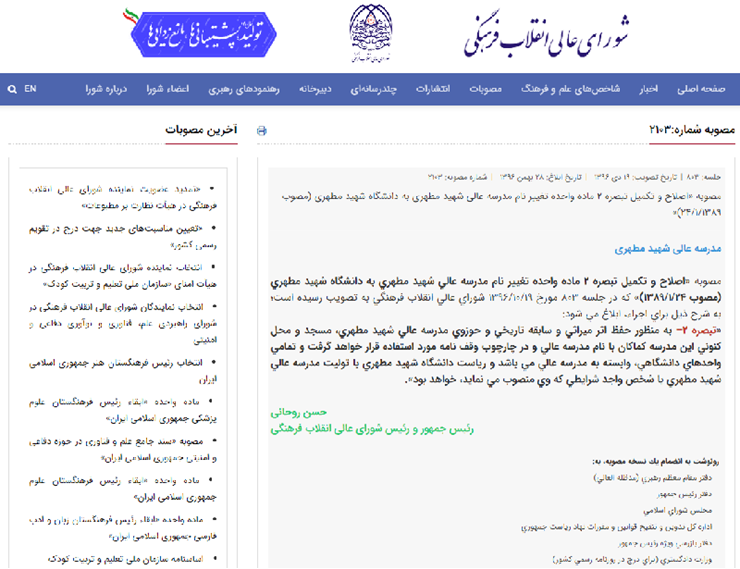
In response to Mehralizadeh and Hemmati, Raisi showed a license issued by Motahari University. However, Raisi’s certificate fueled ambiguities. The degree lacks minimum credit. For instance, the issuer has written Sayed instead of the name of Raisi’s father while everyone knows that Sayed is a title in the Persian culture.

Also, the issuer has written that Raisi finished his education in April 2011. However, the certification was issued in February 2014. Furthermore, Motahari was a school in 2014 and only in January 2017 upgraded to a university.

Raisi’s forged certificate is the tip of the iceberg. And there are enormous samples of such forged certificates, including President Hassan Rouhani’s Ph.D. from Britain while he cannot speak English fluently to Ali Kordan, the Interior Minister of Mahmoud Ahmadinejad’s administration, who did not know that Oxford University is not located in London!

Iran Dispatches Terror Squads to Iraq: Militia Commander Confesses

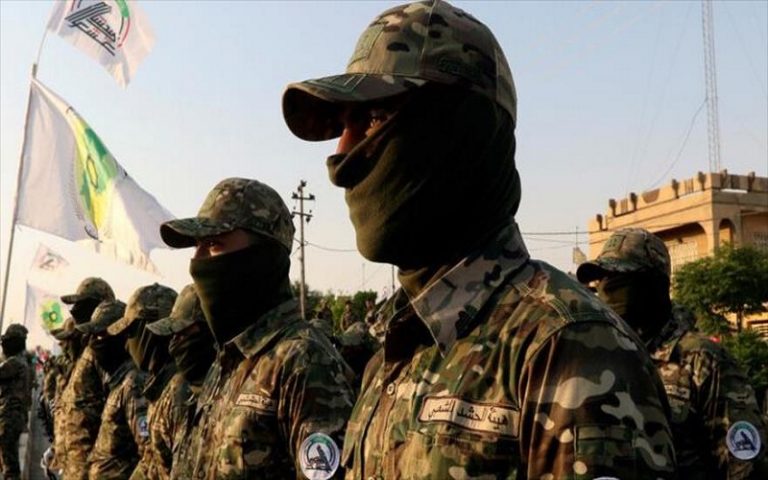
“Confessions made by Qassem Musleh al-Khafaji, one of commanders of Iran-backed Popular Mobilization Units (PMU) in al-Anbar governorate, unveiled planning and targeting of several activists, demonstrators, and journalists,” al-Hadas TV reported on June 4 based on details provided by security sources.

Musleh had been detained by security forces a week earlier. He was the West al-Anbar Operations commander. According to sources familiar with the issue, influential officials attempted to have him released. However, judiciary authorities insisted on his crimes, describing an ‘obvious abuse of power.’

During the interrogations, Musleh revealed a 20-member group that was assassinating Iraqi protesters. “There are some snipers among these people. They had entered Iraq under the command of an officer of the Islamic Revolutionary Guard Corps (IRGC) from Najaf airport on October 3, 2020,” Musleh admitted.

Since 2017, Musleh was the West al-Anbar Operations commander. He had also been the commander of Brigade 13, which called al-Tofouf, affiliated with Iran-backed militias.

According to sources, Musleh used to attend a ‘war room’ for suppressing the October protests. The war room was managed by militia commanders and officials closed to Iran.

Further investigations exposed that Musleh was protecting Iranian weapons and missiles which were transferred through Iraq to Syria. Since the beginning of Syrian protests in 2011, the IRGC has supplied Iranian and Afghani paramilitary groups in Syria to keep Bashar al-Assad in power.

On the other hand, Musleh was involved in smuggling of narcotics, essential cargoes, and families of the Islamic State of Iraq and Levant (ISIL/ISIS). In his confessions, Musleh unveiled a great embezzlement, and how an armed network affiliated with high-ranking military commanders controls sensitive service centers and facilities. “This network had influenced Iraqi security organizations and ensured its positions within them,” al-Hadas quoted Musleh as saying.

These confessions prompted Iraqis’ anger unprecedentedly. Observers describe them as a ‘black box’ and the tip of the iceberg, which gradually leaked outlaw and dangerous performances of militias.

Iran-backed parties like Asaeb Ahl-e Haq severely condemned Iraqi forces’ operation. “The administration of Mostafa Kazemi follows clear policies, which cause to the establishment of a police state,” said Qais al-Khazali, the founder and leader of Asaeb Ahl-e Haq who was sanctioned by the U.S. in 2019 for human rights abuses.

“Some detainees, who are accused of financial corruption cases, have been forced to making confessions against elite politicians of Iraq,” Khazali said, adding, “Musleh had been exposed to attack and invasion in custody.”

Notably, in October 2019, hundreds of thousands of people flooded onto the streets protesting systematic corruption and unbridled influence of Iran-backed militias and parties in the entire political and judicial system. At the time, the Iranian government did its best to keep the government of Adil Abdul-Mahdi, one of its allies, in power.

The Supreme Leader Ali Khamenei personally interfered advising the people of Iraq to prioritize security over their livelihood grievances. “The U.S. and Western intelligence services, which are supported by regional dogmatic states’ finance, most of all are making chaos around the world. This is the worse adversary and the most dangerous grudge against a nation. I advise compassionates of Iraq and Lebanon to follow their grievances in legal paths,” Fars news agency quoted Khamenei as saying on October 30, 2019.

At the time, Reuters revealed that Iran had intervened to prevent ousting of Iraqi prime minister in an exclusive report. “In a secret meeting in Baghdad on October 30, Qassem Soleimani intervened. Soleimani asked [Badr Organization’s chief Hadi] al-Amiri and his militia leaders to keep supporting Abdul Mahdi, according to five sources with knowledge of the meeting,” Reuters wrote on October 31.

However, Iraqi protesters finally pushed back Iran-aligned Prime Minister Abdul-Mahdi despite the militias’ harrowing crimes and suppression. As one of their main slogans, demonstrators condemned Khamenei, Soleimani, and other Iran-backed parties and militias, demanding their expulsion from Iraq.

Currently, confessions made by Qassem Musleh is a key part of the puzzle of Iran’s influence and malign behavior in neighboring countries. In their protests, Iraqi citizens from different walks of life once again called on the government to expose all details and hold criminal militias accountable.

Iran’s Presidential Candidates Deliberately Ignore Crises Caused by the Neglect of the Social Sphere

One of the main crises in Iran, caused by the mullahs’ underdeveloped culture, is the social crisis. On the evening of Tuesday, June 8, the second debate of the 2021 presidential election was held on cultural, social, and political issues. But what was marginalized in this debate, and the candidates were content with a few general statements about it, was the social sphere.

In the second debate, the 2021 presidential candidates referred to the problems of people with disabilities, women head of households, and addicts, and the need to maintain social capital, but did not explain to the audience what their plans were to solve these problems.

Although Iran’s social experts warned continuously that one of the most important areas is the country’s suffering society, hurt with poverty, social harms and the lack of social justice, security and at least life expectancy, but it has always been neglected purposely and only during an election is used by the candidates as a slogan spices to heat up the election oven.

The candidates’ speeches showed that this time it seems that the social sphere is not considered in the election process too.

Hassan Mousavi Chalac, the President of the Iranian Association of Social Workers, about Iran’s social sphere in an interview with IRNA said:

“Our society has acute and minor social issues, and in a situation where everyone says that the social sphere is not good, unfortunately, the social debate of the presidential candidates was not good either. In the second debate, some social issues such as the problems of the disabled, addicts, marriage of young people, women and the poor were discussed in general without being in the form of a plan and the candidates to say how they want to solve the problems in this area.

“We did not see any plans and the talks were just a few recommendations. This is at a time when candidates must have a plan for the future of the country. It is not enough to talk about what has happened so far and whether it has been done well or not. It is expected that the presidential candidate will have a plan knowing the current situation.”

Then he warned the government about a social collapse and said: “In this area, the judiciary, the parliament and the whole government are involved. The whole government must make a serious decision for the social sphere, otherwise the social sphere of the country will face a serious crisis.”

Then pointing to the government’s loss of social capital, he added: “In the last few years, many incidents, even the occurrence of tragic events due to the increase in gasoline prices, are due to the decrease in social capital. It is true that everyone considers livelihood and economic problems as the first problem of the country, but if the social capital in the country is not high, you cannot manage crises or run a resistance economy.”

“If there is no social capital, we cannot make a decision today that will have the desired result for all people in the next 10 years. Trust is important because it provides a platform for participation. Two capitals are the factor of development of any country: One is human capital, and the other is social capital. The current situation also creates social harms and provides the ground for the spread of social harms.”

About the government’s defeat in the social sphere over the last 40 years, he added: “The next government must put a few measures on its agenda. The first is the implementation of a multi-layered social system to identify people in need and provide social assistance, social support and their connection to social insurance. This may take two decades to implement. We have not been able to implement this system for 40 years, but the only solution is to follow this path.

“The command of the social sphere has not been in the hands of social managers for 42 years, and part of the current problems is the result of this issue. People are not at their proper positions in the social sphere, and unfortunately this has continued for the last 40 years.”

Then about the reason of this situation, he said: “The government should believe in social affairs as an important area and consider it without a political-security approach. The political-security approach in the social sphere deepens the problems.”

Satellite Footage Shows Tehran Never Stopped Nuclear Bomb-Making Projects

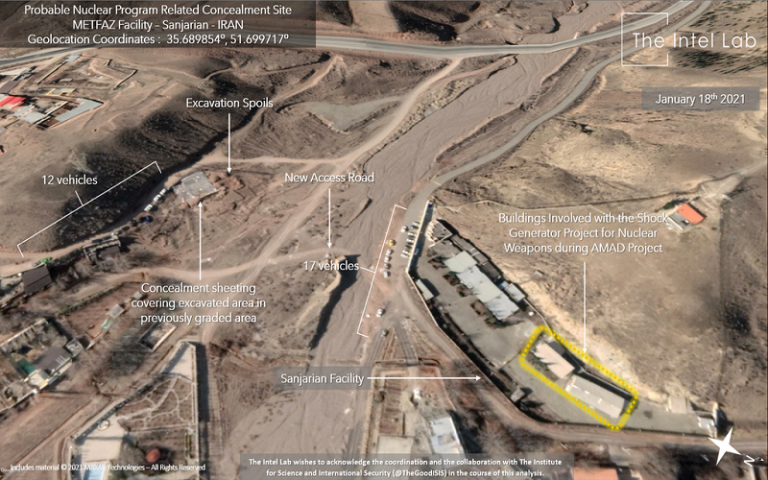
On June 9, Fox News revealed unusual activity at the Sanjarian nuclear site in 25 miles outside the capital Tehran, Iran. According to new satellite images obtained from Maxar, there were 18 vehicles at the site on October 15, 2020. The Iranian government has used more vehicles and excavation in January along with a new access road that was later covered up in March.

Fox News mentioned that Iranian authorities had already practiced “shock wave generators,” which allow the government to miniaturize a nuclear weapon. The International Atomic Energy Agency (IAEA) had declared that Tehran halted the scientific program to build nuclear weapons in 2003.

Iranian Opposition Exposed the Sanjarian Nuclear Site in 2009

In a press conference in Paris, the Iranian opposition National Council of Resistance of Iran (NCRI) had exposed the site on September 24, 2009. At the time, the NCRI revealed that operated site is located in the Sanjarian village.

“The regime conducts scientific research at a site located in Tehran Pars district, called Metfaz. And this site produces the results of research. Residents of the Sanjarian village have special ID cards for communicating,” said Mehdi Abrishamchi, the NCRI Peace Commission chair, at the conference regarding the Iranian government’s attempts for producing nuclear weapons.

The NCRI’s September 24, 2009 revelation is one of a string of revelations by the Iranian Resistance since 2003, when the international community was taken aback by Tehran’s secret nuclear-bomb-making projects for the first time.

On May 7, 2019, David Albright, the IAEA’s Action Team associate (1992-1997) and the first non-governmental inspector of Iraq’s nuclear program, and Olli Heinonen, the IAEA’s operations director (1995-2005), published their joint research about Tehran’s nuclear activities.

“This site was first publicly identified in 2009 by the National Council of Resistance of Iran (NCRI), which called it the ‘Research Center for Explosion and Impact’ near Sanjarian, known under its Farsi language abbreviation METFAZ. The NCRI stated that this site was developing high-explosive detonators for use in atomic bombs and manufacturing components for these detonation systems,” they wrote.

The IAEA’ Questions About the Sanjarian Site Remain Unanswered

In the past two decades, the world powers tried time and again to contain Iran’s provocative nuclear projects. Instead, Tehran only responded with cheating and more concealing. For instance, Iranian authorities never declared their sites’ location or the quality of their activities before being revealed by the opposition or other counterparties.

For years, the ayatollahs had been refusing the UN nuclear watchdog access to their sensitive site. “Regarding Iran’s nuclear program, I provided a clear assessment since 2003 to 2009. In 2011, I raised 12 fields and said, ‘Iran should respond these questions,” said the late Yukio Amano, the former IAEA director-general in May 2019.

The first question was about producing detonation for the nuclear explosion, which was applied at the Sanjarian site, with alias Nourabad. The IAEA asked Tehran about developing detonations, in clause C-5, and beginning tests of severe explosions and relevant experiments, in clause C-6.

At the June 7 convention of the IAEA Board of Governors, the IAEA director-general Rafael Grossi once again declared his frustration towards Iran’s secrecy. “The lack of progress in clarifying the agency’s questions concerning the correctness and completeness of Iran’s safeguards declarations seriously affects the ability of the IAEA to provide assurance of the peaceful nature of Iran’s nuclear program,” said Grossi at the meeting.

Just like his predecessor, Grossi expressed alarm that after many months, the Iranian regime has not provided the necessary explanation for the presence of the nuclear material particles at any of the three locations where the agency has conducted complementary accesses.

“In the absence of such an explanation from Iran, I am deeply concerned that nuclear material has been present at the three undeclared locations in Iran and that the current locations of this nuclear material are not known by the agency. Nor has Iran answered the questions with regard to the other undeclared location or clarified the current location of natural uranium in the form of a metal disc,” he said.

U.S. and Eu Negotiators’ Frustration Over the JCPOA

Tehran’s contradictory behavior has also disappointed U.S. and EU negotiators. In his Presidential campaign, U.S. President Joe Biden had vowed that he would rejoin the 2015 Iran nuclear deal, formally known as the Joint Comprehensive Plan of Action (JCPOA).

However, Tehran still renounces direct talks with the U.S. and avoids full compliances with the JCPOA. Aside from uranium traces in some sites, Tehran recently acknowledged the enrichment of uranium up to 60-percent fissile purity.

“We have a country that has a very developed and ambitious nuclear program, which is enriching at very high levels, enriching uranium at very high levels, very close to weapons-grade,” Grossi said.

Ayatollahs Understand the Language of Firmness

“It remains unclear whether Iran is willing and prepared to do what it needs to do come back into compliance,” Reuters quoted U.S. Secretary of State Antony Blinken as saying on June 7. “Meanwhile, its program is galloping forward…. The longer this goes on, the more the breakout time gets down.”

In such circumstances, the international community faces a complicated situation regarding Tehran’s nuclear ambitions. On the one hand, Tehran seemingly intends to keep negotiations in a limbo, and it still continues provoking attempts for achieving nuclear weapons on the other hand.

“To guarantee its survival, the clerical regime has not abandoned its atomic bomb project,” said NCRI President-elect Maryam Rajavi on June 7. The recent IAEA report “also shows that to buy time, the regime has continued its policy of secrecy to mislead the international community. At the same time, the regime is blackmailing its foreign interlocutors into lifting sanctions and ignoring its missile programs, export of terrorism, and criminal meddling in the region.”