Home Blog Page 300

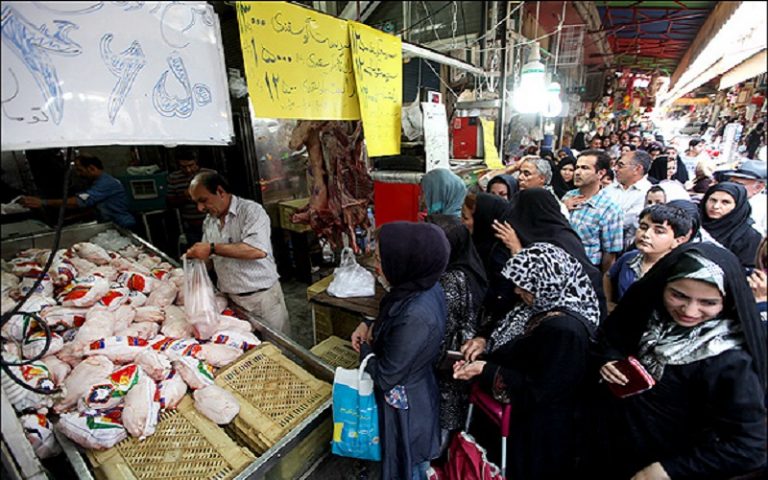
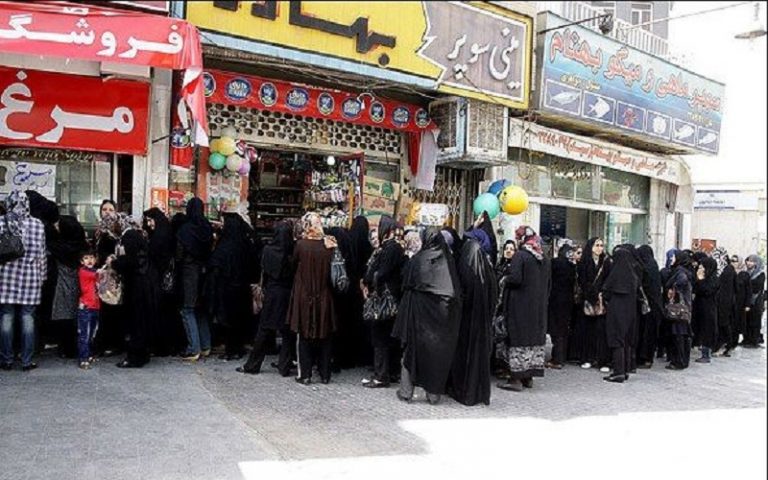
Iran: ‘Outcome of the JCPOA, Long Queues for Chicken and Oil’

While Iran’s President Hassan Rouhani had previously promised that by entering the JCPOA (2015 Iran nuclear deal) with world powers, his government would make “so much economic prosperity that people would not need the 45,000 tomans subsidies at all”, after eight years in office, his so-called rival faction that backs Iran’s supreme leader Ali Khamenei announced that “the outcome of the JCPOA are long queues for chicken and oil.”

After the end of Mahmoud Ahmadinejad’s presidency, when Khamenei found out that he cannot continue his aggressive policy with the international community, he brought Hassan Rouhani to power as a so-called moderate to continue his rule with the “heroic flexibility”. Khamenei later confessed this policy started by his direct order with the help of one of the “respected people of the region”, which was the Omani’s Sultan Qaboos bin Said.

But at that time, he could not reveal his own role in the negotiations with the US, fearing the defection in the ranks of his regime, especially because at that time he had removed former president Akbar Hashemi Rafsanjani from the power circle with the help of the Guardian Council.

But behind the curtain, Rouhani’s role was not to create an economic boom, but to advance negotiations for the government and maintain the regime’s rule under the shadow of a threat of war by world powers. And the question here raised is why was this the main policy of Rouhani?

Because Rouhani was proud to deceive Europeans in negotiations before, as the head of the National Security Council of the Government, and once he said, “while we negotiated with them, we continued the enrichment” so he could probably defraud the West for a second time.

The result of this policy was the JCPOA. Rouhani claimed the solution to all the country’s problems was linked to the JCPOA. But after six years, the only result for the Iranian people from the JCPOA was nothing more than more poverty and misery. Dissidents say not even a cent of the money freed under the JCPOA was used for the people.

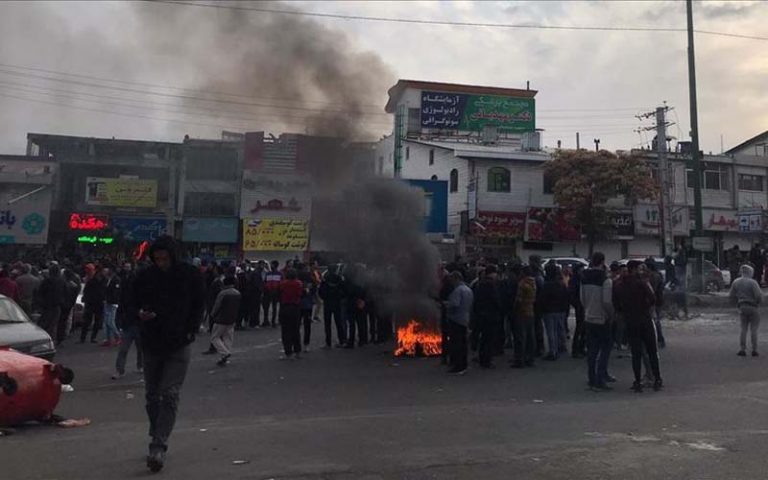
The regime to clear its budget deficit was forced to hike the prices of fuel which led to the 2019–2020 Iranian protests also known as Bloody November. Those were a series of nationwide civil protests, initially caused by a 50–200 percent increase in fuel prices, leading to calls for the overthrow of the government in Iran and Supreme Leader Ali Khamenei.

Now Khamenei’s faction, which celebrated the negotiations and the JCPOA, once as one of Khamenei’s ‘miracles’, are attacking their self-made government for the negotiations, while they themselves are the main culprits of this situation.

Mohammad Nabavian, an MP, on March 25, 2021 pointed to the presence of one of the ministers that, when he questioned him, “why people should stand for oil and chicken in the queue” he answered, that the “monthly oil consumption in the country is 350,000 tons, and we have injected 170,000 more than the people’s requirements into the market.” Nabavian added: “The outcome of the JCPOA are long queues for chicken and oil.”

Problems are not related to sanctions

Nabavian, quoting Rouhani’s Program and Budget deputy, who announced the increase in oil exports and gas condensate at the peak of the sanctions at 350 percent adding $400 million to the government’s revenue from gasoline exports. Nevertheless, “From the 80 million Iranians, 60 million receive livelihood subsidies.”

Nabavian also claimed more than 70 percent of the country’s problems are caused by “weakness, corruption and disability in the administration of the country”. This is true, but incomplete, because the country’s economic problems cannot be explained only for the period of Rouhani’s presidency. In which of the regime’s governments, was the economy and livelihood of the Iranian people booming?

Nabavian also stated that “80 percent of the power, money and management of the country” are attributed to the president. This is false because in recent years, many within the government explicitly state that more than 60 percent of Iran’s economy is in the hands of the Revolutionary Guards (IRGC) and Khamenei, and the IRGC is the foremost and unrivaled military power in this regime.

Nabavian also pointed to the subject that Rouhani and his foreign minister Mohammad Javad Zarif have promised that, “87.5 percent of the sanctions” should remain. This is also true, but incomplete, because he did not mention the fact that Khamenei has the last word on the JCPOA and its negotiations.

The JCPOA has started and continued with the order and confirmation of Khamenei. Now why are elements of Khamenei’s faction attacking Rouhani? The answer is very simple. The upcoming presidential election and Khamenei’s decision to unify the rule in his own favor.
Iranian Officials Brag About Their Economic ‘Accomplishments’

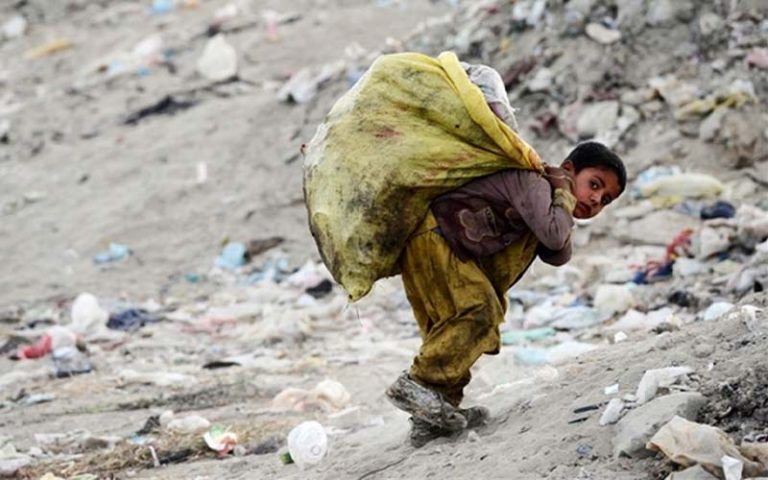
For over four decades, Iranian officials have resorted to deceitful methods and fabricated statistics to downplay their economic failures. They have frequently bragged about their financial accomplishments while most of Iran’s population live below the poverty line.

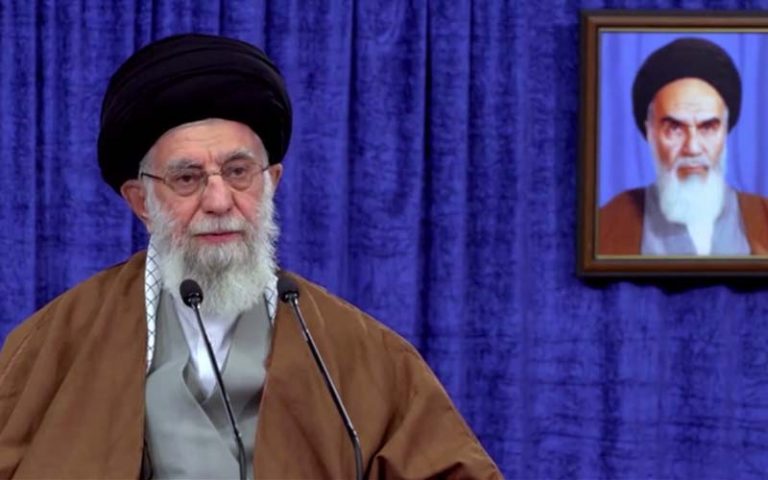
However, the ayatollahs still raise odd figures despite definite facts and evidence. “Experts affiliated with the World Bank say, ‘Iran’s economy is among top economies across the globe and stands at 18th rank,’” said the Supreme Leader Ali Khamenei on March 21 on the occasion of the Persian new year.

This is while many people suffer from poor nutrition, according to official sources. The government’s economic failures and bankruptcy have diminished Iran’s middle-class families and driven them to misery. Many citizens have to search garbage bins for something to eat.

Such circumstances have prompted public ire against the entire political system. “God damn Khamenei and [the Islamic Republic founder Ruhollah] Khomeini. At the midnight, the people have to rummage in garbage bins for some breadcrumbs,” said a citizen.

On the other hand, not only does the government provide no aid for the people but also adds insult to their injuries by its oppressive and plundering plans. For instance, municipalities commonly harass vendors and even shopkeepers on bogus charges.

“Yesterday, I saw municipal agents had spread a shopkeeper’s seeds and nuts on the floor… I am 24 years old and have nothing for Nowruz expenditures… Damn officials for what they have done to our youths and younghood,” said another citizen.

However, high-ranking officials boast of their ‘financial achievements .’ On March 24, President Hassan Rouhani once again spoke about his government’s contributions. “We offered many loans to ordinary people in the past Persian year. We paid one million rials [$4.00] to each citizen every month,” said Rouhani.

This is while the official statistic centers had estimated the poverty line at between 100-130 million rials [$400-520] for a family of four. In other words, Rouhani’s administration gave only $16 to each family of four, which covers their  expense for a single day of the month in the best-case scenario.

Surprisingly, in March 2020, Rouhani had claimed that “we aren’t among those countries whose COVID19 patients are lying on pavements and floor of hospitals. Thank God, we are not among those countries whose death toll is too high and those who transfer their dead with freezer trucks.”

At the time, the official death toll declared by the Health Ministry was 2,900 while according to the Iranian opposition Mojahedin-e Khalq (MEK/PMOI), more than 14,700 people had lost their lives to the novel coronavirus until the end of March 2020. The MEK had provided the number through reports obtained by its domestic networks in 237 cities across the country.

Iranian officials, however, time and again address sanctions and isolation as the main economic dilemma. Despite officials’ disastrous performance which had led the international community to punish the world’s foremost state-sponsor of terrorism, systematic corruption and non-standard decisions are the main obstacle for Iran’s economy.

“Even if there were no sanctions, the flawed and anti-productive structure had been driving the country to collapse,” said a government-backed economist Farshad Momeni.

However, the Islamic Republic has been challenged by social crises before economic ones. The government faces an unprecedented ire, and the volcano of public fury may erupt each moment.

“God damn Khamenei… Why did you take power? You have damaged the entire people’s lives… Why should this be so?… What is the distinction between our children with yours?… We are the sons of people who wish to have a normal lives,” said a citizen.

Tehran Expresses Its Disappointment About U.S. Approach

In the past year, Iranian officials had gazed at the U.S. Presidential election, hoping that developments in Washington would rescue them from hypertensive crises inside the country and abroad. In this respect, they constantly blamed former U.S. President Donald Trump for withdrawing from the 2015 Iran nuclear deal, formally known as the Joint Comprehensive Plan of Action (JCPOA).

Evidence shows that Iranian officials not only waited out the Trump presidency but also interfered and colluded in the U.S. elections, hoping to take advantage, according to the FBI. They expected that a Democratic administration would restore the Obama-era policy. However, they have since seemingly been disappointed by the Democratic administration.

In its March 17 edition, Javan daily, affiliated with the Islamic Revolutionary Guard Corps (IRGC), expressed the government’s frustration about the new U.S. administration. “Joe Biden entered the Presidential campaign with the slogan of returning to the JCPOA. This issue was so important in the Democrats’ campaign that both Biden and his vice-president Kamala Harris criticized the Republicans and Donald Trump for withdrawing from the JCPOA,” Javan wrote. “Eight weeks after Biden’s inauguration, evidence shows that he is still not reluctant with the ‘maximum pressure’ policy.”

Furthermore, Tasnim news agency, affiliated with the IRGC Quds Force, posted a cartoon showing President Biden with a pair of boxing gloves with the words ‘maximum pressure.’ Furthermore, the cartoon claimed that this policy was fruitless for Trump, let alone Biden. This is while the Supreme Leader Ali Khamenei has implicitly admitted to sanctions’ impact several times, seeking removal of the sanctions at all costs.

Likewise, Khamenei has declared that the Islamic Republic would comply with nuclear restrictions mentioned in the JCPOA after the sanctions are lifted, which openly displays the effectiveness of sanctions and economic pressure.

President Hassan Rouhani also reiterated his enthusiasm for negotiations with the new U.S. administration, signaling that Tehran is ready to comply with its obligations under the JCPOA. He implicitly begged Biden and his team to loosen sanctions and give his government a lifeline. However, U.S. officials like  Jake Sullivan, Antony Blinken, and Robert Malley, the JCPOA designers, have rejected any talks before Tehran reserves its breaches and obeys the deal’s articles.

Notably, Iran’s lobbies also declared their disappointment about the U.S. approach toward Iran. “Trump to Iran: starve under sanctions until you give in to our demands… Biden to Iran: starve under sanctions until you give in our demands and happy Nowruz,” tweeted Assal Rad, a known lobby for Tehran, on March 20.

Meanwhile, Javan daily expressed the government’s concerns over a surge of bipartisan legislation, including eight pieces in recent weeks addressing Tehran’s nuclear ambitions and malign behavior in the Middle East.

“The eight pieces of legislation address issues including tightening sanctions enforcement, expressing disapproval of the 2015 Joint Comprehensive Plan of Action (JCPOA), opposing easing sanctions on Iran and seeking to block the U.S. from reentering the JCPOA entirely,” the daily cited Jewish Insider’s piece on March 15.

In such circumstances, even Iranian Foreign Minister Mohammad Javad Zarif, as the JCPOA architect, showed his despair over the new U.S. administration’s policy toward Iran. “The U.S. economic measures against the people of Iran, particularly during the pandemic, is not less than an economic war. However, we currently witness that there is no distinction between former and current presidents of the U.S. in pursuing the defeated policy of maximum pressure,” said Zarif on March 15.

And on March 21, Iran’s final-say official Khamenei explicitly and sarcastically announced the government’s disappointment, saying, “We believe that the circumstances have changed but, in our favor… We do not hasten for renegotiating, and even if the U.S. lifted sanctions, we first verify then will comply with our obligations.”

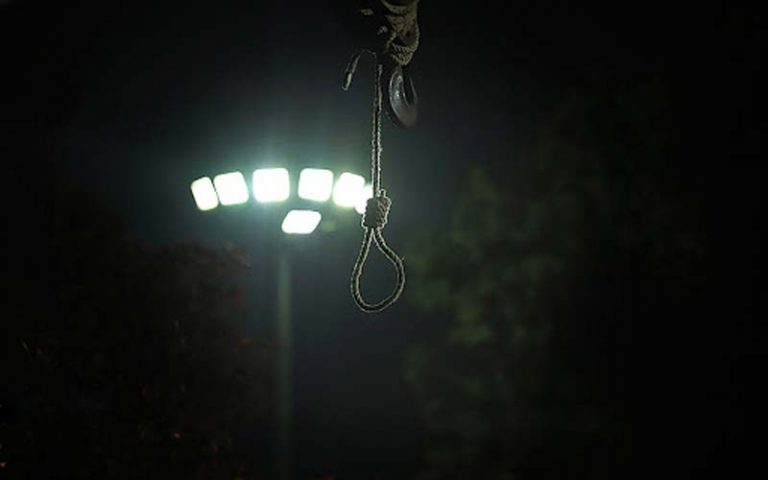
Iran’s Judiciary Hangs Mother in Front of Her Teenage Girl

According to human rights defenders, a mother was legally hanged with the blessing of her daughter at the Rasht Prison in the northern Iranian province of Gilan on March 13. Activists reported that the execution was carried out under the pretense of ‘retribution.’

The executed woman was Maryam (Masoumeh) Karimi. She had been on death row for around 13 years. She had been accused and sentenced to death for killing her husband in collaboration with her father. It is said that Maryam Karimi was exposed to ill-treatment. Furthermore, the husband had refused to divorce and put her wife in overwhelming conditions.

Notably, her father’s execution was delayed at the last moment. However, authorities took her father to the gallows to see the hanged lifeless body of his loved one. This is another kind of mental torture applied by Iranian authorities against inmates. They had visited each other for the last time in mid-February.

Earlier in November 2020, interrogators tortured 19-year-old inmate Mohammad Davaji to death in front of other prisoners to teach them an unforgettable lesson. To intimidate society, Iranian officials frequently hang inmates in public for different reasons.

According to the Islamic Republic’s Penal Code, family members of slain must be present as the execution takes place. This is another indicator of barbarism in Iran under the ayatollahs’ thumb. Worse, judiciary officials misused a girl to carry out her mother execution sentence.

Notably, at the time of the murder, the girl was just six years old. Following the murder, her paternal family took her in their custody. During the past 13 years, they had told her that both her father and mother had died. However, some weeks in advance, they told the true story to the young woman, preparing her psychologically for the execution of her mother Maryam .

“Recruiting a girl for hanging her mother is an inhuman and merciless action prone to a firm response on behalf of human rights organizations across the globe,” Iranian dissidents stressed. “The international community should do whatever it takes to stop performing death penalties in Iran.”

According to Iran Human Rights Monitor, Iranian authorities have executed at least 80 individuals in 2021, including 31 inmates in January, 37 in February, and 12 in the first 20 days of March. There are several political activists and female prisoners among the executed individuals. However, given the secret executions that are carried out in Iran, the real number of executions is thought to be much higher.

On the other hand, many prisoners are currently on death row. They have been convicted to death during rigged proceeding and trials, Iran experts say. Iranian authorities reportedly file forced confessions as evidence in courts which issue their biased rulings based on flawed documents.

Iran’s Forests at Risk of Complete Destruction

Iran’s forests are at full risk while environmental crises in Iran, especially the crisis of destruction of forests and pastures, are incomparable with other countries in the Middle East.

In 2020, a significant portion of the forests in the west of the country was burned and turned into ashes because of the neglect of the government.

Reza Bayini, assistant deputy of the Forest Organization, said that in 2020 more than 21,000 hectares of Iranian forests were burned.

Is fire the only cause of destruction of pastures and forests in Iran?

The vast dimensions of environmental degradation, and especially the destruction of forests, are due to the plundering of natural resources of the country by government officials and offices affiliated with Iran’s supreme leader Ali Khamenei and the Revolutionary Guards (IRGC).

The following are examples that show the dimensions of the destruction of forests by the Revolutionary Guards:

The construction of a Navy base of the IRGC in the Forest Park of Sarkheh and destroying the wildlife in this national park.

Destruction of nearly 100,000 hectares of Zagros forests for the construction of IRGC’s bases, villas, corporate homes and ammunition depo.

Occupation and destruction of 13000 hectares of forests of Golestan province by the IRGC forces called Lashkar 25 of Karbala.

The destruction of 93 hectares  of the best place of the Hirkani forests for the construction of Shafarood Dam in Gilan.

Construction of the “Mahalati” (resident units) set for members of the IRGC in 500 hectares of Lavasan region in Tehran.

The capture of 10 hectares of Gorgan’s Naharkhoran forests in Gorgan province by the IRGC in 2012, despite the construction prohibition.

Construction of a museum by the IRGC with the destruction of the Tahlijan forest in Shahrekord.

Cutting over 13500 old oak trees in the protected region of ‘Dena’ in Kohgiluyeh and Boyerahmad province by the IRGC’s construction base Khatam al-Anbia for implementation of a gas pipeline project.

Setting on fire deliberately the forests in the western region of the country by the IRGC, with the pretext of “security threats” by the opposition groups. Or, due to the military operations of the IRGC, such as the forest fire in Marivan and Paveh in 2010.

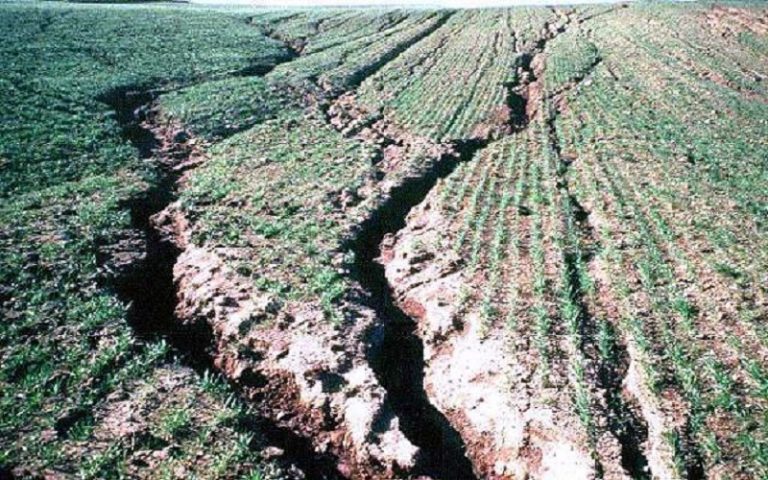
Today we are witnessing the removal of fallen trees in the forests of the north of the country, which is mainly done by the companies of the IRGC forces. This act has led to the destruction of the soil of these forests.

Iran is the only country in the world that consumes 100 percent of its renewable water, while the average consumption of renewable water should not be more than 40 percent. In such conditions and in such a way, how is it possible that the environment would survive? Certainly, forests cannot be preserved in such conditions.

The trend of destruction of Iranian forests is moving faster and the head of Iran’s Forest Organization has predicted that in 30 years the north forests of Iran which were once one of the biggest forests in the world would not exists anymore.

World Powers Should Have a Bit More Courage When Tackling Iran’s Nuclear Projects

After the new United States President Joe Biden took office in January, it was expected the US would return to the JCPOA (2015 Iran nuclear deal) as soon as possible, rapidly, and easy.

But the historical experiences of the big playgrounds and international cases in which many actors are involved have shown that after the crossing and solving the many contradictions, it is possible to determine the game’s result. In this regard, nothing will be determined spontaneously in this process. And the actual actions on the political and strategic landscape will have the last word.

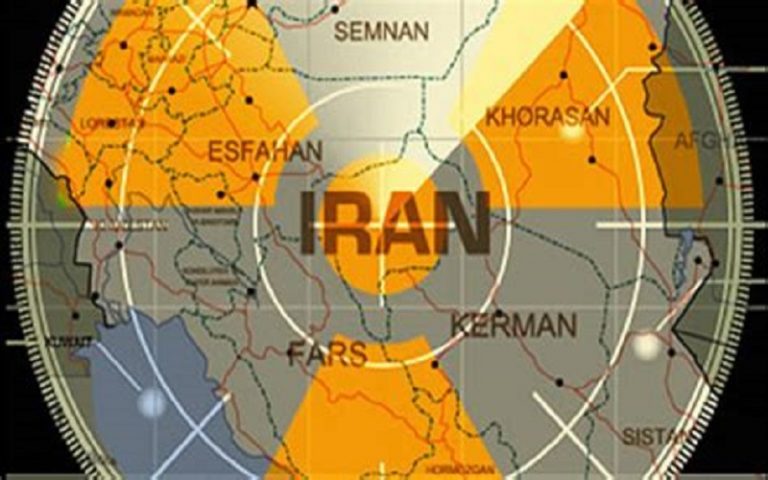
The JCPOA which is now the main challenge for Iran’s rulers. With nuclear weapons as its main issue and regime’s efforts to achieve it, and of course the effort of the international community to prevent this regime to achieve it are the main subjects that are discussed these days around Iran.

But the problem is not ending here about Iran, on the peak of the Iran’s behaviors there are many other subjects that are the raising the concerns of the international community.

Iran’s ballistic missile program, its shameless international terrorism and its support, interfering in the internal affairs of the Middle Easten countries, its human rights violation case, are among the most important cases that are the concern of the international community.

It could be clearly said that none of these cases which are the concern of the international community are solved till, mainly because of the long year appeasement with this regime, and now after 40 years of the rule of this regime these issues are raising more concern and scaring everyone.

The nuclear bomb case, which is officially denied by its leaders, but in practice, they are continuing it hiddenly. The ballistic missile program is continuing under the alibi of ” Defensive strength enhancement program”, supporting Bashar Assad in Syria, Hezbollah in Lebanon, the Yemeni Houthis, Iraqi militias, Bahraini terror groups, the Afghan Taliban, etc., are still the important subjects which are followed by the Iranian government and are the officially announced strategies and is insisting on the continuations of them.

The negation of the existence and independence of other countries with slogans such as “conquest of Qods through Karbala” and nimbuses such as the “conquest of Mecca” and raising the regime’s flag on the US White House and converting it to a “Hosseinia” (a religious place), wiping out other countries from the map, should also be added this dangerous pyramid of the regime’s views and behaviors.

But it seems and something is changing even slowly and very warily in the relations of the world powers with this regime, and hopefully this will be continuing.

On 24 March, EU High Representative for Foreign Affairs and Security Policy/Vice President of the European Commission, Josep Borrell, and the Secretary of State of the United States of America, Antony J. Blinken met in Brussels and discussed their relations with the Iranian government.

“They shared concerns about Iran’s continued departure from its nuclear commitments under the JCPOA and underlined their full support for the work of the IAEA to independently monitor Iran’s nuclear commitments.  Secretary Blinken reaffirmed the U.S. readiness to reengage in meaningful diplomacy to achieve a mutual return to full implementation of the JCPOA by the United States and Iran.” (eeas.europa.eu)

Secretary Blinken emphasized: “We have been very clear that the path to diplomacy is open. So as we’ve said, the ball is really in their court to see if they want to take the path to diplomacy and returning to compliance with the agreement. Should that happen, we would then seek to build a longer and stronger agreement, but also to engage on some of the other issues where Iran’s actions and conduct are particularly problematic – destabilisation of countries in the region, ballistic missile programme…”

And about his coordination with the E3 about Iran’s case he said: “We are all very much on the same page when it comes to Iran, when it comes to our common interest in seeing if Iran wants to engage in diplomacy to come back fully into compliance with its obligations. We are prepared to engage on that. To date, Iran has not been, but let’s see what happens in the weeks ahead.”

Director-General of the International Atomic Energy Agency (IAEA) Rafael Grossi said that reviving the nuclear agreement between Iran and world powers is “impossible” and called for striking a new deal.

In an interview with Spain’s El Pais newspaper, Grossi said he believes the old agreement has died after Tehran began producing what could be considered the minimum amount of materials needed to produce a nuclear weapon, although it still needs more materials to build a bomb.

And in a interview with Newsweek, he showed his concern about Iran’s hidden projects and said: ‘”detailed and technical discussions” are needed to ascertain the location of Iran’s undeclared uranium and that this issue is “totally connected” to the future of the deal.

‘He said there were a number of points that were “still unclear” relating to traces of uranium that were found but had not been declared in the past by Tehran.

And finally, he added: ‘”We need to know what was going on there, we need to know exactly what kind of activities were taking place there, and we need to know if there was material, where is this material now?”’ (newsweek, March 23)

Iran on the Cusp of Fundamental Changes

“History tells us that when evolution becomes impossible, revolution becomes probable,” mentioned Ilan Berman, the senior vice president of the American Foreign Policy Council in Washington D.C., in a recent article in the Washington Times.

According to a survey of Iranian attitudes by GAMAAN, the Group for Analyzing and Measuring Attitudes in Iran, and his personal research, he concluded that most “Iranians are looking beyond ayatollahs and the Islamic Republic.”

For more than four decades, Iranian officials deceived society with the play of ‘the reformists versus the hardliners.’ However, the people experienced both factions during the past 42 years and grasped that they are cuts from the same cloth.

In recent years, Iranians frequently chanted the slogan of “Reformists, principalists, the game is over” as a sign of their distrust in the entire ruling system. On the other hand, the government’s violent response to any objection and grievance shows the existing gap between the state and society.

Nonetheless, political dilemmas are not the only puzzle in Iran’s today. The rift is more profound and deepening every day. The government’s costly and irresponsible policies like regional ambitions and supporting radical proxies, ballistic missile projects, and nuclear bomb-making programs are the flipside of political problems. In fact, the theocratic rule in Iran has brought enormous social phenomena to the people, rather than easing people’s hardship.

These days, the people of Iran are suffering from unprecedented poverty, rampant inflation, skyrocketing prices of essential goods and services, and the coronavirus’s mental, economic, and health complications. All these facts mentioned above are derived from a corrupt and flawed political system. Furthermore, youths and women particularly endure suppression, and the government has banned them from their inherent rights.

Notably, economic dilemmas, oppressive measures, and other disastrous elements have constantly increased during the ayatollahs’ era, regardless of whether a ‘reformist’ president had been in office or a ‘principalist’ one. In other words, the current circumstance in Iran is the outcome of both reformists’ and principalists’ performance.

For instance, in November 2019, President Hassan Rouhani’s administration announced gas price hikes. The issue immediately ignited nationwide protests in around 200 cities across the country. A day later, Rouhani ironically claimed that he was informed about new prices through the TV like many people, attempting to save himself from public ire.

Many loyalists to the Supreme Leader Ali Khamenei, including members of the Islamic Revolutionary Guard Corps (IRGC), expected Khamenei to cancel the new high prices, said IRGC commander Salar Abnush.

Instead, Khamenei openly declared his support for the gas price hikes and revealed that the heads of the three branches – President Rouhani, Judiciary Chief Ebrahim Raisi, and then-Parliament (Majlis) Speaker Ali Larijani – had agreed with the rationing fuel and raising the prices.

Meanwhile, Khamenei ordered the IRGC and the State Security Forces (SSF) to ‘do whatever it takes’ to quell the protests, leading to the death of 1,500 demonstrators and bystanders and the arrest of more than 12,000 people.

Afterward, all prominent leaders of the reformist faction expressed their support for Khamenei’s order, blaming citizens for protesting. However, not only did the bloody crackdown on defenseless people not end protests but citizens continued scattered protests since then, putting the ruling system in a fragile condition.

In such a status quo, the Supreme Leader has purged his reformist rivals and planned to appoint his purposive figure as the President in the June election. “Our nation should not consider the election as a symbol of polarization and should put aside these false divisions between the ‘lefts’ and the ‘rights’… The important issue is the Islamic State in the country,” said Khamenei on March 21.

He sees contraction as the sole instrument to preserve his reign against social protests. However, the clearing of ‘reformists’ rivals signals that society would no longer be duped by hollow promises and is indicative of the people’s genuine willingness for fundamental changes.

A Prediction for Iranian People’s Situation This Year

Due to the Iranian government’s plundering and its institutionalized corruption, the livelihood of the people is getting worse year by year. And its result is the fall of most of Iran’s population under the poverty line, or as has been announced by its official media, the ‘food poverty line’.

The state-run daily Mostaghel on March 14, 2021 wrote: “The living conditions of different segments of society have fallen sharply. According to the report of the Statistics Center of Iran and information obtained from the per capita consumption of basic goods in the country, it shows the weakening and shrinking people’s livelihood. The main reason is high inflation in such goods.

“Commodities such as meat, poultry, fish, oil, rice, dairy products, etc., which are gradually being removed from the livelihoods of the middle and poor sections of society. Economic indicators cover most different areas of society such as lifestyle, employment, livelihood.

“Basic components such as poverty line, human development, hunger index, purchasing power, ease of doing business, per capita food consumption, unemployment rate, inflation rate, net and gross production, income inequality coefficient, quality of life index, etc., which are the factors that affect economic growth, are things that there are currently no measures for improvement, and there is no hope.”

The state-run daily Kayhan on March 17 wrote: “We are witnessing the fact that the country has faced a severe inflationary recession and employment is also the output of investment and economic growth, especially in the last two years, 2019 and 2020, the economy has shrunk by 12 percent.”

In July 2020, the International Monetary Fund said that the economic growth of Iran under the rule of the mullahs is negative 6 percent.

Referring to this subject the state-run daily Jahan-e-Sanat on February 18, 2021 pictured something worse and wrote: “The experience of three consecutive years of recession from 2018 to 2021 is also noteworthy. According to official statistics, Iran’s economic growth at the end of 2018 and 2019 was -9.4 and -7 percent, respectively.”

“This situation continued this year as well, as official statistics show a negative growth of 9.1 percent in the first six months of this year (2020).”

Liquidity growth of course is one of the clear indexes of an economical stalemate, which is growing year by year and its result for the country’s economy is more inflation.

The state-run daily Eghtesad News on March 7, 2021 wrote: “Estimates show that in the first 11 months of this year, an average of 2.48 trillion tomans has been added to the country’s liquidity.”

Previously on November 29, 2020, the state-run news agency Tasnim wrote: “Some economic estimations indicate that in 2018, one trillion tomans of liquidity was created daily, which in 2019 reached 1.6 trillion tomans per day and in 2020 is reached 2.6 trillion tomans.

“At the end of this year (2020-2021), it is predicted that the volume of liquidity will reach 3.4 trillion Tomans and at the end of [2021-2022], we will have more than 4.5 trillion Tomans of liquidity. In other words, with the continuation of the current situation in the economy, next year we will have a daily liquidity of 3.1 trillion tomans.”

Regarding the increase in prices and its pressure on the lives of the people, Hossein Kamali, a former member of parliament, said: “The goods that were produced or produced in the country were provided to the people at several times the price. In some goods, we had several times the price increase, and this increase in prices put pressure on the people and caused dissatisfaction among the people.” (ILNA, March 22, 2021)

The pressure of the burden of poverty, rising inflation, and the rising cost of goods on people is such that their main issue is no longer welfare, but to provide at least food to fill their empty tables.

“From a series of past and present events, one can make an approximate prediction of the events and conditions of the people in 1400 (2021-2022), although some of these events and predictions do not require any mental strength. For example, prices will continue to rise, and the coronavirus will continue. Inflation and high prices eliminated the middle class from society and only two rich and poor classes will remain in society.” (Arman daily, March 18, 2021)

Iran: Supreme Leader Expresses His Concerns Over Cyberspace

During his first remarks in the new Persian year, Iran’s Supreme Leader Ali Khamenei expressed his concerns over the cyberspace. This is while other nations are constantly removing all types of censorship and secrecy. However, in Iran, ‘the men of faith’ still resort to untransparent means to cover up systematic corruption and gross violations of human rights.

Today, thanks to technology and the free flow of information, Iranian leaders can no longer hide their evil essence behind baseless claims and pious gestures. In this context, the theocratic government’s public base has been shrinking every day, which has severely terrified high-ranking officials.

“Unfortunately, [the people] do not obey necessary observations in our country despite my emphasis,” declared Khamenei, expressing his frustration in a video message on the occasion of Nowruz broadcasted by state television on March 21. “The cyberspace should be managed. This means should not be given to the enemy.”

For a long while like almost all dictators, Khamenei has intimidated society under the guise of combatting ‘foes’ to impose more restrictions and suppression. He and his representatives frequently speak about enemies and have applied an unprecedented inquisition in the country.

In the past four decades, they have justified beheading, flogging, amputating limbs, exiling, torturing, demonizing, and assassinating political dissidents at all the costs under the excuse of religious beliefs. However, they only won more anti-establishment protests and a volcano of public ire against the entire ruling system.

Why Does Khamenei Leak His Worry?

In such circumstances, Khamenei is concerned about society’s apathy in the Presidential election scheduled on June 18. Therefore, he intends to hold this election in a bleak atmosphere under censorship to appoint his desirable candidate. “U.S. and Israeli intelligence apparatuses want to disperse the people, claiming, ‘The election has been engineered.’ They accuse election organizers or the Guardian Council of manipulating the election,” he added.

This is while Khamenei had previously purged his rivals and their paths for resuming negotiations with the new U.S. administration. “There is a contradiction in terms when Khamenei seeks to hold a vibrant election, but at the same time, seeks to install his own subservient candidate,” said Maryam Rajavi, the President-elect of the Iranian opposition coalition National Council of Resistance of Iran (NCRI).

In the leadup to the Presidential election, Iranian officials unveil their nervousness over the revelation of corruption and embezzlement cases. “Many social media activists—affiliated with principalists—attack us while when they were in charge, they ate and took advantages. Now, they tell us, ‘Do not eat and take advantages,” said Masoud Pezeshkian, a ‘reformist’ MP from the northwestern province of East Azarbaijan on March 20.

“In cyberspace, it is Haram [forbidden] to vilify others or revealing their true or false files,” said Yousef Tabatabaeinejad, Khamenei’s representative in the central province of Isfahan in his mid-March lecture. Furthermore, Khamenei’s representative in the southeastern province of Kerman Ahmad Sheikh-Bahaei expressed his fear about the free flow of information. “The cyberspace has turned into the enemy’s mental bombardment against our forces,” he said on March 12.

However, the former Minister of Intelligence and Security (MOIS) and deputy chief of the judiciary Gholamhossein Mohseni-Eje’i alludedto the dictatorship’s main nightmare, saying, “They are openly training people on how to protest in the cyberspace.”

“If this incident(i.e. protests) takes place, it would be very dangerous. Our soft-warfare officers should not allow this incident to take place,” Khamenei had said on March 11.

Iran’s Political Prisoners Protest Exile and Persecution

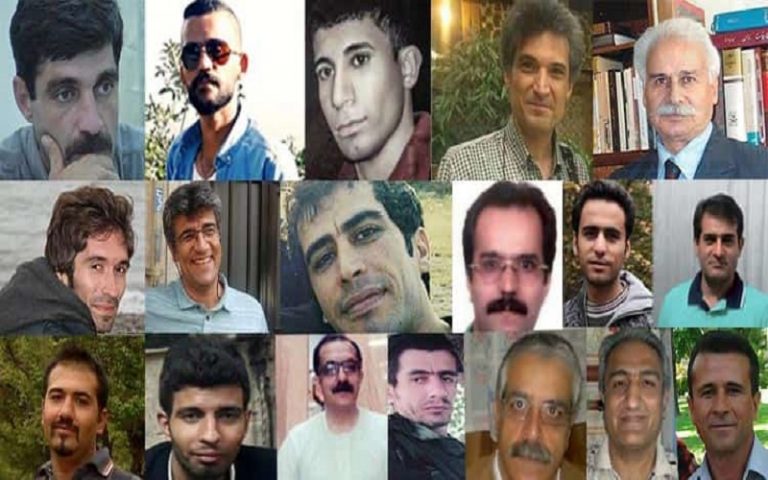
Eighteen political prisoners in Iran’s Gohardasht Prison in Karaj condemned in an open letter the exile of political prisoners from their hometowns.

These prisoners in their letter explained that this act by the Iranian government’s officials was due to their fear and fury over the prisoners’ resistance and confronting the regime’s pressure to break the prisoner’s dignity.

They emphasized that these measures could not force prisoners to back down in pursuing their rights. These prisoners emphasized in their letter: “The security institutions and judges affiliated with these institutions have clearly found that the prison has not only failed to prevent political prisoners from struggling for their rights, but instead it has turned into the site and the place for continuing their struggles and resistance.”

Among the signature of the supporters of this letter, the names of prisoners such as Jafar Azadzadeh, Saeed Masouri, Soheil Arabia, Arash Sadeghi, Hassan Sadeghi and Mohammad Ali Mansouri, and etc. can be seen, many of whom have been in detention for a long time.

Full letter of the political prisoners

The letter by the 18 political prisoners in Gohardasht (Rajaishahr) prison is as follows:

“Letter of Political Prisoners of Karaj Rajaishahr Prison on the intensification of the intimidation of political prisoners:

Over the past months, despite the allegations of the highest judicial authorities of the Islamic Republic surrounding the rights of political prisoners, something that is actually and every day is occurring, is not the improving of the conditions of the prisoners, but also the intensification of repression and antagonism, while increasing the price of the prison, people who lost their patience and political actors at the political level in the community to be intimidated and felt subdued because of their repressive policies.

Transferring to solitary confinement, insulting and humiliation, beating, forming new cases, and issuing new sentences and exile to prisons away from the habitat and, etc. are among the methods of exercising pressure on prisoners and harassing their families, which has become more severe and wider in recent months.

The security institutions and judges affiliated with these institutions have clearly found that prison has not only failed to prevent political prisoners from struggling for their rights, but instead it has turned into the site and the place for continuing their struggles and resistance. And from behind its tall walls, every time the voice of their rights will be heard clearly, and the ignominy of the totalitarian rule can be seen.

They thought that with the aggravation of systematic abuse of prisoners and their families, and violating more their rights, they can force them to be silent and become passive. It is based on this, that they have decided with more harassment to exile the political prisoners to prisons far away from the place of their residence to prisons with crimes such as drugs, murder, and robbery etc.

Obviously, such actions will not lead us as political prisoners to retreat from the defense of our human rights, and it is showing the fear and horror of the rulers over our cries of justice, and it is the result of their political, economic, and social deadlocks.

Certainly, just as the use of repressive policies by the government has led to nothing, this time, these policies will lead to nothing too, and in advance, this policy is destined to fail.

Matlab Ahmadian, Mohammad Banazadeh Amir Khizi, Afshin Baymani, Jafar Azimzadeh, Arsham Rezaii, Arash Sadeghi, Hassan Sadeghi, Soheil Arabia, Abolqasem Fuladvand, Nasrollah Lenshi, Behnam Mousivand, Reza Mohamad Hosseini, Saeed Masouri, Ali Mousanejad, Farhad Maysami, Mohammad Ali Mansouri, Mehdi Meskinnavaz, and Arash Nasri.”