Home Blog Page 301

Iran’s Refusal To Vaccinate People Against COVID Is Backfiring

Since late last year, countries all over the world have been doing their best to ramp up the vaccination effort and achieve some sort of normal for their citizens, hopefully before mutated strains can increase the danger.

But one exception to that is Iran, a country that  did not institute a lockdown and is now refusing to buy any of the World Health Organisation-approved vaccines, which is putting the entire world at risk, not to mention Iranians.

Health officials are openly worrying about the problem, with Tehran Covid-19 Task Force chief Alireza Zali saying that the new wave of the coronavirus is “inflaming” on March 1, and National Covid-19 Task Force spokesperson Alireza Raisi saying on February 20 that the “pace of virus spread is very high”.

Things have gotten so bad that even the state-run media has criticised the government’s mishandling of vaccinations, with Arman daily saying that global vaccinations are effective, even against mutated strains, and criticised the mullahs for failing to protect the people.

The ISNA news agency stated that this vaccination campaign has so far protected 225 million people in 100 countries, while Mostaghel daily pointed out that even war-torn Afghanistan has got half a million doses, compared with Iran’s 0.

This is all because Supreme Leader Ali Khamenei banned the import of the vaccine for no logical reason, which means that other officials are having to promise that a domestic vaccine will be out later this year, subject to testing.

The truth is that Iranian officials are terrified that a Covid-19 vaccine would allow the Iranian people to once again gather in large crowds, which would mean increased protests against the system and the overthrow of the mullahs. For the past 12 months, the government has used the pandemic as a way to suppress protests and keep its shaky grip on power.

Before the pandemic, the Iranian government was facing multiple protests each day and had only barely suppressed three major protests in two years. It would not at all be surprising that another one would happen again so soon.

The coronavirus allowed Khamenei and President Hassan Rouhani to divert attention away from their disastrous rule, with Khamenei even describing it as a “blessing”. But they couldn’t even manage that because the attention is back on them now and the Iranian people are furious at being used as cannon fodder against the virus.

The Hamdeli daily wrote: “Officials’ behaviours seem that they missed the increase in coronavirus death toll and new cases, and cannot tolerate a decrease in Covid-19 patients.”

Two Iranian Fuel Porters Killed; Three Injured Last Week

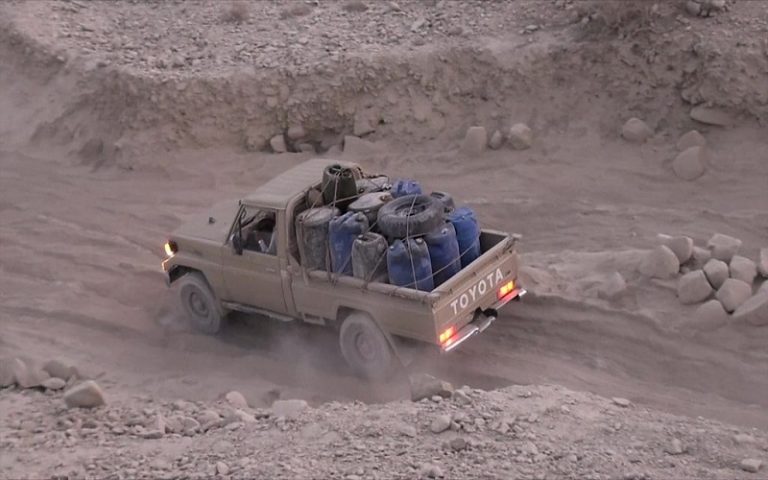
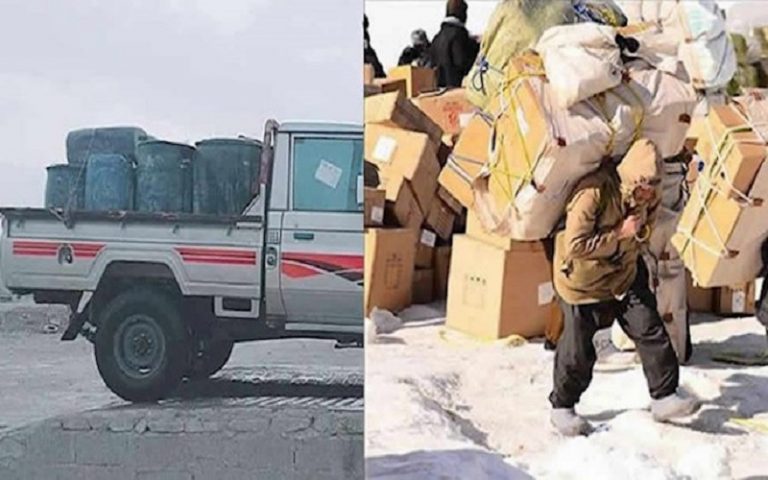
Two Iranian fuel porters have been killed by security forces in the past week, while three others, including a child, were injured in arbitrary shootings.

In Mirjaveh, south-eastern Iran, on March 8, the Iranian police began shooting at a car that was driving away, causing the car to overturn. The crash killed fuel porter Attallah Gazouie and seriously wounded his father Mazar, with reports circulating that he’s in a coma.

On March 7, in Minab, the police also shot at the car of fuel porter Ahmad Qasemi, who died because of the seriousness of his injuries.

On March 6, 16-year-old Mehdi Kolahizadeh Mameghani was shot by police in East Azerbaijan Province, north-western Iran. An informed source told the Human Rights News Agency that police had stopped Mameghani and asked for his license, but because the boy was young and scared over not having a drivers’ license, he drove off.

The police fired three shots before the car stopped and now doctors at  the Shohada Hospital in Tabriz are worried that Mameghani may never walk normally again.

The previous day, police opened fire on border porter Hojat Ghezavat without warning in Kermanshah, western Iran. Ghezavat was taken to the hospital.

The Iranian government has a long history of arbitrarily shooting and killing porters carrying goods across the borders. In fact, it’s something that happens almost daily, with the authorities claiming that they are cracking down on smuggling.

But the truth is that the Revolutionary Guards (IRGC) control a major smuggling network and they actually want to stop people from taking away business from them.

The border porters in Iran carry heavy loads across mountainous terrain on their backs for little money. They wouldn’t do all this, risking not just murder at the hands of Iranian police, but also avalanches, falls, hyperthermia, and hypothermia, if they weren’t desperate.

There are so few jobs there that they have no choice if they want to continue putting food on the table. This is a direct consequence of the Iranian’s 42-year corruption binge, whereby Iranians in border provinces face unrivalled unemployment.

The 2020 report by a human rights group stated that at least 204 Iranians were directly or indirectly killed or wounded by state security forces that year alone, with 74 killed – including 36 border porters, 5 fuel carriers and 33 other citizens – and 130 injured. How can this continue to happen without consequence?

Where Have the Wages of Iran’s Workers Gone?

“Our salary is 2 million, the poverty line is 10 million.”

This cry reflects the dimensions of pain and suffering that have now gripped most Iranians. Indeed, why, when the poverty line in Iran is at least 10 million tomans, is the minimum wage about 2 million and set to be just 3.5 million next year? To answer this question, we first review Article 41 of the government’s labor law.

“Workers’ wages, salaries, benefits and holidays should be calculated based on the real inflation rate in the country.
Every year, the Supreme Labor Council is obliged to determine the minimum wage for different parts of the country or different industries according to the following criteria:

  1. The minimum wage for workers according to the percentage of inflation announced by the Central Bank of the Islamic Republic of Iran.
  2. The minimum wage, without taking into account the physical and mental characteristics of the workers and the characteristics of the work assigned, must be sufficient to support a family, the average number of which is announced by the authorities.”

But why does the regime not follow its own law?

The state-run newspaper Resalat wrote on February 28: “Workers lose 30 to 40 percent of their purchasing power each year.”

Iran’s Army of Starving People Like a Volcano Waiting To Explode

Meanwhile, the Revolutionary Guards (IRGC) and companies affiliated with the supreme leader Ali Khamenei, which control about 60 percent of the country’s economy and labor force, are making huge profits. Last year, the price of a Pride (Iran’s car) increased from 25 million tomans to 105 million tomans. But have the salaries of the workers of Iranian machine-building factories also quadrupled?

Has a more than 100 percent increase in housing prices led to a more than 100 percent increase in the wages of construction workers?

The answer is no.

The reason why workers’ wages are not increasing is the astronomical looting that the regime and Khamenei’s affiliated institutions are taking away from them.

The state-run Etelaat newspaper wrote on April 11 about the approval of the Supreme Labor Council of the regime: “The minimum wage for workers in the new year (2020) was set at 1.835 million tomans.”

Of course, this figure was so scandalous that they had to add another 100,000 tomans a few weeks later to silence the protests.

The state news agency ILNA on July 30, 2020, in a report, acknowledged that: “It is always the government that opposes raising workers’ wages.”

“The government has always opposed a fair and adequate increase in workers’ wages, claiming that wages are inflationary; This is while the government itself has been one of the biggest generators of inflation by injecting liquidity under the name of subsidy. This fact is clearly seen even in the published official reports.”

As for the minimum wage in 2021, the situation has not changed much, and it is many times at risk of poverty. The government website of Eqtesad-e-24 in this regard wrote:

“At present, the government has set a minimum of 3.5 million tomans for its employees next year, and it seems unlikely that government representatives will pay more than this amount.”

But where do the rights that are denied to workers and other disadvantaged sections of society really go?

The state-run newspaper Arman on February 17 gave an indication, writing: “If today people are forced to borrow even in the field of “bread”, one should look for the money that is spent and forgiven by the children of officials.”

The next example is related to the burdensome situation of the retirees in Iran, as the state-run daily Gostaresh News on January 27 admitted: “A sum of money was taken from Shasta (Iran’s Social Security Investment Company), and this was apparently given to the national team coach, and this number, which was the money of the retirees, by order of the First Vice President to give the debts of the Ministry of Sports and Youth in some way.”

The next example is the regime’s proxy forces. Former member of parliament Heshmatollah Falahatpisheh on May 20, 2020 said: “We gave 20 to 30 billion dollars to Syria.”

And the last example was given by the regime’s parliament speaker Mohammad Bagher Ghalibaf as he said: “When the country has $100 billion in revenue, we have inflation and high costs, and our oppressed people become weaker, and speculators, rent-seekers, and profiteers get fatter. When the country earns $15 billion, we still have inflation and high prices, again, rent-seekers become fatter, the underprivileged become more and weaker. This is the fact.”

NCRI Report on Women’s Rights in Iran for IWD 2021

On International Women’s Day, which was Monday, the Women’s Committee of the National Council of Resistance of Iran published their Annual Report on the lives of women in Iran, including the struggles they face to have their basic rights respected. Here, we will focus on the main takeaways.

COVID-19

As with most of the world, the coronavirus has drastically impacted women’s rights, especially in the fields of employment, healthcare, and childcare.  The NCRI highlighted that, as of publishing the report, there had been at least 230,000 coronavirus deaths and the country was in its fourth wave, but still the mullahs were banning the import of vaccines and promising to start vaccinating everyone in 2022.

Poverty

The Iranian economy is floundering and millions are in poverty, which has led to such shocking instances as parents selling their vital organs – including hearts – to put food on the table for their families, even if it means their death.

Read More:

Iran’s Female Breadwinners Are Fighting Losing Battle Against Deadly Poverty

Some parents have even died from suicide along with their children because of poverty and women are more likely to be impoverished than men because their jobs are less secure and they’re more likely to be taking time off for childcare.

Protests

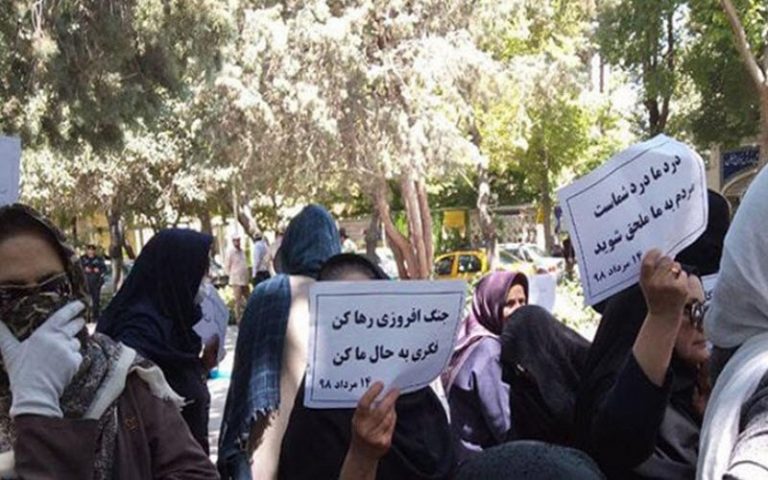
Women have been at the forefront of the five major protests over the past four years and that shows no sign of letting up. The NCRI Women’s Committee said that these “courageous women” provided a “beacon of hope in the dark of the night” and gave them “great hope for change” in spite of the misery inflicted by the mullahs.

Throughout the past year, the mothers of execution victims and those who died in the Revolutionary Guard (IRGC) downing of the Ukrainian Airliner in January 2020, remained active in their quest for justice, which brought hope over the prosecution of Iran’s leaders. In addition, women were also the leading voices at protests by workers, retirees, and defrauded investors.

The NCRI Women’s Committee wrote: “We hope to have brought to light the most crucial issues concerning Iranian women, namely the Iranian regime’s brutal attempt to suppress all and every voice of freedom, the various aspects of violence against women both sponsored by the state or promoted by state laws and policies, and the whopping gender gap in Iran as a result of gender discrimination in all fields.”

Iran’s Human Rights Abuses in February 2021

As usual at the start of a new month, we are going to look back at the human rights situation in Iran, as documented by the Iran Human Rights Monitor. It will not make for easy reading and it’s really not supposed to, but it’s necessary to warn you about this before you read further.

One of the major human rights stories in Iran in February 2021 was the authorities’ crackdown on protests by Baluch fuel porters in Saravan, Sistan and Baluchistan province, that left 40 unarmed people killed and 100 wounded.

The protests began at an Islamic Revolutionary Guards Corps (IRGC) base near the Iran-Pakistan border on February 22 after the IRGC closed the border. The IRGC then opened fire on the unarmed protesters, who may have been trying to enter the building after being stuck without food or water for days at the border, unable to complete their job.

The IRGC shut down the internet in a bid to stop the news from spreading but protests continued for a week and spread across the province.

Amnesty International has since called for an independent investigation.

Then, of course, we have all the typical human rights violations that are seen far too often in Iran, including executions, torture, and discrimination against minorities.

At least 34 people were executed in Iran last month, including four political prisoners and one woman.

In a particularly bizarre turn of events, the woman – Zahra Esma’ili – had died from a heart attack in Rajai Shahr Prison of Karaj on February 17, after seeing 16 others hanged, and the government hanged her dead body anyway, according to her lawyer, Omid Moradi.

Esma’ili was innocent, only taking responsibility for the murder of her abusive husband, Intelligence Ministry managing director Alireza Zamani, to save her teenage daughter from prison and a death penalty.

Regarding the political prisoners, all four Arab Ahvazis – Jasem Heidari, Ali Khosraji, Hossein Silavi, and Naser Khafajin – were executed in Sepidar prison on February 28, just minutes after their final family visit ended. The prisoners have gone on hunger strike on January 25 to protest not seeing their families and being mistreated by prison authorities.

In another case of the authorities mistreating a prisoner of conscience, Gonabadi Dervish Behnam Mahjoubi died in a Tehran hospital on February 21 after being given a large quantity on an unknown medication in Evin Prison because there wasn’t a doctor at the infirmary when he went there. He’d previously been denied appropriate medical care during his two-year sentence for peaceful protest.

Iranian Media: Neither Economy Cycle nor Centrifuges Are Running

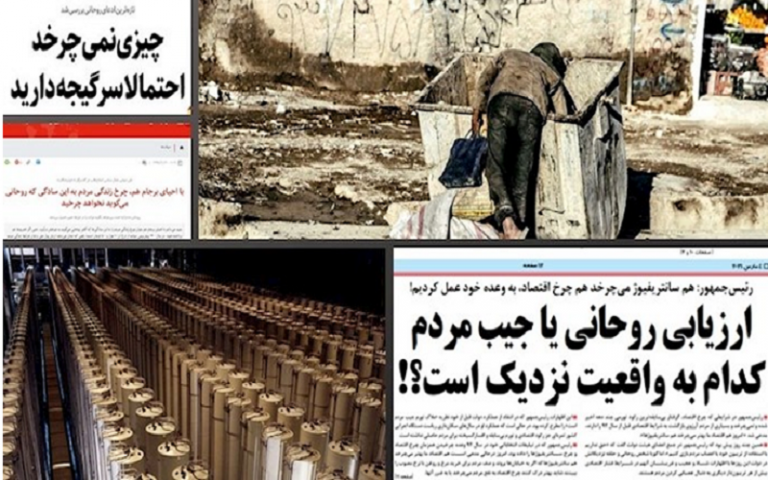
“We vowed, ‘both centrifuges and the economy cycle would spin,’ and we kept our promises. We made nuclear energy priceless,” said Iranian President Hassan Rouhani during the March 3 cabinet session.

The President’s remarks faced severe criticism. “Rouhani does not realize the people’s pockets are empty. I recommend he speak less during the remaining months of his administrations’ life,” said Jabbar Kouchakinejad, a member of the Parliament’s (Majlis) Budget Commission, in an interview with Dana News website.

“Rouhani’s assessment or people’s pockets, which one is closer to reality?” Keyhan daily titled in its March 4 edition, slamming the President for his baseless claims. As the mouthpiece of Supreme Leader Ali Khamenei, the paper mentioned the Rouhani administration’s economic failures in the past eight years.

“While the economy’s cycle has fallen in the most unprecedented inflation record in recent decades and does not spin, Rouhani claimed, ‘Today both our economy’s cycle and centrifuges spin better.’ The inflation rate and the poverty line have reached over 50 percent and 100 million rials [$400], respectively, while the poverty line was around 20 million rials in 2013—when Rouhani took office,” Keyhan wrote.

Furthermore, Javan daily, affiliated with the Islamic Revolutionary Guard Corps (IRGC), criticized Rouhani for raising false information. “Neither the economy nor centrifuges ran… Talking to the people and official statistics show the truth is another thing,” Javan wrote on March 4.

Read More:

Iran, Khamenei, Engineered Election and Hard Days

“Currently, we are far from our nuclear capabilities from 2012 to 2014. Our imports and exports have approximately been half of 2013… For the first time, investment has become less than the total depreciation of capital in the country, which is unprecedented since 1988… The average economic growth was nearly zero in the past eight years,” Javan added.

Vatan-e Emrouz daily also blamed Rouhani for people’s dire living conditions. “Rouhani’s peculiar remarks about his promises in the 2013 Presidential campaign,” titled the daily on March 4. “It was spun, but backwards… the people are experiencing the most extreme living situation since the Islamic Revolution in 1979. Nowadays, people purchase meat in installments and face a boom of buying chicken’s legs. Furthermore, edible oil has become rare,” the daily wrote.

“Point-to-point inflation is more than 50 percent. Housing prices have increased by 550 percent. Unprecedented devaluation of rial against the dollar and the average economic growth of zero percent are only parts of the [government’s] record in the financial field,” Vatan-e Emrouz added.

Moreover, the daily warned about public disappointment and society’s backlash against the government’s failures. “The peak of the [Rouhani] administration’s economic failures was when financial grievances ignited protests in the country, which were seized upon by opposition groups,” Vatan-e Emrouz concluded.

Resalat daily, affiliated with the most fundamentalist party of Motalefeh, prodded Rouhani in its March 4 edition. “Rouhani’s latest claim was studied. Nothing is running. Probably, you have vertigo,” the daily wrote.

“Centrifuges’ spinning, which was Iran’s main card in negotiations, has stopped. There is no news about the economy’s cycle. The people’s food basket is shrinking every day. However, those, who had insider trading, are daily becoming richer. They have benefited from disappearing $18 billion of the country’s foreign exchange reserves,” Resalat added, pointing to Rouhani allies’ corruption cases and embezzlements.

And Farhikhtegan daily, controlled by Ali Akbar Velayati, Khamenei’s top advisor and former Foreign Minister, criticized the President. “Rouhani’s comments have no place, and, in fact, the people’s living conditions would not improve easily. The misery index, which contains inflation and unemployment statistics, is at around the 67 mark. This number was below 20 in 2017—when Rouhani was re-appointed by Khamenei and started his second presidency round,” the daily wrote.

These political rivalries on the cusp of the 2021 Presidential elections show confusion among high-ranking officials in Iran. On the one hand, Khamenei’s appointees blame Rouhani and reformists for people’s dire living conditions. On the other hand, Rouhani had precisely followed Khamenei’s path, and he did not have the power to defy Khamenei’s orders.

In the 2017 Presidential campaign, Rouhani exploited public hatred against the suppression and execution, forcing Khamenei to re-appoint him. In Hamedan, he implicitly reminded the notorious background of his rival Ebrahim Raisi, current Judiciary Chief, saying, “Our people will once again announce that they do not want those who only know prison and execution in the past 38 years.”

Rouhani became President. Raisi was defeated, but a few months later, he was appointed as the Judiciary Chief by Khamenei. Raisi’s running mate Mohammad Bagher Qalibaf also become the Majlis Speaker during the controversial Parliamentary elections in February 2020.

In a nutshell, Khamenei pulled the strings to control public hatred and to preserve his rule. However, after the coronavirus outbreak and the government’s horrible management, economic failures, and worsening human rights situation in recent years, the people have declared that they no longer trust the current establishment and pursue fundamental changes.

“Reformists, principalists, the game is over,” protesters frequently chanted during nationwide protests in December 2017-January 2018, November 2019, and January 2020.

The FATF Crisis and the Incurable Pain of Iran’s Government

One major point of contention in the factional feuding that exists in Iran is the issue of the regime joining the international conventions related to the Financial Action Task Force (FATF).

This dispute was reignited after Iran’s president Hassan Rouhani asked the regime’s supreme leader Ali Khamenei for the Expediency Discernment Council to reconsider the relevant bills, as their non-approval would block trade with the international community.

Khamenei later wrote to the Expediency Council to reconsider the issue. A statement by 205 members of the parliament against the FATF also exacerbated the crisis.

Of course, a number of members of the regime’s parliament did not join this act and didn’t sign the statement. One of them said to Mohammad Bagher Ghalibaf, the parliament speaker, in a meeting on March 2: “Of course, this is the opinion of the signatories of the statement, not the opinion of the parliament.” (ICANA, March 2)

In the field of social consequences of not joining the FATF, Rouhani warned the Expediency Discernment Council: “But if we do not join, and if these bills are not implemented, explain how much it costs anyway and who should bear this cost.” (State TV News Channel, March 3)

Read More:

Meaning of Iran’s Return to the FATF Blacklist 

Immediately after the speeches of Rouhani, Mohsen Rezaei, the secretary of the Expediency Discernment Council, came to the scene and while admitting the deadlock with the promise of review next year, he nullified the dream of a deal with the US and the lifting of sanctions and said:

“One of the ministers said, approve this so that we can join the FATF, because they may lift any of those sanctions. Well, we are waiting until April. As soon as the sanctions are lifted, we will come here and discuss. For example, we agree, but this is also ambiguous.” (State TV News Channel, March 3)

Meanwhile, referring to the global isolation of the regime, the former director of the regime’s Ministry of Foreign Affairs said: “They have thrown the ball in the system’s court, and the more the system reacts negatively, the more the international community will turn to the United States.” (State-run daily Setareh-e-Sobh, March 2)

Government spokesman Ali Rabiee, in response to a reporter’s question regarding the referral of the previous parliament’s decision to join the FATF, told the current parliament: “Referral to parliament is no longer an issue at all.” (IRNA, March 2)

A government expert acknowledged the shaky foundations of the regime and warned against a potential uprising: “We have not done anything to maintain our social capital by being able to withstand the pressures. With these shaky foundations, we cannot go to war with the international community, so we must accept the FATF.” (State-run daily Jahan-e-Sanat, March 3)

Contrary to this warning and the desire of some of the regime’s officials to join the FATF, some showed the truth behind the regime’s hesitation to join this agreement.

In 2019, clergyman Mesbahi Moghaddam made it clear that accepting these bills would mean cutting off support for the Revolutionary Guards (IRGC): “The funding of the IRGC is considered as terrorist financing by the US, so in those circumstances we must also stop supporting the IRGC.”

Ali Nikzad, a Member of Parliament and former Minister, wrote in the most explicit tweet: “If we accept the FATF, it means exposing ways to circumvent sanctions.” (State-run daily Hamshahri, March 3)

The bottlenecks of the regime are not just one or two. According to the Iran daily, March 4, if the sanctions are lifted, the regime will be in dire straits in its banking transactions not accepting the FATF:

“If all parties return to the JCPOA {2015 Iran nuclear deal}, if Iran does not accept the FATF, will not be able to work with the world banking system. Maybe even 2nd and 3rd tier European banks will not work with us. It seems that not only the top Chinese banks do not work with us today, but also the Chinese sub-banks are willing to cooperate with us at exorbitant costs.”

This is the impasse that the regime is facing. This is at a time when the regime is facing a major crisis at home over the anger of the people. A situation that is ready to explode with any spark.

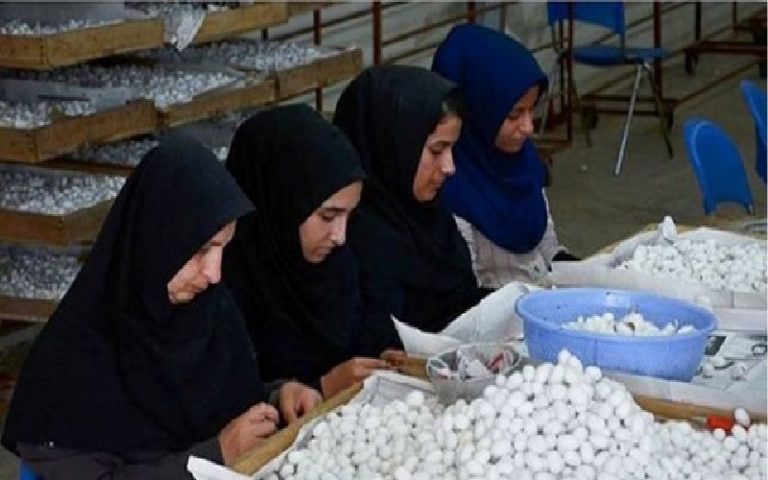
One Million Women Have Become Unemployed in Iran Due to the Coronavirus

While the whole world tries to restrain the crisis of the coronavirus with the least damage to the people, the government in Iran is using this as a weapon against the people. One of the unresolved problems of the Iranian community is unemployment, especially women’s unemployment. According to statistics over the past year, more than 1 million women out of 3 million working women have lost their jobs due to the coronavirus. Women from different strata, such as nurses and women, are the first victims.

There are several reports about the unemployment of the unemployment of the women especially in areas such as public services. Nurses are suffering much more than other areas because of their conditions due to the pandemic, while having no premiums and government support. On January 10, the state-run ISNA news agency reported that more than 70 percent of the workers who have become unemployed due to the COVID-19 are women. But surprisingly the seasonal report of the Iranian Statistics Center for the summer of 2020 evaluated women’s share of the employment market was rated as reasonable.

Women are the first victims of the coronavirus

In the subject of employment, women have suffered more than men. Because women enjoy lower income, savings, and support. A greater share of unstable jobs belongs to Iran’s women. Women who were employed in jobs such as hairdressers, food centers, hotels, halls, schools, kindergartens, etc. have lost their jobs or are working part-time.

Misogynous Law Bans Iran Ski Coach From Travelling With Her Team

Arman daily, quoting Alaeddin Azvagi, director of the Ministry of Labor Employment, wrote:  In the spring of 2020, compared to the spring of last year, about 749,000 cases of women’s employment decreased, and in spring until summer 2020, about 120,000 other women’s employment has been reduced – which indicates the effect of coronavirus on women’s employment.

10 percent of the female heads of households have a job opportunity

The situation is worse than what it is thought to be. The state-run Salamat News website quoting a judicial authority wrote:

“Only ten percent of women in the household have access to job opportunities. While 30 percent of these women are at least familiar with a profession. Due to the process of the increase of household women, the unemployment cycle continues to grow.

4 million female headed households have been abandoned

According to statistics, 4 million Iranian women are household women and the main income source of their families. But these women have never been recognized in this sovereignty. They are not receiving any support. These women are exposed to a variety of damage without having government empowerment. In addition, their children are also dark and blurred fate, facing the life of a child labor.

Of the 4 million household women, only 850,000 are covered by the Welfare Organization. It is clear, in what a condition the rest of the 3 million women are living, while not covered and supported by any government organizations.

Educated women and the army of the unemployed

According to the data center, more than 40 percent of the unemployed people are graduates. Of course, women’s share in this area are more than men. In provinces like Kurdistan and Kermanshah, unemployment and poverty have pushed educated women to extreme hard job, if we could call them even jobs, like cargo porters, famous in Iran Colbar.

Fars News Agency wrote: “In the border provinces, 60 percent of the jobs are informal. The purpose of the government about unofficial jobs are that kind jobs that the government does not recognize. Therefore, it has the right to attack them whenever they want, mostly attacked people are the cargo porters in the west areas of Iran and the fuel porters in the east of Iran.”

Women nurse first victims

Nurses, 80 percent of whom are women, are another strictly vulnerable strata that their rights and incomes are not paid by the government living mostly on the line of poverty, or below it.

More than 50 percent of the nurses are contracted. That is, temporary contracts with private companies or private hospitals. They are not hired, so they do not have at least a job security.

In this case the state-run news agency quoting and official wrote: “The Ministry of Health added a percentage to the nurses’ incomes, then it cried it out everywhere. But this increase in the salary is belonging to all treatment staff and not specific to nurses. Contract nurses have been used since 2014. That is, exploitation in a new way. Due to the strong mafia of the Ministry of Health, this exploitation is much more.”

According to Ghazanfar Mirza Beigi, the head of the entire nursing system, out of about 145,000 nurses, 60,000 were infected with the coronavirus and 6,000 were quarantined and about 100 people lost their lives. Most of them are women.

Iran: 90% Increase in Inflation Compared to Autumn 2019

The Iranian Statistics Center announced a 90 percent increase in inflation compared to the fall of 2019 and that inflation of imported goods in the fall of 2020 was more than 588 percent and the annual inflation rate of these commodities had a 412 percent growth.

Iran Statistics Center’s report

Iran Statistics Center on March 3 in two distinct reports outlined the “price index of export goods in the fall of 2020” and the “import index of imported goods in the fall of 2020”.

According to the Iranian Customs Statistics Center, the inflation rate of imported goods in the fall of this year, compared to the fall of the fall in 2019, shows an increase of 588 percent and annual inflation rates of imported goods had an increase of 412 percent.

The importance of this is a dramatic inflation rate, where this increase in the price of these products will be ultimately provided to the Iranian citizens and will have a direct impact.

According to the report and its comparison with the previous season, in the summer of 2020, the number was 498.2 and increased in the autumn to 588.8 percent and according to the increase of the rate of the point-to-point inflation, it had an increase of 90.6 percent.

Changing the price index of imported items based on dollar information was also 50.1 percent in the fall of 2020 compared to the fall of 2019.

Annual inflation

Changes in the average price index of imported goods based on rial data from the fall of 2020 were 491.9 percent, compared with the annual inflation of the summer of 2020 (equal to 412.2 percent), increased by 79.7 percent.

Iran: Government’s $12-Billion Debt to Social Security Organization

According to the Iranian Center for Statistics Center, the lowest annual inflation rate in the Rial section belongs to the “raw skin and leather skin” group, and the highest rate belongs to the “mechanical machinery and machines, electrical equipment, components and spare parts.”

Point to point inflation

Changes in the price index of import-based data based on Rial data in the fall of 2021 were 588.8 percent compared to the autumn of 2019 and compared with the point-to-point inflation to the summer of 2020 (equal to 498.2 percent), had an increase of 90.6 percent.

These statistical data show the increase in the inflation in imported goods and, consequently, the consumer goods of the citizens, the leaders and brokers of the government while lying about these statistics speak about a “reducing inflation”, including the President of this regime, who in a surprising speech spoke about the “process of reducing inflation” and relied it on “all the factors.”

Perhaps there is no need to argue about the steady increase in inflation in Iran in recent years, but certainly whose who are experiencing this increase in inflation are the Iranian people without requiring specialized economic science.

Engineered statistics

Experience has shown, what is presented as “official statistics” in the specialized organs of the Iranian government are hugely engineered statistics to keep public opinion on the belief that what leaders and economic agents and government’s brokers called as “economic prosperity” and other titles like, are based on the reality.

And sometimes to cover their fake statistics and such contradictions, the state-run media is ordered to speak about contradiction and why the statistical data of various economic institutions that the economic custodians announce contradict.

The expression of such statistics is an attempt to keep public opinion away from the depth of the catastrophe behind the curtain.

Nonetheless, the feeling of the market tell everything to the Iranian people about the situation of this economic turmoil, and the announcement of such engineered statistics only reveals some bitter truths.

Iran’s Army of Starving People Like a Volcano Waiting To Explode

The oligarchic rule of the Iranian regime has constructed a hell for the people from poverty, hunger, water shortage and drought, among calamities, Iran watchers say.

Mohammad Reza Badamchi one of the regime’s MPs, said in the parliament on April 4, 2020: “In these 40 years, two trillion dollars of foreign capital has entered the country, but what did we do? From the grief of the unemployed youth and, female-headed households, to the tragedy of the homeless people and the pain of homeless children and a thousand great sufferings of Iranians.”

Eghtesad-e-Pouya, a state media outlet, while expressing a corner of this hell and this dark souvenir for the Iranian people, wrote: Today, Iran is a society that, “For the money, a mother sells her newborn beloved baby for 3 million tomans so that her other children can eat meat and have food, or the mother or father push her child in front of a car so that she can receive a ransom and spend their daily expenses. We can talk about the workers and retirees that they are either below the poverty line, or absolute poverty, or just alive. During this time, we saw that the people of the cities ate every animal, from cats and crows, to not to be hungry.” (State-run daily, Eghtesad-e-Pouya, 21 April 2020)

Fuel and cargo porters, the result of class difference and discrimination

The 98 percent of class difference is the common pain of the Iranian people, but this distance is many times more than some parts of Iran, especially in the provinces of Sistan and Baluchestan and Kurdistan.

A sociologist said about this class distance and institutional discrimination in this regime: “You should compare the lives of the people in the deprived border areas of Iran with the lives of the people in the north of Tehran. They are about 150 to 200 years apart. This distance and discrimination create unfavorable conditions for the lives of border people. The root of this situation begins with discrimination, meaning that in society some [i.e., the mullahs and the Revolutionary Guards] have privileges that others are deprived of.” (State-run daily Hamdeli, February 28, 2021)

Read More:

Toiling for Bread in Sistan and Baluchistan

In finding the root of the phenomenon of cargo and fuel porters, he said: “I believe that the existence of discrimination as well as economic poverty becomes what we call fuel or cargo porter, which has not existed in the history of Iran in this way.” (State-run daily Hamdeli, February 28, 2021)

Infographic of political-economic geography of Sistan and Baluchestan

Sistan and Baluchestan province with an area of ​​about 187,502 square kilometers and 24 cities and 9,000 villages and hamlets, that 6500 villages are populated. Sistan and Baluchestan province with a population of 2.8 million people and with more than 1300 km of land border with Afghanistan and Pakistan and 310 km of sea border on the shores of the Oman Sea is in a very sensitive and important position.

The state-run news agency Mehr on January 25 wrote: “The province is located on the world metal and mineral belt, which extends from the Balkans to Pakistan, and has abundant reserves of chromite, copper, manganese, lead and zinc, tin, tungsten, gold. Sistan and Baluchestan also has more than 400,000 tons of garnet with 40 percent grade, 10 million tons of andalusite, 5 million tons of feldspar, 130,000 tons of silica and 43,000 tons of antimony, including capacities.”

“The port called Beheshti of Chabahar was established as a link between Southeast Asia, Central Asia and Afghanistan with a capacity of 83 million tons in 1992 and was finally registered with a $500 million expansion plan between Iran and India in January 2018.” (IRNA, March 30, 2019)

The IRGC’s fingers on this wealth

The entry of the Revolutionary Guards (IRGC) Khatam al-Anbiya base which is one of the main bases of the IRGC and the economical artery of the regime’s economy into the mines and wealth of this province has been going on for many years and is still going on. Among the presence of the Revolutionary Guards in the implementation of projects without tenders can be seen throughout the province:

  • Water transfer project from the Oman Sea to the east of the country since 2018 for the three provinces of South Khorasan, Khorasan Razavi and Sistan and Baluchestan. The main contractor for the project is Khatam base. The project is unfinished. (ILNA, August 27, 2020)
  • Khatam Al-Anbiya Camp Announces Exploration of Copper, Manganese and Chromite Lead and Iron Mine in Sistan and Baluchestan Province. (Tasnim, July 29, 2020)
  • Unsuccessful 4-year plan – In 2009, the implementation of the second line of Chah-Nimeh transfer to Zahedan with technical changes in pipe diameter and line capacity through foreign financing with the investment of Sino Hydro China in the amount of 120 million Euros was commissioned within three years. In 2010, by the order of the then president, foreign financing was removed from the agenda and the project was handed over to Khatam al-Anbia construction base with the same conditions. The implementation of the plan is still unfinished for various reasons.” (State-run daily Shahrvand, August 11, 2020)
  • Arbaeen Sepah project, providing provincial funds to transfer and accommodate 30,000 Pakistani Arbaeen pilgrims from Mirjavah border to Sistan and Baluchestan.

While looting the rich lead, iron, manganese, chromite, and gold mines of Sistan and Baluchestan, the Revolutionary Guards stole water and brought a hell of poverty and misery to the deprived people of Sistan and Baluchestan, now through the Razzaq project, seeks full control of fuel transfers to Pakistan. According to this plan, cards will be issued to border residents up to a radius of 25 kilometers.

According to this plan, the IRGC issued an authorized traffic card for every 5 families, for which they must pay 5 million tomans. Each of these families, in turn, can sell a cargo containing 3,000 liters of fuel only once a day, on the condition that after selling the fuel, they hand over the received currency to the Revolutionary Guards and receive a daily fee in return.

When the people gathered and protested in front of the Revolutionary Guards checkpoint on February 22, 2021, they were brutally attacked by them, and several of them were killed and wounded.

The state-run newspaper Shargh wrote on March 1, 2021 in the investigation of the Saravan massacre: “The events of Monday, February 22, in Saravan city showed other dimensions of the issue of fuel smuggling. A distinction must be made between fuel smuggling and fuel porters. The first is a sign of corruption and inefficiency at the national level and fuel porting is a sign of poverty and hard work of some for bread.

“If at least 15 million liters of fuel are smuggled across the eastern borders a day, that’s the equivalent of more than $6 billion a year, much of which goes into the pockets of some smugglers and not the noble people of the border, without registering and accounting.”

Sources of fuel smuggling

In the summer of 2014, the National Oil Company announced that it was asking the police for $170 million of the sale of the Ministry of Oil’s oil shipments.

“The demand is based on the delivery of an oil shipment worth $185.24 million, which Brigadier General Ahmadi-Moghaddam, the then commander of the police force, refused to repay as his debt to the state treasury.” (State-run news agency Alef, September 2018)

The report of the budget program commission of the parliament on April 15, 2018 states: “Ismail Ahmadi Moghadam, the commander of the police force, received two oil shipments worth $240 million from Oil Minister Rostam Ghasemi and did not deposit $180 million of this amount into the treasury. Also, the police owe more than 600 billion tomans to the National Oil Company for a second shipment that was delivered in 2013.”

A government researcher investigating the source of fuel smuggling in Balochistan wrote: “Is it possible not to manage fuel smuggling inside the country and manage fuel smuggling by organizing the border villagers? Is it possible to see thousands of smuggled fuel tankers and vans entering the area and not doing anything to manage it! But at the same time, did you expect that it would be possible to manage the outflow of fuel from the country by managing the border people? Note that the main issue is the main sources of fuel smuggling at the national level, not fuel porting at the local level.” (State-run daily Shargh, March 1, 2021)


From wood smuggling to currency smuggling

State-run Arman newspaper on March 2, 2021 in an article entitled, “From the fuel porters in the East to the currency smugglers in the center”, wrote:

In the north of the country, with the problem of ‘wood smuggling’, and with the increase, the base for deforestation has been provided. In the south, we are facing the problem of ‘soil-smuggling’ that Iranian soil is the basis for the construction of artificial islands in Arab countries. In the east, we have been facing the problem of ‘fuel porting’ for many years. In the west of the country, we are facing the problem of cargo porters (Kolbar), and in the center of the country, there is also the problem of ‘currency smuggling’, and the embezzlers are embezzling and stealing from people’s pockets.”

Mudbrick homes built on a land of treasure and wealth

Sistan and Baluchestan carries the scourge of poverty, deprivation, and unemployment from the two regimes of the Shah and the mullahs. And the huts in which people live are built on a treasure and wealth.

The head of the government organization Agricultural Jihad in Sistan and Baluchestan said: “Drought caused 726 billion tomans of damage to farmers and ranchers in Sistan region, including Zabol, Zahak, Helmand, Nimroz and Hamoon cities in the 2017-18. (IRNA, March 31, 2019)

And Asr-e-Iran daily on August 17, 2020 wrote: “Also, according to official statistics, about forty percent of the villages of Sistan and Baluchestan are deprived of access to drinking water and active water supply networks, and their water needs are met through unsanitary water in the hotspots and rivers adjacent to the village.”

The ‘army’ of starving people is a time bomb ready to explode

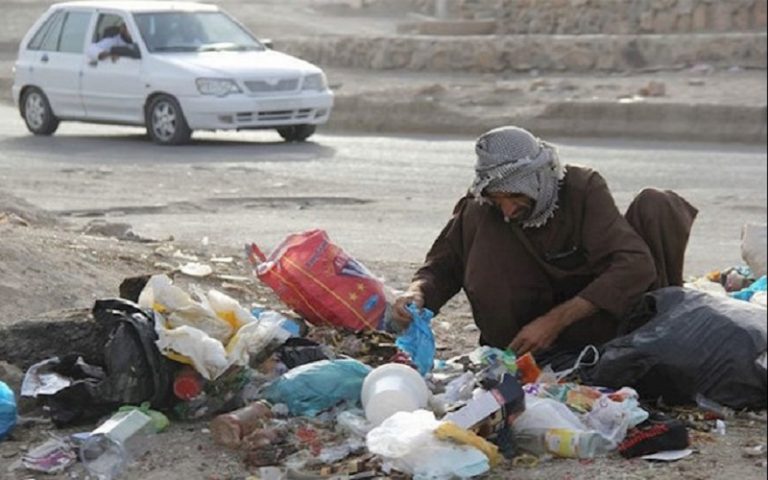
The Saravan protests in continuation of the November 2019 protests showed that an accumulation of the volcano of an army of 60 million starving and marginalized people is lurking under the skin of all Iranian cities. Society, like a ‘ticking timebomb,’ is waiting for a spark to explode.

The state-run daily Jahan-e-Sanat, on February 28, 2021 in fear of the starving people’s protests wrote: “The scope of the consequences of this bomb will not know friend or foe. If as a result of the negligence of the country’s rulers and underestimating this potential and terrible danger and their negligence in reducing the class gap in society, this time bomb explodes, nothing will be left of us.”