Home Blog Page 266

Subsidence Destroys Iran’s Economy and Future Generations

0

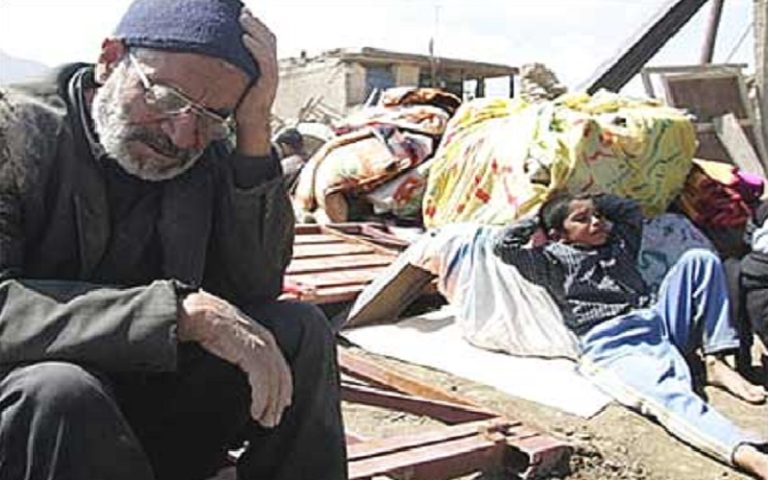
Deep cracks in the earth’s surface or vast and deep holes that suddenly happen under people’s feet in towns and villages are signs of the phenomenon of land subsidence. Subsidence has now become an environmental, social, and economic threat in the world.

According to the results of the ‘Mapping, the global threat of land subsidence’ article published earlier this year in the journal Science, 19 percent of the world’s population lives in areas exposed to subsidence. Also, 12 percent of the world’s GDP, which is about $8.17 trillion, is produced in areas prone to subsidence.

Subsidence is not only a direct threat to human life and property but also exacerbates flood damage and can even lead to permanent loss of land with various land uses damage to infrastructure and buildings, as well as damage to the environment.

The phenomenon of land subsidence is not the issue of a particular country or logic, but on all continents, some areas are prone to subsidence. North America, Asia, Europe, and South Australia are prominent examples of regions involved with the subsidence phenomenon.

Reports about the damages of this phenomenon show that the economic consequences of subsidence are not just speculation. For example, despite the subsidence phenomenon, the risk of flooding in the world’s coastal cities will reach $635 billion annually by 2050.

The economic consequences of subsidence can be investigated in two categories: direct and indirect. Critical infrastructure such as water management, transportation, energy, and communications are damaged by subsidence, and this is just one of the direct consequences of subsidence.

Damage and destruction of residential buildings and factories is another direct consequence of subsidence in the economy. These damages impose the cost of repair, migration, and uncertainty on the economy. Other direct consequences of subsidence can be considered as its destructive impact on the environment, cultural-historical sites, as well as damages caused by declining performance.

On the other hand, indirect consequences of subsidence can also affect the economy. Among them are increased flood risk, reduced agricultural production, and social and healthcare challenges. According to estimates, $77.7 billion of Iran’s GDP is at risk of subsidence.

Of Iran’s 609 plains, about 500 have fresh waters, all of which are facing subsidence. The results of the latest monitoring on the plains of Iran show that there is currently no plain in the country where freshwater is available but does not face the phenomenon of subsidence.

The reason for this is the indiscriminate harvesting of water from aquifers and the lack of management of water resources by the government.

It is not unexpected that next year’s studies will show that the northern cities of Gilan and Mazandaran have also been added to the total cities involved in subsidence risk, cities that are even not facing drought.

In the plains of Tehran, the rate of subsidence has decreased compared to the previous five years, but its extent has increased. The most dangerous province in the country in terms of subsidence is Isfahan province and Isfahan is the only metropolis in the country that subsidence has penetrated the city.

Therefore, not only can subsidence be considered as a threat to the historical-cultural centers of this province, but also the tourism economy of Isfahan, followed by the livelihood of residents, is threatened by the phenomenon of subsidence.

The most basic way to deal with land subsidence is to reduce water harvesting from underground water resources. Because due to proper administration and control by the government the only solution left for the country is the management of consumption from underground water resources because the loss and damages are not easily reversible.

Anger That Has Robbed Iran’s Officials of Sleep

Public hatred and the rift between the people and Iran’s regime, which mostly is targeting the supreme leader Ali Khamenei these days, has alarmed state media and government officials from both regime factions.

They describe such hatred and rift as mistrust or damage to the public’s trust and see the priority of Ebrahim Raisi’s government to be rebuilding and repairing this loss.

In a meeting with the government of Raisi, Khamenei expressed his fear about the people’s hatred and the people’s increasing distance with the regime, admitting, “The greatest asset is for a government that can win the trust of the people, which, of course, unfortunately, is damaged somehow and need to be repaired.” (State TV Channel One, August 28, 2021)

Khamenei’s remarks have recently become the subject of debate and scrutiny by media outlets affiliated with his faction, and they warn the Raisi administration that, ‘regarding the challenges and obstacles facing the government contained key and helpful materials,’ were in Khamenei’s speeches.

The Kayhan daily on September 2, 2021, warned the government too and wrote, “Social gaps and intensification of social confidence loss”, and “a blatant, risky and even perishing conspiracy”, must be considered, that can overthrow Raisi’s government or any other if it fails to reach its goal and promises given to the people.

The hatred of the people has a devastating outcome for the regime, which is its downfall, as we have witnessed in the past years in the people’s protests.

That is why the Kayhan columnist wrote with concern about people’s hatred and the rift between them and the ruling power that this is “irreparable damage that simply throws a devastating fire on the social capital of a country.”

The Mardom Salari newspaper on September 2, 2021, showed the same fear in an article entitled, “Iran’s recent movements” and said that the leadership of these movements is “not anymore in the hands of the middle class, and the leaders of these movements are aware people from the lower and poor classes.

“Movements in Iran in 2017 and 2019 and somehow in 2021 have fallen into the hands of the poor and lower classes. People who suffer a lot and are wounded by their movements the society and the government.”

Then it admitted that the main opposition of this regime the MEK/PMOI, “is leading the middle class to a politic of violence.” Something that is very dangerous and is remembering the “events of 2017, 2019, and 2021” which had the same nature, which means a movement of the poor classes with a violent and subversive character.

Then while trembling it suggests Raisi “get this situation out of this dilemma and crisis and think of a solution.”

In the impossible assumption, if Raisi wants to take a step, the first step is to address the supercritical state of the economy and people’s livelihoods. But according to state media, the government is more disabled than imaginable.

“The government does not have a well-planned and acceptable economic plan for reforming the country’s economic affairs, and what ministers have promised in the economic debate and the construction of a million housing, and other cases, is more slogan than the program.

“Economists in the country, with every economic point and vision, will say that there are a few percent hopes for reform, but we have not seen a plan yet. Some things are said that have not been studied at all, the capacity of the country has not been studied, the country’s facilities are not estimated, and they promise what is not feasible with these conditions and because it is not practical, it will cause disappointment.” (State-run daily Arman, September 2, 2021)

Therefore, all these promises and the latest moves of the regime’s president, like traveling to poor and deprived areas of the country like Khuzestan and Baluchistan province, can be considered as the regime’s fear of more uprisings, once the people overcome the coronavirus.

Iranian Regime’s Options About Its Nuclear Case Are Next to Zero

While the faction attributed to Iran’s supreme leader Ali Khamenei, which is now emerging as Ebrahim Raisi’s government, has been arguing and opposing the Vienna talks with world powers over its nuclear program, it now seems to have no choice but to come to the Vienna talks table.

The transfer of power took place in the Iranian government, and one of the issues that should be considered in the foreign policy of the Iranian government is the nuclear issue and the Vienna talks or the JCPOA.

Negotiations that have remained unresolved since June 20, 2021, and after the end of the sixth round, and so far, no decisive policy has been adopted by the Iranian government or at least has not become public.

What is leaking to the media from the lower echelons of the regime’s government shows that the head of government must also sit in the same hot chair as the regime’s former president Hassan Rouhani and his foreign minister Mohamad Javad Zarif.

In other words, although the faction attributed to Khamenei rejects the JCPOA talks by one hand, it is forced to pull it back with its other hand.

‘Negotiating with the West is a decision that political sovereignty must make, and the president is mostly the one who implements this decision,’ the Setareh-e-Sobh newspaper wrote in an article titled ‘The Need to De-escalate Foreign Policy.’

In other words, it is assumed that the political rule of Velayat-e-Faqih, headed by Khamenei, has no choice but to negotiate with the West over its nuclear program.

In another article entitled ‘The United States will likely want more concessions from Iran,’ Setareh-e Sobh eloquently shows the weak and low position of the Iranian government in the possible Vienna negotiations.

This newspaper highlighted the regime’s sickness in such a way that, “Iran should try to take advantage of the same limited concessions that the United States gives to Iran, the new negotiations will differ in content from the Obama administration, the political system should retreat somewhat from its position, there is no other way for the country.”

In another article on the Vienna talks, this newspaper wrote, “now that the government has been consolidated, the opposites to JCPOA have gradually come to terms with the facts and are giving the green light for the talks.”

According to most of the media of the Iranian government and the world and other apparatus of this regime, this government cannot do anything in the economic field without lifting the sanctions because they block any maneuver by the regime.

In addition, the failure to reach an agreement because of the explosive economic and social conditions, the society is a potential threat and danger for the regime and any of which could become a real threat to the Iranian government if the Vienna talks do not take place.

The Farhikhtegan newspaper, quoting a government expert named Diako Hosseini, highlighted this need as follows: “The lifting of sanctions is a priority in the presidency, not the revival of the JCPOA. The generalities of the mainstream government’s approach to the talks are clear, and we will soon see the resumption of nuclear talks between Iran and other countries.”

But with all these assumptions, there is always a sign of contraction and intensification of a conflict with the international community by the Iranian government as an option, albeit with a lower percentage of probability, and it should not be removed from the equations of the Vienna talks in general.

As Diako Hosseini says about the global consensus against the Iranian government in the process of acquiring a nuclear weapon: “The second process goes back to the common concern of these countries (Western countries, Russia and China) about the Iranian government’s acquisition of nuclear weapons.

“There is a concern between China and Russia that if the JCPOA is canceled and international oversight of Iran’s nuclear activities is lifted, Iran could approach the atomic bomb, and if IAEA oversight in the form of IAEA and safeguards is lost, then there is a concern. China and Russia will increase, and it will be possible to reach a consensus against the Iranian government.”

Mohsen Rezaei Appointed As Raisi’s Vice President for Economic Affairs

0

Ebrahim Raisi, the Iranian regime’s new president has appointed Mohsen Rezaei as the vice president for Economic Affairs, as well as the roles of secretary of the Supreme Council of Economic Coordination, and secretary of the administration’s Economic Headquarters.

Before becoming Raisi’s vice-president, Rezaei served as a member and secretary of the Expediency Discernment Council since 1997. He has run for president several times but has never been selected by the regime’s Supreme Leader Ali Khamenei.

According to statements that Rezaei has made previously in regards to economic affairs, it suggests that his new role will involve promoting the regime’s terrorist activities. He has already put forward his questionable place to improve Iran’s dying economy declaring that the value of Iran’s currency, albeit damaged by inflation, is equal to the values of the dollar and the euro.

Mohsen Rezaei was born Sabzevar Rezaei Mir Ghaed on September 1, 1954 in the city of Masjed Soleiman. During his studies in Tehran in the mid-1970s, Rezaei made connections with the religious group, Mansourun, and with some of their members, went on to form the Mojahedin Organization of the Islamic Revolution after the 1979 Revolution.

Rezaei was also a key element in the repression of the ethnic minorities, particularly Kurds, at the beginning of the revolution since he was one of the top IRGC commanders. Afterward, he and his ilk were active in suppressing and arresting dissidents, mainly MEK supporters.

Soon after, he became a commander of the Islamic Revolutionary Guard Corps’ Intelligence and was appointed as the commander-in-chief in the first months of the Iran-Iraq war, a role which he served in from 1981 to 1997. During this time, tens of thousands of children were used as “one-time soldiers” to sweep Iraqi minefields, while the Iranian regime prolonged the war and launched several offensives, known as Operation Karbala. These ultimately failed and resulted in the deaths of thousands of Iranian citizens.

The regime’s official statistics identified 10,000 Iranians as killed or missing in Operation Karbala-4 and a further 7,000 in Karbala-5. Another 26,000 were listed as injured in those two operations.

Rezaei is also responsible for the crimes committed in ward 209 of Evin Prison due to his role in the IRGC. The notorious ward was used to torture dissidents, as well as members and supporters of the MEK.

A further incident from Rezaei’s warpath saw his involvement in a bombing in Argentina in 1994. On July 18, 1994, a truck bomb outside a Jewish center in Buenos Aires killed 85 people and injured a further 200. The following month, it was announced that the bombing had been planned by the IRGC in Tehran. A lawsuit against the perpetrators of the attack was filed in 2006, including Rezaei, and as a result, they were placed on Interpol’s wanted list.

In a reaction, Argentina’s government condemned the appointment of a second official in new Iran President Ebrahim Raisi’s administration wanted by Interpol in relation to the 1994 bombing of the AMIA Jewish community center in Buenos Aires.

Argentina’s Foreign Ministry issued a statement expressing “strongest condemnation” of the approval of former IRGC leader Mohsen Rezaei as Iran’s vice-president for economic affairs.

Despite having little to no experience in managing the economy, Rezaei’s new role as the Vice President for Economic Affairs has confused many people. He is also said to be heading the Supreme Council of Economic Coordination, known as the ‘Economic War Room’, tasked with tackling Iran’s economic crisis.

The Iranian economic crises are due to the regime’s corruption and financing of terrorism. Thus, the Raisi government and its officials like Rezaei are unable to resolve economic crises, and will inevitably resort to exerting more pressure on the Iranian people while further amplifying state corruption.

Iran: 400,000 Deaths and 100,000 Nurses Infected

0

Since March 2020, when the COVID-19 vaccine was first distributed around the world, everything has been ready to push back the virus including in Iran, but the regime’s supreme leader Ali Khamenei issued a government order banning the purchase of foreign vaccines and insulting and betraying the Iranian people.

Since then, the lives of millions of Iranians have become a toy of Khamenei’s stubbornness as the first culprit of the rising number of deaths. Now because of such a decision, Khamenei has become a target of the people.

The rising number of deaths left no doubt that Khamenei is using the coronavirus as a weapon against the people. There is no difference between this strategy and the massacre of the political prisoners in 1988 both are implemented to secure the existence of this regime. It has even been decided that schools should be opened at the height of this massacre.

On this issue of August 29, 2021, the state-run daily Hamdeli in an article entitled ‘Reopening schools, a tsunami of death’ wrote: “Alireza Raisi, spokesman for the National Headquarters against Coronavirus, said that from September 23, some 30 to 40 percent of schools and from 23 October, all schools will be reopened in person.”

The decision to reopen schools comes as the paper quotes health experts as saying: “There will be 4-digit coronavirus deaths in the future, and in these supercritical conditions, the promise to reopen schools will only play with students’ lives and cause educational chaos.”

And there is no doubt that the main person behind this massacre is Khamenei, as one of the regime’s news agencies the SNN (Student News Network, Daneshjoo) angry about the People’s Mojahedin of Iran (PMOI/MEK) campaign to present Khamenei as the main culprit complained and, in an article, entitled, “Vaccination and enemy’s dangerous advantage taking” wrote:

“The coronavirus super-challenge has now entered the security sphere for the system. Cause, it is a fierce psychological war waged by the Mojahedin in this regard. They indoctrinate that all countries are vaccinating, only Iran does not want to vaccinate people because of the regime’s ‘deliberate policy.’

“The Mojahedin-e Khalq (MEK) does not suffice to this propaganda, and with all its massive propaganda apparatus, with its satellite network, with its various sites and with its virtual army, it instills in the people and society that the main culprit for the lack of vaccines is Khamenei.

“The Mojahedin even raise the issue of riot and call the coronavirus an accomplice of the regime to deal with the riots. Massoud Rajavi (leader of the MEK) also sends a message saying that Khamenei sees the coronavirus as a blessing and opportunity with a huge human loss to protect (the system) from danger (riot).

“This advantage taking has now promoted the dangerous belief in society that Khamenei is guilty of lack of vaccines. The outcome of this situation is the next step of Massoud Rajavi, who invites people to revolt and, unfortunately, finds a lot of echoes in society.

“The Mojahedin-e Khalq, especially Rajavi who is the worst enemy of the system, does not hesitate to take any opportunity to attack Khamenei’s system and person.” (State-run news agency SNN, August 30, 2021)

The result of such a policy is not only the death of hundreds of thousands of people but it will have long psychological, social, and economic effects on society. One of these effects is the collapse of the country’s healthcare system.

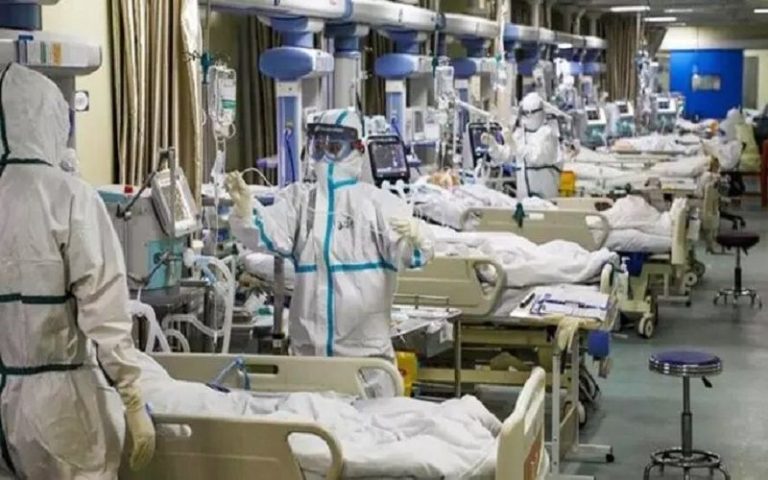
The state-run news agency Fars on August 31, 2021, wrote: “According to the current situation in which we are located, the number of patients and deaths due to the coronavirus delta strain has increased and medical staff and nurses are serving patients for 24 hours and physically nurses are exhausted and mentally threaten their depression.

“Since the beginning of the coronavirus outbreak, 100,000 nurses have been infected in the whole country, of which 30,000 are from Tehran. Also, 92 nurses have died of coronavirus since the beginning of the outbreak.”

Ebrahim Raisi’s Visit to Khuzestan Raises Suspicions

“For now, the head of state prefers to say only that we can solve problems and go on a provincial trip and visit. The fact is that these visits only prove to everyone that the head of state does not know the real situation in the country.” (Hamdeli, September 1, 2021)

The Iranian president Ebrahim Raisi flew across Iran last Friday to visit the city of Ahvaz in Khuzestan province, sparking suspicions of a PR stunt.

During his campaign in the run-up to the presidential elections in June, Raisi was insistent in getting the Iranian people on his side, mostly in a bid to curtail revolts. Since 2017, there have been a large number of nationwide uprisings, and the regime is constantly in fear of future popular revolts. As a result, phrases such as ‘reaching out to people’, ‘working with people’ and ‘talking to people’ were consistent features in Raisi’s campaign speeches.

Iranians, as well as political observers, still remember how Hashemi Rafsanjani, the former president after Khomeini’s death, called himself ‘the Builder-in-Chief’, trying to pose as the man-to-go for building up a nation that had lost several hundred thousand lives and more than 1 trillion in treasure to war with Iraq.

Looking at Raisi’s predecessors, they’ve all had their attempts at trying to manipulate Iranian citizens. Mohammad Khatami, who replaced Rafsanjani, was identified as ‘a reformist’ who tried his best to stifle the pleas for social and political freedom in Iran, while Mahmoud Ahmadinejad, who followed him, painted himself as ‘the man of the people’. Even Hassan Rouhani’s attempts to connect with society seemed to hit a nerve. As for Ebrahim Raisi himself, barely anyone respects him anymore.

By choosing the Khuzestan province, Raisi showed where the regime fears most that an uprising could be imminent.

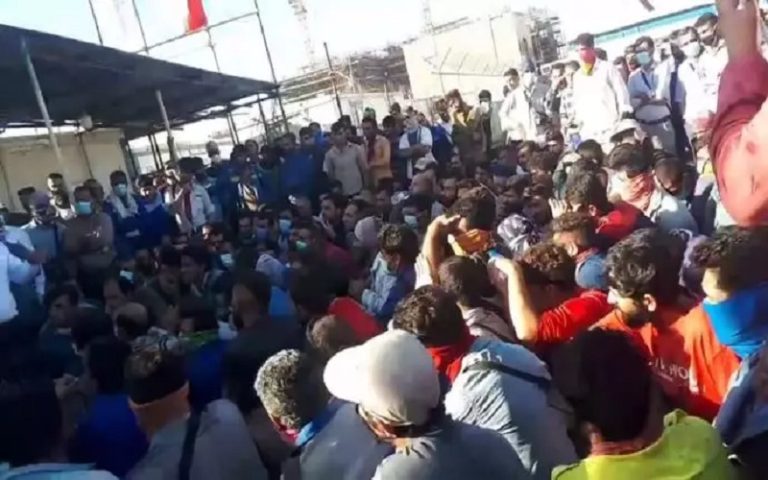
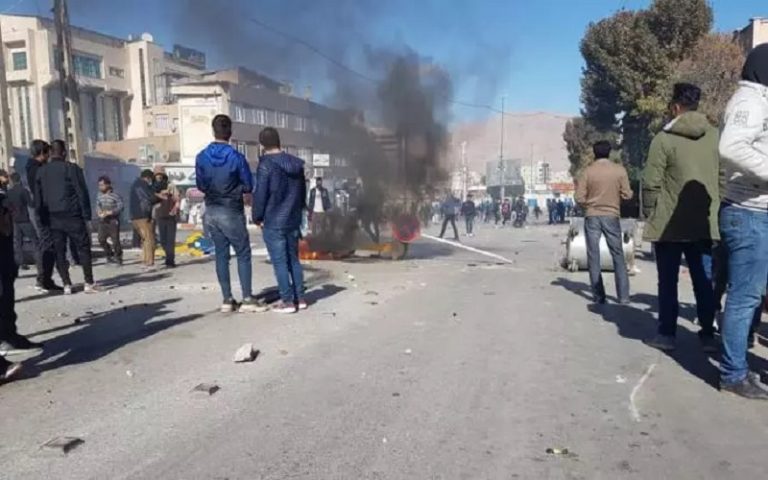
July of this year saw demonstrations taking place in cities across Khuzestan with protesters, who were extremely fed up with the power outages and water shortages, leading chants of ‘Death to Khamenei’. Protesters clashed with security forces at many of those protests, which resulted in the deaths of 12 people, hundreds injured, and many others being arrested and sent to the regime’s prisons.

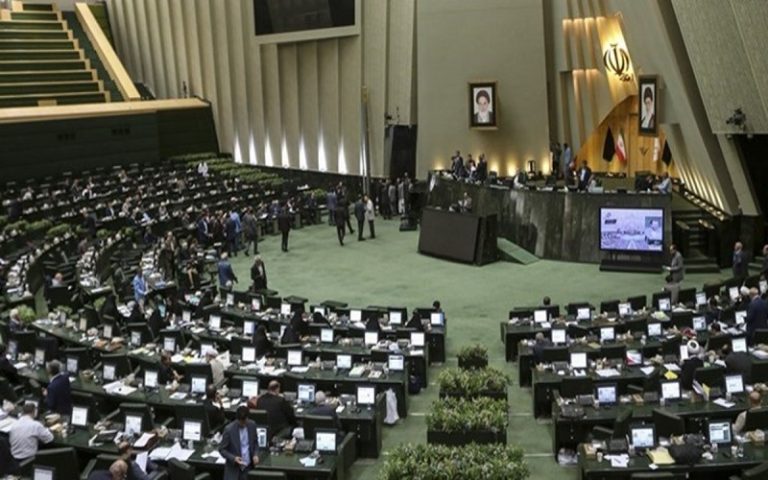
Reacting to Ebrahim Raisi’s visit to Khuzestan, a local member in the parliament called the trip “a show” and said that “these short, one-day trips will not solve Khuzestan’s problems” and called on the government to stop the practice.

In a post on the state-run website, Aftab News, there was a quote from MP Majid Naserinejad who said, “Problems such as sewage issues, unemployment, drought, the destruction of palm trees, etc. are problems which need constant attention and major decisions.”

Although not officially confirmed, reactions on social media indicated concerns about increasing pressure on the people of the province and the suppression of popular protests following the appointment.

Raisi, on his travels around the province, vowed that he would solve the unemployment problem that residents of Khuzestan are facing by expanding industries and agriculture opportunities. Upon leaving Khuzestan after his visit, he headed back to Tehran to take part in press activities, leaving behind the province that has been ravaged by droughts and poverty.

He didn’t explain why these problems exist and what he’d done through four decades of his tenure in the highest office of the country’s judicial system. Nor did he explain what his true plans are for the province. But if history is any guide, the future will prove that all his staging has been in vain.

Iran and Four Dimensions of Poverty

0

Institutional looting and corruption and the dominance of the Iranian government institutions over the country’s economy, as the regime’s parliament speaker Mohamad Bagher Ghalibaf has acknowledged, has led to prosperity for four percent of the country’s population and the expansion of poverty among the rest.

The result as expected is the growing class gap in Iran, as these days the state-run media have confessed. At the head of these marauding institutions are the institutions affiliated with the supreme leader Ali Khamenei’s office, which have monopolized a large part of the country’s economy and caused a class divide in the country.

Gholam-Hossein Mohseni Ejei, head of the judiciary, admitted this without naming the institutions and monopolies that created a class divide in the country: “Some monopolies in the country have created a class divide’ (Mehr News Agency, July 31, 2021).

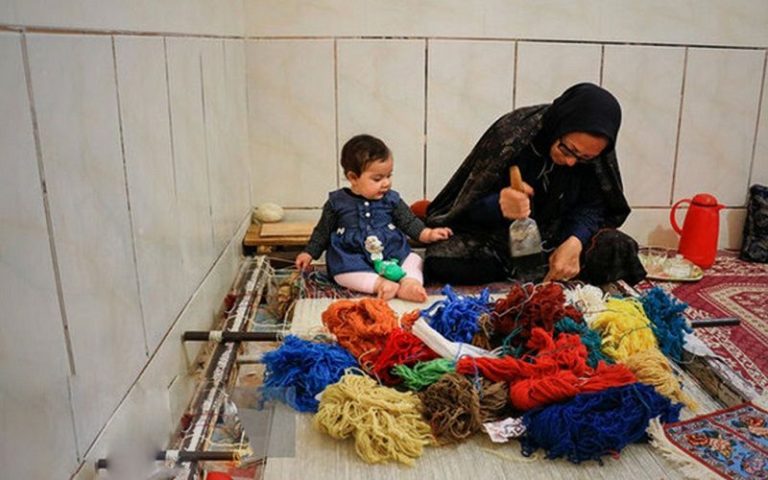
“The significant class gap in Iran is the monthly income of the tenth decile in the city of more than 70 million, and the income of the first decile in the village is only 500,000 Tomans per month,” the Khabar Fori Telegram Channel reported.

The income status of the poorest segments of society, especially the incomes of the lower strata in the villages, is so low that the Farhikhtegan newspaper wrote about it on August 28, 2021:

“The study of expenditure and income of households in the country shows that such similar cases have only been observed in critical years such as war and famine in the last 100 years. The situation is similar for rural households, and the cost-to-income ratio in the country’s villages has risen from 1.2 in 2010 to 0.8 in 2019, indicating a sharp drop in consumption. Studies of inequality indicators indicate deepening class differences. The main cause of income inequality for Iran’s economy exists in the same structural problems of the Iranian economy.”

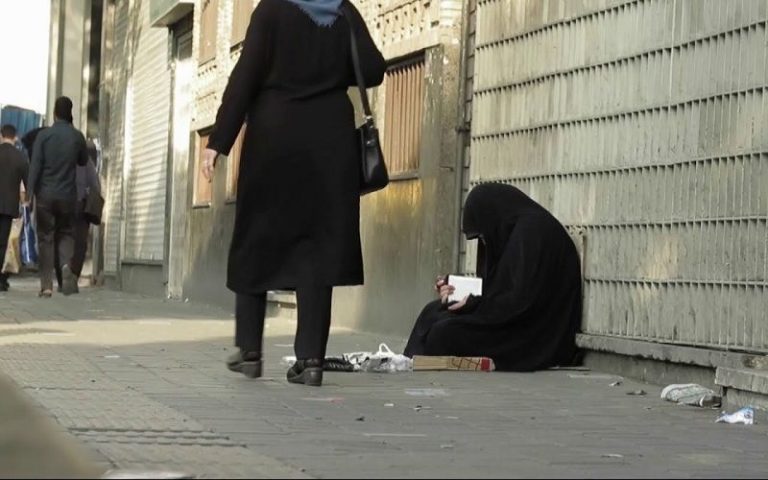
What this means is that people have reached the lowest point of the poverty line, the hunger line, and the survival line, which means that most people in society have reached a point where they are struggling for their survival. Currently, more than 60 percent of Iranians are on the hunger line and survival line.

In the face of rising inflation, unemployment, inequality, reduced per capita income and purchasing power of the people, and ultimately the shrinking livelihood basket, there is a highly affluent group dependent on the regime that has spent an average of 230,000 billion tomans to buy villas, a wealthy class that has spent $2.9 billion on luxury car imports over three years.

The average cost of importing a foreign car is equal to the annual living costs of 33,000 people in the outskirts of the cities.

The effects of increasing the class gap and widespread poverty in society are not only obvious in the economic context but also its destructive effects can be felt in wider areas.

“Today, poverty has a broader meaning of material poverty, including lack of access to safe water, nutrition, health services, education, clothing, and shelter, living standards, social insurance, and employment. Poverty can be defined in at least four dimensions: lack of economic, cultural, social and symbolic capital.” (Etemad daily, August 29, 2021)

The trend of ‘social damages,’ crises such as addiction, marginalization, theft, divorce, suicide, street violence, and assault, in the country is constantly increasing and the age of people involved in these crises is decreasing compared to past years. Suicide and domestic violence statistics have also grown, according to forensic statistics.

Iranian Regime Behind Iran’s Electricity Shortage Problems

Iran is continuing to experience blackouts and power outages across the national grid. Demonstrations over the outage in early July shocked the Iranian regime, with protesters in Tehran blaming the regime for the issues while chanting ‘Death to Khamenei’.

The outgoing Minister of Energy Ardakanian of Hassan Rouhani’s government said that the power outage was due to the premature warming of the air and the decrease in rainfall.

Mohammad Hassan Motavilizadeh, CEO of Tavanir, blamed the electricity shortages on a reduction in the volume of water in dam reservoirs which is affecting the production of hydropower. Another excuse, this time from the former Minister of energy, lay the blame on the extraction of cryptocurrency (bitcoin) for wasting electricity.

While cunningly apologizing to the people for the shortage, the mullahs’ now outgoing president Hassan Rouhani at the same time, mockingly stated that “China and America” have electricity problems too.

Figures suggest that the peak power consumption in Iran sits around 55 gigawatts (GW), while electricity generation statistics from the Ministry of Energy reveal that country’s capacity is over 85 GW. According to these numbers, shortages should not exist.

The first lie of the clerical regime is the actual production capacity, which in practice is a maximum of about 60 gigawatts.

Due to erosion and technical defects in the systems at thermal power plants, the generators often only run at partial production capacity, even though the plants supply up to 80% of the country’s electricity.

The mullahs’ second lie is about the consumption increase due to the seasonal heat. According to the outgoing Minister of Energy, the rise in temperature in May was 3 degrees compared to the previous year’s average.

Reports from the CEO of Ahwaz Power Distribution have said that even one degree of an increase in temperature will create an additional 300 megawatts (MW) of extra load during the production peak. By this logic, an increase of three degrees in the temperature would create less than one GW of overload.

The mullahs’ third lie is the high average household consumption. According to global statistics, Iran has an average per capita global consumption (about 3 kWh), which is lower than similar consumption in similar countries.

In a comparison of the annual electricity consumption across all sectors of industry in Iran, the share of household consumption sits at the lowest level, behind all the industry sectors.

The next lie is the outsized role of lack of rainfall. The amount of hydroelectric power generation is between 10 and 12 gigawatts, and the largest figure given by the regime, which is also likely to be exaggerated, is 14.5 gigawatts.

The lack of rain will supposedly cause a 40% drop in electricity production according to the government, but with these figures, the actual amount of deducted power is less than 6 GW, about one-tenth of the total output of electricity of the whole of Iran.

The country’s electricity transmission and distribution network are worn out due to lack of investment, so the rate of energy loss reaches an incredible 12%. In other words, about 10 gigawatts of the country’s electricity production is wasted simply due to the freak network condition.

The Purpose of the Baghdad Summit and Its Impact on the Iranian Government

0

The Baghdad Summit was held in the Iraqi capital on August 28, 2021, with the presence of the leaders and senior officials of the neighboring countries of Baghdad. Apart from the apparent reasons given for holding the summit, what is the nature and purpose of this summit?

The Middle East is brim with many crises and turbulences. Observers say that there are just a few moments and days that this crisis-prone region is not burning in the flames of wars, which is flaring from a corner of this region, no conflict arises between the two countries, and no serious challenges are posed to the region, governments, and people of the Middle East.

Occasionally there are meetings in this region between the countries who are trying to decrease their disagreements, while not every time the outcome is not zero but is not always perfect and the conflicts continue.

The issue of cooperation and dialogue between Saudi Arabia and the Iranian government has sometimes led Iraq, which is self the victim of the Iranian government’s intervention in the country, to host the two countries, east and south to its borders, and try out its chances for an agreement that could bring relative stability to Iraq which is damaged by the conflicts mainly executed by Iran’s regime.

Before the start of the Vienna talks on the Iranian government’s nuclear program, French president Emmanuel Macron said any new negotiations about the Iran nuclear deal (JCPOA) should include Saudi Arabia and other countries of the region.

“Saudi Arabia and its ally the United Arab Emirates have said that Gulf Arab states should be involved in any talks this time which they say should also address Iran’s ballistic missile program and its support for proxies around the Middle East.” (Reuters, January 29, 2021)

The Iranian government, in the name of the so-called Iraqi Initiative, met with Saudi Arabia in Baghdad to prevent Arab countries, from interfering in the Vienna talks and that the regime’s regional inference should not be included in new nuclear negotiations. This could and be a heavy impact on the Iranian government, as it is still strongly opposing it.

Aligned with the Vienna talks some secret and sometimes official meetings were held between Iran and Saudi Arabia without any specified result.

The Iranian government thought to have reached its desired goal, which was keeping the Arab countries away from the Vienna talks, did not show any serious desire to continue the talks which finally came to a standstill on June 20, which is continuing until now.

Now with the host of the Iraqi government and Iranian-Saudi talks have started again. The two countries met in Baghdad on August 28, along with other Iraqi neighbors, except Syria.

The Saudi Foreign Ministry and its Iranian counterpart also attended the Baghdad summit.

Iran’s Foreign Minister Hossein Amir Abdullahian, who attended the Baghdad meeting on behalf of the Iranian government, said the Iranian government is ready to develop bilateral and regional cooperation with Saudi Arabia.

It is worth mentioning that the Iraqi Foreign Minister had previously invited Ibrahim Raisi to attend the Baghdad Summit, but in the end, the Iranian Foreign Minister left for the Baghdad Summit.

Earlier, Iraqi officials said one of the main goals of the Baghdad summit was to improve relations between Tehran and Riyadh as regional rivals. Now, why Baghdad seeks to improve relations between Saudi Arabia and Iran is a question that needs to be considered.

There is no doubt that after the fall of the former Iraqi government, the Iranian regime has had very extensive interventions in Iraq, which have also spread to other countries such as Yemen, Lebanon, Syria, etc., endangering the interests of Saudi Arabia and the stability of all the countries in the Middle East.

Something that the regime is not paying its price but the people of Iran and the people of other countries.  So, countries like Iraq are looking for a way to end these proxy wars between Saudi Arabia and Tehran.

Saudi Arabia and the Iranian government have not had diplomatic relations for six years after the attack on the Saudi embassy and consulate in Tehran and Mashhad and have been waging a proxy war in Yemen.

Some time ago, it was thought that with the continuation of negotiations between Saudi Arabia and Tehran, representatives from Saudi Arabia would go to Tehran for the inauguration of the regime’s new president Ebrahim Raisi, but this does not happen, it seems that the level of talks and cooperation is still not developed and instable.

But another hidden goal of the Iranian government to attend the Baghdad summit can be considered the country’s concern about the Abraham Accord between Israel and Arab nations, which has caused concern to the Iranian government in recent years.

Certainly, Iran’s regional dialogues with Arab countries conflict with the Abraham Accord, and the strengthening of one of the two negotiations inherently undermines the other. The Iranian government’s participation in the Baghdad Summit can also be examined from this perspective.

Severe Shortage of COVID Medicine Is a Threat to Life for Iranians

Faces a rising number of Covid-19 cases and an overwhelming rate of deaths due to the pandemic, the Iranian regime continues to ban vaccine imports and hoard medicines meant to treat those afflicted.

Government officials have blamed medicine shortages on overcrowded pharmacies. The reality, however, is that hoarding by the drug mafia in Iran has prevented patients from accessing necessary medications.

According to a report from the IRNA news agency from August 15, at least 18 tons of the medication used to treat Covid-19 patients are awaiting clearance at the airport. The report, states that “more than four tons of raw materials for Favipiravir, 800 kilograms of Betadex raw materials and more than 13 tons of Remdesivir have been stored in the relevant cold storages.”

However, custom statistics have revealed that a shipment of 200,000 packages of 100mg syringes of Remdesivir remains stuck at customs, waiting for a decision from the Health Ministry as to when and where they’ll be distributed.

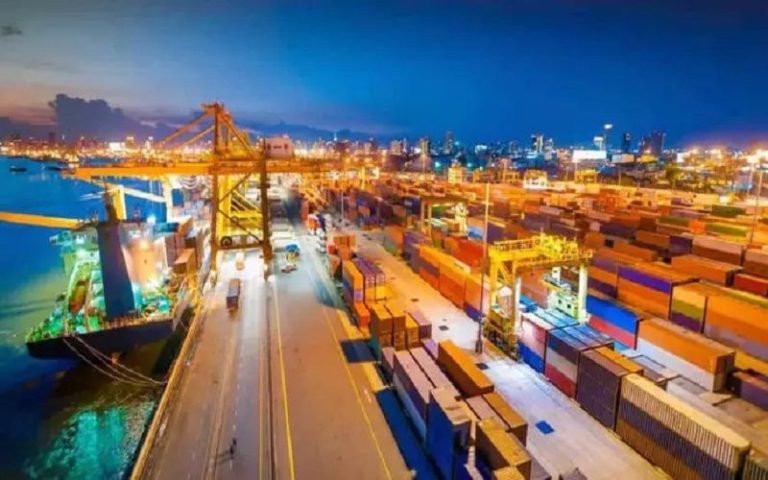
Also, in ports and docks, medicine is stored in large quantities. However, they become scarce and expensive in the market. One of the rare and expensive medicines is now the ones needed to treat black fungus caused by covid.

Jamejam online reported that Iran is facing a serious shortage of fungal infection medication, Amphotericin B. Due to an increase in cases of black fungus caused by Covid-19, demand for the drug in the Iranian market has risen dramatically.

While the drugs being used to treat covid patients are helping, the medication and corticosteroids they are being given have been found to have more side effects than Covid-19 itself. The head of Yas Hospital in Tehran said, “More than half of the deaths of covid patients are due to the side effects of the drugs that are prescribed.”

Mardomsalari, a state-run daily, wrote in their publication that the regime attempted to procure 60 million Sputnik vaccine doses. In the end, only 900,000 doses were imported into Iran, all of which were only given to ‘certain sections of the society.

From the very beginning of this pandemic, this entity opposed the import of vaccines and regularly promised to produce millions of doses of indigenous vaccines. It is now clear that these domestic vaccines are not very effective, and at the same time, the regime is plundering the Iranian people by storing drugs in customs and leaking them to the black market.

The Executive Headquarters of Khomeini’s Order is said to be Iran’s largest economic cartel. With the regime’s Supreme Leader, Ali Khamenei in control, and the regime’s First Vice President, Mohammad Mokhber supervising, the Order controls the production and import of pharmaceuticals.

Up to 96 percent of Iranians live below the poverty line and struggle daily to make ends meet. For these people, purchasing medicine has become impossible, leaving millions of Iranians fighting to survive during this terrible pandemic.

The people blame the regime and Khamenei for the current extremely critical situation, an issue that has recently prompted government officials to justify Khamenei’s orders to distance him from public anger and hatred.