Home Blog Page 9

Retirees Protest Across Iran Against Poverty, War, and Executions

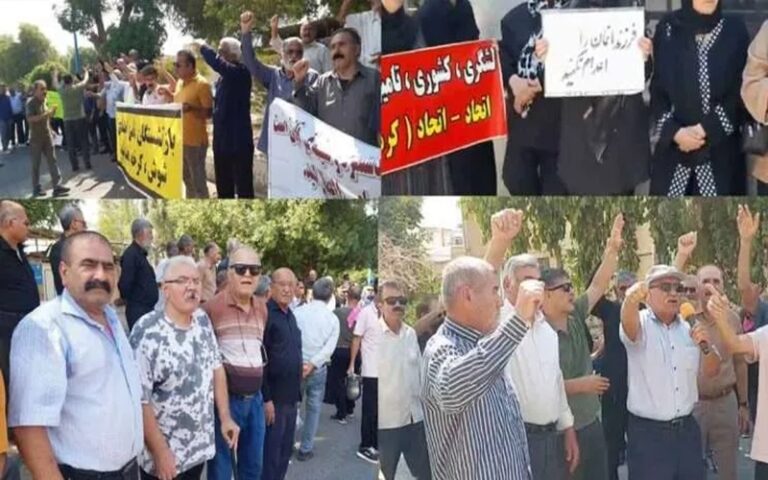
On Sunday, July 26, retirees covered by Iran’s Social Security Organization held simultaneous protest gatherings in Tehran, Ahvaz, Kermanshah, and Shush to demonstrate against deteriorating living conditions, rising inflation, soaring prices, declining purchasing power, inadequate healthcare, and what they described as the violation of their rights. In some cities, protesters also chanted slogans expressing opposition to warmongering, death sentences, and the arrest of labor and civil activists.

Tehran: “Our Salaries Are in Rials, Our Expenses Are in Dollars”

A group of Social Security retirees gathered outside the headquarters of the Social Security Organization in Tehran, protesting difficult economic conditions and the continuous decline in purchasing power while demanding that their grievances be addressed.

Protests Expand Across Iranian Cities, From Retirees and Workers to Students and Bakers

Chanting “Our salaries are in rials, our expenses are in dollars,” the protesters stressed that the constant rise in the prices of goods and services has created severe hardships for a large number of retirees.

Ahvaz: Protest Over Living Conditions in Extreme Heat

In Ahvaz, Social Security retirees also gathered outside the Khuzestan Provincial Social Security Office despite the extreme heat.

Protesting economic conditions, inflation, and living hardships, demonstrators chanted slogans including “Wealthy Iran, what has an incompetent official done to you?” and “Enough warmongering, our tables are empty.” They called for improved living conditions and pensions that reflect the actual cost of living.

Kermanshah: Protest Against War, Inflation, and Death Sentences

Social Security retirees in Kermanshah also gathered outside the city’s Social Security Office. In addition to protesting living conditions, inflation, war, and healthcare issues, they expressed support for prisoners sentenced to death.

Participants chanted slogans including “From Isfahan to Tehran, against the death sentence” and “Against the death sentence, we will stand until the end.”

The retirees also voiced their demands through slogans such as “Inflation, high prices, no to war and destruction,” “So much oppression and injustice has driven us into the streets,” “Unity, unity against poverty and corruption,” “Healthcare should be free, but it has become paid, my friends,”

“Imprisoned workers must be freed” and “Imprisoned teachers must be freed.”

Shush: Commitment to Continue Protests Until Demands Are Met

Social Security retirees in Shush also held a protest gathering, emphasizing that they would continue pursuing their labor-related and economic demands.

Chanting “Only in the streets will we win our rights,” the protesters declared that they would continue their demonstrations until their demands are fulfilled.

In their statement and slogans, the retirees in Shush presented a range of economic and social demands, including wage increases in line with the cost of living, controlling inflation and rising prices, creating employment opportunities, regulating housing rents, providing free education and healthcare, guaranteeing the right to protest and strike, releasing detained protesters, ending the security crackdown, combating corruption, eliminating discrimination, and ensuring the fair distribution of wealth

The simultaneous protests by retirees in four cities took place as demonstrations over living conditions, declining purchasing power, inflation, and rising prices have become an ongoing demand of retirees and other salaried groups across different cities in Iran in recent months.
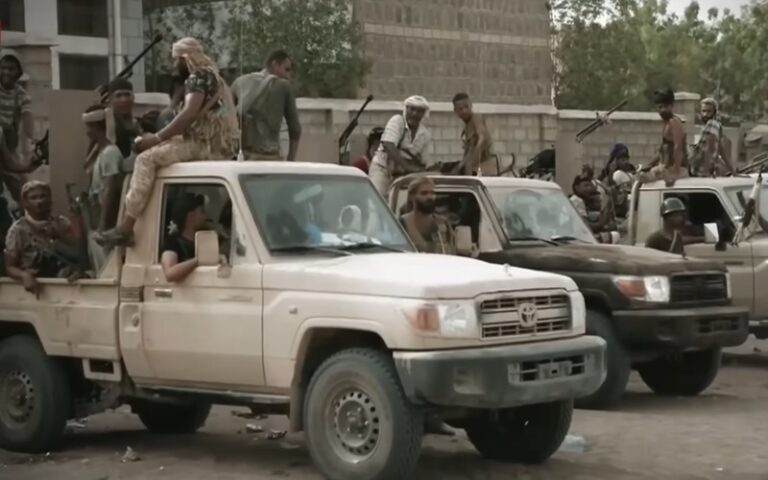
Saudi-Led Coalition Bombs Hodeidah Port Are in Escalation of Clashes with Tehran-Backed Houthis

Yemen’s Houthis announced on the morning of Saturday, July 25, that they had carried out a missile attack on Saudi Arabia, just hours after Saudi Arabia targeted the group’s positions in response to Houthi attacks on Saudi vessels.

The attacks came several days after the Iranian regime-backed Houthis announced the imposition of a “naval blockade” against Saudi Arabia and subsequently attacked two Saudi oil tankers in the Red Sea.

The escalation has heightened concerns about the opening of a new front in the regional conflict and further disruptions to global oil shipping routes.

The Houthi-affiliated Ansar Allah media outlet reported early Saturday that a “missile attack” had caused a fire in the city of Jizan in southern Saudi Arabia on the Red Sea coast.

Saudi Arabia has not yet confirmed the claim. However, the Saudi Civil Defense Authority briefly warned residents of Jizan and Yanbu early Saturday of a “potential danger” before canceling the alerts a few minutes later.

UK Designates Iran Regime’s IRGC as a Terrorist Organization

Similar warnings have been issued in the past when missiles or drones were launched toward Saudi Arabia.

The alleged Houthi attack came after the Saudi-led coalition announced on Friday that it had struck the group’s military positions in Yemen and destroyed targets that had been used to threaten commercial shipping.

The Houthis described the Saudi strikes as a “dangerous escalation” and warned that Riyadh’s actions “will not go unanswered.”

From Declaring a “Blockade” to Attacking Oil Tankers

The Houthis announced last Monday that they had imposed a “naval blockade” against Saudi Arabia, citing the principle of “an eye for an eye.”

The group described the move as a response to what it called Saudi Arabia’s “blockade” of Yemen over nearly the past 12 years.

In a radio broadcast directed at ships, the Houthis also warned that they would target vessels “belonging to the Saudi enemy” that failed to comply with the declared blockade.

The group also said early Thursday that it had targeted two Saudi oil tankers in the Red Sea.

Saudi Arabia confirmed that one vessel belonging to a Saudi company had been targeted. The Saudi Press Agency, citing an official from the country’s transport authority, reported that a ship was struck while sailing in the Red Sea. Its hull sustained minor damage, but it was able to continue its voyage.

U.S. President Donald Trump warned following the Houthi attacks that Washington would hold the Iranian regime responsible for any future attacks by the group and threatened both Iran and the Houthis with “military punishment” if the attacks continued.

Houthis: We Will Not Close the Bab al-Mandab Strait

Despite declaring a naval blockade against Saudi Arabia, the Houthis say they do not intend to completely halt ship traffic through the Bab al-Mandab Strait.

Mohammed Abdulsalam, the Houthi spokesperson and one of the group’s senior negotiators, said on Friday, July 24, “Contrary to what some claim, Bab al-Mandab has not been closed.”

He stressed that the blockade declared by the group targets “only the Saudi side.”

The statement came after several Iranian regime military officials, during and after the 40-day war with the United States and Israel, had threatened that the Houthis might intervene on Iran’s behalf and close the Bab al-Mandab Strait.

Despite the Houthis’ insistence that the strait remains open, the recent attacks have affected the behavior of shipping companies. According to Agence France-Presse (AFP), at least nine ships have changed course since the blockade against Saudi Arabia was announced.

Reuters also reported that the Houthi attacks forced several oil tankers to alter their routes and head north toward the Suez Canal. To reach Asia, these vessels would have to take the much longer route around Africa.

The Red Sea’s Growing Importance Amid Disruptions in the Strait of Hormuz

The escalating tensions in the Red Sea have become even more significant as oil tanker traffic through the Strait of Hormuz has declined sharply due to the war between Iran and the United States.

To reduce its dependence on the Strait of Hormuz, Saudi Arabia transports part of its oil by pipeline to the port of Yanbu on the Red Sea coast. As a result, the Red Sea route has played an increasingly important role in the kingdom’s oil exports in recent months.

Iranian Regime Replaces Essential Goods with Non-Essential Items in Subsidized Voucher Program

Peyman Falsafi, a member of the Iranian regime’s Majlis (parliament), said the government, instead of increasing the rial value of the electronic subsidy voucher, has expanded the number of eligible products from the original 11 items to dozens of products, to the point that even pizza cheese and, “in some places, bottled water is also offered.”

Falsafi, a member of the Majlis Agriculture Committee, told the state-run ILNA news agency on Saturday, July 25, that rising prices for red meat, chicken, and dairy products have forced some households to remove these goods from their shopping baskets, while non-essential items have taken a larger share of purchases made with the subsidy voucher.

The remarks come as the monthly voucher credit remains at 1 million tomans (10 million rials, approximately $5.20) per person. However, according to calculations based on official prices published by the Statistical Center of Iran, the cost of purchasing the program’s original basket of 11 essential goods had reached about 5.4 million tomans (54 million rials, approximately $28.40) per person in June.

Iran’s Economy on the Brink of Hyperinflation

As a result, the voucher’s value of 1 million tomans (10 million rials) now covers less than one-fifth of the cost of the same basket with which the program was originally launched.

Under the revised voucher program, which took effect in January, each person was allocated a monthly credit of 1 million tomans (10 million rials).

The original basket included 11 items, including rice, cooking oil, red meat, chicken, eggs, legumes, milk, yogurt, and cheese. The program’s stated objective was to help households maintain their purchasing power for essential goods.

Falsafi said the law does not specify a fixed number of products but instead emphasizes providing 2,640 calories of nutritional needs. He said the government initially selected 11 essential goods to meet that objective.

According to him, the range of eligible products has now expanded considerably, and by doing so the government has “avoided the real issue.”

He added that under such circumstances, a person who realizes the voucher credit is insufficient to buy meat may choose not to purchase it and instead spend the credit on other goods.

One Million Tomans Versus a Basket Costing at Least Five Million

According to calculations based on data from the Statistical Center of Iran, the cost of purchasing the voucher basket’s 11 main items for each person was about 4.58 million tomans (45.8 million rials) in March 2026. The figure rose to about 5.3 million tomans (53 million rials) in April and May, and to approximately 5.4 million tomans (54 million rials) in June.

This means that between March and June alone, the cost of the basket increased by nearly 18%, while the voucher credit of 1 million tomans (10 million rials) remained unchanged.

For a family of four, the monthly voucher credit amounts to 4 million tomans (40 million rials), while the cost of purchasing the full basket based on June prices exceeded 21 million tomans (210 million rials, approximately $110).

Price increases for some essential items have been significantly higher. According to data from the Statistical Center of Iran, compared with the previous month, prices in January rose by more than 77% for liquid cooking oil, nearly 79% for solid cooking oil, about 49% for eggs, more than 37% for imported rice, and 29% for chicken.

During the same month, cheese prices increased by more than 17%, beef and veal by 16%, lamb by about 15%, and milk by more than 11%.

Food prices continued to rise in subsequent months, and by March 2026 the prices of some items had increased several-fold compared with a year earlier. Annual price increases included about three-and-a-half times for solid cooking oil, more than three times for liquid cooking oil, and more than double for imported rice.

The head of the Majlis Dynamic Agriculture and Nomadic Affairs Caucus also pointed to another problem in implementing the program, saying that some stores have refused to provide goods to voucher holders because the government has not settled payments owed to them.

At the same time as the lawmaker’s remarks, the government announced on Saturday, July 25, 2026, that it currently has no plans to increase the value of the subsidy voucher.

Iranian Regime Official Killed While Preparing to Suppress Protests

0

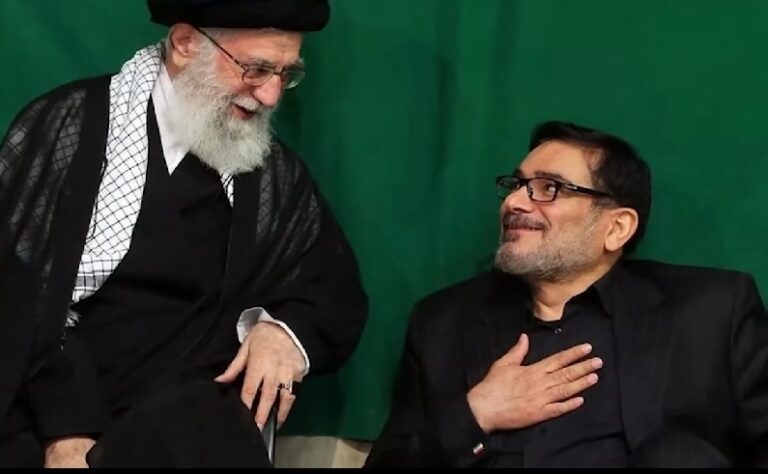
The state-run Nour News, a media outlet close to the slain Ali Shamkhani, revealed that the meeting in which he and several senior Iranian regime military commanders were killed on the first day of the 40-day war had been convened, among other purposes, to follow up on a new plan aimed at organizing forces and procuring new equipment to confront protests.

The outlet wrote on Friday, July 24, that one of the two agenda items for the morning meeting on February 28, 2026, was to follow up on the implementation of the plan for “organizing resources, structures, personnel, and procuring new equipment for managing unrest.” The second agenda item was reportedly to examine the imminent possibility of a U.S. and Israeli attack on Iran.

According to Nour News, the plan was drafted after the widespread January protests, and Ali Khamenei, the former supreme leader of the Iranian regime, had approved its implementation and emphasized accelerating its execution.

The report also states that Khamenei had instructed the Secretariat of the Defense Council and Ali Shamkhani personally, rather than the Supreme National Security Council, to oversee the implementation of the plan through to its execution.

EU Sanctions Hossein Shamkhani: A Blow to the Oil and Weapons Network of Iran’s Regime and Russia

Ali Shamkhani, who served as secretary of the Iranian regime’s Supreme National Security Council from 2013 to 2023, was appointed secretary of the newly established Defense Council after it was formed in 2025.

Nour News claimed that the purpose of the plan was to increase the preparedness of security and law enforcement forces to confront future protests with “the least possible damage and human casualties.”

During the January protests, Iran’s regime carried out the bloodiest crackdown on protests in its history through widespread internet shutdowns and the use of lethal force.

Human rights organizations, including Amnesty International, have documented the widespread use of live ammunition against protesters, and Iranian regime officials themselves confirmed that at least 3,117 people were killed during the protests. The real figure is estimated to be much higher.

In another part of its report, Nour News revealed for the first time that Shahid Meysami Industries, affiliated with the Iranian regime’s Ministry of Defense and targeted by Israel during the 12-day war, was responsible for designing and producing equipment used to control gatherings and protests.

According to Nour News, the facility’s primary mission was to develop tools that would enable the management of protests without the use of lethal weapons.

At the time of the attack on the facility, Iranian regime officials had provided no explanation as to why it had been targeted, and the nature of its activities had not been officially disclosed. This is the first time that a media outlet close to the regime has publicly described the facility’s mission.

The protests that began on December 28, 2025, initially erupted in response to the collapse of the rial’s value, inflation, and the cost-of-living crisis, and quickly spread to dozens of cities. Within a short time, protesters’ slogans began targeting the Iranian regime and Ali Khamenei personally.

Contrary to the official figures released by Iran’s regime regarding protesters killed, some human rights organizations estimated the death toll at between five thousand and six thousand people.

Like other Iranian regime media outlets and officials, Nour News also claimed that the January protests were part of a foreign plot and a prelude to a U.S. and Israeli military attack, even though Iranian regime officials have consistently blamed anti-government protests on foreign governments.

According to the Nour News report, the Defense Council’s subcommittee meeting, chaired by Shamkhani, was reviewing this plan as well as the possibility of an imminent U.S. and Israeli attack when the first wave of strikes in the 40-day war began.

Ali Shamkhani was killed on the morning of February 28 during that very meeting, along with several senior Iranian regime commanders, in a joint U.S.-Israeli attack.

Abbas Araghchi, the Iranian regime’s foreign minister, recently said that on February 28, when the joint Israeli-U.S. attack on Iran began, in addition to the office of Ali Khamenei, the offices of Ali Shamkhani, Mohammad Shirazi—both senior military officials—and Ali Asghar Hejazi, a senior security official and close aide to Khamenei, were also targeted. Of those targeted, only Hejazi survived.

Iran’s Regime Escalates Death Sentences and Pressure Against Political Prisoners

Iranian authorities have intensified their crackdown on individuals accused of links to the People’s Mojahedin Organization of Iran (PMOI/MEK), imposing lengthy prison sentences, issuing death threats, and expanding the use of capital punishment against political prisoners.

According to information released by the Secretariat of the National Council of Resistance of Iran (NCRI), five political prisoners currently held in Hall 37 of Ghezel Hesar Prison are being denied basic amenities while facing increasing judicial pressure. Several of the prisoners had previously been transferred from Fashafouyeh Prison to Ghezel Hesar in April 2026.

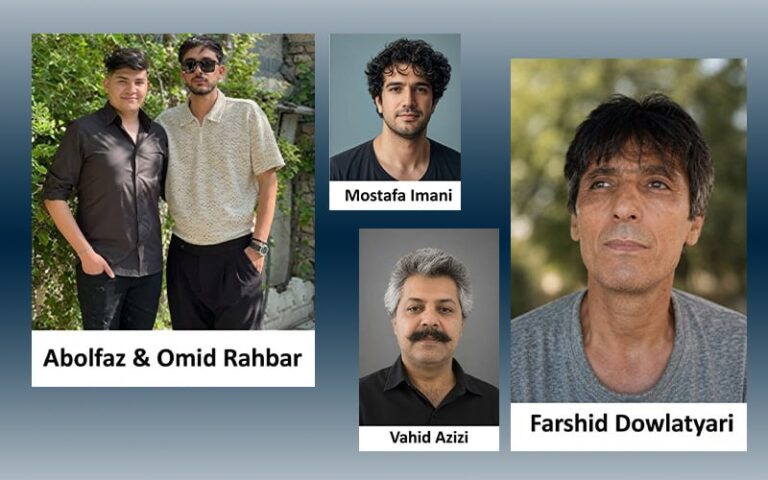
Among them are two young relatives accused of PMOI membership. Abolfazl Rahbar, a 23-year-old house painter, and his cousin Omid Rahbar, a 24-year-old laborer, were arrested in January 2026. They were recently informed verbally of prison sentences of 20 and 26 years, respectively.

Two other detainees in the same ward are reportedly facing explicit threats of execution. Vahid Azizi, a 42-year-old civil and groundwater engineer with a PhD, was arrested on January 6, 2026, during the nationwide protests and has since been threatened with the death penalty. Mostafa Imani, a 39-year-old writer and designer from Karaj who holds a master’s degree in art, was arrested on March 29, 2026, on charges related to alleged contact with and membership in the PMOI. Prosecutors have reportedly warned him that he could face execution.

The fifth prisoner, Farshid Dolatyari, a 41-year-old driver, has remained in detention since November 2025. According to the report, he has been subjected to sustained pressure while his legal status remains unresolved. In December 2025, the Ministry of Intelligence-affiliated Mehr News Agency published his photograph without identifying him by name, alleging that he had stockpiled weapons.

The reported cases come amid a broader escalation in the use of executions against political opponents. On July 22, authorities executed Mehdi Khanaki, a 26-year-old law graduate and PMOI member, following months of torture and a trial lacking due process. Khanaki had been arrested in February 2026 after participating in the nationwide protests.

The report states that approximately 2,400 people have been executed over the past year, including ten PMOI members. It also alleges that authorities have refused to return the bodies of some executed prisoners to their families.

The judiciary has also expanded the use of capital punishment against relatives of political dissidents. Amir Hassan Akbari-Monfared, a 22-year-old accounting student, was sentenced to death on charges of “rebellion.” The sentence was linked to his family relationship with a deceased PMOI member. His family had previously lost four relatives during executions in the 1980s.

In another case, PMOI supporter Arghavan Fallahi, 25, was sentenced to death on July 1, 2026, after what the report describes as months of physical and psychological torture.

There have been other cases in Rasht’s Lakan Prison, where several PMOI supporters have received death sentences following brief video hearings conducted without legal representation. Those named include Zahra Tabari, a 68-year-old electrical engineer; Yaghoub Derakhshan, 51, who reportedly underwent a retrial; and Amin Farahavar, a 38-year-old poet who was denied medical treatment for internal bleeding before being sentenced to death on charges of “enmity against God.”

The NCRI has called on the United Nations High Commissioner for Human Rights, the UN Human Rights Council, and the UN Special Rapporteur on the situation of human rights in Iran to intervene. The organization urged international bodies to press for the revocation of the reported death sentences and to dispatch an independent fact-finding mission to inspect prisons including Ghezel Hesar and Evin, citing concerns over the treatment and safety of political prisoners.

Thirteenth Day of the Hunger Strike By 1,500 Prisoners, Condition of the Strikers Is Critical

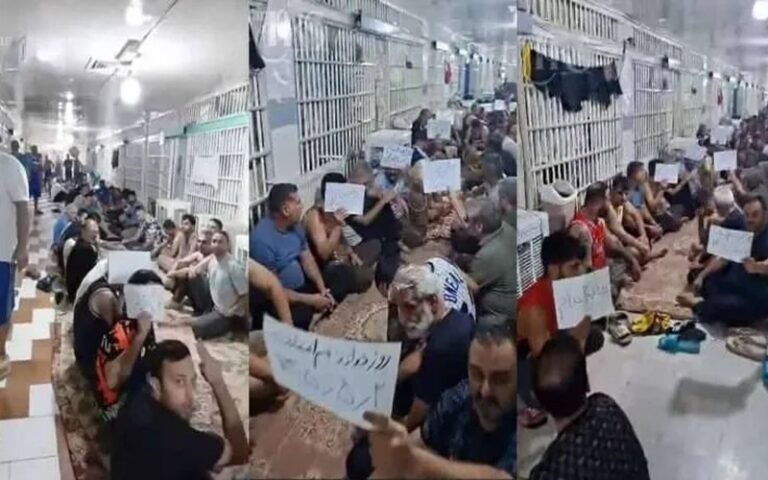
The collective hunger strike by around 1,500 death-row prisoners in Unit 2 of Ghezel Hesar Prison in Karaj entered its 13th day on Saturday, July 25. As the protest continues, a new video from inside the prison has been released, showing a number of prisoners holding signs reading “No to Execution” while reaffirming their determination to continue the hunger strike.

According to received reports, the strike continues in protest against the ongoing implementation of execution sentences and what the prisoners describe as the “intensification of executions.” The strikers are demanding an immediate halt to executions, respect for the right to life, and that the authorities address their demands.

The video released from Unit 2 of Ghezel Hesar Prison shows that despite nearly two weeks having passed since the hunger strike began, the prisoners remain steadfast in their demands and have declared that they will continue their hunger strike until their demands are addressed.

At the same time, reports from inside the prison indicate that the physical condition of many of the hunger strikers has significantly deteriorated. According to informed sources, the prolonged hunger strike has caused severe weakness, low blood pressure, weight loss, exhaustion, and physical incapacity among a number of prisoners, and some have lost a significant portion of their physical strength due to refusing food.

Collective Hunger Strike at Ghezel Hesar Prison Calls for Halt to Executions

One of the prisoners said about the conditions inside the prison that many of the hunger strikers are suffering from severe physical weakness after 13 days without food. However, despite the deterioration of their condition, no effective medical care has been provided so far.

According to these reports, officials at Ghezel Hesar Prison and the prison infirmary have so far taken no effective measures to examine or treat the hunger strikers. Informed sources say that despite the prisoners’ severe physical decline, no medical team has been dispatched to assess their health.

During the first days of the protest, images were also released showing a number of prisoners who had sewn their lips shut in an act of protest, an action that received widespread attention in the media and on social media.

Death Fatwa: Salman Rushdie’s Attacker Coordinated with an Individual in Iran

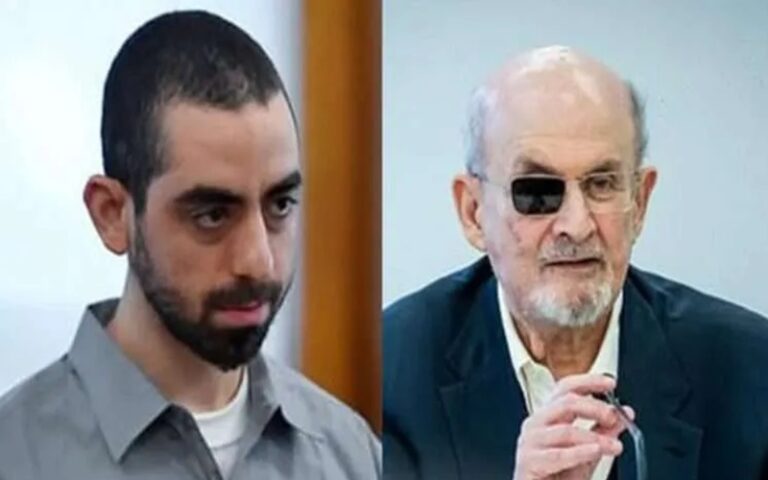
The attack on Salman Rushdie was carried out in connection with the death fatwa issued against him by Ruhollah Khomeini, the founder of Iran’s regime. A new report by The New York Times has revealed additional details about the attempted assassination of Rushdie. According to the report, prosecutors in the case against Hadi Matar allege that before carrying out the attack, he communicated with an individual in Iran identified as “Kamyar” and discussed implementing the death fatwa against the author. The allegation was presented during court proceedings and forms part of the evidence submitted by prosecutors.

Salman Rushdie Attacker Is an Agent of Hezbollah

New Details About the Death Fatwa

According to The New York Times, prosecutors said that in May 2022, Hadi Matar sent a message to an individual in Iran identified as “Kamyar.” According to prosecutors, Matar wrote that he knew Rushdie’s location but had questions about how to carry out the attack.

According to the same court documents, Matar also asked whether the death fatwa against Salman Rushdie remained valid. Prosecutors say that after the individual assured him the fatwa was still in effect, Matar decided to carry out the attack. These allegations were presented as part of the prosecution’s evidence and legal arguments in court, and The New York Times based its report on those filings.

The Attack on Salman Rushdie

On August 12, 2022, Salman Rushdie was stabbed while preparing to speak at the Chautauqua Institution in New York State. Hadi Matar rushed onto the stage and attacked the author, stabbing him multiple times.

Rushdie was seriously injured in the attack. He lost the sight in one eye, and the nerves in one of his hands sustained severe damage. Security personnel at the scene immediately detained the attacker, and criminal proceedings were subsequently initiated.

Background of the Death Fatwa

The origins of the case date back to 1989. Following the publication of The Satanic Verses, Ruhollah Khomeini, the then leader of Iran’s regime, issued a fatwa calling for the killing of Salman Rushdie and the publishers who knowingly disseminated the book. Since then, the death fatwa has remained one of the most controversial issues in relations between Iran and Western countries and has repeatedly drawn international attention over the decades.

The recent New York Times report has once again brought the issue into the spotlight. Prosecutors believe the alleged communication between Hadi Matar and an individual in Iran may shed light on the planning of the attack. However, these allegations have been presented as part of the ongoing judicial proceedings, and it is up to the court to evaluate the evidence and determine their validity.

The release of these details, as judicial proceedings continue, has once again placed the attempted assassination of Salman Rushdie and the consequences of the death fatwa at the center of international media attention.

Why Bandar Abbas and Chabahar Have Become Central to Military Developments

In Iran, the southern ports occupy a position that extends beyond their role as commercial hubs due to their unique geographic location. Situated along the Strait of Hormuz, the Gulf of Oman, and major global shipping routes, Bandar Abbas and Chabahar have become two strategically sensitive points in the region’s economic and geopolitical landscape.

However, the importance of these two ports is not the same. Bandar Abbas—particularly Shahid Rajaee Port—is the current heart of Iran’s trade, while Chabahar is viewed more as a long-term geopolitical asset. As a result, any disruption at either location could have consequences far beyond localized damage, affecting trade, industrial production, transportation, and the livelihoods of millions of people.

Bandar Abbas Explosion Exposes Regime’s Deadly Cover-Up

Bandar Abbas: The Main Gateway for Iran’s Foreign Trade

Bandar Abbas consists of several port facilities, the most important of which is Shahid Rajaee Port. According to statistics published by port authorities and maritime transport studies, approximately 85% to 90% of Iran’s container operations are handled at Shahid Rajaee Port. The port processes more than 81 million metric tons of cargo annually, and more than 50% of Iran’s maritime trade depends on it.

Trade estimates indicate that goods worth tens of billions of dollars pass through this route each year. Bandar Abbas alone accounts for an estimated $29 billion in Iran’s foreign trade.

The significance of these figures becomes even clearer considering that a large share of the goods essential to Iran’s economy enter the country through this route:

Basic commodities and food products, raw materials for factories, industrial machinery, automobile parts, electronic equipment, chemicals, and agricultural and livestock inputs.

Bandar Abbas is also one of Iran’s principal export gateways. Petrochemical products, steel, cement, minerals, bitumen, agricultural products, and manufactured goods are among the items shipped to international markets through this port.

Chabahar: A Smaller Port with Strategic Importance

Compared with Bandar Abbas, Chabahar handles a much smaller volume of trade. According to available statistics, the port processes around 4 million metric tons of cargo annually and accounts for approximately 2% of Iran’s maritime trade. Its share of Iran’s container traffic is estimated at between 3% and 5%.

Crisis of Unpaid Wages for Workers in Southern Iran Amid Escalating War Conditions

Chabahar is Iran’s only oceanic port, meaning it is the country’s only port with direct access to the Indian Ocean and is located outside the Strait of Hormuz.

Chabahar is a key component of the International North–South Transport Corridor (INSTC), a trade route designed to connect India, Iran, Russia, and Central Asian countries through integrated maritime, rail, and road networks.

From Port Disruptions to a Livelihood Crisis

Truck drivers, transportation companies, freight terminals, repair shops, tire and spare parts suppliers, roadside service providers, and hundreds of related businesses all depend on the uninterrupted flow of trade.

Approximately 450,000 road freight drivers are active in Iran. Including their families and related occupations, the livelihoods of several million people depend on the continued functioning of this economic chain.

Therefore, reduced activity at Iran’s southern ports could trigger a domino effect:

The consequences extend far beyond the transportation sector. Delays in the arrival of industrial raw materials reduce production, while higher transportation costs ultimately increase prices for consumers.

In an economy already struggling with inflation, declining purchasing power, and production challenges, such a shock could significantly increase social pressure.

Economic Crisis: A Challenge Beyond War and Trade

Disruptions to critical infrastructure typically create more than just an economic crisis; they can also evolve into a broader social crisis.

When people directly experience rising prices, declining incomes, and fewer employment opportunities, questions about the origins of the crisis and responsibility for political decisions inevitably become more pronounced.

Under such circumstances, the Iranian regime’s efforts to turn an external crisis into a source of domestic unity may face significant challenges, as public support depends on the perception that the costs of the crisis are shared fairly and that political decisions serve the public interest.

For this reason, the military developments surrounding Iran’s southern ports cannot be viewed solely as a military or commercial issue. They lie at the intersection of the country’s economy, security, and political future. It is possible that any effort by Mojtaba Khamenei—the son of Iranian regime supreme leader Ali Khamenei—to initiate another military confrontation may prove ineffective in the face of the opposing side’s strategy from the outset. Nevertheless, developments in the coming days and weeks will need to be monitored closely.

UN Fact-Finding Mission Urges Immediate Halt to Executions in Iran’s Alikhani Square Case

In a statement, the United Nations Independent International Fact-Finding Mission on Iran urged Iran’s regime to immediately stop carrying out the death sentences of defendants in the case known as the “Alikhani Square” case in the city of Isfahan.

The mission said on Thursday, July 23, that according to credible information it has received, the families of at least two more individuals sentenced in this case have been summoned for final visits, raising concerns that the executions may be imminent.

Iran’s ‘No to Executions Tuesdays’ Campaign Marks130th Week

The “Alikhani Square” case is related to the January protests in Isfahan. Earlier, the Committee for Following Up on the Situation of Detainees in Iran reported that Iran’s Supreme Court had upheld the death sentences of 12 detainees in this case. One week after that announcement, two of those sentenced, Golmohammad Mohammadi and Erfan Esfandiari, were executed.

The UN fact-finding mission also expressed concern over the accelerating pace of executions of protesters in Iran and called on officials of Iran’s regime to refrain from carrying out these death sentences.

The mission had previously warned that during periods of social and political unrest in Iran, the issuance and implementation of death sentences intensify and that capital punishment is used as a tool to instill fear, suppress dissent, and retaliate against protesters.

Death Sentence Issued for Iranian Political Prisoner Amirhassan Monfared

Amirhossein Akbari Monfared, a 27-year-old political prisoner held in Tehran’s Evin Prison, has been sentenced to death by Judge Abolghasem Salavati on the charge of baghi (armed rebellion against the state).

According to the ruling issued by Branch 15 of the Tehran Revolutionary Court, presided over by Judge Abolghasem Salavati, and served to Akbari Monfared two days ago, he was sentenced to death on the charge of baghi through membership in the People’s Mojahedin Organization of Iran (PMOI/MEK).

The prisoner is currently being held in Evin Prison and was tried before the same court several weeks ago.

Amirhasan Akbari Monfared, along with his father, Mohammad Akbari Monfared, and his brother and sister, Amirhossein and Zeinab Akbari Monfared, were arrested by agents of the Iranian regime’s Intelligence Department in Karaj during the winter of 2025. The other three family members were later released on bail.

So far, no information has been made available regarding the details of the security-related charges brought against the other members of the family.

Mohammad Akbari Monfared, born in 1968, Amirhossein Akbari Monfared, 33, Zeinab Akbari Monfared, 30, and Amirhasan Akbari Monfared, 27, are residents of Karaj.