


 Baltimore Sun: The plight of the organized resistance to the regime in Iran, particularly the violent persecution of the group known as the Mujahedeen e-Khalq (MEK/PMOI), has been one of the great, untold stories in international politics. It is a story of deadly betrayal, broken promises and political expediency. And that’s just on the U.S. side.
America’s bungled relationship with the MEK/PMOI has led to missed opportunities and humanitarian catastrophe
Baltimore Sun
By Mitchell Reiss
The plight of the organized resistance to the regime in Iran, particularly the violent persecution of the group known as the Mujahedeen e-Khalq (MEK/PMOI), has been one of the great, untold stories in international politics. It is a story of deadly betrayal, broken promises and political expediency. And that’s just on the U.S. side.
Over several decades, the group was opposed to the corrupt military dictatorship of the Shah and was instrumental in the revolution that saw the end to monarchy in Iran. It also revealed Iran’s 20-year clandestine nuclear weapons program, which prompted the International Atomic Energy Administration’s inspection regime and the United Nations Security Council resolutions. And it provided invaluable, actionable intelligence to the coalition forces in Iraq about Tehran’s nefarious activities there. It is today dedicated to a secular, democratic and non-nuclear republic in Iran.
None of which is thanks to U.S. encouragement. Quite the opposite.
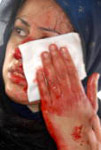
In 1997, the Clinton administration put the group on the U.S. government’s list of “Foreign Terrorist Organizations” as a sop to Iranian clerics who promised nuclear negotiations that never materialized. Since then, the group’s members have been in a bizarre, Kafkaesque netherworld where they remain to this day, just as the moment of danger in U.S.-Iran relations reaches its apex. They are people without a country, living in an abandoned U.S. military base near Baghdad, Iraq, awaiting an evacuation they were promised by the U.S. government a decade ago. They are still mercilessly hunted and murdered by Iran: Two massacres during their long internment in Iraq killed and wounded hundreds of MEK/PMOI members, and a deadly rocket strike several months ago shows they remain in lethal harm’s way.
“The Mujahedin-E Khalq: Shackled by a Twisted History,” a new monograph by Ambassador Lincoln Bloomfield, a former top U.S. arms negotiator and diplomat, attempts to explain this tortured story. Through firsthand interviews with MEK/PMOI members and access to senior U.S. policymakers past and present, Mr. Bloomfield paints a picture of willful ignorance and malign neglect on the part of the U.S. government and the mainstream media that has left a viable U.S. ally sidelined and vulnerable to extermination.
How did America get into such a humanitarian quagmire, one that serves neither its values nor interests in one of the world’s most dangerous confrontations?
Mr. Bloomfield offers an elegantly simple answer: laziness. It was easier for the U.S. government to put the group on the terrorist list than to confront Iran about its abuse of dissidents or to demand talks with no strings attached. It was easier for subsequent administrations to kick the can and ignore the oncoming humanitarian catastrophe for the group in Iraq, even as the MEK/PMOI were making brave contributions to U.S. security. It was easier for the media to take the spoon-fed line that the group was not a “viable” opposition group or worse, was a fringe “cult,” than to dedicate resources to getting to a more complex truth that challenges the regime’s preferred narrative.
Even the belated decision by the U.S. State Department to “delist” the MEK/PMOI from the terrorist list last year was, in effect, an act of laziness. It took a demand by a U.S. federal court, based on its assessment that the group did not meet the congressionally required criteria for the designation, to get the government to move.
Mr. Bloomfield’s book raises painful questions about the limits of (and the public’s tolerance for) the dark dealings of realpolitik in an age of near total transparency. That the MEK/PMOI was so visibly used as leverage by the U.S. to keep Iran at the negotiating table, and so callously bled of vital intelligence, then left to die in a desert after promises of protection, exposes a cruelty at the heart of U.S. statecraft across administrations both Democratic and Republican. At a minimum, the reality of the MEK/PMOI’s plight should send a chill through any other foreign groups considering risking their lives to help the U.S. or to demonstrably share our values.
Mr. Bloomfield’s book leaves open the last chapter of the MEK/PMOI’s tortured history. At this writing, the group remains huddled in an ill-equipped and unprotected facility in Iraq called, ironically, Camp Liberty.
Mitchell Reiss is president of Washington College in Maryland. He served as director of policy planning staff at the U.S. State Department under Secretary Colin Powell.


