


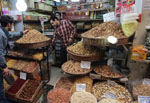
 Fortune: Massive cuts to Iran’s generous subsidy regime could lead to significant popular unrest in the country in the coming weeks and months. The cuts, which coincide with the first day of the Iranian calendar, are necessary in order for the government to close the huge revenue gap.
Sanctions-induced subsidy cuts have sent prices skyrocketing, which could push Iran to work faster to resolve its nuclear issues with the West.
By Cyrus Sanati
FORTUNE — Massive cuts to Iran’s generous subsidy regime could lead to significant popular unrest in the country in the coming weeks and months.
The cuts, which coincide with the first day of the Iranian calendar, are necessary in order for the government to close the huge revenue gap brought on by the ratcheting up of international sanctions by the West. The potential unrest could push the Mullahs to work faster to resolve its nuclear issues with the West and finally focus on improving economic opportunity for their downtrodden citizens.
The Persian New Year, Nowruz, is supposed to be a happy time for Iranians. The holiday, which coincides with the vernal equinox, the first day of spring, signifies rebirth and good fortune. After years of trying to repress the pre-Islamic holiday, the Mullahs in power in Tehran have finally embraced it. Iran’s new President, Hassan Rouhani, even tweeted out a new year’s greeting on Thursday, wishing Iranians all over the world a happy and prosperous new year.
MORE: Bill Clinton on leadership
But for many Iranians, the year 1393 is starting out pretty, well, poorly. Overnight, prices across the country jumped sharply as government subsidies started rolling off. Over the coming days and weeks, gasoline prices are expected to triple while flour prices may double. Electricity prices will go up by 25% while water prices are expected to rise by 20%.
That’s not all. The government is soon expected to introduce a new “means” test for the 90% of Iranians who receive monthly welfare checks from the state. Tehran is hoping to eliminate payments to millions of people they believe don’t need the 450,000 rials ($18) per month handed out, which is costing the government somewhere around $50 billion a year and fueling inflation, which is now running around 37% per year.
This is all part of a plan by Iran’s government to eliminate some 630 trillion rials ($25 billion) worth of subsidies from this year’s budget. The subsidies, which make up some 25% of the total Iranian state budget of $400 billion, has simply become impossible to sustain as tighter Western sanctions have made it very difficult for the government to export oil like they used to. Overall, Iran’s oil exports have been cut in half, to 1 million barrels per day, due to the sanctions. This deprived the Iranian government of around nearly $100 billion of hard currency last year.
The Iranian government decreased subsidies by a similar degree in 2007 and 2010. In both cases, riots and protests broke out in Tehran’s streets, some rivaling those that occurred during 2009’s “Green Revolution,” when the city’s middle class objected to the election results that gave then-President Mahmoud Ahmadinejad another term in office. The opposition movements were eventually crushed by the Islamic Republic, but they served as reminders to the Mullahs that there are limits to what they can do.
It is unclear how Iranians will react to the new price increases. They have already endured years of economic misery, but the last two years have been especially painful. The most recent round of sanctions has caused inflation to skyrocket, wiping out people’s savings and bringing foreign direct investment to a screeching halt. As a result, Iran experienced a whopping 5% contraction in GDP last year. The Central Bank of Iran said last August that only 32% of the country’s population was economically active — an extremely low figure. Meanwhile, the government says unemployment is at 15%, but it is really probably around 30% or higher.
MORE: Harvard B-school dips its toe into online education
When you combine a relatively young population with this much economic pain, unrest is almost inevitable. Ayatollah Ali Khamenei, Iran’s primary authority figure, warned that forgetting about the poor is “un-Islamic,” which is “Mullah speak” for, “could cause us some trouble.” President Rouhani tried to head off any possible trouble by handing out free food to Iranians earlier last month. But the long lines and poor quality food angered people who were used to getting a fat Nowruz check from the government. President Rouhani apologized for the debacle and set up 400 price-controlled markets where people could shop as they wish.
Eventually, though, those special markets will close and Iranians will have to get used to making ends meet with the new prices. While some goods will still be heavily subsidized, several will soon be out of reach for many Iranians, especially foreign goods. The West will undoubtedly use the economic turmoil as leverage in their negotiations with Tehran over its nuclear program. In his annual Nowruz address, President Obama spoke of his desire to open a new chapter between the U.S. and the Iranian people this year.
In the end, as the noose around Iran’s economy grows tighter, the Mullahs will be forced to decide which is more important — nukes or their necks.


