

Regime Authorities Prevent Students From Entering Tehran Polytechnic University
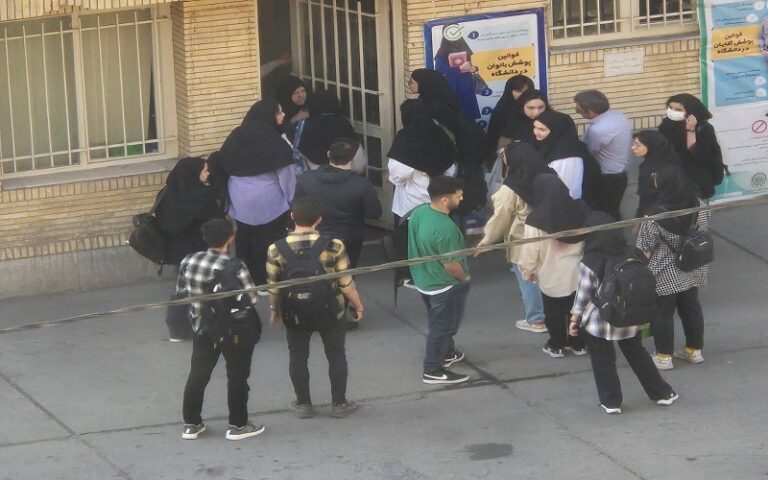
Simultaneously with the implementation of the “Noor Plan” in Iran, which started on Saturday, April 20, to deal with society’s resistance to hijab, student media reported intensified crackdowns on students under the pretext of not having “appropriate hijab.”
The Amir Kabir newsletter reported that from the early hours of Saturday, crackdowns on Amir Kabir students have reached their highest level in the past ten years.
It has been announced that only at one entrance, more than 20 students were prevented from entering due to what is considered “inappropriate clothing,” and similar situations have been reported at other entrances of the university.
The Amir Kabir newsletter stated that Amir Kabir security agents force female students deemed to have “inappropriate clothing” to wear a chador before being permitted to enter the university.
Earlier on April 10, reports from Al-Zahra University indicated an “increase in campus security” and the installation of “facial recognition cameras” at the entrance and exit of the university in Tehran.
Furthermore, threatening text messages regarding hijab compliance have been sent to students of Malayer University (western Iran).
Pressure on students in Iran has intensified since the nationwide protests of 2022 to the extent that student news sources reported in late September 2023 the establishment of “hijab patrols (morality police)” at Tehran University and the obligation for students to wear “full hijab and long mantles” down to “below the knee.”
On the other hand, the bill passed by the parliament under the title of “Chastity and Hijab” also emphasizes that a “database of students” should be made available to the State Security Forces to identify individuals who violate hijab standards.
In this regard, on September 20, 2023, the latest “Executive Code of Conduct and Professional Attire” for medical students and interns for the academic year 2024-2023 was published.
The code stipulated that “any short or tight clothing, open-front mantles, silk fabric, lace, or attire revealing the body is prohibited.”
It also emphasized that one must be covered with a “long cloak (to below the shoulders) of appropriate thickness covering all hair and the neckline of the garment.” The use of thin and short scarves, shawls alone, or hair protruding from the front or back of the cloak is also “prohibited.”
The code also stressed that “nail extensions” and any makeup or nail polish that “attracts the attention” of others are prohibited.
Iran’s Regime Very Close to Producing Nuclear Bombs, IAEA Director Warns
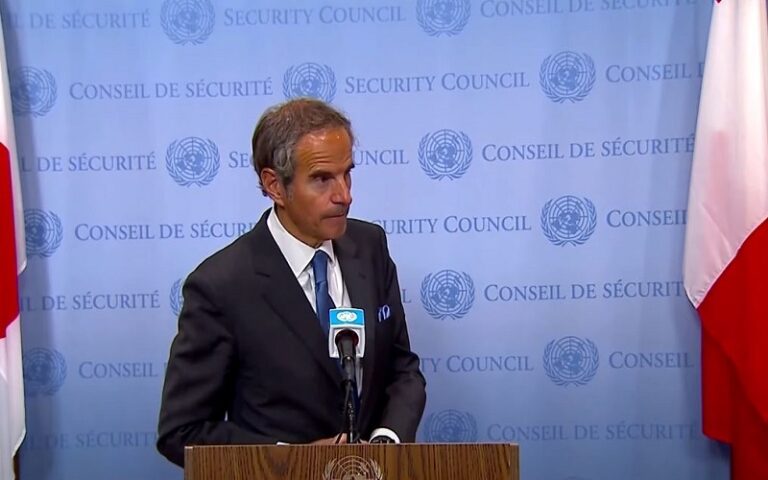
Rafael Grossi, Director General of the International Atomic Energy Agency (IAEA), told Germany’s state-run network ARD television network in Vienna that since the failure of nuclear negotiations, Iran has significantly approached nuclear bomb production.
He announced that no country without an atomic bomb enriches uranium to 60%, adding that Iran has produced enriched uranium in volumes beyond what is needed for nuclear bomb production.
In this conversation published on April 19, he noted that while 90% enrichment is necessary for a nuclear bomb, technically 60% is almost the same as 90%.
The Director General of the IAEA emphasized that the international community must do everything to prevent Iran from this.
Rafael Grossi had previously stated that the Iranian regime is increasing its nuclear capabilities, and although the IAEA is carrying out inspections, these inspections are not sufficient.
Grossi announced on Monday, April 15, the temporary suspension of inspections of Iran’s facilities due to concerns about Israel’s retaliatory attacks on Iran’s nuclear facilities and said these inspections would resume on Tuesday.
In an interview with PBS on March 29, Grossi emphasized that Iran’s regime’s tendency towards maximum enrichment is worrying, although Iran’s nuclear program is very complex and has various aspects.
Rafael Grossi highlighted that inspectors of the agency should be able to carry out their inspection duties with full authority, but currently inspections are not being conducted to the extent and depth required by the nature of the atomic program.
Grossi also said that he has warned Iranian authorities to restart the inspection process from scratch.
He expressed concern and warned that the agency is the only point of contact trying to bring the parties closer together and report on what is happening there. Grossi emphasized that the IAEA is diligently following the case and expects ‘negotiation and diplomacy’ to get involved.
On March 7, the United States warned the Iranian government that the continuation of “stonewalling” regarding cooperation with the International Atomic Energy Agency sets the stage for further action by the IAEA Board of Governors, including the possibility of issuing more resolutions against Tehran.
In the quarterly meeting of the Board of Governors attended by 35 members, the United States asked the Iranian regime to cooperate with the agency’s inspectors, who have long demanded explanations from the Iranian government about the origin of uranium particles at some undeclared sites.
Iranian Women’s Resistance: Beyond the Veil of Hijab Enforcement
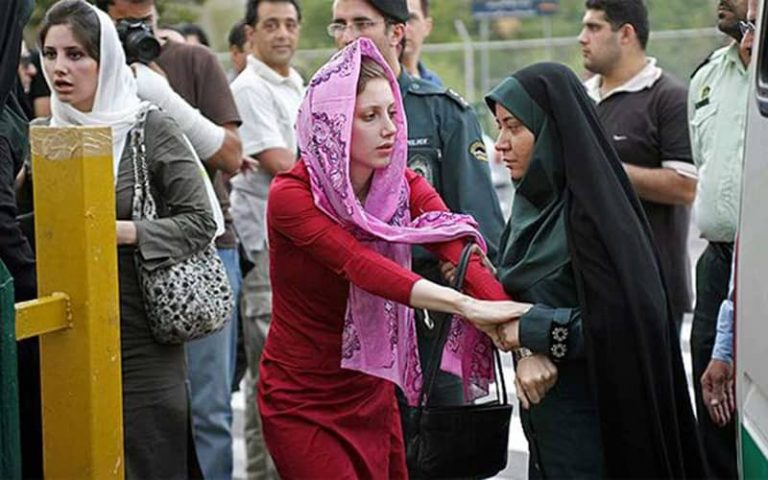
These days streets and alleys of Iran are witnessing the harassment and persecution of women by police patrols under the pretext of hijab. TheState Security Forces (SSF) arrest and disrespect Iranian women, and in some cases, violently apprehend them for not wearing hijab.
Reports indicate violent encounters by the government to detain women under the pretext of improper hijab in Iranian cities. During arrests, SSF use many plain clothes agents to prevent people from rescuing women.
Furthermore, SSF troops take women into police vans, and expose them to sexual insults, violence, assault, and harassment.
When the regime’s supreme leader, Ali Khamenei, appointed Ebrahim Raisi as president in March 2021, he had a specific goal in mind: the survival of the regime through contraction in foreign policy and increased internal suppression. Khamenei chose Raisi, who has been involved in all the crimes of this regime, including the mass execution of political prisoners in 1988, as the best option to advance this policy.
The Iranian regime faced a nationwide uprising by the people in 2022, where women and girls played a leading role in organizing and directing scenes.
The protests began with the death of 22-year-old Mahsa Amini. The regime’s morality police arrested her on September 13, 2022, for allegedly improperly wearing a hijab, the mandatory head covering imposed upon Iran’s women. Two hours after her arrest, she was taken to a hospital where, three days later, she succumbed to skull injuries that had been sustained during her detention.
Khamenei and the Revolutionary Guards are not particularly concerned about the end of the 2022 uprising; they are more concerned about how to return the situation to its previous balance to distance themselves from the uprising.
Launching the war in Gaza was part of this survival strategy for Khamenei. However, in practice, we saw the equation reversed, and he found himself trapped. Therefore, Khamenei sees no solution other than expanding the scope of suppression once again.
Women and girls in Iran play a leading role in the struggle against the regime because they are disproportionately subjected to religious dictatorship and intimidation.
A religious dictatorship thrives only by creating fear and terror.
Khamenei recently issued orders to suppress, under the pretext of combating “religious deviation,” to a force called “Enjoining Good and Forbidding Evil.” Following that, the Tehran Police Command announced that “the hijab and chastity plan will be pursued more vigorously in all public streets and places.”
The Revolutionary Guards Corps (IRGC) and police forces have been stationed in various squares of Tehran and other cities since April 13 to implement the plan and arrest women under the pretext of improper hijab.
Simultaneously with the squares of the cities, they intensified the suppression in universities.
Khamenei’s resort to violence is a response to his failure in the Gaza war and his defeat in the staged elections to curb society’s demands. Therefore, the issue is not “hijab and chastity” as claimed by the government, but rather the resistance and liberation of Iranian women.
Across the globe, everyone now knows that the snake’s head is in Tehran. This will help strengthen the uprising and the people’s movement in Iran. That’s why Khamenei is trying to cover his international and regional failures by intensifying internal suppression.
The freedom of women depends solely on comprehensive resistance and struggle, and Iranian women must stand up against this suppression and not allow the ruling regime in Iran to achieve its intention of prolonging its lifespan.
Fabricated Statistics in Iran’s Economy

While Iranian regime President Ebrahim Raisi and the government’s economic team accuse critics of ignorance and fabricating statistics, Farshad Momeni, an economist who highlights the contradictions of the government, has labeled the statistics presented by the government as “fabricated” and states that the continuation of this trend will lead to further economic weakness and “erosion of legitimacy.”
Momeni told the regime’s semiofficial ILNA news agency, “The country’s vulnerability to poverty has increased, and in a three-year period at the end of the 2010s, the size of Iran’s poor population tripled.”
Momeni, criticizing the presentation of fabricated statistics, referred to claims of quality growth in the past three years by the government spokesperson and said, “Denying and ignoring problems does not solve them.”
At the same time, Jabbar Kuchaki Nejad, a member of the Majlis (parliament) Planning and Budget Commission, told the regime’s Khabar Online website on April 16 that “the analyses and statistics provided by the government’s economic team are unrealistic.”
Kuchaki Nejad, citing government statistics manipulation and the inefficiency of the economic team, called for the dismissal of all individuals from the vice president to all ministers, advisors, and economic managers of the government.
However, the government continues its course and seeks to align parliamentarians with itself. In this regard, after the increase in exchange rate fluctuations and the record registration of 700,000 rials for a dollar, Raisi’s parliamentary deputy considered the remarks and criticisms of parliamentarians contrary to the predictions of economic experts and the explicit statements of central bank managers as unfounded and asked them to refer to “government statistics” in their opinions.
In a statement, this parliamentary deputy attacked the government critics and representatives who have reported on the government’s “statistical manipulation” saying, “If only such individuals would benefit from media literacy training to know that casting doubt on the country’s official statistics is one of the opposing media’s tricks to avoid inadvertently playing into the enemy’s media puzzle.”
Raisi’s parliamentary deputy also referred critics to the statements of the regime’s supreme leader, Ali Khamenei and wrote: “How can a respected member of parliament who should be aware of the resolutions and actions be unaware of the country’s official statistics or pretend to be so and be unaware of the emphasis of the leadership in disseminating the positive achievements of the government and the system, and strengthening hope and avoiding creating despair among the people?”
Economic analysts believe that this deputy is clearly targeting those who have questioned the government’s statistics against Ali Khamenei to prevent the continued questioning of the statistics by creating a climate of fear of security consequences.
This trend in the economy and the government’s efforts to align experts and parliamentarians in the dissemination of fabricated statistics come while Ebrahim Raisi said in April 2013 in a meeting with economic activists: “We are not seeking statistical manipulation in the economy; the clearer the figures, the better the people can engage in economic activities.”
These statements by Ebrahim Raisi were, in fact, a response to criticisms that peaked in 2022, and statistical manipulation was one of the main axes of criticism.
Criticism of the government’s statistical manipulation somewhat turned into a media war between the parliament news agency (ICANA) news agency, which is under the supervision of the parliament, and the government’s official news agency, IRNA.
On this basis, in the media war between IRNA and ICANA, this statistical manipulation became more apparent, and ICANA accused IRNA of fabricating statistics for the government.
However, this statistical manipulation also led to controversies and inconsistencies. In this regard, in one instance, Ali Bahadori Jahromi, the spokesperson for the government, said on March 14, 2023: More than 2,000 factories such as Mazandaran Textile, Hepco, and Bafq Steel became operational this year.
However, Raisi, without being informed of the statistics presented by the spokesperson, announced a week later that the number of revived factories in 2022 was “more than 3,000.”
Iran’s Teachers Working at Low Wages and Without Insurance
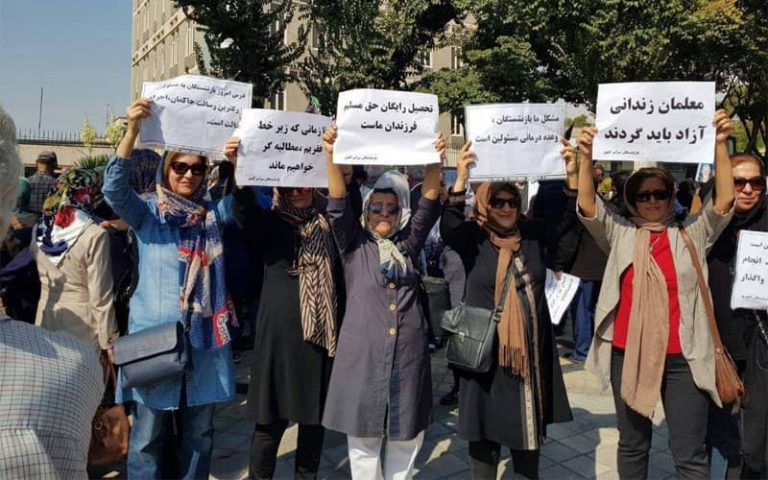
While pressures on teachers’ activists by the Iranian regime continue, the regime’s Ham-Mihan newspaper has published a report examining the livelihood problems of teachers, with accounts of “insignificant wages, lack of job security, and teacher labor” being published.
In the report published on April 16, emphasis was placed on the “more critical conditions” of teachers’ “services procurement and contract teachers,” with teachers teaching in “deprived areas” having minimal rights that are paid “irregularly,” and “their insurance rights, if not formally employed, are not fully paid.”
According to this report, the wages of these teachers “sometimes do not even reach 80 million rials (approximately $122), and even this small amount is paid after several months with significant delays.”
According to the report, the current situation of teachers contradicts the promises of Reza Moradi Sahraei, the regime’s Minister of Education, who had previously stated that “with the implementation of the teacher ranking law, a minimum of 26 percent will be added to each teacher’s salary.”
The newspaper, by recalling that the education ministry uses retired teachers as contract teachers, has stated that this ministry compensates for its shortage by using retirees “at the lowest cost.”
The report quotes a teacher named Maryam as saying: “The Ministry of Education procrastinates in paying our salaries in a way that from the beginning of the academic year (after 7 months), they have only paid three months of our salary, and it is unclear when the rest of our salary will be paid. What was paid to me by the school principal was 50 million rials (approximately $77) per month, a very small amount for regular working hours.”
According to this teacher, “many teachers, due to the Ministry of Education’s behavior, have abandoned their classes, as there is no guarantee that their salaries will be paid.”
Another teacher named Mohammad, residing in Sistan and Baluchestan province, who has been working as a “services procurement and contractual teachers” in elementary school for 9 years, said that due to “difficult living conditions,” he also works as a “part-time assistant” to support his family of five.
Another teacher named Sima in this province stated that although she has been working for 9 years, “only four years’ worth of insurance has been paid for her,” meaning “insurance rights are only paid for two to three months each academic year.”
Hossein, another teacher interviewed by Ham-Mihan, who has “11 years of teaching experience,” said, “In these years, only four and a half years of our insurance has been paid. The Ministry of Education does not address this issue,” and he is forced to do “transportation” to support his family expenses.
According to this teacher, who works in Jaz Murian city, Kerman province (central Iran), one of his colleagues “passed away due to illness because he could not afford his medical expenses due to lack of insurance and sufficient salary.”
Similar experiences of other teachers are also mentioned in this report.
Reports of increasing poverty, shrinking teachers’ livelihoods, and violation of their rights by the Ministry of Education come at a time when the regime’s security and judicial crackdown on teachers and their unions has intensified since last year.
These crackdowns have prompted criticisms from teachers’ and workers’ unions worldwide.
According to a previous report by the Coordination Council of Iranian Teachers’ Guilds, in 2023, 12 activists of teachers’ unions have been expelled and another 26 have received compulsory retirement sentences.
House Rent Prices at Record High in Iran

After claims by Ehsan Khandouzi, the Minister of Economy of the Iranian regime, regarding the government’s optimal performance in the area of rental rates, the state-run Donya-e-Eqtesad newspaper questioned this claim in a report, stating that investigations show, “In the thirteenth government, the housing rental market has recorded the highest growth in rental rates in history, according to official rental data.”
According to an April 17 report by Donya-e-Eqtesad, official figures related to housing rent inflation in Tehran indicate that from 2021 to the end of 2023, “rents increased annually by 45 percent, 44 percent, and 52 percent respectively.”
The report emphasized that the “most inflamed period of tenancy” has been during the presidency of Ebrahim Raisi, and judgment based on “official data” shows that this government has not succeeded in “regulating rental rates.”
In this context, in November 2023, Iranian media, citing official statistics published in this section, emphasized that the contracts of tenants in 2023 saw a 55 percent increase compared to the previous year, which is more than twice the “historical average of this rate.”
Donya-e-Eqtesad had also written at that time that in the past four and a half years, the rate of increase in rental costs in Tehran has been higher than the rate of increase in prices of other household items.
According to this report, the increase in rental rates has been affected by the increase in housing prices, which has also led to the disruption of housing market rules.
In the same vein, on November 6, 2023, Donya-e-Eqtesad wrote that statistics indicate a record registration of residence in houses up to 40 square meters in the capital during the current year.
The report stated that the share of “very small” houses of up to 40 square meters in Tehran’s transactions has increased from 3.3 percent in 2018 to over 5.2 percent.
The critical conditions of housing and rental rates have also been evident in the official reports of government centers, to the extent that the Majlis (parliament) Research Center also referred to the issue of increasing evictions from the housing market in August 2023 in a report and wrote that deciles one to three are not absolutely able to provide the necessary housing for their residence, and even some of the sixth decile are “relatively” unable to provide the housing needed for their residence.
Why Nurses in Iran Migrate or Commit Suicide
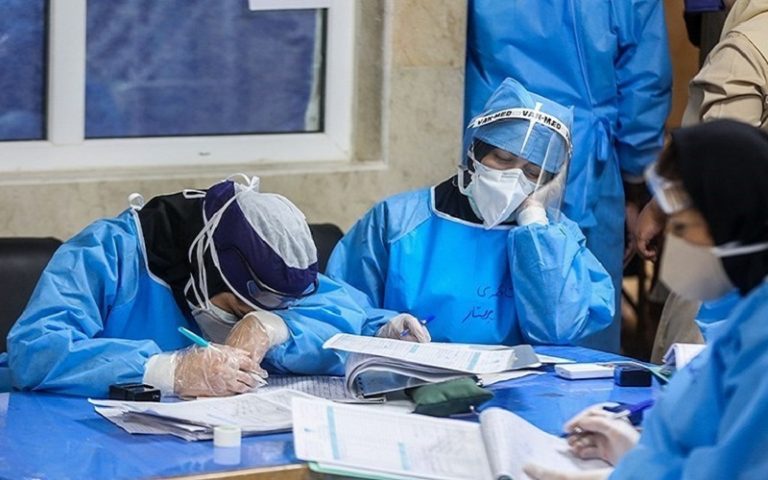
This year, the issue of suicide among Iran’s healthcare personnel resurfaced with the death of a young cardiac specialist in the third week of March and a nurse in Kermanshah. It is said that, due to not renewing her contract and psychological pressures, she ended her life. The exact number of nurse suicides is not officially known, but the number is alarming. Work-related and psychological pressures on healthcare staff are among the main reasons for suicides.
This comes despite severe shortages of nurses in hospitals, where short-term contracts of 89 days are signed with them. Such contracts deprive nurses of many of their rights and future claims if they become unemployed, and they refer to these contracts as “seasonal workers”.
Mohammad Sharifi Moghadam, the secretary-general of the Iranian regime’s Nurses’ House, described the number of young nurse deaths in 2023 as high, but did not provide statistics. He believes that the field is narrow for nurses, and all officials are responsible for creating such an environment.
Fariborz Dartaaj, the head of the Iranian Educational Psychology Association, described the situation of nurses as stressful due to the nature of their job and cited a study conducted among nurses in Malayer city in 2021, stating, “15.38% of nurses had moderate to severe depression, and 46.47% had moderate to severe anxiety. 27.56% had suicidal thoughts, and 9.94% were ready to commit suicide.”
Hospitals without nurses
According to the World Bank, there are two active nurses per thousand people in Iran. This information is obtained from the World Health Organization’s global health workforce statistics and the Organization for Economic Cooperation and Development (OECD). The World Bank warns that the shortage of nurses is a growing health hazard in many countries. A nurse at a public hospital says nurses work 44 hours a week or 175 hours a month, but due to the shortage of staff in most centers, nurses are forced to work about 300 to 400 hours. Overtime compensation for nurses in government hospitals is calculated at 200,000 rials (approximately $0.3) per hour and for contract nurses at 14,800 rials (approximately $0.22) per hour. In November 2023, the secretary-general of the Nurses’ House announced, “Patients lose their lives due to a shortage of nurses. Over 3,000 nurses emigrate from the country annually, but the Ministry of Health does not even add this amount to the healthcare staff.” In the summer of 2021, the head of the Iranian Nursing Organization said, “Despite 20,000-30,000 unemployed nurses in the country, we are facing a shortage of over 100,000 nurses.” An 89-day contract means the minimum rights and benefits and being placed in precarious and unsafe conditions. If this contract is 90 days or longer, the nurse can claim rights and benefits according to labor laws, but an 89-day contract can be repeated several times, each time for 89 days, so the nurse has no legal recourse for job security. The base salary of an official nurse with five years of experience is 130 million rials (approximately $198), which reaches about 150 to 160 million rials (approximately $228 to $243) including benefits. However, the salaries of contractual nurses are much lower than this amount. Sharifi Moghadam, the secretary-general of the Nurses’ House, says that the determination of tariffs, changing the status and recruitment of nurses, receiving shortages, mandatory overtime with very low wages, and delayed payments in some hospitals are major problems for nurses, and nurses usually face requests and threats of dismissal if they object to such situations. According to the secretary-general of the Nurses’ House, the nursing community in Iran has been severely crisis-ridden, and no official pays attention to this situation.Farmers Resume Protests in Isfahan, Education Workers Protest Low Wages

Economic protests in Iran on Monday, April 15, continued with farmers gathering in Isfahan province (central Iran) and school janitors protesting in Khomeinishahr (Isfahan province).
According to reports on Monday, April 15, a group of farmers from the east and west of Isfahan once again gathered in protest of the authorities’ failure to fulfill promises to reopen the Zayandeh Rud river at Khorasgan Square.
The protesting farmers parked their tractors at Khorasgan Square and went on strike in this location; a trend that has also occurred in recent days.
Some sources have referred to this round of farmer protests as a result of their “water rights being usurped” by “government entities.”
In the city of Varzaneh, Isfahan province, protesting farmers lined up their tractors in protest of the violation of their water rights and “in hopes of securing a continuous water supply.”
A group of service personnel and school janitors in the fifth district of Isfahan as well as in Khomeinishahr of this province gathered on Monday in protest of their economic situation.
The gathering of educational service personnel in protest of “below poverty line” wages of less than “100 million rials (approximately $150)” and “empty tables and broken promises” has occurred.
About 10,000 retired teachers, mostly “employees of the education sector who retired in 2021,” have been gathering since Sunday, April 14, in front of the Planning and Budget Organization.
This round of teacher protests was sparked by demands including “prompt payment of overdue bonuses, which have been delayed for 31 months,” “amendment of their retirement benefits based on the implementation guidelines for adjusting retirement benefits by 90% according to ranking,” “prompt payment of 30 months of overdue retirement benefits from October 2021 to March 2024,” and “payment of ranking-related arrears for the time they served, which has been more than two years.”
These retirees insist on their rights and demand quick reforms,” and the authorities of the Planning and Budget Organization, the Ministry of Education, and the National Retirement Organization have promised that “the problem of these retired educators will be addressed as soon as possible.”
According to the Retirees Council of Iran, in Qazvin, a large number of victims of the Taravat Novin Reyhan Tak company staged a rally in the central streets of this city, demanding the dismissal of Hossein Rajabi, the prosecutor of Qazvin, with slogans of “Corrupt Prosecutor, We Don’t Want You.”
Retirees of the Social Security Organization in this city gathered in protest of the “poor economic situation and the non-fulfillment of their demands” in front of the building of this organization and staged a rally.
Fluctuations in the foreign exchange and gold markets in recent days have exacerbated the economic concerns of workers. In this regard, a member of the Supreme Council of Workers’ Representatives has stated that without these changes, a 35% increase in wages would have no impact on people’s purchasing power.
According to previous reports, the dollar wage value in Iran has dropped from $136 in the third week of March to $119 in the second week of April.
Iran’s Rial Drops to Record Low After Attack Against Israel
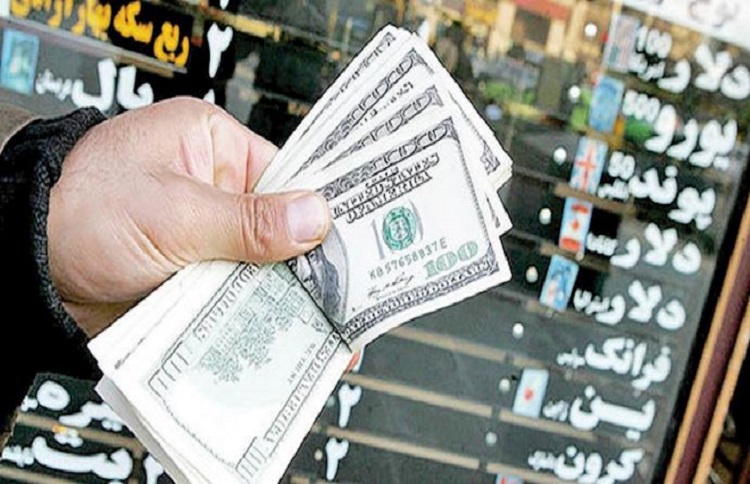
The exchange rate of the US dollar in the Iranian free market experienced a surge of over four percent compared to the previous day following the Iranian regime’s attack on Israeli soil, reaching as high as 700,000 rials for a short period on Sunday morning, April 14.
Since Israel’s attack on the Iranian consulate in Damascus on April 1 and the Iranian regime’s threats against the country, the dollar rate against the Iranian rial has surged by approximately 15 percent.
From Saturday morning until afternoon, amidst heightened warnings of Iran’s imminent attack on Israel, the dollar experienced a jump of around 14,000 rials, and after these threats materialized, it grew by an additional 37,500 rials.
According to the latest statistics, the price of the US dollar in the Iranian market has now dropped below 700,000 rials and reached over 675,000 rials.
The depreciation of the Iranian rial has accelerated since last winter, and over the past four months, Iran’s currency has lost more than one-fourth of its value. However, in the past two weeks, the decline in the value of the national currency has intensified.
Mohammad Reza Farzin, the regime’s head of the Central Bank of Iran, recently broke his silence to claim that the country’s economy has no involvement in the exchange rate in the free market and that only “smuggled” goods are imported into the country with free currency.
His statements come amid a flurry of reports in recent days about the repercussions of the exchange rate surge on the economy, trade, and commodity prices, from the suspension of the government’s housing plan to the consecutive record-breaking prices of various coins and the inflation of goods with currency fluctuations.
In this regard, Reza Kangari, the head of the Food Bankers Union of Tehran Province, announced on April 9: “In the past two weeks, we have had a 30 percent increase in the prices of food items, especially in the field of legumes, the currency problem has caused a 50 percent increase in prices.”
While the regime’s president, Ebrahim Raisi, had promised to preserve the value of the rial, control inflation, and halt government borrowing during his election campaigns, official statistics from the regime’s Central Bank show that since the start of Raisi’s government in winter, government borrowing from banks has doubled, the Iranian rial has lost 65 percent of its value, and the prices of goods, especially food items, have increased two-and-a-half to threefold.
Iran’s Regime Seizes Ship in Hormuz Strait
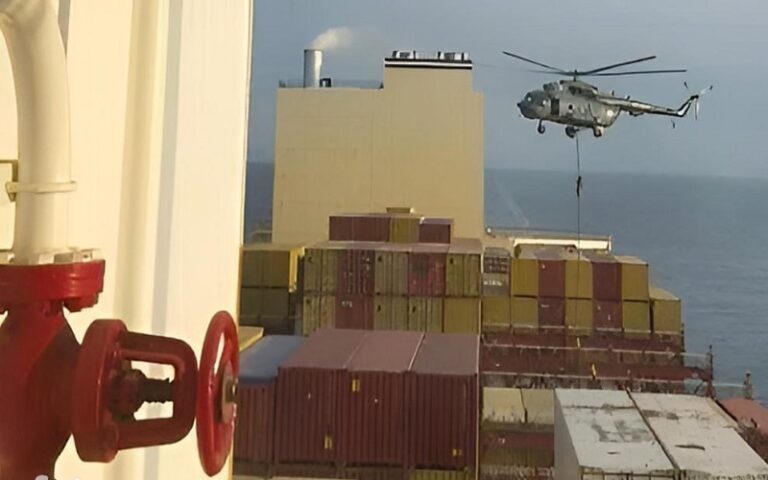
A video seen by the Associated Press shows Iranian commandos attacking a ship near the Strait of Hormuz, an attack that a Middle Eastern defense official attributes to the Iranian regime amid broader tensions between Tehran and the West.
The Tasnim news agency, affiliated with Iranian regime security agencies, confirmed this news shortly after the publication of reports by foreign media and wrote, “The naval commandos of the Revolutionary Guards seized a cargo ship affiliated with the Zionist regime in the Persian Gulf region this afternoon.”
This video depicts an attack previously reported by the British Royal Navy’s Maritime Trade Operations Institute. The institute had reported the “detention of this ship by regional authorities” in the Gulf of Oman near the port city of Fujairah, United Arab Emirates, without providing details.
A defense official who requested anonymity and spoke about intelligence matters shared this video with the Associated Press. In it, commandos descend onto containers on the ship’s deck from a helicopter.
In the film, a crew member can be heard saying, “Get out.” He then tells his colleagues to go to the ship’s bridge as more commandos descend onto the deck. One of the commandos can be seen kneeling above the others to provide potential covering fire.
However, given the known details consistent with previous incidents, it appears that the helicopter used was also previously used by the Revolutionary Guards in attacks on other ships. This was later confirmed by the Tasnim News Agency.
The ship involved is likely the MSC Aries flying the Portuguese flag, a cargo ship associated with Zodiac Maritime, based in London. This company is part of the “Zodiac” group owned by Israeli billionaire Eyal Ofer. Zodiac refrained from commenting and referred questions to MSC, which did not immediately respond to inquiries.
The MSC Aries was last located near Dubai on Friday and was heading towards the Strait of Hormuz. The ship had turned off its tracking data, a common practice for Israeli-affiliated ships moving through the region.
This incident occurs against the backdrop of heightened tensions between Iran and the West, especially following an attack attributed to Israel on the Iranian regime’s consulate in Syria.
Iran has not immediately confirmed the detention of any ship, but the Tasnim News Agency, affiliated with the IRGC, confirmed this action hours later and attributed it to the naval forces of the Revolutionary Guards.
Since 2019, the Iranian regime has been involved in the detention of several ships and attacks on ships affiliated with it amid ongoing tensions with the West over its nuclear program.
