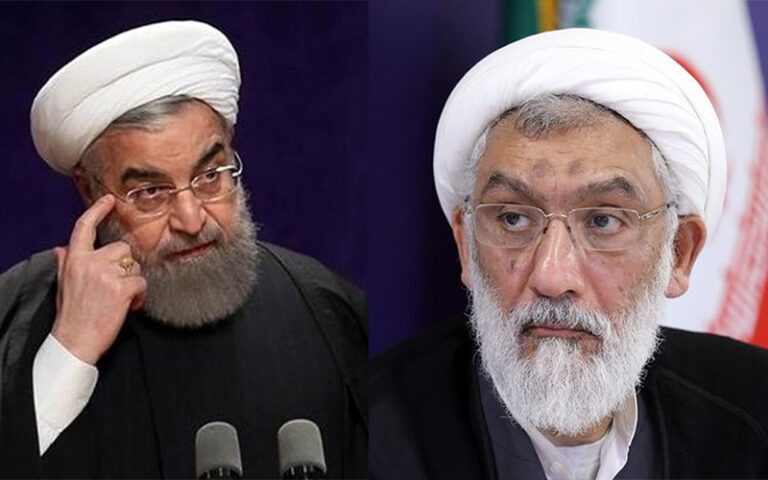
The official website of former Iranian regime president Hassan Rouhani has announced that the Guardian Council has rejected his candidacy for the upcoming elections of the Assembly of Experts, scheduled for March 1.
The website stated on wednesday, January 24, that the disqualification of the former President of Iran will also be officially announced through the Ministry of Interior.
Unofficial reports of his disqualification were circulated in domestic news agencies in Iran in recent days.
Hassan Rouhani, who is currently a member of the Assembly of Experts, has registered for candidacy in the upcoming elections for the Assembly.
A day before the announcement of Rouhani’s disqualification on his website, Nasrollah Pejmanfar, the head of the Article 90 Commission of the Parliament, had said that “in the previous government, Rouhani and his administration’s efforts were focused on resolving the country’s issues and problems through communication with the United States.” He also threatened to “publicize his dark dossier.”
Rouhani, who served as the President of Iran’s regime from 2013 to 2021 and whose previous government held the parliamentary elections under the supervision of the Ministry of Interior, has previously stated that after the November 2019 protests, the regime has crossed a line and that it is no longer important for high officials if participation in elections is low.
Throughout his more than 40 years in the government hierarchy, Rouhani has consistently held the highest positions in the regime. His resume includes five terms of presence in the Majlis (parliament), three terms (24 years) of membership in the Assembly of Experts, 16 years as the Secretary of the Supreme National Security Council, and two terms (eight years) as President.
The Guardian Council also disqualified the candidacy of Mostafa Pourmohammadi, a former security and judicial figure of the regime and former Minister of Justice, from participating in the elections for the Assembly of Experts.
The news of the disqualification of this regime official was published on January 24, hours after the news of Hassan Rouhani’s disqualification, the former President of Iran.
Mostafa Pourmohammadi was a member of the “Death Committee.” He was also the head of the Center for the Documentation of the Islamic Revolution, and a former Minister of interior. This is the second time he is being disqualified for candidacy in an election.
In the summer of 1988, following a fatwa issued by Rouhollah Khomeini, the founder of the Islamic Republic, a four-member committee known as the “Death Committee” was tasked with reviewing the cases of thousands of political and ideological prisoners who were serving their sentences in prisons.
Pourmohammadi, along with the current regime’s President, Ebrahim Raisi, was a member of this committee. In 1988, they confirmed the death sentences of 30,000 political prisoners and handed them over to execution squads.
In 2019, in a video interview with the weekly magazine Mosaalas, he stated that he should not be held accountable for those executions and should not provide a legal answer. Instead, he said, “the Mojahedin (PMOI/MEK) should tried, and each of them should be dealt with individually.”
Most of the victims of the 1988 executions were members of the PMOI.
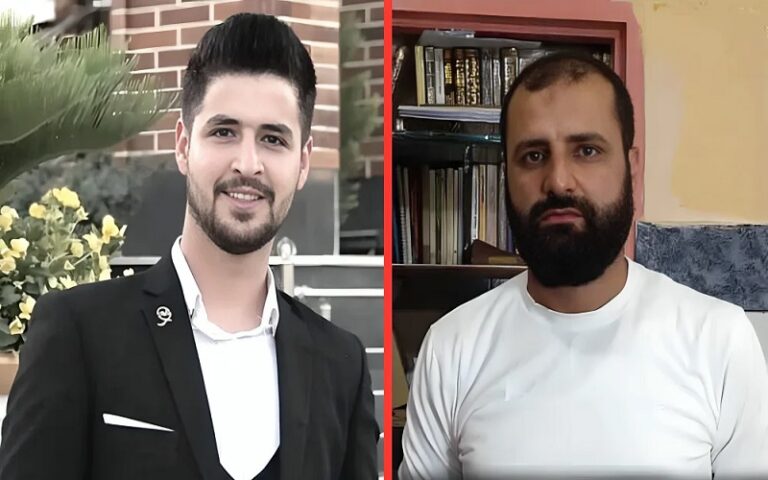
Following the execution of Mohammad Ghobadlou and Farhad Salimi, two political prisoners, 61 political and ideological prisoners in the women’s ward of Evin Prison announced on Tuesday, January 21 that “the news of the execution of Iranian youth has sparked a wave of anger and protest in society. Political and ideological female prisoners at Evin Prison will go on a general hunger strike on Thursday, January 25, in protest of the recent executions and to demand the ‘halt of executions.'”
The execution of two political prisoners on the morning of Tuesday, January 23, has sparked anger and protest on social media, with observers considering these executions as the Iranian regime’s “vengeance” against the people of Iran following the “killing of its terrorists” in the region.
Following this hunger strike, a large number of political and civil activists inside and outside Iran declared their support and solidarity with this strike.
On Wednesday, January 24, the Kurdistan Human Rights Network, quoting “one of her close associates,” wrote that political prisoner Zeynab Jalalian, who is serving a life sentence in Yazd Prison, will go on a hunger strike on Thursday in protest of the executions and to demand the “halt of executions.”
According to this close associate of Zeynab Jalalian, despite her “isolated conditions” in Yazd Prison and severe restrictions on her phone calls, she said that on Wednesday, after learning about the execution of political and ideological prisoners in the past few months and in support of the public’s demand to abolish death sentences in Iran, she will also go on a hunger strike along with 61 female political and ideological prisoners in Yazd Prison.
At the same time, more than 110 retired teachers, cultural figures, and labor and civil activists have announced in a statement their support for the protests against the implementation of death sentences in Iran and declared that they will go on a hunger strike on Friday, January 26.
The statement reads: “We, a group of activist educators and labor activists, in protest against the wrong policies of the ruling authorities and extensive injustices, and in solidarity with imprisoned women, civil activists, and political activists who went on a hunger strike on Thursday, January 25, will go on a hunger strike on Friday.”
The signatories of the statement also demanded the “unconditional abolition of death sentences” and referred to it as “one of the fundamental demands in seeking justice and freedom.”
Amirhossein Moradi and Ali Younesi, elite students of Sharif Industrial University who have spent the past four years in prison on false charges, announced that they have joined the hunger strike along with 61 female political and ideological prisoners in the women’s ward of Evin Prison to demand the cessation of executions.
These two elite students were arrested on April 10, 2020, and after enduring severe torture and prolonged detention, they were each sentenced to 16 years in prison by the Islamic Revolutionary Court.
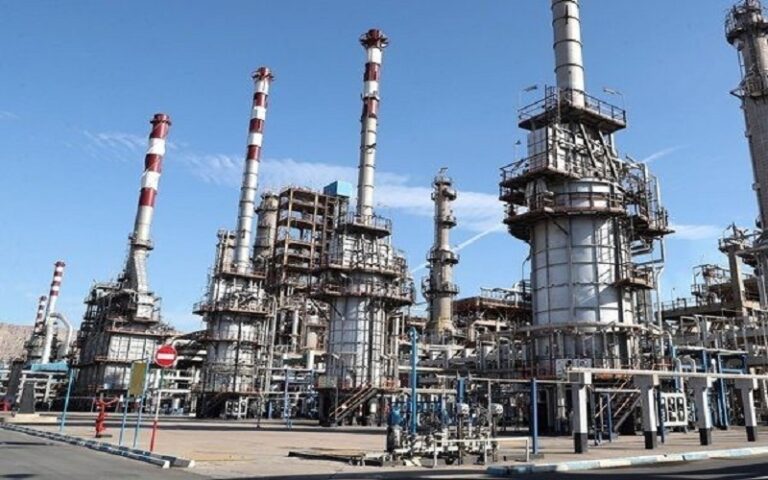
Despite being the second-largest natural gas reserves holder, the third-largest oil-rich country, and abundant in renewable energy sources, the regime’s media outlets claim that the country will face energy supply problems in less than 20 years.
According to a report by the regime’s Fars News Agency, estimates indicate that Iran will only be able to meet one-third of the country’s gas demand from 2041 onwards. Until then, Iranian people and industries will only have access to gas and electricity for eight hours per day.
Fars, which is associated with the Islamic Revolutionary Guard Corps (IRGC), states that although the development of the South Pars gas field, the world’s largest gas field, has allowed Iran to surpass Qatar in gas production since 2018, with a record-breaking daily production of 700 million cubic meters of gas, the decline in production from this field starting in 2025, at a rate of 28 million cubic meters per day, will exacerbate the existing gas crisis in the country.
A report from the Majlis (Parliament) Research Center also indicates that the gas shortage has surpassed the seasonal fluctuations since last year, and currently, Iran faces a daily shortage of approximately 123 million cubic meters throughout the year.
Meanwhile, Tasnim, another IRGC-linked news agency, has simultaneously reported that less than one percent of the country’s energy is supplied by renewable power plants.
According to this report, Iran’s total capacity for using renewable energy is currently 870 megawatts, while the government is obligated to add at least 10,000 megawatts to the country’s renewable power plant capacity by 2025.
Iran, with its extraordinary potential in energy sources such as solar and wind, can meet a significant portion of its energy needs from these natural, clean, and renewable sources.
However, the Iranian regime is allocating all financial resources to nuclear ambitions and interfering in regional countries rather than developing its renewable energy sector.
The exchange rate of gold, U.S. dollar, and other foreign currencies in the Iranian free market has experienced a significant and hourly increase. At the time of this report, the exchange rate for one US dollar had reached “55,700 tomans.”
According to the Bonbast website, which reports the exchange rates of foreign currencies and gold in the Iranian market, within just one hour, the price of each US dollar increased by “2,500 rials,” and each gold coin increased by “1 million rials” (approximately $2).
The financial markets in Iran have been turbulent in recent days, with the price of the US dollar rising from 540,000 rials on Sunday, January 21, to nearly 560,000 rials within three days.
According to the regime’s official IRNA news agency, the main index of the stock market, at the end of Tuesday’s trading on January 23, experienced a decline of 26,000 points, reaching 2.129 million units, and 9,160 billion rials (approximately $16.5 million) worth of liquidity was withdrawn from the stock market.
According to Jahan-e-Sanat daily, Vahid Shaghaghi Shahri, an economist, emphasized that “no management takes place in the stock market” and that “this market is completely abandoned.”
According to Shaghaghi, “each ministry and entity continuously issues directives and changes them.”
Shaghaghi Shahri also emphasized that “the issued resolutions constantly manipulate the rates and key variables affecting the stock market, which creates confusion,” and “in these conditions, shareholders buy shares, but then they see that a sudden resolution has a negative impact on the profitability of companies.”
Furthermore, Siamak Ghasemi, an economic expert in Iran, attributed the range of fluctuations in the coin market to repressive policies and “manipulating markets with directives,” and he posted on X that this trend “has no benefit other than driving people’s capital to unofficial and cash markets,” and the authorities “never once thought of reasons beyond closing and restricting.”
The wave of increasing gold and currency rates in the Iranian market is happening while there are ongoing protests related to livelihood issues in various cities.
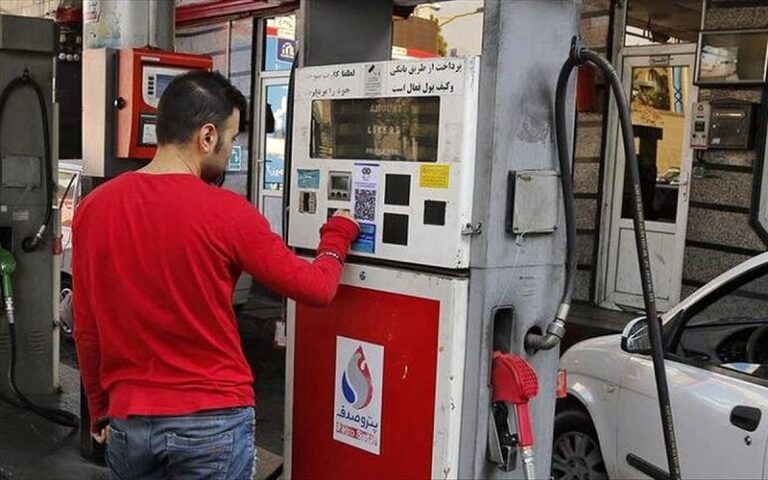
Approximately one month after the promises made by Iranian regime’s officials not to change the price or rationing of gasoline in Iran, Tasnim News Agency, linked to the Islamic Revolutionary Guard Corps (IRGC), reported that the rationing of subsidized gasoline (approximately $0.05) on personal fuel cards has been reduced from 150 liters to 100 liters.
Tasnim News Agency announced this news on Monday, January 22, stating that the reserve for the 15,000-rials (approximately $0.02) gasoline ration has also been reduced to six months and a maximum of 360 liters. Previously, the reserve period was nine months with a maximum of 540 liters.
Tasnim News Agency emphasized that it is not possible to store more than 360 liters of the 15,000-rials gasoline ration on fuel cards, and if a fuel card has this amount of ration, the new ration will not be deposited into the card in the coming months.
ISNA News Agency also confirmed the reduction of the 30,000-rial gasoline (approximately $0.05) ration on fuel cards from 150 liters to 100 liters and attributed the reason to “combating smuggling.” The news agency quoted Jafar Salarinasab, the CEO of the National Iranian Oil Products Distribution Company, who stated that “this issue has no relation to the monthly 60-liter ration.”
Some Iranian media have described this reduction in gasoline ration as “sudden” because there was no prior announcement or communication regarding this matter.
The unexpected change in the fuel card storage limit affects both passenger cars and motorcycles.
This decision by the Ministry of Oil comes approximately one month after the nationwide hacking of fuel stations in Iran. Previously, Jaleel Salari, the CEO of the National Iranian Refining and Oil Products Distribution Company, had rejected the government’s decision to reduce gasoline rations.
A protest gathering of truck drivers took place on November 28, 2023, in Tehran in response to fuel shortages. During this gathering, slogans such as “Incompetent officials, resign, resign” were chanted.
During the hacking of fuel stations in Iran, people were forced to purchase fuel at market prices, which is several-fold more expensive.
Due to the transportation of goods and the transportation systems in Iran, the price of fuel is one of the main factors in determining the prices of other goods, and its increase directly affects the rising prices of other commodities.
Government decisions regarding fuel rationing and gasoline price increases have led to protests at various times.
The largest of these protests occurred in November 2019 after the regime suddenly hiked the price of fuel by 300%. During the protests, which spread across the country, Iranian regime security forces killed 1,500 protesters.
Information indicates that security forces are seeking to minimize protests following the reduction of gasoline rationing and the increase in free market prices by distributing gasoline subsidies among households without cars and facilitating its sale at market prices.
Mohsen Zakerian, the head of the Nafas Foundation, has announced the latest statistics on abortion in Iran, stating that there are 500,000 cases per year. He also mentioned that 90 to 93 percent of these abortions are performed by married couples in official and permanent marriages. Analysts attribute the main cause of this to the country’s economic conditions and severe inflation.
According to the semiofficial ILNA news agency, Zakerian emphasized in a meeting of the Markazi Province Administrative Council that based on the available statistics nationwide, approximately 1,000 abortions are performed daily.
The reasons cited by Zakerian for abortion include economic, cultural, legal, psychological, social, and religious issues.
This level of abortion is taking place in the country while all responsible authorities in this field, including the Ministry of Health, have been instructed by the Supreme Leader of the Iranian regime, Ali Khamenei, to prioritize population growth.
Based on this, the Ministry of Health announced the launch of the ” Abortion Patrol” in April of this year.
In Iran, with the adoption of the law known as the “Support for Family and Youth Population,” numerous obstacles have been created for doctors and medical centers regarding abortion, and security and judicial measures, including the sealing of clinics or revocation of medical licenses, have been taken in this regard.
Nevertheless, according to this government official, an estimated 500,000 abortions occur annually, a phenomenon that should be traced back to economic issues and the lack of a clear vision of the country’s economic and political future.
Statistics show that in 2008, the unemployment rate exceeded 35 percent and the inflation rate was 25.4 percent. By autumn 2023, these figures had reached a 45 percent inflation rate and an unemployment rate exceeding 52 percent.
Simultaneously with the widespread civil efforts to stop the execution of Mohammad Ghobadlou, one of the detainees of last year’s nationwide protests in Iran, which was ultimately carried out today, Tuesday, January 23, news sources have reported the execution of Farhad Salimi, a Kurdish political prisoner.
According to a report by Hengaw on Tuesday, January 23, the execution order of Farhad Salimi, a Kurdish prisoner from the city of Saqqez in Kurdistan province, was implemented in Karaj’s Ghezel Hesar prison.
Farhad Salimi was on a hunger strike for three weeks before his execution. Farhad’s family waited for two days to have their final visit with him, but the regime’s authorities did not allow them to meet him.
Earlier, an international human rights organization had issued a warning that Farhad Salimi, a prisoner, was at risk of execution. On Sunday, January 21, he was transferred to solitary confinement in Ghezel Hesar prison in Alborz province and was in “imminent danger of execution.”
Concerns about the execution of Salim had increased in recent days following the executions of Qasem Abesteh, Ayoub Karimi, and Davood Abdollahi, three other Kurdish prisoners who were executed in separate cases over the past three months.
Amnesty International emphasized in a statement on January 22 that the trials of these prisoners have been severely unfair and accompanied by torture and other ill-treatment.
Tortured prisoner Farhad Salimi, from Iran’s Kurdish Sunni minority, faces imminent execution in Ghezel Hesar prison after transfer to solitary confinement yesterday. The authorities must stop his execution NOW. https://t.co/DqER0kRKoNpic.twitter.com/Nbi5Pi8RHO
Farhad Salimi and six other defendants in this case were sentenced to death by Branch 28 of the Tehran Revolutionary Court, presided over by Judge Mohammad Moghiseh, in March 2016.
Anwar Khodari, Kamran Sheikhi, Farhad Salimi, Qasem Abesteh, Khosrow Besharat, Ayoub Karimi, and Davood Abdollahi were seven defendants who were collectively sentenced to death, and until today, three of them have been executed.
Amnesty International states that the authorities of the Iranian regime use the death penalty as a tool to suppress protesters, opponents, and minorities, while simultaneously restricting the access of ethnic and religious minorities to education, employment, and political positions.
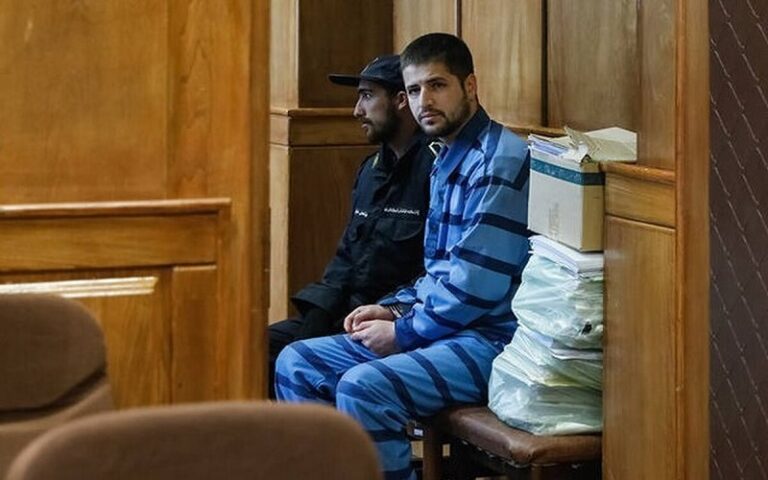
On the morning of Tuesday, January 23, the official media outlet of the Iranian regime’s judiciary announced the execution of Mohammad Ghobadlou, a 23-year-old political prisoner and participant in the nationwide protests of 2022.
Despite protests from his defense lawyers and human rights activists, the execution was carried out.
According to the Mizan News Agency, the criminal court’s verdict of capital punishment against Mohammad Ghobadlou for the killing of a State Security officer was confirmed by the Supreme Court of the country and subsequently executed. The execution took place despite objections from Amir Raeisian, Ghobadlou’s defense lawyer, who deemed it “unlawful.”
Amir Raeisian had emphasized that Mohammad Ghobadlou was entitled to a fair retrial at this stage, and therefore, the execution of the death sentence “has no legal authorization and is undoubtedly considered murder.”
The regime’s judiciary had informed Ghobadlou’s lawyer just one day before the execution that the verdict had been referred to the enforcement department and was scheduled to be carried out on Tuesday.
On Monday, January 22, Mrs. Maryam Rajavi, the President-elect of the National Council of Resistance of Iran, issued a message on X network:
I earnestly urge all my fellow citizens, especially the youth in Tehran and Alborz, to protest against the unjust verdict condemning imprisoned protester, #MohammadGhobadlou, and Sunni political prisoner Farhad Salimi to execution. Both have been transferred to solitary cells, placing them at imminent risk of execution.
.@UNHumanRights@UN_HRC I earnestly urge all my fellow citizens, especially the youth in Tehran and Alborz, to protest against the unjust verdict condemning imprisoned protester, #MohammadGhobadlou, and Sunni political prisoner Farhad Salimi to execution. Both have been…
Mohammad Ghobadlou faced accusations of fatally striking a police officer with his car during the 2022 protests in Iran. Despite his consistent denial and the presentation of evidence supporting his innocence, he was implicated in the incident.
Following the news of a potential execution for Mohammad Ghobadlou, his family and numerous concerned citizens gathered in front of Ghezel Hesar prison on Monday night. Their hope was to at least delay the execution, which typically occurs with the morning call to prayer just before sunrise.
Shortly after sunrise, Mizan News, the regime’s Judiciary outlet, announced the execution of Ghobadlou. A brief video clip circulated on X, depicting Ghobadlou’s mother at the prison gate, passionately shouting at the guards, expressing, “You have taken the life of my beloved Mohammad, who had taken to the streets on behalf of all the young people.”
One of the indicators of the growth and development of any country is the expansion and prosperity of the middle class. The existence of a thriving middle class in any society is a key driver of economic growth and development. Governments that have properly protected and supported the middle class have been able to guide the country’s economy on the path of growth and development.
The spread of poverty, lack of development, and destruction of Iran’s middle class are pushing society towards polarization. There is a prosperous class that emerges through government control and utilizes the wealth that belongs to the general public, while the second class is impoverished. The Iranian regime is rapidly exploiting natural resources such as oil, gas, water, and land in the country.
The middle class, which has emerged through national growth and development, is being pulled towards a decline in wealth, power, and income due to the regime’s policies that stunt national production. As a result, the middle class is gradually merging with the lower classes, polarizing the society between a wealthy class of elites who benefit from the government’s resources and a growing impoverished class.
Rapid Decline of the Middle Class
International economic institutions’ assessments indicate that individuals belonging to the middle class are those who spend at least $12 per day (based on purchasing power parity in 2017).
These individuals can be found even in developing regions such as Asia and Africa, enjoying independent homes, sufficient income, adequate health standards, the ability to afford education for their children, stable employment, and a fair amount of leisure.
According to published statistics, Iran’s middle class, which once constituted 60% of the population in the 2000s, has gradually declined until the 2010s.
In recent years, the intensity of this decline has accelerated.
“The middle class in Iran is shrinking each year, joining the ranks of the lower class. The current number of the economic middle class in Iran is approximately 23 million people, constituting only around 29.4% of the country’s population. However, these official figures may the actual size of the middle class,” according to a report by Arman daily on October 24, 2023.
The Steep Fall of the Middle Class
The economic crisis and extremely high inflation rates (reportedly around 70%) have driven the middle class towards impoverishment at an accelerated pace. This poses a serious threat to the Iranian regime.
“The deepening poverty and decline of the middle class, representing the largest segment of society, can jeopardize the stability of the political system,” according to a May 31, 2023, report by the state-run Ettelaat newspaper.
On November 11, 2023, Arman daily quoted sociologist Taqi Azad Armaki as saying, “The current situation is such that we have the upper class and the lower class, and the middle class has once again returned to the lower stratum. In these circumstances, we witness the importance of the wealthy and the rulers. Large industries belong to the government (state capitalism) and they run major economic sectors, such as the automotive and petrochemical industries, the higher education system, the healthcare system, and other industries.”
Iran ranks among the most corrupt countries according to the Transparency International Corruption Perceptions Index. In 2017, Iran ranked 130th in terms of government corruption, but by 2020, it had dropped to 149th place.
In the following years, the depth and institutionalization of this corruption became so prominent that Mahmoud Jamsaz, a government-linked economist, stated, “The main issue in Iran’s economy today is not the exchange rate, but rather the rent-seeking and corruption that has been created through it, shaping a speculative economy” according to the Etemad newspaper posted on January 27, 2021.
Today, rent seekers and corrupt government elements have seized even more domains. The state-run Islamic Republican (Jomhuri-ye Eslami) newspaper wrote on December 11, 2023, “Iran is not governed by a government and ruling system; it is governed by a mafia. The mafia is stronger than the governments and officials. When the mafia takes control of a country, corruption and bribery, authoritarianism, economic exploitation, infiltration into institutions, violence and intimidation, undermining democratic processes, nepotism, and more become evident. The Islamic Republic possesses all these characteristics.”
With a brief look at this situation, it can be inferred that in the not-so-distant future, the middle class will disappear. However, the people of Iran seize every opportunity to express their protests and grievances.
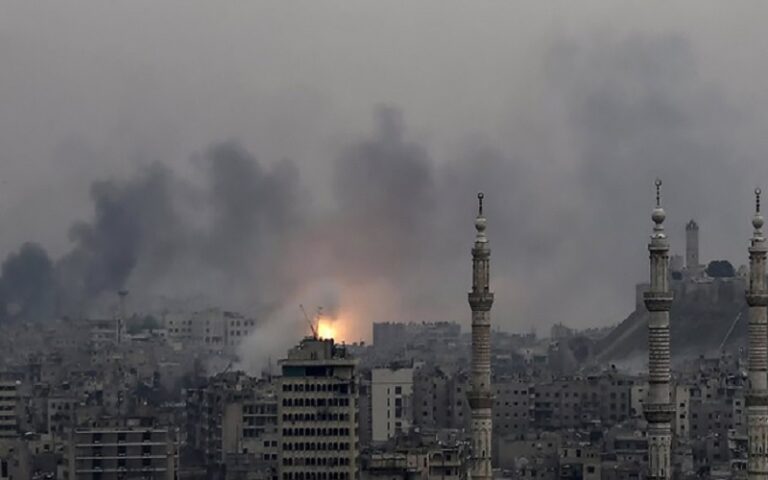
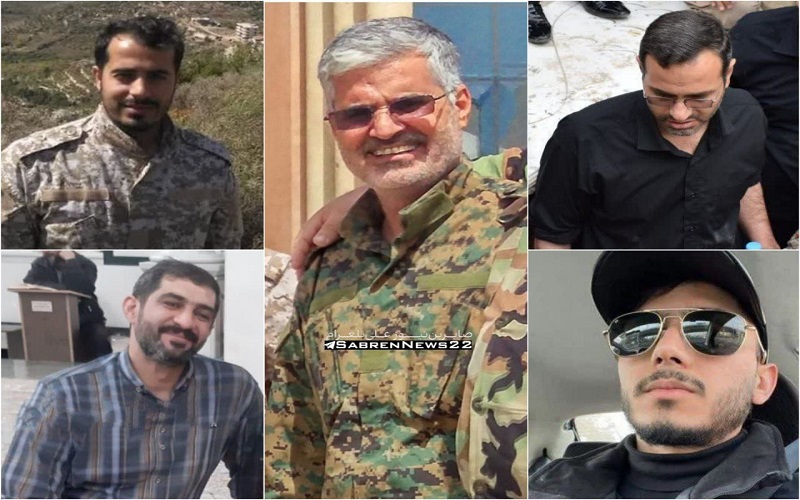
On January 20, Reuters news agency reported that in an attack on a building in Damascus, four members of the Islamic Revolutionary Guard Corps (IRGC), including the head of IRGC Quds Force intelligence unit, were killed.
In this regard, the public relations department of the IRGC also announced in a statement the killing of “four military advisers of the Islamic Republic” in today’s attack on Damascus.
The Telegram channel Saberin News, affiliated with the IRGC in Iran, reported the killing of Sadegh Omidzadeh, the deputy intelligence officer of the Quds Force of the IRGC, along with four other IRGC members named Ali Aghazadeh, Hossein Mohammadi, Saeed Karimi and Mohammad Amin Samadi.
An official of an Iran-backed group in the Middle East also told the Associated Press that this building was used by IRGC officials and added that “Israeli missiles” completely destroyed the building.
Prior to this, Reuters had reported, citing sources in the Regional Coalition Supporting Syria, that a senior official of the IRGC was killed in an airstrike today on a building in Damascus, which Syrian media attributed to Israel.
5 IRGC Members Killed in Syria Strike.
This source said that this multi-story building was used by Iranian advisers supporting the Syrian government and was completely demolished.
A video published in the media shows a large plume of smoke rising in the “Al-Mazzeh” neighborhood. Syrian state media referred to this attack as an “Israeli aggression.”
Earlier, on January 8, six informed sources told Reuters that Israel had launched an unprecedented wave of deadly attacks in Syria, targeting trucks, infrastructure, and individuals involved in the transfer of Iranian regime weapons to its proxy forces in the region.
These sources, including a Syrian army intelligence officer and a commander of the regional coalition supporting Damascus, said that Israel had changed its strategy after the October 7 attacks by Hamas.
According to these sources, although Israel has been attacking targets related to the Iranian regime in Syria for years, it is now carrying out more deadly and frequent airstrikes on air defense systems and arms transfers in Syria.
Nasser Kanaani, the spokesperson for the Iranian Ministry of Foreign Affairs, reacted to the killing of four Quds Force in Damascus due to airstrikes.
He attributed these attacks to Israel and called them a “repeated violation of the sovereignty and territorial integrity of Syria and an escalation of aggressive and provocative attacks on various targets” in the country.
The Iranian regime has launched attacks on Iraq, Syria, and Pakistan in the past week.
Kanaani also threatened that Iran considers its “reciprocal right to respond to organized terrorism” by Israel “reserved for itself at the appropriate time and place.”