

Iran’s Nuclear Program Is Shrouded in Mystery
With the latest tensions between the Iranian government and Western countries on the side of the Board of Governors of the International Atomic Energy Agency, it remains to be seen where the Iranian government’s nuclear case will go.
Tensions over Iran’s nuclear program escalated after the release of two classified IAEA reports and after it was announced that the Iranian government had qualitatively restricted IAEA inspectors’ visits to sites.
The French and US Foreign Ministries issued warnings to the Iranian government, and the Iranian government reciprocally called the IAEA’s actions ‘disruptive’ to the negotiations, stating that it was seeking negotiations for a result, not negotiations for negotiations.
The certainty of these words of the Iranian government expresses its inability to withstand the crushing pressure of international sanctions, but what we are witnessing in practice is not a step towards reducing the number of violations of the Joint Comprehensive Plan of Action (JCPOA) agreement by the Iranian government but increasing it.
Nevertheless, as Iran is violating the JCPOA, otherwise known as the 2015 nuclear deal with world powers, and is expanding its nuclear program, member states of the Board of Governors and world powers are expected to issue a resolution against the Iranian government next week’s meeting of the Board of Governors.
This has frightened the Iranian government, prompting Kazem Gharibabadi, the government’s permanent representative to the IAEA, to announce that ‘we hope rationality will prevail at next week’s meeting of the Board of Governors.’
Iran Drug Mafia: 80 Percent of Drugs Are Not Observable

As the spokesperson for Iran’s Anti-Trafficking Headquarters has recently said, out of the 34 trillion tomans of the annual turnover of the drug in the country, about 25 trillion tomans, which is equivalent to 80 percent, is not observable and there is no control over its distribution, and this is creating extreme losses for the country’s economy.
The main holes of this leak are the drugstores, the hospitals, and the supply, distribution, and consumption network.
However, as the healthcare officials said if the information about the drugs were recorded in the Titak system, the withdrawal of the drugs from the network does not happen that easily.
But it seems that the deputy of health has no interest in cooperating to record the distribution of the drugs in the Titak system which is raising the skepticism that the health ministry is easing the way of drug smuggling. This skepticism is affirmed because the health deputy is showing no interest to join the meetings to investigate the drug leakage.
The drug mafia and the golden signs are an old story in Iran and looking to the past its trace is visible. For a long time, ago Nasser Khosrow Street is the black market for smuggled and fake drugs which has become the last hope for patients who cannot find their drug in any drugstore.
And none of the officials are denying this event while most of these are fake and endangers the people’s lives. As Saeed Namaki, former minister of health emphasized and unveiled the corruption in the Food and Drug Administration and the existence of drug mafia and golden signatures, widespread violations in the support system of the Food and Drug Administration (Titak). A system that Namaki later claimed that they must make reforms in it, but this did not happen.
Now Mohammad Reza Dehghaninia confessed about the drug mafia and corruption and said: “Currently, only about 6.5 trillion tomans of medicine are monitored due to registration in the Titak system, but about 25 trillion tomans are not observed and it is possible to get these items out of the chain.”
The roots of this widespread corruption can be found in the Food and Drug Administration (Titak) support system, which, according to Mohsen Jalavati, deputy managing director of the NGO Transparency Watch, is possible to manipulate and import the desired information to it, so that even those who do not receive the 4200 tomans import currency has been able to get the currency by importing banned drugs.
The surprise is that this system is in the hands of the so-called private mainly controlled by the Revolutionary Guards (IRGC), and the regime’s health officials have no control over it.
Another system that is helping the smugglers and this corrupt drug chain is the country’s custom controlled by the IRGC. Seyed Heidar Mohammadi, Director General of Drug Affairs under the control of the Food and Drug Administration said that the custom never accepted to give the inventory information of the goods which are stored in the public depots to the specialized institutions such as the Ministry of Health, Ministry of Agriculture Jihad, Ministry of Communications and Ministry of Industries and Business.
Iran’s Banks Are a Major Source of Corruption
The main job of the banks in Iran is money laundering and circumventing the global sanctions in favor of the supreme leader’s goals, Iran experts say.
And how they are completing this target is by robbing from the people’s pockets to fill the government’s budget deficit hole. Of course, at the cost of the large interest, they receive from the government.
The protests of the people in front of the banks speak volumes about this situation. And this reality has been reflected even in the reactions and the speeches of the officials.
Ehsan Khandouzi, the economy minister, on August 31 while criticizing the banking system said: “The banking system prefers the collateral of the rich to the poor. And it cuts financial resources from those who need it most. Because, as a rule, those groups do not have the necessary documents to obtain facilities. The current form of the banking business is not only indifferent to inequality, rich and poor but it can be said that it prefers the rich to the poor.”
Unfortunately, he fails to reveal the real identity of those 10 percent which are the regime’s elements and officials who are preferred to the 90 percent, which are the people, by the banking system.
He does not say that while according to the government’s statistics center, the number of homes in the country is almost equal to the number of households, why should more than half of the Iranian households be tenants. And many are becoming homeless such as the cardboard sleepers, the grave sleepers, and finally the rooftop sleepers.
He does not speak about the role of the banks in the housing crisis. More importantly, what is the share of the regime’s leaders and repressive institutions in the banks? From the police force to the Revolutionary Guards, the Basij, the army, and the infamous Ministry of Intelligence, in addition to those with their independent banks, they share many banks.
Ahmad Naderi, an MP, on September 1, in an interview with the state-TV Channel One, said: “Yes, some of the briberies were approved and became public. For example, a bag full of (gold) coins was given to the former director-general of the Central Bank. And there are many such examples.”
Again, this official does not reveal the rest of the corruption by the officials, too. To have a vision about the amount of corruption and looting in Iran, it is enough to mention the speeches of Agha Ali Eslami, one of the first commanders of the regime’s terrorist IRGC Quds Force, as he in a gathering called ‘Islamic Banking’ said:
“Iran’s national net income growth in 2020 has decreased by about 34% compared to 2007. Iran’s GDP is currently $300bn.”
In this way, such a devastating reduction, or better said looting and destruction, provides a clear vision of the amount of looting in more than four decades of the disgraceful rule of the mullahs, while the banks had the leading role in this loss.
Iranian Citizens Political Confidence in Government Is in Rapid Decline
Earlier this week Iran’s state media published acknowledgments of Iran’s current crises and warned Iran’s government of the reactions of frustrated Iranian citizens.
The state-run Setare-Sobh daily wrote on September 6 that Iran is currently facing a large shortage of vaccines, with many large vaccination centers being closed. Those that are still open only have enough stocks for the first doses of the Covo-Barakat vaccine.
Hamdeli daily said, “While we were discussing the matter, other countries built and exported vaccines. They succeeded in reducing the Covid-19 fatalities, and the life [in those countries] is close to becoming normal as before the pandemic. Yet, we thought we would produce 50 million doses of Covid-19 vaccines by September.”
According to the Iranian opposition, over 412,700 people have died as of September 8. The Iranian regime supreme leader Ali Khamenei banned credible Covid-19 vaccines in January 2021 and persisted in producing the so-called domestic vaccines.
By banning the vaccines from abroad, Khamenei persisted in the production of domestic vaccines as many financial institutions in charge of producing and distributing them are under his supervision. One such institution is the Execution of Imam Khomeini’s Order (EIKO) which is at the center of Iran’s economic power.
State-run daily, Jahan-e Sanat wrote on September 8 that regime officials have killed thousands of infected people with their ‘false promises and deadly mistakes about providing the required vaccine and neglecting the vital precautions in controlling the coronavirus’.
Iran’s economy is plagued with crises, such as inflation and skyrocketing prices. The regime’s new president, Ebrahim Raisi, has only given hollow promises to resolve these issues. The regime’s inability to address economic crises and Raisi’s hollow promises were also a subject discussed in Iran’s state media in recent days.
The Resalat daily reported that the regime will face a budget deficit of 400 trillion Tomans if Raisi continues with the plundering policies of the regime’s previous governments.
Increasing dairy prices for households mean that such items are, on average, 57.1 percent more expensive compared to last year, according to the Setare Sobh daily in reviews of the regime’s statistics center reports.
The two previous major Iran protests in 2018 and November 2019 are testaments to the explosiveness of Iranian society. The nationwide boycott of the regime’s sham parliamentary and presidential elections also shows that the regime is illegitimate.
Published by the state-run Etemad daily on September 6, their article outlined that the ‘reducing political trust’ and ‘the downward trend of social capital’ are some of the challenges that the regime is currently facing. The low voter turnouts of the 11th parliamentary election and the 13th presidential election have thus confirmed just how the Iranian peoples’ confidence in the regime has declined rapidly.
While Iranians suffer from poverty and the Covid-19 crisis, the regime continues its malign activities and spreading terrorism under the pretext of helping other nations.
Iran: Social Collapse or a Ticking Timebomb Waiting To Explode?
“The totalitarian attempt at global conquest and total domination has been the destructive way out of all impasses. Its victory may coincide with the destruction of humanity; wherever it has ruled, it has begun to destroy the essence of man.” (Hannah Arendt)
‘Destroying the essence of man…’, this is what is happening now in Iran under the totalitarian rule of the mullahs. Experts describe Iran’s clerical leadership as enemies of freedom and the main source of global fundamentalism, which has now destroyed the entire Middle East, especially over the past 40 years. As an example, the origins of what we are now witnessing in Afghanistan is not in this country itself, rather it stems from Iran.
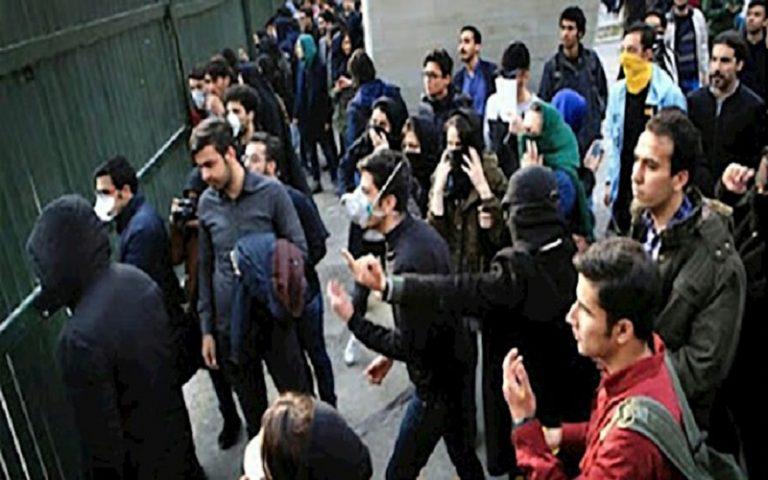
 Having a look at this picture will explain everything. The question raised here is what are we witnessing in Iran? The answer is simple: social collapse. And what is the social collapse? The death of morality and the rise of modern slavery by destroying the identity.
 Iran’s state broadcaster and state-run websites and media, Friday prayers leaders, the Revolutionary Guards and the Basij, its government, and finally the supreme leader are nothing but a mixture of ideological vulgarity and moral decay, dissidents say.
All the political and economic efforts of the mullahs’ Islamic system are to spread this ideological vulgarity and morality death into the deepest level of the social life. The goal, however, is to neutralize all impulses, energies, and kill the hope of change.
Getting people used to watch street execution scenes, getting used to the growth of poverty, becoming indifferent to each other, promoting numbness in the face of political and economic corruption of the ruling class, getting used to organ sales, getting used to garbage collectors, getting used to homeless people, getting used to not realizing their demands, etc., this is the macro policy of Iran’s regime.
The goal is to neutralize the human conscience and morality by repeating these habits. The goal is to kill the shame that is one of the most transcendent senses of man so that the continuation of domination, tyranny, and exploitation is effortlessly guaranteed.
The social collapse in occupied Iran by the mullahs is so openly advanced that even its state media point to this catastrophic event.
“Iran is suffering from a social collapse. The alarm is ringing where the collapse exceeds 50 percent and enters a critical phase where I believe our society is in this situation.
“One of the big signs of social collapse is when we see someone leaning down to the waist inside the trash can and passing by. The more people feel helpless, submit, think about their livelihood, or wait for the savior, the collapse in that society is much more.” (State-run daily Hamdeli, on September 7, 2021, quoting a social expert.)
The only barrier that has stopped Khamenei and his system from gaining full supremacy and inevitably turning to the policy of contraction and the selection of a criminal and mass executioner as the president is the existence of a vigilant resistance, along with a resilient and rebellious people who have read the mullahs’ hands and responded with several uprisings over the past decade.
It can be said that the mullahs are not able to kill the hope for a free and democratic Iran.
Iran’s state broadcaster and state-run websites and media, Friday prayers leaders, the Revolutionary Guards and the Basij, its government, and finally the supreme leader are nothing but a mixture of ideological vulgarity and moral decay, dissidents say.
All the political and economic efforts of the mullahs’ Islamic system are to spread this ideological vulgarity and morality death into the deepest level of the social life. The goal, however, is to neutralize all impulses, energies, and kill the hope of change.
Getting people used to watch street execution scenes, getting used to the growth of poverty, becoming indifferent to each other, promoting numbness in the face of political and economic corruption of the ruling class, getting used to organ sales, getting used to garbage collectors, getting used to homeless people, getting used to not realizing their demands, etc., this is the macro policy of Iran’s regime.
The goal is to neutralize the human conscience and morality by repeating these habits. The goal is to kill the shame that is one of the most transcendent senses of man so that the continuation of domination, tyranny, and exploitation is effortlessly guaranteed.
The social collapse in occupied Iran by the mullahs is so openly advanced that even its state media point to this catastrophic event.
“Iran is suffering from a social collapse. The alarm is ringing where the collapse exceeds 50 percent and enters a critical phase where I believe our society is in this situation.
“One of the big signs of social collapse is when we see someone leaning down to the waist inside the trash can and passing by. The more people feel helpless, submit, think about their livelihood, or wait for the savior, the collapse in that society is much more.” (State-run daily Hamdeli, on September 7, 2021, quoting a social expert.)
The only barrier that has stopped Khamenei and his system from gaining full supremacy and inevitably turning to the policy of contraction and the selection of a criminal and mass executioner as the president is the existence of a vigilant resistance, along with a resilient and rebellious people who have read the mullahs’ hands and responded with several uprisings over the past decade.
It can be said that the mullahs are not able to kill the hope for a free and democratic Iran.
Having a look at this picture will explain everything. The question raised here is what are we witnessing in Iran? The answer is simple: social collapse. And what is the social collapse? The death of morality and the rise of modern slavery by destroying the identity.
Iran’s state broadcaster and state-run websites and media, Friday prayers leaders, the Revolutionary Guards and the Basij, its government, and finally the supreme leader are nothing but a mixture of ideological vulgarity and moral decay, dissidents say.
All the political and economic efforts of the mullahs’ Islamic system are to spread this ideological vulgarity and morality death into the deepest level of the social life. The goal, however, is to neutralize all impulses, energies, and kill the hope of change.
Getting people used to watch street execution scenes, getting used to the growth of poverty, becoming indifferent to each other, promoting numbness in the face of political and economic corruption of the ruling class, getting used to organ sales, getting used to garbage collectors, getting used to homeless people, getting used to not realizing their demands, etc., this is the macro policy of Iran’s regime.
The goal is to neutralize the human conscience and morality by repeating these habits. The goal is to kill the shame that is one of the most transcendent senses of man so that the continuation of domination, tyranny, and exploitation is effortlessly guaranteed.
The social collapse in occupied Iran by the mullahs is so openly advanced that even its state media point to this catastrophic event.
“Iran is suffering from a social collapse. The alarm is ringing where the collapse exceeds 50 percent and enters a critical phase where I believe our society is in this situation.
“One of the big signs of social collapse is when we see someone leaning down to the waist inside the trash can and passing by. The more people feel helpless, submit, think about their livelihood, or wait for the savior, the collapse in that society is much more.” (State-run daily Hamdeli, on September 7, 2021, quoting a social expert.)
The only barrier that has stopped Khamenei and his system from gaining full supremacy and inevitably turning to the policy of contraction and the selection of a criminal and mass executioner as the president is the existence of a vigilant resistance, along with a resilient and rebellious people who have read the mullahs’ hands and responded with several uprisings over the past decade.
It can be said that the mullahs are not able to kill the hope for a free and democratic Iran. Iranian Regime’s Cabinet of Criminals: Interior Minister Wanted by Interpol
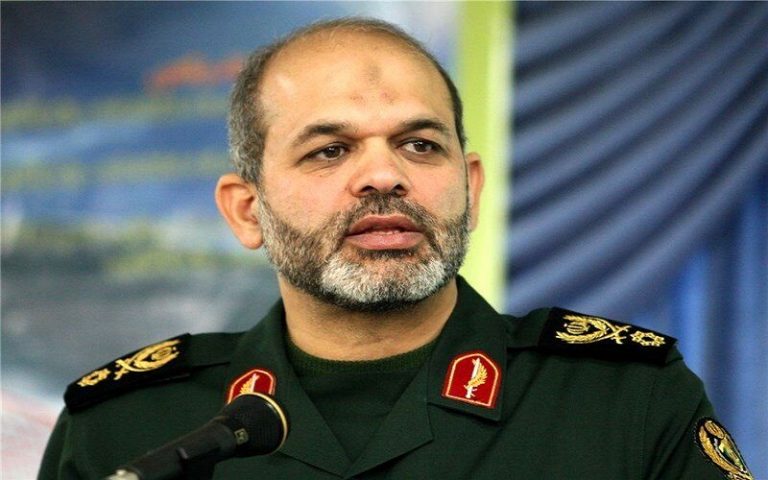
Two weeks ago, Ebrahim Raisi’s candidates for minister roles in his administration had been approved by the Iranian regime’s parliament. Thieves and terrorists make up the entire cabinet, but Interior Minister Ahmad Vahidi is the most questionable appointee, considering that he is wanted by Interpol for his terrorism involvement.
Ahmad Vahidi was born in June 1958. His birth name is Ahmad Shah Cheraghi. He has been one of the top commanders of the Revolutionary Guards (IRGC) for much of his career. In 1988, when the IRGC’s Quds Force was formed, Vahidi became its first commander.
The Islamic Revolutionary Guard Corps (IRGC) is comprised of four forces. The Quds Force is the most notable. They usually operate outside of Iran, but in times of crisis, they are the ones usually brought in to suppress uprisings.
The other forces of the IRGC include the Ground forces, commanded by IRGC Brigadier General Mohammad Pakpour, the Air Force under the command of IRGC Brigadier General Amir Ali Hajizadeh, and the Navy with IRGC Brigadier General Alireza Tangsiri at the helm.
This isn’t the first time that Vahidi has held a ministerial position. He was previously the Minister of Defence under Mahmoud Ahmadinejad’s administration. In the 1980s, he was one of the officials that helped to found the IRGC’s Intelligence unit.
In 1981, when Rezaei became the IRGC commander, Vahidi became his deputy in charge of the IRGC Intelligence unit. Vahidi particularly focused on organizing the regime’s terrorist activities abroad and supporting the mullahs’ proxy groups.
Mohsen Rezaei once said that the goal of the Quds Force is to form an ‘Islamic International Army’. They have played a key role in political assassinations abroad since their founding, and Vahidi oversaw many of these terrorist acts until 1997.
One such attack took place in Argentina in 1994. July 18 of that year saw a huge truck bomb being detonated outside a Jewish center in Buenos Aires, killing 85 people and injuring over 200. A month later, the Iranian Resistance revealed that the IRGC was behind the bombing and that other regime agencies were involved also.
In 2006, Argentinian federal government prosecutors officially filed a lawsuit against the perpetrators of this attack, including Ahmad Vahidi. Argentine prosecutor Alberto Nisman, who was investigating the AMIA bombing, underlined that Vahidi was involved in planning and carrying out the operation. Nisman was assassinated in his home before going to court.
After Ebrahim Raisi was appointed as the regime’s new president, Agnès Callamard, Amnesty International’s Secretary-General, said the fact, “that Ebrahim Raisi has risen to the presidency instead of being investigated for the crimes against humanity of murder, enforced disappearance, and torture, is a grim reminder that impunity reigns supreme in Iran.”
Raisi, himself, is most notable for his role in the 1988 massacre, which saw the executions of 30,000 political prisoners ordered by then-Supreme Leader, Ruhollah Khomeini.
This cabinet once again shows the regime in Iran is dedicated to human rights violations inside Iran and the export of terrorism abroad. Raisi and his ministers, such as Vahidi, should not be welcomed by world powers but should be tried for crimes against humanity.
Iran’s New Government Faces an Old Problem, Housing
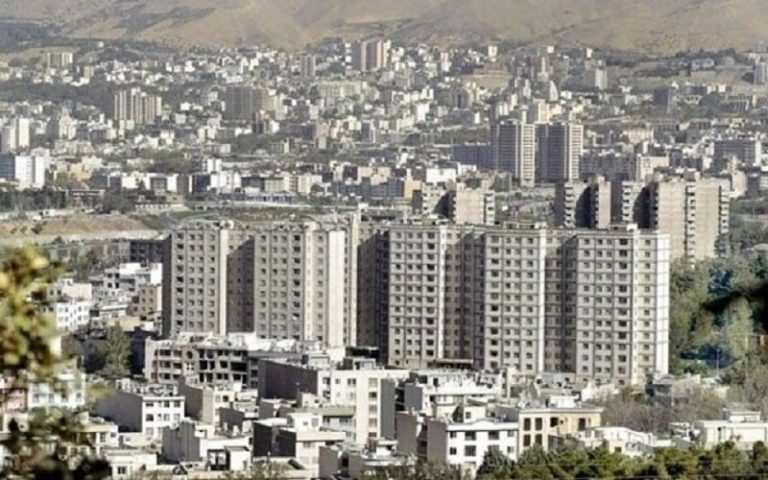
Before Iran’s new president Ebrahim Raisi took office, he promised to build one million housings and decrease the number of homeless people, which has become one of the major problems for the country especially for women who have no roof over their heads.
According to a plan called production leap and housing supply, the government is obliged to build one million houses in a year in urban and rural areas.
But many officials are criticizing this plan because the government lacks the needed financial resources to execute such a plan.
The first reason for new housings is the issue of compensating for the shortage of housing against the number of households in the country. According to the latest census of population and housing, while the number of households in the country was reported to be 24.196 million households, the number of housing units in the country was 22.825 million houses.
This means that in the current situation, some households in the country live jointly in a housing unit or their place of residence cannot be referred to as housing such as those in the outskirts of the cities, where on numerous occasions the regime has attacked its residents in the past years and destroyed their self-made housings. So, for each household to have 1 housing unit, the country’s housing market is facing a shortage of 1.371 million shelters.
The second reason for housing demands is due to new marriages. In the last ten years, an average of 783,000 marriages have occurred, it can be said that the housing market must meet this number of new demands, but due to the negligence of the government, the number of marriages has decreased which has created many social challenges for the country.
The third reason for new housing is due to the renovation and rehabilitation of worn-out areas. According to surveys conducted by the Ministry of Roads and Urban Development in 2013 to revise the housing master plan, more than 11.2 million people currently live in 76.4 thousand hectares of deteriorated urban areas in Iran.
Adding to this the probability of earthquakes is increasing the importance of this issue, especially in the capital, that in any major earthquake the number of casualties would exceed millions. It can be said that an average of 21% of the country’s housing units is in a worn-out region.
Referring to the existing statistics indicates that a minimum estimate of 5 million old urban housing units needs to be rebuilt. Besides the worn-out urban regions, the share of non-resistant housing units in the country’s villages is more worrying.
Currently, there are more than 3.2 million non-resistant rural units in the country. As a result, according to the statistics, there are a total of 8 million housing units in the country that need to be rebuilt by 2026.
Over the past four decades, more than 100,000 villages have been destroyed in the country, and many of the country’s population centers have collapsed and the population is concentrated mostly in the capital and metropolises. Many border areas are haunted.
The last reason for new constructions is the debate of natural housing reserves. To regulate the supply and demand market, many countries around the world must always anticipate several uninhabited housing units to respond to the weaknesses caused by the disproportionate distribution of residential units as well as the need for office and commercial units.
Therefore, it seems that about 600,000 units should be planned and constructed as a market reserve in 10 years. But many times, the officials claimed that many empty houses can be considered as the country’s housing reserve.
But the reality is that these units are mostly not habitable for the public because there are too luxurious and expensive or are in tourist areas.
The survey of resource statistics on the need to build a residential unit shows that to solve the problem of housing supply in the country by 2026, it is necessary to produce a total of 22 million housing units in the country from 2016 and within 10 years. Therefore, the country’s real need is to produce 2.2 million units per year, and building 1 million homes per year cannot solve the housing market problem.
Newest Member of Raisi’s Administration Becomes the Only Female Official in the Regime
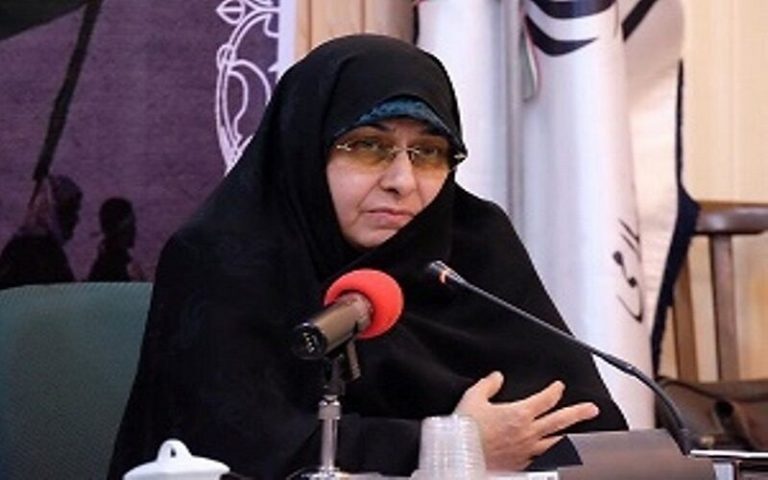
On September 2, the Iranian regime’s new president, Ebrahim Raisi officially appointed Ensieh KhazAli as the new Women and Family Affairs director, becoming the only female member of Raisi’s administration.
Nevertheless, the former heads of the directorate have repeatedly acknowledged that they had no executive power and that such minute defense of women’s rights would go nowhere in the mullahs’ patriarchal system.
KhazAli’s predecessor, Massoumeh Ebtekar admitted last month that ‘existing biases’ made her job difficult and that ‘there is a sense of discrimination against women’.
The daughter of Abolghasem KhazAli, a former member of the Assembly of Experts, Ensieh KhazAli was born in Qom in 1963. Following in her family’s political footsteps, her sister is part of the Supreme Council of the Cultural Revolution, heading the Cultural and Social Council for Women and the Family.
The KhazAli family was closely associated with Ruhollah Khomeini, founder of the mullahs’ religious dictatorship in Iran. Ensieh KhazAli said that Khomeini had read her wedding sermon personally and set her dowry at 14 gold coins.
As the only member of Raisi’s cabinet tasked with defending women’s rights, affiliated with the regime’s misogynistic faction, she has admitted that despite her education and background, she has never been independent even in her private life.
She stated in an interview that, “men do not like their wives to be out of the house very much. My husband even set the limit of 15 hours per week for my work outside the house. My husband expects that I always accept what he says, and I always do so.”
As the only representative of women’s rights in the government, Ensieh KhazAli advocates for early marriage for girls. In a June 2017 interview, she said that she had married at 16, and her children did so, too.
In a conference held in 2015 at Az-Zahra University, titled ‘Family Sustainability, the Excellence of Society’, she urged that the ‘belief that getting married brings wellbeing to families’ must be promoted, adding that some women are not having as many children if any, because ‘they do not want to sacrifice their comfort for others and see children as obstacles to their interests’.
A former president of the Az-Zahra University, KhazAli implemented the ‘Moral Charter’, which represses female students under moral pretexts at the hands of the university’s security team.
During her presidency, Ensieh KhazAli expelled Atena Farghadani, a civil activist sentenced to prison for insulting the clerical regime’s officials and members of the mullahs’ parliament by drawing cartoons.
Angry at KhazAli for expelling her, Farghadani, a very talented student of Az-Zahra University, and the highest-ranking student in the field of art, designed a cartoon as a response to her expulsion. In a message aimed at KhazAli, she said, “In response to insulting and humiliating me by expulsion from the university, the only good gift I could give you was to design something dormant inside you for years!”
Iran’s ‘Livelihood Basket’ Rate Reaches 11 Million Tomans
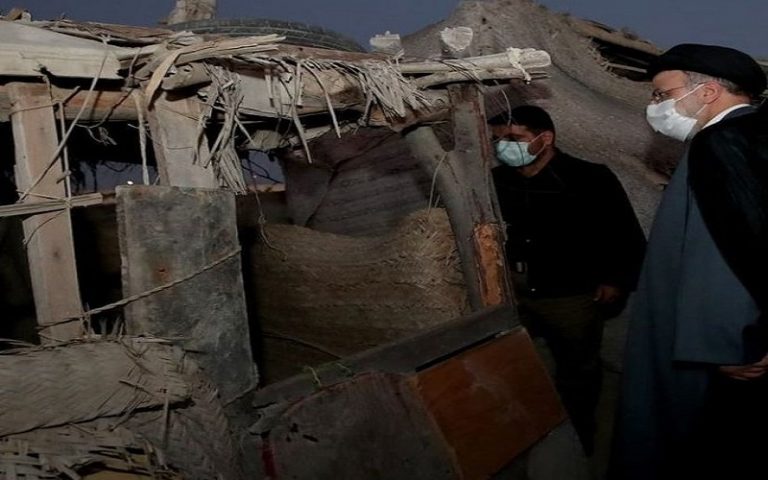
At a time when all economic data in Iran shows the shrinking of people’s livelihood basket, especially the lower-income deciles, and many goods, even the simplest and most basic ones, including rice and dairy, are disappearing from the weekly shopping cart of households, the government is advertising the slogan of the impossible control of the Inflation rate.
Meanwhile, the authorities are trying to highlight inflation control as a strategy for the government instead of providing the minimum living basket of the working classes and their families.
Therefore, considering the inflation rate mentioned in paragraph 1 of Article 41 of the Labor Law, more important than the minimum subsistence basket which is an irrevocable obligation in paragraph 2 of this article is a betrayal to the poor and lower classes, while official inflation is still breaking its previous records and there is no sign that it can be controlled for at least the next two and even more years. Even the 60% forecast inflation shows that in a few months, consumer inflation will increase again.
According to the National Statistical Center of Iran, the inflation rate of August 2021 was 45.2 percent, which represents a one percent growth rate compared to the previous month. Spot inflation reached 43.2% in August 2021, meaning households in the country spent an average of 43.2% more than in August 2020 to buy a ‘uniform set of goods and services.’
The spot inflation rate of the major ‘foods, beverages and tobacco’ group increased by 1.5 percent to 58.4 percent and the ‘Non-Edible Goods and Services’ group dropped 1.3 percent to 36.1 percent.
These official statistics show that the nutritional crisis of the working class and wage earners (including employed, retired, informal, seasonal, and project workers) is an ultimately serious crisis, and the greatest pressure from the cost of food is imposed on lower households.
Of course, we should keep in mind that housing costs and housing rent have no place in the statistical basket of the Statistical Center of Iran and the increase in housing costs is not involved in inflation calculations that if the real increase in the rent rate is calculated, in this section we will also have point-to-point inflation of more than 100 percent, i.e., households spending more than 100 percent more than the same month last year.
However, this reduced basket shows that in August 2021, households spent about 60 percent more to finance essential foods than in August of last year. And in the same period, the wage increase won’t reach 40 percent.
Now the question is when the inflation rate (even in the most diminished calculations possible by the Statistical Center of Iran) is rising permanently, how does the Labor Minister claim that wages cannot be raised because employers are losing money and should resort to curbing inflation?
Livelihood basket calculations are based on calculating the rate of raw items of foods and beverages in the food basket, which is unrealistic and does not match the real needs of the people’s baskets, which is the ‘real food’.
The overall livelihood basket is 8.866 million tomans, and if we consider the calculated livelihood basket for the wage negotiations of 2021, which was rated 6.895 million tomans for comparison, we will reach a different number of 1.970 million tomans, so in the most minimal calculations, the cost of living in the first five months, has increased 1.970 million tomans and the level of coverage of the 4 million tomans wages is about 45 percent of the wages. That means the people’s wages cover only about 13 days.
Overall, the ‘livelihood crisis’ is expanding and deepening further. While inflation is increasing without any end in sight, and all official data prove this claim, the minimum livelihood basket rate has reached about eleven million tomans and workers live nearly 19 days each month without any purchasing power as many officials say, while the numbers calculated in this text are the most optimistic figures.
Recap of Atrocities in Iran During August 2021
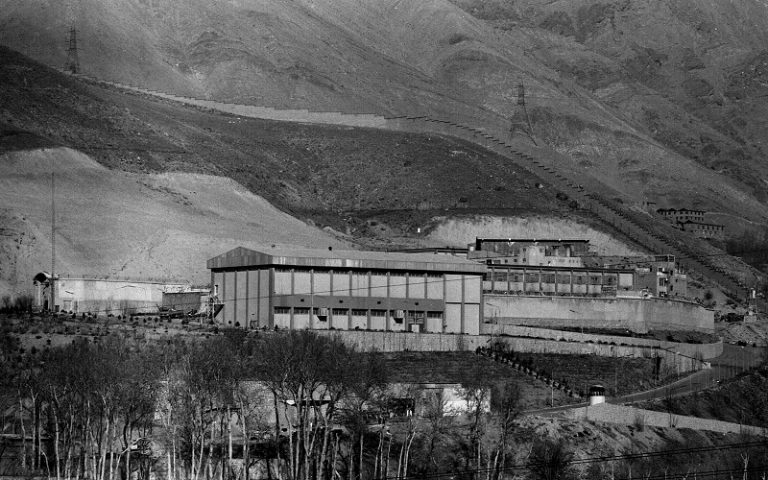
The Iran Human Rights Monitor (Iran HRM) recently published their overview of the events that they reported on during August, heading their report with the leaked footage of Iran’s Evin Prison that went viral on social media.
The hacked security camera footage, published online by the hacker group ‘Edalat-e Ali (Ali’s Justice), showed guards beating prisoners and suicide attempts, as well as scenes of the terrible conditions that inmates have to live in and endure.
In a tweet from the head of Iran’s Prisons, Mohammad Mehdi Haj Mohammadi, he accepted responsibility for the prison conditions and asked for ‘forgiveness’ from God, showcasing a rare admission of the abuses caused by authorities.
Iran HRM said, “In July, at least 26 death sentences were carried out in Iranian prisons. At least 15 executions were carried out for drug-related offenses and 10 were carried out for murder. The details and reason for the execution of another prisoner are not known.”
Amnesty International raised concern over the condition and treatment of political prisoner, Maryam Akbari Monfared. They said that she was held in inhumane conditions in Semnan prison and ‘ill-treated for seeking truth and justice’ for her siblings who were forcibly disappeared and executed in 1988.
Iran HRM said, “The 104th branch of a criminal court in western Iran sentenced a media activist to prison and lashes for “defaming” local officials. The Sanandaj court sentenced Morteza Haghbayan to two years and six months of prison, 90 lashes, and a 10 million toman fine (around 390 USD) for defaming officials in Kurdistan Province and publishing government documents.”
During protests in Naqadeh on August 7, 27-year-old Mohammad Alizadeh was fatally shot by a man who believed him to be affiliated with security forces as he walked behind a group of riot police. Not realizing the extent of his injuries, he refused to seek medical attention for fear of being arrested but he soon fell unconscious and ultimately succumbed to internal bleeding.
Religious persecution was another feature during August. Ali Ahmadi, an Iranian Bahai from Qaemshahr was summoned to serve his prison sentence for following the banned faith. As he suffers from diabetes, heart problems, and thyroid illnesses, they transferred him to the COVID-19 infected prisons which is a severe threat to his health.
Iran HRM said, “Three Christian converts, Milad Goudarzi, Ameen Khaki, and Alireza Nourmohammadi, were sentenced to prison in Karaj near Tehran on August 22.”
The three men were charged with “spreading propaganda and deviant educational activities opposing Islam” and given a fine of 40 million tomans (about $1,412) each. They were sentenced to five years of prison each, which was later reduced to three years.
In terms of civilian deaths at the hand of the regime’s military and armed forces, including the Islamic Revolutionary Guard Corps (IRGC), at least six Iranians were killed in August, and a further nine were injured during indiscriminate shootings by security forces.
As the Delta variant of the Covid-19 virus ravages through cities across Iran, the daily death toll reached 390 in Tehran as of September 1.
Iran HRM said, “State-run media report of hospitals and ICUs brimming with COVID-19 infected patients. At the same time, cemeteries are filled, and provinces report not having enough room to bury the bodies.”
Iranians are angry and blaming Supreme Leader Ali Khamenei for the thousands of deaths in Iran due to the virus, many of whom could have been saved if Khamenei and the regime had not banned the U.S. and UK made vaccines at the beginning of the year.
