

Raisi the Ace or the Iranian Supreme Leader’s Last Card?
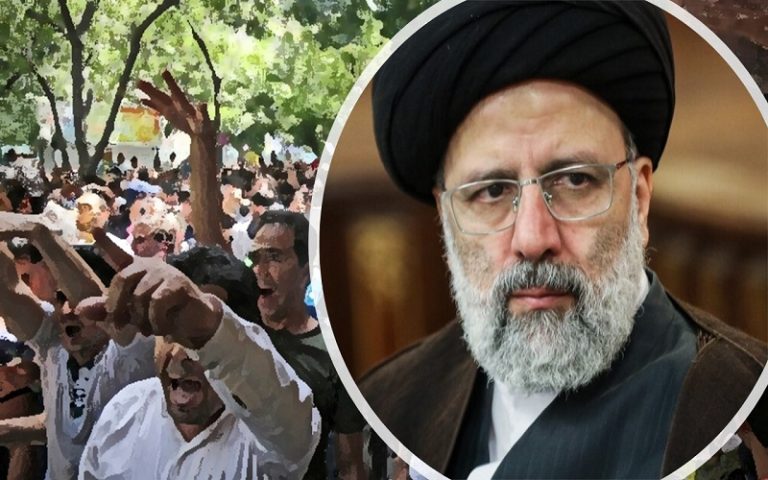
With Ebrahim Raisi occupying the post of Iran’s presidency, the supreme leader’s dream has become a reality, and the regime is now contracted. There is no more so-called reformist faction in the main positions of the government, therefore Ali Khamenei has lost his card of having an opposition inside the country and announcing them as the main culprit of all the people’s miserable situation to covering him and his corrupted institutions.
From now on the huge waves of the people’s protests will directly hit Khamenei’s palace.
Raisi complained about the coronavirus during the inauguration ceremony, not because it is taking between 700-800 honorable lives from the Iranian people every day, because he failed to kiss Khamenei’s hand.
With this eloquence, he showed that he had come for being loyal to the regime’s supreme leader and that he had no further mission than to spread repression and respond to discontent with bullets and tear gas, torture, and imprisonment.
But the truth is that Raisi is not an opportunity, he is an anti-opportunity. He is the latest card that Khamenei put on the table. According to Fereydoun Majlesi, a former diplomat of the regime, the government cannot afford to make the slightest mistake. He said this before Raisi took the power.
“The synergy of internal crises has given the government the warning that society has no patience to endure this situation and the threshold of people’s patience has reached its most fragile state. Therefore, there is no more chance and opportunity for adventure. This view of the thirteenth government will certainly be dictated.
Because the thirteenth government, even if given over to people like Seyyed Ibrahim Raisi, no longer has the chance and opportunity to make any mistake.” (Diplomacy Irani, May 22, 2021)
So Raisi is not a lifeline after all; he is just a version between the bad and the worst. By boycotting the election show and a series of uprisings, the society has shown that it is not looking for a solution within the government while having experienced it many times and failed.
Raising “strong skyscraping fists” and showing teeth and unveiling models of missiles and UAVs is no longer authoritative and is just reflecting fundamental weaknesses. This has also been understood by the elements of this regime.
“We cannot solely rely on Putin’s military capabilities and unrealistic incentives and Xi Jinping genius and test the social scene by pseudo-security plans and narrow the country’s connection to the world every day.” (State-run daily Hamdeli, August 7, 2021)
The result of Raisi’s power taking is that the foundations of this regime are wretched in all the fields. The regime now has no authority or power, neither militarily, nor ideologically, nor economically, nor politically. This is a reality that they self are speaking about it:
“With two conventional actions of approval and inauguration, the presidency of Ibrahim Raisi was recognized. He is in a position where according to Michael Mann four sources of power, Military, ideological, economic, and political power are each in a special position.
Military power is under the magnifier of foreign opposition, and they are trying to limit it, and ideological power has lost its former influence in the public arena, and oil-dependent economic power has not good conditions and is dependent on the JCPOA and the political power has lost its hegemony.” (State-run daily Shargh, August 7, 2021)
Retreat and weakness are spreading like a virus among the regime’s officials and elements. This was obvious in the speeches of some of them in Raisi’s inauguration. Which has become a disaster for the regime.
“The speeches of the esteemed Speakers of the Parliament and the Judiciary at the inauguration ceremony and in the presence of representatives of more than seventy countries were weak. It was not in the dignity of the revolution and the Islamic Republic of Iran. The focus of their speeches were issues such as corruption and dense livelihood problems and unemployment and the impact of sanctions and the like.” (Tazeh News, August 6, 2021)
The result for the regime is the constant warnings about being overthrown:
“Worrying economic pressures, along with high mortality due to disease outbreaks and the inefficiency of decision-making institutions, eventually bring distressed people to a point where they will have nothing to lose. And this is a dangerous process that has been warned by sympathizers repeatedly despite all the audits. (Mostaghel, August 7, 2021)
Iran’s Government Warned Political Prisoners It Would Repeat the 1988 Massacre
Despite the Iranian regime’s struggle to bury the history of the 1988 massacre of political prisoners and even not possible to minimize this event which is one of the worst human rights violation cases after World War Two but its henchmen in the regime’s prison are warning the political prisoners that they would repeat such an action if they support the protests, write a letter to the outside world or issue statements about the regime’s actions in the prison and the country.
The interesting part is that with the start of the government of Ebrahim Raisi, who is one of the main actors in the 1988 massacre, there is a clear sign of the supreme leader’s decision to increase the pressure in the country like their latest decision in the parliament to restrict and country’s internet cut the country from the outside world under the pretext of a plan named ‘protection of social media users.
But this is just the beginning and from now on the world will face more violations by this regime in any possible field.
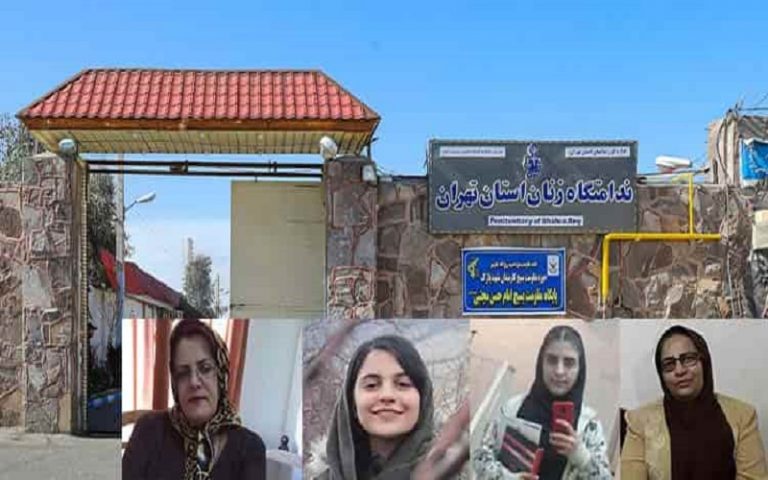
Reports from Qarchak prison in Varamin indicate that four women political prisoners in support of the Iranian opposition were threatened and re-interrogated on 4 August. Political prisoners Zahra Safaei, Forough Taghipour, Parasto Moeini, and Marzieh Farsi were each interrogated and threatened separately on Monday.
These threats and interrogation were implemented after these political prisoners have issued a statement about the regime’s presidential election and condemned the presidency of the ‘Tehran’s Butcher’ Ebrahim Raisi, who is one of the main perpetrators of the 1988 massacre.
One of these threatened women is the 20-year-old Parsto Moeini. The interrogator warned her that the “conditions of 1988 may be repeated.”
“Even if we do not execute you, we will do something that you beg to be executed,” he said in another part of his threat.
Reports indicate that in addition to interrogation and threats, special restrictions have been imposed on these women prisoners by order of the head of the prison. Other women are prevented from entering the rooms of these 4 women prisoners. These women are prevented from going to other parts of the prison, such as the library and the prayer hall.
The lives of these women political prisoners are in danger in Qarchak prison, and before that, agents of the regime in this prison by the direct order of the head of this prison tried to kill them by attacking them and pouring boiling water over them.
Zahra Safaei and her daughter Parasto Moeini, along with Forough Taghipour (25) and her mother Nasim Jabbari (58), were arrested by security forces in Tehran on February 24, 2020, and transferred to the Ministry of Intelligence Detention Center, Ward 209 of Evin Prison.
Zahra Safaei, Parasto Moeini, and Forough Taghipour were deported from Evin Prison to Qarchak Prison in Varamin in late April 2020.
Parasto Moeini was infected with the coronavirus in Qarchak Prison in Varamin on July 10, 2020, but was transferred from ward 5 of Qarchak prison in Varamin to a room on the upper floor of the prison’s medical building without medical treatment.
Simply Said, Iran’s Environment Is Dead
Iran’s environment is in bad condition. That is something that these days the government is no longer able to deny.
The situation becomes worse when we know that the government is not caring about this issue, and in the past year, the country’s environmental situation has worsened.
All four indicators that reflect the state of Iran’s environment have a worrying outlook: soil, water, air, and biodiversity. In all four components, Iran’s situation is becoming more fragile. Iran has almost the highest rate of soil erosion in the world (relative to its share of the Earth’s landmass).
The issue becomes even more worrying when we know that for one centimeter of soil to form in Iran, it takes an average of 800 years, while the average figure for soil formation on Earth is 400 years. Therefore, the deterioration of the situation in Iran is 16 times the global average.
The rate of soil formation in Iran is between one-sixth and one-seventh of soil displacement, and the valuable resources of Iran’s soil, which is the most important source and reason for the people’s food security, are constantly declining.
If Iran does not have fertile soil, there is no hope to produce the people’s needed food. While the IRGC is exporting Iran’s soil, almost no country in the world exports its soil because the process of soil production is very time-consuming. While some countries export water because water is easier to obtain anyway.
Even in some cases, water can be desalinated and obtained from the oceans and seas, but this is practically impossible in the case of soil.
The level of Iran’s aquifers decreases by an average of 2 meters per year. This has led to the phenomenon of land subsidence. In this phenomenon, thanks to the government’s negligence they broke the world record twice in the 21st century. Once in 2010 in the south of Tehran, the Geological Survey announced subsidence of 36 cm, which was 4 cm more than Mexico City, the capital of Mexico. 36 cm is 90 times the critical level in the European Union which is there just 4 mm.
Even worse a region between Fasa and Jahron has reached the number of 54 cm per year which is 140 times more than the critical level. 35,000 villages have been abandoned because soil fertility has decreased. Air pollution is still a serious and breathtaking crisis. At least one of Iran’s cities is always one of the 10 most polluted cities in the world.
The $ 8 billion in air pollution damage is breathtaking. The government’s official statistics claim that just 35,000 people are killed by air pollution, but the fact is that when it is announced that 400,000 people have been killed by air pollution in the European Union and 50,000 by the United Kingdom, it is doubtful, for a government that is doing nothing about this situation.
In the field of biodiversity, the situation is worse than the other three areas and less attention has been paid to it. Compared to 47 years ago, it has decreased by 90%. This is a terrible number, and it is considered a collapse.
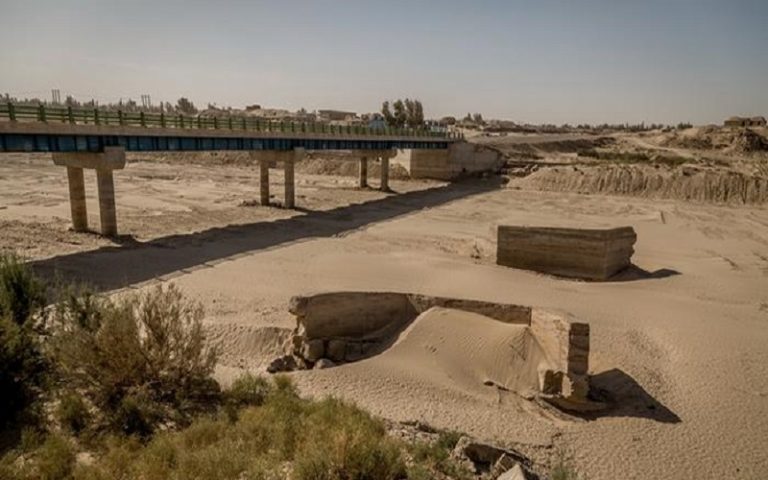
But that’s not all. Iran is losing all its water resources. Most of its rivers are dried up. The Chalous River has dried up for the first time in its history due to rent-seeking permits. It is said that the age of this river is the age of the northern forests. A river that originates from Kandovan in Mazandaran and flows into the Caspian Sea after flowing 85 km.
The IRGC-controlled private sector has built a 110-kilometer tunnel since 1995 to divert the river to eastern Mazandaran and Amol for agricultural purposes. 500 million cubic meters per year and harvest of 300 to 400 million cubic meters.
Iran’s Environment Agency, the Forests and Natural Resources Organization have become licensing bodies and have lost their essence of environmental protection.
The extent of deforestation in the north of the country and its natural resources is unbelievable, and now, with the onslaught of the “private sector”, deforestation, river dryness, and water transfer projects have doubled in intensity.
But that is not the end of this sad story here is another example. The infiltration of Ilam Petrochemical effluent into the Chavar River has been a serious alarm for many years; Ilam Petrochemical Plant produces significant amounts of solid waste and sludge every year, some of which can endanger rivers, countless fishes, and even the surrounding environment due to the presence of toxic material.
Governments in other parts of the world are doing their best for the aquatic animals to preserve these species and use them in the sustainable tourism industry, but in Iran’s geography, they are doomed to extinction.
Now the question is why Ilam Petrochemical, which has a daily income of billions of Tomans, cannot treat its effluent? Why is this large industrial unit unable to build a refinery? Questions like this and many more are questions that the government must respond to, but, according to Iran watchers, this is a hopeless demand from this regime.
Iran People’s Dinner Tables Are Deprived of Even Bread
Iran’s economy has not reached the end of the year (Persian calendar 1399) when the official economists warned and sounded the alarms bells and showed the ruling system a dark vision.
Mahmoud Jamsaz, one of these experts, believed that “Iran’s economy in 2021 (1400), according to the current characteristics and variables of the economy will be accompanied by intensifying inflation and a further decline in GDP.” (Entekhab, March 9, 2021)
His argument like many other economists was that in the past three years constantly the country’s economy is facing a rapid decline in growth. The value of the national currency has fallen from 3000 tomans to 25000 each US dollar, which is an eight times fall.
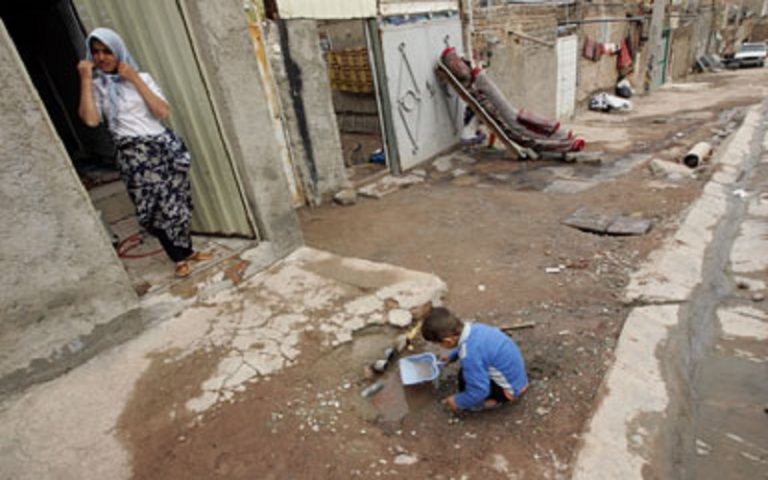
Therefore, the public income is decreased too, and the poverty and social gap have been intensified so that more than 60 percent of the population are now living under the poverty line. A poverty line that according to the officials is now 10 million tomans and most incomes even do not reach this border a are just 2.8 million tomans. That’s meaning that these people are just struggling to survive, and a proper living has become a dream.
And that just in a situation when these people can find a job to gain this little income, and there is no discussion about white contracts which do not promise anything to the workers and the employer can cut off their loan and dismiss them.
These forecasts are more realistic about the country’s economy than the promises of the new president Ebrahim Raisi. These economists said the rampant and chronic inflation has become one of the main pillars of the country’s economy and the others are: “Liquidity that has reached more than 3705 trillion tomans today and is going to break the record of 4000 trillion tomans.” (Eghtesad Online, August 4, 2021)
The next pillar is the continuous increase of the government budget deficit, which is the source of funds of the regime’s corrupted factions who are stealing officially from the people in their favor, and the parliament also seals its approval.
“Rouhani took over the government from Ahmadinejad with a budget deficit of 53,000 billion Tomans, he will now hand over the government to a president with a budget deficit of 350,000 billion Tomans in 2021.” (state-run website Quds, August 3, 2021)
Now there is significant liquidity in the country, it is predicted that by the end of this year, the liquidity will reach approximately 4.600 billion tomans. The next challenge is the issue of inflation, which has made the Gini coefficient significant and has widened the class gap between the deciles. The next issue is the budget deficit.
The government’s debt to the Central Bank, and borrowing from the bank’s printing house, is an astronomical figure, which, of course, the new President Ebrahim Raisi has no choice but to continue this path, that is, printing worthless money. The central bank released a report on a 24 percent increase in government debt to the central bank last year. Government debt to the Central Bank has increased by more than 70% compared to June last year.
And the effect on the people is that for example, the purchase of bread by the people has decreased by 30%. The people of Iran have given up buying meat, fruit, rice, and other necessities a long time ago, but can they stop purchasing bread?
It is said that the cost of the simplest foodstuffs per month is more than half of the minimum wage of an Iranian household.
“If one eats only bread and tomato omelet every day and every night. According to market prices, he must set aside about 100,000 tomans for two 30-ounce eggs (2 eggs per serving).
“The average price of a loaf of bread after announcing the new rate is 3,000 Tomans. Therefore, for 30 days, he must set aside about 100,000 tomans to buy bread. Assume that 3 to 4 tomatoes are used at a time in these repetitive omelet meals.
“In this case, he needs to buy about 3 to 4 kilos of tomatoes per month, the approximate price of this purchase is 30,000 tomans. By adding the price of frying oil to the cost of eating 2 omelets a day, the cost of this ‘suicide’ reaches about 300,000 tomans per month. Not including public transportation, water, electricity, and gas, rent, etc.
“It seems that even this impossible assumption monthly salary is not enough for the cost of a month of simple living in Tehran.” (Hamshari, 31 July 2021)
Dual Nationals Among Those Likely To Suffer Under Iran’s New Administration
On Tuesday, Iran’s Nour News Agency, an entity close to the country’s Supreme National Security Council, quoted an unnamed government official as saying that Tehran was dropping plans for prisoner swaps with the United States. The statement is a probable sign of the regime hardening its approach to foreign and dual nationals as it makes the transition from the administration of pragmatist President Hassan Rouhani to avowed hardliner Ebrahim Raisi.
Raisi was formally recognized as the next president by Supreme Leader Ali Khamenei in a ceremony on Tuesday, setting the stage for his formal inauguration on Thursday. Tuesday’s event also coincided with the brief seizure of a tanker ship near the port of Fujairah in the United Arab Emirates. Last week, two crew members on another vessel were killed by what was believed to be an explosives-laden drone belonging to the Islamic Republic.
Many observers interpreted the attacks as a preview of further escalation after Raisi takes over the presidency. Many of the same observers expect an even greater escalation in the Iranian regime’s attacks on dissident activists and other perceived domestic threats to the theocratic system. The planned retention of American citizens in Iranian prisons demonstrates the potential connections between these two categories of issues, and Iran’s Resistance movement is sure to highlight those connections in the interest of convincing Western policymakers that assertive dealings with the Raisi administration would be in their own nations’ interests as well as in the interest of the Iranian people.
At least 16 dual nationals are currently detained in the Islamic Republic, with two having been sentenced on Wednesday, the day after Raisi’s induction ceremony. Mehran Raoof and Nahid Taghavi were both sentenced to 10 years in prison on charges of affiliation with a banned group and “propaganda against the state.” Raoof and Taghavi hold citizenship in Britain and Germany, respectively, and are both in their mid-60s. These details, together with their history of social activism, make them especially vulnerable both to the inherently harsh conditions of Iran’s political wards and to targeted harassment by prison officials and security forces.
These dangers are greatly amplified by the ongoing coronavirus pandemic, which has had a much more devastating effect on the Islamic Republic than on any other country in the region. Iran set a record for new cases on Monday, at 37,189. The Health Ministry also recorded 411 deaths, pushing the official total beyond 91,000. But the National Council of Resistance of Iran insists that the real situation is even worse than regime authorities are letting on. Gleaning information from various institutional records and eyewitness statements, the NCRI has determined that the true death toll is fast approaching 350,000.
The pace of these deaths and the extent of the cover-up have a common source in that many outbreaks have occurred in prison facilities where inmates are routinely denied basic medical care. Early in the pandemic, regime authorities claimed to have released thousands of prisoners on furlough to reduce the risk of transmission, but these reports could never be fully verified and in any event, the relevant statements tended to specify that political prisoners, or persons accused of “national security” crimes, were to be excluded from furlough arrangements.
This restriction implies that authorities were knowingly weaponizing the novel coronavirus – a conclusion that was supported by various reports of new inmates being integrated into crowded prison populations without virus screening and often without separating prisoners according to the nature of their crimes as required under Iranian law. Raoof and Taghavi were initially detained in Evin Prison during a time when furloughs were supposedly still in effect but political detainees were being added to the prison population on a regular basis. They have remained there for roughly the past 10 months, during which time Taghavi spend 194 days in solitary confinement and was subjected to 1,000 hours of interrogation.
Their sentencing on Wednesday coincided with the sentencing of three other activists who hold only Iranian citizenship. Although charged with similar political offenses, their sentences range from two years and eight months to six years and eight months. The harsher sentences for Raoof and Taghavi were possibly influenced by a long history of paranoia and harassment directed at dual nationals, who are routinely accused of espionage or collaboration with “hostile” foreign states on the basis of the flimsiest evidence, such as casual communication with friends who live abroad.
But this is not to say that other categories of political prisoners can expect better treatment during the Raisi era. Their prosecution, sentencing, and extrajudicial punishment are likely to accelerate also, in keeping with the new president’s long history of human rights abuses involving critics of the Iranian regime. During the summer of 1988, he played a key role in the massacre of 30,000 political prisoners, and beginning in November 2019, as head of the judiciary, he oversaw elements of the regime’s crackdown on political activism following that month’s nationwide anti-government uprising.
Approximately 1,500 peaceful protesters were killed in the initial clashes that resulted from that uprising, and at least 12,000 individuals were arrested. Raisi’s judiciary oversaw a campaign of systematic torture for months afterward, in an apparent effort to elicit forced confessions and set the stage for aggressive prosecution of activists, including prosecution on charges that carry the death penalty.
At least 48 death sentences were carried out in Iran during the month of July alone. There is no question that the Islamic Republic will retain its title as the country with the highest rate of executions per capita, and there is ample reason to believe that that rate will climb even higher as Raisi promotes crackdowns in his role as president, and leaves the implementation of those crackdowns to his former deputy, now the new judiciary chief, Gholamhossein Mohseni Ejei.
July also saw the issuance of prison sentences for at least three Iranian human rights lawyers – a sign that the judiciary intends not only to crack down on dissent but also to further criminalize the act of providing dissenters with a legal defense. This presents a particular danger to Iran’s civilian population if unrest continues to expand, as it is widely expected to.
In June, the vast majority of Iran’s eligible voters boycotted the tightly-controlled election which brought Raisi to power, and the day after his “victory” was confirmed protests began to break out in various localities, over various issues. In mid-July, water shortages in Khuzestan Province inspired massive protests first in that region and later across much of the country. As the movement spread, it also took on an anti-government message reminiscent of that which defined the November 2019 uprising and a prior uprising in January 2018.
At least 12 individuals have already been killed in the latest round of protests, but Resistance activists anticipate that more casualties will be confirmed as activists work to convey information in spite of the regime’s efforts to block the internet and social media. Mass arrests have also been reported, and concern is growing that these could set the stage for systematic killings which would compound the new president’s legacy of participation in crimes against humanity.
Whatever crackdowns are visited upon the Iranian people in the coming days, they are sure to have knock-on effects upon existing political prisoners and upon political prisoners who are also dual nationals. In the face of large-scale unrest, Tehran invariably attempts to diminish popular sentiment by blaming it upon foreign infiltration, and this is all but certain to provide the Raisi administration with greater incentives to issue punishments for the crime of having lived outside the Islamic Republic.
Raisi’s Government Is a Defeated Government
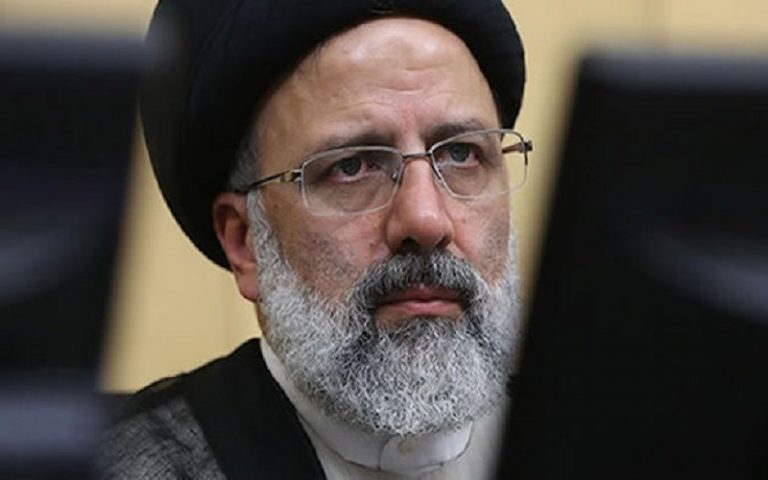
On August 3, 2021, the new president of Iran Ebrahim Raisi was approved by the supreme leader Ali Khamenei. During the regime’s sham election in June, the supreme leader created a scene for Raisi to become the next president, to have someone who will only follow the orders of the supreme leader without questioning them.
Years before Khamenei decided to create a young, efficient, and revolutionary government, following the example of someone like former Revolutionary Guards Quds Force commander Qassem Soleimani, who was fully obedient to the supreme leader.
But this is just a whole imagination that Raisi’s government could be effective and problem-solving. Because experienced showed that all the recent officials are corrupt people and just thinking about their benefits and the of their families.
Raisi will not appoint any person outside the current corrupt political body. But regardless of the greedy nature of the elements of this government, how is it possible that those who have caused all these crises and unimaginable problems can be the solution?
The first problem is the illegitimacy of this system, which these days we can see in the people’s slogans when they chant ‘death to Khamenei’ and ‘death to the principle of Velayat-e Faqih’ and of course ‘death to Raisi’ on the streets across Iran.
At the same time, the boycott by the election by the people indicates that the people are not compatible with this cruel and brutal regime and its government.
Regardless of this fact, the challenges facing the country and the people are far greater than the stature of this government, as the expertise of its head was and is the repression and the execution of the people over the past four decades.
In this regard, Abbas Abdi from the so-called reformist faction, while pointing out that the people have absolutely no hope that the situation will get better with the arrival of Raisi, but their opinion is that the situation will get worse, warns the president and the elements that are entering his government and said:
“The situation is not favorable at all to start work. Of course, your self have chosen this and you have made promises that cannot be fulfilled, and this society will understand, but the situation has worsened in several ways since June 18, when you have been elected.
“First, in terms of the suspension of the JCPOA negotiations and the closure of the short-term perspective in resolving the issue of sanctions.
“Second, increasing regional tensions that, even if they do not continue, have adverse daily effects on society and the economy.
“Third, the situation in the region and the arrival of the Taliban.
“Fourth, the situation of the coronavirus, which is in the worst condition of the last 18 months, especially since the issue of vaccination has become a complex and difficult issue.
“Fifth, the issue of despair and public protests, from Khuzestan to the issue of cyberspace and the promises that were made during the elections and must be fulfilled, all made the people more pessimistic, more confident and more protesting.” (State-run daily Etemad, August 3, 2021)
The fact is that these problems and crises did not arise overnight to be solved quickly and overnight, these problems are the result of 4 decades of the infamous rule of this regime. Crises that have deeply penetrated the body and soul of society.
It is not without reason that the Jahan-e-Sanat newspaper wrote, citing the statements and comments by Raisi’s relatives:
“The worrying news is that the relatives of Ibrahim Raisi emphasize the critical situation in the country and sometimes say that miracles should not be expected from Raisi and his future government. This position probably means retreating from the promises and visions that Ibrahim Raisi and his like-minded people have already presented to the people. Because the situation has not changed significantly since the last months when those visions and promises were expressed.
“If the members of the 13th government want to hide their inability and justify their inefficiency, then they must work to show the country more devastated.” (Jahan-e-Sanat, August 3, 2021)
The Mostaghel newspaper also predicts that the government of Raisi will be an inefficient and crippled government from now on. This newspaper listed crises, including “increasing sanctions, new coronavirus peaks, water and electricity crises, environmental disasters, and, most importantly, popular protests,” which “all can oust Raisi from the beginning. Especially the new strains of the coronavirus that researchers have predicted will kill one-third of patients.
External problems which the new government will face such as, “severe economic sanctions” while “the way to sell oil and receive revenue is completely closed and the future government budget is in a state of ambiguity.”
It predicts that Raisi’s government has no mechanism and chance to solve all these problems, and “sooner or later we will see strong waves of protests by the people, especially the vulnerable sections of society, against the economic performance of the 13th government.” (Mostaghel, August 3, 2021)
The truth is that the patience and endurance of the people have a ceiling, and soon this regime must face the consequences of the people’s hatred.
Iran’s Society Will Not Tolerate New Crises

The accumulation of problems in Iran’s society has strengthened the protest spirit in the people. They are angry with the current situation and each time they want to return to a normal life, a new crisis created by their rulers is imposed on their lives.
Observe the sequence and form of crises in the last year and then see which nation in the world must withstand so many crises without any protest. The government’s officials instead to find out a solution for all these crises are increasing the protest spirit of the people because the problems are the solution for the government to control and people.
Making wrong decisions and vice versa the people priorities, for the regime’s official it is enough to just walk around the city for a day and talk to people in shopping malls, fruit and vegetable markets, subways, buses, vaccine queues, and deprived provinces, then they will realize the main priorities of Iranian society and instead of making decisions that conflict with people’s lives.
But their interests are groups like Hezbollah and other proxy groups and nuclear and regional terror activities. Therefore, for the regime’s officials, it is necessary to answer which crisis the people must cope with and join them in cooperation and empathy and not protest?
Inability to prevent the creation of new coronavirus waves. High costs and rampant inflation. Rising housing prices. Lack of medicine in the capital. Lack of hospital equipment in border cities. Dehydration in a province with several large rivers. Lack of electricity in the summer heat. Or this last decision to block the means of mass communication on the internet and restrict freedom of expression.
The latest plan has angered people the most, as from a 7-year-old child to a 90-year-old man, their lives and leisure time are tied to cyberspace. The question for all people is that if your plan is defensible and has no objections, why do you consider us unreliable and examine it in a closed session? But there is no wonder because all critical decisions which are tied with the continuation of this regime are handled behind closed doors.
Worse, are the people asking, why did they refer the bill to a special commission to oust most of them from any responsibility if there is nothing bad in this decision and will not destroy the people’s lives and restrict their freedom of speech? Why not explain to people that in these economic and social conditions, the plan to limit cyberspace has become their priority, if there is nothing to hide?
Isn’t it true that the lives of many Iranians today are tied to Internet businesses, and that they make a living in this way? Iran society has become an erupting society and any wrong speech or decision by the regime will raise the people’s protests which in this situation is a security issue for the regime, because Iran’s society has become a crisis-stricken society and cannot withstand a new crisis. Finally, the regime is forced to face the people soon, which will be a landmark of Iran and the people’s fate.
The Story of Iran Regime’s Attacks on Oil Tankers

A Liberian-flagged ship flying 280km from the port of Al-Daqam in the Oman Sea was targeted by a drone on Friday.
The oil tanker is called MV Mercer Street and is managed by the Zodiac Maritime company owned by Israeli billionaire Eyal Ofer. Two crew members, one British and one Romanian, were killed in the attack.
Following the incident, Israeli media and politicians pointed the finger at Iran. Britain and the United States later said that Iran’s regime was behind the attack.
The foreign ministers of Israel, Britain, and the United States held talks after the attack. At the same time, there were reports in the media about possible action against Iran.
U.S. Secretary of State Antony Blinken said: “We are in very close contact, in coordination with the United Kingdom, Israel, Romania, and other countries. And there will be a collective response,” he told reporters at the U.S. State Department on Monday.
Bogdan Aurescu, foreign minister of Romania, in a tweet on August 2, 2021, said: “Based on t/available info, Romania Flag of Romania strongly condemns t/Iranian drone attack against “Mercer Street”, during which a RO citizen was killed. There are no justification whatsoever 4 deliberately attacking civilians. We continue 2 coordinate w/our partners 4 an appropriate response.”
British Prime Minister Boris Johnson said on Monday that Iran must face up to the consequences of the attack on the oil tanker off the coast of Oman.
“Iran should face up to the consequences of what they’ve done. This was clearly an unacceptable and outrageous attack on commercial shipping,” the British Prime Minister told reporters, according to the Reuters news agency.
“A UK national died. It is vital that Iran and every other country, respects the freedoms of navigation around the world and the UK will continue to insist on that,” he added.
Such hostile activities are nothing new by Iran’s regime. Without thinking about the consequences of such actions, it takes such measures to show its forces that it is not in a weak stand, especially when it seems that the JCPOA nuclear talks are failing, and the regime must face the consequences of its nuclear adventures.
Escaping forward and warning other nations about the consequences of any ‘adventures’ against Iran is a clear sign of such half-baked decisions and weakness.
This weakness can be seen in the reactions of the state-run media. The state-run daily Tose-e-Irani on August 3, 2021, wrote:
“Now Iran is under pressure from these four countries and, of course, threats of retaliation. Iran’s reaction, however, has so far been a denial. Foreign Ministry spokesman Saeed Khatibzadeh said yesterday that the reaction of the four countries was unfortunate and said:
“These coordinated statements themselves contain contradictory phrases, such that they first accuse the Islamic Republic of Iran without providing any evidence and then speak of its “possibility.”
“It is unfortunate that while these countries have remained silent in support of terrorist attacks and sabotage of Iranian merchant ships in the Red Sea and international waters, in a blatant political bias they are making false accusations against the Islamic Republic of Iran, if these countries have a document to prove their false claims, they must provide it.”
Besides the regime’s fear about any reaction, it is clear that no one would reveal its resources to such a dictatorship, and one other than this regime is benefiting from the instability in the Middle East as we are witnessing its many countries and there is no need to count them all.
In an indirect confession about the regime’s action, the state-run daily Eghtesad News on August 3, 2021, wrote:
“With the denial of Iran, the Zionist regime and the United States are still trying to take full advantage of this incident. In a situation that less than a month has been passed after the sabotage in one of the buildings of the Atomic Energy Organization of Iran located around Karaj on June 23.
“The subversive act of which the Prime Minister of the Zionist regime Naftali Bennett implicitly referred to the role of this regime in this incident. The destructive and criminal role that was shown in the previous months by sabotaging the Natanz facility and assassinating our country’s nuclear scientist, Mohsen Fakhrizadeh.
“This is at a time when Western countries are not interested in condemning such actions against Iran and pass by it indifferently, preferring to remain silent in the face of crimes such as the child-killing of the Zionist regime in the 12-day war in Gaza.”
The decision of confronting the world and destabilizing more the situation in the Middle East has started at that time when the regime’s supreme leader Ali Khamenei was receiving the message of the former US President Donald Trump by Japan’s prime minister and ordered to attack an oil tanker of Japan, to show that the regime is not negotiable.
Taking such a decision a few days before the start of the regime’s new presidency of Ebrahim Raisi, delivered the message that the regime’s terror machine will not stop and will become even worse.
A Loan That Was Lost in the Sewage of the Iran Regime’s Corruption
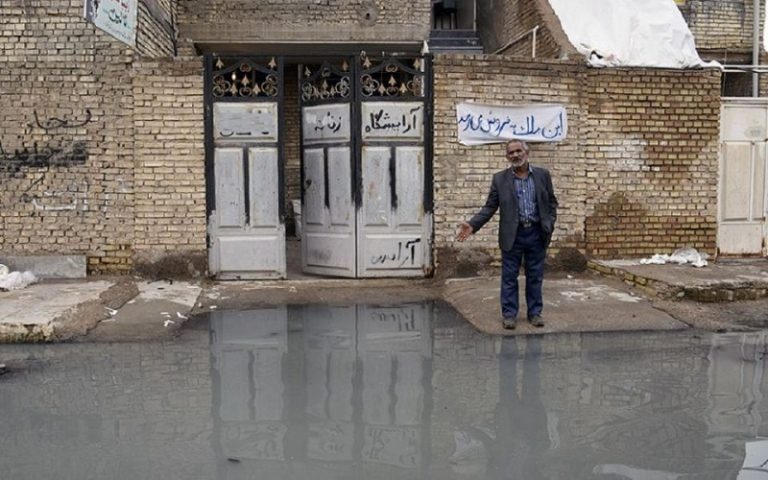
The sad story of Iran’s Khuzestan province has not ended. Drinking water, electricity, and health care are becoming people’s dreams, so speaking about inflation, unemployment, poverty, and misery is nonsense. Ahvaz and other cities of this province in addition to these miseries are facing the disaster of the municipal sewage.
The sewage not only flows on the streets of these cities, but with the slightest rain, the sewage erupts and overfloods all streets, alleys, people’s houses, and even hospitals and health centers.
This situation was so dramatic that international agencies decided to give a large loan to Iran to overcome this situation. But as usual in this corrupt regime, this money and aid did not reach the people and this resource was looted.
Amazingly, now after the latest protests by Khuzestan’s residents, the regime’s officials remember this loan and are asking each other about the fate of that $149 million which was given to the regime in 2005 by the World Bank.
This loan should have put an end to this health disaster but now it has become one of the main subjects of the people in the social media and public’s opinion.
And again, as usual, the response of the officials is no one knows what happened to this loan. This event was so inexplicable that the then governor was forced to call it “Money poisoning.”
Then the official as a red herring used the alibi of a dispute between the Water and Sewerage Company and the municipality.
“Khuzestan Water and Sewerage Authorities, instead of questioning how the previous credits were allocated, have started a war between water, sewage and the municipality.” (State-run daily Etemad, December 26, 2019)
In a factional dispute, the then governor said: “In Khuzestan, we have suffered from a kind of money poisoning, which means that the projects are funded, but nothing is done. Shariati sharply criticizes the implementation process of the Ahwaz Wastewater Treatment Plant and specifically the Provincial Water and Sewerage Company and says: ‘In the province and Ahvaz, not all issues are related to the lack of money and credit, this can be seen in the non-implementation of the Ahwaz Wastewater Treatment Plant, which in the last 15 years has been allocated a lot of credit resources, including a World Bank loan, but has been not fulfilled.” (State-run daily Etemad, December 26, 2019)
At the same time, the head of water and sewage in the province had said that “A former high-ranking official of the province was involved in the seizure of this loan in 2005, but this revelation was not tracked.” (IRNA, December 20, 2019)
He mocked this official and said: “Instead of announcing what happened to the World Bank money, he appeared as a plaintiff and becomes a pretender for the current situation of water and sewage in Ahvaz.” (IRNA, December 20, 2019)
Finally, the Friday Prayers Leader of Ahvaz added his voice: “In the early 2000s, the World Bank allocated a large amount of credit to solve the problem of sewage in Ahvaz and some parts of the country, but unfortunately these credits were not spent in this city.” (IRNA, December 20, 2019)
Since then, constantly the regime’s media are speaking and writing about this corruption and the disaster raised by it. Here are just a few examples:
“For the umpteenth time, billions of dollars will be allocated to regulate the province’s sewage situation. Due to the ambiguity in the way of allocating billion (tomans) budgets, the sewage situation of Khuzestan province is stagnated for many years.” (Etemad, December 26, 2019)
“So far, large budgets have been allocated to solve Ahwaz’s sewage problems, but the streets of the metropolis are still flooded with every rain and as soon as the ground gets wetter.” (Javan News Agency, December 27, 2020)
In the 2000s, the World Bank predicted the current situation of Ahwaz’s sewage system and considered a loan to improve the sewerage network, but it remains to be seen where the money of this loan was spent. After about a decade and a half, the Ahwaz sewage problem has not been solved.” (Mardom Salari, July 24, 2021)
“The loan agreement was signed in March 2004 in the presence of the Deputy Minister of Economy, the Deputy Minister of Energy, the Successor Minister of Energy, as well as representatives of the World Bank. But after the essence of the signing of this contract dried up and the change of government in 2005, until the end of the ninth government, Khuzestan sewage and the World Bank loan were forgotten. This loan may have been lost somewhere in history.” (Iran Plus, July 29, 2021)
Iran’s Regime Has Nothing To Offer but Weakness
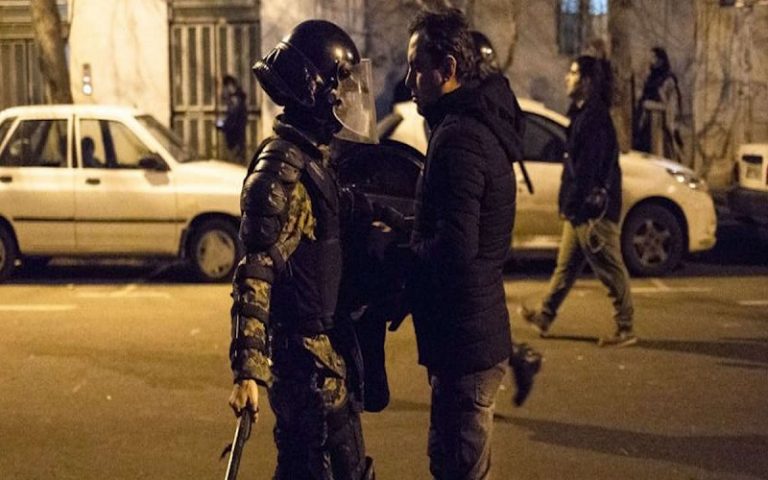
In recent years the weaknesses of Iran’s regime have become more transparent every day. From its weakness in the economy to lose its dominance in the country facing many huge protests which increased this weakness, to its international isolation, which is derived from its malign activities in the region, its support from the global terrorism and dictatorships sharing the same behavior with them.
The regime’s struggle to cover up this weakness with senseless activities like its missile and nuclear program not only does not help but increased the frustration of the people because of wasting their resources in such projects and increased the international will to counter the regime and preventing it from becoming a nuclear power.
Analyzing these weaknesses, it can be seen in the nuclear deal with world powers known as the Joint Comprehensive Plan of Action (JCPOA). The regime hopes that the new US government after the Trump administration would accept the regime’s requests and would return to the 2015 JCPOA without and precautions and new requests, but this did not happen.
As reported by many of the regime’s outlets and websites the state-run website Asr-e-Iran on July 29, 2021, wrote: “The United States has warned that nuclear talks with Iran to revive the JCPOA will not continue indefinitely. US Secretary of State Anthony Blinken said in a statement in Kuwait yesterday (Thursday) that talks with Iran could not and should not continue indefinitely.
“Pointing out that now is the time for Tehran to decide, the senior US diplomat added: ” We’re committed to diplomacy, the ball remains in Iran’s court.”
Then this media acknowledged that the US did not accept the regime’s avarice and added: “According to a recent statement by Iran’s representative to the International Atomic Energy Agency, US diplomats in the last six rounds of the Vienna talks have refused to lift more than 500 sanctions against various Iranian individuals and entities.”
Frustrated about a JCPOA+, it continued: “According to Kazem Gharib Abadi, Iran’s representative to the International Atomic Energy Agency, during the Vienna talks, the Americans insisted on including issues outside the scope of the Iranian nuclear issue and they have insisted on adding a clause on negotiations on regional issues to the agreement to revive the JCPOA.
“At the same time, Washington has stressed that the United States will wait for the establishment of the government of Iranian President-elect Ibrahim Raisi to continue the Vienna talks, but Washington limits the opportunity for Vienna talks to revive the JCPOA and there will be no further concessions from Washington.”
The AXIOS website interviewed a US official about Washington’s position, writing:
“The official stressed that the window for reaching a deal won’t be open for much longer, and the Iranians should return to the table quickly. “We also hope they don’t think they will get more than the previous government because they are tougher. It’s not about being tougher, it’s about fully implementing the terms of the 2015 nuclear deal. The U.S. position will not change, and the Iranians will not be able to reinvent the nuclear deal or be in a situation where they do less, and we do more.” (AXIOS, July 28, 2021)
Kazem Gharib Abadi in another interview about the defeat of the negotiations said: “The Americans tied the whole understanding to the acceptance of future talks on regional issues, which is completely irrelevant and harmful to the subject of negotiations. The lifting of some sanctions, as well as the removal of the name of the Islamic Revolutionary Guard Corps from the list of terrorist groups, was directly conditional on the acceptance of this clause.
“The Americans refused to guarantee in the negotiations that they would not repeat the same behavior of the previous administration in the face of the nuclear deal, and even refused to lift sanctions against more than 500 individuals and entities – who were sanctioned by the Trump administration on non-nuclear grounds. They also did not repeal the Countering America’s Adversaries Through Sanctions Act (CAATSA).”
But that’s not all. The situation for the regime is getting so bad that state TV was forced to admit that they no longer have the opportunity for lobbying the US government and are losing this aiding political ground.
The state TV Channel Two on July 28 reported: “Now you see a week among the US senators, some of them are writing letters. Many of them are writing letters to Mr. Biden that whatever agreement you make with Iran when we come to power, we will destroy all these agreements.
“You do not need to stand until 2024 for the next election in the United States. Next year you have the congressional election 2022 and the gap between Democrats and Republicans in the US Senate is one vote, one seat. And the US Senate looks set to fall to Republicans next year.
“Now that the US Senate is in the hands of the Democrats, the chairman of their foreign policy commission is Mr. Bob Menendez, who was a speaker at the hypocrites’ (MEK/PMOI) meeting last week.
“This means that this democrat, who is now influential in US policy towards Iran because of the role that the US Congress has in foreign policy, is the speaker of this group of hypocrites.”
Finally, a regime expert in international affairs Mohammad Jamshidi pointed to the main reason for the regime’s weakness and said:
“The 2009 sedition (2009 protests) that took place, after which we had the resolution of 1929 and the heavy unilateral sanctions of the United States. Haj Qasem Soleimani was martyred because of the riots of November 2019. When the other side sees that you are weak and confused, he moves towards hitting more.”
